

To upgrade your home theater with Atmos sound, you’ll need to select ceiling speakers that deliver precise height effects and directional audio. Your choice depends on three core factors: your room size, your budget, and your existing speaker setup. You can pick from established brands like Micca, Polk, and Klipsch, each offering different woofer sizes and features. Before you commit to any model, you should understand what specifications actually matter for your space.
| Micca M-8C 2-Way In-Ceiling Round Speaker |
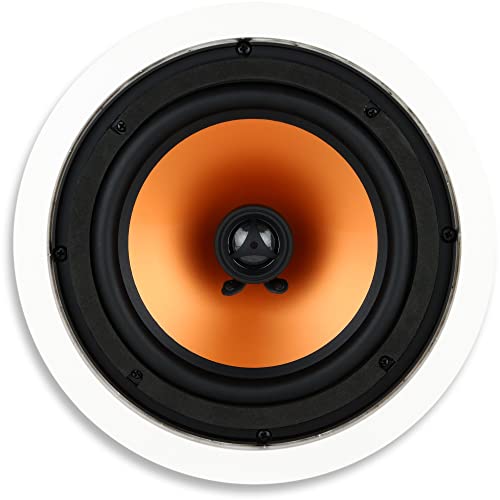
| Best Overall | Woofer Size: 8 inches | Tweeter Type: 1″ silk dome | Power Handling: 100 watts per speaker | VIEW LATEST PRICE | Read Our Analysis |
| Polk Audio RC80i 2-Way In Ceiling Speakers (Set of 2) |
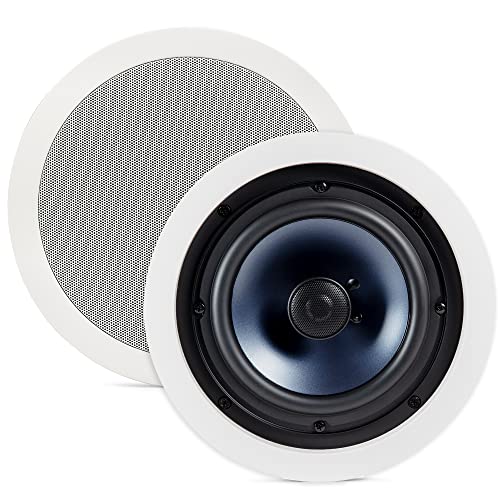
| Best Value | Woofer Size: 8 inches | Tweeter Type: 1″ adjustable soft-dome | Power Handling: Not specified | VIEW LATEST PRICE | Read Our Analysis |
| Klipsch CDT-5650-C II In-Ceiling Speaker – White (Each) |
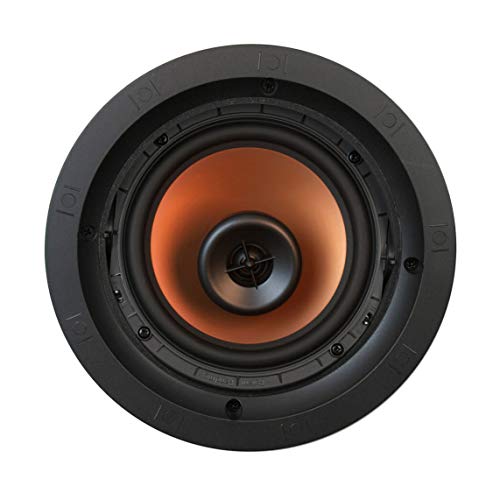
| Premium Performance | Woofer Size: 6.5 inches | Tweeter Type: 1″ titanium with Tractrix Horn | Power Handling: Not specified | VIEW LATEST PRICE | Read Our Analysis |
| Micca Reference Series R-8C In-Ceiling Speaker 8 Inch |

| Best Customization | Woofer Size: 8 inches | Tweeter Type: 1″ aluminum dome, fluid-cooled | Power Handling: 120 watts per speaker | VIEW LATEST PRICE | Read Our Analysis |
| Polk Audio RC80I 2 Way in Ceiling Speakers – 8 Pack (White) |

| Multi-Room Solution | Woofer Size: 8 inches | Tweeter Type: Aimable soft-dome | Power Handling: Not specified | VIEW LATEST PRICE | Read Our Analysis |
More Details on Our Top Picks
Micca M-8C 2-Way In-Ceiling Round Speaker
Looking to upgrade your home theater without visible speakers cluttering your space? The Micca M-8C delivers performance without compromise. This 2-way in-ceiling speaker features an 8″ woofer and 1″ silk dome tweeter, producing 40 Hz–20 kHz frequency response at 90 dB sensitivity. Installation requires a 9.4″ cutout; built-in mounting tabs grip drywall directly without additional brackets. The pivoting tweeter adjusts your sound stage, while the rimmed grill design sits flush with minimal protrusion. Paint the white speaker to match your ceiling for near invisibility. It handles 100 watts per channel and works standalone or paired with a subwoofer. This configuration suits whole-house audio, home theater, and general living spaces effectively.
- Woofer Size:8 inches
- Tweeter Type:1″ silk dome
- Power Handling:100 watts per speaker
- Frequency Response:40 Hz–20 kHz
- Impedance:8 ohms
- Installation Type:In-ceiling/wall with built-in mounting tabs
- Additional Feature:Pivoting tweeter for sound staging
- Additional Feature:Built-in drywall mounting tabs
- Additional Feature:Paintable rimmed grill design
Polk Audio RC80i 2-Way In Ceiling Speakers (Set of 2)
If you’re installing ceiling speakers in moisture-prone areas like bathrooms, kitchens, or covered porches, the Polk Audio RC80i 2-Way In Ceiling Speakers deliver reliable performance without the hassle of complex setup. Each 8-inch speaker features a Dynamic Balance woofer and adjustable tweeter that you can fine-tune for depth and detail. The mineral-filled polymer cone provides improved damping for full-bodied sound, while a rubber seal prevents moisture ingress. Installation takes three straightforward steps with no extra assembly required. The paintable aluminum grilles blend seamlessly with your interior, and the speakers integrate directly into your existing home audio system. Polk’s 50-year heritage in audio equipment ensures dependable quality and innovation.
- Woofer Size:8 inches
- Tweeter Type:1″ adjustable soft-dome
- Power Handling:Not specified
- Frequency Response:Not specified
- Impedance:Not specified
- Installation Type:In-ceiling with quick 3-step installation
- Additional Feature:Mineral-filled polymer cone
- Additional Feature:Moisture-resistant rubber seal
- Additional Feature:Sold as set of two
Klipsch CDT-5650-C II In-Ceiling Speaker – White (Each)
The Klipsch CDT-5650-C II delivers Atmos height channel performance through horn-loaded technology that minimizes distortion while maintaining balanced treble and mid-range frequencies across your listening area. You’ll install this 6.5-inch woofer and 1-inch titanium tweeter directly into your ceiling for surround sound integration. The independently aimed tweeter and woofer let you direct sound toward your main seating position. Use the treble and mids attenuation switches to fine-tune output for your room’s acoustics. Mount the speaker using standard ceiling brackets, then connect it via wired connections to your compatible audio system. This setup transforms overhead audio channels without requiring wireless components or outdoor installation considerations.
- Woofer Size:6.5 inches
- Tweeter Type:1″ titanium with Tractrix Horn
- Power Handling:Not specified
- Frequency Response:63 Hz minimum
- Impedance:8 ohms
- Installation Type:Ceiling mount with remote-controlled operation
- Additional Feature:100° Tractrix Horn technology
- Additional Feature:Treble/mids attenuation switches
- Additional Feature:Low-profile slim design
Micca Reference Series R-8C In-Ceiling Speaker 8 Inch
Want ceiling speakers that deliver balanced sound across your entire room without requiring complex calibration? The Micca Reference Series R-8C uses independent tone switches for both the 8-inch woofer and 1-inch tweeter, letting you adjust frequencies by +3 dB, 0 dB, or -3 dB to match your space. The swivel-bridge mounted tweeter focuses sound directionally, while the carbon/glass fiber cone ensures vocal clarity. With 90 dB sensitivity and 120 W power handling, you’ll get performance suitable for background music or home theater use. Installation requires only basic tools and a 9.5-inch cutout. This speaker covers 40 Hz–22 kHz, making it versatile for any room type.
- Woofer Size:8 inches
- Tweeter Type:1″ aluminum dome, fluid-cooled
- Power Handling:120 watts per speaker
- Frequency Response:40 Hz–22 kHz
- Impedance:8 ohms
- Installation Type:In-ceiling/in-wall with easy installation
- Additional Feature:Independent woofer/tweeter tone switches
- Additional Feature:Swivel-bridge mounted tweeter
- Additional Feature:Carbon/glass fiber cone
Polk Audio RC80I 2 Way in Ceiling Speakers – 8 Pack (White)
Polk Audio’s RC80i speakers deliver the performance you’ll need if you’re installing ceiling speakers across multiple rooms or setting up a thorough surround sound system. The 8-pack white configuration covers multiple zones with matched acoustic characteristics. Each unit features an 8-inch woofer and aimable tweeter, delivering 90 dB sensitivity across a 50 Hz–20,000 Hz range. The moisture-resistant design suits bathrooms, kitchens, and covered porches. With 8-ohm impedance, you’ll integrate them into most amplifier systems without complications. Install these speakers for consistent surround channels, background music distribution, or complete home theater coverage using a single product line.
- Woofer Size:8 inches
- Tweeter Type:Aimable soft-dome
- Power Handling:Not specified
- Frequency Response:50 Hz–20,000 Hz
- Impedance:8 ohms
- Installation Type:In-ceiling with standard installation
- Additional Feature:Aimable soft-dome tweeter
- Additional Feature:Dynamic balance composite cone
- Additional Feature:Sold as eight-pack bundle
Factors to Consider When Choosing Ceiling Speakers for Atmos
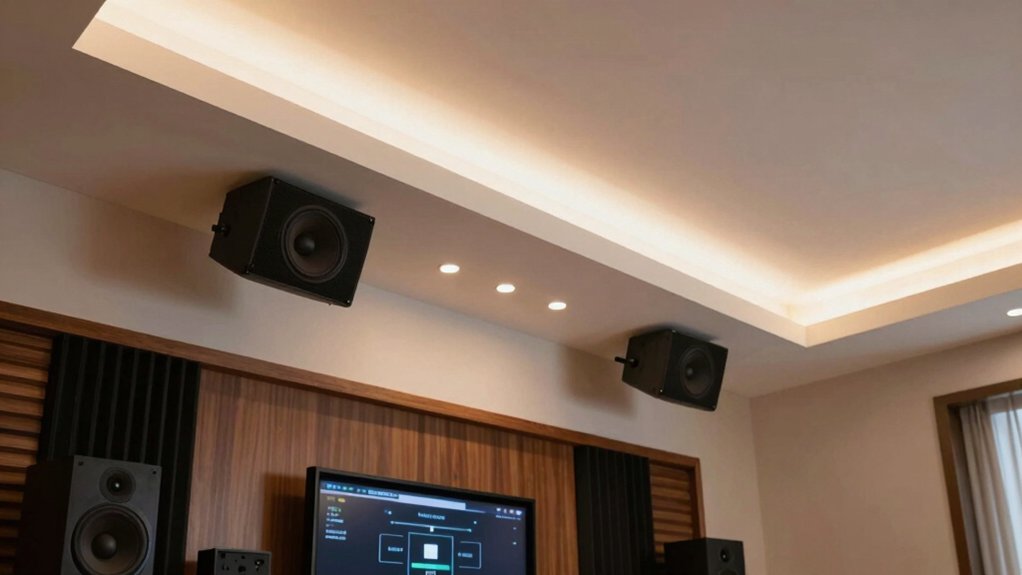
When selecting ceiling speakers for Atmos, you’ll need to evaluate the frequency response range to ensure the speakers reproduce both high and low frequencies accurately, check the power handling capacity to match your amplifier’s output, and examine tweeter adjustment features that let you aim the high-frequency sound toward listening areas. You should also assess installation requirements like mounting depth and wiring accessibility before purchasing, and consider woofer size because larger drivers typically deliver deeper bass response in your overhead channels. These factors work together to determine whether the speakers’ll integrate properly with your Atmos system and deliver the immersive audio experience you’re seeking.
Frequency Response Range
How does a ceiling speaker’s frequency response affect your Atmos experience? The frequency range determines which sounds your speaker reproduces, from low bass to high treble. Most ceiling speakers span 40–50 Hz to 20 kHz. Check the low-frequency floor first: speakers extending to 40 Hz deliver deeper ambient atmosphere than those limited to 60–80 Hz. For Atmos, wider upper-range response near 20 kHz captures high-frequency details in immersive mixes. If your speakers don’t reach below 60 Hz, plan to add subwoofers for full LFE impact. Compare specific models by their stated frequency ranges, not just marketing claims. Prioritize deeper bass extension if you want room-filling sound without subwoofers. Otherwise, accept that supplemental subwoofers become necessary for complete Atmos performance.
Power Handling Capacity
Beyond frequency response, you’ll need to evaluate power handling capacity, which determines how much amplifier wattage your ceiling speakers can safely accept. Match your receiver’s channel output in watts to each speaker’s power rating. For example, if your receiver outputs 100 watts per channel, select ceiling speakers rated for at least 100 watts continuous power. This alignment prevents clipping and overheating during playback. Higher power handling ratings support louder, cleaner sound with minimal distortion, especially important for Atmos overhead effects. Check your speaker’s specifications for continuous power handling, not peak ratings. Select speakers with adequate wattage for your room size and desired listening levels. Undersized speakers risk damage; oversized speakers provide necessary headroom for dynamic Atmos content without performance degradation.
Tweeter Adjustment Features
What role do tweeter adjustment features play in optimizing your Atmos ceiling speakers? They let you tailor high-frequency response to match your room’s acoustics and your listening position. Pivoting or aimable tweeters direct treble toward your main seating area, improving clarity and imaging. Some ceiling speakers include treble attenuation switches that let you add or reduce brightness in increments—typically ±dB—without redesigning the entire crossover. This proves especially useful in Atmos setups with reflective surfaces that amplify ceiling reflections. Independent tweeter controls also reduce off-axis glare that degrades perceived height and vertical dispersion. When selecting speakers, confirm the tweeter adjustment works alongside the woofer crossover and horn dispersion design to maintain coherent sound across your multi-channel installation.
Installation Requirements
Before you purchase ceiling speakers for Atmos, you need to verify three critical measurements: the ceiling cutout size, the mounting depth available above your ceiling, and the speaker’s physical dimensions. Mismatched dimensions cause installation delays and potential damage to your drywall.
Check your ceiling’s depth space first. Most in-ceiling speakers require 4–6 inches of clearance above the ceiling surface. Measure your available space and compare it directly to the speaker’s mounting depth specification.
Next, confirm the cutout size. Speakers typically need circular or rectangular openings ranging from 6–8 inches. Your installation kit should include a template; use it to mark the exact hole dimensions before cutting.
Finally, verify impedance and power-handling ratings match your amplifier’s output. Standard specifications like 8 ohms and 100–120 watts per speaker ensure proper Atmos channel performance without overloading your system.
Woofer Size Considerations
How does woofer size affect your Atmos speaker performance? Woofer diameter directly determines your ceiling speaker’s bass capability and installation requirements. Choose an 8-inch woofer if you want deeper bass and fuller ambient effects without a separate subwoofer. Select a 6.5-inch woofer for balanced performance in moderate rooms where you’ll pair speakers with existing subwoofers. Use woofers 6.5 inches or smaller only if you’re willing to invest in dedicated amplification or accept limited low-end response. Next, measure your ceiling cavity depth—larger woofers require deeper enclosures and bigger cutout sizes, which may not fit standard installations. Finally, match your woofer size to proper crossover tuning to maintain coherent bass frequencies and prevent phase issues across your Atmos layout.
Impedance Compatibility
Since impedance mismatches can damage your receiver or trigger protection shutdowns, you’ll need to verify that your ceiling speakers match your AVR’s capabilities. Most in-ceiling Atmos speakers use 8-ohm impedance, which works with standard receivers. However, some models drop to 6-ohm minimum, requiring careful attention. Check your receiver’s impedance stability rating—typically listed as “8-ohm stable” in the manual. If you’re installing multiple ceiling speakers, calculate the total load across all channels. When the combined impedance drops below your receiver’s minimum, you risk shutdowns. Consider speakers with dual voice coils or selectable impedance for flexibility in complex setups. These options let you adjust the load to match your specific system, preventing compatibility problems before installation.
Final Thoughts
You’ll want to match your ceiling speakers to your room size and budget. Check impedance compatibility with your receiver—typically 8 ohms works best. Measure your ceiling height and speaker placement to ensure proper Atmos height channel positioning. Compare wattage handling across models. Install speakers centrally above listening areas for optimal immersion. Test adjustable tweetters to direct sound toward your seating. Verify moisture resistance if you’re installing in bathrooms or kitchens.

Meet Ry, “TechGuru,” a 36-year-old technology enthusiast with a deep passion for tech innovations. With extensive experience, he specializes in gaming hardware and software, and has expertise in gadgets, custom PCs, and audio.
Besides writing about tech and reviewing new products, he enjoys traveling, hiking, and photography. Committed to keeping up with the latest industry trends, he aims to guide readers in making informed tech decisions.