
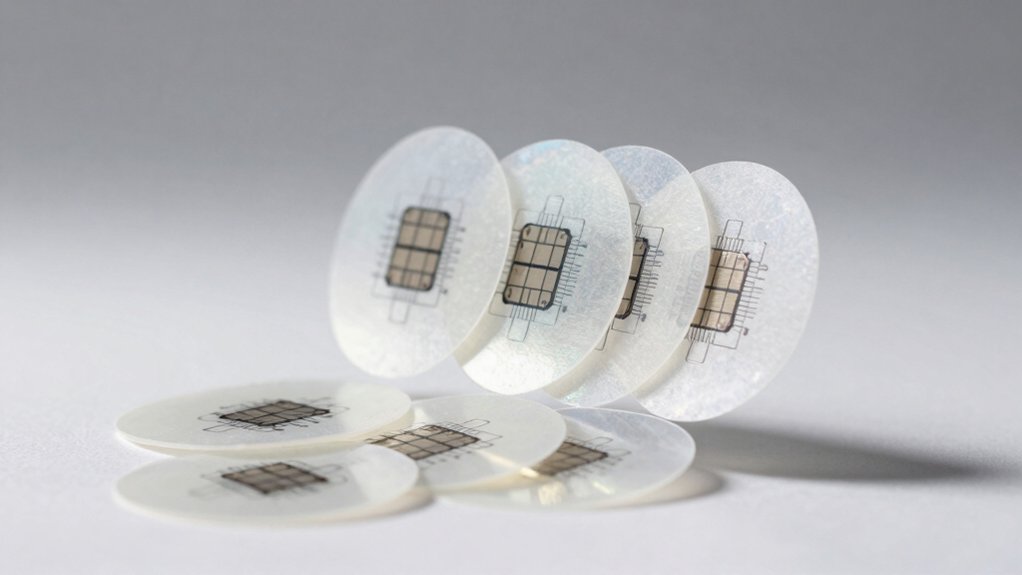

If you’re managing inventory, you’ve likely struggled with manual counting errors and slow audits. RFID stickers offer a straightforward solution: they enable touchless identification and real-time status updates across your warehouse or retail space. You can choose from several tag types—each designed for different distances and environments. The key’s matching the right sticker to your specific tracking needs. Here’s what you need to know about the six options that’ll transform how you track assets.
| UHF RFID Tag 9662 Long Distance Passive (100-Pack) |

| Long-Distance Champion | Frequency: 860–960 MHz (UHF) | Form Factor: Rectangular adhesive inlay label (76 x 21 mm) | Pack Quantity: 100 units | VIEW LATEST PRICE | Read Our Analysis |
| UHF RFID Pet Sticker Waterproof Adhesive Label (50-Pack) |
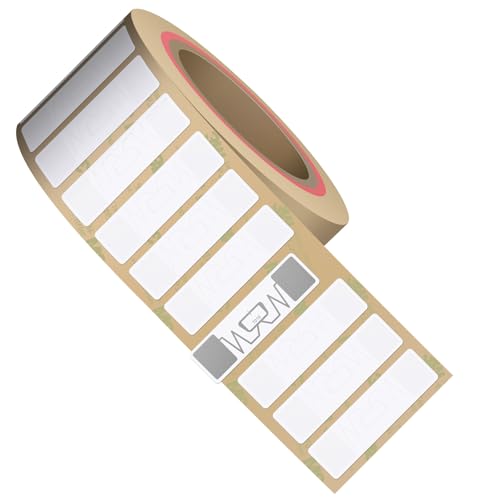
| Waterproof Workhorse | Frequency: 860–960 MHz (UHF) | Form Factor: Rectangular adhesive inlay label (73 x 20 mm) | Pack Quantity: 50 units | VIEW LATEST PRICE | Read Our Analysis |
| 50 Pcs NFC Tags Stickers NTAG215 Chip Rewritable |

| NFC Versatility Pick | Frequency: 13.56 MHz (NFC) | Form Factor: Round adhesive sticker (1.0-inch diameter) | Pack Quantity: 50 units | VIEW LATEST PRICE | Read Our Analysis |
| 10pcs T5577 RFID Sticker Tags 125kHz Rewritable |

| Access Control Specialist | Frequency: 125 kHz | Form Factor: Round adhesive sticker (25 mm diameter) | Pack Quantity: 10 units | VIEW LATEST PRICE | Read Our Analysis |
| ETEKJOY 10 PCS Writable RFID Sticker Tags (125kHz) |

| Budget Rewritable Option | Frequency: 125 kHz | Form Factor: Round adhesive coin sticker (25 mm diameter) | Pack Quantity: 10 units | VIEW LATEST PRICE | Read Our Analysis |
| UHF RFID Tag Sticker 100PCS Anti-Theft Security Tags |

| Anti-Theft Essential | Frequency: 860–960 MHz (UHF) | Form Factor: Rectangular adhesive sticker (44 x 18 mm) | Pack Quantity: 100 units | VIEW LATEST PRICE | Read Our Analysis |
More Details on Our Top Picks
UHF RFID Tag 9662 Long Distance Passive (100-Pack)
Are you managing inventory across a warehouse or retail space where you need reliable asset tracking without active power sources? The UHF RFID Tag 9662 offers a practical solution. These self-adhesive passive tags operate at 860–960 MHz and deliver reading distances up to 8 meters, depending on your reader equipment. The 76 x 21 mm label includes a markable surface, letting you add identifying information directly. Each pack contains 100 ready-to-use tags requiring no assembly. Simply peel and apply the adhesive backing to your items, then scan with any compatible UHF RFID card reader. The tags store 96-bit EPC data, 32-bit TID, and 512 bits of user memory, giving you sufficient capacity for asset identification and tracking codes across your inventory system.
- Frequency:860–960 MHz (UHF)
- Form Factor:Rectangular adhesive inlay label (76 x 21 mm)
- Pack Quantity:100 units
- Read/Write Capability:Read-only (passive)
- Adhesive Material:Adhesive inlay (unmarked brand)
- Durability/Environmental Resistance:Standard adhesive label
- Additional Feature:8-meter maximum reading distance
- Additional Feature:Markable adhesive label surface
- Additional Feature:96-bit EPC memory capacity
UHF RFID Pet Sticker Waterproof Adhesive Label (50-Pack)
Whether you’re managing warehouse inventory, tracking assets across multiple locations, or organizing bulk stock levels, this UHF RFID Pet Sticker offers the long-range passive identification you’ll need for efficient operations. You’ll receive 50 blank, printable tags measuring 73x20mm, compatible with EPC Gen2 and ISO18000-6C protocols across 860–960 MHz frequencies. The premium PET material with genuine 3M adhesive bonds securely to non-metallic surfaces like plastic, glass, and cardboard while resisting water and daily wear. Apply these tags to inventory items in warehouses, retail environments, or humid locations. You can’t use them on metal surfaces, so verify your application surface first. The rewritable format lets you customize each tag for your specific tracking needs.
- Frequency:860–960 MHz (UHF)
- Form Factor:Rectangular adhesive inlay label (73 x 20 mm)
- Pack Quantity:50 units
- Read/Write Capability:Rewritable
- Adhesive Material:Genuine 3M adhesive
- Durability/Environmental Resistance:Waterproof; daily wear resistant; indoor/outdoor suitable
- Additional Feature:Genuine 3M adhesive bonding
- Additional Feature:Blank printable customization capability
- Additional Feature:Non-metallic surface compatibility only
50 Pcs NFC Tags Stickers NTAG215 Chip Rewritable
If you’re looking for a practical solution to tag inventory, share digital information quickly, or create interactive gaming cards, the 50-piece NTAG215 NFC sticker pack delivers what you need. Each round, quarter-sized tag features 504 bytes of rewritable memory and waterproof PVC construction, making them durable for wet environments. Simply hover your NFC-enabled device over a tag to transfer data. You can write, edit, and lock tags as read-only for protection. These tags work with compatible smartphones, smart devices, and Amiibo applications. Use them to automate home tasks, share Wi-Fi credentials, or link social media profiles. The adhesive backing lets you attach tags directly to inventory items, equipment, or surfaces for immediate access.
- Frequency:13.56 MHz (NFC)
- Form Factor:Round adhesive sticker (1.0-inch diameter)
- Pack Quantity:50 units
- Read/Write Capability:Rewritable
- Adhesive Material:Adhesive backing
- Durability/Environmental Resistance:Waterproof; durable PVC construction
- Additional Feature:Compatible with TagMo Amiibo
- Additional Feature:504 bytes NDEF memory
- Additional Feature:Read-write lock function
10pcs T5577 RFID Sticker Tags 125kHz Rewritable
You’ll find these T5577 sticker tags most useful if you need rewritable RFID solutions for access control, hotel systems, time attendance tracking, or inventory management in non-metal environments. Each pack contains 10 circular tags measuring 25mm in diameter with adhesive backing for easy attachment to surfaces. The T5577 chip operates at 125kHz frequency and stores data for up to 10 years. Before using them, you must program each tag with your desired ID format—compatible formats include standard 125kHz ID and HID WG formats. After programming, the tags read at 2.5 to 10 centimeters distance. Note that these tags won’t work with Onity systems or Proxmark3 RDV4 readers. The ABS material withstands temperatures up to 190°F, making them durable for most indoor applications.
- Frequency:125 kHz
- Form Factor:Round adhesive sticker (25 mm diameter)
- Pack Quantity:10 units
- Read/Write Capability:Rewritable
- Adhesive Material:Adhesive back
- Durability/Environmental Resistance:High-temperature resistant (up to 190°F); abrasion-resistant
- Additional Feature:10-year data storage life
- Additional Feature:Compatible with Flipper Zero
- Additional Feature:190°F high-temperature resistance
ETEKJOY 10 PCS Writable RFID Sticker Tags (125kHz)
Organizations that need to create custom access credentials, backup existing tags, or establish new inventory tracking systems should consider the ETEKJOY 10 PCS Writable RFID Sticker Tags—especially when working with 125kHz frequency systems already in place. You’ll receive ten blank round stickers with adhesive backing, each 25mm in diameter and compatible with T5577 chip technology. Before using these tags, you must encode them with a 125kHz RFID writer since they arrive unprogrammed. The tags support up to 100,000 write cycles and retain data for ten years. You can affix them to non-metal surfaces, and they’ll read at distances between 2.5 and 10 centimeters. Remember that smart locks read only programmed card numbers—they can’t write data independently.
- Frequency:125 kHz
- Form Factor:Round adhesive coin sticker (25 mm diameter)
- Pack Quantity:10 units
- Read/Write Capability:Rewritable
- Adhesive Material:Adhesive back
- Durability/Environmental Resistance:Waterproof; durable; 10-year data storage life
- Additional Feature:100,000 erase/write cycles
- Additional Feature:White PVC plastic casing
- Additional Feature:Universal 125kHz tag compatibility
UHF RFID Tag Sticker 100PCS Anti-Theft Security Tags
The Aoeeki UHF RFID Tag Sticker pack works best for businesses that need to track assets across large facilities or monitor inventory through multiple zones without line-of-sight scanning. You’ll get 100 rectangular silver stickers measuring 44 x 18 mm, each equipped with 96-bit memory capacity. These tags operate at 860–960 MHz and comply with ISO/IEC 18000-6C standards, enabling fast data transfer and extended read ranges compared to lower frequencies. Apply them directly to inventory items, equipment, or shipments. The soft tag construction withstands harsh warehouse environments. Use them for asset theft prevention, supply chain operations, and warehouse stock visibility. Their compact form integrates easily into existing retail anti-theft antenna systems.
- Frequency:860–960 MHz (UHF)
- Form Factor:Rectangular adhesive sticker (44 x 18 mm)
- Pack Quantity:100 units
- Read/Write Capability:Read-only (passive)
- Adhesive Material:Adhesive backing
- Durability/Environmental Resistance:Durable construction for harsh environments
- Additional Feature:Long-range tracking capability
- Additional Feature:Soft tag material construction
- Additional Feature:Retail anti-theft antenna compatible
Factors to Consider When Choosing RFID Stickers for Inventory
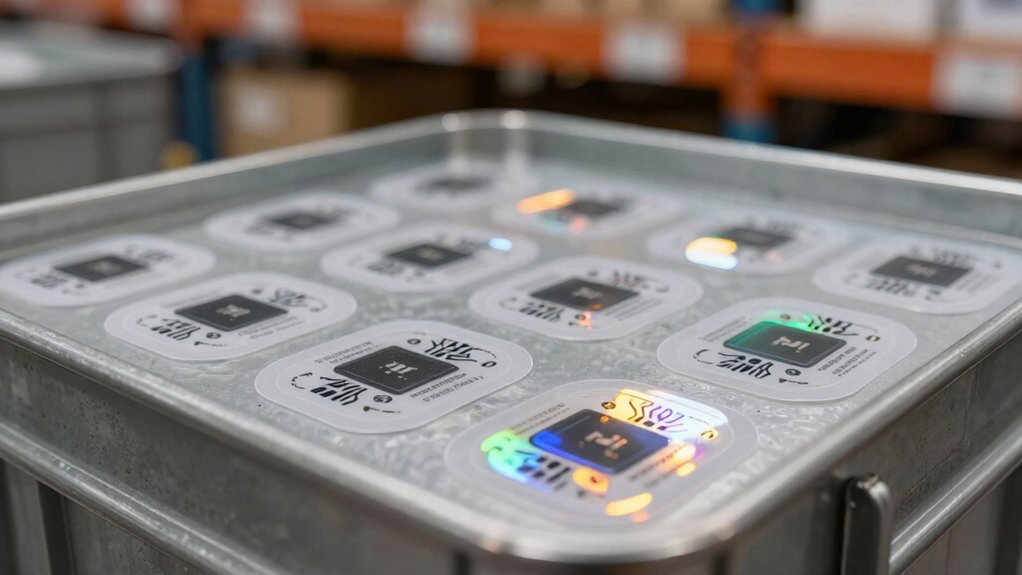
You’ll need to evaluate five key factors when selecting RFID stickers for your inventory system: frequency range compatibility with your existing readers, read distance requirements based on your scanning environment, material durability standards for the products you’re tracking, surface application suitability for different item types, and memory capacity needs for the data you’ll store on each tag. Start by checking your current RFID infrastructure to confirm what frequency your readers support—typically HF (13.56 MHz) or UHF (860–960 MHz)—then measure the distance between your readers and tagged items to determine if you need short-range or long-range capabilities. Finally, match the sticker’s adhesive strength and material composition to your storage conditions and item surfaces, and confirm the tag’s memory capacity can hold all required product information without excess space.
Frequency Range Compatibility
How do you know which frequency band your RFID stickers should operate on? First, identify your reader’s supported frequency range. UHF readers typically operate in the 860–960 MHz band, while legacy or access control systems often use 125 kHz. Match your tag’s frequency to your reader’s specifications—mismatched frequencies won’t communicate reliably.
Next, consider your read distance requirements. UHF stickers provide longer ranges, making them ideal for warehouse inventory scanning. 125 kHz tags work better for shorter distances and systems requiring backward compatibility.
Finally, verify protocol compatibility. Most UHF tags use EPC Gen2 or ISO18000-6C standards, ensuring cross-vendor interoperability. Confirm your reader supports the same protocol as your chosen stickers to guarantee consistent performance across your inventory system.
Read Distance Requirements
What distance do you need your RFID reader to detect stickers from your inventory items? Start by measuring your storage space and determining the maximum distance between readers and tagged items. UHF passive RFID stickers typically read from 0 to 8 meters, depending on chip type and reader capability. Next, evaluate your environment for obstacles. Metal surfaces and conductive materials reduce read distance, so place stickers away from these surfaces when possible. Then, consider antenna design and memory size, as larger optimized antennas achieve greater range. Finally, match your tag type to your requirements: reusable rewritable stickers may perform differently than single-use tags. Test your chosen stickers in your actual workspace before full implementation to confirm they meet your distance needs.
Material Durability Standards
The foundation of reliable RFID sticker performance rests on selecting materials that can withstand your specific operating conditions. Consider PET labels if you need waterproof protection for indoor and outdoor environments. Choose ABS stickers when you’re working in high-temperature settings up to 190°F. Both materials offer extended data storage, with PET and PVC backing supporting 10-year label life. Evaluate your surface type carefully: non-metallic surfaces like plastic, glass, and cardboard work well with standard labels, while metal surfaces require special consideration for optimal reading. Verify adhesive quality using genuine 3M products to prevent de-lamination in warehouses or outdoor conditions. Match your material choice to your durability demands—asset tagging requires higher environmental resilience than indoor labeling.
Surface Application Suitability
Before you apply RFID stickers to your inventory assets, you’ll need to evaluate your surface type carefully, as compatibility directly affects tag performance and longevity. Non-metallic surfaces like plastic, glass, and cardboard accept standard RFID stickers without preparation. Metal surfaces, however, require special tags designed to function near conductive materials or alternative tagging approaches entirely. Check adhesive strength ratings for your specific surface texture—uneven or irregular surfaces demand stronger bonding to prevent peeling during handling and storage. In wet or humid environments, select waterproof or water-resistant tags to maintain readability. For rewritable tags, clean surfaces beforehand to ensure proper data integrity and read/write performance. Always verify manufacturer compatibility guidelines before purchasing stickers for your particular asset types and storage conditions.
Memory Capacity Needs
How much data do you actually need to store on each tag? Start by listing what information each inventory item requires: product ID, location, date, or serial number. UHF Gen2 tags typically offer 96-bit EPC memory plus 512-bit User memory for additional data. NFC tags like NTAG215 provide 504 bytes of usable space. Match your tag’s capacity to your needs—don’t overpay for excess memory you won’t use. If you’re storing only a product code and quantity, 96 bits suffices. For detailed tracking with timestamps and batch numbers, choose 512-bit User memory or larger. Verify your reader can access the full memory map you’re purchasing. Rewritable tags cost more but allow future updates without replacing stickers.
Rewritable vs. Passive Tags
When you’re deciding between rewritable and passive RFID tags, you’re essentially choosing between flexibility and cost—rewritable tags let you write and update data multiple times after manufacturing, while passive tags come pre-programmed or blank and can’t be changed without specialized equipment. Rewritable tags support up to 100,000 write cycles, making them ideal for tracking assets that need frequent updates or changing access permissions. Passive tags work well when your inventory data stays static. Consider your application: if you’re updating asset records regularly, rewritable tags justify their higher cost. If your tags need permanent, unchangeable data, passive tags are more economical. You’ll also need compatible readers and encoding equipment for either option. Verify compatibility before selecting your tag type to ensure seamless integration with your existing systems.
Final Thoughts
You’ll want to match your RFID sticker choice to your specific inventory needs. Pick UHF tags for long-range warehouse tracking, NFC stickers for quick smartphone checks, or 125kHz options for short-range indoor use. Consider your surfaces—avoid metal areas, ensure adhesives suit your environment, and confirm memory capacity fits your data requirements. Test your selected tags before full deployment to confirm they’ll reduce miscounts and speed your audits effectively.

Meet Ry, “TechGuru,” a 36-year-old technology enthusiast with a deep passion for tech innovations. With extensive experience, he specializes in gaming hardware and software, and has expertise in gadgets, custom PCs, and audio.
Besides writing about tech and reviewing new products, he enjoys traveling, hiking, and photography. Committed to keeping up with the latest industry trends, he aims to guide readers in making informed tech decisions.