
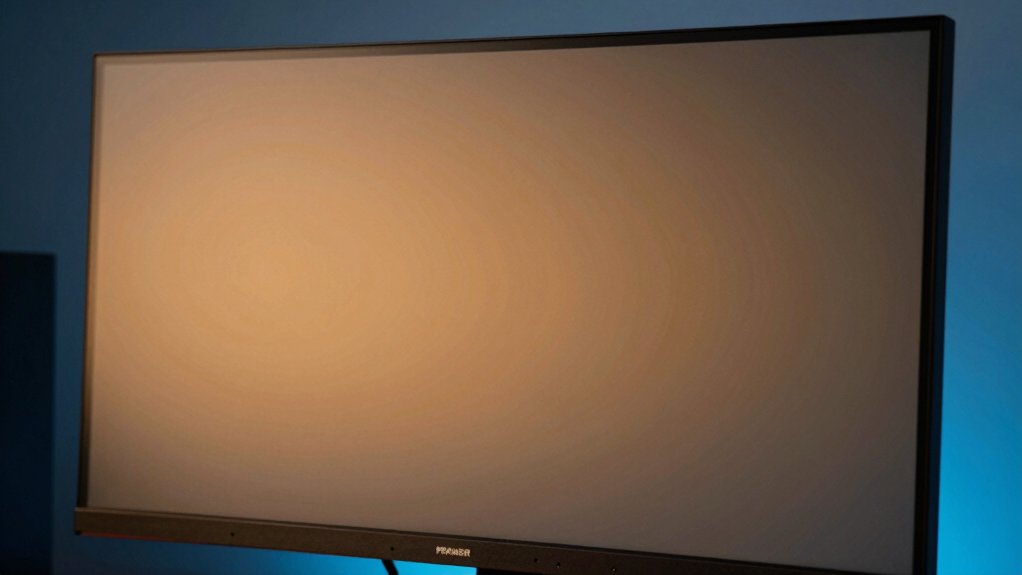

You spend hours at your monitor daily, and blue light exposure can strain your eyes and disrupt your sleep. A quality blue light blocking filter cuts harmful wavelengths while maintaining screen clarity, but choosing the right one requires understanding key factors. Your monitor’s size, the filtration level, and material quality all affect performance. Here’s what you need to know to find the filter that actually delivers results.
| MOSISO Blue Light Blocking Screen Protector for 23-24 inch Monitor |
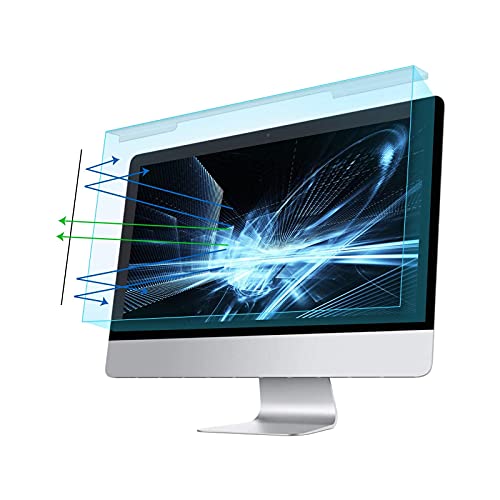
| Best Overall | Blue Light Filtering: 45% HEV reduction (420nm-460nm wavelength) | UV Protection: 99% harmful UV filtering | Screen Compatibility: 23-24 inch monitors (16:9 widescreen) | VIEW LATEST PRICE | Read Our Analysis |
More Details on Our Top Picks
MOSISO Blue Light Blocking Screen Protector for 23-24 inch Monitor
If you’re spending hours daily in front of your computer screen—whether you’re working in an office, gaming, or coding—the MOSISO Blue Light Blocking Screen Protector for 23-24 inch Monitor is the best choice for reducing eye strain and protecting your vision. This acrylic filter blocks 99% of harmful UV rays and reduces blue light (420nm–460nm) by approximately 45%, cutting HEV exposure considerably. The ultra-thin 0.05-inch design maintains 95% screen clarity without darkening your display. Installation’s straightforward: measure your monitor’s diagonal first—it fits 23, 23.6, 23.8, and 24-inch models—then mount it directly onto your screen. The 21.26 x 13.39-inch protector also guards against dust, fingerprints, and scratches while preserving original brightness. Compatible with iMac, Dell, HP, Lenovo, and Acer monitors, this filter delivers practical eye protection for extended screen time.
- Blue Light Filtering:45% HEV reduction (420nm-460nm wavelength)
- UV Protection:99% harmful UV filtering
- Screen Compatibility:23-24 inch monitors (16:9 widescreen)
- Material & Thickness:Acrylic, 0.05 inch ultra-thin
- Screen Clarity:95% transparency, non-darkening
- Installation:Easy mount installation with removable surface film
- Additional Feature:99% harmful UV filtering
- Additional Feature:Maintains original screen brightness
- Additional Feature:Compatible with multiple monitor brands
Factors to Consider When Choosing a Blue Screen Filter for Monitor
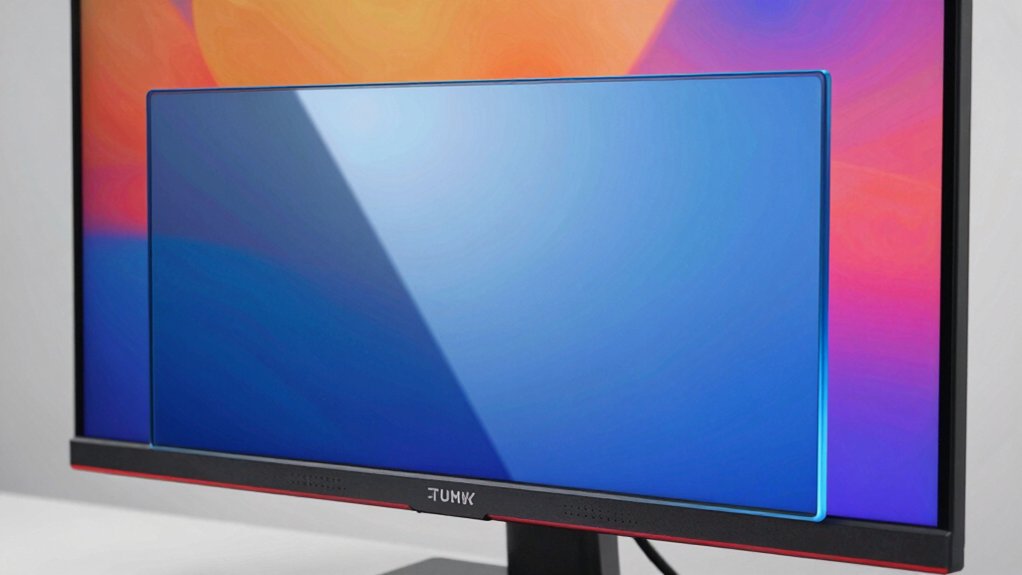
When you’re selecting a blue screen filter for your monitor, you’ll need to evaluate five key factors: confirming that the filter fits your monitor’s size, checking the percentage of blue light it blocks, assessing whether the screen remains clear and transparent after installation, ensuring you can install it without professional help, and verifying that it actually reduces your eye strain during extended use. Start by measuring your monitor’s dimensions and matching them to available filter sizes, then compare the blue light filtration levels across products, typically ranging from 50% to 90% reduction. Finally, read user reviews that specifically mention clarity and eye comfort to confirm the filter performs as advertised before making your purchase.
Monitor Size Compatibility
Your monitor’s diagonal measurement—whether 23-inch, 23.8-inch, 24-inch, or another size—must match your blue screen filter‘s dimensions to guarantee full coverage and a secure fit. Check your monitor’s specifications or manual to confirm the exact diagonal size. Next, verify that the filter supports your specific measurement, as manufacturers often list compatible sizes. Measure your screen’s length and width (L x W) and compare these dimensions against the filter’s specifications to confirm alignment with your bezel and edges. Confirm the filter’s compatibility with your monitor type, typically LCD or LED screens. Finally, check that the filter won’t block your webcam, sensors, or on-screen menu overlays, and verify the mounting method suits your monitor frame for proper installation.
Blue Light Filtration Level
How much blue light does a filter actually block? Most filters reduce blue wavelengths in the 420–460 nm range by approximately 45%. You’ll want to check if manufacturers specify exact reduction percentages and spectral ranges rather than vague claims. Keep in mind that higher filtration levels block more blue light but may slightly reduce screen brightness and color accuracy. Most quality filters maintain about 95% transparency, meaning you won’t lose much visibility. When comparing options, prioritize filters that list quantified reduction percentages and target wavelength ranges. This approach helps you avoid products with unsubstantiated claims. Evaluate your needs: if you work extended hours on screens, consider filters offering maximum reduction. If color accuracy matters for your work, opt for moderate filtration levels that balance protection with visual clarity.
Screen Clarity And Transparency
What makes screen clarity so critical when selecting a blue light filter? A filter’s transparency directly affects how you view content on your monitor. You’ll want to look for filters with around 95% clarity to preserve original brightness and image sharpness. Check the material type—acrylic offers clear optics without distortion. Verify the filter’s thickness; ultra-thin options at 0.05 inch minimize added depth that could interfere with screen usability. Confirm the finish type aligns with your preference: anti-glare reduces reflections, while glossy maintains brightness. Finally, match the diagonal size and aspect ratio to your monitor to avoid edge gaps or unwanted cropping. These steps ensure your filter enhances eye comfort without compromising visual quality.
Installation Ease And Setup
When you’re ready to apply a blue light filter to your monitor, the installation process should be straightforward and require only a few basic steps. First, verify that your filter matches your monitor’s diagonal size, such as 23 to 24 inches with a 16:9 aspect ratio. Remove the surface film from both sides of the filter. Clean your monitor screen thoroughly to eliminate dust and fingerprints that cause air bubbles. Position the filter carefully on your screen, starting from the top and pressing downward to secure it. The thin profile—around 0.05 inches—prevents adding bulk while maintaining screen brightness. If misalignment occurs, you can reposition the filter without permanent adhesion. Follow the manufacturer’s cleaning instructions during installation to keep the filter pristine and functional.
Eye Strain Reduction Benefits
Once you’ve installed your blue light filter correctly, you’ll want to understand how it reduces eye strain during extended screen use. Blue light filters block 420–460 nm wavelengths, which decreases digital eye strain considerably. You’ll experience reduced dryness and fatigue because the filter cuts HEV exposure by roughly 45%. When you combine blue light blocking with UV protection, you’re lowering overall glare and photochemical stress on your retina. This dual protection minimizes discomfort during long office, gaming, or programming sessions. The filter maintains approximately 95% screen transparency, so you won’t sacrifice visual clarity while gaining these benefits. You’ll notice improved comfort and reduced strain within days of consistent use.
Material Quality And Durability
How you select your filter’s material directly impacts its longevity and optical performance. Acrylic construction offers high clarity at 95% transparency while maintaining an ultra-thin 0.05-inch profile that won’t obstruct your screen’s brightness. This material resists dust, fingerprints, and scratches effectively, preserving optical quality over extended use. When evaluating durability, consider the filter’s impact resistance and cleaning ease—acrylic handles both well without degrading. Check that your chosen filter matches your screen’s exact dimensions, such as 21.26 x 13.39 inches for 23–24-inch monitors, ensuring proper fit and protection. Verify UV blocking reaches 99% and HEV reduction covers the 420–460 nm range. These specifications guarantee that your filter maintains protective performance throughout its lifespan without compromising screen visibility or display quality.
Work Environment Suitability Assessment
Your work environment’s specific conditions determine which blue screen filter features‘ll serve you best. First, assess your lighting situation. If you work in bright rooms with high ambient light or near windows, prioritize anti-glare finishes to reduce reflections. For quiet administrative work requiring sustained focus, blue light filtration becomes more critical than for varied tasks. Next, evaluate your monitor setup. Single standard monitors need different protectors than multiple displays with varying sizes. Check whether your workspace involves high-glare conditions, which demand matte finishes over glossy options. Finally, determine your clarity needs. If visual precision matters—such as design or detailed analysis work—select high-transparency protectors that filter blue light without significantly reducing brightness or color accuracy.
Warranty And Return Policy
Before you buy a blue screen filter, check the warranty terms carefully to understand what’s covered and for how long. Review the return policy’s time window—typically 30 days—and whether opened or used filters qualify for returns. Confirm if refunds go to your original payment method or as store credit. Look for exclusions affecting eligibility, such as custom orders or promotional bundles. Verify whether the warranty requires product registration or original packaging to remain valid. Check the manufacturer’s website or product page for official warranty details. Understand what defects are covered versus normal wear. Note any restocking fees that might apply. Contact customer service before initiating a return or claim to ensure you follow proper procedures and meet all requirements.
Final Thoughts
You’ve reviewed the MOSISO filter and key selection factors. To make your purchase decision, verify your monitor’s exact size, confirm the filter blocks 45% of blue light in the 420–460 nm range, and check that screen clarity stays above 95%. Compare warranty lengths across brands, then order the filter that matches your monitor dimensions. Install it properly following included instructions for maximum eye strain reduction during extended screen use.

Meet Ry, “TechGuru,” a 36-year-old technology enthusiast with a deep passion for tech innovations. With extensive experience, he specializes in gaming hardware and software, and has expertise in gadgets, custom PCs, and audio.
Besides writing about tech and reviewing new products, he enjoys traveling, hiking, and photography. Committed to keeping up with the latest industry trends, he aims to guide readers in making informed tech decisions.