
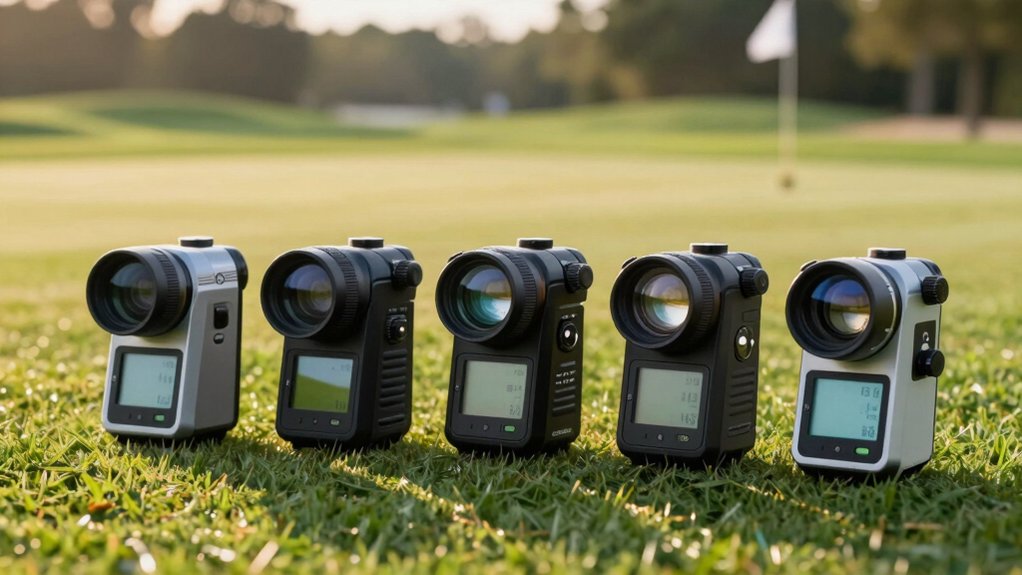

You need accurate PAR meters to maintain consistent lighting across your garden. These devices measure photosynthetically active radiation—the light wavelengths that directly affect plant growth. You’ll find models with full-spectrum capabilities, Bluetooth connectivity, and field-ready designs that deliver real-time PPFD readings. Choosing the right meter depends on your specific needs, budget, and measurement requirements. Here’s what separates the best options from the rest.
| Quantum PAR Meter Full-Spectrum PPFD Light Tester |

| Professional Standard | PAR Wavelength Range: 400–700 nm | Data Storage Capacity: Up to 100 measurements | RGB/Color Spectrum Breakdown: No separate color channels | VIEW LATEST PRICE | Read Our Analysis |
| VBR-Aqua IP68 PAR Meter for Aquarium with Rod |

| Aquarium Specialist | PAR Wavelength Range: Separate blue, green, red channels (full spectrum) | Data Storage Capacity: 400 PAR points across tank positions | RGB/Color Spectrum Breakdown: Blue, green, red channels measured separately | VIEW LATEST PRICE | Read Our Analysis |
| AH-Quantuv PAR Meter for Grow Lights with UVA |

| UV-Enhanced Performance | PAR Wavelength Range: 400–750 nm (plus UVA 320–400 nm) | Data Storage Capacity: Up to 100 PAR measurements | RGB/Color Spectrum Breakdown: Blue, green, red components shown separately | VIEW LATEST PRICE | Read Our Analysis |
| VBR-100 Quantum PAR Meter with Bluetooth App |

| Smart Mapping Technology | PAR Wavelength Range: 400–700 nm with RGB breakdown | Data Storage Capacity: Grid mapping with downloadable data | RGB/Color Spectrum Breakdown: Blue (400–500 nm), green (500–600 nm), red (600–700 nm) | VIEW LATEST PRICE | Read Our Analysis |
| LGBQM2 Advanced Quantum Sensor PAR Meter Light Intensity |
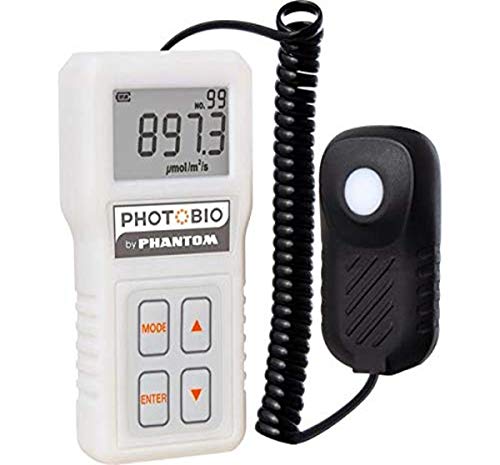
| Budget-Friendly Essential | PAR Wavelength Range: 400–700 nm | Data Storage Capacity: Up to 99 measurements | RGB/Color Spectrum Breakdown: No separate color channels | VIEW LATEST PRICE | Read Our Analysis |
More Details on Our Top Picks
Quantum PAR Meter Full-Spectrum PPFD Light Tester
Looking for a meter that measures light energy for plant growth rather than golf course conditions? The Quantum PAR Meter Full-Spectrum PPFD Light Tester by DANOPLUS measures photosynthetic photon flux density between 400–700 nanometers. You’ll get real-time readings up to 5000 μmol/m²·s with ±10 nanometer tolerance for accuracy. The device stores 100 measured values and displays your last four readings. At 8.4 ounces and roughly 7.5 by 3.7 inches, you’ll carry it easily between greenhouse locations or outdoor growing areas. Use the tripod socket for stable measurements. Check your light levels quickly to optimize plant growth and make informed decisions about your lighting setup.
- PAR Wavelength Range:400–700 nm
- Data Storage Capacity:Up to 100 measurements
- RGB/Color Spectrum Breakdown:No separate color channels
- Portability & Accessories:Compact, lightweight (8.4 oz); tripod socket included
- Power Source:Battery type not specified
- Connectivity & App Features:Real-time display; no app mentioned
- Additional Feature:Measures up to 5000 μmol/m²·s
- Additional Feature:Stores 100 measured values
- Additional Feature:Tripod socket for stable measurements
VBR-Aqua IP68 PAR Meter for Aquarium with Rod
The VBR-Aqua IP68 PAR Meter isn’t designed for golfers—it’s built for aquarium and reef tank enthusiasts who need precise light measurements underwater. This waterproof sensor measures PAR separately across blue, green, and red light channels, helping you optimize coral health and coloration. The included 3-foot telescopic rod lets you test different tank depths easily. It stores 400 PAR readings and tracks daily light integral data over 28 days. Power comes from three AAA batteries lasting 100 hours, or use an optional adapter for continuous testing. Turn off water circulation during measurements to ensure accuracy and stability.
- PAR Wavelength Range:Separate blue, green, red channels (full spectrum)
- Data Storage Capacity:400 PAR points across tank positions
- RGB/Color Spectrum Breakdown:Blue, green, red channels measured separately
- Portability & Accessories:3 ft telescopic rod; 3 AAA batteries included
- Power Source:3 AAA batteries (~100 hours); optional adapter for continuous testing
- Connectivity & App Features:No app connectivity mentioned
- Additional Feature:IP68 waterproof sensor design
- Additional Feature:3 ft telescopic rod included
- Additional Feature:28-day DLI documentation capability
AH-Quantuv PAR Meter for Grow Lights with UVA
If you’re managing indoor plant growth operations and need precise light spectrum data beyond standard PAR measurements, the AH-Quantuv PAR Meter delivers dual-spectrum capability that sets it apart. You’ll measure both PAR (400–750 nm) and UVA (320–400 nm) irradiance using a reliable Japanese sensor IC. The device logs up to 100 PAR measurements for light distribution mapping, helping you identify hotspots and low-light zones. You can view PAR values, UVA irradiance, and RGB breakdown separately to understand how blue light supports vegetative growth while red light promotes flowering. The HOLD function stabilizes readings during measurement. CE certification confirms reliable performance for optimizing your grow light setup across different plant growth stages.
- PAR Wavelength Range:400–750 nm (plus UVA 320–400 nm)
- Data Storage Capacity:Up to 100 PAR measurements
- RGB/Color Spectrum Breakdown:Blue, green, red components shown separately
- Portability & Accessories:Handheld design
- Power Source:Battery type not specified
- Connectivity & App Features:Multiple display modes; no app mentioned
- Additional Feature:Measures UVA (320–400 nm)
- Additional Feature:CE certified quality assurance
- Additional Feature:Light distribution mapping function
VBR-100 Quantum PAR Meter with Bluetooth App
Want a PAR meter that works reliably under any lighting condition without requiring you to manually select spectrum profiles? The VBR-100 Quantum PAR Meter measures PPFD directly and breaks down light into RGB components—blue, green, and red wavelengths shown separately. You’ll connect via Bluetooth to a free companion app featuring a clean interface with no subscription fees. Use the grid mapping function to record PPFD at multiple points across your growing space, identifying weak zones and optimizing fixture placement. You can mount this compact meter on a drone or rover to test coverage throughout your greenhouse without constant manual movement.
- PAR Wavelength Range:400–700 nm with RGB breakdown
- Data Storage Capacity:Grid mapping with downloadable data
- RGB/Color Spectrum Breakdown:Blue (400–500 nm), green (500–600 nm), red (600–700 nm)
- Portability & Accessories:Compact; can mount on drone or rover
- Power Source:Battery type not specified
- Connectivity & App Features:Bluetooth app with free companion app; no subscription or hidden fees
- Additional Feature:PPFD grid mapping analysis
- Additional Feature:Drone/rover deployment compatible
- Additional Feature:No spectrum profile selection needed
LGBQM2 Advanced Quantum Sensor PAR Meter Light Intensity
Serious golfers who manage their own course turf or maintain practice greens can’t afford guesswork when it comes to light measurement—and that’s where the LGBQM2 Advanced Quantum Sensor PAR Meter comes in. This handheld device measures photosynthetically active radiation across 400–700 nanometers, the exact wavelength range that affects grass growth and health. You’ll record up to 99 readings and store them in the device’s memory for tracking changes. The kit includes a compact main unit, remote sensor, two cables, batteries, and a protective case for portability. Use it to adjust light fixture heights, check dimmer settings, and evaluate how environmental conditions impact turf during different growth phases. Its straightforward operation makes quick assessments simple, supporting your maintenance decisions with accurate, cost-effective data.
- PAR Wavelength Range:400–700 nm
- Data Storage Capacity:Up to 99 measurements
- RGB/Color Spectrum Breakdown:No separate color channels
- Portability & Accessories:Compact with remote sensor; two connection cables; carrying case
- Power Source:AAA batteries
- Connectivity & App Features:No app connectivity mentioned
- Additional Feature:Remote sensor with cables
- Additional Feature:Two connection cable options
- Additional Feature:Protective carrying case included
Factors to Consider When Choosing Parameters
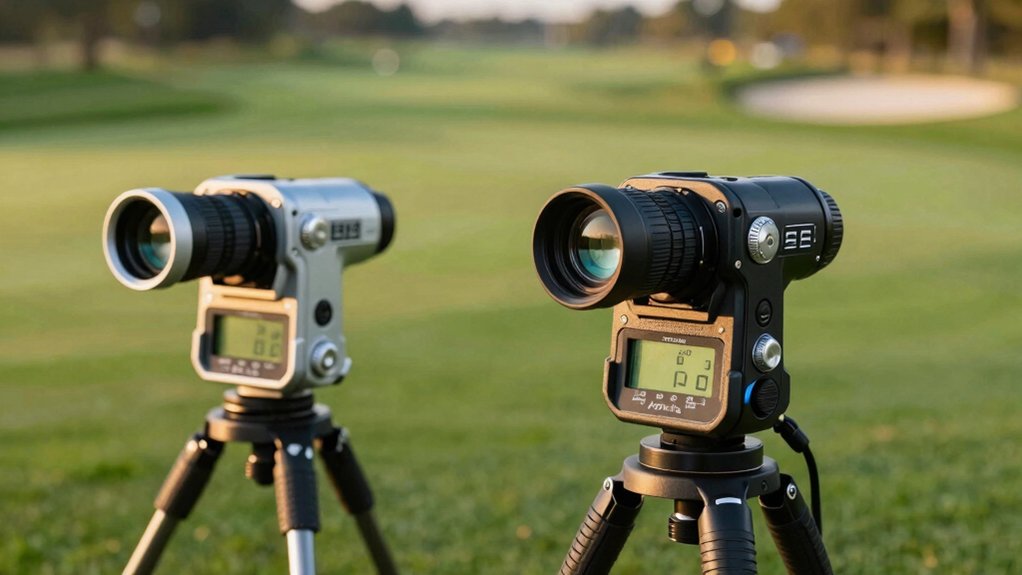
When you’re selecting a PAR meter, you’ll need to evaluate five key factors: measurement range and accuracy to ensure the device captures readings across your specific growing conditions, wavelength spectrum coverage to verify it measures the light spectrum your plants actually use, data storage and recording capabilities to track changes over time, portability and design so you can move it between growing spaces without difficulty, and light source compatibility to confirm it works with your current grow lights. Start by identifying which growing environment you’ll monitor most, then check the device’s measurement range against the light intensity levels in that space. Finally, compare how each meter’s wavelength coverage aligns with your light source type, whether LED, HPS, or natural sunlight.
Measurement Range and Accuracy
How do you know if a PAR meter will actually capture the light conditions you’re measuring? Check the measurement range first. Most reliable meters cover 0 to 5000 μmol/m²·s, which handles everything from dim indoor spaces to bright outdoor conditions. Next, verify accuracy tolerances for spectral wavelengths. Look for ±5 to ±10 nm tolerance on the 400–700 nm band—this ensures your readings stay correct. Compare meters that display PPFD readings directly in μmol/m²·s, as this standardizes comparisons between devices. Finally, consider whether you need data storage and cross-spectral analysis features like RGB breakdowns. These capabilities let you track multiple measurements and analyze specific wavelength bands separately, improving consistency across your testing sessions.
Wavelength Spectrum Coverage
Beyond confirming your meter’s accuracy range, you’ll want to examine its wavelength spectrum coverage—the specific light frequencies it can detect. Standard PAR meters cover 400–700 nm, which captures the full photosynthetically active radiation range plants use for growth. Some advanced models extend to 750 nm to include near-infrared wavelengths for broader analysis. If you’re analyzing mixed-light environments, choose a meter offering RGB channel breakdowns—separate readings for red, green, and blue wavelengths. This helps you understand how different light frequencies contribute to your PPFD measurements. Check the device’s cut-on and cut-off specifications, including tolerances (typically ±10 nm), since these boundaries directly affect measurement accuracy at the spectrum’s edges.
Data Storage and Recording
Most serious growers overlook data storage until they’re standing on the green trying to remember yesterday’s readings—that’s when you’ll realize it matters. Check your meter’s onboard memory capacity first. Basic models store 99 to 100 readings, while advanced units hold up to 400 data points across multiple tank positions. Consider whether you need multiple display modes—PAR values, UVA irradiance, and RGB breakdowns—since logging historical data requires adequate storage space. Review whether your meter supports autofocus hold functions and grid mapping, as these features demand additional memory. Finally, verify if your meter connects via Bluetooth or app interfaces for downloading data to your phone or computer for detailed analysis later.
Portability and Design
When you’re moving between measurement sites, a compact and lightweight meter becomes your best asset in the field. You’ll want a unit weighing around 7–9 ounces with a small footprint that fits easily in your pocket or equipment bag. A built-in tripod socket stabilizes the meter when you need hands-free measurements on uneven terrain. Choose a device with an IP-rated waterproof body to handle wet conditions on courses with water hazards or morning dew. Ergonomic design matters—select a meter you can operate one-handed while reading results in real time. Consider optional accessories like a telescopic rod or mounting bracket that extend your reach to varied heights and angles without requiring additional equipment setup.
Light Source Compatibility
How do you know if your PAR meter‘ll accurately measure the specific lights you’re using on your course?
Check whether your meter supports the light sources on your greens. Some meters measure only standard broadband 400–700 nm PAR, while others detect LED, HPS, or mixed lighting combinations. Review the meter’s specifications to confirm it includes spectrum profile selection for your fixture types.
If your meter lacks spectrum options, it assumes generic lighting, which reduces accuracy for shifted or atypical sources. Look for models offering RGB PAR breakdowns—these show blue, green, and red wavelength data separately, helping you understand how different lights perform.
Select a meter compatible with your actual course lighting setup. This ensures your readings reflect real conditions and support informed maintenance decisions.
Budget and Value
PAR meters range from $200 to $3,000+, so you’ll need to balance upfront cost against the specific features your operation requires. Compare initial investment against measurement range, data storage capacity, and included accessories like tripods or Bluetooth apps. Evaluate battery efficiency by checking how many hours one set of batteries provides—longer operation reduces replacement costs. Determine whether an optional power adapter exists for continuous testing without battery drain. Assess data capabilities by counting stored readings and grid-mapping functions; devices logging historical data eliminate extra software expenses. Finally, weigh measurement accuracy and spectral range against price. Full-spectrum 400–700 nm readings justify higher costs for precision-dependent applications, while basic models suit simpler monitoring needs and tighter budgets.
Additional Features and Connectivity
Beyond cost considerations, the features you’ll actually use in the field make the difference between a meter that sits in your equipment bag and one you rely on daily. Look for Bluetooth or app connectivity that lets you view real-time data and store measurements directly on your phone. Check whether the meter exports data or downloadable grids for record-keeping and analysis. Some meters provide RGB PAR breakdown, showing blue, green, and red spectrum effects separately—useful for understanding how different light wavelengths affect plant growth. Verify GPS or positional logging features that document exact measurement locations in a grid pattern. Finally, ensure the meter mounts on external devices like drones or rovers, enabling hands-free testing in difficult-to-reach areas.
Final Thoughts
You’ll select a PAR meter by comparing spectrum range (400–700 nm), PPFD measurement capacity, and portability. Check battery life, data export options, and durability features like IP68 ratings. Decide whether you need Bluetooth connectivity, GPS mapping, or UVA measurement based on your specific turf assessment needs. Purchase the model matching your budget and required accessories, then calibrate it before use to ensure accurate course maintenance readings.

Meet Ry, “TechGuru,” a 36-year-old technology enthusiast with a deep passion for tech innovations. With extensive experience, he specializes in gaming hardware and software, and has expertise in gadgets, custom PCs, and audio.
Besides writing about tech and reviewing new products, he enjoys traveling, hiking, and photography. Committed to keeping up with the latest industry trends, he aims to guide readers in making informed tech decisions.