
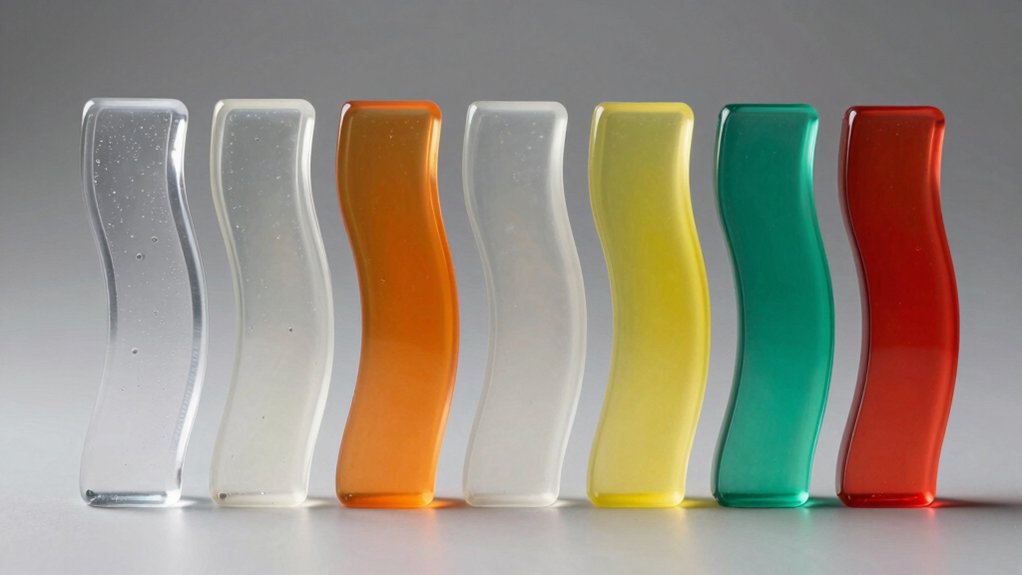

When you’re selecting flexible resin for 3D printing, you’ll need to evaluate several key options that actually perform as promised. You can choose from materials like YOUSU Flexible, SUNLU High Toughness, and Superflex, each offering different durability levels and cure speeds. Before you commit to a purchase, however, you should understand the specific factors that’ll determine which resin works best for your printer and project requirements.
| YOUSU Flexible 3D Printer Resin 1000g Black |

| Best for Durability | Shore Hardness: 80A | Package Size: 1000g | UV Curing Wavelength: 405nm | VIEW LATEST PRICE | Read Our Analysis |
| SUNLU High Toughness Flexible 3D Printer Resin (1KG) |

| Best Overall | Shore Hardness: Not specified | Package Size: 1KG | UV Curing Wavelength: 405nm | VIEW LATEST PRICE | Read Our Analysis |
| Superflex 3D Printer Resin 80A Flexible Rubber (500g) |
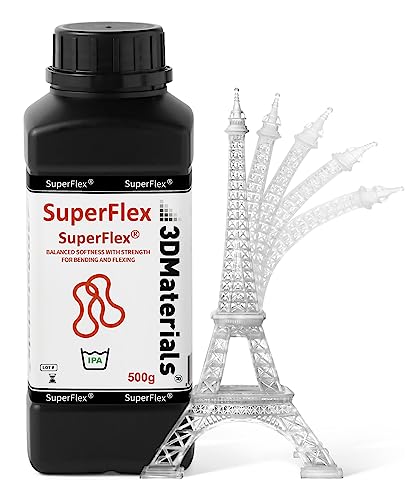
| Fastest Printing Speed | Shore Hardness: 80A | Package Size: 500g | UV Curing Wavelength: 405nm | VIEW LATEST PRICE | Read Our Analysis |
| Inslogic Flexible 70A Resin 3D Printer Resin (1KG) |
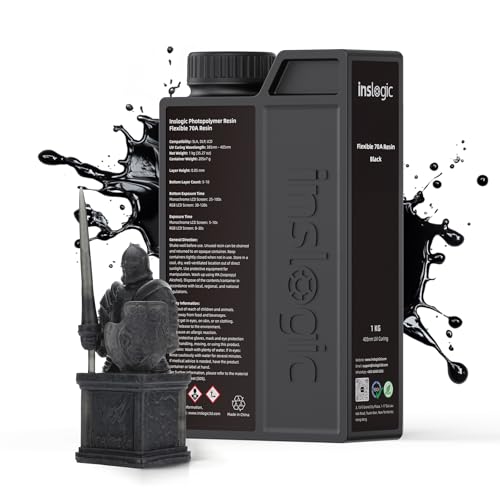
| Smoothest Finish | Shore Hardness: 70A | Package Size: 1KG | UV Curing Wavelength: 405nm | VIEW LATEST PRICE | Read Our Analysis |
| Siraya Tech Tenacious 3D Printer Flexible Resin (1kg) |
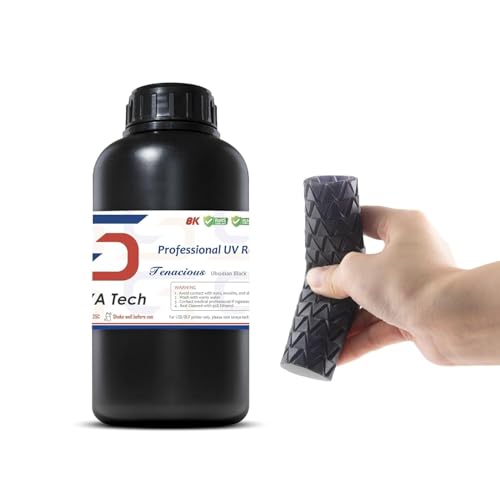
| Most Versatile | Shore Hardness: Not specified | Package Size: 1kg | UV Curing Wavelength: 405nm | VIEW LATEST PRICE | Read Our Analysis |
| SUNLU High Toughness 3D Printer Resin White 1KG |

| Best Color Option | Shore Hardness: Not specified | Package Size: 1KG | UV Curing Wavelength: 405nm | VIEW LATEST PRICE | Read Our Analysis |
| ANYCUBIC Ultra Tough Resin for LCD 3D Printers (1kg) |

| Best for Wearables | Shore Hardness: Not specified | Package Size: 1kg | UV Curing Wavelength: Not specified | VIEW LATEST PRICE | Read Our Analysis |
More Details on Our Top Picks
YOUSU Flexible 3D Printer Resin 1000g Black
If you’re looking for a resin that bends without breaking, YOUSU Flexible 3D Printer Resin delivers the resilience you need. This 80A Shore hardness material mimics rubber toughness, allowing printed items to fold and bend repeatedly without cracking. The resin resists yellowing and produces smooth, detailed surfaces with minimal impurities. You can use it in most LCD and DLP printers operating at 405nm. Before printing, shake the bottle thoroughly, wear gloves and a mask, and avoid direct skin contact. This resin suits mobile phone cases, wallets, medical devices, insoles, and seals. Its high tear resistance and low water absorption make it ideal for elastic parts requiring durability and flexibility.
- Shore Hardness:80A
- Package Size:1000g
- UV Curing Wavelength:405nm
- Printer Compatibility:LCD and DLP printers
- Color:Black
- Key Benefit:High tear resistance and bending capability
- Additional Feature:High tear resistance capability
- Additional Feature:Easy recycling and tearability
- Additional Feature:Yellowing-resistant resin formula
SUNLU High Toughness Flexible 3D Printer Resin (1KG)
Choose SUNLU High Toughness Flexible 3D Printer Resin when you need durable, bendable prints that won’t crack or shatter under stress. This 405nm UV resin offers five times higher elongation than standard resins, making it ideal for structural parts and solid models. The low viscosity enables shorter curing times and crisp details with minimal volume shrinkage. You’ll experience reduced distortion and improved printing accuracy. After washing and curing, your models resist cracking, increasing your overall success rate. Compatible with most LCD, DLP, and SLA printers, this grey resin produces unbreakable, long-lasting components. Clean up easily using alcohol or ethanol.
- Shore Hardness:Not specified
- Package Size:1KG
- UV Curing Wavelength:405nm
- Printer Compatibility:LCD, DLP, and SLA printers
- Color:Grey
- Key Benefit:5x higher elongation than standard resin
- Additional Feature:5x elongation vs standard
- Additional Feature:Low shrinkage during curing
- Additional Feature:Lower odor than competitors
Superflex 3D Printer Resin 80A Flexible Rubber (500g)
Superflex 3D Printer Resin 80A is your choice when you need flexible parts that won’t snap or crack during use. This Korean-made resin delivers 80A Shore hardness with 100% elongation at break, perfect for cushioning and shock absorption applications. You’ll print 50-micrometer layers in just 1.7 seconds using monochrome LCD printers, boosting productivity by 40%. The balanced softness and strength simulate rubber or TPU materials effectively. After proper cleaning and post-curing, your prints pass ISO 10993-5 biocompatibility testing. Each 500-gram container provides substantial material for prototyping flexible components reliably.
- Shore Hardness:80A
- Package Size:500g
- UV Curing Wavelength:405nm
- Printer Compatibility:Monochrome LCD printers
- Color:Clear
- Key Benefit:Fast printing speed with 40% productivity boost
- Additional Feature:50um layer in 1.7sec
- Additional Feature:Boosts productivity by 40%
- Additional Feature:ISO 10993-5 biocompatibility certified
Inslogic Flexible 70A Resin 3D Printer Resin (1KG)
When you’re printing wearable parts, phone cases, or mechanical components that need to bend without breaking, you’ll want a resin that delivers genuine flexibility rather than brittleness. Inslogic Flexible 70A Resin offers true Shore 70A elasticity, meaning your prints won’t crack under repeated bending or twisting. The material resists tearing even in thin, detailed sections, making it reliable for moving parts. Its smooth, non-sticky finish comes clean from the printer without tackiness. The low-viscosity formula flows well and produces minimal odor during printing. You get 1KG in secure, leak-proof packaging. This resin cures under standard 405nm UV light, integrating easily into your existing workflow.
- Shore Hardness:70A
- Package Size:1KG
- UV Curing Wavelength:405nm
- Printer Compatibility:Most LCD and DLP printers
- Color:Black
- Key Benefit:Exceptional tear resistance and low odor
- Additional Feature:Smooth, non-sticky finish
- Additional Feature:Leak-proof secure packaging
- Additional Feature:Comprehensive after-sales support
Siraya Tech Tenacious 3D Printer Flexible Resin (1kg)
Siraya Tech Tenacious 3D Printer Flexible Resin delivers high impact resistance and extreme flexibility—it’s your best choice if you’re printing miniature models, protective gear like braces, or gaming pieces that need to withstand bending up to 180° without breaking. This 405nm UV-curing resin works with most LCD and DLP printers, including 8K-capable systems. Print at 25°C or higher for optimal results. You can also blend Tenacious with standard resins to boost their durability and drop resistance. The obsidian black liquid resin accepts dyes easily, letting you customize colors. Use it for O-rings, washers, swords, and other flexible objects that demand toughness and elasticity in your final prints.
- Shore Hardness:Not specified
- Package Size:1kg
- UV Curing Wavelength:405nm
- Printer Compatibility:LCD and DLP printers
- Color:Obsidian Black
- Key Benefit:Withstands 180° bending without breaking
- Additional Feature:Bends up to 180°
- Additional Feature:Works as resin additive
- Additional Feature:8K printer capable
SUNLU High Toughness 3D Printer Resin White 1KG
If you’re printing structural parts or models that need to withstand bending and stress without cracking, the SUNLU High Toughness 3D Printer Resin offers an elongation rate five times greater than standard resins, making it ideal for durable, flexible applications. This white resin features low viscosity for faster curing and shorter print times. You’ll experience reduced shrinkage during curing, which minimizes distortion and improves accuracy with crisp details. The low shrinkage also decreases cracking after washing and curing, boosting your printing success rate. Compatible with most LCD, DLP, and SLA printers, you can use this 1kg bottle across different printing systems. The resin produces lower odor than alternatives, creating a more comfortable working environment. Clean finished prints easily with alcohol or ethanol for straightforward post-processing.
- Shore Hardness:Not specified
- Package Size:1KG
- UV Curing Wavelength:405nm
- Printer Compatibility:LCD, DLP, and SLA printers
- Color:White
- Key Benefit:5x elongation with low shrinkage
- Additional Feature:5x elongation vs regular
- Additional Feature:Low shrinkage reduces distortion
- Additional Feature:Optimal at 25°C temperature
ANYCUBIC Ultra Tough Resin for LCD 3D Printers (1kg)
Are you printing articulated models, wearable parts, or designs that need to withstand impact without cracking? ANYCUBIC Ultra Tough Resin delivers exceptional flexibility and impact resistance for LCD 3D printers. This black resin performs well in humid environments and extreme temperatures, making it suitable for functional parts like earphone covers or articulated joints. You can use it directly for printing or mix it with other resins to enhance their toughness. The material maintains sharpness for detailed textures and won’t irritate skin when cured, ideal for wearable applications requiring daily durability and comfort.
- Shore Hardness:Not specified
- Package Size:1kg
- UV Curing Wavelength:Not specified
- Printer Compatibility:LCD resin 3D printers
- Color:Black
- Key Benefit:Non-irritating feel suitable for wearable parts
- Additional Feature:Rapid recovery after deformation
- Additional Feature:Non-irritating when fully cured
- Additional Feature:Performs in extreme temperatures
Factors to Consider When Choosing Flexible Resin for 3D Printing
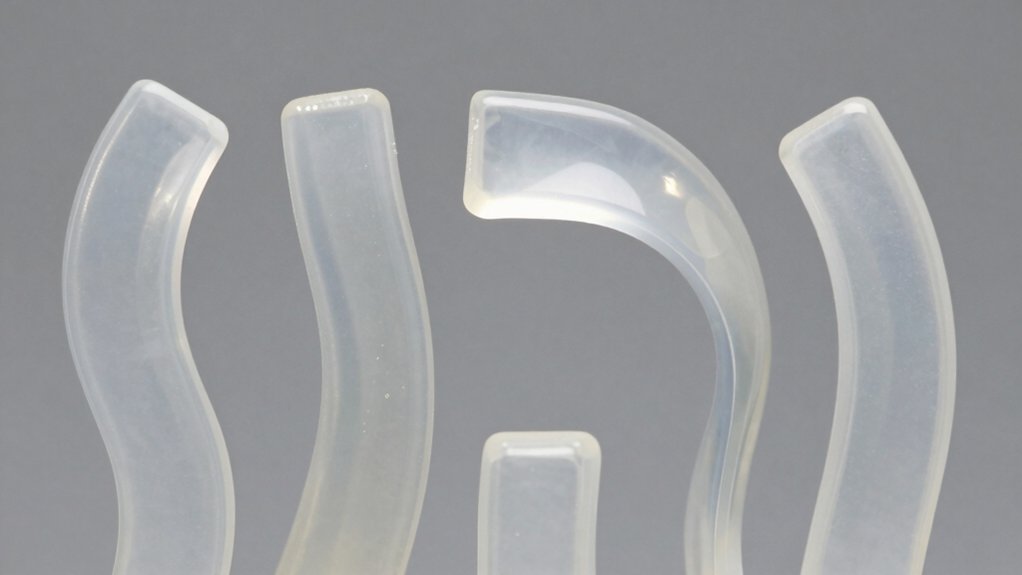
You’ll need to evaluate shore hardness levels to match your flexibility requirements, check print quality metrics like layer adhesion and surface finish to ensure your final product meets specifications, and verify that your specific printer model supports the resin’s curing wavelength and temperature parameters. Next, assess tear resistance ratings and durability standards based on how you’ll use the printed object, whether for mechanical stress applications or protective components. Finally, match the resin type to your intended application—whether you need medical-grade flexibility, impact absorption, or elastomeric properties—since different flexible resins perform better for specific use cases.
Shore Hardness And Flexibility
When selecting flexible resin for 3D printing, understanding Shore hardness is essential because it directly determines how much your printed parts can bend and flex. Shore hardness uses a scale measuring softness, with 80A and 70A resins representing the softest options for flexible applications. Choose 80A hardness when you need high elongation and cushioning properties that withstand repeated bending without breaking. Select 70A resin if you want maximum flexibility paired with rubber-like elasticity and tear resistance for parts subjected to constant deformation. Generally, lower Shore values increase flexibility, while higher values provide greater initial rigidity. Match your resin choice to your part’s intended use: protective or wearable components benefit most from resins labeled flexible or tough-flex that balance softness with functional strength.
Print Quality And Precision
How much detail can your flexible resin actually hold? Look for resins with low shrinkage during curing, which reduces distortion and preserves fine features. Choose materials advertised as low viscosity and high flowability—they cure faster and produce smoother surfaces with fewer defects. Check printer compatibility; resins that work across LCD, DLP, and SLA systems maintain consistent accuracy across batches. Verify batch consistency, since variations affect reproducibility. Pay attention to post-processing requirements: resins requiring only alcohol cleanup create a more stable work environment, minimizing contamination that degrades precision. When evaluating options, prioritize low shrinkage first, then flowability, then compatibility. This sequence ensures you capture intricate details while maintaining structural integrity throughout your prints.
Printer Compatibility And Curing
What printer type do you have? You’ll need to verify your machine uses 405 nm UV curing, which most LCD, DLP, and SLA printers employ. Check your printer’s manual for the exact light source and vat compatibility before purchasing resin.
Next, match the resin formulation to your printer. Many flexible resins work across multiple printer types, but some are marketed specifically for LCD, DLP, or SLA systems. Confirm this compatibility to avoid printing failures.
Then, adjust your exposure settings based on the resin’s curing speed. Fast-curing resins with 50 µm layers may require different exposure times than standard formulations. Test initial settings and modify exposure if you notice incomplete curing or over-curing.
Finally, follow the manufacturer’s post-curing and wash procedures exactly. These steps maintain part flexibility and structural integrity.
Tear Resistance And Durability
You’ll want to prioritize tear resistance as a primary factor when selecting flexible resin, since this property directly determines whether your printed parts’ll withstand repeated stress without failing. Look for resins formulated with high toughness that resist cracking after curing and washing. Check specifications for elongation rates, which indicate how much a material stretches before tearing. Select flexibles with 80A Shore hardness or similar ratings that balance softness with strength, allowing repeated bending without damage. Examine low-shrinkage formulations, as shrinkage during curing creates weak points prone to tearing. For moving or wearable parts, choose resins specifically designed for impact resistance. These durability features ensure your prints maintain structural integrity through flexing, bending, and repeated use without premature failure.
Application-Specific Use Cases
Selecting the right flexible resin depends on matching the material’s properties to your intended application. For wearables and insoles, choose Shore 80A–70A resins that provide cushioning and comfort during repeated use. If you’re printing seals or O-rings, select 405 nm UV-fast-curing formulations with low shrinkage to ensure precise dimensional accuracy. For structural parts requiring durability, high-toughness resins with 5x elongation prevent cracking under stress. When producing hinges or articulated components, prioritize low-odor, low-shrinkage resins for detailed accuracy. Check printer compatibility—flexible resins work across LCD, DLP, and SLA systems. Verify post-processing requirements; most flexible resins clean easily with standard alcohol. Always confirm ISO 10993-5 certification if your parts contact skin or food. Match resin hardness, cure speed, and material strength directly to your part’s functional demands.
Odor And Workspace Safety
How much odor matters depends on your workspace setup and personal tolerance, but choosing flexible resins with lower odor profiles directly improves your printing environment and reduces health risks. During printing, low-viscosity resins produce fewer airborne particulates, though you’ll still need adequate ventilation. Always wear gloves and masks when handling uncured resin to prevent skin exposure. For cleanup, select resins that dissolve easily in alcohol or ethanol—this minimizes odor during the post-processing stage. After printing, fully cure your prints according to manufacturer guidelines. Properly cured and cleaned prints meet safety standards for handling. By prioritizing lower-odor flexible resins and following protective protocols, you create a safer workspace without sacrificing print quality or material performance.
Final Thoughts
You’ll find the right flexible resin by matching your printer’s wavelength (405nm works universally) with your project’s needs. Choose 80A durometers for maximum flexibility, or blend resins for custom properties. Compare water absorption rates and cure times based on your setup. Start with YOUSU or SUNLU for reliable results, then experiment with specialty options like Siraya Tenacious once you’re comfortable with the basics.

Meet Ry, “TechGuru,” a 36-year-old technology enthusiast with a deep passion for tech innovations. With extensive experience, he specializes in gaming hardware and software, and has expertise in gadgets, custom PCs, and audio.
Besides writing about tech and reviewing new products, he enjoys traveling, hiking, and photography. Committed to keeping up with the latest industry trends, he aims to guide readers in making informed tech decisions.