
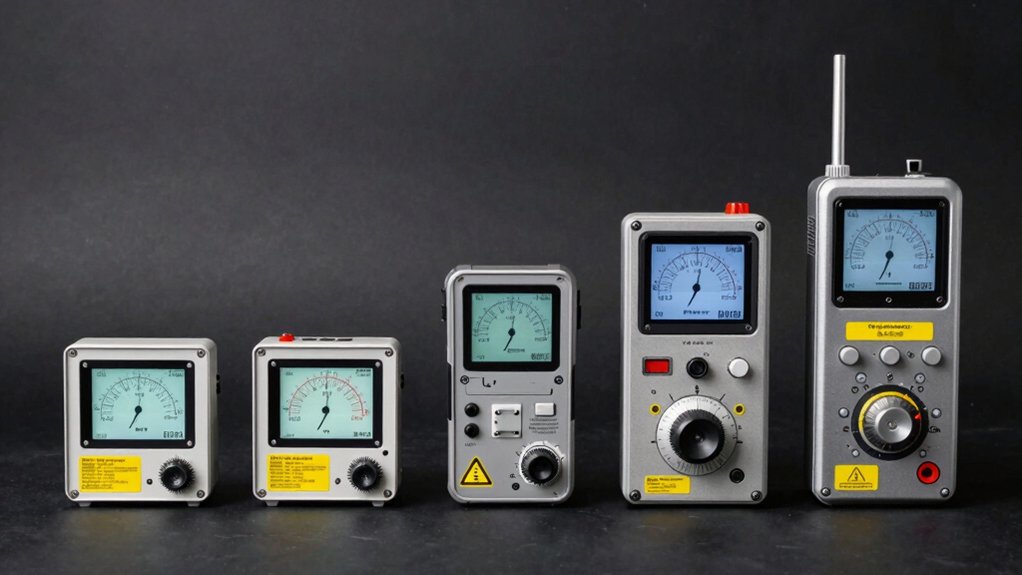

When you’re shopping for a Geiger counter, you’ll want one that gives you accurate radiation readings without complications. You’ve got options—from basic models with simple LCD displays to advanced units with color screens and data logging capabilities. Each detector handles beta, gamma, and X-ray detection differently, and some last longer than others. Before you commit to a purchase, you need to understand what features actually matter for your specific situation.
| Nuclear Radiation Detector GQ GMC-800 Geiger Counter |

| Best Overall | Radiation Types Detected: Beta, Gamma, X-ray | Display Type: Large color LCD (TFT) | Alarm Types: Visual LED, Audio, Vibration, Voice (5 types) | VIEW LATEST PRICE | Read Our Analysis |
| Geiger Counter Radiation Detector for Beta & Gamma Rays |

| Best Value | Radiation Types Detected: Beta, Gamma, X-ray | Display Type: Multi-value LCD | Alarm Types: 3-level with color indications (Green/Yellow/Red) | VIEW LATEST PRICE | Read Our Analysis |
| Smart Geiger Counter Radiacode-102 Radiation Detector |
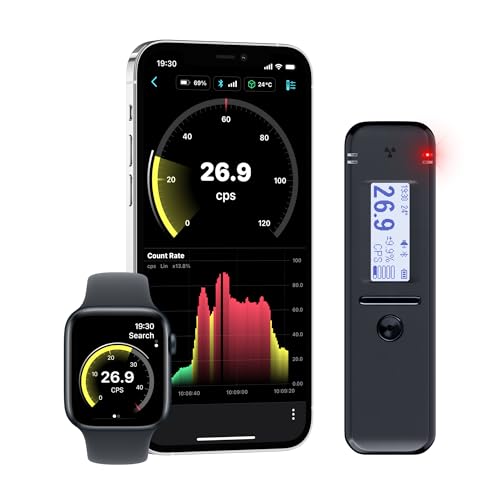
| Fastest Detection Speed | Radiation Types Detected: Gamma, X-ray, hard Beta | Display Type: Transflective blue-backlit display | Alarm Types: Up to 7 alarm modes (sound, LED, vibration, app alerts) | VIEW LATEST PRICE | Read Our Analysis |
| Geiger Counter Radiation Detector with 20-Year Sensor |

| Most Durable | Radiation Types Detected: Beta, Gamma, X-ray | Display Type: Large color LCD | Alarm Types: Not explicitly specified | VIEW LATEST PRICE | Read Our Analysis |
| Geiger Counter Nuclear Radiation Detector with LCD Display |

| Best For Beginners | Radiation Types Detected: Gamma, Beta, X-ray | Display Type: LCD | Alarm Types: Light, Vibration, Sound | VIEW LATEST PRICE | Read Our Analysis |
| Geiger Counter Personal Radiation Detector Nuclear Dosimeter |

| Most Compact | Radiation Types Detected: Beta, Gamma, X-ray | Display Type: OLED | Alarm Types: Audible and visual alarms | VIEW LATEST PRICE | Read Our Analysis |
| Geiger Counter Nuclear Radiation Detector with LCD Display |
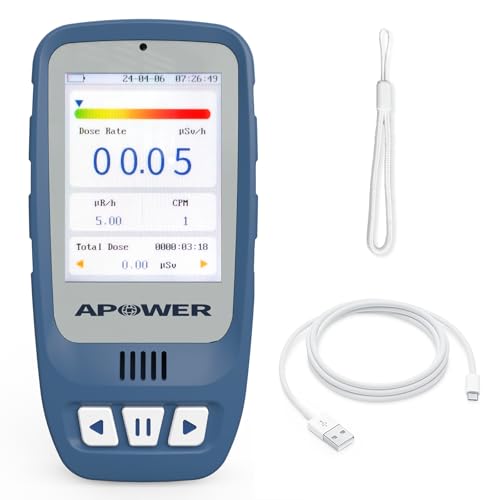
| Best Battery Life | Radiation Types Detected: Gamma, Beta, X-ray | Display Type: LCD color display | Alarm Types: Visual, Audible, Red indicator lights (3 types) | VIEW LATEST PRICE | Read Our Analysis |
| AEGTEST Radar-5633 Portable Radiation Detector with LCD Screen |

| Professional Grade | Radiation Types Detected: Beta, Gamma, X-ray | Display Type: Bright TFT color LCD | Alarm Types: Visual & audible alerts, Red indicator lights | VIEW LATEST PRICE | Read Our Analysis |
More Details on Our Top Picks
Nuclear Radiation Detector GQ GMC-800 Geiger Counter
Looking for a geiger counter that works right out of the box without requiring technical expertise? The GMC-800 delivers immediate radiation readings on its large color LCD display. You’ll detect beta, gamma, and X-ray radiation while choosing from five alarm types: visual LED, audio, vibration, or voice alerts. Set custom thresholds based on your needs. The device stores dosimeter data for up to ten years and supports data export through included software. Its rechargeable battery charges via USB Type-C, and the compact design measures 2.75 by 4.92 inches, weighing 8.8 ounces. Navigate between four function screens with one-press shortcuts. The display remains readable indoors and outdoors under direct sunlight, accommodating vision-impaired and hearing-impaired users through multiple alert options.
- Radiation Types Detected:Beta, Gamma, X-ray
- Display Type:Large color LCD (TFT)
- Alarm Types:Visual LED, Audio, Vibration, Voice (5 types)
- Battery Type:Rechargeable Li-ion (USB Type-C)
- Measurement Range (Dose Rate):0.00–50,000 μSv/h
- Portability/Size:Pocket-sized; 2.75 x 4.92 x 0.59 inches; 8.8 ounces
- Additional Feature:10-year memory storage capacity
- Additional Feature:Solar-readable color LCD display
- Additional Feature:Open protocol data sharing
Geiger Counter Radiation Detector for Beta & Gamma Rays
Need a portable radiation detector that fits in your pocket yet delivers professional-grade detection capabilities? The ND01 model uses Geiger-Muller technology to detect beta particles, gamma rays, and x-rays across energy ranges of 48 keV–1.5 MeV. You’ll receive real-time measurements from 0.00–50,000 μSv/h with a three-color alarm system: green for safe levels, yellow for caution, and red for danger. The device responds within 1–2 minutes and includes two AAA batteries, a user manual, and two-year replacement coverage. You can deploy this detector at nuclear facilities, laboratories, customs checkpoints, and hospitals for comprehensive radiation monitoring.
- Radiation Types Detected:Beta, Gamma, X-ray
- Display Type:Multi-value LCD
- Alarm Types:3-level with color indications (Green/Yellow/Red)
- Battery Type:2x AAA batteries
- Measurement Range (Dose Rate):0.00–50,000 μSv/h
- Portability/Size:Compact pocket/backpack design
- Additional Feature:Three-color alarm level system
- Additional Feature:2-year free replacement warranty
- Additional Feature:Automatic power-off feature
Smart Geiger Counter Radiacode-102 Radiation Detector
The Radiacode-102 is your best option if you need a compact, app-connected detector that identifies specific radioactive isotopes rather than just measuring general radiation levels. This device detects radiation 20x faster than standard counters, displaying results in multiple units including μSv/h and CPS. The built-in spectrum analyzer identifies likely isotopes such as Cs-137, Ra-226, and U-238. Download the free iOS or Android app to access dose rate graphs, GPS tracking, and real-time radiation mapping on Google Maps. Set up to seven alarm modes with adjustable sound levels, LED indicators, or vibration alerts. The lightweight design and lithium polymer battery enable portable field use.
- Radiation Types Detected:Gamma, X-ray, hard Beta
- Display Type:Transflective blue-backlit display
- Alarm Types:Up to 7 alarm modes (sound, LED, vibration, app alerts)
- Battery Type:Lithium Polymer
- Measurement Range (Dose Rate):Multiple units (CPS, CPM, μSv/h, μR/h)
- Portability/Size:Compact; 5.71 x 4.13 x 1.38 inches; 2.36 ounces
- Additional Feature:20x faster detection speed
- Additional Feature:Real-time GPS radiation mapping
- Additional Feature:Isotope identification capability
Geiger Counter Radiation Detector with 20-Year Sensor
If you’re seeking a dependable radiation detector that won’t require sensor replacement for two decades, this model’s 20-year sensor life sets it apart as an excellent choice for professionals and serious hobbyists. The FD-5000 detects beta, gamma, and X-rays across three measurement modes: dosimeter, CPM count, and graph display on its large color LCD screen. Its ABS housing withstands a 10-foot drop test, making it durable for fieldwork. Weighing 11.7 ounces and measuring 7.09 by 2.56 by 3.54 inches, you’ll carry it easily. The included lithium-ion battery and test radiation card get you started immediately. Forensics Detectors backs it with one-year warranty and Los Angeles-based customer support.
- Radiation Types Detected:Beta, Gamma, X-ray
- Display Type:Large color LCD
- Alarm Types:Not explicitly specified
- Battery Type:Lithium Ion
- Measurement Range (Dose Rate):Not explicitly specified
- Portability/Size:Handheld; 7.09 x 2.56 x 3.54 inches; 11.7 ounces
- Additional Feature:10-foot drop test passed
- Additional Feature:Includes test radiation card
- Additional Feature:20-year sensor lifespan
Geiger Counter Nuclear Radiation Detector with LCD Display
For technicians, safety officers, and field inspectors who need dependable radiation monitoring across multiple environments, the FNIRSI GC-01 delivers practical detection capabilities in a compact handheld format. This device detects gamma, beta, and X-ray radiation using a built-in GM detector. You’ll measure cumulative doses from 0.00 to 500.0 mSv across an energy range of 48 KeV–1.5 MeV. Set alarms for current and cumulative dose thresholds, then activate light, vibration, or sound alerts when levels exceed your limits. The rechargeable LCD display switches between measurement units. At roughly 200 grams, this yellow detector fits easily in one hand for industrial inspections, geology surveys, labs, and nuclear facilities.
- Radiation Types Detected:Gamma, Beta, X-ray
- Display Type:LCD
- Alarm Types:Light, Vibration, Sound
- Battery Type:Rechargeable (Type-C)
- Measurement Range (Dose Rate):0.00 uSv to 500.0 mSv cumulative
- Portability/Size:Compact handheld; ~3.07″ W x 4.72″ H; ~200g
- Additional Feature:One-handed operation design
- Additional Feature:Switchable measurement units available
- Additional Feature:English/Chinese language support
Geiger Counter Personal Radiation Detector Nuclear Dosimeter
Looking for a compact radiation detector you can carry in your pocket? The Geiger Counter Personal Radiation Detector Nuclear Dosimeter delivers dual functionality: it works as both a Geiger counter and dosimeter. This device measures radiation from 0.05 to 50 mSv with real-time updates every second. It detects beta, gamma, and X-ray radiation in your home, medical facilities, or high-risk environments. The pocket-sized unit features an OLED display, Type-C rechargeable battery, and 50-hour screen sleep mode. You’ll get audible and visual alarms when radiation levels spike. The device comes FCC, CE, and ROHS certified with a one-year warranty. Use it to assess radiation in toys, antiques, building materials, and food sources.
- Radiation Types Detected:Beta, Gamma, X-ray
- Display Type:OLED
- Alarm Types:Audible and visual alarms
- Battery Type:Rechargeable (Type-C); includes CR2 battery
- Measurement Range (Dose Rate):0.01–999 µSv/h
- Portability/Size:Ultra-portable pocket-sized; 4 1/8″ L x 5/8″ Dia; 0.67 ounces
- Additional Feature:Pocket-sized form factor design
- Additional Feature:50-hour screen sleep duration
- Additional Feature:FCC/CE/ROHS certifications included
Geiger Counter Nuclear Radiation Detector with LCD Display
The APOWER RD-3 works best for you if you need a portable radiation detector that fits in your pocket and doesn’t require frequent recharging. This handheld dosimeter detects gamma, beta, and X-ray radiation across 33 keV to 3 MeV energy ranges. The rechargeable lithium battery lasts eight days on a single charge with sound disabled. You’ll receive triple alarms—visual, audible, and red indicator lights—that activate when radiation thresholds are exceeded. The color LCD display shows cumulative dose readings from 0.05 to 50.0 mSv and stores historical data automatically after each measurement session. Adjust alarm thresholds, measurement units, screen brightness, and language settings directly on the device.
- Radiation Types Detected:Gamma, Beta, X-ray
- Display Type:LCD color display
- Alarm Types:Visual, Audible, Red indicator lights (3 types)
- Battery Type:Rechargeable Lithium (Type-C)
- Measurement Range (Dose Rate):0.05 μSv–50.0 mSv cumulative
- Portability/Size:Lightweight, compact pocket carry; 5.67 x 4.25 x 1.65 inches; 5 ounces
- Additional Feature:36-month after-sale service included
- Additional Feature:8-day battery life duration
- Additional Feature:Timed automatic data storage
AEGTEST Radar-5633 Portable Radiation Detector with LCD Screen
Want a radiation detector that won’t force you to juggle multiple screens while monitoring your environment? The AEGTEST Radar-5633 displays real-time dose rates, count rates, and cumulative doses on a single bright TFT LCD screen. It detects beta, gamma, and X-ray radiation across 33 keV to 3 MeV using semiconductor sensors. You’ll set customizable alarm thresholds that trigger visual and audible alerts even when the device sleeps. The detector logs timed measurements for later review, charges via Type-C, and runs up to 18 days per charge. Weighing 115 grams, it fits easily in your hand or pocket for portable radiation protection.
- Radiation Types Detected:Beta, Gamma, X-ray
- Display Type:Bright TFT color LCD
- Alarm Types:Visual & audible alerts, Red indicator lights
- Battery Type:Type-C rechargeable
- Measurement Range (Dose Rate):Cumulative dose 0.1 μSv to 9999 mSv
- Portability/Size:Handheld portable; 4.72 L x 0.98 W x 2.56 H; 115 grams
- Additional Feature:18-day extended battery life
- Additional Feature:Single-screen multifunctional readout design
- Additional Feature:Customizable alarm threshold settings
Factors to Consider When Choosing a Geiger Counter for Radiation Detection
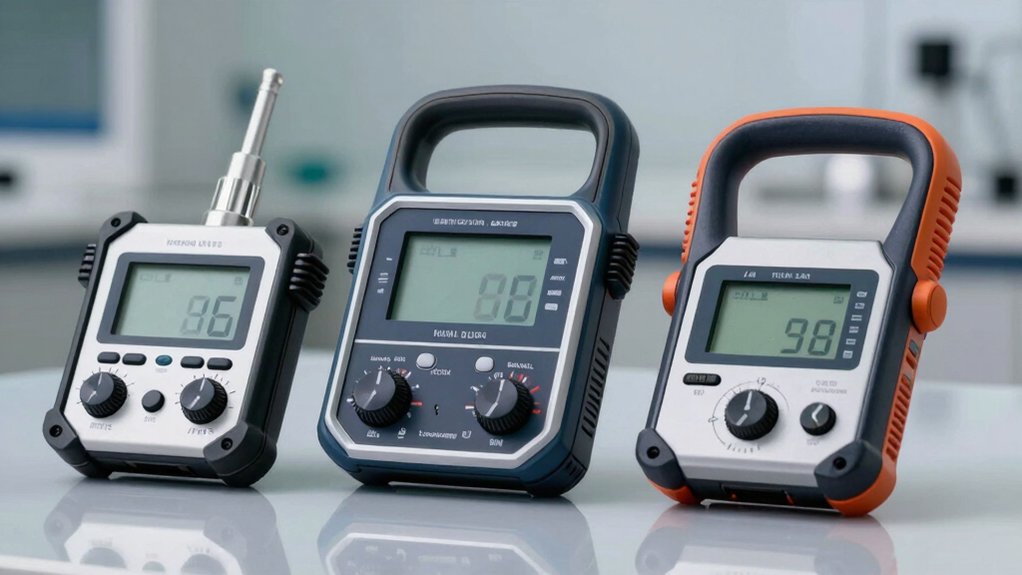
When selecting a geiger counter, you’ll need to evaluate five key factors that directly affect performance and usability: detection range and sensitivity determine how effectively the device identifies radiation types and levels, display type and readability let you quickly interpret measurements in various lighting conditions, battery life and charging options assure your device remains operational during extended use, alarm modes and customization allow you to set thresholds that match your specific monitoring needs, and portability and durability affect whether the counter can withstand your intended environment and be transported easily. Each factor serves a distinct purpose in matching a geiger counter to your situation, so you should assess your primary use case—whether that’s professional radiation monitoring, emergency preparedness, or hobby detection—before weighing these considerations. The sections below break down each factor in detail so you can make an informed choice based on your requirements.
Detection Range And Sensitivity
How do you know if a Geiger counter can actually detect the radiation you’re measuring? You’ll need to check its detection range and sensitivity specifications. Look for the dose-rate range, typically shown in microsieverts per hour (μSv/h) or counts per minute (CPM). A wider range—from near-zero to thousands of μSv/h—lets you measure both background radiation and high-dose events accurately. Next, examine the energy range, listed in kiloelectron volts (keV). This determines which radiation types the device detects. For example, a counter detecting 33 keV to 3 megaelectron volts (MeV) covers more isotopes than a narrower range. Finally, review accuracy specifications like ±17% to +20%. Lower error percentages mean more reliable readings at minimal dose rates.
Display Type And Readability
What you see on your Geiger counter’s screen directly affects how quickly and accurately you’ll interpret radiation readings in the field. Choose a transflective or backlit LCD display that remains readable in bright sunlight and darkness without draining battery power excessively. Select a large color TFT screen with high contrast and adjustable font sizes if you have vision impairment or work in visually demanding environments. Look for multi-unit display options—CPM, CPS, μSv/h, μR/h—so you read measurements directly without mental conversion, which reduces errors. Pair your display choice with on-device visual alarms using LED indicators combined with audible or vibration alerts. Request graphical representations like dose-rate graphs or spectrograms that show radiation trends over time, enabling faster pattern recognition and decision-making.
Battery Life And Charging
Battery performance directly impacts your Geiger counter’s reliability in the field, especially during extended monitoring sessions or emergency response situations. You’ll find battery life varies considerably—some models last days or weeks per charge, while others require recharging after hours of continuous use. Check whether your device uses USB Type-C charging, which offers faster recharging and wider compatibility. Review the manufacturer’s specs for standby longevity; many detectors enter sleep modes lasting up to 50 hours, preserving power during inactive periods. Consider that real-time alarms—sound, LED, and vibration functions—drain batteries faster during active monitoring. For field deployments where frequent recharging isn’t practical, prioritize models offering extended battery life or replaceable batteries. OLED and LCD displays with power-saving modes also help extend operational time considerably.
Alarm Modes And Customization
When you’re selecting a Geiger counter, you’ll want to prioritize devices that offer multiple alarm modalities—sound, visual alerts, vibration, and voice notifications—so you can receive warnings in virtually any environment or situation. Look for models with user-settable thresholds that let you customize dose rate limits in μSv/h and cumulative dose limits in μSv or mSv based on your specific needs. Verify the device triggers alarms on real-time readings regardless of screen state, ensuring you won’t miss critical alerts while the display sleeps. Color-coded indicators—green, yellow, and red zones—provide quick visual risk assessment at a glance. Choose counters with configurable alert levels so you can adjust sensitivity to match your workplace or monitoring requirements precisely.
Portability And Durability
How’ll you actually use your Geiger counter—in a lab, the field, or both? This determines your portability needs. For field work, choose compact models weighing under 12 ounces with dimensions fitting your pocket or pack. Check the housing specs: look for devices rated to survive 10-foot drop tests without damage. Next, examine battery systems. Rechargeable batteries reduce trips to replace cells during extended fieldwork. Verify battery life spans days or weeks per charge to minimize downtime between uses. Finally, assess ergonomics. One-handed operation matters when you’re collecting samples or climbing. Lanyards and holsters keep your counter accessible without constant hand-holding. These factors combined—size, durability, battery endurance, and grip design—ensure your counter performs reliably wherever you deploy it.
Data Logging And Analysis
Once you’ve confirmed your counter’s portability and durability features, examine its data logging capabilities—the ability to record and store radiation measurements over time. Look for devices that retain historical data for extended periods, ideally up to 10 years, with memory sufficient for your analysis needs. Verify the detector supports real-time logging with timestamped measurements so you can correlate radiation spikes with specific events. Check whether you can adjust logging intervals and select measurement units like CPS, CPM, μSv/h, or μR/h based on your requirements. Confirm the device integrates with software or online platforms offering charts, spectrum analysis, and GPS-tagged mapping. Finally, confirm whether the device supports cloud storage and automatic alarms linked to dose thresholds for proactive monitoring and response.
Energy Response And Accuracy
Why does a Geiger counter read differently for different types of radiation? Your detector’s energy response determines which photon energies it accurately measures, typically ranging from 33 keV to 3 MeV. This range covers common isotopes like Cs-137 and Co-60. Check the device’s accuracy rating, which shows percent deviation for specific isotopes—for example, -17% to +20% for Cs-137 indicates how close readings match true values. Resolution quality, measured by FWHM around 9.5%, affects your ability to distinguish closely spaced gamma lines during spectral analysis. Consider your detector type: GM tubes and semiconductor sensors respond differently to the same radiation. Verify calibration standards align with national or international references to ensure reliable measurements across your intended energy spectrum.
Final Thoughts
You’ve reviewed eight reliable Geiger counters designed for accurate radiation detection. To select the right model, compare display types, sensor durability, data storage capacity, and detection range for your specific needs. Consider portability if you’ll use it in the field, and verify alarm features match your safety requirements. Test the unit’s responsiveness before committing to ensure it meets your radiation monitoring standards.

Meet Ry, “TechGuru,” a 36-year-old technology enthusiast with a deep passion for tech innovations. With extensive experience, he specializes in gaming hardware and software, and has expertise in gadgets, custom PCs, and audio.
Besides writing about tech and reviewing new products, he enjoys traveling, hiking, and photography. Committed to keeping up with the latest industry trends, he aims to guide readers in making informed tech decisions.