
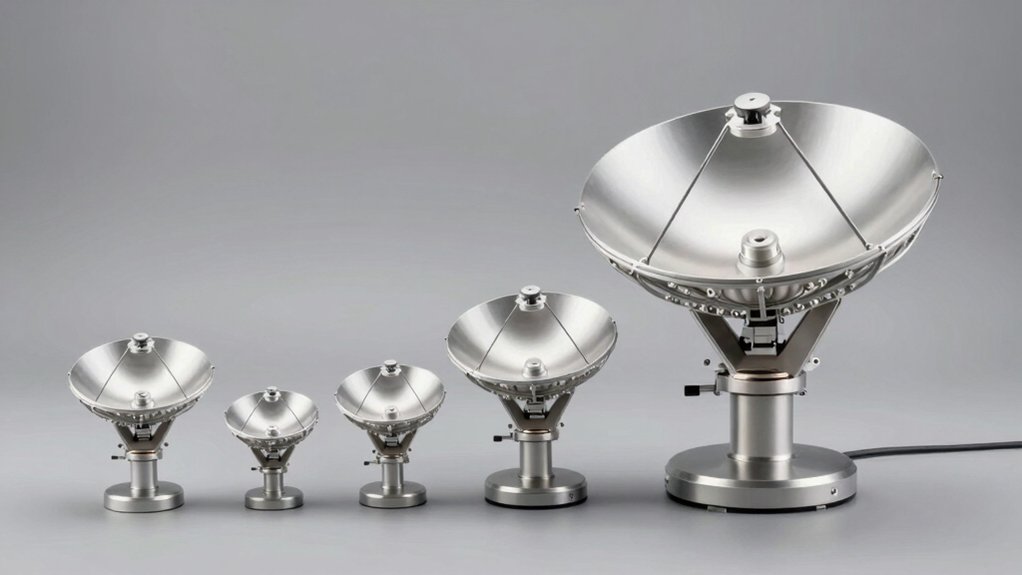

You need a WiFi Yagi antenna when standard routers won’t reach far enough or through obstacles. These directional antennas focus signals in one direction, giving you gains from 8 to 25 dBi depending on the model. They’re weatherproof, mount on poles or walls, and use SMA or RP-SMA connectors. Before you pick one, though, you’ll want to understand what each antenna type actually does and how to match it to your specific situation.
| Yagi WiFi Antenna 2.4GHz 25dBi High Gain Directional |

| Best Overall | Gain (dBi): 25 dBi | Frequency Support: 2.4 GHz only | Connector Type: RP-SMA | VIEW LATEST PRICE | Read Our Analysis |
| TECHTOO WiFi Antenna 18dBi High Gain Yagi Directional |
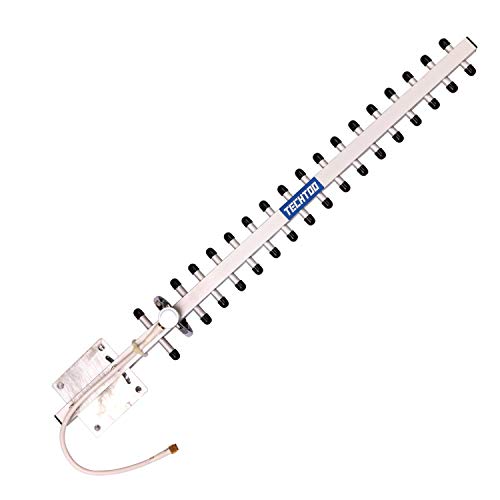
| Best Value | Gain (dBi): 18 dBi | Frequency Support: 2.4 GHz only | Connector Type: RP-SMA | VIEW LATEST PRICE | Read Our Analysis |
| 12dBi Dual Band WiFi Directional Yagi Antenna (SMA Male) |

| Dual Band Option | Gain (dBi): 12 dBi (2.4GHz), 4 dBi (5.8GHz) | Frequency Support: Dual-band (2.4 GHz & 5.8 GHz) | Connector Type: SMA male | VIEW LATEST PRICE | Read Our Analysis |
| 16dBi High-Gain WiFi Directional Yagi Antenna for Drones |
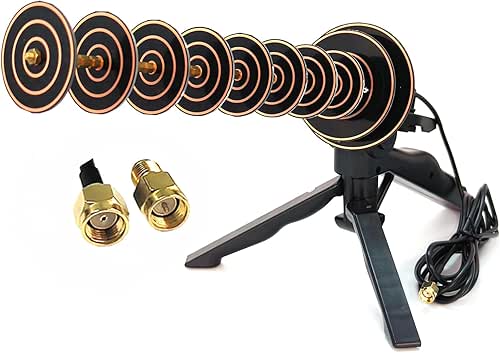
| Best For Drones | Gain (dBi): 16 dBi | Frequency Support: 2.4 GHz only | Connector Type: RP-SMA male and SMA male | VIEW LATEST PRICE | Read Our Analysis |
| BOOBRIE Dual Band Yagi WiFi Antenna 8dBi Outdoor |

| Professional Grade | Gain (dBi): 8 dBi | Frequency Support: Dual-band (2.4 GHz & 5.8 GHz) | Connector Type: RP-SMA female | VIEW LATEST PRICE | Read Our Analysis |
| Yagi WiFi Antenna 2.4GHz Outdoor Directional (15dBi) |

| Maximum Range | Gain (dBi): 15 dBi | Frequency Support: 2.4 GHz only | Connector Type: N-Female pigtail | VIEW LATEST PRICE | Read Our Analysis |
| 10 dBi Wideband Directional Log Periodic Yagi Antenna |
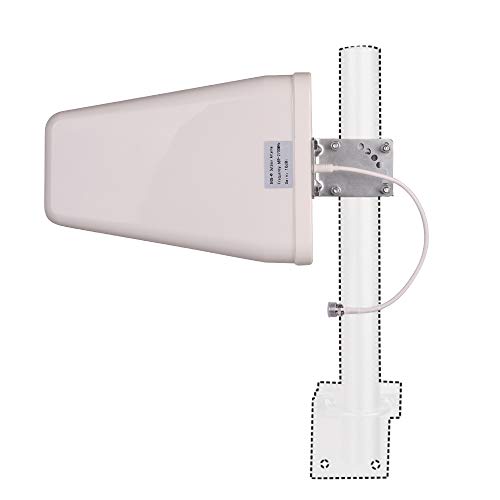
| Most Versatile | Gain (dBi): 10.6 dBi | Frequency Support: Wideband (698–2700 MHz) | Connector Type: N-Female | VIEW LATEST PRICE | Read Our Analysis |
More Details on Our Top Picks
Yagi WiFi Antenna 2.4GHz 25dBi High Gain Directional
Why’d you choose a directional antenna over a standard one? This Yagi antenna delivers 25 dBi gain, concentrating your signal toward specific sources like routers or towers. The 50-centimeter aluminum design operates at 2400–2483 MHz and includes a 150-centimeter extension cable for flexible positioning. Installation takes minutes: unscrew your existing antenna and attach this RP-SMA connector. The waterproof construction suits outdoor mounting with the included wall bracket. Use it with 2.4 GHz WiFi routers, security cameras, IoT gateways, and wireless extenders. Note that this antenna won’t work with 5.8 GHz devices. The directional design reduces interference while extending range, making it ideal for industrial applications and remote monitoring setups.
- Gain (dBi):25 dBi
- Frequency Support:2.4 GHz only
- Connector Type:RP-SMA
- Outdoor/Weatherproof:Yes (waterproof, aluminum alloy)
- Mounting Hardware Included:Wall mount bracket
- Primary Use Cases:WiFi routers, security cameras, CCTV, IoT gateways, wireless extenders
- Additional Feature:150 cm extension cable included
- Additional Feature:Gold-plated RP-SMA connector
- Additional Feature:Aluminum alloy construction
TECHTOO WiFi Antenna 18dBi High Gain Yagi Directional
The TECHTOO WiFi Antenna’s 18dBi gain and highly directional Yagi design make it an excellent choice if you’re dealing with weak 2.4 GHz signals in specific areas or need to extend coverage to dead spots around your property. Installation requires you to remove your current antenna and screw on the TECHTOO unit—no software setup needed. Point the antenna toward your signal source, like a router or access point, for optimal performance. The waterproof fiberglass construction withstands outdoor conditions, and the included wall mount bracket secures it to your building. This antenna works with routers, modems, security cameras, USB adapters, and network cards operating on 2.4 GHz frequencies. Note that it doesn’t support 5.8 GHz devices, and you may need a gender adapter depending on your device’s antenna port configuration.
- Gain (dBi):18 dBi
- Frequency Support:2.4 GHz only
- Connector Type:RP-SMA
- Outdoor/Weatherproof:Yes (waterproof, fiberglass construction)
- Mounting Hardware Included:Wall mount bracket
- Primary Use Cases:Desktop PC, router, security cameras, PCIe cards, IoT gateways, wireless video
- Additional Feature:Fiberglass construction material
- Additional Feature:No software required installation
- Additional Feature:Extends to dead spots
12dBi Dual Band WiFi Directional Yagi Antenna (SMA Male)
Looking to extend your WiFi range for FPV drones, security cameras, or remote monitoring systems? This 12dBi dual band antenna delivers 12dBi gain at 2.4GHz and 4dBi at 5.8GHz, making it ideal for directional signal boosting. The SMA male connector fits most wireless adapters, routers, and WLAN access points. Its narrow beamwidth reduces interference from TVs, phones, and other devices. Mount and align it properly toward your target device for peak performance. Verify your equipment has an SMA connector and operates on 2.4GHz or 5.8GHz frequencies before purchasing. This antenna works well for industrial networking, UAVs, and long-distance wireless applications requiring focused signal transmission.
- Gain (dBi):12 dBi (2.4GHz), 4 dBi (5.8GHz)
- Frequency Support:Dual-band (2.4 GHz & 5.8 GHz)
- Connector Type:SMA male
- Outdoor/Weatherproof:Not specified for outdoor use
- Mounting Hardware Included:Not specified
- Primary Use Cases:FPV drones, UAVs, security cameras, industrial routers, remote monitoring
- Additional Feature:Dual band 2.4GHz/5.8GHz support
- Additional Feature:PCB Yagi antenna design
- Additional Feature:Reduces signal interference sources
16dBi High-Gain WiFi Directional Yagi Antenna for Drones
Need to extend your drone’s control range or boost wireless video transmission over long distances? This 16dBi antenna delivers directional signal concentration up to 100 meters. You’ll mount it on your drone controller, router, or USB adapter using the RP-SMA or SMA connector. The antenna’s 2.4GHz frequency matches standard WiFi bands with strong interference resistance. Position it toward your drone for optimal reception. Use the included 2-meter extension cable to place the antenna at your best vantage point. This setup works for surveillance systems, vehicle installations, and industrial monitoring. The directional design targets your specific coverage area, improving signal purity and stability in complex environments.
- Gain (dBi):16 dBi
- Frequency Support:2.4 GHz only
- Connector Type:RP-SMA male and SMA male
- Outdoor/Weatherproof:Yes (outdoor-suitable)
- Mounting Hardware Included:Mounting accessories and 2-meter extension cable
- Primary Use Cases:Drones, USB adapters, routers, cameras, wireless surveillance, IoT gateways
- Additional Feature:2-meter extension cable included
- Additional Feature:Up to 100 meters range
- Additional Feature:Dual connector types (RP-SMA/SMA)
BOOBRIE Dual Band Yagi WiFi Antenna 8dBi Outdoor
If you’re setting up a long-range wireless system for demanding environments like smart farms, surveillance networks, or warehouse operations, the BOOBRIE Dual Band Yagi WiFi Antenna delivers professional-grade performance you’ll need. This antenna operates on both 2.4GHz and 5.8GHz frequencies, handling up to 50W of power while maintaining an 8dBi gain rating. You’ll get 30% longer transmission distance compared to standard antennas, plus directional radiation patterns that minimize interference in crowded WiFi environments. The aluminum construction resists environmental stress, and the included 4.92-foot RG58 coaxial cable with gold-plated RP-SMA connector ensures reliable connections. Mount it outdoors on poles or walls, and you’ll achieve stable signal coverage for routers, network cards, and IoT devices requiring extended range and dependable connectivity.
- Gain (dBi):8 dBi
- Frequency Support:Dual-band (2.4 GHz & 5.8 GHz)
- Connector Type:RP-SMA female
- Outdoor/Weatherproof:Yes (aluminum structure, outdoor pole/wall mounting)
- Mounting Hardware Included:Suitable for outdoor pole/wall mounting
- Primary Use Cases:Routers, PCIe cards, wireless repeaters, IoT devices, smart farms, surveillance
- Additional Feature:50W maximum power handling
- Additional Feature:4.92ft RG58 coaxial cable
- Additional Feature:30% longer transmission distance
Yagi WiFi Antenna 2.4GHz Outdoor Directional (15dBi)
The Tupavco TP512 delivers strong directional signal concentration for users who need to bridge WiFi networks across long distances or boost reception from a remote location. This 15dBi gain antenna operates on the 2.4GHz frequency with a 30-degree horizontal and 25-degree vertical beam width, reaching up to 1,000 feet. The N-female connector attaches directly to your router or access point via the included 1-foot cable. Mount the antenna outdoors using the provided U-bolts and pole hardware to maximize signal penetration. Its weatherproof construction resists corrosion in outdoor conditions. Install screws and washers according to included instructions to secure the mount. The directional design focuses signal in one direction, requiring proper antenna positioning toward your target receiving point for optimal performance.
- Gain (dBi):15 dBi
- Frequency Support:2.4 GHz only
- Connector Type:N-Female pigtail
- Outdoor/Weatherproof:Yes (weatherproof, corrosion-resistant)
- Mounting Hardware Included:U-bolts (2), screws (4), washers (8), 1ft cable
- Primary Use Cases:Remote location signal reception, bridge WiFi networks between distant points
- Additional Feature:1000 feet maximum range
- Additional Feature:N-Female pigtail connector
- Additional Feature:Corrosion-resistant materials
10 dBi Wideband Directional Log Periodic Yagi Antenna
Want a single antenna that handles multiple frequency bands without requiring separate units for 3G, 4G, LTE, and Wi-Fi coverage? The XRDS-RF 10 dBi Wideband Directional Log Periodic Yagi Antenna covers 698–2700 MHz with up to 10.6 dB gain. Mount it outdoors using the included U-bolts, point it toward your cell tower, and connect it via the N-Female connector to your equipment. Its rugged, waterproof design withstands outdoor conditions. This antenna works with major US carriers and 2.4 GHz Wi-Fi systems, eliminating the need for multiple antennas across different frequency bands.
- Gain (dBi):10.6 dBi
- Frequency Support:Wideband (698–2700 MHz)
- Connector Type:N-Female
- Outdoor/Weatherproof:Yes (waterproof, rugged exterior)
- Mounting Hardware Included:Two U-bolts and attached plate
- Primary Use Cases:Cellular (3G/4G/LTE), WiFi, radio systems, fixed outdoor installations
- Additional Feature:698–2700 MHz frequency range
- Additional Feature:Compatible with 3G/4G/LTE
- Additional Feature:Supports multiple US carriers
Factors to Consider When Choosing a WiFi Yagi Antenna
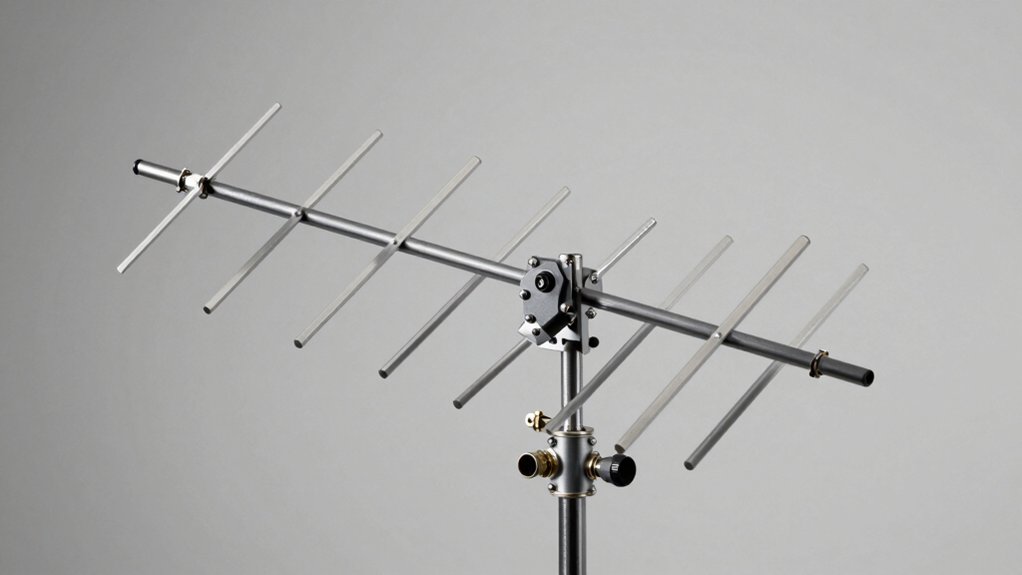
When selecting a WiFi Yagi antenna, you’ll need to verify that the frequency band (2.4GHz or 5GHz) matches your router and devices, check the gain level in dBi to ensure it provides adequate signal boost for your distance and environment, and confirm the connector type (SMA, N-type, or RP-SMA) aligns with your equipment. Next, determine your directional beamwidth needs—narrow beams concentrate signal over longer distances while wider beams cover larger areas—based on whether you’re targeting a specific direction or broader coverage. Finally, confirm the antenna meets outdoor durability standards by checking for weatherproof ratings, corrosion-resistant materials, and mounting hardware if you plan to install it outside.
Frequency Band Compatibility
How do you know if a WiFi Yagi antenna will actually work with your devices? First, identify your device’s operating frequency. Most WiFi devices run on 2.4 GHz, while newer equipment may support 5.8 GHz or both bands. Check your antenna’s specifications for its frequency range—a 2.4 GHz antenna typically covers 2400–2483 MHz and won’t function properly at 5.8 GHz. If you need both frequencies, choose a dual-band antenna, which lists separate gain values for each band. Second, verify the connector type matches your equipment, whether RP-SMA or SMA. Third, confirm the antenna’s 50-ohm impedance aligns with your host device. These three steps ensure your antenna delivers optimal performance without compatibility issues.
Gain Level Requirements
Once you’ve confirmed your antenna’s frequency band and connector compatibility, you’ll need to select the right gain level for your specific use case. Gain, measured in dBi, determines how concentrated your signal becomes in a single direction. Higher gains extend range but narrow your beamwidth, requiring precise aiming. For general outdoor directional use, 10–18 dBi offers a practical balance between extended range and installation flexibility. If you’re pushing a link across significant distance, 15–25 dBi Yagi antennas deliver substantial improvement. However, very high gains around 25 dBi demand careful alignment and are more susceptible to misalignment problems. Evaluate your target distance, mounting capability, and tolerance for precise aiming before committing to a gain level that fits your link budget requirements.
Connector Type Matching
What connector type does your device actually have? Check your router or wireless card’s port to determine if you need RP-SMA or SMA. Match the antenna’s connector gender—male or female—to your device’s port to avoid requiring adapters. If your device uses RP-SMA, select an antenna with RP-SMA compatibility; using an SMA-only antenna creates incompatibility issues. For outdoor installations, verify the connector is rated for weatherproof use to prevent corrosion and water damage at the connection point. Review any included mounting hardware and extension cables to confirm they’re compatible with your chosen connector type. This ensures secure physical connections and optimizes your signal alignment without additional purchases or modifications.
Directional Beamwidth Needs
After you’ve confirmed your connector type matches your device, you’ll need to evaluate the antenna’s directional beamwidth to guarantee it covers your target area effectively. Beamwidth determines how concentrated or spread your signal becomes. Narrow beamwidth, such as 30° horizontal by 25° vertical, focuses power toward one direction, delivering higher gain for distant targets but limited coverage to the sides. Wide beamwidth provides broader coverage across multiple angles, though with reduced peak gain. Match your beamwidth choice to your installation setup. If you’re targeting a single distant access point, select narrow beamwidth. If you need coverage across multiple directions or shorter distances, choose wider beamwidth. Review your mounting location and target signal source before deciding.
Outdoor Durability Standards
How’ll you know if your WiFi Yagi antenna can survive harsh outdoor conditions? Check the IP rating first—IP65 or higher ensures water and dust resistance. Next, verify the housing material; aluminum and fiberglass withstand UV exposure and temperature swings better than plastic. Examine the connector type; gasketed, waterproof connectors prevent moisture intrusion. Review the operating temperature range to confirm it matches your climate extremes. Inspect the mounting hardware—stainless steel clamps and bolts resist corrosion. Finally, assess cable quality and strain relief features; reinforced cables with proper sealing reduce water damage risk. These specifications work together to keep your antenna functioning reliably through rain, freezing temperatures, intense sun, and wind without performance degradation.
Installation Space Available
Once you’ve confirmed your antenna can withstand outdoor conditions, you’ll need to assess whether your installation location can actually accommodate it. Measure your available mounting area carefully, since Yagi antennas range from 50 cm to 2.7 meters in length. Factor in space for the supporting mast and brackets. Verify you have a clear line of sight toward your signal source—towers or routers—without obstructions like trees or buildings blocking the path. Check that your mounting surface can support the antenna’s weight and hardware securely. Account for cable length, typically 1.5 meters, ensuring it runs without excessive sag that causes signal loss. Finally, confirm you can access the installation spot for orientation adjustments and future maintenance.
Range And Distance Goals
Before you select a Yagi antenna, you’ll need to determine how far you want it to reach and what distance goals match your specific situation. For 2.4 GHz devices, aim for 12–25 dBi gain to extend line-of-sight links effectively. Higher gain concentrates signal in one direction, boosting range but narrowing coverage. Compact models with 16–18 dBi offer broader reception at shorter distances, while 25 dBi designs deliver maximum distance with tighter beamwidth. Outdoor weatherproof antennas typically outperform indoor setups in harsh conditions. Match your antenna length and gain to your distance target: a 50 cm antenna with 25 dBi suits long-range needs, while smaller options work for moderate distances. Precise aiming at your signal source is critical—misalignment severely reduces achievable distance and stability.
Final Thoughts
You’ve reviewed seven high-gain Yagi antennas ranging from 8dBi to 25dBi. Select one based on your coverage distance, frequency band, and connector type. Install it outdoors with clear line-of-sight toward your target. Align it precisely for maximum signal strength. Mount it securely on a weatherproof pole. Test your connection speed and stability after installation. Adjust positioning if needed to optimize performance in your specific location.

Meet Ry, “TechGuru,” a 36-year-old technology enthusiast with a deep passion for tech innovations. With extensive experience, he specializes in gaming hardware and software, and has expertise in gadgets, custom PCs, and audio.
Besides writing about tech and reviewing new products, he enjoys traveling, hiking, and photography. Committed to keeping up with the latest industry trends, he aims to guide readers in making informed tech decisions.