
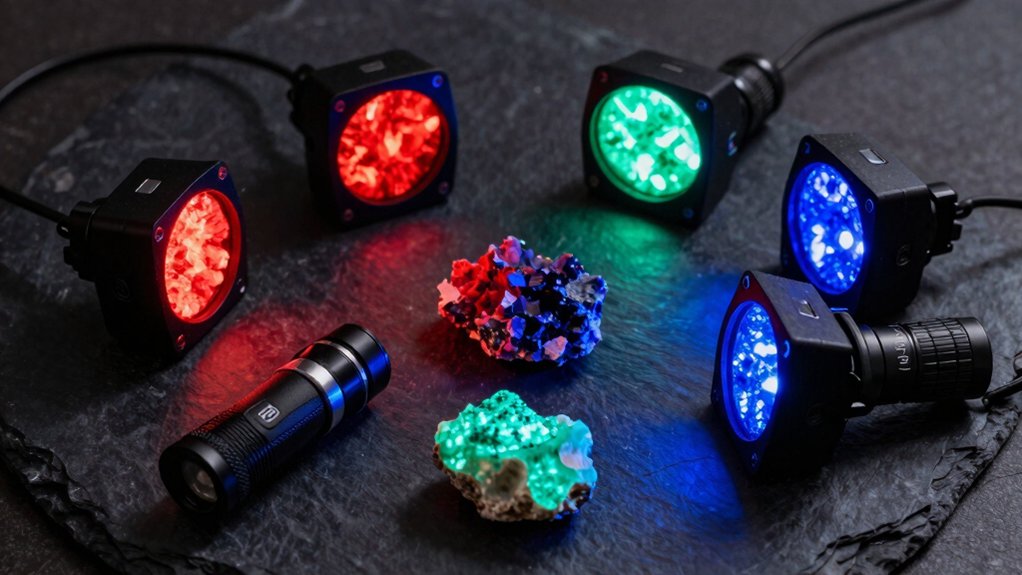

When you’re rockhounding, you need the right UV light to spot fluorescent minerals hidden in plain sight. You’ll want a flashlight that delivers reliable performance in the field with strong battery life and durable construction. The market offers several solid options, each with specific strengths. Understanding what features matter most—wattage, wavelength, and build quality—helps you pick the tool that’ll actually work when you need it. Here’s what you should know about your best choices.
| TrixHub 365nm UV Black Light Flashlight Rechargeable |
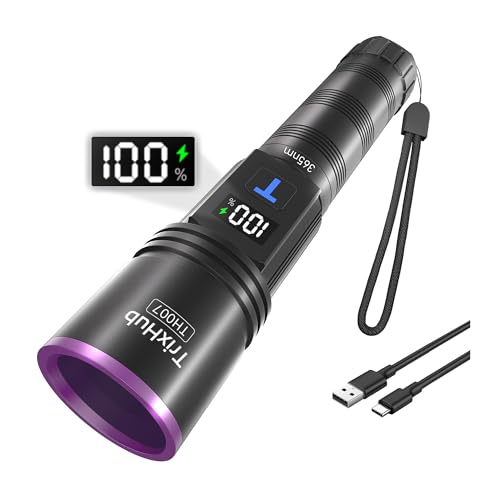
| Professional Grade | UV Wavelength: 365nm | Power Output: 30W | Charging Method: USB-C rechargeable | VIEW LATEST PRICE | Read Our Analysis |
| 365nm UV Flashlight Rechargeable with LCD Display |

| Best Value | UV Wavelength: 365nm | Power Output: High-intensity upgraded lamp bead | Charging Method: USB-C rechargeable | VIEW LATEST PRICE | Read Our Analysis |
| Goreit 365nm Black Light UV Flashlight with LCD Display |

| Best Overall | UV Wavelength: 365nm | Power Output: 30W (4-core LED) | Charging Method: USB-C rechargeable | VIEW LATEST PRICE | Read Our Analysis |
| UV Blacklight Flashlight 365nm & 395nm Ultraviolet Torch |

| Dual Wavelength Option | UV Wavelength: 365nm & 395nm | Power Output: Not specified | Charging Method: Rechargeable or 3 AAA batteries | VIEW LATEST PRICE | Read Our Analysis |
| Alonefire SV62 Mini 3W UV Flashlight 365nm |

| Compact Everyday Carry | UV Wavelength: 365nm | Power Output: 3W | Charging Method: AAA alkaline battery | VIEW LATEST PRICE | Read Our Analysis |
More Details on Our Top Picks
TrixHub 365nm UV Black Light Flashlight Rechargeable
Looking for professional-grade UV detection that won’t drain your budget? The TrixHub 365nm flashlight delivers 30W of ultraviolet output specifically designed for rockhounding and mineral searches. You’ll charge it fully in approximately two hours using the included USB-C cable, and the digital LCD display shows your battery level in real time. The aluminum alloy construction resists impact and heat, making it durable for extended outdoor use. Use this flashlight to identify fluorescent minerals, detect invisible stains during indoor inspections, and cure UV resin projects. The waterproof design handles moisture exposure without performance loss. You receive the flashlight, charging cable, and user manual in your package.
- UV Wavelength:365nm
- Power Output:30W
- Charging Method:USB-C rechargeable
- Battery Display:LCD digital display
- Build Material & Durability:Aluminum alloy, waterproof, impact-resistant
- Included Accessories:USB-C cable, user manual
- Additional Feature:30W professional-grade output
- Additional Feature:~2 hour quick charge
- Additional Feature:Impact-resistant aluminum alloy
365nm UV Flashlight Rechargeable with LCD Display
Need a reliable UV light that won’t drain your budget? The 365nm UV Flashlight Rechargeable with LCD Display delivers practical performance for rockhounding trips. Its upgraded lamp bead setup produces consistent, high-intensity light that reveals fluorescent minerals effectively. The lithium-ion battery runs approximately four hours per charge via the included USB-C cable. An LCD screen displays your remaining battery percentage in real time, so you’ll know when to recharge. The durable aluminum body withstands outdoor conditions, and the included lanyard keeps it accessible during searches. Use this flashlight to identify calcite, willemite, and other UV-reactive stones in your collection locations.
- UV Wavelength:365nm
- Power Output:High-intensity upgraded lamp bead
- Charging Method:USB-C rechargeable
- Battery Display:LCD digital screen showing battery percentage
- Build Material & Durability:Aluminum body, weatherproof, waterproof
- Included Accessories:USB-C cable, lanyard, user manual
- Additional Feature:4-hour runtime capability
- Additional Feature:Upgraded lamp bead setup
- Additional Feature:Included lanyard for portability
Goreit 365nm Black Light UV Flashlight with LCD Display
When you need a UV light that performs reliably across rockhounding and mineral detection tasks, the Goreit 365nm flashlight stands out with its 30W output and multi-layer filter design. The 365nm wavelength detects uranium glass and fluorescent minerals with high contrast against backgrounds. Its 6000mAh battery delivers ten hours of runtime on high mode, while USB-C charging reaches full capacity in two hours. The LCD display shows precise power levels, eliminating guesswork during field work. Use the included UV test cards to verify detection capability before trips. The thirty-foot beam penetrates darkness effectively, and the multi-layer filter blocks ninety-nine percent of visible light, producing cleaner results than competing 395nm models. Pack the holster and lanyard for secure transport during exploration.
- UV Wavelength:365nm
- Power Output:30W (4-core LED)
- Charging Method:USB-C rechargeable
- Battery Display:Precise ±1% LCD display
- Build Material & Durability:Aluminum with multi-layer UV filter lens
- Included Accessories:2 UV test cards, USB-C cable, 3 AAA batteries, battery holder, holster, lanyard, user manual, gift box
- Additional Feature:30-foot beam range
- Additional Feature:10-hour runtime capacity
- Additional Feature:Multi-layer UV filter lens
UV Blacklight Flashlight 365nm & 395nm Ultraviolet Torch
The UV Blacklight Flashlight with dual wavelength options at 365nm and 395nm gives you versatility for identifying fluorescent minerals during rockhounding expeditions. You’ll adjust the zoomable beam to focus on specific specimens or diverge for broader coverage. The compact handheld design fits easily in your field pack, and the ergonomic grip provides comfortable extended use. Power your flashlight through rechargeable batteries or three AAA batteries for immediate availability without waiting for charging. The pen clip and lanyard keep your light accessible during hands-on prospecting. This torch also works for verifying ore authenticity and detecting fluorescent agents in your collected samples.
- UV Wavelength:365nm & 395nm
- Power Output:Not specified
- Charging Method:Rechargeable or 3 AAA batteries
- Battery Display:None specified
- Build Material & Durability:Portable compact design
- Included Accessories:Pen clip, lanyard
- Additional Feature:Dual wavelength (365nm/395nm)
- Additional Feature:Zoomable adjustable beam focus
- Additional Feature:AAA battery compatibility option
Alonefire SV62 Mini 3W UV Flashlight 365nm
Looking for a UV light you’ll actually carry with you? The Alonefire SV62 Mini 3W UV Flashlight delivers 365nm wavelength detection in a pocket-sized package weighing just 20g. Its aluminum construction withstands field use while fitting easily in your pocket or gear bag. The kit includes an AAA alkaline battery—install it and you’re ready to hunt fluorescent minerals immediately. One-button operation keeps things simple for both beginners and experienced rockhounds. This compact flashlight reveals hidden gems by detecting mineral fluorescence effectively, making it reliable for serious field work without carrying bulk.
- UV Wavelength:365nm
- Power Output:3W
- Charging Method:AAA alkaline battery
- Battery Display:None specified
- Build Material & Durability:Aluminum construction, 20g
- Included Accessories:AAA alkaline battery included
- Additional Feature:Ultra-compact EDC design
- Additional Feature:Only 20g lightweight
- Additional Feature:One-button operation simplicity
Factors to Consider When Choosing UV Light for Rockhounding
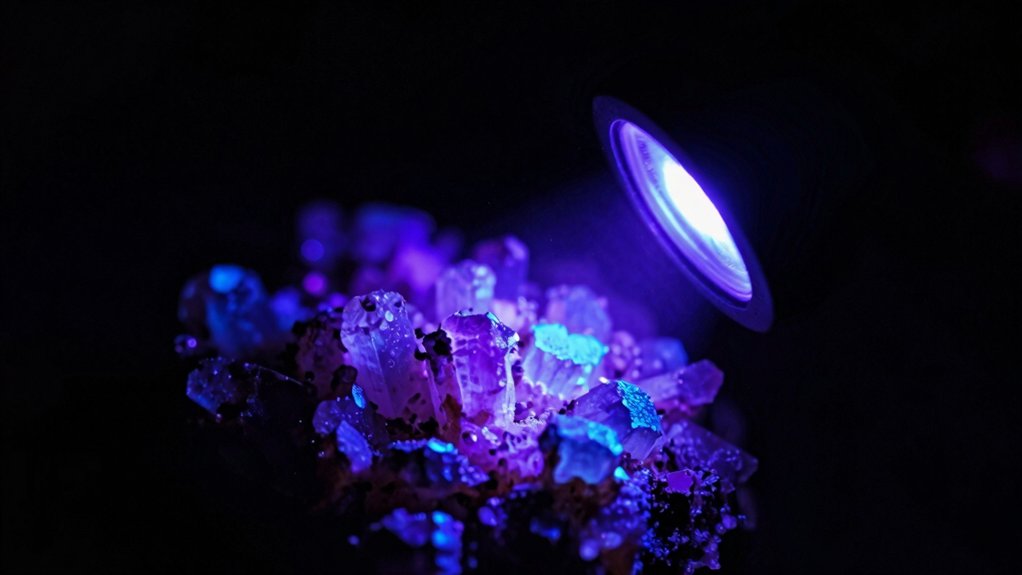
When you’re selecting a UV light for rockhounding, you’ll need to evaluate five key factors: the wavelength range that matches your target minerals, the battery life that supports your typical field sessions, the durability of the casing and lens for outdoor conditions, the beam’s brightness and focus for spotting fluorescent rocks, and the overall weight and design for comfortable carrying during long hunts. Start by identifying which minerals you want to find, then match that to the appropriate wavelength—most rockhounding applications use 365nm or 395nm lights—before checking the runtime to ensure you won’t run out of power mid-expedition. Finally, verify the flashlight’s construction materials, beam quality, and portability features so you can handle extended use without equipment failure.
Wavelength and Detection Range
How do you choose the right wavelength for your rockhounding UV light? You’ll want to focus on 365 nm as your primary option. This wavelength delivers strong fluorescence output while minimizing visible light contamination, which improves contrast when you’re examining rocks in the field. If you want broader detection capabilities, consider models offering both 365 nm and 395 nm options. The dual-wavelength setup lets you identify different materials and fluorescence responses, expanding what you can discover. Start with 365 nm for most rockhounding work, then add 395 nm capability if you encounter specimens that don’t fluoresce under the narrower wavelength. Testing both wavelengths on your target materials before your expedition ensures you’ll have the right tool for your specific geological survey.
Battery Life and Runtime
What’ll determine whether your rockhounding expedition succeeds or cuts short? Battery life and runtime. You need a UV flashlight with a stated runtime on high power lasting several hours per charge to cover extended sessions. Check the battery type and capacity—a 6000mAh battery, for example—to estimate total use time under 365nm illumination. Look for models with battery indicators or LCD displays so you can monitor remaining runtime and avoid unexpected shutdowns mid-expedition. Choose USB-C rechargeability for quick top-ups during longer outings, verifying the full-charge time is around two hours. Remember that environmental conditions like cold or damp locations reduce battery efficiency and runtime, so plan accordingly for your specific rockhounding location and climate.
Build Quality and Durability
Your UV flashlight’s ability to survive rockhounding means choosing one built to handle impacts, moisture, and extended use in rough terrain. Select models with aluminum alloy bodies that resist dents and cracks from drops. Look for waterproof or weatherproof ratings that protect against dust, mud, and water exposure. Check that the flashlight has reinforced seals and gaskets around all openings to prevent internal damage. Verify the design includes effective heat dissipation features to keep the UV bulb from overheating during long sessions. Choose a compact, ergonomic build that fits securely in your hand during extended use. Test the mechanical switches for reliability—they should withstand repeated pressing without failing. These durability features ensure your UV light performs consistently across multiple rockhounding trips.
Beam Focus and Brightness
When selecting a UV light for rockhounding, you’ll need to evaluate both beam focus and brightness as interconnected performance factors. A focused beam concentrates UV output into a narrower spot, allowing you to detect fluorescent minerals at greater distances. Higher brightness at 365 nm wavelength improves visibility of trace residues and mineral fluorescence in field conditions. Choose lights with adjustable zoom or beam divergence to switch between distant spotlighting and close-up inspection work. Examine the wattage and lens design together, as these jointly determine beam throw—30W-class sources typically deliver longer reach for scanning solid surfaces. Multi-layer UV filters help maintain contrast and reduce ambient light interference, enhancing overall beam performance during rockhounding sessions.
Portability and Ease of Use
Beyond focusing your beam and maximizing brightness, you’ll need a UV light that doesn’t burden you during extended rockhounding trips. Choose a compact, lightweight model that fits easily in your backpack without adding bulk. Look for durable, weatherproof construction to handle outdoor conditions. Select a design with a comfortable grip, lanyard, or clip attachment for secure one-handed use and hands-free carrying when you need both hands free for specimen collection. Verify the power source: USB-C recharging offers convenience, while readily available batteries ensure quick replacements in the field. Check for a small form factor and clear battery indicator display so you can monitor power levels throughout your rockhounding session and avoid unexpected shutdowns during important finds.
Final Thoughts
You’ve now reviewed five reliable UV lights suited for rockhounding. To select the right one, match your needs: choose 365nm models for calcite and willemite, or dual 365nm/395nm units for versatility. Verify the wattage meets your field conditions—30W-class lights offer superior range. Check battery life against your hunting duration. Confirm USB-C charging availability and weatherproof ratings. Compare weight and beam focus for comfortable extended use.

Meet Ry, “TechGuru,” a 36-year-old technology enthusiast with a deep passion for tech innovations. With extensive experience, he specializes in gaming hardware and software, and has expertise in gadgets, custom PCs, and audio.
Besides writing about tech and reviewing new products, he enjoys traveling, hiking, and photography. Committed to keeping up with the latest industry trends, he aims to guide readers in making informed tech decisions.