
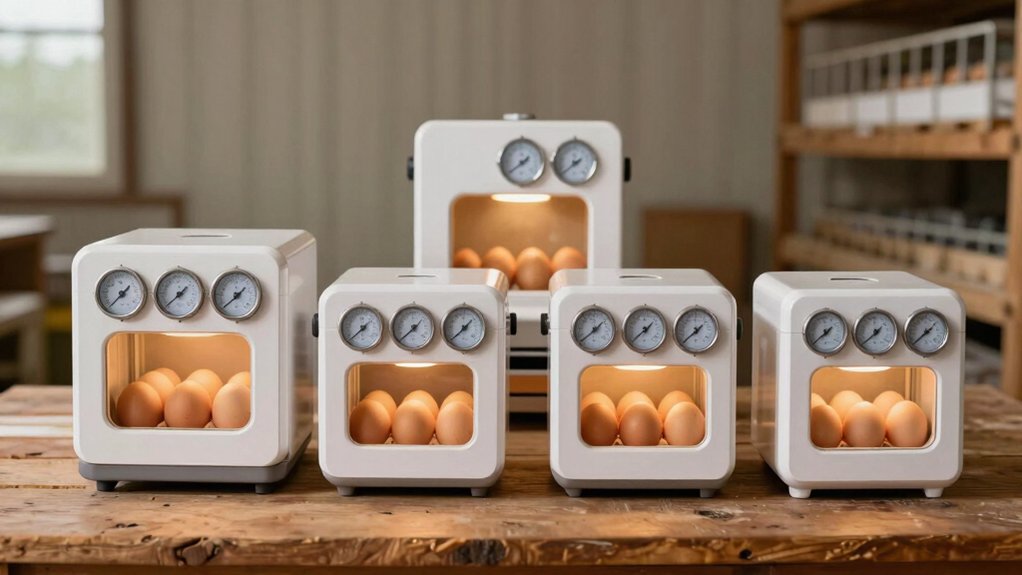

When you’re ready to hatch chicken eggs successfully, you’ll need an incubator that handles temperature, humidity, and egg turning automatically. You’ve got options ranging from compact 12-egg models to larger 48-egg systems, each with specific features designed to reduce your manual work. The right choice depends on your setup size and experience level. Here’s what you need to know before selecting the best incubator for your situation.
| MATICOOPX 20 Egg Incubator with Automatic Turner |

| Compact & Reliable | Egg Capacity: 20 eggs | Automatic Egg Turner: Side-to-side every 60 minutes | Temperature Control: Stable temperature with circulating airflow system | VIEW LATEST PRICE | Read Our Analysis |
| APDOE Automatic Egg Incubator with Temperature Control (12 Eggs) |

| Best for Beginners | Egg Capacity: 12 eggs | Automatic Egg Turner: Horizontal rotation every 2 hours | Temperature Control: Digital control with real-time display | VIEW LATEST PRICE | Read Our Analysis |
| MATICOOPX 30 Egg Incubator with Automatic Turner |

| Best Overall | Egg Capacity: 30 eggs | Automatic Egg Turner: Side-to-side every 60 minutes | Temperature Control: Stable temperature with strong fan circulation | VIEW LATEST PRICE | Read Our Analysis |
| Onsju Automatic Egg Incubator with Humidity Control |

| Most Versatile | Egg Capacity: 18 eggs | Automatic Egg Turner: Customizable 60/120/180 minutes | Temperature Control: Precision digital control within optimal ranges | VIEW LATEST PRICE | Read Our Analysis |
| 48 Egg Incubator with Auto Turner & Digital Control |
| Professional Grade | Egg Capacity: 48 eggs | Automatic Egg Turner: Customizable every 120 minutes (default) | Temperature Control: Digital temperature and humidity control with alarm alerts | VIEW LATEST PRICE | Read Our Analysis |
More Details on Our Top Picks
MATICOOPX 20 Egg Incubator with Automatic Turner
The MATICOOPX 20 Egg Incubator‘s compact & reliable design makes it ideal for beginners who want a straightforward hatching solution. You’ll maintain stable temperatures using the circulating airflow system, which prevents fluctuations that harm embryo development. The automatic turner rotates eggs side-to-side every 60 minutes, then stops three days before hatching to prevent damage. You can monitor embryo progress with the built-in candler without removing eggs. The humidity display lets you track moisture levels, while the external water refilling port lets you add water without opening the lid, avoiding temperature drops. This 20-egg capacity unit includes all necessary accessories, requiring no additional purchases for successful chicken hatching.
- Egg Capacity:20 eggs
- Automatic Egg Turner:Side-to-side every 60 minutes
- Temperature Control:Stable temperature with circulating airflow system
- Built-in Egg Candler:Yes, built-in candler
- Humidity Management:Humidity display; external water refilling
- Auto-Stop Turning Before Hatch:Stops 3 days before hatching
- Additional Feature:External water refilling system
- Additional Feature:Circulating airflow fan system
- Additional Feature:No additional accessories required
APDOE Automatic Egg Incubator with Temperature Control (12 Eggs)
Looking to start hatching chicken eggs without complicated machinery? The APDOE HatchPro 12 handles the process automatically. You get a 12-egg capacity incubator with digital temperature and humidity controls displayed in real time. The unit rotates eggs every 2 hours horizontally, promoting even embryo development. A 360° transparent dome lets you monitor progress without opening the lid. Built-in egg candling tracks development stages. The 2-in-1 humidity system uses an internal tray and dual external water bottles for precise environmental control. Remove the egg tray during the final 3 days for easier handling. Included components cover everything: water bottles, power cord, hatching guide, and user manual. The incubator weighs 3.5 pounds with dimensions of 11L x 5.5W inches. A 3-year limited warranty and 30-day money-back guarantee protect your purchase.
- Egg Capacity:12 eggs
- Automatic Egg Turner:Horizontal rotation every 2 hours
- Temperature Control:Digital control with real-time display
- Built-in Egg Candler:Yes, built-in with 360° transparent dome
- Humidity Management:Advanced multi-stage with AB humidity control tray and dual external water bottles
- Auto-Stop Turning Before Hatch:Removable tray final 3 days
- Additional Feature:360° transparent dome viewing
- Additional Feature:Dual external water bottles
- Additional Feature:3-year limited warranty included
MATICOOPX 30 Egg Incubator with Automatic Turner
MATICOOPX’s 30-egg model stands out for beginners and small-scale operators who need reliable results without complexity. The automatic turner rotates eggs every 60 minutes, eliminating manual turning for 18 days. You’ll monitor humidity through the display window without opening the lid, thanks to external water refilling ports. The built-in candler lets you check embryo development directly inside the incubator. During the final three days, the turner automatically stops, allowing chicks to position themselves for hatching. A strong internal fan maintains stable temperature throughout incubation. Measuring 14.1 by 14.1 by 9.1 inches, this model fits standard spaces while delivering consistent hatch rates.
- Egg Capacity:30 eggs
- Automatic Egg Turner:Side-to-side every 60 minutes
- Temperature Control:Stable temperature with strong fan circulation
- Built-in Egg Candler:Yes, built-in candler
- Humidity Management:Humidity display; external water refilling without opening lid
- Auto-Stop Turning Before Hatch:Stops 3 days before hatching
- Additional Feature:External water refilling system
- Additional Feature:Strong fan circulation airflow
- Additional Feature:Compact 14.1 x 14.1 dimensions
Onsju Automatic Egg Incubator with Humidity Control
Want versatility that covers multiple bird species? The Onsju Automatic Egg Incubator holds 18 standard eggs or 40 smaller eggs, making it ideal for chickens, ducks, quail, and parrots. You’ll control temperature precisely with its digital system and adjust humidity automatically through its sealed water system. The incubator turns eggs on customizable intervals—choose 60, 120, or 180 minutes between turns. Four days before your hatch date, the auto-turn function stops automatically to protect developing embryos. Monitor egg development using the high-intensity LED candling light. Set up according to the manual for optimum performance and longevity in home, classroom, or lab settings.
- Egg Capacity:18 eggs
- Automatic Egg Turner:Customizable 60/120/180 minutes
- Temperature Control:Precision digital control within optimal ranges
- Built-in Egg Candler:Yes, high-intensity LED with 360° dome
- Humidity Management:Auto-regulated humidity system with sealed construction and smart replenishment
- Auto-Stop Turning Before Hatch:Stops 4 days before hatching day
- Additional Feature:Customizable turning intervals (60/120/180)
- Additional Feature:High-intensity LED candling light
- Additional Feature:Holds 40 smaller eggs
48 Egg Incubator with Auto Turner & Digital Control
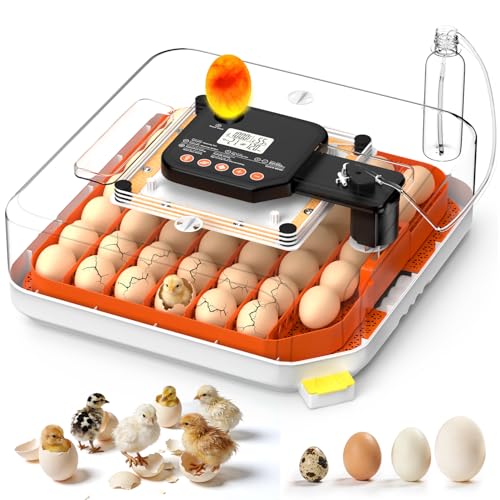
The Dovnis 48H delivers professional-grade automation that removes guesswork from hatching. You’ll load up to 48 chicken eggs and let the auto-turner handle rotation every 120 minutes until day 19. The digital display tracks temperature, humidity, day count, and turning status in real time. An intelligent alarm alerts you if conditions drift beyond ±2°F or ±10% humidity, keeping your hatch on track. The built-in LED candler lets you inspect embryos without opening the lid. On day 19, you remove trays, open vents, and increase humidity for lockdown. External water refill access maintains precise moisture levels while keeping the lid sealed, preventing environment fluctuations that derail hatches.
- Egg Capacity:48 eggs
- Automatic Egg Turner:Customizable every 120 minutes (default)
- Temperature Control:Digital temperature and humidity control with alarm alerts
- Built-in Egg Candler:Yes, built-in LED candler with 360° view
- Humidity Management:External water refill for precise humidity control
- Auto-Stop Turning Before Hatch:Stops during final 3 days
- Additional Feature:Intelligent alarm system alerts
- Additional Feature:Adjustable trays for versatility
- Additional Feature:Large transparent lid observation
Factors to Consider When Choosing a Chicken Egg Incubator
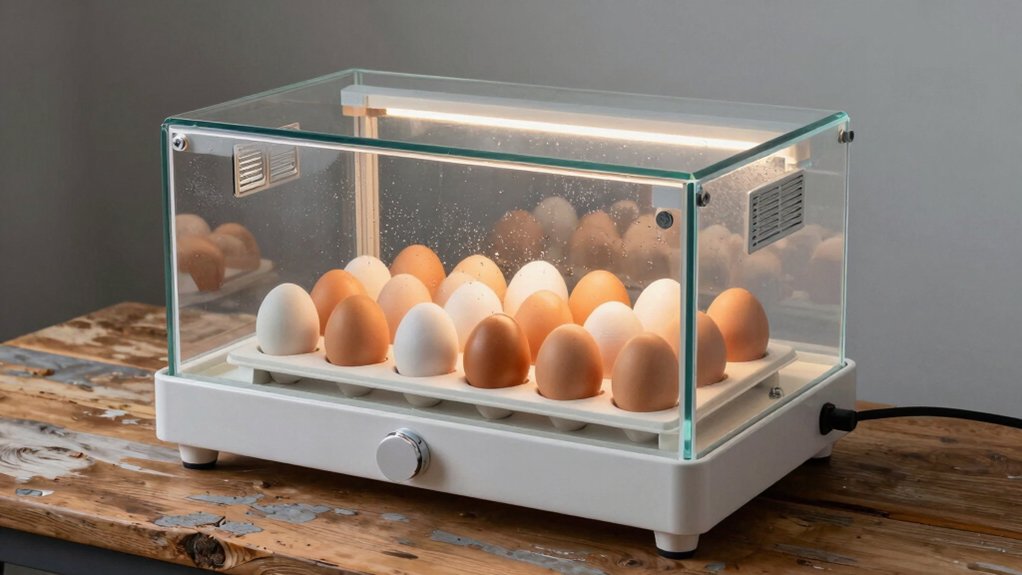
You’ll need to assess five key factors when selecting your incubator: determine how many eggs you want to hatch at once (egg capacity), verify the unit maintains consistent temperature within 0.5 degrees, check that humidity controls keep moisture levels steady between 40-60%, confirm the turner rotates eggs automatically multiple times daily, and ensure you can see inside to monitor progress without opening the lid. Each feature directly affects your hatch rate, so you should prioritize models that combine reliable temperature precision with effective humidity management and automatic turning to reduce manual work and human error. Start by listing your capacity needs and budget, then compare models against these five criteria to narrow down your best options.
Egg Capacity Requirements
How many eggs do you actually need to incubate at once? Start by counting the eggs you want to hatch simultaneously, then add a buffer for infertile or discolored eggs—typically 10–15% extra. Common home incubators hold 12 to 48 eggs, so match capacity to your needs. If you’re managing a larger flock or classroom setting, choose models supporting 30–48 eggs to minimize multiple batches. Lower-capacity models (12–18 eggs) work well for small operations but require frequent reloading. Check whether the incubator offers adjustable tray configurations to accommodate different egg sizes while maintaining stable conditions. This flexibility ensures you can adjust capacity based on seasonal breeding patterns or changing flock size without purchasing multiple units.
Temperature Control Precision
Why does temperature matter more than any other incubator factor? Embryos need consistent heat to develop properly. Fluctuating temperatures cause failed hatches, so you’ll want a model with tight tolerance specifications—ideally ±1°F accuracy or better.
Look for incubators with digital displays and reliable sensors that continuously monitor internal conditions. These components track temperature in real-time and alert you to problems before they damage eggs.
Choose a unit with circulating airflow and built-in fans. These features distribute heat evenly and eliminate hot or cold spots throughout the incubator.
Consider advanced models offering multi-stage temperature management. These adjust settings based on embryo development stages, improving your hatch success rates significantly.
Check the manufacturer’s specifications carefully before purchasing any incubator.
Humidity Management Systems
While temperature keeps embryos developing at the right speed, humidity levels control moisture loss from the egg—a balance that’s just as critical for successful hatches. Look for incubators with built-in humidity control trays or external water refill systems that maintain stable relative humidity without requiring frequent lid openings. Multi-stage systems with 360° airflow and sealed designs distribute moisture uniformly around developing embryos. Consider models featuring automatic humidity regulation paired with vent adjustments and turning schedules that optimize moisture levels during critical hatch windows. Transparent domes and LED candlers let you monitor humidity-related condition changes without disturbing eggs. External water bottles or continuous water supply systems prevent temperature and humidity fluctuations caused by lid openings, keeping your hatch environment consistently stable.
Automatic Turning Features
Successful embryo development hinges on consistent egg rotation, which automatic turning systems deliver by flipping eggs at regular intervals—typically every 60, 120, or 180 minutes depending on your incubator model. You’ll benefit from adjustable turning intervals that match your specific poultry species’ needs. Built-in auto-turn mechanisms reduce manual handling, which stabilizes temperature and humidity by minimizing lid openings. Most quality incubators automatically stop turning three to four days before hatch to prevent embryo damage during final development stages. Look for units with STOP indicators or alerts that notify you when turning has ceased, ensuring you’re prepared for hatch readiness. These features work together to create optimal conditions for successful chicken egg incubation without requiring constant monitoring or intervention.
Monitoring And Visibility
Once you’ve secured reliable automatic turning, you’ll want clear visibility into your incubator to track embryo development and catch problems early. A 360° transparent dome lets you monitor progress without opening the lid, which prevents temperature and humidity fluctuations that harm eggs. Built-in egg candling features enable day-by-day observation without requiring separate equipment. Digital displays showing real-time temperature and humidity readings help you detect deviations immediately. Integrated LED candlers and visual or audible alerts identify issues before they become critical, improving hatch rates. Removable trays and easy-clean designs simplify inspection and maintenance while improving your view of egg contents. These visibility features work together to give you complete control over incubation conditions and embryo health.
Airflow Distribution Quality
Why does airflow matter so much in your incubator? Consistent air circulation prevents temperature and humidity variations that kill developing embryos. You’ll want a centralized circulating fan system rather than small local vents, as it distributes air uniformly across all egg positions. This approach eliminates hot spots and cold spots that reduce hatch rates.
Look for incubators with positive pressure systems. These maintain gentle airflow that keeps external contaminants out while stabilizing internal conditions. Check whether your model offers adjustable or automatic airflow control, allowing you to customize settings for different chicken egg sizes and developmental stages.
Use transparent observation windows to monitor airflow performance without opening the lid and disrupting temperature stability. This monitoring capability lets you verify that air reaches every egg position effectively.
Build Material And Durability
What materials can withstand the constant heat, moisture, and handling that come with regular incubator use? Choose enclosures made from ABS plastic or heavy-duty polycarbonate—both resist cracking and tolerate daily setup and cleaning. Verify that interior components like trays and turning mechanisms use BPA-free or food-grade plastics for durability and safety. Check the lid design and insulation quality; good insulation minimizes heat loss and protects plastic integrity during repeated use cycles. Inspect hinges carefully—sturdy hinges prevent warping and misalignment from frequent opening during candling and monitoring. Finally, evaluate the incubator’s build weight and dimensions to ensure you can safely move and position it without stressing the shell or internal components. These material choices directly impact long-term reliability.
Water Refilling Convenience
Most reliable incubators feature external water refilling systems that let you adjust humidity without lifting the lid—a critical advantage because opening the incubator causes temperature and moisture fluctuations that can harm developing embryos. Look for models with dedicated water refill bottles or integrated reservoirs designed for easy top-ups during incubation. Lid-sealed humidity systems reduce the risk of large fluctuations when you add water. Check whether the incubator offers clear visibility or candling access paired with external refilling so you can monitor conditions without disturbance. The consistency of your water supply and refilling method directly impacts hatch reliability. Evaluate each model’s specific water system before purchasing to ensure it matches your management preferences and supports successful hatches.
Final Thoughts
You’ll select your incubator based on flock size and budget. For small operations, choose the 12-egg APDOE model. For medium flocks, pick the MATICOOPX 20 or 30-egg units. For larger production, invest in the 48-egg system. All models feature automatic turning and temperature control. Before purchasing, verify humidity capacity and candling options match your needs. Set up your incubator one week before adding eggs to ensure stable conditions.

Meet Ry, “TechGuru,” a 36-year-old technology enthusiast with a deep passion for tech innovations. With extensive experience, he specializes in gaming hardware and software, and has expertise in gadgets, custom PCs, and audio.
Besides writing about tech and reviewing new products, he enjoys traveling, hiking, and photography. Committed to keeping up with the latest industry trends, he aims to guide readers in making informed tech decisions.