
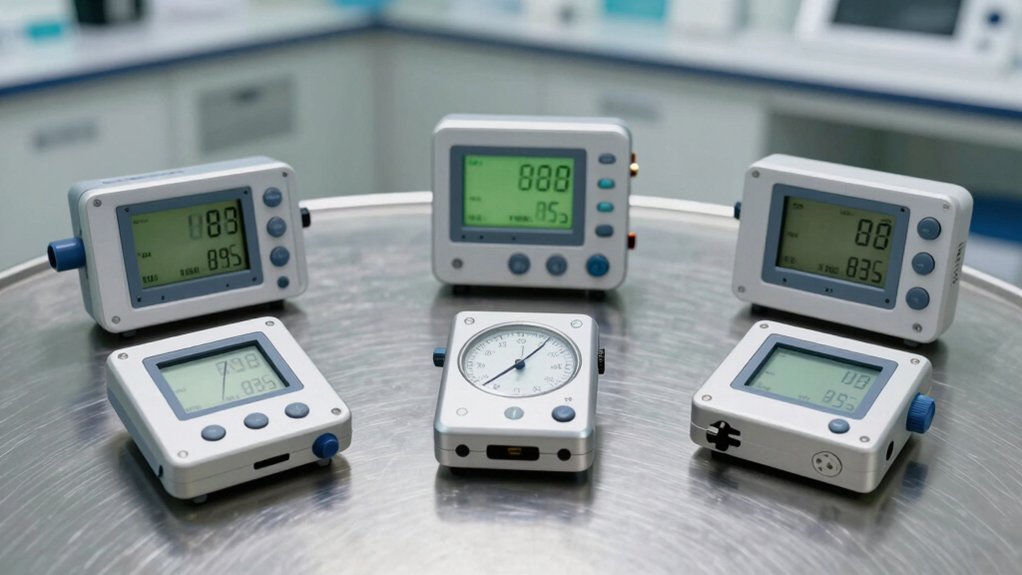

When you need to monitor radiation exposure, you’ll want a dosimeter that delivers accurate, real-time measurements. You can choose from several reliable options—each offering different features like Bluetooth connectivity, data export capabilities, and customizable alarms. Some models prioritize portability; others emphasize advanced analytics. Before you select one, you should understand what factors matter most for your specific monitoring needs.
| Nuclear Radiation Detector GQ GMC-800 Geiger Counter |

| Best Overall | Radiation Types Detected: Beta, Gamma, X-ray | Display Type: Large color LCD (TFT) | Data Connectivity: USB-C with free software | VIEW LATEST PRICE | Read Our Analysis |
| FNIRSI GC-01 Geiger Counter Radiation Detector |

| Budget-Friendly Pick | Radiation Types Detected: Beta, Gamma, X-ray | Display Type: Digital display | Data Connectivity: No wireless mentioned | VIEW LATEST PRICE | Read Our Analysis |
| Extech SL400 Personal Noise Dosimeter with USB Interface |
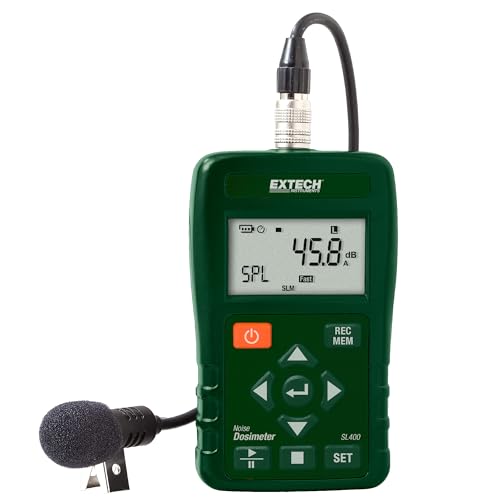
| Specialized Professional Grade | Radiation Types Detected: Not applicable (noise dosimeter) | Display Type: Digital display | Data Connectivity: USB interface with PC software | VIEW LATEST PRICE | Read Our Analysis |
| SAF Aranet Radiation Detector with Bluetooth & App |
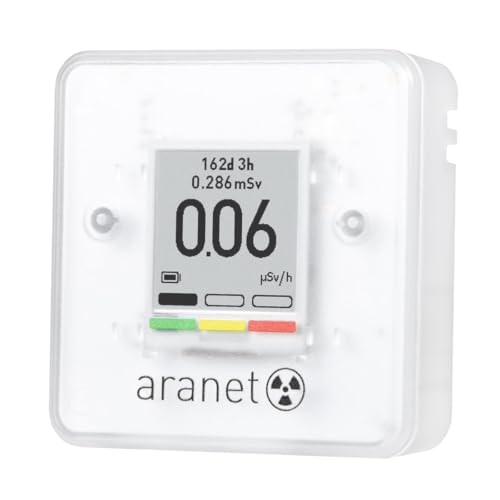
| Best Smart Features | Radiation Types Detected: Ionizing radiation (ambient equivalent dose) | Display Type: E-Ink display | Data Connectivity: Bluetooth with free app | VIEW LATEST PRICE | Read Our Analysis |
| Smart Geiger Counter Radiacode-102 Nuclear Radiation Detector |
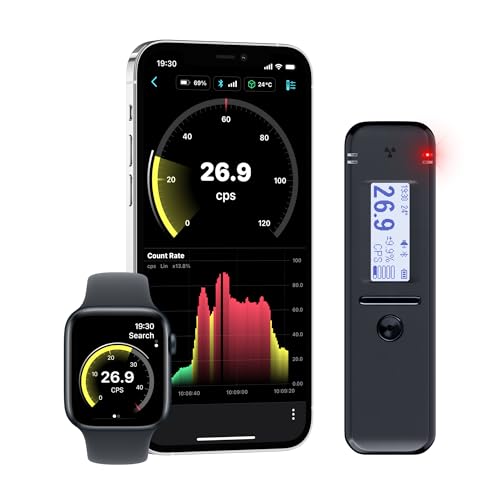
| Advanced Mapping & Analysis | Radiation Types Detected: Gamma, X-ray, hard beta | Display Type: Transflective blue-backlit display | Data Connectivity: Free mobile and desktop apps (iOS, Android, macOS, Windows) | VIEW LATEST PRICE | Read Our Analysis |
More Details on Our Top Picks
Nuclear Radiation Detector GQ GMC-800 Geiger Counter
If you need a radiation detector that works for personal, group, and professional monitoring, the GQ GMC-800 stands out as the top choice across all use cases. This portable device detects beta, gamma, and X-ray radiation with quick, sensitive readings. The large color LCD display shows dosimeter units and radiation data in real time. You’ll access four function screens with one-key shortcuts and choose from five alarm types—visual LED, audio, vibration, and voice—suited for different situations. The built-in memory stores data for up to ten years, which you can transfer via USB-C to a computer using included software. Its rechargeable battery and durable construction make it reliable for extended field use.
- Radiation Types Detected:Beta, Gamma, X-ray
- Display Type:Large color LCD (TFT)
- Data Connectivity:USB-C with free software
- Alarm Modes:Visual (LED), Audio, Vibration, Voice
- Weight:8.8 ounces
- Battery Type:Lithium-Ion (rechargeable)
- Additional Feature:10-year memory storage capacity
- Additional Feature:Five customizable alarm types
- Additional Feature:USA NIST & NRC compliant
FNIRSI GC-01 Geiger Counter Radiation Detector
The FNIRSI GC-01 offers a budget-friendly pick for users who need reliable radiation detection across multiple exposure types. This Geiger counter detects gamma rays, beta particles, and X-rays using a built-in GM detector with an energy range of 48 KeV–1.5 MeV. You can monitor cumulative doses from 0.00 μSv to 500.0 mSv and set custom alarm thresholds for light, vibration, and sound alerts. The device operates one-handed and switches between English and Chinese languages. Alarms trigger automatically when thresholds are exceeded, whether the device is active or in sleep mode. It’s suitable for home radiation checks, geological surveys, vehicle inspections, nuclear facilities, industrial settings, and radiology labs.
- Radiation Types Detected:Beta, Gamma, X-ray
- Display Type:Digital display
- Data Connectivity:No wireless mentioned
- Alarm Modes:Light, Vibration, Sound
- Weight:Not specified
- Battery Type:Not specified
- Additional Feature:48 KeV-1.5 MeV energy range
- Additional Feature:Bilingual interface (English/Chinese)
- Additional Feature:Cumulative dose up to 500 mSv
Extech SL400 Personal Noise Dosimeter with USB Interface
Need to monitor workplace noise exposure accurately? The Extech SL400 Personal Noise Dosimeter with USB Interface measures frequency-weighted noise exposure and peak sound levels for OSHA, ISO, and MSHA compliance. Set sampling times from one second to 24 hours, then retrieve data via USB to your PC software. The device datalogs up to 999,999 readings and displays sound level, minimum/maximum values, Leq averages, peak levels, and sound exposure levels. Adjust criterion levels, exchange rates, and thresholds as needed. This compact dosimeter weighs seven ounces, making it portable for eight-hour accumulation surveys that determine total employee sound exposure and necessary protective measures.
- Radiation Types Detected:Not applicable (noise dosimeter)
- Display Type:Digital display
- Data Connectivity:USB interface with PC software
- Alarm Modes:Not applicable (noise dosimeter)
- Weight:7 ounces
- Battery Type:One battery required (type not specified)
- Additional Feature:OSHA/ISO/DOD/MSHA compliance
- Additional Feature:999,999 reading data capacity
- Additional Feature:Adjustable sampling (1 sec-24 hrs)
SAF Aranet Radiation Detector with Bluetooth & App
Looking for smart features that combine portability with thorough radiation tracking? The SAF Aranet Radiation Detector measures dose rate and total dose using an advanced E-Ink display. You’ll track ambient equivalent dose rates up to 1000 mSv and monitor cumulative exposure over two years. Connect via Bluetooth to the free app, which displays your data graphically and alerts you when radiation levels exceed safe thresholds. The device runs for up to four years on batteries and weighs just 7.8 ounces, fitting easily in your pocket. With dimensions of 5.12 x 4.72 x 1.65 inches, you can carry it during site inspections or routine environmental monitoring without burden or inconvenience.
- Radiation Types Detected:Ionizing radiation (ambient equivalent dose)
- Display Type:E-Ink display
- Data Connectivity:Bluetooth with free app
- Alarm Modes:High radiation level alarm
- Weight:7.8 ounces
- Battery Type:Long-life battery (up to 4 years)
- Additional Feature:Up to 4-year battery life
- Additional Feature:Advanced E-Ink display technology
- Additional Feature:Portable particle counter function
Smart Geiger Counter Radiacode-102 Nuclear Radiation Detector
If you’re mapping radiation hotspots across large areas, Radiacode-102’s advanced mapping and analysis capabilities make it your best choice. This detector identifies gamma, X-ray, and hard beta radiation 20 times faster than standard devices. You’ll use the free app to log GPS coordinates, display real-time readings on Google Maps or offline maps, and analyze radiation spectra to identify likely isotopes. The device measures in CPS, CPM, μSv/h, or μR/h. Set one of seven alarm modes—adjustable sound, LED, or vibration alerts—to notify you of dangerous levels. Battery life and portability support extended fieldwork missions.
- Radiation Types Detected:Gamma, X-ray, hard beta
- Display Type:Transflective blue-backlit display
- Data Connectivity:Free mobile and desktop apps (iOS, Android, macOS, Windows)
- Alarm Modes:Up to seven modes (sound, LED, vibration, app-based alerts)
- Weight:2.36 ounces
- Battery Type:Lithium Polymer
- Additional Feature:20x faster detection speed
- Additional Feature:Real-time GPS radiation mapping
- Additional Feature:Isotope identification via spectrum analysis
Factors to Consider When Choosing a Dosimeter
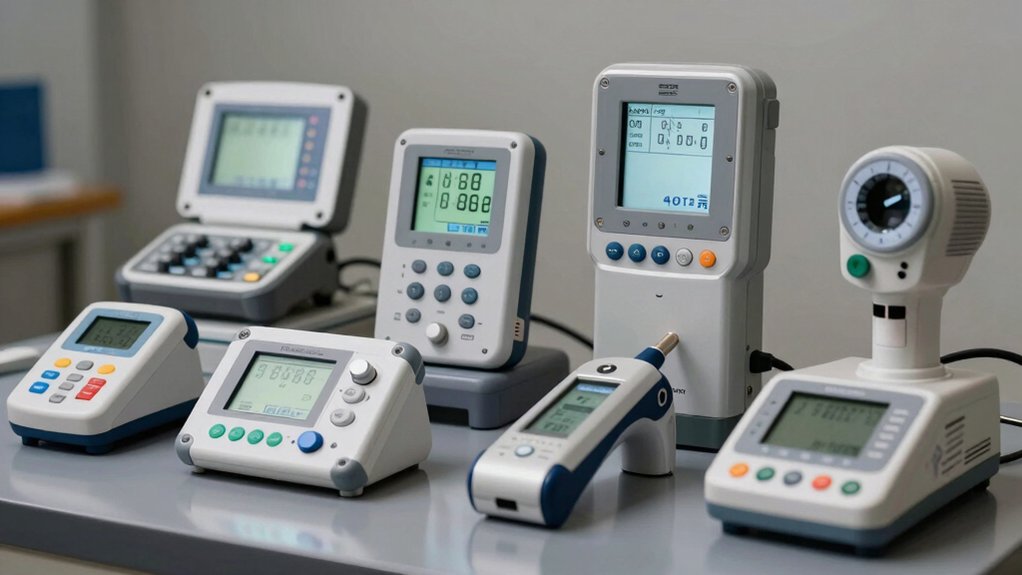
When you’re selecting a dosimeter, you’ll need to evaluate five key factors that directly affect its usefulness: detection range and sensitivity, display quality and readability, battery life and power options, data storage and transfer capabilities, and alarm systems and notifications. Start by determining what radiation types and exposure levels you’ll encounter, then match these requirements to a device’s detection specifications and screen clarity so you can read measurements quickly in various conditions. Finally, assess whether the dosimeter’s power supply, data management features, and alert functions align with your work environment and safety protocols.
Detection Range and Sensitivity
How well a dosimeter detects radiation depends on its detection range and sensitivity—two interconnected specifications that determine what your device can actually measure and how accurately it’ll catch even small exposures. Detection range tells you the minimum and maximum dose levels your dosimeter can reliably register. Sensitivity indicates how responsive it is to specific radiation types like gamma, beta, or X-rays. You’ll need to match your dosimeter’s energy range specification—for example, 48 keV to 1.5 MeV—to the isotopes you’re monitoring. Check the measured units your device reports, such as μSv/h or CPM, since unit conversions affect how quickly you’ll notice changing exposure levels. Select a dosimeter whose detection capabilities align with your monitoring environment and safety requirements.
Display Quality and Readability
Once you’ve confirmed that a dosimeter’s detection range and sensitivity match your monitoring needs, you’ll also want to examine its display quality and readability—because accurate measurements mean nothing if you can’t read them quickly and correctly.
Look for dosimeters with high-visibility displays featuring large fonts and color options that work in bright sunlight and dim conditions. Transflective or TFT/LCD technology improves contrast and legibility in varying light environments. Check that units appear clearly labeled—whether showing CPS, μSv/h, or μR/h—so you interpret readings without confusion.
Choose models with quick-access screens and intuitive navigation menus that minimize time spent decoding information during emergencies. Multi-spectral color indicators and large digits help you assess dose rates against safety thresholds instantly.
Battery Life and Power Options
Your dosimeter’s battery performance directly impacts its reliability during extended monitoring operations, so you’ll want to evaluate both battery type and longevity before making a purchase. Compare rechargeable models with USB-C charging against replaceable battery options—rechargeable units offer convenience, while replaceable batteries enable quick field swaps without downtime. Check the manufacturer’s specifications for multi-year battery life under typical use conditions, which reduces replacement frequency during deployments. Examine power management features like low-power standby modes and auto-sleep functions that extend battery duration between uses. Verify that your dosimeter clearly displays battery status and estimated runtime so you can plan monitoring schedules accurately. These factors ensure your device remains operational when you need it most.
Data Storage and Transfer Capabilities
When evaluating a dosimeter, what matters most is whether it’ll store enough readings without requiring constant data transfers. Look for devices that hold at least 999,999 data points for extended logging periods. Check which interfaces the device supports—USB-C, Bluetooth, or both—so you can transfer data conveniently to your computer or phone. Verify whether the dosimeter records real-time exposure data or accumulated totals, and confirm it timestamps each entry for accurate dosimetry history. Next, confirm the software compatibility with your existing systems and whether it offers free processing tools or online storage. Finally, ensure the device exports data in standard formats like CSV so you can integrate readings into your analysis workflows without compatibility issues.
Alarm Systems and Notifications
How’ll you know when radiation exposure reaches dangerous levels? Dosimeters provide multiple alert methods to catch dangerous doses before they harm you. You can choose from visual alerts using LEDs, auditory warnings with sounds, vibration notifications, or voice alerts depending on your sensory preferences. Configure your alarm thresholds for either current dose rate or cumulative dose—whichever matches your work situation. Select multi-mode alerts that function whether your device sleeps or stays active, ensuring you won’t miss critical warnings. Adjust trigger levels and repetition settings to prevent alert fatigue while maintaining safety. Use real-time displays or companion apps that show alarms through graphs and color-coded danger levels, helping you interpret radiation exposure quickly and accurately.
Portability and Physical Design
What makes a dosimeter truly portable? Weight and compact dimensions determine how easily you’ll carry it through fieldwork. Look for handheld, pocket-sized designs that fit your work environment. Consider 2–5 inch displays paired with slim profiles—these devices clip to belts, fit in pockets, or stand hands-free on flat surfaces. Battery life directly impacts portability; select models with long-lasting or user-replaceable batteries to avoid frequent recharging during extended work. Evaluate build materials for durability—lightweight construction, anti-drop capability, and shatter-resistant features reduce carrying strain and protect your investment in outdoor or industrial settings. Check mounting options: devices that stand on two sides, include belt clips, or attach via lanyards offer flexibility across different tasks and locations. These features combine to ensure your dosimeter stays accessible whenever you need it.
Final Thoughts
You’ve reviewed five reliable dosimeters suited for different radiation monitoring needs. To choose yours, evaluate your specific requirements: portability, budget, alarm preferences, and data export needs. Compare the GMC-800’s affordability against the Radiacode-102’s advanced features. Check whether you need Bluetooth connectivity or USB compatibility. Test the device’s interface before purchasing. Select the model that matches your monitoring environment and technical comfort level.

Meet Ry, “TechGuru,” a 36-year-old technology enthusiast with a deep passion for tech innovations. With extensive experience, he specializes in gaming hardware and software, and has expertise in gadgets, custom PCs, and audio.
Besides writing about tech and reviewing new products, he enjoys traveling, hiking, and photography. Committed to keeping up with the latest industry trends, he aims to guide readers in making informed tech decisions.