

If you’re setting up a multi-zone audio system, you’ll need to choose the right speaker switch selector box to connect your amplifiers and speakers efficiently. You can pick from passive models that require no power, like the P2 and Cubilux AS-BS1, or powered options with additional features like the Pyle PSS4 and Monoprice SSVC-4.1. Each type offers different zone configurations and connection options. Here’s what separates the best from the rest.
| Pyle 4 Zone Speaker Switch Selector Box (PSS4) |

| Best For Small Systems | Configuration Type: 4-zone multi-speaker distribution | Power Handling: 100W per channel | Speaker Impedance: 8 ohms minimum | VIEW LATEST PRICE | Read Our Analysis |
| P2 2-in-1 Amp Speaker Switcher Splitter |
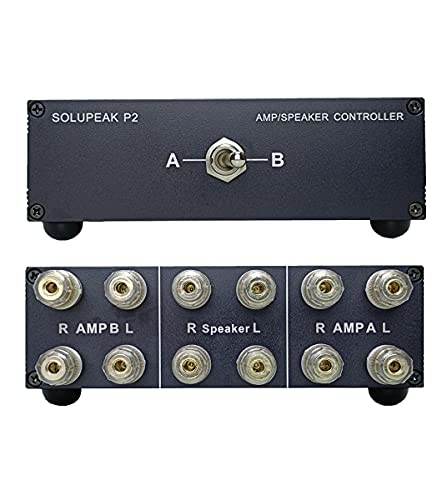
| Most Compact | Configuration Type: 2-in-1-out or 1-in-2-out switching | Power Handling: 100W RMS / 200W peak per channel | Speaker Impedance: Not specified | VIEW LATEST PRICE | Read Our Analysis |
| Pyle 8 Zone Speaker Switch Selector Box (PSS8) |
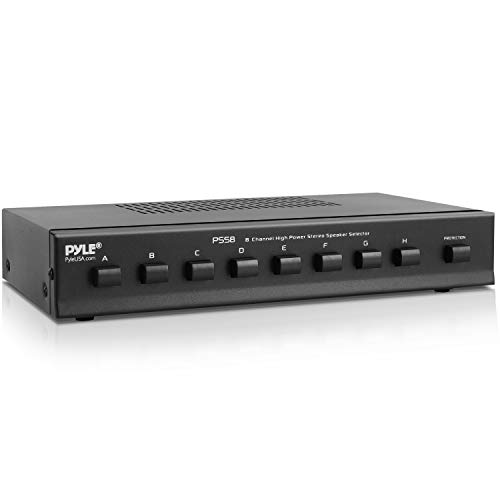
| Best For Multi-Room | Configuration Type: 8-zone multi-speaker distribution | Power Handling: High-power (specific wattage not stated) | Speaker Impedance: Not specified | VIEW LATEST PRICE | Read Our Analysis |
| ET30 VU Meter Amplifier Speaker Selector Switch Box |

| Best Aesthetics | Configuration Type: 2-in-2-out amplifier and speaker switching | Power Handling: Class A/B/AB and tube amplifier compatible (specific wattage not stated) | Speaker Impedance: Compatible with all amplifier classes (impedance not specified) | VIEW LATEST PRICE | Read Our Analysis |
| PROZOR 2-in-1 Amp Speaker Switcher Selector Box |

| Budget-Friendly Pick | Configuration Type: 2-in-1-out or 1-in-2-out switching | Power Handling: 100W RMS / 200W peak per channel | Speaker Impedance: Not specified | VIEW LATEST PRICE | Read Our Analysis |
| Pyle 4 Channel Speaker Selector Switch (PSLSW4) |
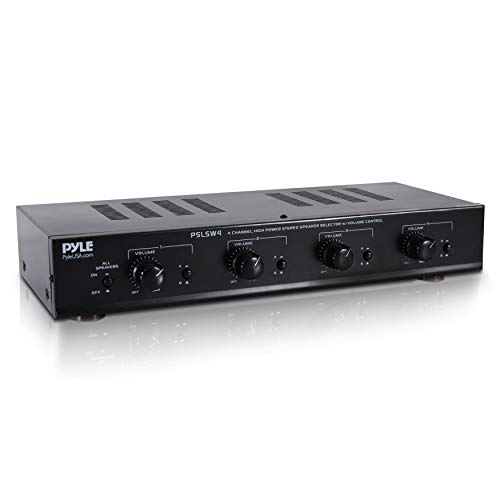
| Best With Volume Control | Configuration Type: 4-zone multi-speaker distribution with volume control | Power Handling: 100W max per channel | Speaker Impedance: 8 ohm impedance speakers | VIEW LATEST PRICE | Read Our Analysis |
| 2-Way Audio Speaker Selector Switcher Box (P21) |

| Most Affordable | Configuration Type: 2-way speaker pair switching | Power Handling: 80W max per channel | Speaker Impedance: 8-16 ohms | VIEW LATEST PRICE | Read Our Analysis |
| Monoprice SSVC-4.1 4-Channel Speaker Selector with Volume Control |
| Best Overall | Configuration Type: Single input 4-channel speaker selector with volume control | Power Handling: 100W continuous / 200W peak per channel | Speaker Impedance: 4-8 ohm speakers with impedance protection | VIEW LATEST PRICE | Read Our Analysis |
| Cubilux AS-BS1 2-Way Speaker Selector Switch Box |
| Premium Build Quality | Configuration Type: 2-in-1-out or 1-in-2-out bidirectional switching | Power Handling: High-fidelity passive (specific wattage not stated) | Speaker Impedance: Not specified | VIEW LATEST PRICE | Read Our Analysis |
More Details on Our Top Picks
Pyle 4 Zone Speaker Switch Selector Box (PSS4)
The Pyle PSS4 speaker switch works well for small audio systems with multiple speaker pairs. This 4-zone selector box lets you connect up to four separate speaker pairs to one stereo amplifier using A/B/C/D switches. You can handle 100 watts per channel, making it suitable for moderate-powered systems. The unit accepts speaker wires up to 14-gauge and requires a minimum impedance of 8 ohms. Its compact dimensions—7.48 inches wide, 1.97 inches high, and 4.72 inches deep—fit easily into most audio setups. Simply route your speaker wires into the appropriate terminals, select your desired zone, and control which speakers receive audio from your amplifier.
- Configuration Type:4-zone multi-speaker distribution
- Power Handling:100W per channel
- Speaker Impedance:8 ohms minimum
- Connection Type:Speaker wire (14-gauge max)
- Power Source:Passive (no power required)
- Control Interface:A/B/C/D selector switches
- Additional Feature:Supports 4 separate speaker pairs
- Additional Feature:Compact tabletop footprint design
- Additional Feature:14-gauge speaker wire compatible
P2 2-in-1 Amp Speaker Switcher Splitter
Looking to compare two amplifiers or switch between speaker pairs without rewiring? The P2 2-in-1 offers flexible switching in two configurations. Use the 2-IN-1-OUT mode to connect two amplifiers to one speaker pair, or select 1-IN-2-OUT to route one amplifier to two speaker pairs. Press the single A/B button to switch between your choices instantly. This passive device requires no power—just plug in your banana-jack connections and start switching. The 100W RMS and 200W Peak rating per channel handles most home audio setups. Connect speaker wires with banana plugs directly to the gold-plated jacks. You’ll appreciate the quick comparisons without disconnecting cables each time.
- Configuration Type:2-in-1-out or 1-in-2-out switching
- Power Handling:100W RMS / 200W peak per channel
- Speaker Impedance:Not specified
- Connection Type:Gold-plated banana jacks
- Power Source:Passive (no power required)
- Control Interface:Single-button A/B switch
- Additional Feature:Reversible 2-in-1/1-in-2-out configuration
- Additional Feature:Gold-plated banana jack connectors
- Additional Feature:Passive plug-and-play operation
Pyle 8 Zone Speaker Switch Selector Box (PSS8)
Need to control multiple speakers from one amplifier? The Pyle PSS8 gives you eight channels to distribute audio across different zones. Connect your amplifier to the main input, then route speaker pairs to individual channels using the 4-pin mini DIN connectors. Each zone operates independently, so you can select which speakers play at any time. The black selector box weighs 16 ounces and runs on battery power. With A/B/C/D switch configurations, you’ll manage six speaker pairs effortlessly. This high-power stereo selector handles multi-room setups without complications. At 4.5 stars from 495 reviews, customers confirm its reliability for distributed audio systems.
- Configuration Type:8-zone multi-speaker distribution
- Power Handling:High-power (specific wattage not stated)
- Speaker Impedance:Not specified
- Connection Type:4-pin mini DIN connectors
- Power Source:Battery powered
- Control Interface:8-channel selector switches
- Additional Feature:Distributes to 8 channels simultaneously
- Additional Feature:Multi-room/multi-speaker setup capable
- Additional Feature:4-pin mini DIN connectors
ET30 VU Meter Amplifier Speaker Selector Switch Box
Want a speaker switcher that doesn’t sacrifice visual appeal for functionality? The ET30 combines retro design with practical switching capabilities. You’ll control two amplifiers and two speaker pairs using either the front button or remote control. The unit features dual 85×45 mm VU meters with adjustable brightness across five levels and 34 color options. Power the device via micro-USB 5V connection. Use stand-alone mode to activate only speaker A or speaker B—never both simultaneously. A built-in dummy load protects your Class A amplifiers when a channel isn’t selected. Fully isolated channels with independent grounds ensure seamless integration without performance interference.
- Configuration Type:2-in-2-out amplifier and speaker switching
- Power Handling:Class A/B/AB and tube amplifier compatible (specific wattage not stated)
- Speaker Impedance:Compatible with all amplifier classes (impedance not specified)
- Connection Type:Speaker-level connections (isolated channels)
- Power Source:Micro-USB 5V powered
- Control Interface:Button and remote control switching
- Additional Feature:Dual VU meters with backlighting
- Additional Feature:34 customizable color options available
- Additional Feature:Built-in dummy load protection
PROZOR 2-in-1 Amp Speaker Switcher Selector Box
The PROZOR 2-in-1 Amp Speaker Switcher Selector Box is the budget-friendly pick for anyone juggling multiple amplifiers or speaker pairs. You’ll connect two amps to one speaker set or one amp to two speaker sets using gold-plated banana plugs. The A/B switch lets you select which input or output you’re using—only one at a time. It requires no power and doesn’t affect sound quality. With a 100W RMS rating per channel and 200W peak capacity, this plug-and-play device handles most passive speakers and amplifiers. Internal UL1007 18 AWG wiring supports up to 12-gauge connections, making it suitable for straightforward switching scenarios without simultaneous playback.
- Configuration Type:2-in-1-out or 1-in-2-out switching
- Power Handling:100W RMS / 200W peak per channel
- Speaker Impedance:Not specified
- Connection Type:Gold-plated banana jacks
- Power Source:Passive (no power required)
- Control Interface:Simple A/B switch operation
- Additional Feature:Gold-plated banana plug connectors
- Additional Feature:18 AWG internal wiring quality
- Additional Feature:No sound quality impact design
Pyle 4 Channel Speaker Selector Switch (PSLSW4)
Managing multiple speaker pairs across different rooms? The Pyle PSLSW4 handles up to four speaker pairs simultaneously. Connect your amplifier’s left and right outputs to the A/B inputs using screw-type terminals that accept 14 AWG speaker wire. Use the push buttons on the front panel to activate each speaker pair independently. Adjust volume for each pair with the rotary knobs without affecting others. The device supports 8-ohm impedance speakers at 100 watts maximum per channel. Built-in overload protection circuitry safeguards your equipment during extended use. This compact tabletop design works for home theater systems, stereo setups, and multi-zone audio distribution.
- Configuration Type:4-zone multi-speaker distribution with volume control
- Power Handling:100W max per channel
- Speaker Impedance:8 ohm impedance speakers
- Connection Type:Screw-type terminals (14 AWG max)
- Power Source:Passive (no power required)
- Control Interface:Push-button switches with rotary volume knobs
- Additional Feature:Independent volume control per channel
- Additional Feature:Overload protection circuitry included
- Additional Feature:Master speaker switch provided
2-Way Audio Speaker Selector Switcher Box (P21)
Looking for an affordable way to control multiple speakers? The TENEALAY P21 handles up to two speaker pairs connected to one stereo amplifier. This compact metal box supports 80W maximum power per channel and works with 8–16 ohm impedances. You’ll connect RCA cables and accept speaker wire up to 14 AWG. Two independent switches let you operate speakers simultaneously or separately. Before connecting, turn off your amplifier. Check all cables before powering on. Avoid turning both switches off simultaneously during startup, as this no-load condition may damage equipment. The P21 works with Blu-ray players, gaming consoles, and televisions, offering straightforward multi-zone audio distribution.
- Configuration Type:2-way speaker pair switching
- Power Handling:80W max per channel
- Speaker Impedance:8-16 ohms
- Connection Type:RCA connectors
- Power Source:Passive (no power required)
- Control Interface:Two parallel control switches
- Additional Feature:Simultaneous or separate operation modes
- Additional Feature:Compatible with multiple device types
- Additional Feature:RCA connector compatibility included
Monoprice SSVC-4.1 4-Channel Speaker Selector with Volume Control
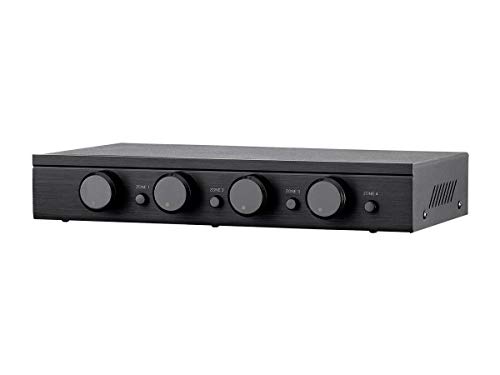
Need to run four separate speaker pairs from one amplifier? The Monoprice SSVC-4.1 lets you do exactly that. This selector handles up to four zones with individual on/off buttons and independent volume controls for each pair. You’ll connect your amplifier to the single input, then wire up to four speaker pairs using the heavy-duty screw-type connectors that accept 12-18 AWG wire. The unit supports both 4-ohm and 8-ohm speakers safely, with impedance protection circuitry that prevents damage. You control each zone independently from the front panel, switching speakers on or off as needed. Its resistor-based impedance matching ensures your amplifier stays protected regardless of your speaker configuration.
- Configuration Type:Single input 4-channel speaker selector with volume control
- Power Handling:100W continuous / 200W peak per channel
- Speaker Impedance:4-8 ohm speakers with impedance protection
- Connection Type:Heavy-duty screw-type connectors (12-18 AWG)
- Power Source:Passive (no power required)
- Control Interface:Front-panel push buttons with independent volume controls
- Additional Feature:Isolated left/right circuit grounds
- Additional Feature:Impedance protection circuitry included
- Additional Feature:Resistor-based impedance matching technology
Cubilux AS-BS1 2-Way Speaker Selector Switch Box
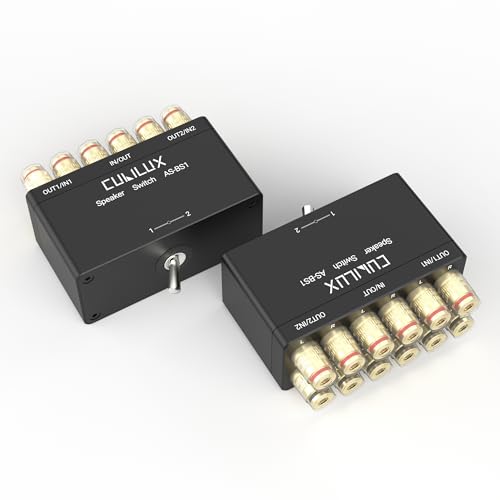
The Cubilux AS-BS1 delivers premium build quality in a compact aluminum enclosure that won’t compromise your audio setup’s integrity. This passive 2-way speaker selector uses gold-plated banana jacks to minimize signal loss and corrosion. You can configure it as either 1-in-2-out or 2-in-1-out, depending on your amplifier and speaker arrangement. Simply connect your devices to the four connectors, then use the clearly labeled toggle switches to select between sources or speakers instantly. The design requires no external power, making installation straightforward. Its durable construction handles frequent switching without degradation, delivering consistent audio clarity for music and movies across compatible receivers, gaming consoles, and televisions.
- Configuration Type:2-in-1-out or 1-in-2-out bidirectional switching
- Power Handling:High-fidelity passive (specific wattage not stated)
- Speaker Impedance:Not specified
- Connection Type:Gold-plated banana jacks
- Power Source:Passive (no power required)
- Control Interface:Toggle switches for A/B selection
- Additional Feature:Full-metal aluminum alloy enclosure
- Additional Feature:Gold-plated corrosion-resistant jacks
- Additional Feature:Minimal signal loss design
Factors to Consider When Choosing a Speaker Switch Selector Box
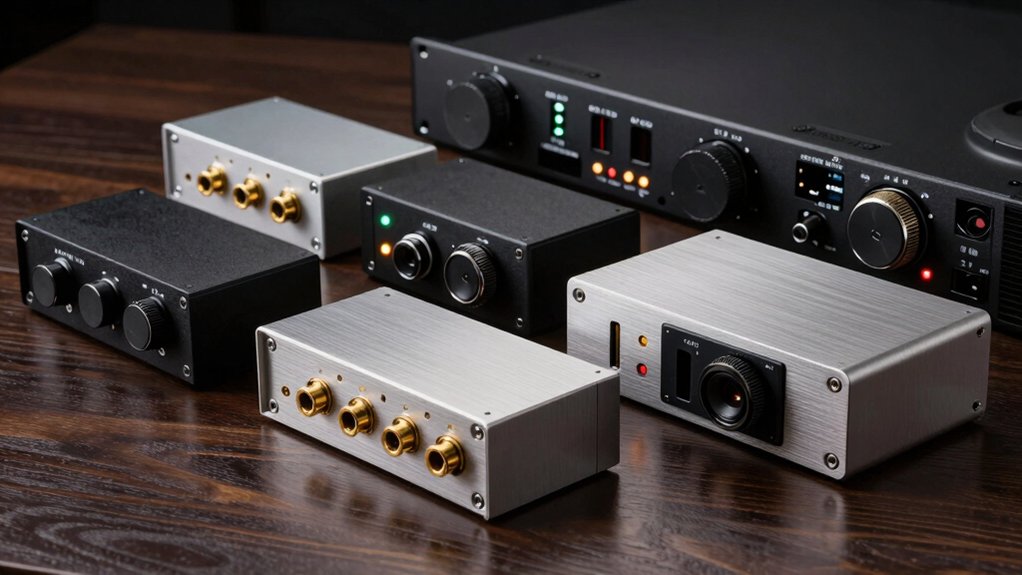
When selecting a speaker switch selector box, you’ll need to evaluate five key factors: power handling capacity (measured in watts), the number of speaker zones you want to control simultaneously, connection type compatibility (RCA, XLR, or binding posts), wire gauge acceptance (typically 12 to 16 AWG), and impedance requirements (usually 4 to 8 ohms). Start by calculating your amplifier’s total wattage and matching it to the box’s rated capacity, then count how many separate speaker locations you need to manage. Finally, confirm that the box accepts the cable types and gauges you currently own or plan to use, and verify that its impedance range matches your speakers and amplifier specifications.
Power Handling Capacity
How do you know if a speaker switch selector box can handle your amplifier’s output without damage? Check your amplifier’s continuous RMS power rating first—this is your baseline requirement. Next, verify the switch’s power handling capacity per channel matches or exceeds your amplifier’s RMS output. For example, if your amp delivers 100W RMS per channel, your switch must support at least 100W per channel. Don’t rely solely on peak power ratings; these reflect brief spikes, not sustained operation. Additionally, confirm the switch’s minimum speaker impedance matches your setup, typically 8 ohms. For multi-channel switches, calculate total simultaneous load across all connected speaker pairs. Exceeding either per-channel or total limits risks overheating and equipment failure. Always prioritize continuous power specifications over peak ratings.
Number Of Speaker Zones
What zone count do you actually need? Start by counting the rooms or areas where you’ll place speakers. A 2-zone unit controls two independent speaker outputs, making it suitable for two rooms or adjacent areas. A 4-zone unit, like the Pyle PSS4, supports four separate speaker pairs, expanding your multi-room setup. An 8-zone unit offers eight independent outputs for larger homes or complex installations. Next, consider your listening habits. Do you want different audio in each space simultaneously, or will you use one or two rooms regularly? Each zone includes independent on/off switching and control, letting you customize which speakers play at any time. Match your zone count to your actual room count plus one for flexibility.
Connection Type Compatibility
Once you’ve settled on your zone count, you’ll need to verify that the switch box’s connectors match your amplifier and speaker cables. Most boxes use one of three connection types: banana plugs, RCA connectors, or screw terminals. Banana plugs offer quick connections but require compatible jacks on your equipment. RCA connectors work well for audio signals but aren’t ideal for high-power speaker connections. Screw terminals accept 12–14 AWG bare wire and suit permanent installations. Check your amplifier’s output connectors first, then match them to your speaker cables. Some boxes enforce 8-ohm minimum impedance requirements. If your amp uses floating outputs, confirm the box supports isolated ground configurations. Mismatched connectors force you to buy adapters or replace cables entirely, so verify compatibility before purchasing.
Wire Gauge Acceptance
Why does wire gauge matter for your speaker switch box? The wire gauge acceptance rating determines the maximum thickness your switch can safely handle. Most boxes accept 14 AWG or 12 AWG wire. Thicker wire (lower AWG numbers) reduces resistance and improves current handling across multiple channels. Using wire thinner than the box’s minimum acceptance rating causes overheating, increased resistance, and poor audio quality. Check your switch’s specifications first, then match your speaker wire accordingly. Verify that your chosen terminal type—screw terminals or banana plugs—accommodates your wire gauge. This compatibility prevents loose connections and safety hazards. Select 12 AWG wire for systems with multiple channels or longer cable runs to maintain optimal performance and safe power delivery at rated wattages.
Impedance Requirements
Beyond matching your wire gauge to the switch box, you’ll also need to confirm that the device’s impedance rating works with your amplifier and speakers. Check your amplifier’s minimum impedance requirement—most units specify 8 ohms or 8–16 ohms for safe operation. Next, verify your speakers’ impedance, typically 4 ohms or 8 ohms. When connecting multiple speaker pairs through one switch, calculate the total load to ensure it doesn’t drop below the minimum impedance per channel. Some selector boxes include impedance protection circuitry to prevent amp strain and clipping. Units with isolated grounds or impedance matching resistors maintain proper loading across zones and reduce signal loss. Always cross-reference your switch box’s impedance specifications against both your amplifier and speaker configuration before installation to avoid equipment damage.
Control Features Available
When you’re selecting a speaker switch box, you’ll want to examine what control options it offers to manage your audio setup. Some models provide per-zone controls that let you adjust volume independently for each speaker pair, giving you customized listening in different rooms. Look for units with dedicated on/off switches for individual zones, allowing you to activate only the speakers you need. Many selector boxes feature A/B/C/D configurations that let you alternate between different inputs or outputs without playing multiple sources simultaneously. Check whether the box includes a master volume control for overall system adjustment. These control features determine how flexibly you can operate your speakers and amplifiers, so match them to your specific listening requirements and room setup.
Physical Design Form
How’ll you fit a speaker switch box into your setup? Start by measuring your available space—whether you’re mounting in a rack or placing on a shelf. Compact 4-zone boxes measure around 7.48″ W x 1.97″ H x 4.72″ D, fitting tight spaces easily. Larger 8-zone hubs demand more room but offer expanded capacity. Next, examine the enclosure material. Metal housings reduce electromagnetic interference and dissipate heat effectively, making them ideal for high-power installations. Finally, check connector compatibility. Screw-type terminals accommodate 14-18 AWG wire, while banana plugs and 4-Pin Mini DIN connectors require matching cables. Verify your existing speaker cables match the available connection types before purchasing. This ensures seamless integration without requiring additional adapters or rewiring.
Amplifier Configuration Support
What amplifier setup do you currently have—one amp powering a single speaker pair, or multiple amps running different zones? Your answer determines which selector box configuration you need. If you’re running two amplifiers into one speaker pair, you’ll want a 2-in/1-out box. Conversely, if one amplifier drives two separate speaker pairs, select a 1-in/2-out model instead. Check your amplifier’s maximum power output, typically around 100 W RMS per channel, and match it against the selector box’s rated capacity. Most boxes handle standard 8-ohm or 4–8 ohm impedance loads. Verify your connections—banana plugs, screw terminals, or RCA inputs—align with both your amplifier outputs and speaker wiring before purchasing. This prevents mismatches that stress equipment.
Final Thoughts
You’ll find the right speaker switch selector box by matching your needs to available features. Count your zones and amplifiers to determine capacity requirements. Choose passive models for simple setups without power constraints, or active units for volume control. Verify impedance compatibility with your speakers. Check connection types—DIN, screw-terminal, or standard inputs. Compare build quality and budget, then select accordingly.

Meet Ry, “TechGuru,” a 36-year-old technology enthusiast with a deep passion for tech innovations. With extensive experience, he specializes in gaming hardware and software, and has expertise in gadgets, custom PCs, and audio.
Besides writing about tech and reviewing new products, he enjoys traveling, hiking, and photography. Committed to keeping up with the latest industry trends, he aims to guide readers in making informed tech decisions.