
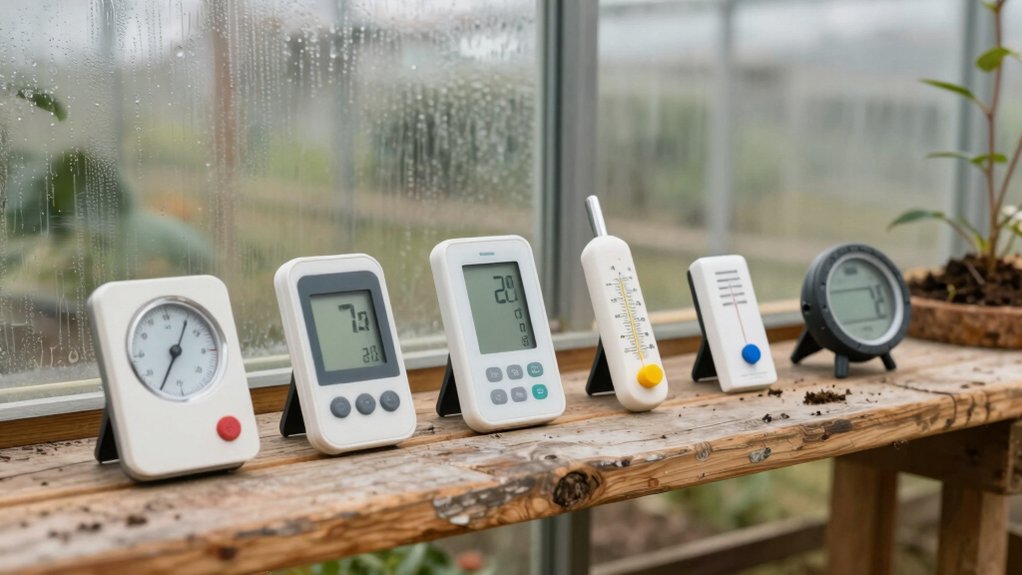

When you’re managing a greenhouse, temperature and humidity control directly affect your crop’s success. You need a thermometer that delivers accurate readings quickly and fits your specific setup. You have several options: basic mechanical models that require no batteries, digital units with fast refresh rates, or smart devices that send alerts to your phone. Each approach has distinct advantages depending on your operation’s size and complexity. The right choice depends on understanding what each model actually offers you.
| TempPro TP150 Greenhouse Thermometer Hygrometer with Records |
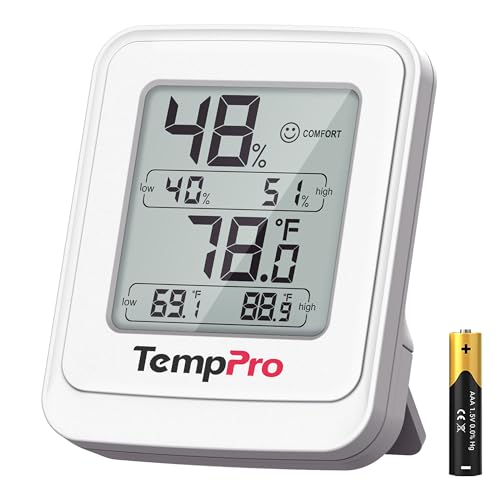
| Best for Beginners | Temperature Accuracy: ±1°F | Humidity Accuracy: ±2% RH | Display Type: LCD with large bold digits | VIEW LATEST PRICE | Read Our Analysis |
| DOQAUS Digital Hygrometer Indoor Thermometer Humidity Meter |

| Most Affordable | Temperature Accuracy: ±1°F | Humidity Accuracy: ±5% RH | Display Type: 2.3-inch LCD with large bold numbers | VIEW LATEST PRICE | Read Our Analysis |
| Govee Digital Hygrometer Thermometer with Bluetooth App Control |

| Smart Monitoring Pick | Temperature Accuracy: ±0.54°F | Humidity Accuracy: ±3% RH | Display Type: 3-inch bright LCD with large numbers | VIEW LATEST PRICE | Read Our Analysis |
| ThermoPro Bluetooth Thermometer Hygrometer with App Control (TP351) |

| Best Remote Access | Temperature Accuracy: ±0.5°F | Humidity Accuracy: ±2% RH | Display Type: App-based digital readout | VIEW LATEST PRICE | Read Our Analysis |
| Outdoor/Indoor Thermometer Hygrometer with Celsius/Fahrenheit by DWEPTU |
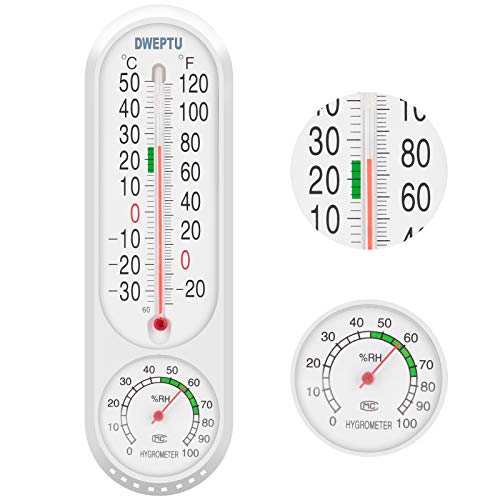
| Battery-Free Reliability | Temperature Accuracy: Analog (mechanical) | Humidity Accuracy: Analog (mechanical) | Display Type: Analog dial | VIEW LATEST PRICE | Read Our Analysis |
More Details on Our Top Picks
TempPro TP150 Greenhouse Thermometer Hygrometer with Records
Are you starting your first greenhouse setup? The TempPro TP150 monitors temperature and humidity in real time, updating every 10 seconds. It displays current readings on a large LCD screen with bold digits you’ll easily read from across your greenhouse. The device tracks 24-hour maximum and minimum values for both measurements, helping you identify temperature swings and humidity patterns. Its IPX5 waterproof design handles high moisture without damage. You can place it on a shelf using the included stand or attach it to metal surfaces with the magnetic back. Temperature accuracy is ±1°F, and humidity accuracy is ±2% RH, making it reliable for plant care decisions.
- Temperature Accuracy:±1°F
- Humidity Accuracy:±2% RH
- Display Type:LCD with large bold digits
- Smart/Remote Monitoring:No remote capability
- Mounting Options:Magnetic back and tabletop stand
- Temperature Range:Up to 140°F
- Additional Feature:24-hour max/min records
- Additional Feature:IPX5 waterproof design
- Additional Feature:Instant comfort indicators
DOQAUS Digital Hygrometer Indoor Thermometer Humidity Meter
Looking for budget-friendly greenhouse monitoring? The DOQAUS Digital Hygrometer delivers accurate temperature and humidity readings with a 2.3-inch LCD display. You’ll get ±1°F temperature accuracy and ±5% humidity accuracy, refreshing every 5 seconds. Mount it using the hanging hole, tabletop stand, or magnet—choose based on your greenhouse layout. The device displays three air condition icons: DRY, COMFORT, and WET, helping you quickly assess conditions. Switch between Fahrenheit and Celsius with a simple button. No batteries required, so you’ll avoid maintenance hassles. At compact 1.8 by 2.3 inches, it fits tight spaces easily. With 18,872 customer reviews and a 4.4/5 rating, this model offers reliable performance for controlled growing environments.
- Temperature Accuracy:±1°F
- Humidity Accuracy:±5% RH
- Display Type:2.3-inch LCD with large bold numbers
- Smart/Remote Monitoring:No remote capability
- Mounting Options:Hanging hole, tabletop stand, magnet
- Temperature Range:Up to 158°F
- Additional Feature:℉/℃ switchable button
- Additional Feature:No batteries required
- Additional Feature:3 mounting options
Govee Digital Hygrometer Thermometer with Bluetooth App Control
The Govee H5075 is your smart monitoring pick for remote greenhouse management. You’ll receive two alkaline batteries, a user manual, and the device itself. The 3-inch LCD display shows temperature and humidity with comfort indicators. You can monitor conditions up to 164 feet away via Bluetooth app control. Set custom alerts for temperature and humidity ranges, then receive instant notifications when levels shift. Access 20-day graphs directly in the app and export two years of data as CSV files. Temperature accuracy reaches ±0.54°F while humidity accuracy is ±3%RH. The device measures 2.5 by 3.1 inches and refreshes data every two seconds for real-time greenhouse oversight.
- Temperature Accuracy:±0.54°F
- Humidity Accuracy:±3% RH
- Display Type:3-inch bright LCD with large numbers
- Smart/Remote Monitoring:Bluetooth app control up to 164 ft
- Mounting Options:Magnetic or hanging mount
- Temperature Range:Up to 140°F
- Additional Feature:20-day temperature/humidity graphs
- Additional Feature:2-second refresh rate
- Additional Feature:Export 2-year CSV data
ThermoPro Bluetooth Thermometer Hygrometer with App Control (TP351)
Want to monitor your greenhouse conditions without stepping outside? The ThermoPro TP351 offers remote temperature and humidity tracking via Bluetooth up to 260 feet away. Set it up by installing batteries and downloading the app—no complicated wiring required. You’ll receive alerts when conditions drift outside your target range, view a one-year data history, and export records for analysis. The device reads temperatures to 140°F with ±0.5°F accuracy and humidity from 10–99% RH with ±2% precision. Updates occur every 10 seconds, giving you real-time information. Its compact design fits easily in tight greenhouse spaces, and the hanging loop allows flexible placement wherever you need monitoring most.
- Temperature Accuracy:±0.5°F
- Humidity Accuracy:±2% RH
- Display Type:App-based digital readout
- Smart/Remote Monitoring:Bluetooth app control up to 260 ft
- Mounting Options:Hanging loop and wall-mount
- Temperature Range:Up to 140°F
- Additional Feature:260FT Bluetooth remote range
- Additional Feature:1-year online data chart
- Additional Feature:Hanging loop wall-mount
Outdoor/Indoor Thermometer Hygrometer with Celsius/Fahrenheit by DWEPTU
If you’re managing a greenhouse without access to electrical outlets or you’d rather avoid battery replacements in cold conditions, DWEPTU’s mechanical thermometer hygrometer offers battery-free reliability that won’t let you down. This two-in-one device displays both temperature and humidity simultaneously, covering ranges from -20℉ to 120℉ and 1% to 99% humidity. The analog design requires no buttons or instructions, making it straightforward to read at a glance. You’ll mount it using either the integrated kickstand for tabletop placement or the back hanger for wall installation. Its mechanical operation eliminates battery drain issues in cold weather, ensuring consistent performance year-round. Use it in greenhouses, cellars, gardens, or any indoor or outdoor space where you need simultaneous temperature and humidity monitoring without electrical dependency.
- Temperature Accuracy:Analog (mechanical)
- Humidity Accuracy:Analog (mechanical)
- Display Type:Analog dial
- Smart/Remote Monitoring:No remote capability
- Mounting Options:Kickstand and back hanger
- Temperature Range:-20°F to 120°F
- Additional Feature:Battery-free mechanical operation
- Additional Feature:No cold-weather battery drain
- Additional Feature:Kickstand and back hanger
Factors to Consider When Choosing a Greenhouse Thermometer
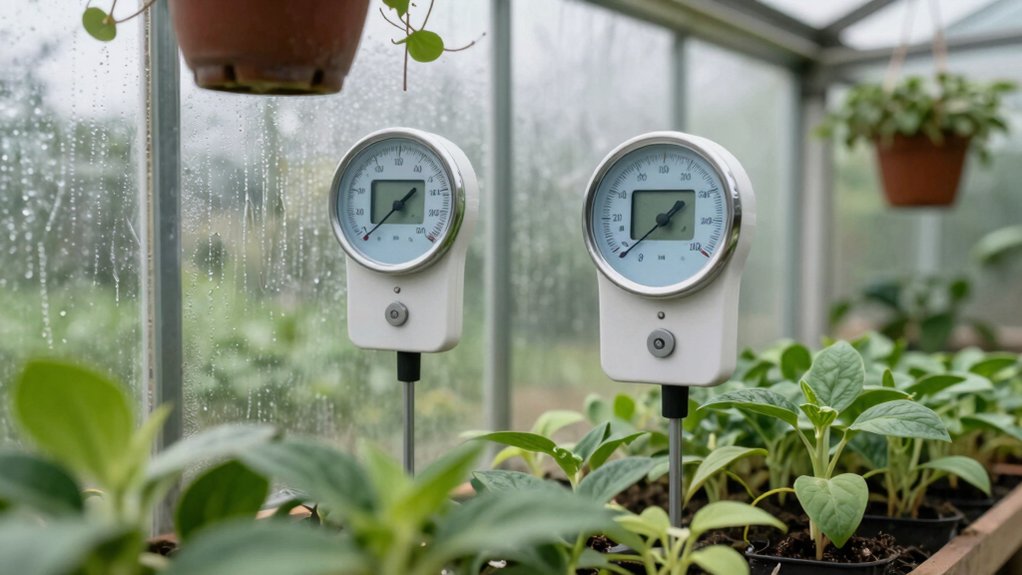
When selecting a greenhouse thermometer, you’ll need to evaluate five key factors: accuracy and measurement range to ensure precise temperature monitoring, display readability and size so you can view readings quickly from a distance, durability and weather resistance to withstand humid greenhouse conditions, mounting flexibility and placement options to position the thermometer where it works best for your setup, and real-time data refresh speed to catch temperature fluctuations before they harm your plants. Start by identifying which factors matter most for your growing environment—for example, if you grow heat-sensitive seedlings, prioritize fast refresh speeds and high accuracy. Then compare thermometers against these criteria to find the model that fits your specific greenhouse needs.
Accuracy And Measurement Range
How closely does your thermometer’s reading match the actual greenhouse temperature? You’ll find temperature accuracy varies from ±0.54°F to ±1°F across models, which directly affects how precisely you can monitor growing conditions. Humidity accuracy ranges from ±2% RH to ±5% RH, influencing your ability to assess moisture levels reliably. Check the measurement ranges before purchasing. Most devices cap around 140°F for temperature and 10%–99% RH for humidity, which may limit extreme condition monitoring. Consider your greenhouse’s climate needs. If you grow heat-sensitive plants, prioritize ±0.54°F accuracy. For standard operations, ±1°F suffices. Fast refresh intervals—2 or 10 seconds—help you detect environmental changes quickly. Choose devices with 24-hour max/min records or data export capabilities to track environmental stability over time.
Display Readability And Size
You’ll want to prioritize display visibility since you’re reading your thermometer from various distances across the greenhouse. Look for a large LCD or digital display with bold digits that you can read quickly without squinting. Check the number of digits shown to determine how much information displays at once—current temperature, humidity, and 24-hour max/min records all compete for screen space. A backlit or high-contrast screen becomes essential in low-light greenhouse environments where natural light varies throughout the day. Examine the font size carefully; if you can’t read it from three feet away, it won’t work for your needs. Also verify that comfort, dry, and wet indicators use clear iconography you’ll instantly recognize, ensuring you interpret readings accurately without guesswork.
Durability And Weather Resistance
Three critical factors determine whether your greenhouse thermometer survives the harsh, moist environment you’re working in: its IP rating, housing construction, and protective sealing. Look for an IP rating like IPX5, which guarantees resistance to water splashes and high humidity. Next, examine the housing material—rugged, durable plastics or metals withstand temperature swings and moisture exposure better than standard materials. Finally, verify that connectors and battery compartments have durable seals to prevent condensation damage. You should also check if the display remains readable in humid conditions without fogging or fading. A secure mounting option—magnetic back, wall mount, or stand—keeps your thermometer stable and prevents moisture accumulation underneath. These durability features ensure your device functions accurately throughout multiple growing seasons.
Mounting Flexibility And Placement
Once you’ve confirmed your thermometer can withstand greenhouse moisture and temperature shifts, you’ll need to determine where and how to position it for optimal use. Evaluate your space to identify the best mounting method. Magnetic backing works well on metal benches or frames, allowing quick repositioning. A tabletop stand suits shelves or benches where you need freestanding placement. Wall-mount or hanging-hole options maximize vertical space in compact greenhouses. Choose a location at plant canopy height for accurate readings that reflect actual growing conditions. Ensure your display has large LCD text or high-contrast markings for easy viewing from a distance. Verify that mounting won’t obstruct plant growth or block your movement through the greenhouse. Select versatile options that combine multiple mounting capabilities for future layout adjustments.
Real-Time Data Refresh Speed
How quickly does your thermometer update its temperature readings? Real-time data refresh speed determines how fast you’ll spot environmental changes in your greenhouse. High-end models refresh every 2–5 seconds, while basic units update every 10–60 seconds. Choose a faster refresh rate to catch rapid temperature or humidity shifts. Quicker updates help you make timely decisions about irrigation and ventilation adjustments. When comparing thermometers, check the manufacturer’s stated refresh interval. A 2-second to 10-second update cycle gives you better trend tracking and more granular data readings. Faster refresh rates correlate with higher data precision in temperature and humidity measurements. Evaluate your growing operation’s needs: if you manage sensitive crops requiring quick responses, prioritize models with 2–5 second refresh speeds.
Smart Features And Connectivity
What’ll set a basic thermometer apart from a truly useful monitoring system is the ability to track your greenhouse conditions remotely. Choose a model with Bluetooth or app-based connectivity so you can access real-time temperature and humidity data from your smartphone or smart home hub. Look for devices offering real-time refresh rates between 2 and 10 seconds for quick updates. Check if the app includes temperature and humidity alerts, comfort indices, and data storage options like CSV exports. Verify compatibility with your existing smart home ecosystem to enable automated responses when readings exceed your thresholds. Confirm the wireless range meets your greenhouse size—most models reach up to 164 feet via Bluetooth. These features transform monitoring from manual checks into proactive greenhouse management.
Battery Life And Power Source
When you’re selecting a greenhouse thermometer, you’ll need to decide between three power options: replaceable batteries (such as AAA or 1.5V cells), built-in rechargeable batteries, or battery-free designs. Replaceable batteries offer convenience and long-term reliability, though you’ll need to stock extras. Wireless models with transmitters or Bluetooth features typically require battery power, and their refresh rates directly affect lifespan—higher frequencies drain batteries faster. Data logging and app connectivity also consume more power than basic display functions. Battery-free mechanical thermometers eliminate power concerns entirely but provide fewer features and shorter readouts. Consider your greenhouse’s humidity and temperature fluctuations when evaluating power sources, as these conditions can impact battery performance. Choose based on your monitoring needs and maintenance preferences.
Temperature And Humidity Indicators
Beyond selecting the right power source, you’ll want to focus on the thermometer’s measurement capabilities—specifically its temperature and humidity accuracy. Look for thermometers offering temperature precision within ±0.5°F to ±1°F and humidity accuracy between ±2% RH to ±5% RH. These ranges ensure reliable greenhouse monitoring for plant health management.
Next, prioritize real-time updates with refresh intervals every 5–10 seconds. This frequency lets you track rapid environmental changes affecting your crops. Additionally, select models that record 24-hour maximum and minimum temperatures and humidity levels. These records reveal daily fluctuations and help you identify trends in your growing environment.
Finally, choose thermometers with comfort or condition indicators—such as Dry, Comfort, or Wet—providing quick visual assessments of current air conditions against your target ranges.
Final Thoughts
You’ll choose your greenhouse thermometer based on three priorities: budget, features, and convenience. If you want basic readings, pick the DWEPTU mechanical or DOQAUS digital option. For app monitoring and alerts, select the Govee or ThermoPro TP351. Mount your chosen thermometer at canopy height using the included brackets. Check readings daily to maintain optimal growing conditions between 65–75°F during the day and 55–65°F at night.

Meet Ry, “TechGuru,” a 36-year-old technology enthusiast with a deep passion for tech innovations. With extensive experience, he specializes in gaming hardware and software, and has expertise in gadgets, custom PCs, and audio.
Besides writing about tech and reviewing new products, he enjoys traveling, hiking, and photography. Committed to keeping up with the latest industry trends, he aims to guide readers in making informed tech decisions.