
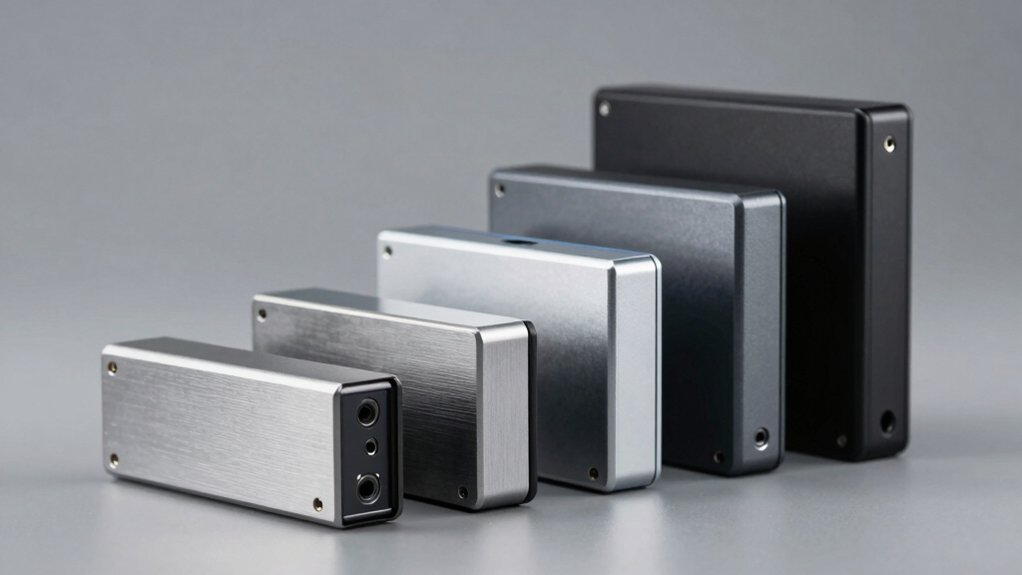

You’re looking for a reliable external IDE drive enclosure that actually delivers. Whether you’re recovering old data, upgrading storage, or repurposing legacy drives, you’ll need something that handles USB 3.0 speeds, supports both 2.5″ and 3.5″ drives, and works across Windows, macOS, and Linux. The right enclosure combines solid build quality with practical features like tool-free installation and proper power delivery. Here’s what separates the dependable options from the rest.
| USB 3.0 Hard Drive Reader IDE/SATA Adapter |

| Versatile Universal Adapter | Data Transfer Speed: Up to 5 Gbps | Drive Size Compatibility: 2.5″/3.5″ HDD/SSD, 5.25″ CD/DVD | Interface Type: USB 3.0 Type-A | VIEW LATEST PRICE | Read Our Analysis |
| Unitek USB 3.0 IDE and SATA Hard Drive Converter |

| Feature-Rich Converter | Data Transfer Speed: Up to 5 Gbps | Drive Size Compatibility: 2.5″/3.5″ HDD/SSD, optical drives | Interface Type: USB 3.0 Type-A | VIEW LATEST PRICE | Read Our Analysis |
| SABRENT USB Type-C Hard Drive Converter (USB-DS12) |

| Modern Type-C Option | Data Transfer Speed: Up to 5 Gbps (USB 3.2 Gen 1×1) | Drive Size Compatibility: 2.5″/3.5″/5.25″ HDD/SSD, CD/DVD | Interface Type: USB Type-C | VIEW LATEST PRICE | Read Our Analysis |
| Hard Drive Docking Station with Card Reader (TCC-S862-US) |
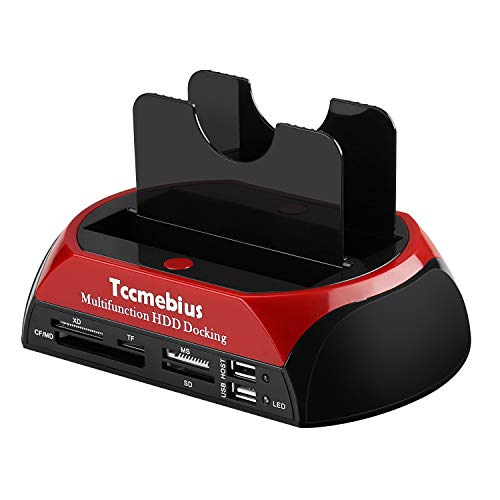
| All-in-One Station | Data Transfer Speed: Up to 480 MB/s | Drive Size Compatibility: 2.5″/3.5″ HDD/SSD | Interface Type: USB 2.0 Type-A | VIEW LATEST PRICE | Read Our Analysis |
| X-MEDIA XM-EN3451 V3 USB 3.0 Hard Disk Enclosure |
![X-MEDIA XM-EN3451 V3 [Upgraded USB 3.0] 3.5-Inch IDE/PATA or SATA](https://m.media-amazon.com/images/I/31FVqHHURNL._SL500_.jpg)
| Aluminum Performance Enclosure | Data Transfer Speed: Up to 5 Gbps | Drive Size Compatibility: 3.5″ IDE/SATA HDD/SSD | Interface Type: USB 3.0 Type-A | VIEW LATEST PRICE | Read Our Analysis |
More Details on Our Top Picks
USB 3.0 Hard Drive Reader IDE/SATA Adapter
If you’ve got an old IDE or SATA drive lying around, this versatile universal adapter converts it into an external drive in minutes. Insert your 2.5″ or 3.5″ hard drive into the enclosure, connect the 12V power adapter, and plug in the USB 3.0 cable to your computer. The device supports drives up to 6TB and transfers data at 5 Gbps. Windows, Mac, and Linux systems recognize it immediately through plug-and-play functionality. For IDE drives, check jumper settings first—some require slave or master configuration. Open Disk Management on Windows to verify your drive appears. The included LED indicator shows power and activity status.
- Data Transfer Speed:Up to 5 Gbps
- Drive Size Compatibility:2.5″/3.5″ HDD/SSD, 5.25″ CD/DVD
- Interface Type:USB 3.0 Type-A
- Power Supply Included:12V 2A power adapter
- Maximum Storage Capacity:Up to 6 TB
- Operating System Compatibility:Windows 10/8.1/8/7/Vista/XP, Mac OS, Linux
- Additional Feature:Supports 5.25″ CD/DVD drives
- Additional Feature:Hot-swapping capability
- Additional Feature:LED power/activity indicator
Unitek USB 3.0 IDE and SATA Hard Drive Converter
The Unitek USB 3.0 IDE and SATA Hard Drive Converter’s feature-rich design makes it ideal for anyone needing to access multiple legacy drives simultaneously. You’ll connect either 2.5″ or 3.5″ IDE and SATA drives using the dual-head IDE connector and SATA II port. The included 12V power adapter ensures stable operation when reading multiple drives at once. Data transfers reach 5 Gbps, and you’re able to read optical drives including DVDs and CDs. The one-touch backup function simplifies file transfers, while the on/off switch protects your hard drives. You’ll receive USB 3.0 cable, power adapter, and 4PIN power cable in the package, making setup straightforward.
- Data Transfer Speed:Up to 5 Gbps
- Drive Size Compatibility:2.5″/3.5″ HDD/SSD, optical drives
- Interface Type:USB 3.0 Type-A
- Power Supply Included:12V 2A power adapter
- Maximum Storage Capacity:Not specified
- Operating System Compatibility:Windows, Mac OS, Linux
- Additional Feature:One-Touch Backup function
- Additional Feature:Dual-Head IDE connectors (40/44-pin)
- Additional Feature:Read multiple drives simultaneously
SABRENT USB Type-C Hard Drive Converter (USB-DS12)
Want to access older SATA and IDE drives without replacing your system? The SABRENT USB-DS12 connects 2.5″ to 5.25″ drives through USB-C, supporting HDDs, SSDs, and optical media. You’ll get up to 5 Gbps transfer speeds, though your drive’s interface limits actual throughput to SATA’s 3 Gbps maximum. The included 12V power supply handles larger 3.5″ and 5.25″ drives requiring extra power, while the 4-pin Molex connector provides additional support. You simply plug in your drive and connect the USB-C cable—no driver installation needed. The adapter works across Windows, macOS, and Linux systems, accommodates drives up to 10 TB, and includes a status LED for power indication.
- Data Transfer Speed:Up to 5 Gbps (USB 3.2 Gen 1×1)
- Drive Size Compatibility:2.5″/3.5″/5.25″ HDD/SSD, CD/DVD
- Interface Type:USB Type-C
- Power Supply Included:12V UL power supply
- Maximum Storage Capacity:Up to 10 TB
- Operating System Compatibility:Windows, macOS, Linux
- Additional Feature:Integrated portable cable design
- Additional Feature:Supports 10 TB capacity
- Additional Feature:USB-C connectivity (Type-C)
Hard Drive Docking Station with Card Reader (TCC-S862-US)
Need both drive access and card reading in one device? The TCC-S862-US combines a hard drive docking station with an integrated card reader. You get dual slots supporting 2.5″ and 3.5″ IDE/SATA drives plus simultaneous card support for XD, TF, MS, CF, and SD formats up to 64GB. USB 2.0 connectivity delivers 480 MB/s transfer speeds. Install drives with adjustable IDE connectors, then format according to your OS—Windows supports FAT32, exFAT, and NTFS; Mac and Linux work with FAT32 and exFAT. The included One-Touch Backup software enables quick file copying on Windows systems. You’ll receive a built-in power adapter and USB cable. Tccmebius backs this enclosure with a one-year warranty and lifelong technical support.
- Data Transfer Speed:Up to 480 MB/s
- Drive Size Compatibility:2.5″/3.5″ HDD/SSD
- Interface Type:USB 2.0 Type-A
- Power Supply Included:Built-in power adapter
- Maximum Storage Capacity:Up to 20 TB (SATA)
- Operating System Compatibility:Windows Vista/7/8/8.1/10/11, Mac OS 10.10+, Linux
- Additional Feature:Integrated memory card reader
- Additional Feature:One-Touch Backup software
- Additional Feature:Dual-slot docking station
X-MEDIA XM-EN3451 V3 USB 3.0 Hard Disk Enclosure
X-MEDIA’s aluminum performance enclosure works best if you’re reviving older 3.5-inch IDE or SATA hard drives. You’ll connect your drive through USB 3.0, which delivers up to 5 Gbps transfer speeds, while USB 2.0 backwards compatibility ensures older system support. The electroplated aluminum design dissipates heat effectively during extended use. Installation requires inserting your drive into the internal bay and securing it; no tools are necessary due to the hot-swappable design. This enclosure supports Windows 2000 through 11 and Mac OS 9.2 and later, making cross-platform usage straightforward. At a 4-star rating with 276 reviews, users confirm reliable performance for data recovery and legacy drive accessibility.
- Data Transfer Speed:Up to 5 Gbps
- Drive Size Compatibility:3.5″ IDE/SATA HDD/SSD
- Interface Type:USB 3.0 Type-A
- Power Supply Included:Power adapter included
- Maximum Storage Capacity:Supports larger capacities (exact max not specified)
- Operating System Compatibility:Windows 2000/XP/Vista/7/8/8.1/10/11, Mac OS 9.2+
- Additional Feature:Electroplated aluminum enclosure
- Additional Feature:Heat dispersion design
- Additional Feature:Single-drive hot-swappable operation
Factors to Consider When Choosing an External IDE Drive Enclosure
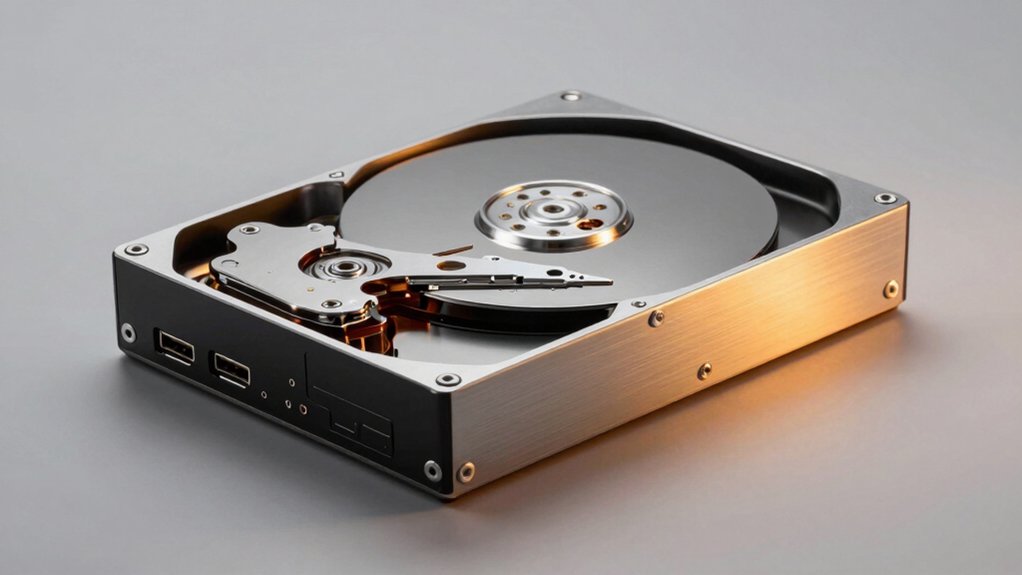
When you’re selecting an external IDE drive enclosure, you’ll want to evaluate five key factors: data transfer speed, power supply requirements, drive compatibility, physical size for portability, and operating system support. First, check the enclosure’s USB version (USB 2.0 versus USB 3.0) to match your speed needs, then verify that the power supply can handle your specific drive’s power draw. Next, confirm that the enclosure supports your IDE drive’s size and connector type, assess whether the unit fits your workspace and travel requirements, and finally ensure it works with your computer’s operating system.
Data Transfer Speed Matters
Consider the USB interface version of your enclosure first, since it’s the foundation for all data movement. USB 2.0 maxes out at 480 Mbps, while USB 3.0 reaches 5 Gbps—a significant difference for large file transfers. Next, identify the slowest component in your chain: the USB controller, the drive’s interface, or the drive’s read/write speed. A SATA 3.0 drive paired with USB 2.0 will bottleneck at USB 2.0’s limit. For optimal performance, match a modern SATA drive with USB 3.x and UASP support. Remember that real-world speeds fall below theoretical maximums due to overhead and caching. You’ll see faster sustained transfers with quality enclosures that provide adequate power and proper interface support.
Power Supply Requirements
While data transfer speed determines how fast your files move, the power supply determines whether your drive works at all. You’ll need to match your enclosure’s power requirements to its drive type and capacity. Most 2.5” drives run on USB power alone, but 3.5″ drives require an external adapter, typically 12V at 2A or higher. Check your enclosure’s specifications before purchasing. If you’re connecting multiple drives or using an older high-capacity drive, verify the adapter meets or exceeds the listed voltage and current requirements. Insufficient power causes detection failures, unstable transfers, and spin-up problems. Always use the power supply included with your enclosure, or confirm any replacement adapter matches the original specifications exactly.
Drive Compatibility & Support
How do you know which enclosure will actually work with your drive? First, identify your drive’s form factor: 2.5″ or 3.5″ HDD/SSD. Next, check whether your drive uses IDE or SATA connections. Most enclosures support one or the other, not both. For IDE drives, verify the enclosure includes proper 40 or 44-pin connectors. For SATA drives, confirm SATA port availability. Check the stated drive capacity limits—some enclosures max out at specific storage sizes. If you’re using older IDE drives, look for optional Molex or 4-pin power connectors. Review whether the enclosure supports multi-drive operation if you need that functionality. Match these specifications against your drive’s exact requirements before purchasing.
Physical Size & Portability
Once you’ve confirmed your drive’s compatibility with a specific enclosure, you’ll want to assess whether that enclosure fits your actual usage environment. Enclosures range from 3.8–7.4 inches in length, 2.7–4.6 inches in width, and 0.63–3.9 inches in height. Measure your desk space or bag to verify fit. Consider the housing material: plastic models weigh less for travel, while aluminum enclosures offer durability but add weight. Smaller 2.5” drive enclosures generally provide better portability than 3.5″ models due to thinner dimensions. Check whether the enclosure includes an integrated power adapter or relies on USB power, as this affects cable management during transport. Dual-slot designs and built-in card readers increase footprint and weight, impacting overall portability.
Operating System Compatibility
Does your computer actually recognize the enclosure you’re considering? You need to verify operating system support first. Check whether the enclosure works with Windows, macOS, or Linux versions installed on your system. Some enclosures claim broad compatibility but require specific file systems like NTFS, exFAT, or FAT32 to function properly.
Next, determine if the enclosure needs driver installation or operates as plug-and-play on your OS. Look for documentation stating driver requirements. Confirm hot-swapping capability without rebooting, since this affects workflow efficiency.
Finally, examine power requirements and firmware specifications. Verify that 12V adapters and power cables match your setup. Check IDE/SATA support alignment with your operating system’s drive detection abilities. These steps ensure seamless integration with your existing hardware.
Build Quality & Materials
The enclosure’s material composition and structural design directly affect its durability and performance longevity. You should prioritize metal aluminum or robust ABS plastic models that resist bending and heat buildup. Check the wall thickness of panels, as thicker construction indicates better durability and impact resistance. Examine the heat dissipation design by looking for aluminum chassis or strategically placed vents that prevent thermal throttling during extended use. Inspect connector ports for reinforced hubs and strain relief features that reduce wear from frequent plugging and unplugging cycles. Assess overall build quality by testing for tight-fitting lids, observing clean cable management, and checking for flex when you handle the enclosure. These tangible indicators reveal whether an enclosure will protect your drive reliably over time.
Warranty & Technical Support
Beyond the physical durability you’ve confirmed through build quality inspection, you’ll want to examine what happens if your enclosure fails after purchase. Start by checking the warranty length—most vendors offer one year standard coverage, though some provide extended options through manufacturer registration. Next, verify the retailer’s return policy within their 30-day window, specifically for DOA units and damaged items. Confirm available support channels: does the company offer 24-hour email support or live help? Request expected response times. Finally, determine whether lifetime technical support exists and if product registration is required to access it. Ensure warranty terms cover both hardware defects and power-related reliability issues. These details protect your investment and guarantee you can resolve problems quickly if they arise.
Final Thoughts
You’ll want to select an enclosure that matches your drive type and USB standard. Check your drive’s IDE or SATA connector, verify the enclosure’s power supply capacity, and confirm cross-platform compatibility with your operating system. Install your drive by aligning connectors properly and securing jumper settings if needed. Test the connection before transferring files to ensure reliable performance and prevent data loss during extended use.

Meet Ry, “TechGuru,” a 36-year-old technology enthusiast with a deep passion for tech innovations. With extensive experience, he specializes in gaming hardware and software, and has expertise in gadgets, custom PCs, and audio.
Besides writing about tech and reviewing new products, he enjoys traveling, hiking, and photography. Committed to keeping up with the latest industry trends, he aims to guide readers in making informed tech decisions.