
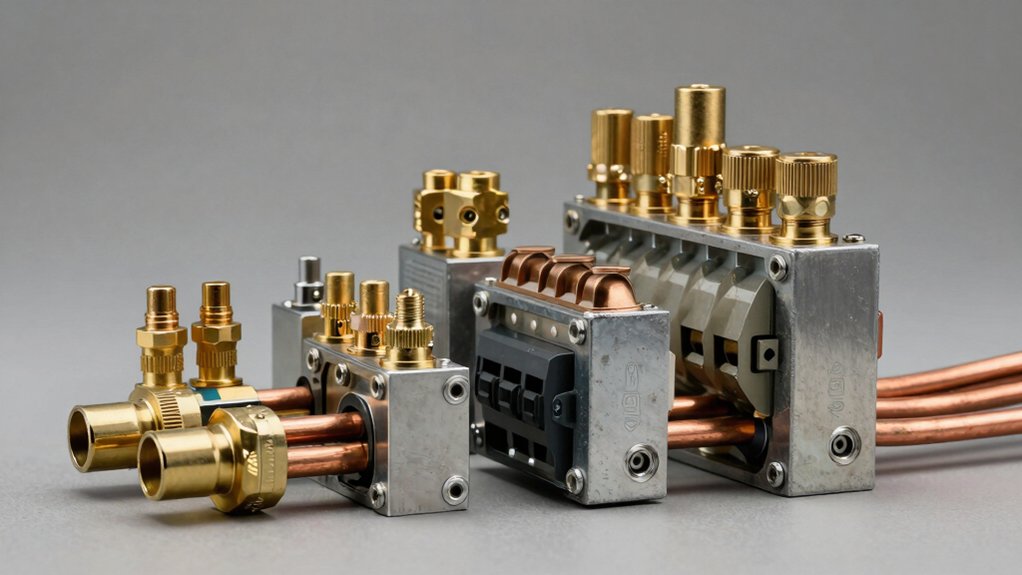

When you’re installing a power distribution system in your RV, boat, or vehicle, you need a bus bar that handles high current safely and lasts through harsh conditions. You’ll want to evaluate models based on current capacity, corrosion resistance, and enclosure protection. The right choice depends on your system’s voltage and how many circuits you’re powering. Let’s examine six proven options that professionals trust—and what makes each one stand out.
| RVBOATPAT Power Distribution Block 12V 150A Marine Bus Bar |

| Compact & Reliable | Maximum Current Rating: 150 Amps | Maximum Voltage Rating: 48V DC | Terminal Stud Configuration: 2 poles, 24 positions with 1/4″ (M6) studs | VIEW LATEST PRICE | Read Our Analysis |
| MOFEEZ Power Distribution Block Bus Bar 48V 250A |

| Heavy-Duty Professional | Maximum Current Rating: 250 Amps | Maximum Voltage Rating: 48V DC | Terminal Stud Configuration: 4 x 5/16″ posts with #8 screw terminals | VIEW LATEST PRICE | Read Our Analysis |
| Joinfworld Power Distribution Block Bus Bar 12V 250A |

| Best Overall | Maximum Current Rating: 250 Amps | Maximum Voltage Rating: 48V DC | Terminal Stud Configuration: 4 x 5/16″ (M8) studs with #8 screw terminals | VIEW LATEST PRICE | Read Our Analysis |
| DAIERTEK Bus Bar 12V 150A Power Distribution Block |

| Most Versatile | Maximum Current Rating: 150 Amps | Maximum Voltage Rating: 48V DC / 300V AC | Terminal Stud Configuration: 4 x 5/16″ (M8) posts | VIEW LATEST PRICE | Read Our Analysis |
| Bus Bar 12V 150A Power Distribution Block |
| Complete Kit Solution | Maximum Current Rating: 150 Amps | Maximum Voltage Rating: 48V DC | Terminal Stud Configuration: 1/4″ (M6) studs with 12 positions | VIEW LATEST PRICE | Read Our Analysis |
| Cannonfish Bus Bar Power Distribution Block (2-Pack) |

| Budget-Friendly Pick | Maximum Current Rating: 200 Amps | Maximum Voltage Rating: 48V DC | Terminal Stud Configuration: Single M10/M8 stud configuration (2-pack) | VIEW LATEST PRICE | Read Our Analysis |
More Details on Our Top Picks
RVBOATPAT Power Distribution Block 12V 150A Marine Bus Bar
The RVBOATPAT’s compact & reliable 150-amp busbar serves marine, automotive, and solar installations where you need organized power distribution. You’ll receive two bars—one positive (red) and one ground (black)—along with 24 terminals and mounting hardware. The tinned copper construction resists corrosion in marine environments. Install the busbar on your panel using the 1/4-inch studs, then connect your battery cables to the main terminals. Attach individual circuit wires to the remaining positions using the included M4 screws. The flame-resistant ABS base and insulated design prevent accidental shorts. This setup keeps your electrical system neat and reduces fire risk in demanding applications.
- Maximum Current Rating:150 Amps
- Maximum Voltage Rating:48V DC
- Terminal Stud Configuration:2 poles, 24 positions with 1/4″ (M6) studs
- Material Construction:Tinned copper plate with ABS base
- Protective Cover:2 covers included
- Applications:Marine, automotive, solar wiring (boat, caravan, yacht)
- Additional Feature:24 terminal positions available
- Additional Feature:Includes 2 AWG copper lugs
- Additional Feature:Red and black color coding
MOFEEZ Power Distribution Block Bus Bar 48V 250A
Why choose a heavy-duty professional bus bar when you’re upgrading your vehicle’s electrical system? The MOFEEZ 48V 250A model delivers robust performance for demanding applications. It features four 5/16″ posts with six #8 screw terminals, handling 250A continuous current. The nickel-plated brass construction resists corrosion effectively. You’ll appreciate the removable nylon cover that prevents accidental contact and the flame-retardant nylon base for safety. This unit measures 6.7 by 2.1 by 1.3 inches, fitting standard panel installations. It’s ideal for boats, RVs, and off-grid systems requiring reliable power distribution at higher voltages.
- Maximum Current Rating:250 Amps
- Maximum Voltage Rating:48V DC
- Terminal Stud Configuration:4 x 5/16″ posts with #8 screw terminals
- Material Construction:Nickel-plated brass with flame-retardant nylon base
- Protective Cover:Removable nylon cover included
- Applications:Car, boat, RV, yacht, caravan, ship power systems
- Additional Feature:Nickel-plated brass construction
- Additional Feature:Removable nylon cover design
- Additional Feature:6.7″ length compact size
Joinfworld Power Distribution Block Bus Bar 12V 250A
Joinfworld’s 250-amp distribution block tops the lineup for anyone wiring automotive, marine, or solar systems requiring reliable power distribution. You’ll receive both positive and negative bus bars with four M8 studs and three #8 screw terminals for flexible cable connections. The 4mm copper plate handles high current loads without overheating, and the included protective cover prevents accidental contact and short circuits. Mount the block using the four provided screws on your vehicle or vessel. The nylon base with stainless steel components resists corrosion in marine environments. Temperature rating reaches 90°C, supporting demanding applications where performance matters.
- Maximum Current Rating:250 Amps
- Maximum Voltage Rating:48V DC
- Terminal Stud Configuration:4 x 5/16″ (M8) studs with #8 screw terminals
- Material Construction:Copper bus bar with nylon base and stainless steel parts
- Protective Cover:Protective cover included
- Applications:Automotive, car, boat, solar systems
- Additional Feature:4mm thicker copper plate
- Additional Feature:90°C temperature upper rating
- Additional Feature:Includes 4 mounting screws
DAIERTEK Bus Bar 12V 150A Power Distribution Block
DAIERTEK’s most versatile bus bar handles 150 amps across multiple system types. You’ll connect up to four circuits using the 5/16″ M8 posts, which accommodate larger wire lugs than standard terminals. The tin-plated copper construction resists corrosion in harsh environments. Install the block onto your PCB using the included mounting hardware, then attach your positive and negative distribution lines. This unit supports 12V systems and works in automotive, marine, solar, and boat applications. The stainless steel terminals ensure reliable connections, while the polycarbonate cover protects your connections from debris and accidental contact during operation.
- Maximum Current Rating:150 Amps
- Maximum Voltage Rating:48V DC / 300V AC
- Terminal Stud Configuration:4 x 5/16″ (M8) posts
- Material Construction:Tin-plated copper bar with nylon base
- Protective Cover:Polycarbonate cover included
- Applications:Automotive, car, boat, solar systems, marine
- Additional Feature:300V AC voltage compatibility
- Additional Feature:Side posts support 180° installation
- Additional Feature:PCB mounting capability
Bus Bar 12V 150A Power Distribution Block
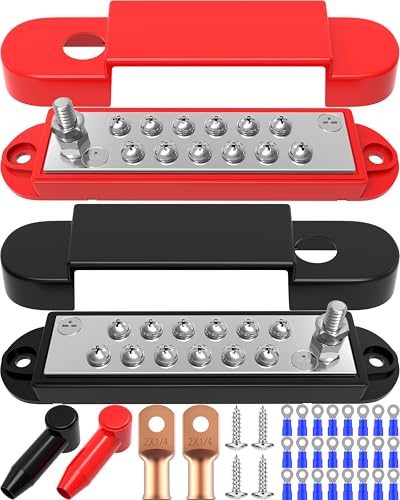
The Bus Bar 12V 150A Power Distribution Block delivers a complete kit solution you’ll need for marine, automotive, and solar installations. You’ll receive two distribution blocks—one positive, one negative—plus protective covers, copper lugs, and ring terminals. The 3mm tinned copper construction handles 150-amp current at voltages up to 48V DC. Connect your red cables to the positive block and black cables to the negative block. The stainless steel screws, flame-retardant nylon base, and waterproof design resist corrosion in harsh environments. Before installation, disconnect power. After wiring, secure all terminals and keep the junction box dry for maximum longevity.
- Maximum Current Rating:150 Amps
- Maximum Voltage Rating:48V DC
- Terminal Stud Configuration:1/4″ (M6) studs with 12 positions
- Material Construction:3mm tinned copper bus bars with nylon base
- Protective Cover:Smart locking silicone cover included
- Applications:Car, RV, boat, solar panel, trailer, truck, audio systems
- Additional Feature:Smart locking cover design
- Additional Feature:24 ring terminals included
- Additional Feature:Anti-oxidation ring terminals
Cannonfish Bus Bar Power Distribution Block (2-Pack)
Cannonfish’s bus bar power distribution block offers you a budget-friendly pick for 48V vehicle electrical systems. You get two junction posts—one red for positive, one black for negative—with stainless steel studs and M10/M8 terminal configurations. The glass fiber reinforced nylon base handles 200 amps continuous DC current. You’ll mount these blocks using the included #10 machine screws with nuts and lock washers into two mounting holes. They work in any orientation, making installation straightforward for RVs, trucks, boats, and coaches needing reliable power distribution.
- Maximum Current Rating:200 Amps
- Maximum Voltage Rating:48V DC
- Terminal Stud Configuration:Single M10/M8 stud configuration (2-pack)
- Material Construction:Glass fiber reinforced nylon base with stainless steel components
- Protective Cover:No cover mentioned
- Applications:48V trucks, RVs, coaches, boats, automotive applications
- Additional Feature:Glass fiber reinforced nylon
- Additional Feature:M10/M8 stud configuration
- Additional Feature:2-pack bundle included
Factors to Consider When Choosing a Bus Bar Power Distribution Block
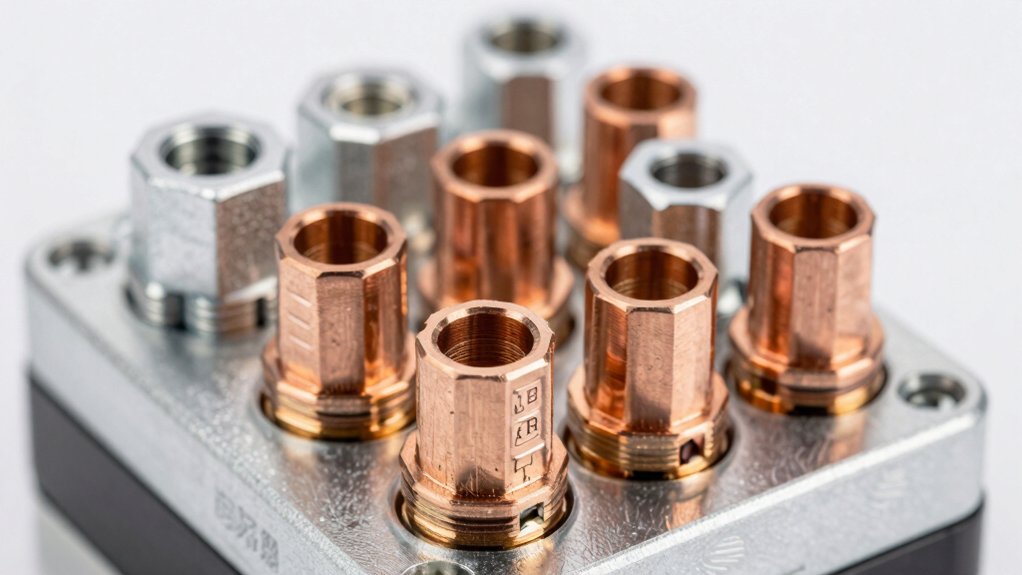
To select a bus bar power distribution block, you’ll need to verify the current rating specifications match your system’s demands, check voltage compatibility against your electrical setup, and confirm the terminal type fits your wire gauges and connection method. Next, evaluate the material quality and durability by examining the construction materials, plating type, and corrosion resistance to ensure long-term reliability in your environment. Finally, review the application-specific installation requirements, including mounting options, spacing clearances, and any special considerations for your particular setup, to guarantee proper integration and safe operation.
Current Rating Specifications
How do you know if a bus bar can handle your system’s power demands? Check the current rating, which indicates the maximum continuous amps the block safely carries—typically 150 A, 200 A, or 250 A. Match this rating to your system’s peak load. Some blocks specify separate intermittent or per-connection limits, like 20 A maximum per connection, so verify these restrictions match your branch circuits. Thicker copper plates and robust studs support higher ratings without overheating. Calculate your total expected load, including all fused circuits and devices. Select a rating that meets or exceeds this total. Undersizing causes overheating and insulation damage; oversizing ensures safety margins and system reliability.
Voltage Compatibility And Limits
Your bus bar block’s maximum operating voltage must match or exceed your system’s voltage—whether that’s 12V DC, 24V DC, 48V DC, or another specification—to prevent insulation breakdown and arcing between terminals. Next, verify that the device is rated for DC operation, since some blocks list only AC ratings that won’t apply to your setup. Then, check each terminal and post’s voltage rating across insulation gaps to prevent dielectric breakdown between adjacent connections. Finally, confirm the continuous current rating doesn’t exceed what your wiring and components can safely handle at your system voltage. Higher voltages with identical current require appropriate insulation and wire gauge. Review the manufacturer’s specifications for intermittent current limits per connection to ensure peak loads won’t exceed terminal capacity.
Terminal Type And Configuration
Once you’ve confirmed that your block’s voltage rating and current capacity match your system’s requirements, you’ll need to examine the terminal type and configuration to ensure compatibility with your wiring and components. Screw-type terminals work with standard #8 screws for smaller gauges, while stud-type terminals use posts like 1/4″ or 5/16″ studs for larger conductors. Multi-stud configurations—such as 4 x 5/16″ or 4 x M8 arrangements—distribute high currents across multiple connection points, supporting bigger wire sizes. Some blocks combine positive and negative terminals in one unit, enabling separate distribution poles. Check pitch and spacing measurements (typically 0.31″ or 0.08″) to confirm adequate clearance for insulation in your panel layout. Removable nylon covers protect terminals and reduce accidental contact during installation and maintenance.
Material Quality And Durability
What separates a reliable distribution block from one that’ll fail you in critical moments? Material quality and durability. You need to examine the copper bus bars first—look for thickness of 3 mm or greater to handle high current without excessive resistance. Next, check the plating. Tin or nickel plating protects copper from corrosion, especially in marine or outdoor settings. Inspect the base and enclosure materials. Nylon or polycarbonate provides flame resistance and heat tolerance you’ll depend on. Verify all fasteners and hardware are stainless steel to prevent galvanic corrosion and ensure secure, lasting connections. Finally, confirm insulation and protective covers are flame-retardant and sealed against moisture. These measures prevent short circuits and extend your block’s operational lifespan significantly.
Application-Specific Installation Requirements
Material durability matters little if your distribution block doesn’t match your system’s actual voltage, current, and physical constraints. You’ll need to verify your system’s voltage (12V, 24V, or 48V DC) and maximum amperage (150A–250A) against the block’s rating to prevent overheating. Next, measure your installation space and confirm the mounting method—whether you’re mounting to a panel or surface—and ensure adequate clearance for airflow. Match your cable lugs to the terminal types available: 1/4″ studs, M6/M8 posts, or #8 screws. Finally, assess environmental demands. Marine installations require corrosion-resistant materials and waterproof housings. Automotive and solar systems need flame-retardant bases and insulating covers. These steps ensure safe, reliable operation specific to your application.
Final Thoughts
You’ll want to select a bus bar block that matches your system’s voltage (12V, 24V, or 48V) and current needs (150–250A). Check that it has tin- or nickel-plated copper terminals for corrosion resistance, stainless steel fasteners, and proper post sizes (M8/M6 or 1/4″ studs) for your connections. Verify the enclosure is flame-retardant and moisture-resistant, then confirm mounting options fit your installation space before purchasing.

Meet Ry, “TechGuru,” a 36-year-old technology enthusiast with a deep passion for tech innovations. With extensive experience, he specializes in gaming hardware and software, and has expertise in gadgets, custom PCs, and audio.
Besides writing about tech and reviewing new products, he enjoys traveling, hiking, and photography. Committed to keeping up with the latest industry trends, he aims to guide readers in making informed tech decisions.