
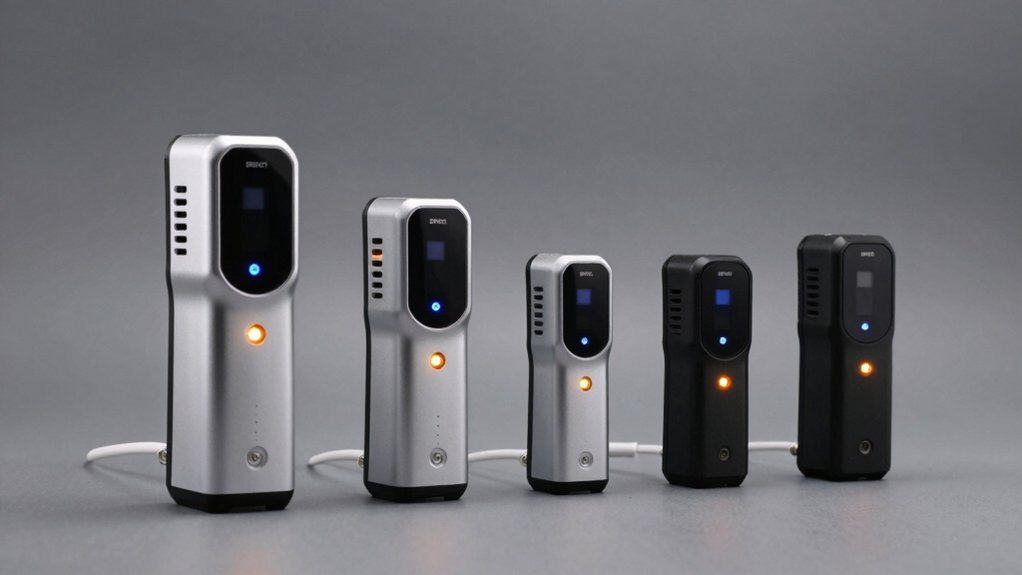

When you’re concerned about surveillance devices in your space, you need a detector that actually delivers results. You’ll want to understand what frequency ranges these devices scan, how they alert you, and which models earn real-world reliability ratings. The right choice depends on your specific needs and budget, but certain features separate effective detectors from ineffective ones. Here’s what separates the top performers from the rest.
| AI Hidden Camera Detector RF Signal WiFi Scanner |

| Compact Travel Essential | Detection Methods: RF signal, infrared scanning, GPS tracking, flashlight | Frequency Range: 100MHz–8GHz | Alert Options: Audible beep and vibration | VIEW LATEST PRICE | Read Our Analysis |
| 7-in-1 Hidden Camera & Bug Detector with RF & GPS |

| Most Versatile Detection | Detection Methods: RF signal, infrared scanning, GPS tracking, AI smart chip | Frequency Range: 1MHz–8GHz | Alert Options: LED flashing, vibration, audio beeps | VIEW LATEST PRICE | Read Our Analysis |
| JMDHKK K18+ Hidden Camera and Bug Detector |
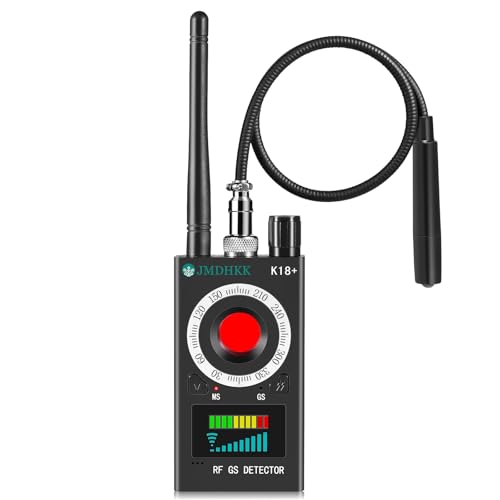
| Magnetic Field Specialist | Detection Methods: Hidden camera detection, bug detection, magnetic field detection | Frequency Range: Not specified | Alert Options: Sound and vibration | VIEW LATEST PRICE | Read Our Analysis |
| Hidden Camera Detector with RF Signal & GPS Tracker Detection |

| Fastest Charging Option | Detection Methods: RF signal detection, infrared scanning, red lens technology | Frequency Range: 0.1MHz–8GHz | Alert Options: Vibration, SOS alarm, sound alerts | VIEW LATEST PRICE | Read Our Analysis |
| Hidden Camera Detector RF Bug Detector & Scanner |

| Best Battery Life | Detection Methods: RF signal, infrared scanning, GPS tracking, flashlight | Frequency Range: 1MHz–7.5GHz | Alert Options: Visual alerts and vibration mode | VIEW LATEST PRICE | Read Our Analysis |
More Details on Our Top Picks
AI Hidden Camera Detector RF Signal WiFi Scanner
Need portable security that travels with you? The Dronewing S500 detects hidden cameras, GPS trackers, and WiFi bugs across 100MHz–8GHz frequencies. Activate one of four modes: wireless signal detection, infrared scanning for pinhole cameras, magnetic GPS tracker location, or flashlight function. Adjust sensitivity across five levels based on your environment—hotels, bathrooms, offices, or cars. The device alerts you through audible beeps or silent vibration. Weighing just 24 grams, it runs 25 hours on a single charge. Its handheld design fits your pocket, and the 360-degree camera optics ensure comprehensive scanning. One-button operation keeps setup simple for daily use.
- Detection Methods:RF signal, infrared scanning, GPS tracking, flashlight
- Frequency Range:100MHz–8GHz
- Alert Options:Audible beep and vibration
- Battery Life:Up to 25 hours continuous use
- Portability:24 grams; 0.63 x 0.83 x 3.46 inches
- Warranty:1-year manufacturer warranty
- Additional Feature:360-degree camera optics
- Additional Feature:25-hour continuous battery life
- Additional Feature:Five adjustable sensitivity levels
7-in-1 Hidden Camera & Bug Detector with RF & GPS
Looking for a device that covers all your privacy concerns in one tool? The 7-in-1 Hidden Camera & Bug Detector with RF & GPS scans frequencies from 1 MHz to 8 GHz, detecting hidden cameras, GPS trackers, and listening devices simultaneously. You’ll receive instant alerts through flashing LEDs, vibrations, and adjustable audio beeps—useful in noisy environments. The device features six sensitivity levels and a built-in AI chip for 360° scanning. Its compact design fits in your pocket, making it ideal for hotels, offices, and vehicles. Battery-powered operation requires no external charging. Lab-certified and FCC-tested, this detector comes with a two-year warranty and responsive customer support.
- Detection Methods:RF signal, infrared scanning, GPS tracking, AI smart chip
- Frequency Range:1MHz–8GHz
- Alert Options:LED flashing, vibration, audio beeps
- Battery Life:Long-lasting (duration not specified)
- Portability:~2 oz; 4.72 x 1.26 x 0.55 inches
- Warranty:2-year manufacturer warranty
- Additional Feature:AI smart chip technology
- Additional Feature:Three-in-one alert system
- Additional Feature:Two-year warranty coverage
JMDHKK K18+ Hidden Camera and Bug Detector
The JMDHKK K18+ serves business professionals and frequent travelers who need reliable detection across multiple threat types. This detector identifies hidden cameras in bathrooms and hotel rooms using its main sensor unit. You’ll operate it with two buttons and receive alerts through sound or vibration modes. The device includes an RF antenna for bug detection and a GS Probe for magnetic field identification. Charge it via USB cable before use. Deploy it systematically in target areas, starting with high-risk zones like sleeping quarters and meeting spaces. Its compact size—roughly 4 inches long and weighing under half a pound—fits easily in carry-on luggage or desk drawers.
- Detection Methods:Hidden camera detection, bug detection, magnetic field detection
- Frequency Range:Not specified
- Alert Options:Sound and vibration
- Battery Life:Not specified
- Portability:0.35 pounds; 3.94 x 2.17 x 0.79 inches
- Warranty:2-year manufacturer warranty
- Additional Feature:Magnetic field detection capability
- Additional Feature:Two-button control interface
- Additional Feature:Includes RF antenna/GS probe
Hidden Camera Detector with RF Signal & GPS Tracker Detection
Frequent travelers and security-conscious professionals need a detector that charges fast and delivers results instantly. This all-in-one device combines RF signal detection, infrared scanning, and red lens technology to locate hidden cameras and listening devices. Press the single button to activate one of three scanning modes—each targets different threat types across 0.1 MHz–8 GHz frequencies. The vibration sensor functions as a portable door alarm, while the SOS emergency alarm and flashlight provide additional security tools. Charge fully in twenty minutes via Type-C, then scan continuously for eight hours. At just 1.76 ounces, it fits your pocket for hotel rooms, offices, and bathrooms.
- Detection Methods:RF signal detection, infrared scanning, red lens technology
- Frequency Range:0.1MHz–8GHz
- Alert Options:Vibration, SOS alarm, sound alerts
- Battery Life:Up to 8 hours continuous scanning
- Portability:1.76 oz; ultra-compact pocket-sized
- Warranty:Not specified
- Additional Feature:20-minute fast charging
- Additional Feature:Vibration sensor/door alarm
- Additional Feature:Three scanning mode detection
Hidden Camera Detector RF Bug Detector & Scanner
Need a portable detector you won’t constantly recharge? The Camuitry X13 runs for 25 hours on a single charge, weighing just 30 grams. Press the single button to activate scanning across 1 MHz to 7.5 GHz, detecting wireless signals, infrared cameras, and GPS trackers. Adjust sensitivity among five levels based on your environment. The built-in flashlight illuminates dark spaces while you scan. Choose between visual alerts or silent vibration mode for discretion. Its compact 4.25-inch design fits easily in your pocket for travel or office use. With a 5-star rating from 44 reviews, this detector delivers reliable performance when you need comprehensive security coverage.
- Detection Methods:RF signal, infrared scanning, GPS tracking, flashlight
- Frequency Range:1MHz–7.5GHz
- Alert Options:Visual alerts and vibration mode
- Battery Life:25 hours
- Portability:30 grams; 0.6 x 0.9 x 4.25 inches
- Warranty:Warranty available (duration not specified)
- Additional Feature:Ultra-lightweight 30-gram design
- Additional Feature:One-button operation simplicity
- Additional Feature:1 MHz–7.5 GHz frequency range
Factors to Consider When Choosing a Hidden Bug Detector
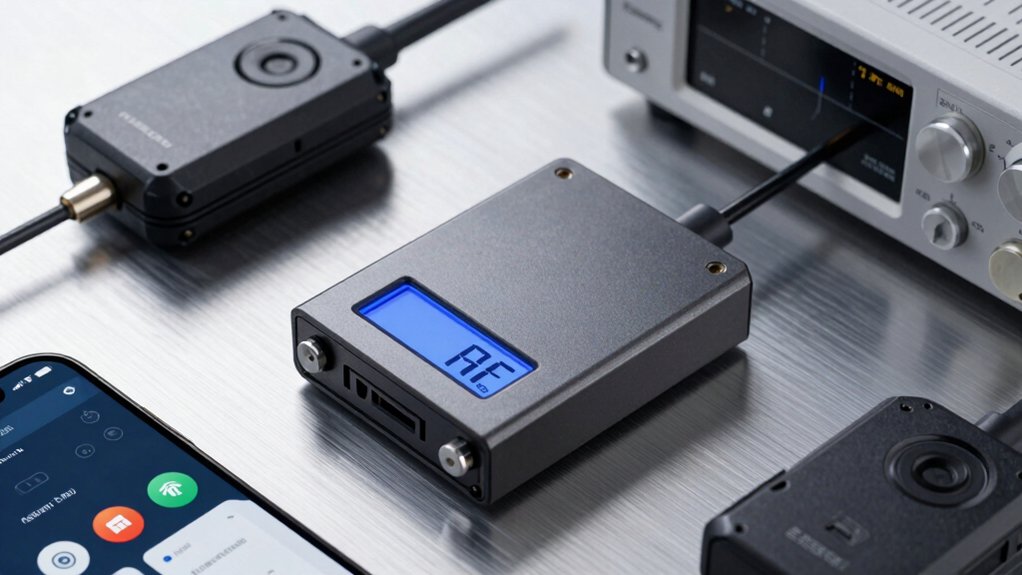
You’ll need to evaluate five key factors before purchasing a bug detector: detection range and frequency (which determine what types of devices it can find), battery life and charging options (affecting how long you can search), alert modes and sensitivity settings (controlling how the device notifies you of threats), portability and design (influencing where and how you can use it), and ease of operation (determining how quickly you can learn and deploy it). Start by identifying which environments you’ll be scanning most often, as this directly impacts the detection range you’ll require. Then prioritize the remaining factors based on your specific needs—for example, choose longer battery life if you’re conducting extended searches, or select higher sensitivity if you’re searching for multiple bug types simultaneously.
Detection Range And Frequency
What’s the difference between a detector that finds most bugs and one that finds them all? Detection range and frequency coverage. You need a detector that scans across multiple frequency bands to catch different surveillance devices. Models covering 0.1 MHz to 8 GHz detect both low-frequency trackers and high-frequency transmitters. Narrower ranges, like 100 MHz to 8 GHz, miss GPS devices operating below that threshold. Consider what you’re searching for: GPS trackers need lower frequencies, while Wi-Fi bugs and hidden cameras operate at 2.4 GHz and above. Newer compact devices often transmit at higher frequencies beyond traditional ranges. Match your detector’s frequency coverage to the specific threats you’re addressing. Broader frequency capability increases your chances of finding concealed devices across all common surveillance bands.
Battery Life And Charging
Battery performance directly affects how long a detector can search before it needs recharging. Most models offer 8 to 25 hours of continuous use on a full charge, depending on the specific unit you select. Recharge times typically range from 2.5 to 8 hours, though some detectors support fast charging options that deliver a full charge in about 20 minutes for quick top-ups during travel. Between uses, your detector enters standby mode, where it can last several weeks without draining power—up to 30 days in many cases. These units use rechargeable Li-ion batteries, usually 3.7V cells built into compact, pocket-sized designs. When choosing a detector, match the battery life to your intended use patterns and travel frequency.
Alert Modes And Sensitivity
How do you know when a detector’s found something? Most detectors offer multiple alert methods you can choose from: audible alerts, vibrations, LED indicators, or combinations like 6-in-1 systems using sound, vibration, and SOS flashing. You’ll want to adjust sensitivity levels—typically five or more settings—to match your environment and reduce false alarms. Some devices display real-time visual cues through LED status lights or 360° scanning indicators that show scan progress alongside alerts. Advanced models integrate AI-assisted or high-definition optical sensing for better accuracy detecting hidden cameras with pinhole lenses. For sensitive situations, you can use quick-mode switches and discreet silent operation to monitor covertly without drawing attention. Select alert modes and sensitivity based on your specific location and privacy concerns.
Portability And Design
Once you’ve settled on alert modes and sensitivity that match your environment, you’ll want a detector that actually fits into your daily routine. Look for models weighing under 2 ounces that slip into your pocket or bag without adding bulk. Choose devices measuring under 5 inches in length for genuine portability. A single-button interface lets you deploy the detector quickly in hotels or unfamiliar spaces without fumbling through multiple controls. Prioritize built-in dual-purpose features like flashlights or vibration modes—these eliminate the need for separate accessories. Select battery-powered units with solid runtime to avoid dependency on outlets while traveling. Confirm the model offers 360° scanning capability so you won’t miss coverage areas. These design choices ensure your bug detector remains accessible whenever you need it.
Ease Of Operation
What makes a bug detector truly practical? You need a device you can operate without confusion or lengthy setup. Look for models with one or two buttons that control basic functions, reducing the learning curve considerably. Check that mode switching between RF, infrared, and magnetic/GPS detection happens directly on the device itself, not through an app installation. Verify the detector offers clear alerts using multiple methods: sound, vibration, and LED indicators. This multi-modal approach ensures you receive feedback regardless of your environment. Select units with adjustable sensitivity settings—ideally five to six levels—so you can customize performance for different spaces like offices or bedrooms. Prioritize devices delivering immediate, unobtrusive feedback through 360° scanning capabilities, allowing you to complete privacy assessments quickly and efficiently without disrupting your surroundings.
Warranty And Support Coverage
After you’ve confirmed that a bug detector operates smoothly and fits your needs, you’ll want to protect your investment by examining the manufacturer’s warranty and support structure. Check the warranty duration—compare 2-year plans against 1-year options—and determine what’s covered: parts, labor, or manufacturing defects only. Next, verify the vendor’s response time for post-purchase support, typically within 24 hours, and confirm available channels like email, chat, or phone. Review the return policy details, including the eligibility window (usually 30 days) and any restocking fees. Look for comprehensive warranty documentation or a dedicated support portal. Finally, assess additional perks such as replacement parts availability, firmware updates, or extended warranty options that enhance long-term protection.
Final Thoughts
You’ll find the best hidden bug detector by matching your needs to key specifications: frequency range (0.1–8 GHz), alert modes (audible, visual, vibration), and pocket-sized design. Verify FCC certification and check warranty length before purchasing. Compare the five models reviewed, then select based on your budget and required detection features. Test your chosen device immediately upon arrival to confirm it operates correctly in your environment.

Meet Ry, “TechGuru,” a 36-year-old technology enthusiast with a deep passion for tech innovations. With extensive experience, he specializes in gaming hardware and software, and has expertise in gadgets, custom PCs, and audio.
Besides writing about tech and reviewing new products, he enjoys traveling, hiking, and photography. Committed to keeping up with the latest industry trends, he aims to guide readers in making informed tech decisions.