
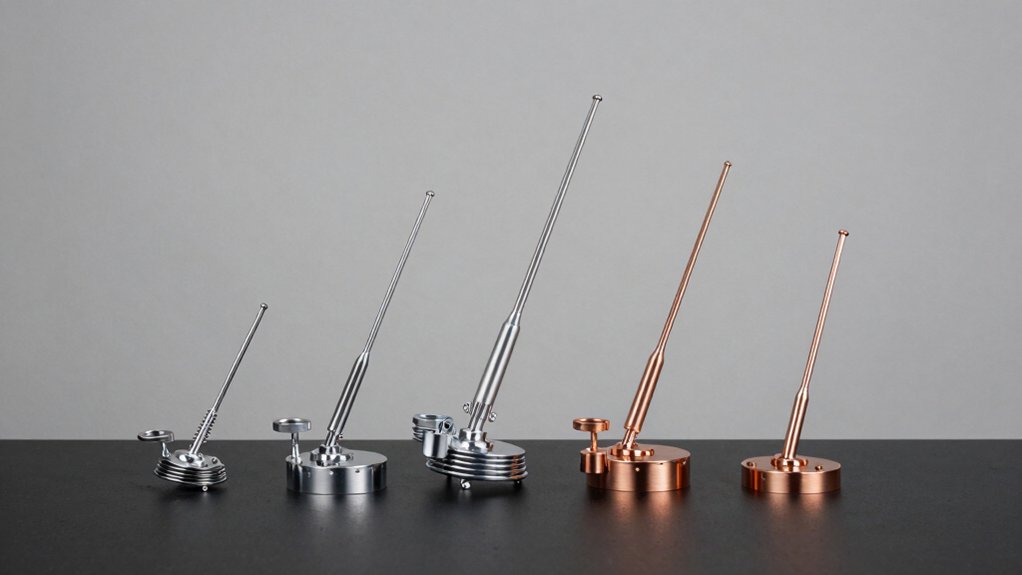

You’re likely frustrated with weak FM radio reception, dead zones, and missing stations. The antenna you choose directly controls what your receiver can pick up. You’ll find five proven models that solve these problems through solid construction, proper shielding, and reliable connectors. Each option works differently—some mount on walls, others use magnetic bases—so you need to understand which fits your setup and location. Let’s explore how each antenna delivers consistent signal strength.
| Bingfu FM Radio Dipole Antenna for Stereo Receiver |

| Best for Receivers | Impedance: 75 ohms | Antenna Type: FM dipole (wire) | Connector Type: F-type plug | VIEW LATEST PRICE | Read Our Analysis |
| Ancable Indoor FM Telescopic Antenna with F Type Connector |

| Best Adjustable Design | Impedance: 75 ohms | Antenna Type: Telescopic rod | Connector Type: F-type male with adapters | VIEW LATEST PRICE | Read Our Analysis |
| Ancable 300 Ohm FM Antenna T Shape Dipole Radio |
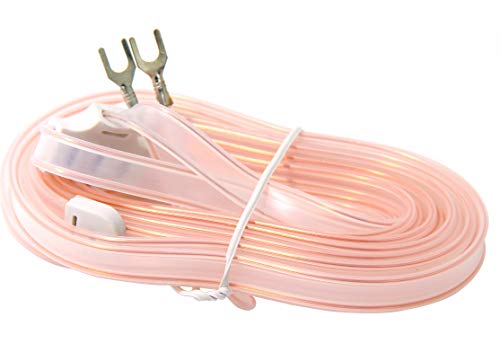
| Best for Vintage | Impedance: 300 ohms | Antenna Type: T-shaped dipole | Connector Type: Spade terminal | VIEW LATEST PRICE | Read Our Analysis |
| FM Telescopic Indoor Radio Antenna with F Type Connector |

| Best Budget Option | Impedance: 75 ohms | Antenna Type: Telescopic rod | Connector Type: F-type male with converters | VIEW LATEST PRICE | Read Our Analysis |
| FM Antenna for Stereo Receiver with Magnetic Base |

| Best Portable Setup | Impedance: Not specified | Antenna Type: Retractable rod | Connector Type: Not specified | VIEW LATEST PRICE | Read Our Analysis |
More Details on Our Top Picks
Bingfu FM Radio Dipole Antenna for Stereo Receiver
If you’re struggling to pick up FM stations clearly on your home audio system, the Bingfu FM Radio Dipole Antenna might be your solution. This 75-ohm dipole antenna includes a 10-foot coaxial cable and works with Pioneer, Onkyo, Yamaha, Marantz, and Bose systems. Mount it on your wall using the adhesive backing, then connect it to your receiver with the appropriate adapter from the included set. Position the antenna near a window and away from electronic devices to maximize signal strength. If reception issues persist, power-cycle your receiver to clear interference. Tighten all connectors securely to prevent signal loss.
- Impedance:75 ohms
- Antenna Type:FM dipole (wire)
- Connector Type:F-type plug
- Installation Method:Adhesive wall mounting
- Included Adapters/Accessories:3 adapters
- Compatible Receiver Brands:Pioneer, Onkyo, Yamaha, Marantz, Bose
- Additional Feature:10 feet coaxial extension cable
- Additional Feature:Adhesive wall mounting installation
- Additional Feature:Includes three adapter types
Ancable Indoor FM Telescopic Antenna with F Type Connector
You’re looking for an antenna that works with multiple radio receivers and doesn’t require permanent wall installation—the Ancable Indoor FM Telescopic Antenna delivers both. This 75-ohm antenna features ten brass copper extension sections for adjustable reception across all FM channels. Its F-type male connector includes three additional adapters: PAL male, PAL female, and 3.5mm, ensuring compatibility with Bose Wave radios, Yamaha receivers, Sony systems, and most stereo equipment. Installation takes minutes—simply screw or plug the antenna into your device’s socket. The telescopic design eliminates messy wall draping. Ancable backs this antenna with a twelve-month warranty and no-questions-asked replacement guarantee.
- Impedance:75 ohms
- Antenna Type:Telescopic rod
- Connector Type:F-type male with adapters
- Installation Method:Screw or plug into socket
- Included Adapters/Accessories:3 adapters
- Compatible Receiver Brands:Bose, Yamaha, Marantz, Sony, Pioneer, Denon, Panasonic, Onkyo
- Additional Feature:10 extension sections telescopic
- Additional Feature:12-month warranty included
- Additional Feature:Brass copper heavy construction
Ancable 300 Ohm FM Antenna T Shape Dipole Radio
The Ancable 300 Ohm FM Antenna works best for anyone with a vintage or modern stereo receiver that needs better FM station reception without complicated installation. This T-shaped dipole antenna connects directly to your receiver’s FM socket using spade terminals. Simply plug it in and stretch both antenna arms away from your device for optimal signal pickup. The 5.9-foot coax cable provides flexibility in positioning. It’s compatible with Yamaha, Sharp, JVC, Denon, and Marantz receivers. Before ordering, verify your receiver has a matching FM socket. Place the antenna on a tabletop or mount it in your home, office, or basement. This straightforward setup improves stereo reception across all FM stations without requiring tools or technical knowledge.
- Impedance:300 ohms
- Antenna Type:T-shaped dipole
- Connector Type:Spade terminal
- Installation Method:Clip or terminal FM socket
- Included Adapters/Accessories:None listed
- Compatible Receiver Brands:Yamaha, Sharp, JVC, Denon, Marantz
- Additional Feature:300 ohm impedance specification
- Additional Feature:5.9 feet coax cable
- Additional Feature:T-shape plug and play
FM Telescopic Indoor Radio Antenna with F Type Connector
Looking for a straightforward antenna solution that works with most home stereo receivers? The FM Telescopic Indoor Radio Antenna with F Type Connector offers a practical option. This 75 Ohm antenna features an F-Type Male Plug that screws directly into your receiver’s antenna socket. You’ll get two length options: keep it compact at 5.3 cm or extend it to 13.5 cm for improved reception. When fully extended, the antenna reaches 20 cm or 51 cm, letting you adjust signal strength by positioning it in your home, garage, basement, or office. The package includes five converters for compatibility with different equipment. Installation takes seconds—simply screw it in and adjust the telescoping sections until you access more FM stations with stable reception.
- Impedance:75 ohms
- Antenna Type:Telescopic rod
- Connector Type:F-type male with converters
- Installation Method:Screw or plug into socket
- Included Adapters/Accessories:5 converters
- Compatible Receiver Brands:Pioneer, Onkyo, Yamaha, Marantz, Sherwood
- Additional Feature:Extends up to 51cm
- Additional Feature:5 converter pieces included
- Additional Feature:Portable flexible placement design
FM Antenna for Stereo Receiver with Magnetic Base
If you’re tired of weak FM signals cutting through your home stereo setup, an FM antenna with a magnetic base offers a straightforward solution for indoor reception without requiring outdoor installation. The magnetic base secures firmly to metal surfaces, keeping the antenna stable and maintaining consistent signal strength. You’ll extend the included 5-meter coaxial cable to position it wherever reception’s strongest in your room. This antenna works with Pioneer, Onkyo, Yamaha, Marantz, and Sherwood receivers. The retractable design lets you adjust the antenna length for ideal FM pickup. Setup takes minutes—simply attach the base to a metal surface, connect the cable to your receiver, and extend the antenna until you’re picking up all your favorite stations clearly.
- Impedance:Not specified
- Antenna Type:Retractable rod
- Connector Type:Not specified
- Installation Method:Magnetic base mounting
- Included Adapters/Accessories:5-meter coaxial cable
- Compatible Receiver Brands:Pioneer, Onkyo, Yamaha, Marantz, Sherwood
- Additional Feature:Strong magnetic base mounting
- Additional Feature:5-meter coaxial cable included
- Additional Feature:Retractable antenna design
Factors to Consider When Choosing an Antenna for FM Radio
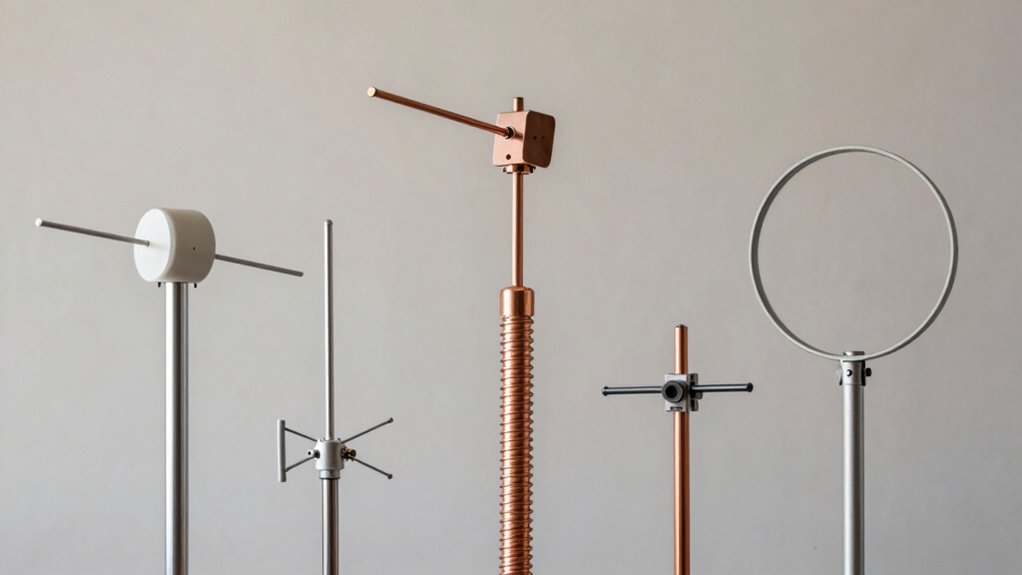
When you’re selecting an FM radio antenna, you’ll need to check the impedance rating and connector type to ensure they match your receiver’s specifications, as mismatched connections will prevent proper signal transmission. Consider where you’ll install the antenna—whether indoors near a window, in an attic, or outdoors—since placement directly affects your ability to receive distant stations clearly. You should also evaluate the antenna’s construction materials and build quality to confirm it’ll withstand weather exposure and provide consistent performance over time, while verifying that it’s compatible with your specific receiver model.
Impedance And Connector Types
Why does your FM antenna’s impedance matter? Impedance matching directly affects signal strength and reception quality. Most FM antennas use 75-ohm impedance, which aligns with standard consumer FM receivers and 75-ohm coaxial cables. This match minimizes signal reflections and loss, ensuring optimal performance.
Check your receiver’s input specifications first. Verify whether it accepts 75-ohm, 300-ohm, or another impedance value. If your antenna’s impedance differs from your receiver’s, you’ll need a matching network or adapter to prevent poor reception and signal leakage.
F-type male/female connectors are industry standard for 75-ohm FM systems. Confirm your receiver has an F-type input or obtain the appropriate adapter. Mismatched connectors or impedance create unnecessary performance problems, so always verify compatibility before purchasing your antenna.
Indoor Installation Placement
Now that you’ve confirmed your antenna’s impedance and connectors match your receiver, you’ll need to focus on where you place the antenna indoors to maximize FM reception. Position your antenna near a window or higher on a wall to reduce interior obstructions and improve line-of-sight to broadcast towers. Keep it away from electronics and metal surfaces, which cause interference and signal leakage. Test multiple mounting locations throughout your home to identify where you receive the strongest stereo FM signal. Consider your signal terrain, weather patterns, and indoor layout, as these factors significantly affect reception quality. Once you’ve identified the optimal position, secure your antenna firmly to prevent shifting that weakens the signal.
Compatibility With Receivers
How does an antenna actually connect to your receiver? You need to match the connector type first. Check whether your receiver uses an F-type connector, 3.5mm jack, or terminal clips. Your antenna must have the same connector to fit properly.
Next, verify the impedance rating. Most FM antennas and receivers use 75 ohms. A mismatch causes signal loss and poor reception.
Then examine the mounting style. Indoor telescopic antennas work with certain receivers, while dipole designs suit others. Confirm your receiver’s socket accepts your antenna’s mounting method.
Finally, review any included adapters. PAL adapters, coaxial converters, and jack adapters enable connections between incompatible ports. Ensure these adapters match your specific receiver model before purchasing.
Signal Reception Performance
Next, consider antenna design. Dipole or T-shaped configurations capture a broad FM band, improving clarity across multiple stations. You can also extend your antenna’s reach by positioning it near a window or away from electronic interference using longer coaxial cables or telescopic designs.
Finally, verify proper installation by securing all connectors, using correct adapters, and maintaining distance from heavy electronics. These steps directly influence your antenna’s ability to reduce multipath interference and increase signal-to-noise ratio in weak-signal areas.
Construction Quality Durability
When you’re selecting an FM antenna, durability directly affects how long it’ll perform reliably. Look for antennas constructed from durable materials like brass and copper with sturdy housing that resists bending and wear. Choose models featuring multi-section telescoping or rigid designs for added strength. Inspect connectors carefully—robust F-type, 75-ohm interfaces with secure threading prevent signal leakage and corrosion. Check that cables are reinforced with quality shielding to reduce moisture ingress, abrasion, and interference. Evaluate mounting hardware and bases, whether magnetic or adhesive, to ensure vibration-resistant installation. Review warranty coverage and return policies as direct indicators of manufacturer confidence in long-term durability. These construction factors determine whether your antenna maintains consistent performance over months and years.
Final Thoughts
You’ll improve your FM reception by selecting an antenna that matches your receiver type and placement needs. Install a telescoping or dipole model near a window, away from electronics that cause interference. Use F-type connectors for secure connections and test different positions to find optimal signal strength. Choose designs with brass components and sturdy construction for reliable, long-term performance across all stations.

Meet Ry, “TechGuru,” a 36-year-old technology enthusiast with a deep passion for tech innovations. With extensive experience, he specializes in gaming hardware and software, and has expertise in gadgets, custom PCs, and audio.
Besides writing about tech and reviewing new products, he enjoys traveling, hiking, and photography. Committed to keeping up with the latest industry trends, he aims to guide readers in making informed tech decisions.