
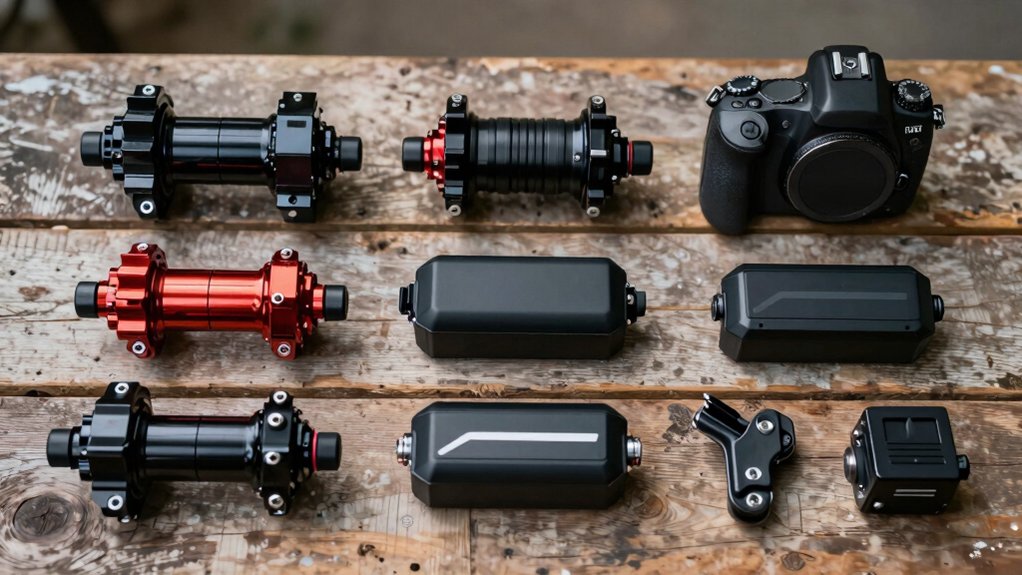

You’re considering converting your bike to electric, and you’ll find eight proven kits that match different needs and budgets. These kits range from 250W city models for casual riders to powerful 2000W systems for aggressive performance. Each option includes specific voltage levels, motor placements, and features like display screens and safety controls. The right choice depends on your frame type, riding style, and terrain—but determining which factors matter most requires understanding what each kit actually delivers.
| Electric Bicycle Motor Kit 24V 250W Conversion |

| Budget-Friendly Pick | Motor Power Output: 24V 250W | Wheel Compatibility: 16-28 inches | Motor Type: DC motor | VIEW LATEST PRICE | Read Our Analysis |
| 48V 1000W Electric Bicycle Rear Wheel Conversion Kit |

| Best Overall | Motor Power Output: 48V 1000W | Wheel Compatibility: 26 inches | Motor Type: Brushless hub motor | VIEW LATEST PRICE | Read Our Analysis |
| 36V 350W Electric Bike Conversion Kit with LCD Display |

| Best For Beginners | Motor Power Output: 36V 350W | Wheel Compatibility: 26 inches | Motor Type: Brushless hub motor with gear reduction | VIEW LATEST PRICE | Read Our Analysis |
| Ktaxon 48V 1000W Electric Bike Conversion Kit |

| Most Versatile | Motor Power Output: 48V 1000W | Wheel Compatibility: 26 inches | Motor Type: Brushless gearless hub motor | VIEW LATEST PRICE | Read Our Analysis |
| PEXMOR Electric Bike Conversion Kit 48V 1200W |

| Most Powerful | Motor Power Output: 48V 1200W | Wheel Compatibility: 26 inches | Motor Type: Brushless hub motor | VIEW LATEST PRICE | Read Our Analysis |
| 24V/36V 250W/350W Electric Bicycle Motor Kit |

| Best Value | Motor Power Output: 24V/36V 250W/350W | Wheel Compatibility: 16-28 inches | Motor Type: Brushed motor | VIEW LATEST PRICE | Read Our Analysis |
| Electric Bike Conversion Kit 48V 1000W 700C |

| Best For Speed | Motor Power Output: 48V 1000W | Wheel Compatibility: 700C/28-29 inches | Motor Type: Brushless gearless hub motor | VIEW LATEST PRICE | Read Our Analysis |
| 20-Inch Electric Bike Rear Hub Motor Kit 48V |

| Best For Fat Tires | Motor Power Output: 48V 2000W | Wheel Compatibility: 20×4 inches | Motor Type: Brushless gearless hub motor | VIEW LATEST PRICE | Read Our Analysis |
More Details on Our Top Picks
Electric Bicycle Motor Kit 24V 250W Conversion
If you’re looking to convert a standard bicycle into an electric bike without purchasing an entirely new e-bike, the 24V 250W conversion kit offers a practical solution that works with most existing bike frames and wheel sizes between 16 and 28 inches. The kit includes a motor, controller, chain, freewheel, mounting plate, and throttle handle. You’ll install the motor using the included bolts and mounting plate, then connect the cables securely to reduce failure risk. The 4.92-foot cable length accommodates various bike geometries. You’ll control speed through the throttle handle without heavy pedaling, making rides easier. The aluminum and iron construction resists abrasion and impacts for durability. Clean the motor assembly occasionally with water and a rag to maintain performance.
- Motor Power Output:24V 250W
- Wheel Compatibility:16-28 inches
- Motor Type:DC motor
- Riding Modes/Control:Pedal assist via throttle
- Display/Control Interface:Accelerator handle throttle
- Installation Complexity:Easy setup with included mounting plate
- Additional Feature:Under-voltage protection (20V)
- Additional Feature:38-section chain drop prevention
- Additional Feature:4.92 ft cable length
48V 1000W Electric Bicycle Rear Wheel Conversion Kit
You’ll want to contemplate the 48V 1000W rear wheel conversion kit when you’re looking to upgrade a 26-inch bicycle without replacing your entire bike. This rear hub motor kit transforms standard bikes into electric models, reaching speeds up to 53km/h with 1000W power and 45N.M torque. The kit includes the motorized wheel, pedal assistant sensor, controller, and assembly accessories—you’ll need to supply your own 48V lithium or lead-acid battery. Installation requires connecting wire colors correctly to the controller per the manual. The 120kg load capacity suits most riders, though avoid wet conditions since the motor isn’t waterproof. The brushless design ensures efficiency exceeding 80% with minimal maintenance.
- Motor Power Output:48V 1000W
- Wheel Compatibility:26 inches
- Motor Type:Brushless hub motor
- Riding Modes/Control:No specific modes mentioned
- Display/Control Interface:No display mentioned
- Installation Complexity:Requires manual reading and wire color connection
- Additional Feature:Load capacity 120kg (264lbs)
- Additional Feature:Speed up to 53km/h
- Additional Feature:2-year warranty included
36V 350W Electric Bike Conversion Kit with LCD Display
The 36V 350W front wheel hub motor kit works best for cyclists who want a straightforward conversion without extensive modifications to their existing 26″ bicycle. You’ll install the aluminum wheel hub motor onto your front fork, then connect it to the LCD display controller. The kit delivers up to 35 km/h and includes five adjustable speed settings with cruise control functionality. The controller monitors your speed, distance, power consumption, and system faults through the LCD screen. All necessary components and installation instructions come included, making the conversion process direct and compatible with standard 26″ wheel frames. This setup provides practical electric assistance for everyday riding.
- Motor Power Output:36V 350W
- Wheel Compatibility:26 inches
- Motor Type:Brushless hub motor with gear reduction
- Riding Modes/Control:5-speed adjustable with fixed-speed cruise
- Display/Control Interface:LCD display (speed, mileage, power, fault status)
- Installation Complexity:Easy installation with all accessories included
- Additional Feature:Five speed adjustable options
- Additional Feature:Maximum speed 35km/h
- Additional Feature:Gear reduction brushless motor
Ktaxon 48V 1000W Electric Bike Conversion Kit
For cyclists who want an affordable conversion option that doesn’t require a separate battery purchase, Ktaxon’s 48V 1000W kit delivers reliable performance through its brushless, gearless hub motor and multiple riding modes. The kit fits most 26″ bikes with 3.93″ front dropout spacing and supports riders up to 220 lbs. You’ll receive all necessary components including the motor, LCD display, PAS sensor, controller, and custom handles for installation. The display shows battery power, speed, distance, and error codes so you can monitor performance. Multiple modes—throttle, presets, PAS, and manual—let you choose your preferred riding style. The brake cut-off safety feature automatically disconnects power when you engage brakes, preventing accidents. Installation requires video guidance included with your kit.
- Motor Power Output:48V 1000W
- Wheel Compatibility:26 inches
- Motor Type:Brushless gearless hub motor
- Riding Modes/Control:Throttle, Presets, PAS, Manual with brake cut-off
- Display/Control Interface:LCD display (battery, speed, distance, mode, errors)
- Installation Complexity:DIY-friendly with video guidance
- Additional Feature:Power cut-off brake handle
- Additional Feature:Multiple riding modes available
- Additional Feature:Video guidance included
PEXMOR Electric Bike Conversion Kit 48V 1200W
Want a conversion kit that handles riders up to 220 lbs without compromising performance? The PEXMOR 48V 1200W rear hub motor kit delivers reliable power for your 26″ bicycle frame. You’ll access three riding modes—throttle, pedal assist, and manual—giving you flexibility for different terrain and energy levels. The sine wave controller operates efficiently and quietly while the included torque arm ensures safe wheel stability. Installation requires the provided tools and instructions, which come with video guidance. You get brake lever integration that cuts power during braking, protecting your motor. With CE certification and aluminum construction, this kit provides durable long-term performance.
- Motor Power Output:48V 1200W
- Wheel Compatibility:26 inches
- Motor Type:Brushless hub motor
- Riding Modes/Control:Throttle, PAS, Manual
- Display/Control Interface:Twist throttle with battery indicator
- Installation Complexity:Includes installation tools and video instructions
- Additional Feature:Torque arm for stability
- Additional Feature:Sine wave controller efficiency
- Additional Feature:CE certification for safety
24V/36V 250W/350W Electric Bicycle Motor Kit
Looking to convert your standard bike into an electric one without breaking the bank? The LIKARVA 24V/36V 250W/350W Electric Bicycle Motor Kit offers an affordable solution. This left-side drive motor kit fits most bicycles with 16″–28″ wheels and includes everything needed: brushed motor, controller, thumb throttle, sprocket, chain, and mounting hardware. The kit works with hub diameters under 36mm and triangle frames best. You’ll operate it in dual modes—pedal assist or throttle-driven—while the freewheel design reduces resistance when unpowered. Built from iron, aluminum, and copper with bake-painting for durability, the controller provides under-voltage and overload protection. Note that you’ll need to purchase a battery and charger separately to complete your conversion.
- Motor Power Output:24V/36V 250W/350W
- Wheel Compatibility:16-28 inches
- Motor Type:Brushed motor
- Riding Modes/Control:Pedal assist and throttle-driven
- Display/Control Interface:Thumb throttle with battery indicator
- Installation Complexity:Complete kit with assembly instructions provided
- Additional Feature:Dual operation modes (pedal/throttle)
- Additional Feature:16″-28″ wheel compatibility range
- Additional Feature:Under-voltage overload protection
Electric Bike Conversion Kit 48V 1000W 700C
The 48V 1000W 700C conversion kit works best if you’re upgrading a standard bicycle with a 700C, 28-inch, or 29-inch front or rear wheel and want straightforward power without complicated maintenance. This brushless gearless motor delivers 45–55 KM/H top speed with smooth acceleration and produces minimal noise. The dual mode controller automatically switches between Hall effect and non-Hall effect operation if a component fails, keeping your motor running. You’ll monitor real-time speed, mileage, battery power, and assist levels through the LCD display. The 5-speed adjustment lets you modify power output for different road conditions. Activate cruise mode by holding the button 2–3 seconds at steady speed. The aluminum alloy frame handles riders up to 264 lbs, and brake lever engagement cuts motor power for safe emergency stopping.
- Motor Power Output:48V 1000W
- Wheel Compatibility:700C/28-29 inches
- Motor Type:Brushless gearless hub motor
- Riding Modes/Control:5-speed adjustment with cruise function
- Display/Control Interface:LCD display (speed, mileage, battery, assist level, cruise)
- Installation Complexity:Standard hub motor installation
- Additional Feature:Cruise function with activation
- Additional Feature:Supports Hall/non-Hall operation
- Additional Feature:Top speed 45-55km/h
20-Inch Electric Bike Rear Hub Motor Kit 48V
If you’re converting a 20-inch folding or mini bike into an electric ride, this 48V 2000W rear hub motor kit offers the power and compatibility you need. The brushless gearless motor delivers 65 N·m torque and reaches speeds up to 55 km/h. You’ll receive the hub motor, controller, LCD display, thumb throttle, and brake levers in one package. Installation requires 20×4 inch tires and a 170mm bottom bracket. The aluminum alloy construction resists rust and scratches, weighing 12.35 kg. The motor operates efficiently at 83 percent with minimal noise under 55 decibels. You can ride on highways, mountain roads, sand, and snow. A 2-year warranty covers defects.
- Motor Power Output:48V 2000W
- Wheel Compatibility:20×4 inches
- Motor Type:Brushless gearless hub motor
- Riding Modes/Control:Throttle with LCD display
- Display/Control Interface:LCD display
- Installation Complexity:Complete kit with English manuals included
- Additional Feature:Torque 65 N·m maximum
- Additional Feature:Temperature range -20 to 45°C
- Additional Feature:Noise level less than 55dB
Factors to Consider When Choosing Electric Conversion Kits for Bicycles
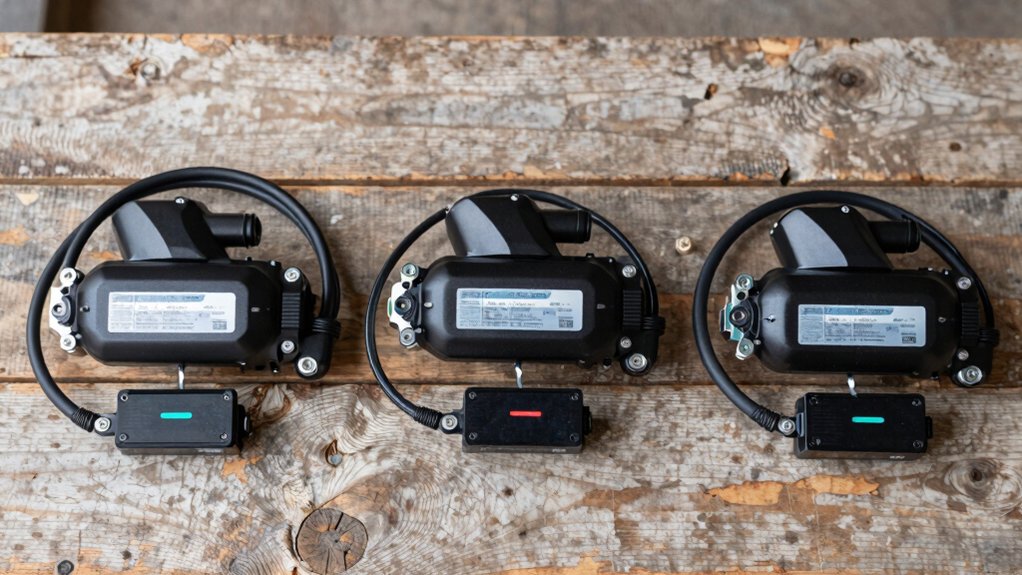
When you’re choosing an electric conversion kit, you’ll need to check your wheel size compatibility, verify the motor power matches your riding needs, and confirm the battery voltage aligns with your bike’s electrical system. Next, assess the installation complexity by reviewing whether you can handle the work yourself or need professional help, and check the weight capacity limits to ensure both the kit and your total bike weight won’t exceed your bike frame’s specifications. These five factors work together to determine whether a specific kit will function safely and effectively on your bicycle.
Wheel Size Compatibility
How do you know which electric conversion kit‘ll work with your bike’s wheels? First, measure your wheel diameter. Most kits specify compatibility by size: 26“, 700C (28″/29″), or ranges like 16″-28”. Check your bike’s current wheels against the kit’s requirements. Next, identify whether you’re converting the front or rear wheel. Front-wheel hubs fit 26″ or 700C bikes, while rear configurations work with 26″ and 20″ wheels. Finally, verify dropout spacing and hub dimensions. Some kits require specific measurements like 3.93″ front dropout or 100mm spacing. Match these specifications to your frame before purchasing. Taller wheels like 700C need compatible LCD displays and PAS systems designed for their rotational speed. This ensures proper installation and performance.
Motor Power Requirements
Motor power ratings in watts—such as 250W, 1000W, or 1200W—directly determine how much propulsion your conversion kit’ll deliver. Higher wattage enables faster acceleration and higher top speeds, but requires stronger batteries and controller ratings. Common categories include 24V/250W for light commuting, 36V/350W for moderate terrain, and 48V/1000W or 48V/1200W for demanding conditions. Torque, measured in N·m (like 45 N·m), indicates your kit’s ability to accelerate from stops and climb hills effectively. Match your kit’s power to three factors: your body weight, your bike frame’s structural capacity, and your intended use. City commuting needs differ from off-road riding. Undersized kits won’t perform adequately; oversized kits risk frame damage and battery strain. Select power that balances your specific requirements.
Battery Voltage Selection
What voltage should your conversion kit’s battery deliver? You’ll typically choose between 24V, 36V, and 48V configurations. Match your battery voltage exactly to your motor and controller ratings—mismatches cause performance loss or damage. Higher voltages offer distinct advantages: a 48V system delivers stronger hill-climbing ability and faster acceleration than 24V on identical motors. However, higher voltages demand compatible wiring and safety protections throughout your system. Consider your riding needs first. If you climb steep hills frequently or need quick acceleration, choose 48V. For casual commuting on flat terrain, 24V or 36V suffices. Battery voltage also affects range and weight—higher voltage packs typically store more energy, extending your ride distance per charge. Verify all components support your chosen voltage before purchasing.
Installation Complexity Level
You’ll encounter varying difficulty levels when installing your conversion kit, and the main factors that determine how straightforward or challenging the process’ll be include your wheel type, frame design, and component compatibility. Front-wheel kits typically require less alignment work than rear-wheel systems, though both may need brake sensor integration. Check your dropout spacing—whether 100mm or 3.93 inches—against the kit specifications for your wheel size (26″, 700C, or 20″ fat tire). Non-standard frames and left-side drive setups complicate torque arm alignment and chainring clearance. Kits with detailed manuals, video guides, and complete hardware reduce confusion significantly. Systems featuring integrated displays, PAS sensors, and brake cut-off switches demand additional wiring connections and calibration, extending installation time considerably.
Weight Capacity Limits
Once you’ve assessed installation requirements, checking the weight capacity limits becomes your next priority before purchasing. Most conversion kits support 220 to 264 lbs, though this varies by model. You must verify two things: your combined weight plus cargo and your bike frame’s rated capacity. Check your kit’s specifications for motor torque and hub design, as these directly affect load handling. Compare this against your bicycle’s maximum weight rating, typically found in the owner’s manual or manufacturer’s website. If you exceed the stated limit, you’ll risk compromising safety, handling, and braking performance. Match your total weight to a kit that safely accommodates it, ensuring both components align with your needs.
Frame Type Suitability
How compatible is your bike’s frame with a conversion kit? You’ll need to match your frame type and geometry to the kit’s specifications. First, identify your wheel size—26-inch or 700C for front kits, and 26-inch through 29-inch for rear kits. Next, check your dropout spacing; front dropouts typically measure 100mm, while rear spacing varies. Verify your hub diameter meets the kit’s minimum requirement, often 36mm or larger. Consider whether you have a folding or non-folding frame, as many kits exclude folding designs. Finally, determine your drive configuration preference—left or right-side—since this affects chainline clearance and derailleur compatibility. Confirm these specifications before purchasing to ensure the motor mounts properly without frame modification.
Speed Performance Goals
What speed do you actually need from your electric conversion kit? Start by identifying your primary use: commuting, recreational riding, or off-road travel. Next, consider your local regulations, which often cap e-bikes at 32 km/h or 45 km/h depending on your region. Then evaluate the motor specifications you’re targeting. A 1000W rear hub motor at 48V typically delivers 45–53 km/h on 26″ wheels, while lower-wattage options provide slower, more controlled speeds. Factor in real-world conditions like rider weight, wind resistance, and terrain. Finally, review the kit’s speed control features—cruise control, multiple PAS levels, and throttle modes let you manage velocity consistently. Match these elements to your needs rather than pursuing maximum speed unnecessarily.
Budget And Warranty
Should you buy the cheapest kit available, or invest more upfront for better protection? Calculate your total cost of ownership by adding the kit price, batteries, tires, and installation tools. Many kits don’t include batteries, so budget separately for this essential component. Compare warranty lengths: 1-year warranties offer basic coverage, while 2-year warranties provide extended protection and lower long-term costs. Higher wattage kits (1000W) cost more but deliver superior power and hill-climbing ability, justifying the investment for demanding terrain. Account for future maintenance by budgeting for replacement sensors, controllers, spokes, and mounts. Kits with safety features like under-voltage or brake-off protection reduce repair costs over time. Review what’s included versus what you’ll purchase separately before deciding.
Final Thoughts
You’ll choose your conversion kit by matching three core specs to your needs: voltage (24–48V), wattage (250–2000W), and motor placement (front or rear hub). Assess your bike’s frame compatibility and weight capacity first. Compare display options, safety features like brake-cut systems, and warranty coverage. Install following the manufacturer’s guide carefully. You’ll then enjoy faster commutes, easier hill climbs, or extended range depending on your kit selection.

Meet Ry, “TechGuru,” a 36-year-old technology enthusiast with a deep passion for tech innovations. With extensive experience, he specializes in gaming hardware and software, and has expertise in gadgets, custom PCs, and audio.
Besides writing about tech and reviewing new products, he enjoys traveling, hiking, and photography. Committed to keeping up with the latest industry trends, he aims to guide readers in making informed tech decisions.