

You’re looking for a reliable way to connect your TV’s audio to your soundbar, and an HDMI ARC adapter can solve that problem. These devices extract audio from your TV’s HDMI port and convert it to optical, coaxial, or 3.5mm outputs your soundbar can use. But not all adapters work equally well—some drop audio signals, lack proper power, or miss compatibility with your equipment. The right adapter depends on your soundbar’s input type and your TV’s capabilities, so let’s explore which options actually deliver results.
| eSynic Professional eARC Audio Extractor to Optical Adapter |

| Professional Grade | Audio Sampling Rate Support: Up to 24-bit/192 kHz | Audio Output Formats: PCM 2.0, Dolby 5.1, DTS 5.1 | Output Type: Optical (TOSLINK) | VIEW LATEST PRICE | Read Our Analysis |
| VPFET HDMI Audio Extractor 4K to Optical Adapter |

| Best For 4K | Audio Sampling Rate Support: Not specified | Audio Output Formats: PCM 2.0, DTS 5.1 (optical) | Output Type: Optical (TOSLINK) + 3.5mm | VIEW LATEST PRICE | Read Our Analysis |
| 192KHz HDMI ARC to Optical Audio Converter |

| Budget-Friendly Pick | Audio Sampling Rate Support: 24-bit/192 kHz | Audio Output Formats: PCM, Dolby 5.1, DTS 5.1 | Output Type: Optical (SPDIF) | VIEW LATEST PRICE | Read Our Analysis |
| 192KHz HDMI eARC to Optical Audio Converter |

| Best Overall | Audio Sampling Rate Support: 24-bit/192 kHz | Audio Output Formats: PCM, Dolby 5.1, DTS 5.1 | Output Type: Optical (SPDIF) | VIEW LATEST PRICE | Read Our Analysis |
| HDMI ARC Audio Extractor with Digital Optical & RCA |

| Most Versatile | Audio Sampling Rate Support: Up to 192 kHz | Audio Output Formats: PCM, Dolby Digital, DTS | Output Type: Optical (TOSLINK), Coaxial (S/PDIF), RCA L/R, 3.5mm | VIEW LATEST PRICE | Read Our Analysis |
| avedio Links HDMI ARC Audio Extractor Converter |

| Editor’s Choice | Audio Sampling Rate Support: Not specified | Audio Output Formats: PCM, Dolby Digital, Dolby TrueHD, DTS-HD | Output Type: Optical (TOSLINK) + 3.5mm | VIEW LATEST PRICE | Read Our Analysis |
| 4K HDMI Audio Extractor Converter with Optical Output |

| Premium Performance | Audio Sampling Rate Support: Not specified | Audio Output Formats: PCM, Dolby Digital, Dolby True HD, DTS-HD, DTS | Output Type: Optical (TOSLINK) + 3.5mm + HDMI passthrough | VIEW LATEST PRICE | Read Our Analysis |
| HDMI ARC Audio Extractor to Optical Converter |
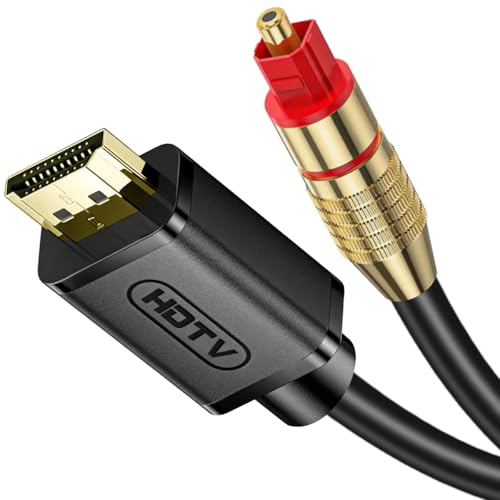
| Best Value | Audio Sampling Rate Support: 24-bit/192 kHz | Audio Output Formats: PCM | Output Type: Optical (TOSLINK) | VIEW LATEST PRICE | Read Our Analysis |
| LiNKFOR eARC/ARC Audio Extractor HDMI to Optical |
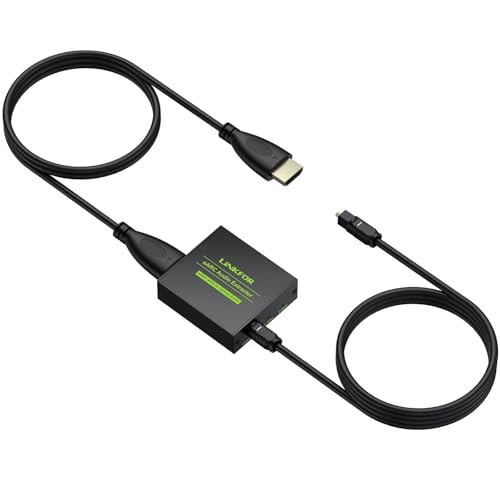
| Best For eARC | Audio Sampling Rate Support: 24-bit/192 kHz | Audio Output Formats: PCM 2.0, Dolby 5.1, DTS 5.1 | Output Type: Optical | VIEW LATEST PRICE | Read Our Analysis |
More Details on Our Top Picks
eSynic Professional eARC Audio Extractor to Optical Adapter
Are you looking for a straightforward way to connect your TV’s audio output to a soundbar or wireless headphones without using HDMI cables? The eSynic Professional eARC Audio Extractor converts your TV’s eARC/ARC signal into optical output. First, connect an HDMI cable from your TV’s eARC/ARC port to the adapter. Then plug in the USB power supply. Next, enable eARC/ARC on your TV through its remote settings. Finally, connect your optical cable to your soundbar or headphones. This adapter supports up to 192 kHz audio quality and outputs Dolby 5.1 and DTS 5.1 formats. Note that volume control requires your TV remote only, as the optical connection doesn’t support CEC remote commands.
- Audio Sampling Rate Support:Up to 24-bit/192 kHz
- Audio Output Formats:PCM 2.0, Dolby 5.1, DTS 5.1
- Output Type:Optical (TOSLINK)
- Power Requirements:USB power supply required
- Installation Type:Plug and play, no drivers needed
- CEC/Remote Control Support:CEC not supported
- Additional Feature:5.1 channel audio indicators
- Additional Feature:eARC/ARC interface only
- Additional Feature:Lag-free experience guaranteed
VPFET HDMI Audio Extractor 4K to Optical Adapter
If you’re connecting a device without built-in audio output to your soundbar, the VPFET HDMI Audio Extractor pulls audio directly from your HDMI signal and sends it through either optical or 3.5mm cables to your receiver. Select 2.0CH mode for 3.5mm stereo output or 5.1CH mode for optical DTS surround sound. The device supports 4K@30Hz via HDMI 1.4V and draws minimal power from USB 5V. Compatible with Blu-ray players, Fire TV, PS4/5, and most HDMI sources, it won’t work with ARC/eARC TVs. If you experience no audio or video initially, switch to PASS mode. One-year warranty covers defects and service issues.
- Audio Sampling Rate Support:Not specified
- Audio Output Formats:PCM 2.0, DTS 5.1 (optical)
- Output Type:Optical (TOSLINK) + 3.5mm
- Power Requirements:USB 5V power
- Installation Type:Plug and play, no drivers needed
- CEC/Remote Control Support:Not specified
- Additional Feature:4K@30Hz RGB/YUV4:4:4 support
- Additional Feature:Dual output (optical + 3.5mm)
- Additional Feature:One-year service warranty
192KHz HDMI ARC to Optical Audio Converter
The 192KHz HDMI ARC to Optical Audio Converter works best for you if your TV has an ARC port but your soundbar or speaker system only accepts optical audio input. Simply connect the converter’s HDMI cable to your TV’s ARC port and plug the optical cable into your speaker system. You’ll need to enable ARC in your TV settings and set the audio output to PCM, Dolby 5.1, or DTS 5.1, depending on what your speakers support. Power the converter through a USB port. The plug-and-play design requires no additional cables or software. The 1.05-meter cable length suits most home theater setups. Note that this converter doesn’t transmit remote control signals through the optical connection.
- Audio Sampling Rate Support:24-bit/192 kHz
- Audio Output Formats:PCM, Dolby 5.1, DTS 5.1
- Output Type:Optical (SPDIF)
- Power Requirements:USB power from TV or USB port
- Installation Type:Plug and play, no extra cables needed
- CEC/Remote Control Support:CEC not supported on optical
- Additional Feature:1.05m cable length included
- Additional Feature:LED connection indicator light
- Additional Feature:ARC interface only (non-eARC)
192KHz HDMI eARC to Optical Audio Converter
Looking to connect your TV’s eARC port to a soundbar that only accepts optical input? The 192KHz HDMI eARC to Optical Audio Converter solves this compatibility problem. Insert the HDMI connector into your TV’s eARC or ARC port, then connect the included optical cable to your soundbar. Power the converter using any USB-compatible port. Next, access your TV settings and enable ARC or eARC mode, then set the audio format to PCM for best compatibility. The converter supports 24-bit/192kHz audio and handles Dolby 5.1 and DTS 5.1 formats if your soundbar supports them. An LED indicator confirms the HDMI connection is active. This plug-and-play setup requires no additional cables or equipment beyond the converter itself.
- Audio Sampling Rate Support:24-bit/192 kHz
- Audio Output Formats:PCM, Dolby 5.1, DTS 5.1
- Output Type:Optical (SPDIF)
- Power Requirements:USB power from TV or USB-compatible port
- Installation Type:Plug and play, no extra cables needed
- CEC/Remote Control Support:CEC not supported on optical
- Additional Feature:3.4ft optical cable included
- Additional Feature:eARC/ARC compatible interface
- Additional Feature:Metal enclosure construction
HDMI ARC Audio Extractor with Digital Optical & RCA
Want your TV’s sound to reach multiple audio devices at once? The AMANKA HDMI ARC Audio Extractor lets you do exactly that. Connect it to your TV’s ARC-enabled HDMI port, then enable ARC on your TV. You’ll get simultaneous outputs through optical, coaxial, RCA, and 3.5mm ports. Set your TV audio to PCM or LPCM for RCA and 3.5mm output. This adapter supports sampling rates up to 192 kHz and handles 5.1 channel audio through optical or coaxial outputs. Its metal enclosure provides durability, and no software installation is required—it’s purely plug-and-play setup.
- Audio Sampling Rate Support:Up to 192 kHz
- Audio Output Formats:PCM, Dolby Digital, DTS
- Output Type:Optical (TOSLINK), Coaxial (S/PDIF), RCA L/R, 3.5mm
- Power Requirements:Not specified
- Installation Type:Plug and play, no drivers needed
- CEC/Remote Control Support:CEC supported
- Additional Feature:Quad simultaneous outputs supported
- Additional Feature:Coaxial + RCA outputs included
- Additional Feature:Metal enclosure design
avedio Links HDMI ARC Audio Extractor Converter
If you need multiple audio output options without replacing your TV, the avedio Links converter gives you flexibility by taking a single HDMI ARC input and splitting it into three separate outputs: one HDMI passthrough, one optical Toslink SPDIF, and one 3.5mm stereo jack. You’ll select your audio mode—Pass, 2CH, or 5.1CH—depending on your source content and equipment. The optical output handles advanced formats like Dolby Digital and DTS-HD, while the 3.5mm jack works for standard stereo. Connect your soundbar, amplifier, or headphones to whichever output matches your setup. The device supports 4K@60Hz video passthrough and HDCP2.2 protection, ensuring compatibility with modern streaming devices, gaming consoles, and Blu-ray players.
- Audio Sampling Rate Support:Not specified
- Audio Output Formats:PCM, Dolby Digital, Dolby TrueHD, DTS-HD
- Output Type:Optical (TOSLINK) + 3.5mm
- Power Requirements:Not specified
- Installation Type:Plug and play, no drivers needed
- CEC/Remote Control Support:CEC not supported
- Additional Feature:HDMI passthrough to TV/Monitor
- Additional Feature:Dolby TrueHD + DTS-HD support
- Additional Feature:Maximum HDMI 2.0 compatible
4K HDMI Audio Extractor Converter with Optical Output
The 4K HDMI Audio Extractor Converter with Optical Output works best for you if you’re connecting multiple audio devices to a single HDMI source without upgrading your entire entertainment setup. This device extracts audio from your HDMI signal and sends it to speakers, soundbars, or amplifiers separately. You’ll get three audio modes—TV, 2.0CH, and 5.1CH—depending on your needs. The optical SPDIF output supports advanced formats like Dolby Digital and DTS-HD, while the 3.5mm jack provides standard stereo audio. You’ll receive a digital optical cable, USB power adapter, and HDMI cable in the package. ARC functionality lets you send audio back through your TV connection when needed.
- Audio Sampling Rate Support:Not specified
- Audio Output Formats:PCM, Dolby Digital, Dolby True HD, DTS-HD, DTS
- Output Type:Optical (TOSLINK) + 3.5mm + HDMI passthrough
- Power Requirements:USB power adapter included
- Installation Type:Plug and play, includes cables
- CEC/Remote Control Support:Not specified
- Additional Feature:HDR10 + 18 Gbps bandwidth
- Additional Feature:Complete accessory bundle included
- Additional Feature:HDMI passthrough to display
HDMI ARC Audio Extractor to Optical Converter
Looking to connect your TV’s HDMI ARC port to a soundbar or home theater system that uses optical input? The Tackston HDMI ARC Audio Extractor converts your TV’s ARC signal to optical format. Connect the HDMI cable to your TV’s ARC-labeled port, then plug the optical output into your soundbar or home theater receiver. You’ll need to activate ARC and CEC on your TV, set the digital audio output to PCM, and connect a USB power supply. The converter supports 24bit/192KHz audio quality with no software installation required. Note that volume control shifts to your optical device during use.
- Audio Sampling Rate Support:24-bit/192 kHz
- Audio Output Formats:PCM
- Output Type:Optical (TOSLINK)
- Power Requirements:5V USB power supply required
- Installation Type:Plug and play, no drivers needed
- CEC/Remote Control Support:CEC not supported
- Additional Feature:6.5 ft cable length
- Additional Feature:ARC interface only (non-eARC)
- Additional Feature:Advanced audio interference elimination
LiNKFOR eARC/ARC Audio Extractor HDMI to Optical
Want to convert your TV’s eARC/ARC signal into optical audio without needing CEC volume controls? The LiNKFOR extractor handles this conversion with a plug-and-play setup requiring no drivers. Connect the HDMI end to your TV’s eARC/ARC port, then attach your optical cable to compatible devices like soundbars or home theater systems. The device supports 24bit/192kHz sampling with Dolby 5.1 and DTS 5.1 formats. An audio signal indicator shows active connections. Note that CEC volume control isn’t supported due to fiber optic limitations, though this doesn’t affect basic audio transmission to your soundbar or wireless headphones.
- Audio Sampling Rate Support:24-bit/192 kHz
- Audio Output Formats:PCM 2.0, Dolby 5.1, DTS 5.1
- Output Type:Optical
- Power Requirements:Not specified
- Installation Type:Plug and play, no drivers needed
- CEC/Remote Control Support:CEC not supported
- Additional Feature:2.1M cable length included
- Additional Feature:Audio signal indicator display
- Additional Feature:Immersive surround sound extraction
Factors to Consider When Choosing an HDMI ARC Adapter for Soundbar
When you’re selecting an HDMI ARC adapter for your soundbar, you’ll need to evaluate five key factors: audio format compatibility (check whether the adapter supports Dolby Digital, DTS, and PCM), connection type requirements (verify that your TV and soundbar have matching ports), cable length considerations (measure the distance from your TV to soundbar to avoid signal loss), power supply needs (determine if the adapter requires USB power or operates passively), and video resolution support (confirm the adapter handles your TV’s maximum output resolution). Start by listing your TV model and soundbar specifications, then cross-reference each adapter’s technical details against your requirements to eliminate incompatible options. This systematic approach ensures you’ll purchase an adapter that functions reliably with your specific equipment.
Audio Format Compatibility
Which audio formats does your soundbar actually support? Check your soundbar’s manual or specifications for compatible formats like PCM 2.0, Dolby Digital 5.1, or DTS 5.1. Not all HDMI ARC adapters support the same formats—some only passthrough PCM 2.0, while others handle surround sound. Before purchasing an adapter, match its supported codecs to your soundbar’s capabilities. If your soundbar requires Dolby 5.1 but the adapter only outputs 2.0, you’ll lose surround sound. Some adapters include manual pass-through or “PASS” options to select your desired output format. If your TV supports eARC, verify whether the adapter can handle higher-bitrate audio that eARC delivers. Always confirm codec compatibility to avoid downmixing and preserve your audio quality.
Connection Type Requirements
Once you’ve confirmed your soundbar’s audio format needs, you’ll need to verify that your TV and adapter can actually connect properly—and that means checking your ports and connection types first. Not all HDMI ports on your TV support ARC or eARC, so locate your TV’s dedicated ARC/eARC port before purchasing an adapter. Next, identify what output your adapter offers: optical, 3.5mm, or RCA connections. Your soundbar or receiver must have a matching input port. Finally, check the adapter’s power requirements—most need USB power to maintain stable signaling and prevent audio dropouts. Connecting power properly ensures consistent performance throughout your setup. Verify all three elements—TV port, adapter output type, and power supply—before installation to avoid compatibility problems.
Cable Length Considerations
How does cable length affect your adapter setup? Your HDMI ARC adapter‘s cable length determines where you can position it relative to your TV and soundbar. Standard adapters come with 1.0 to 1.5 meter cables, offering flexibility for most installations. Longer cables let you route the adapter away from tight spaces, but they risk signal degradation without proper shielding. Choose a length that minimizes visible wiring while keeping the adapter within reach of a powered USB port. Avoid excessive slack that could snag or damage connectors. Additionally, consider your USB power cable length—if your TV’s USB port is distant, you’ll need an extended power cable. Match your cable lengths to your specific installation layout for optimal performance and cleaner appearance.
Power Supply Needs
What’s powering your HDMI ARC adapter? Most models require a 5V USB power supply to function properly. You’ll need to locate a convenient USB port near your TV or audio system before purchasing. Some adapters draw power directly from your TV’s USB port, which may reduce available power for other devices. Others come with external wall adapters—check the included adapter’s voltage before plugging in. A stable power connection is critical for maintaining consistent audio extraction and preventing dropouts or lag. If you’re using multiple USB devices, consider connecting your adapter to a powered hub or dedicated adapter instead of relying solely on your TV’s built-in ports. This approach prevents power-related audio glitches in complex setups.
Video Resolution Support
Do you need your adapter to handle 4K content, or will 1080p suffice for your setup? First, identify your TV’s maximum resolution capability and your source device’s output. Next, verify the adapter supports your required resolution—4K at 60Hz or 1080p—to prevent downscaling. Check the HDMI specification: HDMI 2.0 handles 4K at 30Hz, while HDMI 2.1 supports 4K at 60Hz with full bandwidth. Then confirm HDCP 2.2 compatibility for protected content playback. Review the adapter’s stated limitations, as some don’t support 4K at 60Hz with certain color spaces. Finally, cross-reference your TV’s ARC/eARC capability with the adapter’s video pass-through specifications to avoid sync problems or stutter.
Output Options Available
When selecting an HDMI ARC adapter for your soundbar, you’ll need to evaluate which output formats match both your adapter and your soundbar’s input capabilities. Most adapters provide multiple options: optical (Toslink), 3.5mm analog, and sometimes coaxial outputs. Check your soundbar’s inputs first to determine compatibility. Optical and coaxial outputs typically support 5.1 surround sound formats like Dolby Digital and DTS, while 3.5mm connections usually handle stereo PCM only. Some models include PASS or bypass modes that transmit signals unchanged to downstream equipment. Review the adapter’s specifications to confirm which audio formats it supports on each output type. This step ensures your soundbar receives the audio quality and channel configuration you need without purchasing incompatible equipment.
Setup Complexity Level
How much effort you’ll invest in setup depends on your adapter model—some require just a few basic connections, while others demand you navigate multiple TV settings before audio flows to your soundbar. Plug-and-play models need only an HDMI cable connected to your TV’s ARC/eARC port and USB power. More complex adapters require you to enable ARC/eARC on your TV, select audio formats like PCM or Dolby, and activate CEC for full control. You’ll also need to confirm your HDMI cable supports ARC/eARC compatibility. Some devices add extra steps like connecting separate USB power supplies or optional 3.5mm outputs. Check your specific adapter’s manual before purchasing to understand what settings adjustments you’ll need to complete.
Budget and Value
What’s the right price to pay for an HDMI ARC adapter? Start by comparing total cost against the features you actually need. Check whether the unit supports 2.0 or 5.1 audio output, and count the available connection types—optical, coaxial, and 3.5mm outputs increase flexibility. Verify ARC or eARC compatibility since eARC future-proofs your setup with newer TVs. Next, evaluate power efficiency. USB-powered models work well for most spaces, but compare power draw ratings across options. Look for bundles that include necessary cables like HDMI, optical, and USB to avoid extra purchases. Finally, examine warranty length and customer support availability. A longer warranty typically signals better reliability and protects your investment long-term. These factors combined determine your actual value.
Final Thoughts
To find the right HDMI ARC adapter for your soundbar, verify your TV supports ARC/eARC, then choose an adapter matching your soundbar’s input type—optical, coaxial, or 3.5mm. Enable ARC on your TV settings, connect the adapter between TV and soundbar, and test audio output. USB-powered models with 192 kHz support offer the best compatibility. Check your soundbar’s manual to confirm acceptable input formats before purchasing.

Meet Ry, “TechGuru,” a 36-year-old technology enthusiast with a deep passion for tech innovations. With extensive experience, he specializes in gaming hardware and software, and has expertise in gadgets, custom PCs, and audio.
Besides writing about tech and reviewing new products, he enjoys traveling, hiking, and photography. Committed to keeping up with the latest industry trends, he aims to guide readers in making informed tech decisions.