
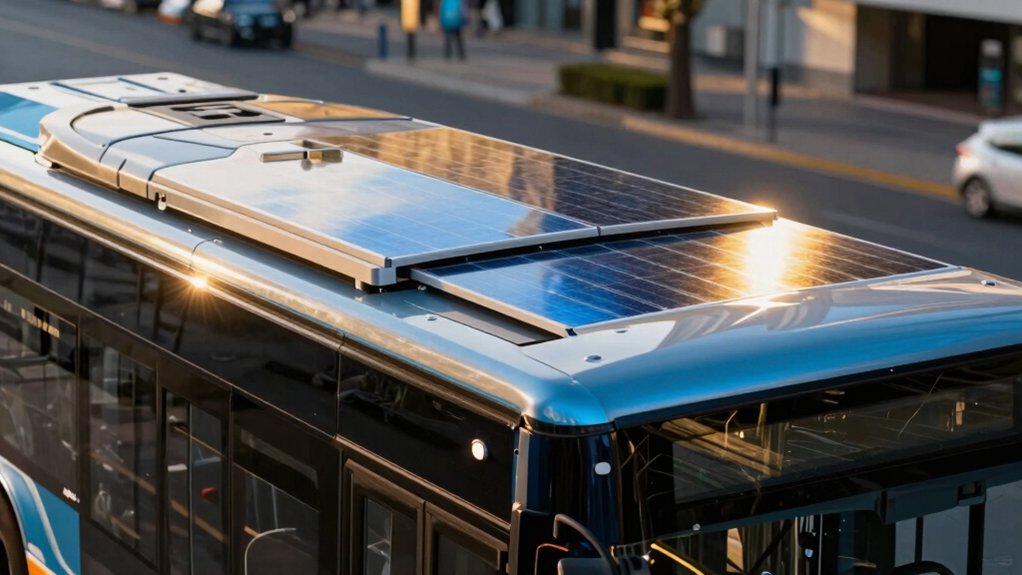

You’re upgrading your bus’s electrical system, and solar panels are your answer—but you’ll need to choose wisely. The right panel kit combines lightweight construction, durable weatherproofing, and integrated controllers to keep your batteries charged reliably. You’ll want options that fit curved roofs and deliver consistent power in variable conditions. Below, you’ll discover seven proven systems and the critical factors that separate effective setups from costly mistakes.
| ECO-WORTHY 200W Solar Panel Kit with 30A Controller |

| Best Complete Kit | Power Output: 200W (2x100W panels) | System Voltage: 12V/24V (configurable series or parallel) | Weather Resistance: IP65 junction box; 2400 Pa wind; 5400 Pa snow load | VIEW LATEST PRICE | Read Our Analysis |
| DOKIO 200W Flexible Solar Panels for 12V Battery Charging |

| Best Flexible Design | Power Output: 200W (2x100W panels) | System Voltage: 12V | Weather Resistance: ETFE surface for wear resistance | VIEW LATEST PRICE | Read Our Analysis |
| Voltset 12V Solar Battery Charger with MPPT Controller |

| Budget Trickle Charger | Power Output: 20W | System Voltage: 12V | Weather Resistance: IP67 waterproof; -40°F to 185°F operating range | VIEW LATEST PRICE | Read Our Analysis |
| Bus Bar 12V 150A Power Distribution Block |
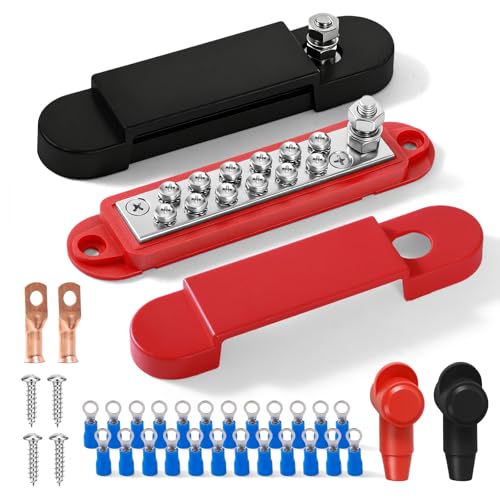
| Best Power Distribution | Power Output: 150A distribution (not applicable) | System Voltage: 12V (up to 48V capable) | Weather Resistance: Stainless steel construction | VIEW LATEST PRICE | Read Our Analysis |
| SOLPERK 20W 12V Solar Panel Kit with MPPT Controller |
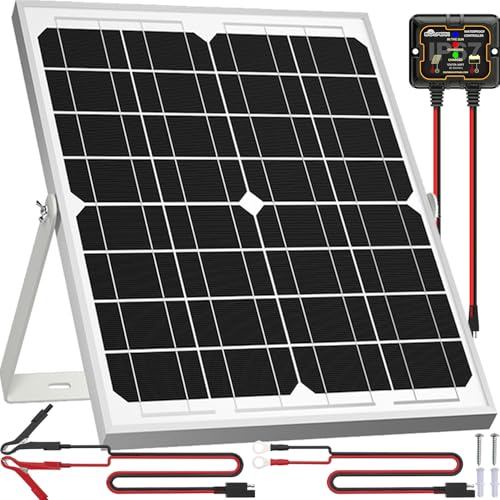
| Best Compact System | Power Output: 20W | System Voltage: 12V | Weather Resistance: 100% waterproof; 2400 Pa wind; 5400 Pa snow load | VIEW LATEST PRICE | Read Our Analysis |
| DAIERTEK 12V Bus Bar Power Distribution Block with Cover |

| Most Durable Distribution | Power Output: 150A distribution (not applicable) | System Voltage: 12V-48V | Weather Resistance: Suitable for extreme conditions | VIEW LATEST PRICE | Read Our Analysis |
| Renogy 400W Portable Foldable Solar Panel Charger |
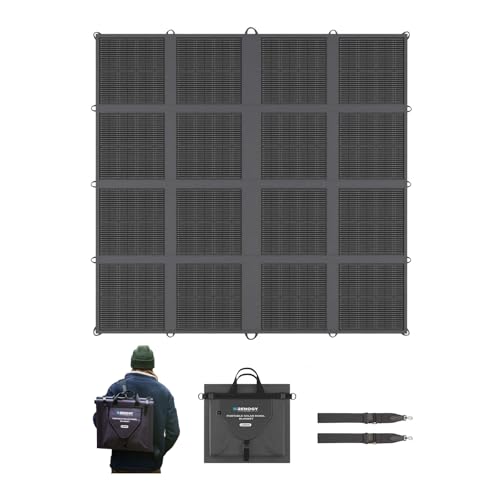
| Best Portable Solution | Power Output: 400W | System Voltage: 12V/24V compatible | Weather Resistance: IP65-rated; -10°C to 65°C; military-grade ETFE lamination | VIEW LATEST PRICE | Read Our Analysis |
More Details on Our Top Picks
ECO-WORTHY 200W Solar Panel Kit with 30A Controller
If you’re outfitting a bus with reliable solar power and need a straightforward, complete system that doesn’t require extensive technical knowledge, the ECO-WORTHY 200W Solar Panel Kit with 30A Controller delivers what you’re looking for. The kit includes two 100W monocrystalline panels, a 30A PWM charge controller, mounting brackets, and pre-assembled cables for plug-and-play installation. You’ll generate approximately 800Wh daily under four hours of full sunlight. Choose series wiring for 24V output or parallel wiring for 12V, depending on your bus’s electrical system. The aluminum-frame panels withstand 2400 Pa wind resistance and 5400 Pa snow load. You receive 1-year warranty coverage and 24/7 technical support through Amazon or ECO-WORTHY’s hotline.
- Power Output:200W (2x100W panels)
- System Voltage:12V/24V (configurable series or parallel)
- Weather Resistance:IP65 junction box; 2400 Pa wind; 5400 Pa snow load
- Included Controller/Regulator:30A PWM charge controller
- Mounting Options:Z-bracket mounting brackets included
- Primary Applications:RV, camper, caravan, off-grid, marine, backup power
- Additional Feature:Series/parallel wiring flexibility
- Additional Feature:Pre-drilled, plug-and-play setup
- Additional Feature:21.5% panel efficiency rating
DOKIO 200W Flexible Solar Panels for 12V Battery Charging
You’ll find the DOKIO 200W Flexible Solar Panels especially valuable if you’re powering a bus with curved roof surfaces and limited mounting space. These panels bend up to 30 degrees, making them ideal for rounded bus roofs. Each panel weighs only 2.3 pounds, so installation requires minimal structural reinforcement. Connect the two 100W panels in series to increase voltage or in parallel to boost current output. The MC4 connectors simplify wiring between panels and your 12V battery system. Leave ventilation space beneath the panels to prevent heat buildup. Mount them on non-combustible surfaces, and avoid burying cables underneath. This flexible design delivers reliable 12V battery charging for extended bus travel.
- Power Output:200W (2x100W panels)
- System Voltage:12V
- Weather Resistance:ETFE surface for wear resistance
- Included Controller/Regulator:None (panels only)
- Mounting Options:Flexible up to 30°; suitable for curved roofs
- Primary Applications:RV, boat, camper, van, trailer, off-grid
- Additional Feature:Flexible up to 30°
- Additional Feature:Ultra-lightweight at 2.3 lbs
- Additional Feature:ETFE surface wear resistance
Voltset 12V Solar Battery Charger with MPPT Controller
The Voltset 12V Solar Battery Charger works best for bus owners who need a compact, reliable charging system that requires minimal installation effort and won’t drain power when the sun goes down. This 20W kit includes a mono solar panel, 10A MPPT controller, adjustable bracket, and alligator clips. You’ll achieve 20-30% faster charging than standard systems. The smart controller prevents overcharging, over-discharging, and reverse polarity damage. It automatically stops charging when your battery reaches full capacity and resumes when voltage drops. The IP67 waterproof design handles extreme temperatures from -40°F to 185°F, making it suitable for buses parked outdoors year-round.
- Power Output:20W
- System Voltage:12V
- Weather Resistance:IP67 waterproof; -40°F to 185°F operating range
- Included Controller/Regulator:10A Smart MPPT controller
- Mounting Options:360° adjustable bracket
- Primary Applications:Car, RV, boat, marine, trailer, truck, motorcycle
- Additional Feature:Multi-battery chemistry support
- Additional Feature:Auto-stop and auto-resume
- Additional Feature:IP67 waterproof marine-grade
Bus Bar 12V 150A Power Distribution Block
Central power distribution in a solar bus system requires a component that can handle multiple high-amperage connections safely and reliably—and that’s where a 12V 150A power distribution block comes in. This solid tinned copper busbar organizes power from your battery to chargers, inverters, and DC accessories through twelve 1/4-inch stud terminals. Install the red positive and black negative bars using panel mounting, then connect your battery cables using appropriately sized ring lugs. Snap-lock covers protect against accidental contact and vibration-induced shorts. Verify lug compatibility and clearance before installation to ensure secure connections throughout your solar setup.
- Power Output:150A distribution (not applicable)
- System Voltage:12V (up to 48V capable)
- Weather Resistance:Stainless steel construction
- Included Controller/Regulator:None (bus bar only)
- Mounting Options:Panel-mount terminal arrangement
- Primary Applications:RV, boat, truck, UTV, off-road, solar battery wiring
- Additional Feature:12-position terminal arrangement
- Additional Feature:Snap-lock vibration-resistant covers
- Additional Feature:Tinned copper low-resistance
SOLPERK 20W 12V Solar Panel Kit with MPPT Controller
If you’re looking for a compact solar solution that works with multiple battery types, this SOLPERK kit delivers reliable charging for trailers, RVs, boats, motorcycles, and other vehicles. The 20W monocrystalline panel features an 8A MPPT controller that charges 12V batteries—LiFePO4, lithium-ion, AGM, SLA, GEL, and others—with 20-30% higher efficiency than standard controllers. Its three-stage charging design prevents overcharge and voltage issues automatically. The waterproof aluminum frame withstands extreme weather, including hail and blizzards, lasting up to 25 years. Installation takes minutes with the adjustable 360-degree bracket and plug-and-play connections. The kit includes the panel, controller, mounting bracket, alligator clips, and hardware. You’ll receive one-year warranty coverage and lifetime technical support.
- Power Output:20W
- System Voltage:12V
- Weather Resistance:100% waterproof; 2400 Pa wind; 5400 Pa snow load
- Included Controller/Regulator:8A Smart MPPT controller
- Mounting Options:360° adjustable mounting bracket
- Primary Applications:Trailer, truck, boat, RV, car, motorcycle, lawn mower, water pump, gate opener
- Additional Feature:Smart three-stage charging
- Additional Feature:25-year lifespan rating
- Additional Feature:360-degree adjustable bracket
DAIERTEK 12V Bus Bar Power Distribution Block with Cover
Looking to distribute power efficiently across your bus’s solar system without voltage drops or connection failures? The DAIERTEK 12V Bus Bar solves this problem with its dual copper and stainless steel design. You get one positive red bar and one negative black bar, each featuring six M8 terminal studs. Install your solar panels, battery bank, and inverter connections onto these studs simultaneously. The bar handles up to 150A DC current and supports 48V systems, making it ideal for larger solar setups. Its round-corner base design fits standard automotive and marine installations. The 180° wire lug compatibility ensures your connections stay secure without twisting or straining cables during vibration or movement.
- Power Output:150A distribution (not applicable)
- System Voltage:12V-48V
- Weather Resistance:Suitable for extreme conditions
- Included Controller/Regulator:None (bus bar only)
- Mounting Options:Wire lug installation compatible
- Primary Applications:Automotive, car, marine, boat, solar system
- Additional Feature:6 M8 terminal studs
- Additional Feature:150A DC current rating
- Additional Feature:Extreme condition materials
Renogy 400W Portable Foldable Solar Panel Charger
The Renogy 400W Portable Foldable Solar Panel Charger stands out for bus owners and mobile operators who need reliable solar power without sacrificing vehicle space. This 16-pound panel folds to compact dimensions and delivers full 400W output across multiple setups: lay it on your windshield for shade while charging, deploy it on ground, or hang it vertically between trees. The 10-foot cable connects to portable power stations or 12V/24V batteries including LiFePO4 types. With 25% efficiency and military-grade ETFE lamination, it operates from -10°C to 65°C and performs adequately under cloudy conditions. UL 61730 certification and a 2-year warranty confirm safety and durability.
- Power Output:400W
- System Voltage:12V/24V compatible
- Weather Resistance:IP65-rated; -10°C to 65°C; military-grade ETFE lamination
- Included Controller/Regulator:None (portable charger without built-in controller)
- Mounting Options:Multiple installation styles (lay flat, deploy on ground, hang vertically); 10 ft cable included
- Primary Applications:RV, SUV, marine, trailer, pickup truck, 4×4 off-road, camping, van
- Additional Feature:16-fold compact design
- Additional Feature:25% cell efficiency N-Type
- Additional Feature:Multiple installation flexibility
Factors to Consider When Choosing Solar Panels for Buses
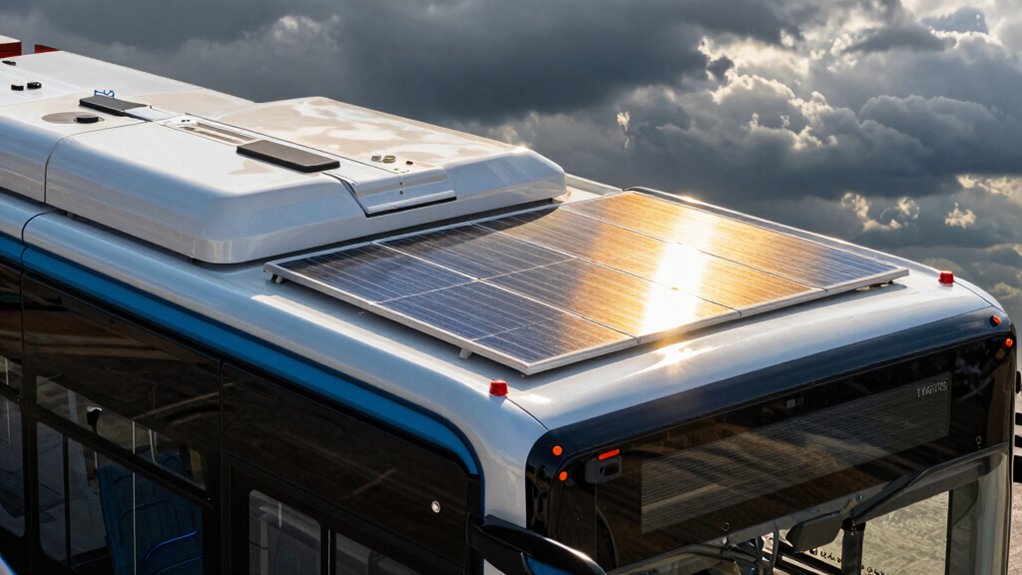
You need to evaluate five critical factors before selecting solar panels for your bus: power output requirements (measured in watts to match your electrical needs), installation space limitations (the roof area you can dedicate to panels), weather durability standards (resistance to rain, wind, and UV exposure), weight and portability (how much additional mass your bus can support), and voltage system compatibility (whether panels match your 12V, 24V, or 48V bus electrical system). Start by calculating your daily energy consumption in watt-hours, then measure your available roof space to determine panel capacity and arrangement options. Finally, verify that your chosen panels meet durability ratings for your climate and confirm their voltage output aligns with your bus’s existing power system before making a purchase.
Power Output Requirements
How much solar power does your bus actually need? Start by calculating your daily energy consumption in watt-hours (Wh/day). List all devices you’ll run—lights, refrigeration, charging ports—and their power draw in watts. Multiply each by daily operating hours to get total needs.
Next, match this requirement against your solar panel system size. A bus with moderate usage typically requires 400–800W of panel capacity, assuming 4–5 sun hours daily. Divide your daily energy needs by available sun hours to determine required panel wattage.
Finally, verify that your chosen panels’ rated output aligns with your charge controller’s input capacity and your battery bank’s charging specifications. This prevents undercharging or overcharging your system. Document these calculations before purchasing equipment.
Installation Space Limitations
Bus rooftops present unique mounting challenges because they’re often curved, irregular, or already crowded with equipment like air vents and communication antennas. You’ll need panels that fit these constraints.
Flexible or semi-flexible panels conform to curved surfaces, expanding your usable mounting area. Ultra-thin profiles—measuring 0.08 to 0.7 inches—maximize clearance and reduce wind resistance without sacrificing performance.
Weight matters too. Lightweight panels around 2.3 to 3 pounds per unit won’t overburden your roof’s support structure, making installation simpler and safer.
For temporary needs or limited permanent space, consider foldable or portable options. They deploy when necessary and store away for maintenance access.
Ensure your mounting system handles curved or irregular surfaces securely and allows adequate ventilation underneath to prevent heat accumulation that degrades panel efficiency.
Weather Durability Standards
Once you’ve secured panels that fit your bus’s roof geometry and weight constraints, you’ll need to verify they can withstand the environmental stresses that constant travel and exposure create. Check for IP65 ratings, which guarantee water and dust resistance. Confirm the panels operate reliably between -10°C and 65°C, covering extreme seasonal conditions. Look for structural certifications showing wind pressure resistance around 2400 Pa and snow load capacity near 5400 Pa. Select marine-grade framing materials like aluminum or stainless steel to prevent corrosion in humid or coastal environments. For curved bus roofs, consider flexible or semi-flexible panels with ETFE surfaces that maintain weatherproofing while conforming to your roof’s shape. Finally, verify UL, CE, and RoHS certifications indicating automotive-grade durability standards.
Weight And Portability
The weight you add to your bus’s roof directly affects fuel efficiency, handling, and structural integrity, so you’ll want to prioritize panels that don’t create unnecessary load. Select lightweight panels weighing around 3–4 pounds per 100W to minimize stress on your vehicle. Consider flexible or semi-flexible options if your bus has curved surfaces, though rigid panels offer better protection. For temporary needs, deploy smaller foldable panels instead of permanent installations. Choose higher wattage panels to reduce the total number of units required, lowering overall weight and mounting complexity. Look for integrated mounting hardware and pre-wired cabling to eliminate extra components. These features streamline installation while keeping your roof load manageable and your bus operating efficiently.
Voltage System Compatibility
Your bus’s electrical system voltage determines how you’ll wire and configure your solar panels to work safely and effectively. Most buses run on either 12V or 24V DC systems, so you’ll match your panel setup accordingly. For 12V systems, wire panels in parallel to maintain voltage while increasing current capacity. For 24V systems, wire panels in series to double the voltage output. Your charge controller and battery bank must accept the panel array’s maximum voltage and current to prevent damage or undercharging. An MPPT controller optimizes charging efficiency by tracking changing panel voltage as your bus load fluctuates. Consider future upgrades from 12V to 24V when designing your initial configuration, allowing scalability without complete system replacement.
Long-Term Lifespan Value
How can you guarantee your solar panel investment won’t degrade prematurely on your bus? Select panels with corrosion-resistant aluminum frames and IP65-rated enclosures that block moisture and road dust. Choose monocrystalline panels rated at 21% efficiency or higher to maximize power output while minimizing the panel count you’ll need over time. Check mechanical ratings for wind and snow load capacity, ensuring your panels withstand vibration and temperature fluctuations during years of service. Prioritize panels backed by 10–25 year warranties from established manufacturers. This coverage protects you against defects and ensures the company remains available for support. Verify that your chosen panels maintain consistent electrical output across varying mounting conditions and road wear patterns. These steps directly extend lifespan and protect your investment.
Final Thoughts
You’ll want to match your bus’s power needs with a solar kit that offers MPPT controllers, lightweight construction, and marine-grade durability. Select panels rated 150W–400W based on your roof space and energy demands. Verify 12V or 24V compatibility, check certifications like UL and CE, and ensure integrated mounting systems fit your curved roof. Compare warranties and calculate your total wattage requirements before purchasing.

Meet Ry, “TechGuru,” a 36-year-old technology enthusiast with a deep passion for tech innovations. With extensive experience, he specializes in gaming hardware and software, and has expertise in gadgets, custom PCs, and audio.
Besides writing about tech and reviewing new products, he enjoys traveling, hiking, and photography. Committed to keeping up with the latest industry trends, he aims to guide readers in making informed tech decisions.