
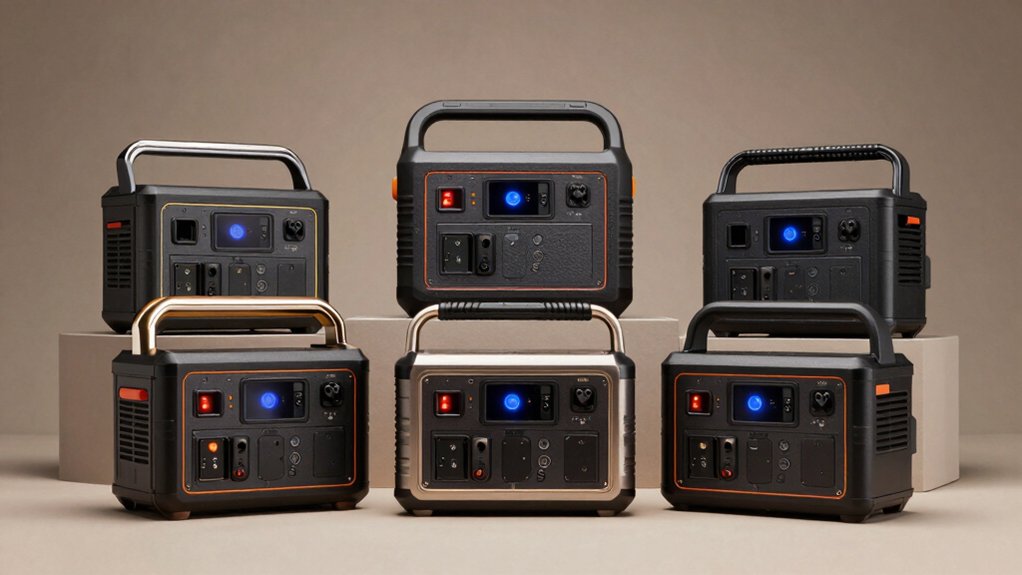

When you need a power station that delivers 3000W or more without failing, you’ll want to evaluate several reliable options. Each model—from the DJI Power 2000 to the UDPOWER S2400—offers different strengths in durability, recharge speed, and expandability. Understanding what each delivers helps you match the right station to your needs. Here’s what separates the best performers from the rest.
| AFERIY 2048Wh Portable Power Station LiFePO4 Battery |

| Industry-Leading Warranty | Battery Type: LiFePO4 | Warranty: 5+2 years | UPS Transfer Time: <10 ms | VIEW LATEST PRICE | Read Our Analysis |
| Jackery HomePower 3000 Portable Power Station Solar Generator |

| Best Overall | Battery Type: LiFePO4 | Warranty: 5 years | UPS Transfer Time: ≤20 ms | VIEW LATEST PRICE | Read Our Analysis |
| OUPES Mega 1 Portable Power Station 2000W |

| Most Expandable | Battery Type: LiFePO4 | Warranty: 5 years | UPS Transfer Time: <20 ms | VIEW LATEST PRICE | Read Our Analysis |
| DJI Power 2000 Portable Power Station (2048Wh) |

| Fastest Charging | Battery Type: LFP | Warranty: 5 years | UPS Transfer Time: 10 ms | VIEW LATEST PRICE | Read Our Analysis |
| UDPOWER S2400 Portable Power Station 2083Wh LiFePO4 |

| Best Value | Battery Type: LiFePO4 | Warranty: 3+2 years | UPS Transfer Time: ≤0.01 seconds | VIEW LATEST PRICE | Read Our Analysis |
More Details on Our Top Picks
AFERIY 2048Wh Portable Power Station LiFePO4 Battery
Are you looking for a portable power station that’ll reliably back up your home during outages, power your CPAP machine at night, or keep your devices charged during camping trips? The AFERIY 2048Wh delivers 2400W continuous output with a 4800W surge capacity through its pure sine wave inverter, making it safe for sensitive electronics. You’ll access 16 ports including six AC outlets, multiple USB options, and a 300W XT60 solar input port. The LiFePO4 battery supports 3500+ cycles over ten years, backed by a seven-year warranty. At 48.5 pounds, you can transport it easily. Charge via AC fast charging or solar panels. Silent operation under 30 dB ensures minimal noise disruption.
- Battery Type:LiFePO4
- Warranty:5+2 years
- UPS Transfer Time:<10 ms
- Battery Cycle Life:3500+ cycles
- Continuous Output Power:2400W
- Weight:48.5 lbs
- Additional Feature:16 total charging ports
- Additional Feature:Ultra-rapid <10ms UPS response
- Additional Feature:Silent operation under 30dB
Jackery HomePower 3000 Portable Power Station Solar Generator
The Jackery HomePower 3000 works best if you need a dependable backup power system for your home during outages or want a portable generator for RV trips and emergencies. This unit delivers 3600W output with a 3072Wh LiFePO4 battery that recharges fully in 1.7 hours using hybrid AC/DC charging or 2.2 hours with AC alone. You’ll access versatile ports including dual 100W USB-C ports for fast charging, plus a 12V RV port. The battery lasts through 4,000 cycles to 70% capacity. At 59.52 pounds and 47% smaller than comparable models, you’ll transport it easily. Pair it with optional SolarSaga 200W panels to charge to 80% in nine hours.
- Battery Type:LiFePO4
- Warranty:5 years
- UPS Transfer Time:≤20 ms
- Battery Cycle Life:4000 cycles
- Continuous Output Power:3600W
- Weight:59.52 lbs
- Additional Feature:1.7 hour hybrid AC/DC recharge
- Additional Feature:Dual 100W USB-C PD ports
- Additional Feature:12V TT-30 RV port
OUPES Mega 1 Portable Power Station 2000W
If you’re running professional operations that demand reliable power without frequent recharging, you’ll find the OUPES Mega 1 delivers 2000W continuous output with a 4500W surge capacity backed by a 1024Wh LiFePO4 battery that expands to 5120Wh. The unit charges from 0–80% in 36 minutes via AC alone, or 26 minutes when combining AC with solar input. Its advanced BMS protects against overcharging and maintains optimal temperatures. The dual 100W USB-C ports and four QC3.0 USB-A outlets cover multiple device types simultaneously. For extended deployments, add up to two B2 Extra Batteries without requiring additional inverters. The 3500+ lifecycle rating ensures years of dependable service across film production, emergency response, and off-grid applications.
- Battery Type:LiFePO4
- Warranty:5 years
- UPS Transfer Time:<20 ms
- Battery Cycle Life:3500+ cycles
- Continuous Output Power:2000W
- Weight:Not specified
- Additional Feature:0-80% in 36 minutes
- Additional Feature:Expandable to 5120Wh capacity
- Additional Feature:MPPT up to 800W
DJI Power 2000 Portable Power Station (2048Wh)
Looking to power your home during blackouts or run tools at a remote worksite without interruption? The DJI Power 2000 delivers 3000W stable output with a 2048Wh LFP battery, recharging to 80% in just 55 minutes. Its 10ms UPS switch time maintains continuous power during outages. You’ll access 15 ports to charge multiple devices simultaneously, then control everything remotely through the DJI Home app. For extended blackouts, expand capacity up to 22.5kWh using separate batteries to run essential home devices for 4–6 days. The unit operates quietly at 30dB and withstands outdoor conditions with its rugged, moisture-tolerant design.
- Battery Type:LFP
- Warranty:5 years
- UPS Transfer Time:10 ms
- Battery Cycle Life:Not specified
- Continuous Output Power:3000W
- Weight:Not specified
- Additional Feature:Expandable to 22.5kWh system
- Additional Feature:15 ports including dual USB-C
- Additional Feature:Wireless DJI Home app control
UDPOWER S2400 Portable Power Station 2083Wh LiFePO4
You’ll find the UDPOWER S2400 an ideal choice if you need reliable backup power for your home, RV, or camping trips without worrying about frequent replacements. The 2083Wh LiFePO4 battery delivers 2400W continuous output and 3000W peak power through six AC outlets and multiple USB ports. It charges fully in 1.3 hours using AC power or accepts up to 440W solar input for renewable charging. With over 4000 charge cycles and 15-year lifespan, this 41-pound unit handles extended use. UPS backup switches power in under 0.01 seconds during outages, protecting connected devices. Safety features include overload and short-circuit protection, making it suitable for emergency situations and outdoor adventures.
- Battery Type:LiFePO4
- Warranty:3+2 years
- UPS Transfer Time:≤0.01 seconds
- Battery Cycle Life:4000+ cycles
- Continuous Output Power:2400W
- Weight:41 lbs
- Additional Feature:0-100% in 1.3 hours
- Additional Feature:Up to 440W solar charging
- Additional Feature:Dual-handle portable design
Factors to Consider When Choosing a Power Station With 3000W Output
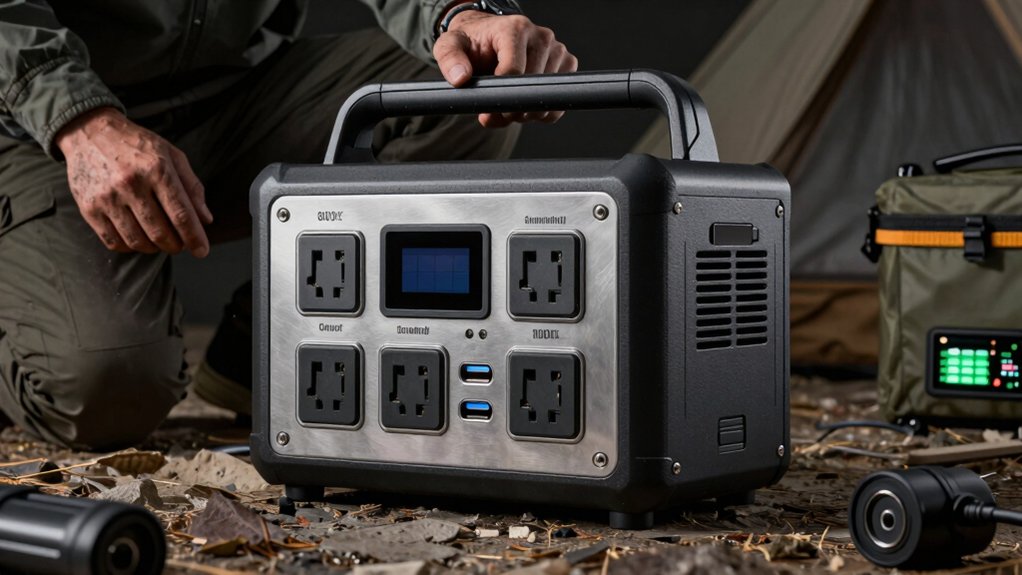
When you’re selecting a 3000W power station, you’ll need to evaluate five critical factors: battery capacity and chemistry (which determine how long your devices run), charging speed and available charging options (which affect how quickly you’re ready to go), port versatility and connectivity (which determine what devices you can power), durability and warranty coverage (which protect your investment), and weight and portability features (which determine whether you can transport it easily). Each factor directly impacts whether the power station fits your specific needs, so you should assess them in order based on your primary use case—whether that’s emergency backup, camping, or job site power. Start by ranking these factors by importance to your situation, then compare models that excel in your top priorities.
Battery Capacity And Chemistry
How much runtime do you actually need from your 3000W power station? Start by matching your Wh capacity to your power demands. A 2048Wh pack provides moderate runtime at 3000W output, while 3072Wh extends use substantially longer. Calculate runtime by dividing total Wh by your average load in watts. Next, examine battery chemistry. LiFePO4 delivers 3500+ cycle lifespan and superior thermal safety compared to standard lithium-ion. This matters for long-term reliability. Then consider expandability—many stations accept additional batteries to boost total capacity without replacing your base unit. Finally, verify the BMS (battery management system) balances cells properly under high discharge stress. Check manufacturer specs confirming multi-cell configuration support. These steps ensure your station matches both immediate power needs and extended usability.
Charging Speed And Options
Once you’ve selected a battery with sufficient capacity and chemistry for your needs, the speed at which you can recharge that pack becomes your next priority. Evaluate multiple charging methods: AC fast charging at 1600W or higher, USB-C Power Delivery, and solar input with MPPT management up to 800W. Compare peak charging rates and check advertised 0–80% recharge times against real-world laboratory results. Hybrid recharging options let you combine AC and solar power simultaneously, reducing downtime when single power sources aren’t available. Verify sustained charging rates under continuous operation, not just peak output. Review specifications for car and generator input compatibility. Faster recharge speeds mean less idle time between uses and greater flexibility for extended trips or emergency situations.
Port Versatility And Connectivity
What ports you’ll actually use matters as much as total wattage when you’re selecting a 3000W power station. Check how many AC outlets you need for simultaneous devices. Verify the USB-C PD wattage—dual 100W ports let you charge laptops and phones at full speed without draining capacity from other equipment. Count USB-A ports for older devices and accessories. Examine DC outputs: a dedicated TT-30 RV port eliminates adapter requirements if you own an RV. Review solar input compatibility and car-charging options to match your recharging locations. Access real-time monitoring through built-in displays or apps to track power distribution across active ports. Match port availability to your typical device lineup before purchasing.
Durability And Warranty Coverage
Reliability hinges on three core elements: battery chemistry, physical construction, and manufacturer support. First, prioritize LiFePO4 batteries rated for 3500+ cycles, which outlast alternatives significantly. Second, verify the enclosure features flame-retardant materials, moisture tolerance, and adequate thermal management—these protect against environmental damage and extend operational life. Third, examine warranty terms closely: seek coverage lasting five years minimum with available extensions, clear support channels, and defined return policies. Check whether the manufacturer covers defects, replacement procedures, and customer service accessibility. Request specific documentation outlining what’s included and excluded. This three-step approach—confirming battery chemistry, inspecting build quality, and reviewing warranty details—eliminates guesswork and ensures you’re investing in a power station built to perform reliably long-term.
Weight And Portability Features
How much does weight actually matter when you’re choosing a 3000W power station? You’ll find units ranging from 41 to 59 pounds, and this affects how you transport and position them. Lighter models around 41 pounds with compact dimensions (roughly 15.8 x 9.5 x 10.1 inches) move easier but may limit capacity. Heavier units near 60 pounds typically deliver 2,000–3,000 Wh and more ports, requiring strategic placement. Check for dual-handle designs on heavier models—they substantially improve maneuverability. Don’t assume lighter automatically means lower output; some compact 3,000 W-capable stations remain portable despite higher power ratings. Evaluate your specific transport needs and installation location before deciding between portability and expanded capacity.
Final Thoughts
To choose your 3000W power station, first identify your power needs and runtime requirements. Next, compare capacity options from 2000Wh to expandable models. Then evaluate recharge speed and warranty length. Finally, select based on portability versus stationary use. All five models use LiFePO4 batteries for reliability. Review specific features like expansion capabilities and safety systems to match your situation before purchasing.

Meet Ry, “TechGuru,” a 36-year-old technology enthusiast with a deep passion for tech innovations. With extensive experience, he specializes in gaming hardware and software, and has expertise in gadgets, custom PCs, and audio.
Besides writing about tech and reviewing new products, he enjoys traveling, hiking, and photography. Committed to keeping up with the latest industry trends, he aims to guide readers in making informed tech decisions.