
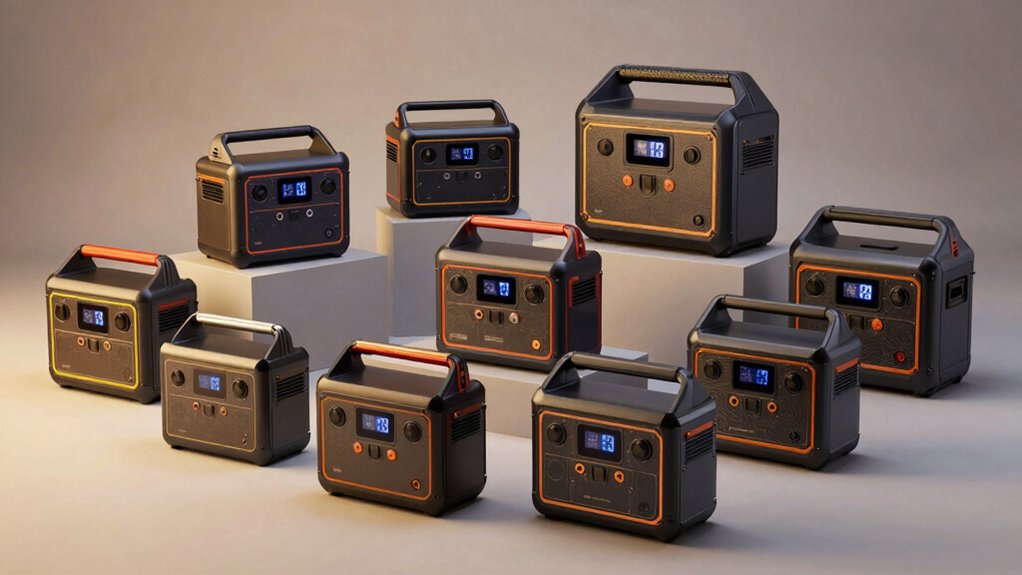

You’re facing power outages or remote work situations where reliability matters. A 2000W power station keeps your essential devices running—laptops, medical equipment, tools—without interruption. You’ll need to understand what separates dependable models from underperformers: battery chemistry, surge capacity, charging speed, and port variety all factor in. Here’s how to identify the right option for your needs.
| OUPES Mega 1 Portable Power Station 2000W |

| Most Expandable | Battery Capacity: 1024Wh (expandable to 5120Wh) | Continuous Power Output: 2000W | Battery Chemistry: LiFePO4 | VIEW LATEST PRICE | Read Our Analysis |
| AFERIY 2048Wh Portable Power Station LiFePO4 Battery |

| Best Warranty | Battery Capacity: 2048Wh | Continuous Power Output: 2400W | Battery Chemistry: LiFePO4 | VIEW LATEST PRICE | Read Our Analysis |
| GRECELL 999Wh Solar Generator Portable Power Station |

| Budget-Friendly Pick | Battery Capacity: 999Wh | Continuous Power Output: 1000W | Battery Chemistry: Lithium | VIEW LATEST PRICE | Read Our Analysis |
| DABBSSON 2048Wh Portable Power Station with Solar Generator |
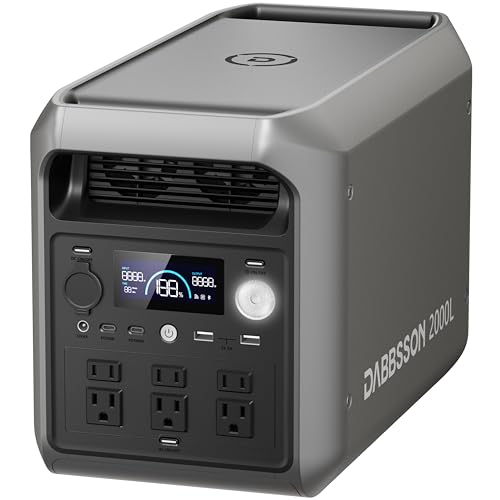
| Fastest Charging | Battery Capacity: 2048Wh | Continuous Power Output: 2200W | Battery Chemistry: Semi-solid LiFePO4 | VIEW LATEST PRICE | Read Our Analysis |
| 999Wh Solar Generator Portable Power Station with USB-C |

| Best Longevity | Battery Capacity: 999Wh | Continuous Power Output: 1000W | Battery Chemistry: LiFePO4 | VIEW LATEST PRICE | Read Our Analysis |
| BROWEY Portable Power Station 1000W Solar Generator |

| Built-In Solar Panel | Battery Capacity: 614.4Wh | Continuous Power Output: 1000W | Battery Chemistry: LiFePO4 | VIEW LATEST PRICE | Read Our Analysis |
| 1000W Solar Generator 999Wh Portable Power Station |

| Most Portable | Battery Capacity: 999Wh | Continuous Power Output: 1000W | Battery Chemistry: Lithium | VIEW LATEST PRICE | Read Our Analysis |
| Jackery Explorer 2000 v2 Portable Power Station |

| Most Compact | Battery Capacity: 2042Wh | Continuous Power Output: 2200W | Battery Chemistry: LiFePO4 | VIEW LATEST PRICE | Read Our Analysis |
| EBL 1000W Portable Power Station with Solar Panel Kit |

| Complete Off-Grid Solution | Battery Capacity: 999Wh | Continuous Power Output: 1000W | Battery Chemistry: Lithium | VIEW LATEST PRICE | Read Our Analysis |
| Anker SOLIX C1000 Gen 2 Portable Power Station |

| Fastest Recharge | Battery Capacity: 1024Wh | Continuous Power Output: 2000W | Battery Chemistry: LiFePO4 | VIEW LATEST PRICE | Read Our Analysis |
More Details on Our Top Picks
OUPES Mega 1 Portable Power Station 2000W
The OUPES Mega 1 is your best choice if you need a power station that delivers 2000W continuous output without the downtime. This unit combines a 1024Wh LiFePO4 battery with fast charging: reach 80% capacity in 36 minutes using AC power alone, or 26 minutes when combining AC and solar charging. You’ll get <20ms UPS transfer time during outages. The station expands to 5120Wh by adding two B2 Extra Batteries without requiring additional inverters. Its outputs include dual 100W USB-C ports, four QC3.0 USB-A ports, 12V DC connections, and AC outlets. The LiFePO4 battery maintains 80% capacity after extensive use, backed by a 5-year warranty and professional-grade thermal management.
- Battery Capacity:1024Wh (expandable to 5120Wh)
- Continuous Power Output:2000W
- Battery Chemistry:LiFePO4
- AC Outlets:4 outlets
- Weight:Not specified
- Warranty:5-year
- Additional Feature:Expandable to 5120Wh capacity
- Additional Feature:<20ms UPS transfer time
- Additional Feature:Dual 100W USB-C PD
AFERIY 2048Wh Portable Power Station LiFePO4 Battery
Looking for a power station that’ll keep your essential devices running during extended outages or outdoor adventures? The AFERIY 2048Wh offers 2400W continuous output with 4800W peak capacity. Its LiFePO4 battery delivers 3500+ cycles, ensuring long-term reliability. You’ll access 16 ports including six AC outlets, four USB-C ports, and an XT60 DC output for solar charging. The unit weighs 48.5 pounds, making it reasonably portable. Pure sine wave technology protects sensitive electronics like CPAP machines. Ultra-rapid UPS capability provides backup within 10 milliseconds during power loss. Silent operation under 30 decibels supports quiet environments. You’ll receive a seven-year warranty, covering extended protection beyond industry standards.
- Battery Capacity:2048Wh
- Continuous Power Output:2400W
- Battery Chemistry:LiFePO4
- AC Outlets:6 outlets
- Weight:48.5 lbs (22 kg)
- Warranty:5+2 year coverage
- Additional Feature:16 total output ports
- Additional Feature:<10ms ultra-rapid UPS
- Additional Feature:Under 30dB silent operation
GRECELL 999Wh Solar Generator Portable Power Station
If you’re planning extended trips outdoors or need reliable backup power at home, GRECELL’s 999Wh portable power station delivers the capacity and versatility you’re looking for. This unit outputs 1000W continuous power with 2000W surge capacity, supporting up to ten devices simultaneously through its 2 AC outlets, 3 USB-C ports, and wireless charging. Recharge using three methods: AC wall outlet, solar panels via MPPT controller, or car outlet. The lithium battery includes upgraded management systems with auto-stop charging, short-circuit protection, and dual cooling fans. Weighing 23 pounds with compact dimensions, it runs laptops, tablets, lights, and CPAP devices. Calculate runtime by dividing 999Wh × 0.85 by your device’s wattage.
- Battery Capacity:999Wh
- Continuous Power Output:1000W
- Battery Chemistry:Lithium
- AC Outlets:2 sockets
- Weight:~23 lbs
- Warranty:2-year
- Additional Feature:Wireless charging pad included
- Additional Feature:Dual cooling fans built-in
- Additional Feature:Supports 10 devices simultaneously
DABBSSON 2048Wh Portable Power Station with Solar Generator
Seeking a power station that charges in under two hours and runs demanding devices like refrigerators and power tools simultaneously? The DABBSSON 2048Wh delivers 2200W continuous output with 3300W surge capacity. Its upgraded semi-solid LiFePO4 battery supports 4000+ deep cycles and includes overcharge, overheating, and short-circuit protection. You’ll access 6 AC outlets plus a full port set. Charge via AC in 1.5 hours, solar panels up to 800W, or your car’s 12V outlet. The built-in app lets you monitor usage and adjust charging remotely. With a 5-year warranty and EPS backup protecting your devices, you’ve got reliable power for camping, RVs, emergencies, and job sites.
- Battery Capacity:2048Wh
- Continuous Power Output:2200W
- Battery Chemistry:Semi-solid LiFePO4
- AC Outlets:6 outlets
- Weight:41 lbs
- Warranty:5-year (3+2 extended)
- Additional Feature:Ultra-fast 1.5-hour AC charging
- Additional Feature:Up to 3300W surge power
- Additional Feature:EPS uninterrupted backup protection
999Wh Solar Generator Portable Power Station with USB-C
The GRECELL EB1000 delivers 999Wh capacity with 1000W continuous power (2000W peak output), making it ideal for anyone who needs reliable backup power during extended trips or emergencies without frequent recharging cycles. You’ll access power through two 110V AC outlets, 60W USB-C PD, USB-A Quick Charge ports, a 12V car port, and wireless charging. The LiFePO4 battery supports 2000+ charge cycles, ensuring 10 years of dependable use. Recharge via AC wall outlet in 7–8 hours, your vehicle’s 12V port, or compatible MPPT solar panels using the included MC4 cable. At 17–18 lbs, you’ll transport it easily to power essentials like CPAPs, mini-fridges, and laptops for weeks without grid access.
- Battery Capacity:999Wh
- Continuous Power Output:1000W
- Battery Chemistry:LiFePO4
- AC Outlets:2 outlets
- Weight:17–18.4 lbs
- Warranty:2-year
- Additional Feature:10-year LiFePO4 lifespan
- Additional Feature:Integrated LED SOS light
- Additional Feature:Pass-through charging capability
BROWEY Portable Power Station 1000W Solar Generator
Need a compact power solution that doesn’t require fuel or produce emissions? The BROWEY S1000 delivers 1000W continuous output with a 614.4Wh LiFePO4 battery lasting over 3500 cycles. You’ll charge it via AC adapter, car outlet, or its built-in 40W solar panel. The device features seven outputs supporting laptops, phones, lights, and CPAP machines simultaneously. Its 2000W surge capacity handles startup demands for various appliances. You can connect additional solar panels for faster charging. The LCD display shows remaining battery, input/output power, and voltage. Weighing 23 pounds with foldable design, you’ll transport it easily. A 3-year warranty and 30-day return policy protect your investment.
- Battery Capacity:614.4Wh
- Continuous Power Output:1000W
- Battery Chemistry:LiFePO4
- AC Outlets:2 AC sockets
- Weight:~23 lbs
- Warranty:3-year with lifetime support
- Additional Feature:Built-in 40W solar panel
- Additional Feature:2022 German IF Design Award
- Additional Feature:Foldable solar panel design
1000W Solar Generator 999Wh Portable Power Station
If you’re camping in remote areas without electrical access or need reliable backup power during home outages, the EB1000 delivers the performance you’re looking for with its 1000W continuous output and 2000W surge capacity. You’ll charge it through three methods: AC outlets, solar panels with built-in MPPT technology, or your car’s outlet. The 999Wh lithium battery powers up to ten devices simultaneously, including laptops, phones, and mini-refrigerators. Its pure sine wave inverter protects sensitive electronics from damage. You get two AC sockets, multiple USB ports including a 60W USB-C option, and wireless charging. The intelligent battery management system prevents overheating with dual cooling fans. At 17.86 pounds with an ergonomic handle and rubber bumpers, you’ll transport it easily.
- Battery Capacity:999Wh
- Continuous Power Output:1000W
- Battery Chemistry:Lithium
- AC Outlets:2 sockets
- Weight:17.86 lbs
- Warranty:2-year
- Additional Feature:LCD real-time wattage display
- Additional Feature:Dual cooling fan system
- Additional Feature:7 total output ports
Jackery Explorer 2000 v2 Portable Power Station
Want a power station that charges faster than most competitors while weighing considerably less? The Jackery Explorer 2000 v2 delivers a 2042Wh LiFePO4 battery in a 39.5-pound package—41% lighter than comparable models. You’ll get 2200W AC output across three outlets plus a 100W USB-C port. Charging takes 66 minutes to 80% capacity using AC power, or approximately six hours with 400W solar panels. The unit operates silently below 30dB and switches to backup power in 20ms during outages. Its LiFePO4 chemistry lasts up to ten years, making it suitable for camping, home backup, and small business applications.
- Battery Capacity:2042Wh
- Continuous Power Output:2200W
- Battery Chemistry:LiFePO4
- AC Outlets:3 outlets
- Weight:39.5 lbs
- Warranty:5-year
- Additional Feature:CTB Cell-to-Body technology
- Additional Feature:0-80% charge in 66 minutes
- Additional Feature:20ms seamless UPS switching
EBL 1000W Portable Power Station with Solar Panel Kit
Looking for a complete off-grid power solution that doesn’t require you to choose between portability and capability? The EBL 1000W Portable Power Station delivers 999Wh capacity with a 200W solar panel included. You’ll charge up to 10 devices simultaneously, accessing three USB-A ports, one 60W USB-C port, wireless charging, and 12V car outlets. The integrated MPPT technology maximizes your solar energy conversion. You’ll weigh just 22 pounds, making transport manageable for camping, RVs, and home backup scenarios. The upgraded Battery Management System protects against overcharging, surges, and overheating. Runtime depends on your device load using this formula: 999Wh × 0.85 ÷ device wattage equals hours.
- Battery Capacity:999Wh
- Continuous Power Output:1000W
- Battery Chemistry:Lithium
- AC Outlets:2 sockets
- Weight:22 lbs
- Warranty:1-year
- Additional Feature:200W monocrystalline solar panel
- Additional Feature:Weather-resistant solar frame
- Additional Feature:All-in-one off-grid solution
Anker SOLIX C1000 Gen 2 Portable Power Station
The Anker SOLIX C1000 Gen 2 suits you best if you need reliable backup power for home outages, camping trips, or extended off-grid use without frequent recharging. This unit delivers 2,000W continuous output with a 1,024Wh LiFePO4 battery, powering up to 10 devices simultaneously. You’ll recharge fully in 49 minutes using HyperFlash technology or 1.8 hours with the included 200W solar panel. The compact design weighs 24.9 pounds, making transport between locations straightforward. Its 10 ports accommodate various charging needs. The InfiniPower battery maintains 80% capacity after 4,000 cycles, backed by a 5-year warranty ensuring long-term dependability.
- Battery Capacity:1024Wh
- Continuous Power Output:2000W
- Battery Chemistry:LiFePO4
- AC Outlets:Multiple ports (10 total)
- Weight:24.9 lbs
- Warranty:5-year
- Additional Feature:HyperFlash 49-minute recharge tech
- Additional Feature:1.8 hour solar recharge capability
- Additional Feature:InfiniPower 10-year battery life
Factors to Consider When Choosing a Power Station With 2000W Output
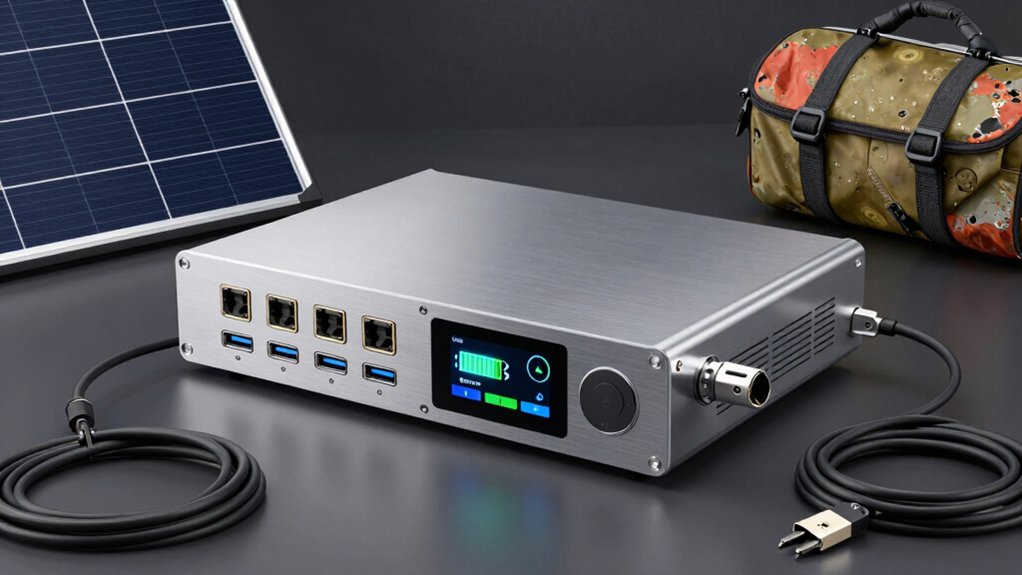
When selecting a 2000W power station, you’ll need to evaluate five core factors: battery capacity and chemistry (which determine how long you can run devices), continuous versus surge power (since continuous power is what you’ll actually use most), charging speed and methods (affecting how quickly you can recharge between uses), port variety and compatibility (ensuring your devices connect properly), and weight and portability (determining whether you can move it easily). Start by matching the battery capacity in watt-hours to your intended use—a 2000Wh unit suits extended camping trips, while smaller capacities work for brief outages. Then cross-reference the station’s input and output ports against your devices to confirm compatibility before making your purchase.
Battery Capacity And Chemistry
How much runtime do you actually need from your power station? Battery capacity directly determines this answer. Most 2000W units use LiFePO4 chemistry, which delivers 3500+ to 5000+ cycles of reliable performance. A 1000Wh pack runs devices for shorter periods, while a 2048Wh capacity extends runtime significantly for multiple appliances. LiFePO4 batteries maintain approximately 80% capacity after years of frequent use, improving long-term value during regular outages. Consider your typical load and duration: calculate how many hours you need power, then match that requirement to available capacity. Some models allow expansion to 4000–5000Wh by adding extra packs without purchasing separate inverters, giving you flexibility to scale up as your needs grow.
Continuous vs. Surge Power
Because most devices require different amounts of power when starting versus running, you’ll need to understand the difference between continuous and surge ratings before choosing your 2000W power station. Continuous power is the steady output your station maintains during normal operation, while surge power handles the brief startup spikes from motors and compressors. A 2000W continuous rating powers typical devices like laptops and TVs reliably. However, you’ll need higher surge capacity—typically 4000–4800W—to start refrigerators and air conditioners without triggering shutdowns. When selecting a unit, verify the surge rating exceeds your heaviest load’s maximum startup wattage. For multiple devices, compare both your total continuous demand and combined peak startup requirements against the station’s specifications to ensure adequate capacity.
Charging Speed And Methods
What’ll determine how quickly you can get your 2000W power station back online? Your charging method. AC fast charging reaches 0–80% in 36–66 minutes with 2000W-class units, while full charge takes roughly 102 minutes. Solar charging via built-in MPPT controllers delivers 200–800W input, completing a full recharge in 1–6 hours depending on panel wattage and sunlight conditions. Combining both methods—hybrid charging—cuts recharge time to under 40 minutes by supplying power simultaneously. Select a station with dual inputs if speed matters. Additionally, check for dedicated fast-charge ports offering USB-C power delivery up to 100W, letting you replenish smaller devices while the main battery charges. Match your chosen method to your usage patterns and environment.
Port Variety And Compatibility
When you’re choosing a 2000W power station, which ports you get determines what devices you can run simultaneously. Look for models offering AC outlets, USB-C PD, USB-A ports, and DC outputs working together. AC outlets power laptops and tools, USB-C PD charges phones and tablets quickly, USB-A handles older devices, and DC outputs support accessories via XT60 connectors. Count your total ports carefully—aim for four to six AC outlets plus multiple USB ports combined. This mix ensures you won’t choose between charging your phone or running a power drill. Verify solar and MPPT compatibility too, letting you recharge during outdoor work without losing charging station availability. Check that your station’s port configuration matches your actual device needs before purchasing.
Weight And Portability
How much does a 2000W power station actually weigh, and does that matter for your situation? Most 2000W models range from 17 to 40 pounds, with many settling around 22–23 pounds. You’ll notice weight directly affects transport comfort during camping trips or RV use. Lighter units reduce fatigue when moving and setting up equipment. Check for built-in handles, foldable solar panels, and integrated carrying cases—these features ease transport despite high battery capacity. Heavier models often include more robust internal cooling and larger battery packs, maintaining performance within manageable weight limits. Assess your typical use: frequent backpacking requires lighter options, while stationary RV placement tolerates additional weight. Match the weight to your physical capability and transport method to ensure practical ownership.
Thermal Management Systems
Once you’ve settled on a power station that fits your weight and portability needs, you’ll want to examine how it handles the heat generated during extended 2000W operation. Check whether the unit uses active cooling with dual fans and passive heat sinks to maintain safe battery temperatures. Verify that the thermal system prevents BMS throttling during peak demand periods. Review manufacturer specifications for temperature regulation performance and capacity retention rates after heavy-use cycles—aim for models preserving 80% capacity or more over multi-year use. Confirm the airflow design minimizes hot spots across battery cells. Test whether the cooling system supports rapid charging and discharging without triggering thermal shutdowns. These specifications directly determine whether your power station sustains consistent 2000W output without degradation.
Warranty And Durability
What’s the actual protection you’ll receive if your 2000W power station fails after six months or two years? You need a minimum 3–5 year warranty, preferably 5 years for maximum coverage. Examine warranty details carefully: confirm battery and BMS failures are covered, and identify out-of-warranty conditions. Check the manufacturer’s support policies for extended warranty options and 24/7/365 service availability. Verify the unit has UL certification and flame-retardant housing. Review the stated cycle lifetime—LiFePO4 models should exceed 3500 cycles. Research the return policy before purchasing. Compare warranty lengths across brands; longer terms indicate manufacturer confidence in durability. Request clarification on any unclear coverage terms. Strong warranties directly reflect build quality and long-term reliability expectations.
Expandability And Scalability
Because your power needs may grow over time, you’ll want a 2000W power station that lets you expand capacity without replacing the entire system. Look for models supporting external battery additions or daisy-chaining capabilities. These options let you scale from 1024Wh to 5120Wh by connecting compatible modules while keeping your inverter and wiring unchanged. Check that added batteries integrate seamlessly with your main unit’s management system. Verify the battery chemistry—LiFePO4 batteries with 3500+ cycle ratings provide durability through repeated expansions. Confirm that safety features like battery management systems and thermal controls remain active when you add packs, preventing overcharging and overheating. This approach reduces complexity while maintaining reliable UPS transfer performance as your requirements increase.
Final Thoughts
You’ll want to prioritize LiFePO4 chemistry, surge capacity, and multiple charging ports when selecting your 2000W power station. Compare real-world runtimes for your specific devices—laptops, CPAP machines, or tools—against each model’s specifications. Check warranty length and expandability options. Verify solar compatibility if you’re planning outdoor use. Test USB-C PD output for fast charging. Cross-reference price against cycle ratings to determine long-term value before purchasing.

Meet Ry, “TechGuru,” a 36-year-old technology enthusiast with a deep passion for tech innovations. With extensive experience, he specializes in gaming hardware and software, and has expertise in gadgets, custom PCs, and audio.
Besides writing about tech and reviewing new products, he enjoys traveling, hiking, and photography. Committed to keeping up with the latest industry trends, he aims to guide readers in making informed tech decisions.