
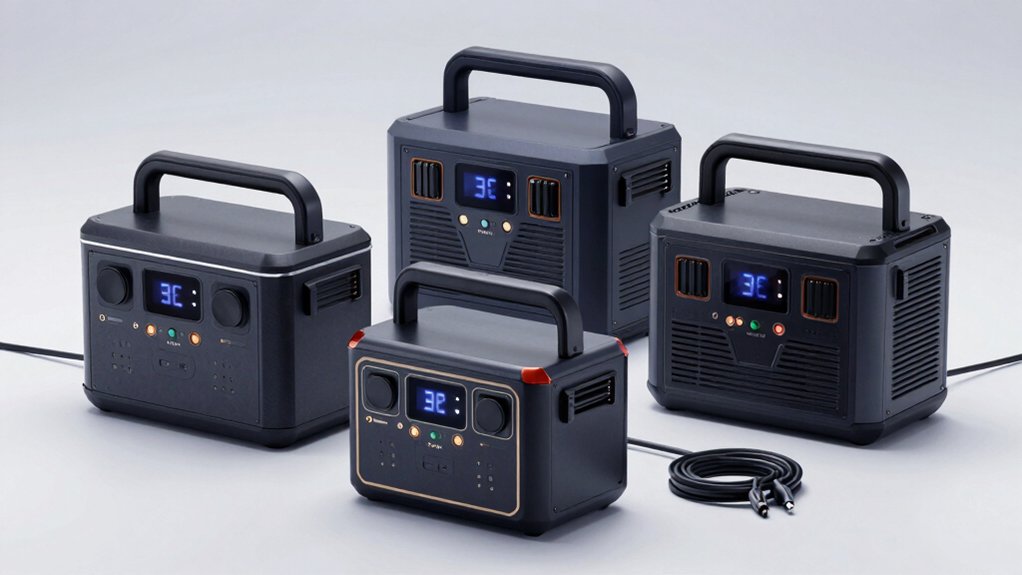

When the grid fails, you need a power station with UPS mode to keep critical devices running without interruption. These systems switch to battery power in milliseconds, maintaining your electronics during outages. You’ll find options ranging from compact 200Wh units to larger 1,000Wh+ models, each with different wattage outputs and switching speeds. The right choice depends on what you’re powering and how long you need backup. Here’s what you should know.
| BLUETTI AC2A Portable Power Station 204Wh Solar Generator |

| Ultraportable Essential | Battery Capacity: 204Wh | AC Power Output: 300W continuous, 600W peak | UPS Backup Speed: ≤20 ms | VIEW LATEST PRICE | Read Our Analysis |
| Anker SOLIX C1000 Gen 2 Portable Power Station |

| Best Overall | Battery Capacity: 1,024Wh | AC Power Output: 2,000W continuous, 3,000W peak | UPS Backup Speed: <10 ms | VIEW LATEST PRICE | Read Our Analysis |
| Anker SOLIX C300 Portable Power Station 288Wh |

| Compact Travel Pick | Battery Capacity: 288Wh | AC Power Output: 300W continuous, 600W surge | UPS Backup Speed: Not specified | VIEW LATEST PRICE | Read Our Analysis |
| ALLWEI Portable Power Station 300W Solar Generator |

| Budget-Friendly Option | Battery Capacity: 256Wh | AC Power Output: 300W continuous, 600W peak | UPS Backup Speed: Not specified | VIEW LATEST PRICE | Read Our Analysis |
| BLUETTI Elite 100 V2 Portable Power Station 1024Wh |

| Premium Performance | Battery Capacity: 1,024Wh | AC Power Output: 1,800W continuous, 2,700W lifting | UPS Backup Speed: Automatic power-outage switch | VIEW LATEST PRICE | Read Our Analysis |
| BLUETTI Elite 10 Mini Portable Power Station 128Wh |

| Airline-Approved Mini | Battery Capacity: 128Wh | AC Power Output: 200W continuous, 350W bypass | UPS Backup Speed: 10 ms | VIEW LATEST PRICE | Read Our Analysis |
| BLUETTI Elite 10 Portable Power Station 128Wh LiFePO4 |

| Most Portable | Battery Capacity: 128Wh | AC Power Output: 200W continuous, 350W bypass | UPS Backup Speed: 10 ms | VIEW LATEST PRICE | Read Our Analysis |
| OUPES Mega 1 Lite Portable Power Station 1024Wh |

| Best Value | Battery Capacity: 1,024Wh | AC Power Output: 2,000W continuous, 4,500W peak | UPS Backup Speed: <20 ms | VIEW LATEST PRICE | Read Our Analysis |
| PROGENY 300W Portable Power Station Solar Generator |
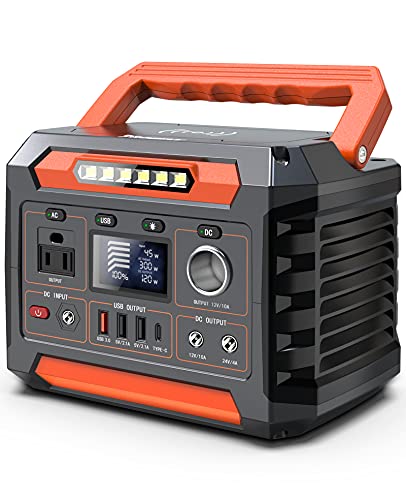
| Versatile Backup | Battery Capacity: 299Wh | AC Power Output: 300W continuous, 600W peak | UPS Backup Speed: Not specified | VIEW LATEST PRICE | Read Our Analysis |
| CyberPower CP1500PFCLCD PFC Sinewave UPS Battery Backup |
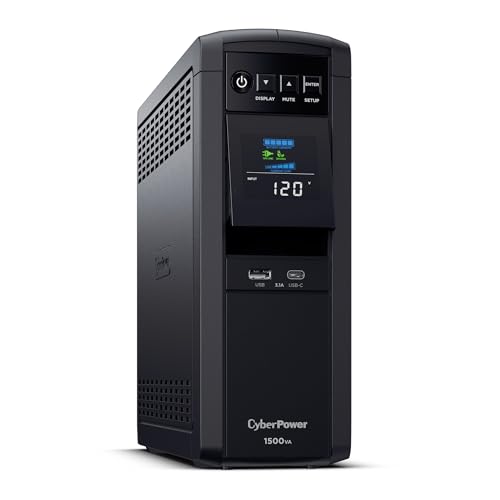
| Professional-Grade UPS | Battery Capacity: 1,500VA/1,000W | AC Power Output: 1,000W | UPS Backup Speed: Line interactive topology | VIEW LATEST PRICE | Read Our Analysis |
More Details on Our Top Picks
BLUETTI AC2A Portable Power Station 204Wh Solar Generator
Why’d you choose a compact power station over a bulky alternative? The BLUETTI AC2A weighs just 7.9 lbs, fits easily into bags, and delivers 300W continuous power with 600W peak output. Its LiFePO4 battery holds 204Wh and lasts 3,000+ cycles. You’ll charge it fully in 70 minutes using 270W Turbo Charging via AC outlets, solar panels, car chargers, or lead-acid batteries. The unit provides six 120V outlets for simultaneous device charging. Its UPS mode activates within 20 milliseconds when power fails, keeping devices running without interruption. You can monitor status and adjust settings through the BLUETTI App. Use it for camping, emergencies, home backup, or road trips.
- Battery Capacity:204Wh
- AC Power Output:300W continuous, 600W peak
- UPS Backup Speed:≤20 ms
- Weight:7.9 lbs
- Battery Type:LiFePO4
- Charging Methods:AC, solar panel, car, lead-acid battery
- Additional Feature:270W Turbo Charging capability
- Additional Feature:Silent operation ≤20ms
- Additional Feature:Six outlets, 120V output
Anker SOLIX C1000 Gen 2 Portable Power Station
The Anker SOLIX C1000 Gen 2 stands out for users who need seamless power continuity during outages and want a portable backup solution that doesn’t interrupt essential devices. This unit delivers 2,000W output with a 1,024Wh LiFePO4 battery, supporting up to 10 devices simultaneously. Its 10ms UPS switchover keeps critical equipment like CPAP machines and laptops running without interruption when power fails. The 49-minute full recharge via HyperFlash and 1.8-hour solar recharge provide flexible charging options. Weighing 24.9 pounds, it’s portable for room-to-room placement or RV use. The five-year warranty and 10-year InfiniPower design ensure long-term reliability, maintaining 80% capacity after 4,000 charge cycles.
- Battery Capacity:1,024Wh
- AC Power Output:2,000W continuous, 3,000W peak
- UPS Backup Speed:<10 ms
- Weight:24.9 lbs
- Battery Type:LiFePO4
- Charging Methods:AC (1,600W HyperFlash), solar (600W, 60V max), car
- Additional Feature:49-minute full recharge HyperFlash
- Additional Feature:10 ports simultaneous powering
- Additional Feature:10-year InfiniPower design
Anker SOLIX C300 Portable Power Station 288Wh
If you’re looking for a compact power station that won’t weigh you down during camping trips or emergency situations, the Anker SOLIX C300 delivers 288Wh of LiFePO4 battery capacity in a design that’s 15% smaller than comparable models while still weighing just 4.1 kg. You’ll access 300W continuous output across eight ports: three AC outlets, one car socket, two high-power USB-C ports, and additional USB connections. Recharge the battery fully in 50 minutes via wall outlet or use 100W solar panels for outdoor sustainability. The LiFePO4 chemistry supports 3,000+ charge cycles with a five-year warranty, making it reliable for extended use across multiple seasons and scenarios.
- Battery Capacity:288Wh
- AC Power Output:300W continuous, 600W surge
- UPS Backup Speed:Not specified
- Weight:~9 lbs (4.1 kg)
- Battery Type:LiFePO4
- Charging Methods:AC wall outlet, solar panels (100W recommended), car, USB-C PD 3.1
- Additional Feature:140W two-way USB-C charging
- Additional Feature:15% smaller than competitors
- Additional Feature:Eight total charging outlets
ALLWEI Portable Power Station 300W Solar Generator
For campers, road trippers, and homeowners who need backup power without breaking the bank, ALLWEI’s 300W Portable Power Station delivers reliable performance in a compact 6.4-pound package. Its 256Wh LiFePO4 battery provides 300W continuous power with 600W peak capacity, supporting up to six devices simultaneously through multiple ports: one AC outlet, USB-C PD 60W, USB-A 18W fast charge, and DC ports. You’ll recharge it four ways: AC wall (3.5–4 hours), car charging (3.5–4 hours), solar panels (4–5 hours), or dual AC and solar combined (2–2.5 hours). The built-in MPPT controller maximizes solar efficiency. Its 6-layer Battery Management System protects against short-circuits and overcharging, while the 3,000 charge-discharge cycle lifespan and 5-year warranty ensure long-term reliability for emergencies and outdoor adventures.
- Battery Capacity:256Wh
- AC Power Output:300W continuous, 600W peak
- UPS Backup Speed:Not specified
- Weight:6.4 lbs
- Battery Type:LiFePO4
- Charging Methods:AC wall, 12V car, solar (100W panel), dual AC+solar
- Additional Feature:6-layer Battery Management System
- Additional Feature:Pass-through charging capability
- Additional Feature:3-level LED with SOS
BLUETTI Elite 100 V2 Portable Power Station 1024Wh
Looking for a power station that doesn’t sacrifice portability for performance? The BLUETTI Elite 100 V2 delivers 1024Wh capacity with 1800W AC output in a compact 25-pound design. You’ll charge it fully in 70 minutes using 1200W TurboBoost AC charging, or pair it with 1000W solar input for off-grid setups. The automatic power-outage switch activates instantly during grid failures, keeping essential devices running without interruption. With 11 ports and silent 30dB operation, you’ll power laptops, refrigerators, and medical equipment simultaneously. One-handed carry via hidden handle makes transport straightforward for camping, RVs, remote work, or home backup during outages.
- Battery Capacity:1,024Wh
- AC Power Output:1,800W continuous, 2,700W lifting
- UPS Backup Speed:Automatic power-outage switch
- Weight:25 lbs
- Battery Type:LiFePO4
- Charging Methods:AC (1,200W TurboBoost), solar (1,000W input), car (optional faster charger)
- Additional Feature:1000W solar input capacity
- Additional Feature:1200W TurboBoost AC charging
- Additional Feature:Hidden one-handed carry handle
BLUETTI Elite 10 Mini Portable Power Station 128Wh
The BLUETTI Elite 10 Mini is your best choice when you need a lightweight, airline-approved power station that won’t add bulk to your travel gear. Its 128Wh LiFePO4 battery delivers 200W AC power with built-in 10ms UPS protection, automatically switching to battery during outages. Weighing just 4.0 lbs with an ergonomic handle, you’ll carry it easily through airports—it meets TSA carry-on limits for up to two units per passenger. Recharge via three methods: 150W AC outlet in 70 minutes, 100W solar panels, or 100W car charging. Use the Bluetooth app to monitor status and customize settings. The device powers laptops, drones, and cameras while providing emergency LED lighting with three modes lasting 50 hours.
- Battery Capacity:128Wh
- AC Power Output:200W continuous, 350W bypass
- UPS Backup Speed:10 ms
- Weight:4.0 lbs
- Battery Type:LiFePO4
- Charging Methods:AC (150W), solar (100W with 60W/100W panels), car (100W)
- Additional Feature:350W bypass output capability
- Additional Feature:Airline carry-on friendly approved
- Additional Feature:Smart App Bluetooth control
BLUETTI Elite 10 Portable Power Station 128Wh LiFePO4
Want a UPS power station you can actually carry in your backpack? The BLUETTI Elite 10 delivers 128Wh capacity with a 10ms backup that keeps your devices running during outages. Its 200W AC outlet powers laptops, cameras, and routers without interruption. Recharge using three methods: AC wall outlet (70 minutes), solar panels, or car charger for flexibility on the go. At 4.0 lbs with compact dimensions, you’ll slip it into travel bags easily. The LiFePO4 battery lasts 3000+ cycles, and Bluetooth app control lets you monitor power status instantly. For emergency backup or camping trips, this unit provides reliable protection.
- Battery Capacity:128Wh
- AC Power Output:200W continuous, 350W bypass
- UPS Backup Speed:10 ms
- Weight:4.0 lbs
- Battery Type:LiFePO4
- Charging Methods:AC (150W), solar (100W with 60W/100W panels), car (100W)
- Additional Feature:350W bypass output capability
- Additional Feature:Airline carry-on friendly approved
- Additional Feature:Smart App Bluetooth control
OUPES Mega 1 Lite Portable Power Station 1024Wh
If you need a lightweight backup power system that switches to battery power in under 20 milliseconds when your home loses electricity, the OUPES Mega 1 Lite delivers reliable UPS performance without the bulk. This 1024Wh LiFePO4 station weighs 26.7 lbs and fits in your car trunk, making it portable for camping or road trips. The 2000W continuous inverter runs coffee makers, microwaves, and power tools. Charge it fully in 46 minutes via AC or 70 minutes with three 240W solar panels. You’ll get over 3,500 cycles to 80% capacity, supporting ten years of regular use. The smart app monitors battery health and usage in real-time through Bluetooth and Wi-Fi connectivity.
- Battery Capacity:1,024Wh
- AC Power Output:2,000W continuous, 4,500W peak
- UPS Backup Speed:<20 ms
- Weight:26.7 lbs
- Battery Type:LiFePO4
- Charging Methods:AC (1,400W), solar (800W via Anderson port), car
- Additional Feature:46-minute AC charging speed
- Additional Feature:800W solar input capacity
- Additional Feature:Smart App Wi-Fi connectivity
PROGENY 300W Portable Power Station Solar Generator
Campers, van lifers, and homeowners preparing for emergencies will find the PROGENY 300W a practical mid-capacity option that balances portability with real-world runtime. The 299Wh capacity charges smartphones roughly 40 times, laptops 4–5 times, or runs a mini fridge for 6–18 hours. You’ll recharge it fully in 6–7 hours via AC outlet, 7–8 hours from your car port, or 6–7 hours using a 120W solar panel with MPPT technology. Its pure sine wave output and 12V regulated system protect sensitive devices like CPAPs. The built-in Battery Management System guards against short circuits, overloads, and overheating. At 7 pounds with a carrying handle, you transport it easily to camping sites or keep it ready for grid failures.
- Battery Capacity:299Wh
- AC Power Output:300W continuous, 600W peak
- UPS Backup Speed:Not specified
- Weight:7 lbs
- Battery Type:Lithium-ion
- Charging Methods:AC wall outlet, solar (120W panel, MPPT), car port (12V/10A)
- Additional Feature:MPPT solar technology included
- Additional Feature:12V regulated output protection
- Additional Feature:Orange color with handle
CyberPower CP1500PFCLCD PFC Sinewave UPS Battery Backup
The CyberPower CP1500PFCLCD delivers reliable backup power for home offices, small businesses, and anyone who can’t afford unexpected downtime when the grid fails. This 1500VA/1000W unit features twelve outlets—six with battery backup and six with surge protection—to power your essential equipment simultaneously. The PFC Sine Wave technology supports both active PFC and conventional power supplies, making it compatible with sensitive devices. Automatic Voltage Regulation (AVR) corrects minor power fluctuations without draining the battery, extending overall lifespan. A tilting color LCD display shows real-time battery and power conditions, alerting you to potential issues before they cause downtime. Two USB ports enable device charging. The included 3-year warranty and $500,000 Connected Equipment Guarantee provide comprehensive protection for your investment.
- Battery Capacity:1,500VA/1,000W
- AC Power Output:1,000W
- UPS Backup Speed:Line interactive topology
- Weight:24.9 lbs
- Battery Type:Lead-acid (2×12V)
- Charging Methods:AC wall outlet only
- Additional Feature:12 NEMA 5-15R outlets
- Additional Feature:Automatic Voltage Regulation (AVR)
- Additional Feature:Tilting color LCD display
Factors to Consider When Choosing a Power Station With UPS Mode
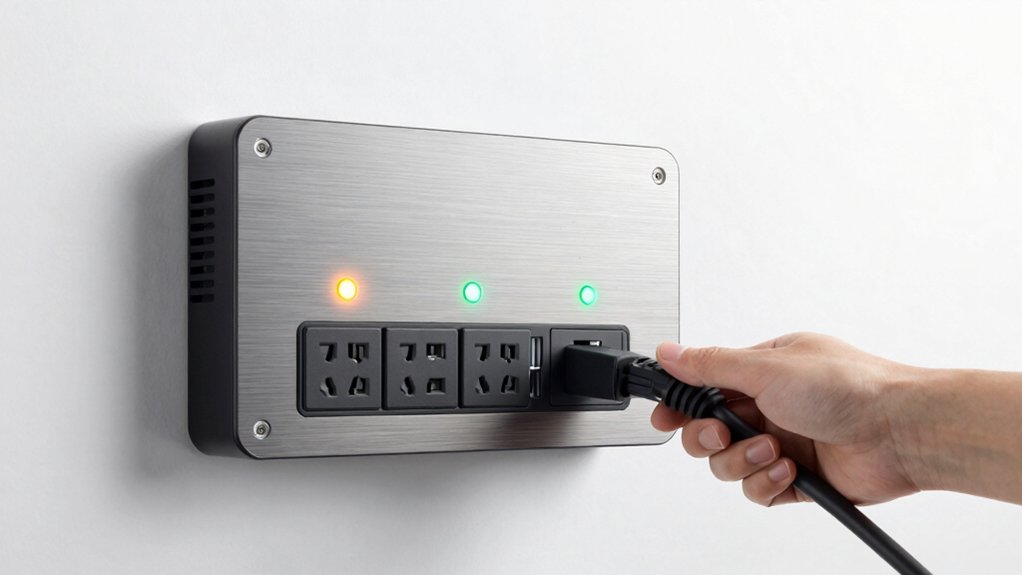
When selecting a power station with UPS mode, you’ll need to evaluate five critical factors: battery capacity and runtime (measured in watt-hours and how long devices run), switchover speed performance (how quickly it kicks in when power fails, typically milliseconds), and output power requirements (matching the wattage your devices demand). Next, consider charging speed options, which determine how fast you can recharge the unit from a wall outlet or solar panels, and balance portability against your power needs—lighter models sacrifice capacity while heavier units offer extended runtime. Comparing these factors against your specific situation helps you choose a unit that reliably supports your essential devices without overspending on unnecessary capacity.
Battery Capacity and Runtime
How long will your power station actually run your devices when the grid fails? Battery capacity, measured in watt-hours (Wh), directly determines runtime. A larger capacity means longer operation before recharging becomes necessary. However, runtime depends on your load—the total wattage of connected devices. To calculate estimated runtime, divide the battery capacity by your device wattage. For example, a 2,000 Wh battery powering a 500W load runs approximately four hours. Real-world runtime varies due to temperature fluctuations, device startup surges, and intermittent versus continuous power draw. LiFePO4 chemistry batteries maintain stable runtime over 3,000–4,000+ cycles, supporting reliable long-term UPS performance. Match your power station’s inverter rating to your critical load to ensure consistent runtime during outages.
Switchover Speed Performance
While runtime determines how long your power station can support your devices, switchover speed determines whether those devices stay powered during the switch from grid to battery. Look for units rated at 10 milliseconds or faster, which ensure sensitive electronics like CPAP machines and computers experience no noticeable interruption. Some models guarantee switchover within 10 ms, while others allow up to 20 ms—acceptable for less critical devices but riskier for equipment requiring constant power. Check product specifications for switchover times, as manufacturers often highlight this feature prominently. Units with pass-through charging capabilities maintain device uptime while the power station itself charges. Prioritize switchover speed based on what you’re protecting: essential medical devices demand the fastest response, while general electronics tolerate slightly longer gaps.
Output Power Requirements
Selecting the right continuous power output is critical to UPS mode performance because it directly determines which devices you can run simultaneously during a grid outage. Calculate your total wattage demand by listing all devices you want to power together. A 1000W unit handles essential items like laptops, routers, and lights. A 2000W unit supports demanding appliances such as refrigerators or power tools. Check each device’s wattage rating—find it on the label or in the manual. Add these numbers together and choose a power station exceeding that total. Remember that you can’t run devices beyond the continuous output limit without risking instability. Verify the unit’s outlet count and wattage distribution across ports to ensure balanced performance.
Charging Speed Options
When you’re choosing a power station with UPS mode, charging speed directly affects how quickly you’ll restore full capacity after a grid outage or extended use. Most models offer multiple recharge methods: AC wall charging typically takes 70 minutes for a full charge, while HyperFlash or TurboBoost technology reduces this to under an hour. Solar charging requires compatible panels rated between 1000–1600W for optimal speed. Dual charging combines AC and solar input simultaneously for faster replenishment. Check the unit’s battery chemistry—LiFePO4 batteries with built-in MPPT and BMS systems charge more efficiently and safely. Compare recharge rates across different power sources before purchasing, ensuring the station meets your recovery timeline after power loss.
Portability vs. Power Needs
You’ll need to balance capacity and weight against the devices you’re powering during an outage. Start by listing what you must run—laptop, medical equipment, router—then check their wattage requirements. A 128Wh unit stays portable under 10 pounds but powers only small devices. A 512Wh model offers more flexibility for multiple gadgets while remaining reasonably portable. For heavy-duty needs, 1024Wh units support higher continuous wattage but weigh considerably more, limiting mobility. Consider your location: if you move frequently between rooms or outdoors, prioritize lighter models. If the unit stays stationary during outages, weight matters less. Match the inverter’s continuous and peak wattage to your simultaneous device needs. LiFePO4 chemistry ensures reliability across extended use cycles, supporting your long-term outage preparedness.
Warranty and Durability Specs
How much protection does your power station really have? Check the manufacturer warranty length—typically two to five years—and confirm it covers both the battery and inverter. Review the rated cycle life of your LiFePO4 battery, which commonly ranges from 3,000 to 4,000+ cycles, to estimate how long your unit will perform reliably. Examine the Battery Management System‘s fail-safes, including short-circuit, over-current, and over-voltage protection, as these features directly impact durability. Verify your UPS switchover speed meets sub-20 ms or faster requirements to protect critical devices during outages. Finally, investigate whether the warranty transfers to new owners and whether extended coverage or degradation replacement options are available. These specifications determine your actual long-term investment value.
Final Thoughts
You’ve reviewed ten reliable UPS power stations. Select one based on your needs: prioritize switchover speed (10–20 ms) for sensitive devices, capacity (288Wh to 1,024Wh) for runtime, and output wattage for your equipment. Check warranty coverage and multi-outlet options. Pair your choice with solar panels for sustained off-grid operation. Test the UPS function before relying on it during outages.

Meet Ry, “TechGuru,” a 36-year-old technology enthusiast with a deep passion for tech innovations. With extensive experience, he specializes in gaming hardware and software, and has expertise in gadgets, custom PCs, and audio.
Besides writing about tech and reviewing new products, he enjoys traveling, hiking, and photography. Committed to keeping up with the latest industry trends, he aims to guide readers in making informed tech decisions.