

If you’re serious about competing in Valorant, your monitor choice directly impacts your ranking. You need a display that delivers fast response times, high refresh rates, and minimal input lag—not flashy features that drain your budget. The right monitor lets you track enemies precisely and react faster than opponents. We’ve tested nine top-performing options that balance performance with affordability. Here’s what separates the best from the rest.
| LG 24G411A-B 24-inch 144Hz Gaming Monitor |

| Balanced Gaming Choice | Refresh Rate: 144 Hz | Resolution: 1920 x 1080 (FHD) | Screen Size: 24 inches | VIEW LATEST PRICE | Read Our Analysis |
| SANSUI 24 Inch 180Hz Gaming Monitor |

| High Refresh Value | Refresh Rate: 180 Hz | Resolution: 1920 x 1080 (FHD) | Screen Size: 24 inches | VIEW LATEST PRICE | Read Our Analysis |
| Sceptre 30-inch Curved Gaming Monitor 200Hz (C305B-200UN1) |

| Ultrawide Immersion | Refresh Rate: 200 Hz | Resolution: 2560 x 1080 (Ultrawide FHD) | Screen Size: 30 inches | VIEW LATEST PRICE | Read Our Analysis |
| Acer Nitro 27 Inch QHD Gaming Monitor 180Hz |

| Color-Accurate Performance | Refresh Rate: 180 Hz | Resolution: 2560 x 1440 (QHD) | Screen Size: 27 inches | VIEW LATEST PRICE | Read Our Analysis |
| BenQ Zowie XL2546X+ 280Hz Gaming Monitor |

| Esports Competitive Edge | Refresh Rate: 280 Hz | Resolution: 1920 x 1080 (FHD) | Screen Size: 24.1 inches | VIEW LATEST PRICE | Read Our Analysis |
| Sceptre Curved 24-inch Gaming Monitor 1080p |

| Budget-Friendly Curved | Refresh Rate: 75 Hz | Resolution: 1920 x 1080 (FHD) | Screen Size: 24 inches | VIEW LATEST PRICE | Read Our Analysis |
| Amzfast 24 Inch Gaming Monitor 180Hz FHD |
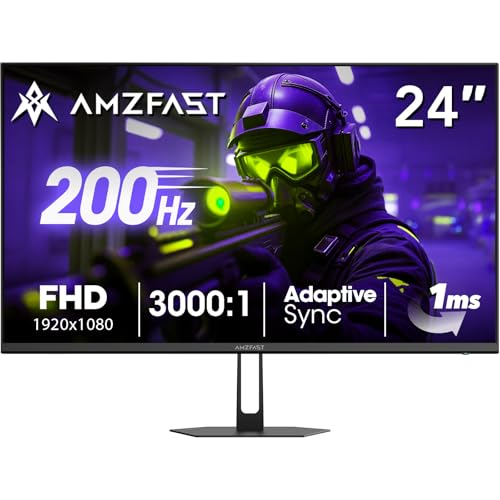
| Vibrant All-Rounder | Refresh Rate: 200 Hz | Resolution: 1920 x 1080 (FHD) | Screen Size: 24 inches | VIEW LATEST PRICE | Read Our Analysis |
| ZZA 32 Inch Curved Gaming Monitor QHD 300Hz |
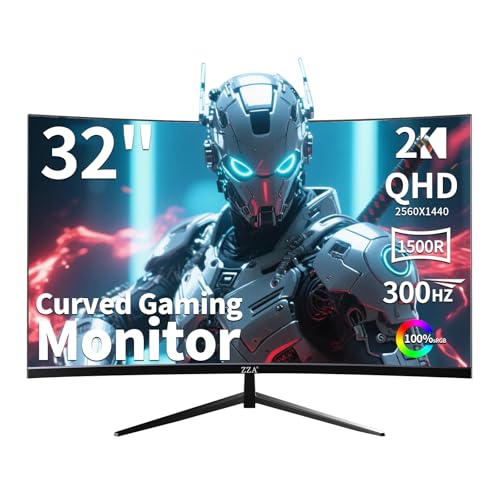
| Ultimate Immersive Setup | Refresh Rate: 300 Hz | Resolution: 2560 x 1440 (QHD) | Screen Size: 32 inches | VIEW LATEST PRICE | Read Our Analysis |
| ASUS ROG Strix 26.5″ 1440P QD-OLED Gaming Monitor |

| Professional OLED Excellence | Refresh Rate: 360 Hz | Resolution: 2560 x 1440 (QHD) | Screen Size: 26.5 inches | VIEW LATEST PRICE | Read Our Analysis |
More Details on Our Top Picks
LG 24G411A-B 24-inch 144Hz Gaming Monitor
The LG 24G411A-B offers a balanced gaming choice for competitive Valorant players who prioritize both performance and display quality. This 24-inch monitor delivers 144Hz overclocked performance with a 1ms response time, reducing motion blur during fast-paced matches. The IPS panel provides 99% sRGB color accuracy and a 178-degree viewing angle, ensuring consistent visuals from different positions. G-SYNC compatibility with NVIDIA cards and FreeSync support with AMD GPUs eliminate screen tearing. The Dynamic Action Sync feature decreases input lag, while the built-in crosshair assists with aim precision. At 1920×1080 resolution, you’ll experience smooth gameplay without demanding excessive graphics processing power.
- Refresh Rate:144 Hz
- Resolution:1920 x 1080 (FHD)
- Screen Size:24 inches
- Panel Type:IPS
- Response Time:1 ms (MBR)
- Adaptive Sync Technology:NVIDIA G-SYNC Compatible, AMD FreeSync
- Additional Feature:Motion Blur Reduction (1ms MBR)
- Additional Feature:Black Stabilizer technology
- Additional Feature:On-screen Crosshair feature
SANSUI 24 Inch 180Hz Gaming Monitor
Looking for a monitor that keeps up with fast-paced Valorant gameplay? The SANSUI ES-G24F4 delivers with its 180Hz refresh rate, giving you smoother visuals than standard monitors. The 1ms response time ensures minimal lag between your actions and on-screen movement. You’ll get a 24-inch Full HD display with 110% sRGB color accuracy, making enemy positions clearer. The monitor includes DisplayPort and HDMI 2.0 connectivity, so you can connect it directly to your PC. Its adaptive sync technology reduces screen tearing during intense matches. The tiltable stand accommodates different desk setups, while eye care features reduce strain during long gaming sessions.
- Refresh Rate:180 Hz
- Resolution:1920 x 1080 (FHD)
- Screen Size:24 inches
- Panel Type:LCD
- Response Time:1 ms (MPRT)
- Adaptive Sync Technology:Adaptive Sync, FreeSync
- Additional Feature:AI Picture Pro upscaling
- Additional Feature:Pixel Dimming technology
- Additional Feature:Eye care protection
Sceptre 30-inch Curved Gaming Monitor 200Hz (C305B-200UN1)
Sceptre’s 30-inch curved display delivers ultrawide immersion with its 21:9 aspect ratio—why settle for standard dimensions when you’re playing Valorant? You’ll get 2560 x 1080 resolution across a curved panel that reduces eye strain during extended matches. The 200Hz refresh rate via DisplayPort keeps your gameplay smooth and responsive. Use the FPS preset mode to optimize your display settings specifically for competitive play. AMD FreeSync eliminates screen tearing, giving you consistent visuals. Blue Light Shift protects your eyes during long gaming sessions, while Anti-Flicker technology prevents backlight flicker for clearer visuals. Mount it on your wall using the VESA compatibility, or position it on your desk. Built-in speakers handle audio for team communication.
- Refresh Rate:200 Hz
- Resolution:2560 x 1080 (Ultrawide FHD)
- Screen Size:30 inches
- Panel Type:VA
- Response Time:Not specified
- Adaptive Sync Technology:AMD FreeSync
- Additional Feature:21:9 ultrawide aspect ratio
- Additional Feature:Blue Light Shift protection
- Additional Feature:Built-in speakers
Acer Nitro 27 Inch QHD Gaming Monitor 180Hz
Competitive Valorant players who demand color-accurate performance and high refresh rates should consider this 27-inch monitor. The Acer Nitro KG271U delivers 2560 x 1440 QHD resolution with a 180Hz refresh rate and 0.5ms response time, ensuring sharp visuals and smooth gameplay. Its IPS panel covers 95% DCI-P3 color space, benefiting both competitive play and color-critical work. AMD FreeSync reduces screen tearing during intense matches. The zero-frame design enables seamless multi-monitor setups. Connect via DisplayPort 1.2 or HDMI 2.0. This monitor balances high performance with professional-grade color accuracy, making it ideal for serious Valorant competitors.
- Refresh Rate:180 Hz
- Resolution:2560 x 1440 (QHD)
- Screen Size:27 inches
- Panel Type:IPS
- Response Time:0.5 ms (GTG)
- Adaptive Sync Technology:AMD FreeSync
- Additional Feature:Zero-frame bezel design
- Additional Feature:DCI-P3 95% color accuracy
- Additional Feature:ComfyView eye comfort
BenQ Zowie XL2546X+ 280Hz Gaming Monitor
The BenQ Zowie XL2546X+ delivers the esports competitive edge you need for Valorant through its 280Hz refresh rate and DyAc 2 motion clarity technology. This 24.1-inch TN panel monitor displays 1080p resolution with sharp, clear moving images that outperform IPS panels for in-game motion outlines. The improved panel design reduces overshoot while enhancing liquid crystal responsiveness. You’ll benefit from vibrant color performance and reduced blur during fast-paced gameplay. The monitor includes DisplayPort and HDMI inputs with FreeSync adaptive sync support. Its included accessories—XL Setting to Share, S Switch, and shielding hood—optimize your competitive setup. Industrial-grade height adjustment and wall mount compatibility let you customize your viewing angle precisely.
- Refresh Rate:280 Hz
- Resolution:1920 x 1080 (FHD)
- Screen Size:24.1 inches
- Panel Type:TN
- Response Time:Not specified
- Adaptive Sync Technology:FreeSync
- Additional Feature:DyAc 2 dynamic accuracy
- Additional Feature:Dual backlight system
- Additional Feature:XL Setting to Share
Sceptre Curved 24-inch Gaming Monitor 1080p
Want a budget-friendly curved monitor that doesn’t compromise on gaming performance? The Sceptre Curved 24-inch Gaming Monitor delivers solid specs at an affordable price. You’ll get a 1080p resolution with a 75Hz refresh rate and 5ms response time, suitable for casual competitive play. The 1800R curved screen enhances your peripheral vision, while the 98.0% sRGB color gamut ensures accurate visuals. Connect via HDMI or VGA to your gaming PC. The monitor includes a stand and wall-mounting capability. At roughly seven pounds, it’s lightweight and easy to position. This option works best if you’re starting competitive gaming without spending heavily.
- Refresh Rate:75 Hz
- Resolution:1920 x 1080 (FHD)
- Screen Size:24 inches
- Panel Type:VA
- Response Time:~5 ms
- Adaptive Sync Technology:Adaptive Sync / FreeSync
- Additional Feature:1800R curved screen
- Additional Feature:3000:1 contrast ratio
- Additional Feature:Built-in speakers
Amzfast 24 Inch Gaming Monitor 180Hz FHD
If you’re seeking a vibrant all-rounder that balances high refresh rates with solid color accuracy, the Amzfast AMZG24X1 delivers 200 Hz performance in a 24-inch FHD package. You’ll appreciate the 129% sRGB color coverage that renders Valorant’s environments with detail. The 1 ms response time and adaptive sync support minimize input lag during competitive play. Connect via HDMI 2.1 or DisplayPort 1.4 to your PC or console. The VA panel’s 3000:1 contrast and 300 nits brightness ensure you spot enemies in darker areas. Eye-care features including blue light reduction and flicker-free technology reduce fatigue during extended sessions.
- Refresh Rate:200 Hz
- Resolution:1920 x 1080 (FHD)
- Screen Size:24 inches
- Panel Type:VA
- Response Time:1 ms
- Adaptive Sync Technology:Adaptive Sync (FreeSync, G-Sync compatible)
- Additional Feature:129% sRGB color gamut
- Additional Feature:HDR Display support
- Additional Feature:Multi-console compatibility
ZZA 32 Inch Curved Gaming Monitor QHD 300Hz
Competitive Valorant players seeking an ultimate immersive setup should consider this 32-inch curved monitor’s 300Hz refresh rate and 1ms response time, which deliver the speed needed to track fast-moving targets and react to opponents without delay. The QHD resolution provides 78% more pixels than Full HD, sharpening enemy visibility at distance. AMD FreeSync Premium and NVIDIA G-Sync compatibility eliminate screen tearing across both GPU types. The 1500R curved VA panel expands your field of view for better peripheral awareness. Use the customizable display modes to balance performance and comfort during extended matches.
- Refresh Rate:300 Hz
- Resolution:2560 x 1440 (QHD)
- Screen Size:32 inches
- Panel Type:VA
- Response Time:1 ms
- Adaptive Sync Technology:AMD FreeSync Premium, NVIDIA G-SYNC Compatible
- Additional Feature:1500R curved VA panel
- Additional Feature:Customizable display modes
- Additional Feature:On-screen crosshairs
ASUS ROG Strix 26.5″ 1440P QD-OLED Gaming Monitor
You’ll find professional OLED excellence in this 26.5-inch QD-OLED display, designed for competitive players who demand both speed and visual precision. The 360 Hz refresh rate and 0.03 ms response time deliver the responsiveness needed for fast-paced gameplay. The QD-OLED panel produces true 10-bit color with Delta E < 2, ensuring accurate visuals. VESA DisplayHD 400 True Black compliance enhances contrast during dark scenes. Use DisplayWidget Center software to access OLED Care+ functions, which reduce burn-in risk through advanced thermal management. The included 3-year warranty and 3-month Adobe Creative Cloud subscription add value for competitive and creative work.
- Refresh Rate:360 Hz
- Resolution:2560 x 1440 (QHD)
- Screen Size:26.5 inches
- Panel Type:QD-OLED
- Response Time:0.03 ms
- Adaptive Sync Technology:Not specified
- Additional Feature:VESA DisplayHDR 400 True Black
- Additional Feature:OLED anti-flicker technology
- Additional Feature:ASUS OLED Care+ burn-in protection
Factors to Consider When Choosing a Monitor for Valorant
When choosing a monitor for Valorant, you’ll want to prioritize refresh rate first since the game rewards fast, responsive gameplay, then evaluate response time performance to guarantee smooth pixel transitions during quick movements. Next, consider your panel type (IPS, VA, or OLED), resolution clarity based on your GPU’s capability, and adaptive sync technology like G-Sync or FreeSync to eliminate screen tearing. These five factors work together to determine whether your monitor supports competitive play or casual gaming, so rank them by your specific needs and hardware setup.
Refresh Rate Matters Most
Why does refresh rate matter most for Valorant? Higher refresh rates reduce perceived input lag and display on-screen action faster, directly improving your reaction time and target tracking during gunplay.
Start by moving from 60 Hz to 120 Hz, which produces a noticeable improvement in how quickly you can track moving enemies and adjust your aim. Next, consider upgrading to 144 Hz or higher for even clearer motion and reduced blur during rapid crosshair movements, though gains beyond this point become incremental.
When selecting your monitor, prioritize adaptive sync technology like FreeSync or G-SYNC alongside high refresh rates. This compatibility minimizes screen tearing at elevated Hz levels, ensuring a consistently smooth competitive experience. Match your monitor’s refresh rate to your graphics card’s output capability for optimal performance.
Response Time Performance
How does response time affect your competitive edge in Valorant? Response time measures how quickly pixels change colors, directly impacting your ability to track moving targets during firefights. Lower response times reduce motion blur and ghosting, which are visual artifacts that make targets harder to follow.
You should prioritize monitors with 1 ms MPRT or GTG response times. These measurements indicate how fast pixels transition between colors. Even with high refresh rates, monitors with slower response times introduce smearing that undermines your aiming precision and target reacquisition.
When selecting a monitor, check the specifications sheet for response time ratings. Look for models explicitly listing 1 ms or sub-1 ms performance. This alignment with Valorant’s rapid gameplay demands ensures you’re not losing competitive advantage to monitor limitations.
Panel Type Considerations
Panel type determines how your monitor handles color accuracy, response speed, and viewing comfort during extended Valorant sessions. You’ll find three main options: IPS, TN, and VA panels. IPS panels deliver wide viewing angles and consistent colors, making them ideal if you sit at various distances from your screen. TN panels prioritize speed with the fastest response times, reducing motion blur during intense firefights. VA panels offer higher contrast but slower response times that may compromise edge clarity. For competitive play, prioritize response times of 1 ms or lower regardless of panel type. Match your choice to your setup: choose IPS for comfort and color stability, TN for raw speed, or VA if contrast matters more than response time.
Resolution and Clarity
What resolution actually matters for Valorant depends on balancing sharpness with your monitor’s refresh rate and your GPU’s capability. A 1080p display on a 24–27 inch monitor delivers 90–125 PPI, which provides crisp enemy outlines and UI clarity at competitive settings. Higher resolutions like 1440p or 4K offer sharper images but demand more GPU power, potentially reducing your refresh rate. You’ll want to prioritize refresh rate—144 Hz or higher—because motion clarity during fast gameplay outweighs static image sharpness. Choose 1080p if you need consistent high refresh rates above 180 Hz. Select 1440p only if your GPU sustains 144+ Hz without dropping frames. Avoid ultra-wide 21:9 formats, which complicate precise targeting compared to standard 16:9 at identical vertical resolution.
Adaptive Sync Technology
Why does your monitor’s image sometimes look torn or stuttering during intense Valorant matches? Screen tearing happens when your GPU’s frame output doesn’t sync with your monitor’s refresh rate. Adaptive Sync technology fixes this by matching your monitor’s refresh rate to your GPU’s output, eliminating tearing and stuttering.
You’ll find two main types: FreeSync for AMD GPUs and G-SYNC for NVIDIA cards. Both reduce perceived latency during high-velocity scenes and rapid aiming. To use Adaptive Sync, you need a compatible monitor, GPU, and connection type—typically DisplayPort or HDMI 2.1. Enable the feature in your monitor’s settings and GPU control panel. At 144 Hz or higher, Adaptive Sync provides noticeable visual stability improvements during competitive play.
Final Thoughts
You’ll want to pick a monitor that matches your setup’s capabilities. Check your GPU’s output first—if you’re running a high-end card, grab a 144–280Hz display. For budget builds, 144Hz works fine. Prioritize 1ms response times and 1080p resolution to keep frame rates steady. Match your monitor’s refresh rate to what your PC can deliver, then adjust in-game settings accordingly for the smoothest competitive performance.

Meet Ry, “TechGuru,” a 36-year-old technology enthusiast with a deep passion for tech innovations. With extensive experience, he specializes in gaming hardware and software, and has expertise in gadgets, custom PCs, and audio.
Besides writing about tech and reviewing new products, he enjoys traveling, hiking, and photography. Committed to keeping up with the latest industry trends, he aims to guide readers in making informed tech decisions.