
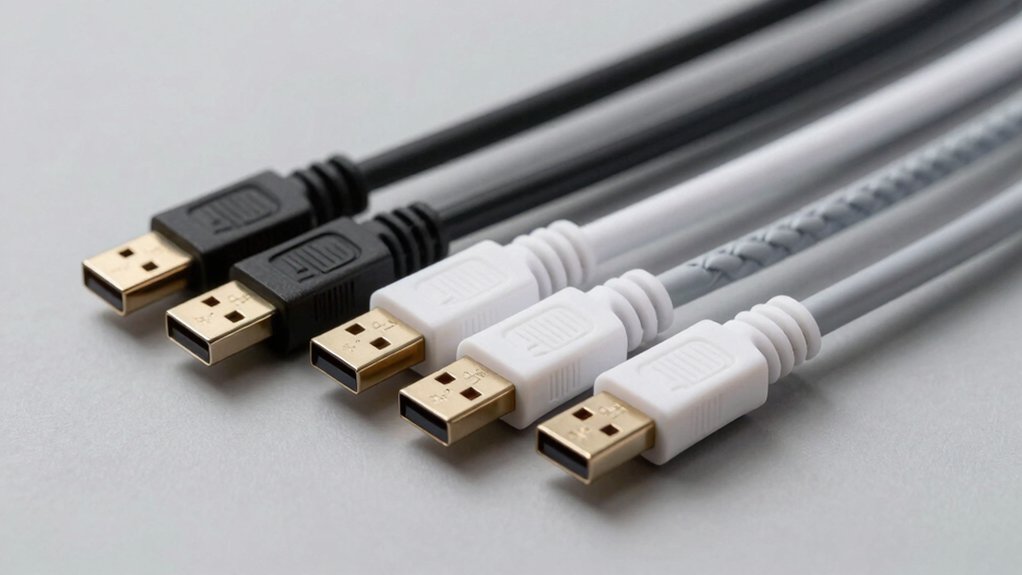

You need a USB printer cable that won’t fail after a few uses. Most cables break because they lack proper shielding, weak connectors, or flimsy strain relief. You’ll want to examine specific features—gold-plated connectors, braided jackets, and multi-layer protection—that determine whether a cable lasts months or years. The right choice depends on your printer type and cable length requirements. Here’s what separates durable cables from disposable ones.
| Amazon Basics USB-A to USB-B Cable 10 Foot |

| Budget-Friendly Basics | Cable Length: 10 feet | Connector Type: USB 2.0 Type A to Type B Male | Transfer Speed: 480 Mbps | VIEW LATEST PRICE | Read Our Analysis |
| USB Printer Cable 10FT Type A to B 2.0 |

| Best Value | Cable Length: 10 feet | Connector Type: USB 2.0 Type A to Type B Male | Transfer Speed: 480 Mbps | VIEW LATEST PRICE | Read Our Analysis |
| USB Printer Cable 10 ft Type A to B |

| Premium Durability | Cable Length: 10 feet | Connector Type: USB 2.0 Type A to Type B Male | Transfer Speed: 480 Mbps | VIEW LATEST PRICE | Read Our Analysis |
| MOSWAG USB Printer Cable 6.6FT Type A to B |

| Compact Pick | Cable Length: 6.6 feet (2 meters) | Connector Type: USB 2.0 Type A to Type B Male | Transfer Speed: 480 Mbps | VIEW LATEST PRICE | Read Our Analysis |
More Details on Our Top Picks
Amazon Basics USB-A to USB-B Cable 10 Foot
Looking for a reliable printer cable that won’t drain your budget? The Amazon Basics USB-A to USB-B Cable delivers dependable performance at an affordable price. This 10-foot cable connects your printer, external hard drive, or camera directly to your computer using USB 2.0 technology. You’ll get transfer speeds up to 480 Mbps, which handles most printing tasks without delays. The gold-plated connectors resist corrosion, extending the cable’s lifespan considerably. Multi-layer shielding protects against signal interference, ensuring consistent connectivity. The extra length gives you flexibility in positioning your devices. Choose this cable if you need a straightforward, durable solution for standard printer connections.
- Cable Length:10 feet
- Connector Type:USB 2.0 Type A to Type B Male
- Transfer Speed:480 Mbps
- Shielding & Durability:Gold-plated connectors with multi-shielded protection
- Device Compatibility:Printers, external hard drives, cameras, mice, keyboards
- Installation:Plug and play
- Additional Feature:Gold-plated corrosion-resistant connectors
- Additional Feature:Multi-shielded noise protection
- Additional Feature:High-speed USB 2.0 capability
USB Printer Cable 10FT Type A to B 2.0
The UorMe USB Printer Cable delivers reliable connectivity for under $20, making it an affordable option for anyone needing a 10-foot Type A to B connection. Gold-plated connectors resist corrosion while PVC shielding prevents signal interference. Supporting USB 2.0’s 480 Mbps transfer rate, it’s backward compatible with older USB standards. The cable works with HP, Canon, Epson, Brother, and Lexmark printers, plus scanners, DACs, and MIDI keyboards. Simply plug it into your device—no driver installation required. Its durable construction handles daily use without degradation, making it suitable for home offices and professional environments requiring dependable printer communication.
- Cable Length:10 feet
- Connector Type:USB 2.0 Type A to Type B Male
- Transfer Speed:480 Mbps
- Shielding & Durability:Gold-plated connectors with PVC shielding
- Device Compatibility:Printers, scanners, hard drives, cameras, MIDI keyboards, DACs
- Installation:Plug and play; no driver required
- Additional Feature:Backward compatible USB versions
- Additional Feature:Extensive device model compatibility
- Additional Feature:Plug-and-play no-driver installation
USB Printer Cable 10 ft Type A to B
If you’re tired of replacing printer cables every few months, here’s what you need: premium durability built into every inch. The Ruaeoda Studio-Pro Series delivers a military-grade double-braided nylon jacket that resists chair crushing and pet damage. Its extended ribbed strain relief design absorbs stress through 30,000 extreme bends without splitting. You’ll get 480Mbps transfer speeds with multi-layer EMI/RFI shielding for zero-latency performance. The space grey aluminum shell and precision-engineered Type-B male connectors ensure secure connections that won’t disconnect mid-task. Simply plug it in—no drivers required for Mac or PC. This cable handles printers, MIDI keyboards, and audio interfaces reliably.
- Cable Length:10 feet
- Connector Type:USB 2.0 Type A to Type B Male
- Transfer Speed:480 Mbps
- Shielding & Durability:Double-shielded nylon braid with aluminum shell; 30,000 extreme bends rated
- Device Compatibility:Printers, scanners, audio interfaces, MIDI keyboards, digital pianos
- Installation:Plug and play for Mac or PC without drivers
- Additional Feature:Space grey aluminum shell
- Additional Feature:Extended ribbed strain relief
- Additional Feature:Travel-friendly dust-proof pouch
MOSWAG USB Printer Cable 6.6FT Type A to B
Need a compact pick that connects your printer to your computer reliably? The MOSWAG cable delivers exactly that with its 6.6-foot length and USB 2.0 Type A-to-B connection. The 24-strand braided nylon jacket resists wear from repeated plugging and unplugging, extending the cable’s lifespan markedly. You’ll get plug-and-play functionality—no driver installation required—and transfer speeds up to 480 Mbps. This cable works with HP, Canon, Epson, Brother, and most USB-B devices. It’s backwards compatible with older USB versions if needed. The package includes one cable and a 12-month warranty, plus customer support for troubleshooting issues.
- Cable Length:6.6 feet (2 meters)
- Connector Type:USB 2.0 Type A to Type B Male
- Transfer Speed:480 Mbps
- Shielding & Durability:24-strand high-density braided nylon jacket
- Device Compatibility:Printers, scanners, servers, cameras, universal USB-B devices
- Installation:Plug and play; no drivers required
- Additional Feature:24-strand high-density braiding
- Additional Feature:Shorter 6.6ft compact length
- Additional Feature:12-month after-sale warranty
Factors to Consider When Choosing a USB Printer Cable
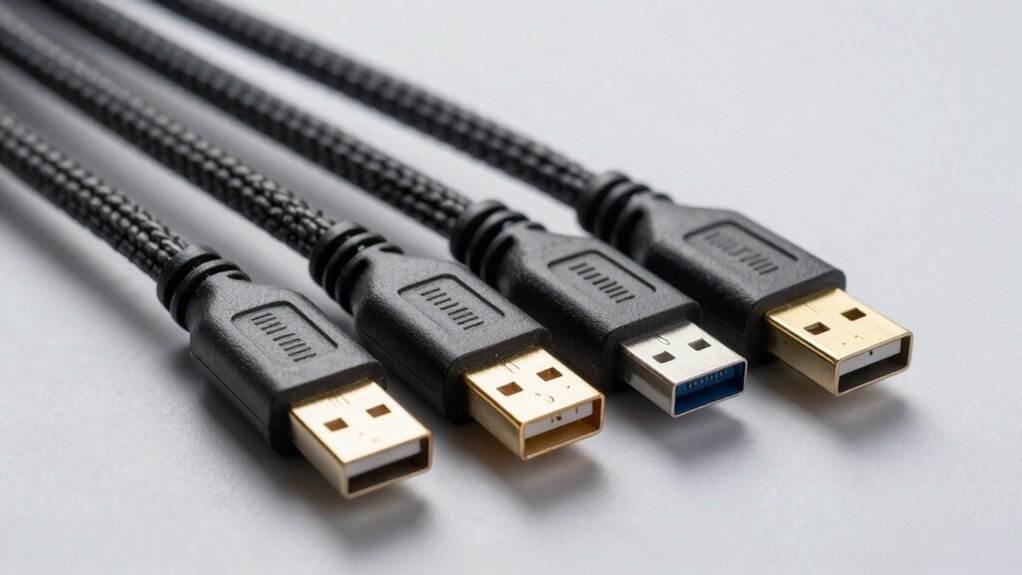
You’ll want to evaluate five key factors before purchasing a USB printer cable: first, measure the distance between your printer and computer to determine your cable length requirements; second, check both devices to confirm they use compatible connector types, such as USB Type A, Type B, or Type C; third, verify the cable supports your needed transfer speed, whether standard USB 2.0 or faster USB 3.0 specifications; fourth, examine the cable’s shielding and build quality to ensure it’ll withstand regular use without degrading; and fifth, confirm the cable works with your specific printer model and computer system. Each factor directly affects how well the cable will perform in your setup and how long it’ll remain functional. Skipping any of these steps risks purchasing a cable that won’t fit your devices, transfers data too slowly, or fails prematurely.
Cable Length Requirements
How long should your USB printer cable actually be? Match the cable length to the actual distance between your printer and computer. A 6–10 foot cable typically works well for standard desk setups without creating excess slack or tension that damages connectors. Longer cables, such as 10 feet, may cause minor signal degradation at USB 2.0’s 480 Mbps speed, so keep lengths practical for reliable data transfer. If you need to span greater distances, use active USB boosters or cables specifically designed for longer runs. Avoid excessively long cables in high-noise environments, where increased length magnifies interference and compromises data integrity. Measure your space first, then select a cable length that fits your layout exactly.
Connector Type Compatibility
What connectors does your printer actually need? You’ll find that most printers use USB Type A on the host computer and USB Type B on the printer itself. This pairing is the standard for data transfer between your computer and device. Before purchasing, verify your printer’s connector type—don’t assume all cables fit the same way. Check your printer’s manual or examine the port directly. Some newer printers use USB-C or micro-B connectors instead, requiring different cables or adapters. Gold-plated connectors and shielding help protect against corrosion and electromagnetic interference, maintaining reliable signal quality. Match your cable’s connectors precisely to both your computer and printer ports. Using mismatched connectors without proper adapters risks damaging your equipment or preventing connection entirely.
Transfer Speed Capabilities
When selecting a USB printer cable, understanding transfer speed matters because it determines how quickly data moves between your computer and printer. USB 2.0 cables support a maximum of 480 Mbps, which is the standard for most printer cables. You’ll find this speed sufficient for typical printing tasks. Don’t be misled by product listings claiming speeds in gigabits per second—these are errors. Verify cable specifications against the official USB 2.0 standard of 480 Mbps. Build quality features like gold-plated connectors and shielding don’t increase maximum speed, but they do maintain stable performance by reducing interference. All USB 2.0 printer cables work with older devices, offering backward compatibility with USB 1.1 and 1.0.
Durability And Shielding
Why your USB printer cable fails often comes down to two critical factors: the quality of its connectors and how well it’s shielded against interference. Gold-plated connectors resist corrosion and reduce wear from repeated use, extending the cable’s lifespan considerably. Multi-layer shielding with EMI/RFI protection minimizes electrical noise that disrupts signal stability. Look for cables featuring double-shielding and braided jackets—nylon or braided nylon options provide abrasion resistance against bending and pulling damage. Extended strain relief at connector joints prevents wire casing from splitting during frequent plugging and unplugging. Check product specifications for bend durability claims, such as 30,000 extreme bends, which indicate how well the cable withstands daily flex stress. These construction details directly determine how long your cable actually lasts.
Device Compatibility Range
Before you buy a USB printer cable, you’ll need to identify which connector type your device actually uses. Check your printer’s manual or examine the port directly—you’re looking for a USB-B port, which is square-shaped and slightly smaller than USB-A connectors. Next, confirm the brand compatibility. Most cables work with HP, Canon, Epson, Brother, Dell, and Lexmark printers, but verify your specific model matches the cable’s listed compatibility. Consider USB 2.0 cables, which support data transfer speeds up to 480 Mbps and work with older USB 1.1 devices. If you use MIDI keyboards, DACs, or digital pianos, those devices also accept USB A-to-B cables. Always double-check your device has a USB-B port before purchasing.
Final Thoughts
When you’re choosing a USB printer cable, you need to verify Type A to B compatibility, check gold-plated connectors, and confirm your printer brand supports the model. Buy cables with braided jackets and strain relief to prevent damage. Test the connection before relying on it for important printing tasks. Replace damaged cables immediately to avoid printer malfunction and data transfer issues.

Meet Ry, “TechGuru,” a 36-year-old technology enthusiast with a deep passion for tech innovations. With extensive experience, he specializes in gaming hardware and software, and has expertise in gadgets, custom PCs, and audio.
Besides writing about tech and reviewing new products, he enjoys traveling, hiking, and photography. Committed to keeping up with the latest industry trends, he aims to guide readers in making informed tech decisions.