
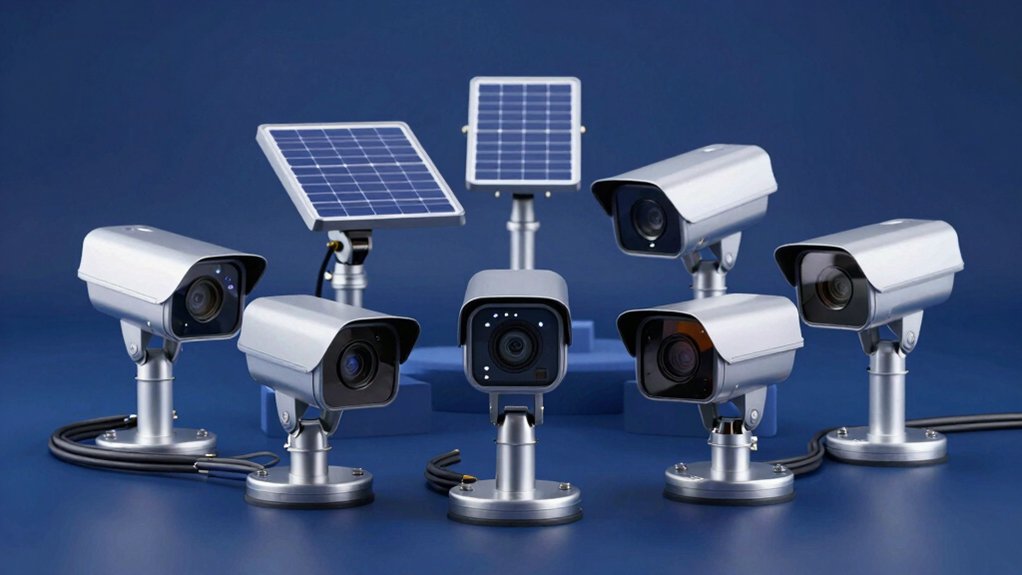

You’re choosing a solar security system with DVR that keeps working in any weather. You need to understand what makes these systems reliable: expandable camera channels, weatherproof construction, durable batteries, and dependable storage. The right system grows with your property without requiring expensive reinstallation. This guide walks you through five proven options and the key factors that separate systems that fail from those that don’t.
| xmartO Wireless Solar Security Camera System 4K WiFi6 |

| Best Overall Performance | Solar Power Type: Solar panels with 9000mAh rechargeable batteries; 5V USB charging option | Night Vision: Up to 150ft black-and-white IR; up to 20ft color with floodlights | Local Storage Capacity: 64GB standard; expandable up to 6TB SATA HDD | VIEW LATEST PRICE | Read Our Analysis |
| Hiseeu Solar Security Cameras Wireless Outdoor System (8-Cam) |

| Best for Large Properties | Solar Power Type: Solar-powered; 4 hours direct sunlight daily sustains operation | Night Vision: Color night vision; 135° wide-angle lens | Local Storage Capacity: 1TB HDD included; supports up to 256GB SD card or 8TB HDD | VIEW LATEST PRICE | Read Our Analysis |
| Wireless Outdoor Security Camera System Solar Powered WiFi |
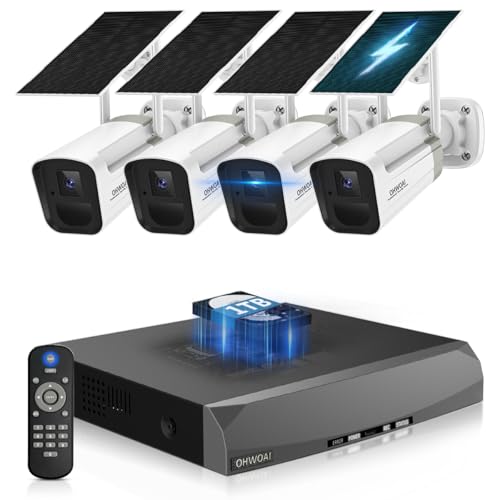
| Most Affordable Option | Solar Power Type: Solar panel included; rechargeable lithium battery with direct charging support | Night Vision: Automatic infrared night vision; crisp detail in darkness | Local Storage Capacity: No storage capacity specified | VIEW LATEST PRICE | Read Our Analysis |
| Kittyhok Solar Security Camera System 4-Pack 2K |
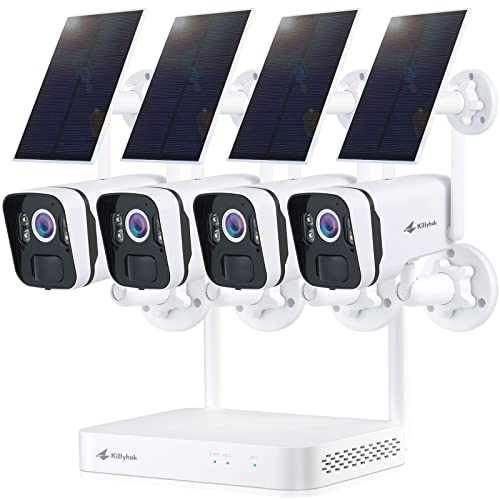
| Best Budget Pick | Solar Power Type: Solar-powered; 3 hours direct sunlight daily sustains operation | Night Vision: Color night vision up to 8 meters; 600 lumens spotlight | Local Storage Capacity: 60 days local storage | VIEW LATEST PRICE | Read Our Analysis |
| Hiseeu Solar Security Camera Outdoor 4MP Wireless |
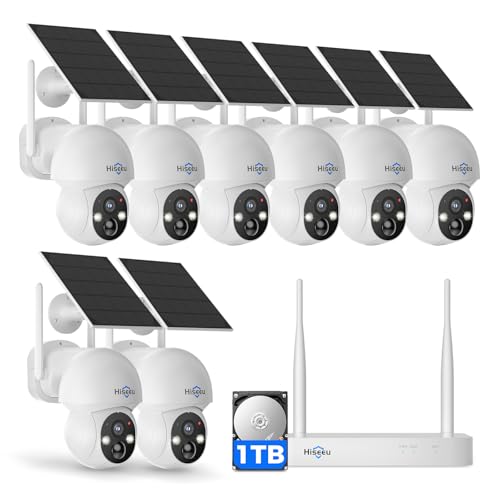
| Best Compact System | Solar Power Type: 100% solar-powered; 19.24 Watt Hours capacity | Night Vision: 4MP HD color night vision; 65 feet range | Local Storage Capacity: 500GB HDD pre-installed; up to 90 days loop recording | VIEW LATEST PRICE | Read Our Analysis |
More Details on Our Top Picks
xmartO Wireless Solar Security Camera System 4K WiFi6
How do you monitor your property around the clock without monthly fees or complex wiring? The xmartO system delivers four wire-free solar cameras with a 10-channel WiFi6 NVR. You plug the NVR into a screen, power on the cameras, and start monitoring instantly. The 9000mAh batteries charge daily via solar panels, operating through sun, rain, and snow. You’ll receive instant app alerts with snapshots when the system detects people, vehicles, or animals. The 64GB storage holds 120+ days of event videos locally, expandable to 6TB. Cameras reach 1300 feet from the NVR and deliver 4MP video with 150-foot night vision, eliminating installation hassles entirely.
- Solar Power Type:Solar panels with 9000mAh rechargeable batteries; 5V USB charging option
- Night Vision:Up to 150ft black-and-white IR; up to 20ft color with floodlights
- Local Storage Capacity:64GB standard; expandable up to 6TB SATA HDD
- Motion Detection:PIR detection with 91%+ false alert reduction; people/vehicle/animal detection
- Two-Way Audio:Built-in 2-way audio and siren alarm
- Camera Resolution:4MP 2K QHD cameras
- Additional Feature:WiFi6 long-range connectivity (1300ft)
- Additional Feature:Expandable storage up to 6TB
- Additional Feature:4-in-1 IR & floodlight LEDs
Hiseeu Solar Security Cameras Wireless Outdoor System (8-Cam)
Are you securing multiple structures across sprawling acreage? The Hiseeu 8-camera kit expands to 10 cameras, covering farms, garages, and multi-room properties. Install within 5 minutes using adjustable brackets and three drill holes. The solar-powered system requires no WiFi for local monitoring—connect the base-station directly to your TV. For remote access while traveling, enable dual-band WiFi on your phone or tablet. Each 4MP camera features IP66 weatherproofing, 135° wide-angle viewing, and color night vision. PIR and AI motion detection distinguish humans, vehicles, and pets, sending real-time notifications. The included 1TB HDD records 6–8 months of footage with loop recording. Your system needs just 4 hours of direct sunlight daily to operate year-round off-grid.
- Solar Power Type:Solar-powered; 4 hours direct sunlight daily sustains operation
- Night Vision:Color night vision; 135° wide-angle lens
- Local Storage Capacity:1TB HDD included; supports up to 256GB SD card or 8TB HDD
- Motion Detection:PIR/AI motion detection; human, vehicle, pet detection available
- Two-Way Audio:2-way audio; smart siren and white light alert
- Camera Resolution:4MP HD resolution
- Additional Feature:Expandable to 10 cameras
- Additional Feature:Extended loop recording (6-8 months)
- Additional Feature:Offline local monitoring capability
Wireless Outdoor Security Camera System Solar Powered WiFi
For homeowners seeking reliable outdoor surveillance without installation complexity, this solar-powered wireless system represents the most affordable option that doesn’t compromise on essential features. You’ll install the camera anywhere using its rechargeable battery and included solar panel—no wiring required. The smart PIR motion detector activates recording when movement occurs, reducing false alerts. You’ll monitor live video through the HonestView app on your phone, receive motion notifications instantly, and use two-way audio to communicate with visitors or deter intruders. Infrared night vision automatically engages in low light, delivering clear footage around the clock. This subscription-free setup provides complete surveillance independence.
- Solar Power Type:Solar panel included; rechargeable lithium battery with direct charging support
- Night Vision:Automatic infrared night vision; crisp detail in darkness
- Local Storage Capacity:No storage capacity specified
- Motion Detection:Smart PIR motion detection; minimizes false alarms
- Two-Way Audio:Built-in microphone and speaker for phone communication
- Camera Resolution:Resolution not specified
- Additional Feature:Direct battery charging option
- Additional Feature:Automatic infrared night mode
- Additional Feature:HonestView app monitoring
Kittyhok Solar Security Camera System 4-Pack 2K
The Kittyhok Solar Security Camera System 4-Pack 2K delivers budget-friendly surveillance without monthly fees or battery replacements. You’ll need three hours of direct sunlight daily to keep cameras powered indefinitely. The built-in battery sustains operation during night or rain. Motion-activated 600-lumen spotlights deter intruders while color night vision detects details up to eight meters in darkness. Person detection filters false alerts, sending meaningful notifications through the app. Local 60-day storage keeps footage on-device for security. You can expand the system to ten cameras using the compatible NVR, adding battery cameras or WiFi options as needed.
- Solar Power Type:Solar-powered; 3 hours direct sunlight daily sustains operation
- Night Vision:Color night vision up to 8 meters; 600 lumens spotlight
- Local Storage Capacity:60 days local storage
- Motion Detection:Person detection reduces false notifications
- Two-Way Audio:Not specified
- Camera Resolution:2K resolution
- Additional Feature:600 lumens motion-activated spotlight
- Additional Feature:Expandable to 10 cameras
- Additional Feature:On-device processing/no cloud dependency
Hiseeu Solar Security Camera Outdoor 4MP Wireless
Hiseeu’s 4MP wireless solar system delivers compact, all-in-one security without the bulk of larger setups. You’ll connect the pre-paired NVR to your monitor using VGA or HDMI, then mount the two cameras outdoors. The solar panels power both units continuously, eliminating battery concerns. You get 500GB of encrypted storage with loop recording up to 90 days and no monthly fees. The 4MP cameras capture clear color night vision within 65 feet, while 360° pan-tilt coverage with 120° viewing angles per camera covers your property. Motion detection triggers automatic recording, and two-way audio lets you communicate remotely through the app.
- Solar Power Type:100% solar-powered; 19.24 Watt Hours capacity
- Night Vision:4MP HD color night vision; 65 feet range
- Local Storage Capacity:500GB HDD pre-installed; up to 90 days loop recording
- Motion Detection:Automatic recording on motion; motion and audio alerts
- Two-Way Audio:2-way audio; light or sound alerts to deter intruders
- Camera Resolution:4MP HD color night vision
- Additional Feature:360° pan and tilt capability
- Additional Feature:90-day loop recording capacity
- Additional Feature:H.265 video encoding technology
Factors to Consider When Choosing a Standalone Solar Security System With DVR
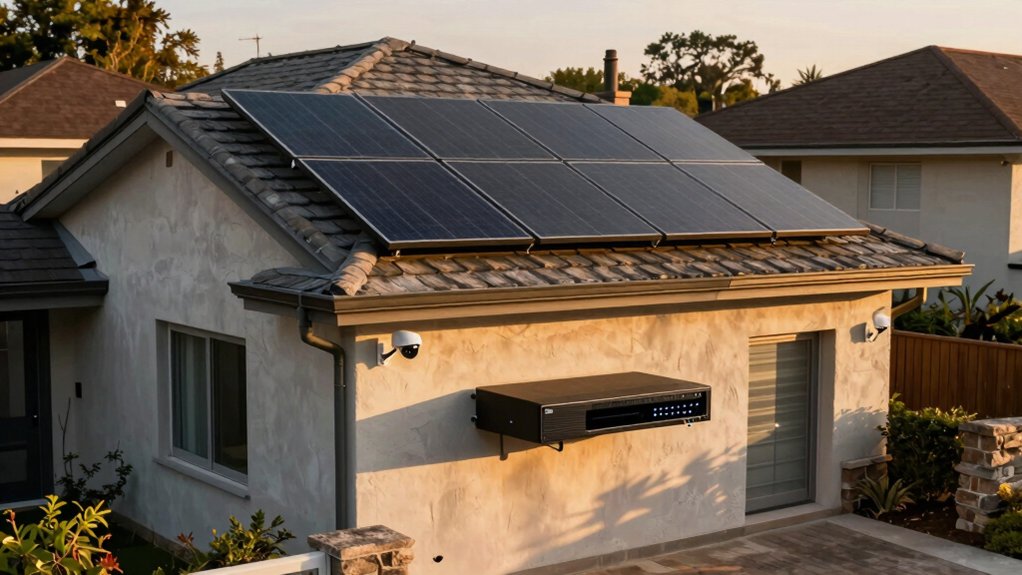
When you’re choosing a standalone solar security system with DVR, you’ll need to evaluate five critical factors: power and battery capacity to ensure continuous operation during low-light periods, storage and recording duration to determine how many days of footage your system can retain, night vision and imaging quality to guarantee clear video in darkness, wireless connectivity range to confirm the system reaches your property’s farthest points, and weather resistance and durability to verify the equipment can withstand your local climate conditions. Start by assessing your location’s sunlight exposure and average cloud cover, then match that data against the system’s battery specifications and solar panel wattage. Next, calculate your required storage by multiplying the number of cameras by the daily footage amount, then confirm the DVR can handle that capacity while meeting your desired retention period.
Power And Battery Capacity
How can you guarantee your solar security system won’t fail when you need it most? Check the battery capacity first—look for automotive-grade batteries rated at 9000mAh or higher. Verify the system recharges daily through solar panels, even during cloudy weather. Confirm the batteries support 24/7 operation by checking cycle life specifications, which indicate how long they’ll perform over extended use. Review battery type and quantity to understand total energy storage. Test whether the system sustains operation during night hours and adverse weather like rain or snow. If solar power proves insufficient, confirm the system accepts 5V USB charging as a backup option. These steps ensure your DVR continues monitoring regardless of weather or daylight conditions.
Storage And Recording Duration
What storage capacity does your solar security system actually need? Start by calculating your daily footage volume based on camera resolution and recording settings. Higher-resolution cameras like 4MP or 4K consume more storage per hour, reducing retention unless you increase drive capacity. Next, determine your required retention period—most systems with 64GB to 1TB HDDs retain 60–120+ days of event video using loop recording. Loop recording automatically overwrites oldest footage when storage fills, eliminating manual cleanup. Finally, consider expandable storage options up to 6TB SATA HDDs to extend recording duration significantly. Match your storage choice to your resolution and retention needs, then verify your system supports the drive size you’ve selected.
Night Vision And Imaging
Once you’ve secured adequate storage for your recorded footage, you’ll need to evaluate your system’s night vision capabilities to ensure you’re capturing usable images around the clock. Check whether your camera uses infrared LEDs for black-and-white footage or floodlights for color imaging. IR systems typically reach 150 feet in total darkness but deliver monochrome video. Color night vision performs best within 20 feet when floodlights activate. Consider your camera’s sensor resolution—2K or 4MP models provide clearer low-light details than lower specs. Assess your property’s lighting conditions and identify areas requiring color identification versus basic motion detection. Match your night vision choice to these specific needs, prioritizing resolution quality and illumination type for reliable 24-hour monitoring.
Wireless Connectivity Range
Why’s your camera’s connection to the DVR so important? A weak link means dropped footage and security gaps. Wireless range in standalone solar systems typically spans hundreds to over a thousand feet, depending on line of sight and obstacles. You’ll want to evaluate your property layout first—identify trees, buildings, and walls between cameras and the DVR base station. Dual-band WiFi (2.4G/5G) or WiFi6 extends reliable communication, especially through barriers. Mount your base station at an elevated position to maximize signal strength. Check the system’s advertised range in open space (often 400 meters), then reduce expectations by 30–50 percent for real-world conditions. Weather and interference further impact stability. Test your setup before final installation to confirm coverage across all camera locations.
Weather Resistance And Durability
Because outdoor security cameras face constant exposure to rain, snow, wind, and temperature swings, you’ll need to prioritize weather resistance and durability when selecting a standalone solar DVR system. Check for an IP rating of at least IP66, which certifies dust and water resistance. Verify that the system uses weatherproof enclosures and seals capable of withstanding harsh conditions. Confirm the solar-powered components have robust housings designed for temperature fluctuations. Review tested operating ranges and climate certifications to ensure performance in your specific region. Examine the materials used—prioritize corrosion-resistant metals and UV-protected plastics that won’t degrade over time. These specifications directly determine how long your system functions reliably without maintenance or replacement issues.
Expandability And System Scalability
How will your security setup handle growth? Check the maximum camera capacity your base station or NVR supports—typically 8–10 channels. Verify that wireless or plug-and-play expansion options let you add cameras without extensive reconfiguration. Confirm storage upgrade paths so you can increase hard drive capacity from 500GB to 1TB or larger as you add more cameras. Ensure all cameras use the same app ecosystem, firmware, and mounting formats to prevent hardware obsolescence. Review compatibility requirements before purchasing additional units. This approach prevents costly system replacements when expanding your network. Plan your expandability needs upfront by selecting a system designed for growth, allowing seamless camera integration without reconfiguring your entire setup.
Final Thoughts
You’ll want to select a solar security system based on your specific needs: determine how many cameras you need, check if the system supports expansion to 8–10 channels, verify the battery capacity and solar panel output, confirm IP66 weatherproofing, and review storage options. Compare the five systems outlined, prioritize reliability and expandability, then purchase the model that matches your property size and budget requirements.

Meet Ry, “TechGuru,” a 36-year-old technology enthusiast with a deep passion for tech innovations. With extensive experience, he specializes in gaming hardware and software, and has expertise in gadgets, custom PCs, and audio.
Besides writing about tech and reviewing new products, he enjoys traveling, hiking, and photography. Committed to keeping up with the latest industry trends, he aims to guide readers in making informed tech decisions.