
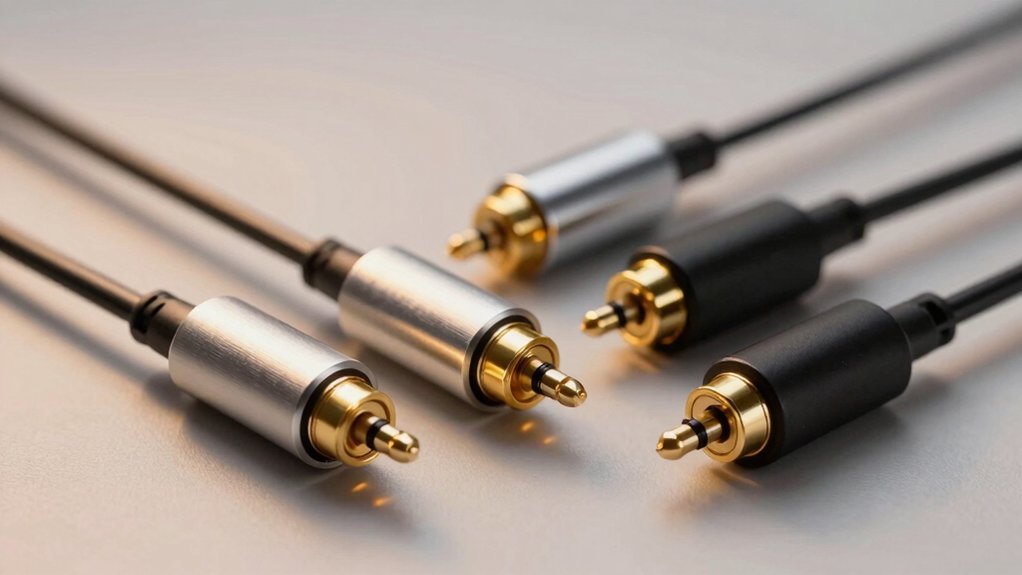

You need a way to connect your TV, gaming console, or laptop’s optical output to speakers or headphones with a 3.5mm jack. Optical-to-aux adapters solve this problem by converting digital signals into analog audio you can actually use. These compact DAC converters handle high-quality sound up to 192 kHz without requiring driver installations. But which model delivers reliable performance for your specific setup?
| eSynic Optical to 3.5mm Audio Adapter DAC Converter |

| Best Overall | Maximum Sample Rate: 192kHz/24-bit | Built-in Amplifier: Yes | Volume Control Method: External speaker/amplifier | VIEW LATEST PRICE | Read Our Analysis |
| 192KHz Optical to 3.5mm Audio Converter DAC |

| Best Value | Maximum Sample Rate: 192kHz/24-bit | Built-in Amplifier: No | Volume Control Method: External playback device | VIEW LATEST PRICE | Read Our Analysis |
| eSynic Optical to 3.5mm Audio Adapter DAC Converter |

| Premium Build Quality | Maximum Sample Rate: 192kHz/24-bit | Built-in Amplifier: Yes | Volume Control Method: External speaker/amplifier | VIEW LATEST PRICE | Read Our Analysis |
| 192KHz DAC Optical to 3.5mm Audio Converter |
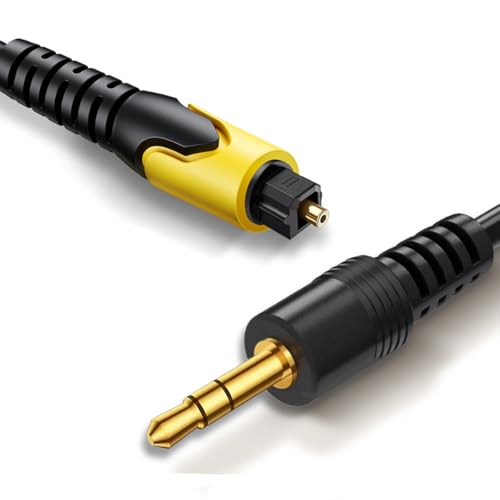
| Most Affordable | Maximum Sample Rate: 192kHz/24-bit | Built-in Amplifier: No | Volume Control Method: External playback device | VIEW LATEST PRICE | Read Our Analysis |
| LiNKFOR 3.5mm to SPDIF Digital Audio Converter |

| Best For Amplifiers | Maximum Sample Rate: 48kHz | Built-in Amplifier: No | Volume Control Method: N/A (not applicable) | VIEW LATEST PRICE | Read Our Analysis |
| 192KHz Optical to 3.5mm Audio Converter Cable |

| Best For Beginners | Maximum Sample Rate: 192kHz/24-bit | Built-in Amplifier: No | Volume Control Method: External speaker/headphone | VIEW LATEST PRICE | Read Our Analysis |
| AUTOUTLET 192kHz DAC Optical to 3.5mm Audio Converter |

| Best With Volume Control | Maximum Sample Rate: 192kHz/24-bit | Built-in Amplifier: Yes | Volume Control Method: Built-in knob | VIEW LATEST PRICE | Read Our Analysis |
More Details on Our Top Picks
eSynic Optical to 3.5mm Audio Adapter DAC Converter
If you’re connecting a TV, PS4, or Blu-ray player to headphones or speakers through a 3.5mm aux jack, the eSynic adapter stands out by combining a built-in amplifier chip with 24-bit/192kHz DAC conversion in one plug-and-play device. Setup requires three steps: connect the optical cable from your source device, plug the 3.5mm output into your headphones or speakers, and attach the included USB power cable. You’ll need to configure your TV’s digital audio output to PCM mode—navigate to settings on Samsung, LG, or Sony models to enable this. The adapter delivers five times clearer audio than standard converters. Note that it handles PCM format only, not Dolby or DTS, and doesn’t work with soundbars or RCA systems.
- Maximum Sample Rate:192kHz/24-bit
- Built-in Amplifier:Yes
- Volume Control Method:External speaker/amplifier
- Cable Length:7 feet
- Audio Format Support:PCM only
- Power Requirement:5V/1A USB (not included)
- Additional Feature:24-Bit PCM decoding capability
- Additional Feature:Aluminum metal shell construction
- Additional Feature:18-month warranty included
192KHz Optical to 3.5mm Audio Converter DAC
Want to hear your TV’s audio through headphones or speakers without breaking your budget? The Tackston converter handles this task efficiently. Connect your TV’s optical output to the device’s optical input using an optical cable. Then plug your headphones or speakers into the 3.5mm jack. Connect the included USB power cable to any 5V USB port to activate the converter. Set your TV’s digital audio output to PCM or Stereo mode. The device processes signals up to 192KHz and 24-bit quality, ensuring clear sound. You’ll adjust volume through your playback device since TV remote control won’t work here. This setup works especially well for late-night viewing or hearing-impaired users who need personalized audio levels.
- Maximum Sample Rate:192kHz/24-bit
- Built-in Amplifier:No
- Volume Control Method:External playback device
- Cable Length:Not specified
- Audio Format Support:PCM/Stereo
- Power Requirement:5V USB power
- Additional Feature:Auto-muting idle static chip
- Additional Feature:4-pin interface connector
- Additional Feature:Single-channel unidirectional design
eSynic Optical to 3.5mm Audio Adapter DAC Converter
The eSynic Optical to 3.5mm Audio Adapter DAC Converter delivers premium build quality for anyone connecting modern entertainment devices to standard headphones or speakers. This 7-foot adapter converts optical signals from your HDTV, Blu-Ray player, or gaming console into 3.5mm audio. It features a built-in 192 kHz DAC chip supporting PCM 24-bit/192 kHz with 105 dB signal-to-noise ratio. Setup requires connecting your optical cable to the adapter’s input, plugging the 3.5mm output into your speakers or headphones, and supplying 5V/1A USB power. The aluminum housing shields against interference, and auto-detection handles 32–192 kHz sources automatically. Note that it outputs stereo PCM only—no surround sound formats like Dolby or DTS.
- Maximum Sample Rate:192kHz/24-bit
- Built-in Amplifier:Yes
- Volume Control Method:External speaker/amplifier
- Cable Length:7 feet
- Audio Format Support:PCM only
- Power Requirement:5V/1A USB (not included)
- Additional Feature:105 dB SNR specification
- Additional Feature:Auto-detects 32-192 kHz
- Additional Feature:Aluminum alloy interference shielding
192KHz DAC Optical to 3.5mm Audio Converter
Tackston’s optical to 3.5mm converter handles TV audio conversion at the most affordable price point in this lineup. You’ll connect your TV’s optical output to the Toslink port, then plug headphones or speakers into the 3.5mm jack. The device supports up to 192KHz audio quality and requires a USB power connection. Set your TV to PCM or stereo output format before connecting. Remember that you’ll control volume on your playback device, not your TV remote. This converter works one direction only—optical to aux—so you can’t reverse the signal flow.
- Maximum Sample Rate:192kHz/24-bit
- Built-in Amplifier:No
- Volume Control Method:External playback device
- Cable Length:Not specified
- Audio Format Support:PCM/Stereo
- Power Requirement:5V USB power
- Additional Feature:Toslink optical connector type
- Additional Feature:0.1 kg lightweight design
- Additional Feature:Hearing-impaired user accessibility
LiNKFOR 3.5mm to SPDIF Digital Audio Converter
Looking to connect your 3.5mm audio source directly to amplifiers? The LiNKFOR converter transforms analog 3.5mm signals into digital optical audio for seamless integration. You’ll plug the included 1.2-meter 3.5mm cable into your device, then connect the optical output to your soundbar, amplifier, or home theater system. This adapter supports 2-channel PCM audio at 48KHz sampling rate, delivering uncompressed digital sound. Its compact, lightweight design fits easily into cable bundles. The plug-and-play installation requires no drivers or additional setup. Compatible with TVs, computers, projectors, and gaming consoles, this converter handles multiple source devices without reconfiguration.
- Maximum Sample Rate:48kHz
- Built-in Amplifier:No
- Volume Control Method:N/A (not applicable)
- Cable Length:1.2 meters (3.9 feet)
- Audio Format Support:2-channel PCM
- Power Requirement:Not specified
- Additional Feature:Converts 3.5mm to optical
- Additional Feature:1.2m built-in cable included
- Additional Feature:Soundbar/amplifier compatibility support
192KHz Optical to 3.5mm Audio Converter Cable
Want digital TV audio through your headphones or speakers? This converter cable accepts optical signals from your TV and outputs them through a 3.5mm jack. First, connect the optical cable to your TV’s digital audio port. Next, plug the 3.5mm end into your headphones or speakers. Then, attach the included USB cable to a 5V power source—the converter requires power to function. Set your TV’s audio output to PCM or Stereo format. Finally, adjust volume using your headphone or speaker controls, not your TV remote. The cable handles sample rates up to 192KHz at 24-bit quality. Note: this converter only works one direction; you can’t send 3.5mm signals back to optical.
- Maximum Sample Rate:192kHz/24-bit
- Built-in Amplifier:No
- Volume Control Method:External speaker/headphone
- Cable Length:Not specified
- Audio Format Support:PCM/Stereo
- Power Requirement:5V USB power
- Additional Feature:Female 3.5mm connector output
- Additional Feature:24-bit data stream support
- Additional Feature:Hearing-impaired viewing enablement
AUTOUTLET 192kHz DAC Optical to 3.5mm Audio Converter
Need an adapter that handles high-quality audio without losing clarity? The AUTOUTLET converter transforms optical digital signals into 3.5mm analog output, supporting up to 192 kHz and 24-bit audio. You’ll connect your HDTV, DVD player, or set-top box’s optical port directly to this device. The built-in amplifier chip boosts your 3.5mm headphones, wireless speakers, or Bose systems without quality loss. Before connecting, set your TV’s audio output to PCM mode through your device’s settings menu. The integrated 3.5mm cable and compact design eliminate clutter, making installation straightforward and space-efficient.
- Maximum Sample Rate:192kHz/24-bit
- Built-in Amplifier:Yes
- Volume Control Method:Built-in knob
- Cable Length:Not specified
- Audio Format Support:PCM only
- Power Requirement:Not specified
- Additional Feature:Built-in volume control knob
- Additional Feature:Integrated 3.5mm cable design
- Additional Feature:Amplifier chip boost technology
Factors to Consider When Choosing a Portable Optical to Aux Adapter
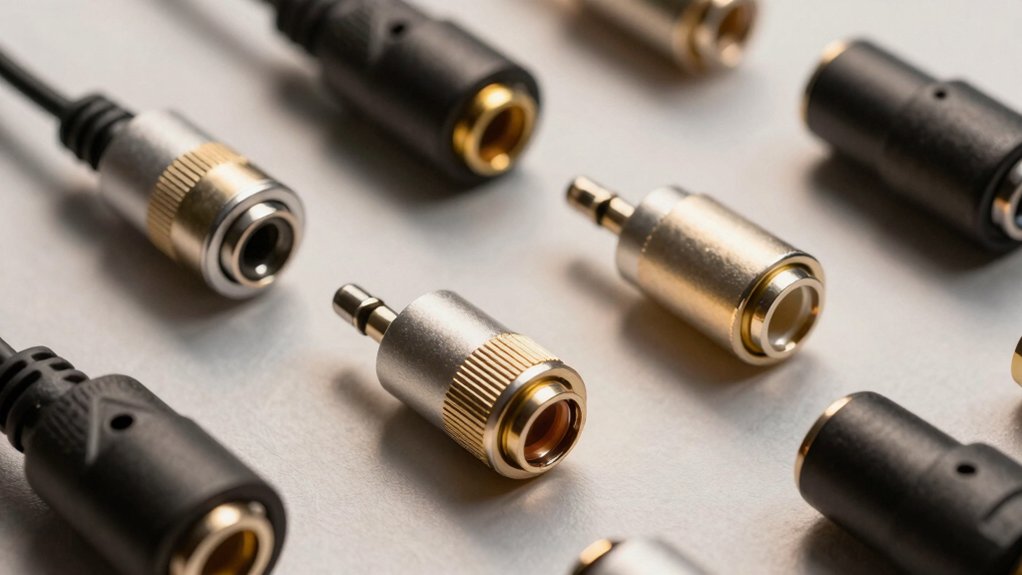
When you’re choosing a portable optical to aux adapter, you’ll need to evaluate five key factors: audio quality standards that match your equipment’s specifications, power supply requirements that fit your setup, cable length and materials that suit your space, device compatibility to ensure it works with your gear, and setup ease so you can get it running quickly. Start by checking the adapter’s supported audio formats and sample rates against your devices’ capabilities, then verify whether it needs external power or runs on USB power alone. Finally, measure your required cable length, confirm compatibility with your specific devices, and review the installation process to avoid buying something that requires complicated configuration.
Audio Quality Standards
How can you tell if an optical-to-aux adapter will deliver the sound quality you’re paying for? Check the adapter’s SNR (signal-to-noise ratio) and THD (total harmonic distortion) specifications. A higher SNR—typically 105 dB or better—means less background noise. Lower THD values, around -90 dB, indicate minimal distortion. Verify that your source outputs PCM audio at 32–192 kHz sample rates, since most adapters support only PCM and can’t decode Dolby Digital or DTS formats. Confirm your TV or device outputs the correct audio format; misconfigured settings cause silent or degraded playback. Look for metal housings and shielding to reduce electromagnetic interference. If the adapter includes a built-in amplifier, it’ll drive headphones louder with better dynamic range than unpowered models.
Power Supply Requirements
Most portable optical-to-aux adapters won’t function without a 5V USB power supply connected to the device. You’ll need to provide this power through a dedicated USB cable—don’t rely on your TV’s USB port to deliver it automatically.
Check your adapter’s specifications for the current rating. Most models require 1A or higher to operate stably and support built-in amplification. Some adapters specify “USB power 5V/1A,” while others simply state 5V USB power.
If you’re using battery-powered USB power, verify it delivers steady 5V output. Inconsistent voltage causes audio dropouts and noise. Purchase a quality USB power adapter rated for your device’s requirements, or use a reliable portable battery pack that maintains consistent power delivery throughout your listening session.
Cable Length And Materials
Why does cable length matter for your optical-to-aux adapter setup? You’ll need to measure the distance from your audio source to your headphones or speakers. Most adapters offer 7 feet of cable, which reaches TVs or gaming consoles from typical seating areas. Check your specific layout before purchasing.
Materials affect durability and signal quality. Aluminum or alloy shells protect internal components and reduce interference along the cable’s length. This shielding prevents audio degradation over longer distances.
Consider the auxiliary output cable separately. Your included aux cable determines how far you can position headphones or external speakers from the adapter itself. Longer aux cables provide flexibility but require additional management space. Match cable lengths to your room’s setup for optimal performance.
Compatibility With Devices
When you’re choosing an optical-to-aux adapter, you’ll need to verify that your devices support the adapter’s capabilities and limitations. First, check whether your TV or audio source outputs PCM audio, not bitstream format—bitstream signals won’t convert properly. Second, confirm your destination device has a 3.5mm AUX input jack. Third, verify your adapter receives 5V USB power and locate an available USB port nearby. Fourth, test whether your source device outputs stereo PCM only, since most adapters don’t decode Dolby Digital or DTS formats. Finally, determine if you need built-in volume control or if your speakers provide it. Checking these compatibility factors prevents purchasing an adapter that won’t function with your equipment.
Setup And Configuration Ease
How simple is it to get your adapter working? Most models are plug-and-play—you connect your optical source directly to the adapter, then plug your headphones or speakers into the 3.5mm output. No drivers are required. However, you’ll need to supply power via a 5V USB port, which isn’t always included in the package. Check your adapter’s specifications before purchasing. Next, configure your TV’s digital audio output to PCM or Stereo mode to ensure compatibility and proper playback. Some units auto-detect PCM formats and support input ranges of 32–192 kHz. Keep in mind that certain adapters don’t support Dolby or DTS outputs, and they work unidirectionally only—optical input to 3.5mm output, with no reverse conversion capability.
Format Support Limitations
Most portable optical-to-aux adapters you’ll encounter support PCM audio only, which means they can’t process Dolby Digital or DTS surround sound formats—a significant limitation if your source device outputs these multi-channel formats.
You’ll also find that many adapters output only 2.0 stereo instead of 5.1 or 7.1 surround sound, even when your source supports it. Check your adapter’s specifications for maximum sample rate and bit depth; most handle up to 192 kHz at 24-bit, but some models max out lower.
Before purchasing, verify that your source device can output PCM audio. Set your source to PCM mode explicitly, as some adapters require this setting for proper playback, regardless of their auto-detection capabilities.
Build Durability And Shielding
Durability and shielding directly affect your adapter’s performance and lifespan. Choose adapters with aluminum or metal alloy housings instead of plastic shells. Metal enclosures block electromagnetic interference and reduce ground loop hum that degrades audio quality. Look for built-in DAC chips housed in metal cases, which minimize external electromagnetic interference affecting your 3.5mm output signal. Verify the adapter includes proper shielding to limit Radio Frequency Interference from nearby electronics. Select compact designs with 7-foot cables and robust metal shells to resist cable strain during daily handling. Properly shielded adapters reduce noise and idle static, delivering quieter operation when using PCM 2.0 audio. Inspect connectors for secure construction and examine cable jacket quality before purchasing. These specifications ensure reliable performance and extended durability.
Final Thoughts
You’ve reviewed seven reliable optical-to-aux adapters that deliver consistent performance. To select the right one, match your needs: consider cable length, power requirements, and compatibility with your devices. Verify your source outputs PCM audio in stereo mode. Connect the optical cable to your device, plug in USB power, and attach the 3.5mm jack to your speakers or headphones. You’ll get artifact-free sound without installing drivers.

Meet Ry, “TechGuru,” a 36-year-old technology enthusiast with a deep passion for tech innovations. With extensive experience, he specializes in gaming hardware and software, and has expertise in gadgets, custom PCs, and audio.
Besides writing about tech and reviewing new products, he enjoys traveling, hiking, and photography. Committed to keeping up with the latest industry trends, he aims to guide readers in making informed tech decisions.