

You’re building a Linux server setup and need reliable hardware that won’t drain your budget or energy costs. Mini PCs offer compact solutions with genuine processing power—from the budget-friendly GMKtec N95 to the high-performance i9 workstations. Each model brings different strengths for your specific needs, whether you’re running Proxmox clusters or managing remote infrastructure. The right choice depends on your workload demands and cooling requirements, which we’ll break down next.
| GMKtec Mini PC N95 with 8GB RAM 256GB SSD |

| Budget-Friendly Pick | Processor Generation & Performance Tier: 12th Gen Intel N95 (4C/4T, up to 3.4GHz) – entry-level | RAM & Storage Configuration: 8GB DDR4 RAM / 256GB SSD | Display Outputs & Capability: Dual HDMI 2.0 (4K@60Hz) | VIEW LATEST PRICE | Read Our Analysis |
| GMKtec Mini PC G3 PRO Intel Core i3-10110U |

| Best Value | Processor Generation & Performance Tier: 10th Gen Intel Core i3-10110U (4C/4T, up to 4.1GHz) – mid-range | RAM & Storage Configuration: 16GB DDR4 RAM / 512GB SSD (expandable to 64GB) | Display Outputs & Capability: Dual HDMI 2.0 (4K@60Hz) | VIEW LATEST PRICE | Read Our Analysis |
| BOSGAME E4 Mini PC with AMD Ryzen 5 |

| Best For Multitasking | Processor Generation & Performance Tier: AMD Ryzen 5 3550H (4C/8T, up to 3.7GHz) – mid-range | RAM & Storage Configuration: 16GB DDR4 RAM / 512GB PCIe SSD | Display Outputs & Capability: Triple displays via HDMI, DisplayPort, USB-C (4K capable) | VIEW LATEST PRICE | Read Our Analysis |
| GMKtec Mini PC Workstation Intel Core i9 13900HK |

| Professional Grade | Processor Generation & Performance Tier: 13th Gen Intel Core i9-13900HK (14C/20T, up to 5.4GHz) – high-performance | RAM & Storage Configuration: 32GB DDR5 RAM / 1TB NVMe SSD (expandable to 12TB) | Display Outputs & Capability: Quad-screen: 2x HDMI 2.0, 1x DisplayPort 1.4 (8K@60Hz), 1x USB Type-C | VIEW LATEST PRICE | Read Our Analysis |
| Fanless Mini PC Industrial Computer 8GB RAM 128GB SSD |

| Best For Industrial | Processor Generation & Performance Tier: Intel Celeron N2840 (2C/2T, up to 2.58GHz) – entry-level | RAM & Storage Configuration: 8GB DDR3L RAM / 128GB SSD | Display Outputs & Capability: HDMI & VGA (4K@60Hz) | VIEW LATEST PRICE | Read Our Analysis |
| ACEMAGIC M1 Mini PC Intel Core i9-11900H 32GB 1TB |
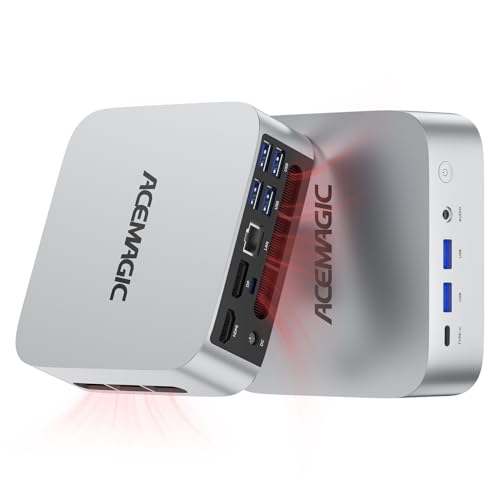
| Editor’s Choice | Processor Generation & Performance Tier: 11th Gen Intel Core i9-11900H (8C/16T, up to 4.9GHz) – high-performance | RAM & Storage Configuration: 32GB DDR4 RAM / 1TB NVMe SSD (expandable to 4TB) | Display Outputs & Capability: Triple outputs: HDMI 2.0, DisplayPort 1.4, USB Type-C (4K@60Hz) | VIEW LATEST PRICE | Read Our Analysis |
| HP EliteDesk 800 G2 Desktop Mini Business PC |
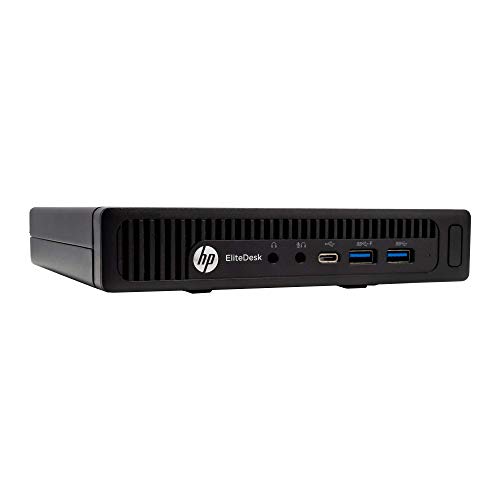
| Best Overall | Processor Generation & Performance Tier: 6th Gen Intel Core i5-6500T (4C/4T, up to 3.1GHz) – mid-range | RAM & Storage Configuration: 16GB DDR4 RAM / 240GB SSD (expandable to 32GB) | Display Outputs & Capability: VGA & DisplayPort | VIEW LATEST PRICE | Read Our Analysis |
More Details on Our Top Picks
GMKtec Mini PC N95 with 8GB RAM 256GB SSD
The GMKtec Mini PC N95 stands as a budget-friendly pick for users who need reliable computing power without excess cost. Its 12th Gen Intel Alder Lake N95 processor delivers 36% better performance than previous models, handling Linux server tasks efficiently. You’ll get 8GB DDR4 RAM and 256GB SSD storage for smooth multitasking and fast boot times. The system includes dual HDMI 2.0 outputs supporting 4K@60Hz displays, USB 3.2 connectivity, WiFi 5, Bluetooth 5.0, and Gigabit Ethernet. These specifications make it suitable for home servers, office deployments, and Proxmox virtualization setups. GMKtec provides a one-year limited warranty with professional support, ensuring you’ve got assistance when needed.
- Processor Generation & Performance Tier:12th Gen Intel N95 (4C/4T, up to 3.4GHz) – entry-level
- RAM & Storage Configuration:8GB DDR4 RAM / 256GB SSD
- Display Outputs & Capability:Dual HDMI 2.0 (4K@60Hz)
- Networking & Wireless Connectivity:Gigabit Ethernet (1000Mbps) / WiFi 5 / Bluetooth 5.0
- USB & Expansion Ports:USB 3.2 (10Gbps) / 3.5mm audio jack
- Operating System & Linux Compatibility:Windows capable / Proxmox-ready
- Additional Feature:36% performance improvement over predecessors
- Additional Feature:Dual 4K@60Hz simultaneous displays
- Additional Feature:AV1 decoding support
GMKtec Mini PC G3 PRO Intel Core i3-10110U
GMKtec’s G3 PRO delivers solid value through its Intel Core i3-10110U processor, which handles Linux server workloads efficiently while remaining affordable compared to higher-tier alternatives. You’ll benefit from 16GB DDR4 RAM and 512GB storage, expandable to 64GB and additional NVMe capacity. The dual HDMI ports support 4K displays at 60Hz for monitoring tasks. WiFi 6, 2.5GbE Ethernet, and four USB 3.2 ports provide reliable connectivity options. You can install Ubuntu, Proxmox, or ESXi directly. Wake On LAN and PXE Boot capabilities streamline remote management. The upgraded cooling system maintains stable performance during extended server operation.
- Processor Generation & Performance Tier:10th Gen Intel Core i3-10110U (4C/4T, up to 4.1GHz) – mid-range
- RAM & Storage Configuration:16GB DDR4 RAM / 512GB SSD (expandable to 64GB)
- Display Outputs & Capability:Dual HDMI 2.0 (4K@60Hz)
- Networking & Wireless Connectivity:2.5GbE Ethernet / WiFi 6 / Bluetooth 5.2
- USB & Expansion Ports:4x USB 3.2 Gen 1 / 3.5mm audio
- Operating System & Linux Compatibility:Windows 11 Pro / Linux, Proxmox, Ubuntu, ESXi VMware compatible
- Additional Feature:Expandable RAM up to 64GB
- Additional Feature:Wake On LAN/PXE Boot capable
- Additional Feature:Secondary NVMe slot available
BOSGAME E4 Mini PC with AMD Ryzen 5
Need a compact machine that handles simultaneous heavy workloads without slowdown? The BOSGAME E4 delivers with its Ryzen 5 3550H processor featuring four cores and eight threads. You’ll get 16GB DDR4 RAM for smooth multitasking and a 512GB PCIe 3.0 SSD for fast data access. The integrated Radeon Vega 8 graphics support triple 4K displays via HDMI, DisplayPort, and USB-C. For connectivity, you’re equipped with dual Gigabit Ethernet, Wi-Fi 5, and Bluetooth 5.0. This setup handles Linux server operations, spreadsheet work, and video streaming reliably. The unit includes FCC, ROHS, and CE certifications plus factory support and lifetime after-sales service.
- Processor Generation & Performance Tier:AMD Ryzen 5 3550H (4C/8T, up to 3.7GHz) – mid-range
- RAM & Storage Configuration:16GB DDR4 RAM / 512GB PCIe SSD
- Display Outputs & Capability:Triple displays via HDMI, DisplayPort, USB-C (4K capable)
- Networking & Wireless Connectivity:Dual Gigabit Ethernet / WiFi 5 / Bluetooth 5.0
- USB & Expansion Ports:USB-C & USB 3.2 / 3.5mm audio
- Operating System & Linux Compatibility:Not specified / Supports everyday computing use cases
- Additional Feature:Triple 4K display support
- Additional Feature:Free lifetime after-sales service
- Additional Feature:Dual Gigabit Ethernet ports
GMKtec Mini PC Workstation Intel Core i9 13900HK
Looking for professional-grade performance in a compact footprint? The GMKtec Mini PC Workstation delivers with its Intel Core i9-13900HK processor featuring 14 cores and 20 threads running up to 5.4 GHz. You’ll get 32GB DDR5 RAM and 1TB NVMe storage as standard, expandable to 12TB across three M.2 slots. The quad-screen capability via HDMI 2.0, DisplayPort 1.4, and USB Type-C connections supports multiple displays simultaneously. For networking, you’re equipped with 2.5G Ethernet, Wi-Fi 6, and Bluetooth 5.2. The compact chassis measures approximately 7.01×7.43×1.53 inches, making it ideal for server deployments, data acquisition systems, and professional workstations requiring robust processing power.
- Processor Generation & Performance Tier:13th Gen Intel Core i9-13900HK (14C/20T, up to 5.4GHz) – high-performance
- RAM & Storage Configuration:32GB DDR5 RAM / 1TB NVMe SSD (expandable to 12TB)
- Display Outputs & Capability:Quad-screen: 2x HDMI 2.0, 1x DisplayPort 1.4 (8K@60Hz), 1x USB Type-C
- Networking & Wireless Connectivity:2.5G LAN Ethernet / WiFi 6 / Bluetooth 5.2
- USB & Expansion Ports:4x USB 2.0 & 4x USB 3.2 Gen2 (10Gbps) / USB Type-C / 3.5mm jack
- Operating System & Linux Compatibility:Windows 11 Pro / Industrial applications, embedded systems compatible
- Additional Feature:Storage expansion up to 12TB
- Additional Feature:8K DisplayPort 1.4 capable
- Additional Feature:Industrial COM port included
Fanless Mini PC Industrial Computer 8GB RAM 128GB SSD
This compact fanless industrial computer serves organizations requiring reliable, silent operation in demanding environments. You’ll find 8GB RAM and 128GB SSD delivering adequate performance for server tasks. The Celeron N2840 processor runs at 2.58 GHz with minimal 7.5W power consumption, ideal for continuous operation. Dual Gigabit Ethernet ports support network redundancy and high-speed connectivity. Two RS232 COM ports switch to RS485 for industrial control applications. You can install Linux, Windows, or specialized systems like OPNsense and OpenWrt. The fanless design eliminates moving parts, reducing maintenance and noise in office or factory settings. Expandable storage via SATA and mSATA slots accommodates growing data needs.
- Processor Generation & Performance Tier:Intel Celeron N2840 (2C/2T, up to 2.58GHz) – entry-level
- RAM & Storage Configuration:8GB DDR3L RAM / 128GB SSD
- Display Outputs & Capability:HDMI & VGA (4K@60Hz)
- Networking & Wireless Connectivity:Dual Gigabit Ethernet (1000M) / Optional WiFi+4G module
- USB & Expansion Ports:1x USB 3.0 & 5x USB 2.0 / 2x RS232 COM (switchable to RS485) / AUDIO
- Operating System & Linux Compatibility:Windows / Linux / OPNsense / OpenWrt / ESXi compatible
- Additional Feature:Fanless design/zero noise operation
- Additional Feature:6-layer PCB construction
- Additional Feature:RS232/RS485 COM port switching
ACEMAGIC M1 Mini PC Intel Core i9-11900H 32GB 1TB
The ACEMAGIC M1 delivers our editor’s choice performance for professionals who demand compact computing power. You’ll get an Intel Core i9-11900H processor with 32GB RAM and 1TB storage—ideal for running Linux servers without compromise. The triple display outputs support 4K resolution, letting you monitor multiple systems simultaneously. You can expand storage to 4TB and upgrade RAM to 64GB as your server needs grow. WiFi 6 and Gigabit Ethernet provide reliable connectivity. The advanced cooling system keeps performance stable during intensive workloads. This mini PC handles photo editing, 3D modeling, and data analysis efficiently, making it perfect for professionals requiring desktop-class power in a portable format.
- Processor Generation & Performance Tier:11th Gen Intel Core i9-11900H (8C/16T, up to 4.9GHz) – high-performance
- RAM & Storage Configuration:32GB DDR4 RAM / 1TB NVMe SSD (expandable to 4TB)
- Display Outputs & Capability:Triple outputs: HDMI 2.0, DisplayPort 1.4, USB Type-C (4K@60Hz)
- Networking & Wireless Connectivity:Gigabit Ethernet / WiFi 6 / Bluetooth 5.0
- USB & Expansion Ports:2x front USB 10Gbps, 4x rear USB 5Gbps, 1x Type-C 10Gbps / 3.5mm jack
- Operating System & Linux Compatibility:Linux/Ubuntu support / Supports Untangle or PfSense
- Additional Feature:Silent centrifugal fan cooling
- Additional Feature:3-year limited warranty included
- Additional Feature:VESA mount with screws
HP EliteDesk 800 G2 Desktop Mini Business PC
Want a refurbished mini PC that delivers solid performance without breaking your budget? The HP EliteDesk 800 G2 offers a certified refurbished Intel Quad-Core i5-6500T processor running at 3.1 GHz with 16 GB DDR4 RAM and a 240 GB SSD. You’ll get Windows 10 Pro 64-bit pre-installed, ready for Linux server deployment. The compact chassis includes dual DisplayPort and VGA outputs, plus four rear USB 3.0 ports for peripherals. This business-class machine comes with keyboard and mouse included. The minimum 90-day warranty provides basic coverage. You receive a tested, cleaned unit that functions like new, making it practical for cost-conscious server setups requiring reliable mid-range performance.
- Processor Generation & Performance Tier:6th Gen Intel Core i5-6500T (4C/4T, up to 3.1GHz) – mid-range
- RAM & Storage Configuration:16GB DDR4 RAM / 240GB SSD (expandable to 32GB)
- Display Outputs & Capability:VGA & DisplayPort
- Networking & Wireless Connectivity:Gigabit Ethernet (RJ-45) / No wireless specified
- USB & Expansion Ports:2x front USB 3.0 & 4x rear USB 3.0 / USB Type-C / Headphone & microphone
- Operating System & Linux Compatibility:Windows 10 Pro 64-bit / Linux support capabilities assumed for refurbished business unit
- Additional Feature:Certified refurbished/like-new condition
- Additional Feature:Keyboard and mouse included
- Additional Feature:Supports up to 32GB RAM
Factors to Consider When Choosing a Mini PC for Linux Servers
When selecting a mini PC for Linux servers, you’ll need to evaluate processor performance to match your workload demands, examine memory capacity and expandability options to support your applications, and assess storage speed and flexibility for data access requirements. Next, review network connectivity options such as Gigabit Ethernet or multiple ports to ensure adequate bandwidth for your server tasks. Finally, compare power consumption and efficiency ratings across models to determine long-term operational costs and heat management needs for your deployment environment.
Processor Performance Requirements
Because Linux servers handle multiple concurrent tasks and processes, you’ll want to prioritize CPUs with at least 4 cores and 8 threads to manage workloads efficiently. Beyond core count, evaluate single-core performance since many server tasks rely on individual thread speed. Check the processor’s TDP rating—aim for 15W to 35W to prevent overheating in compact chassis and reduce cooling demands. Verify that your chosen CPU supports hardware-assisted virtualization (Intel VT-x or AMD-V) if you’ll run virtual machines or containers. Use passMark benchmarks to compare real-world multi-threaded performance across candidates. Finally, confirm your Linux distribution’s kernel and drivers fully support the processor, and check BIOS options for server features like wake-on-LAN and PXE boot capability.
Memory Capacity And Expandability
While processor performance determines how quickly your mini PC executes tasks, the amount and type of RAM you install determines how many tasks it can handle simultaneously. Start by selecting a model with at least 16GB of RAM to comfortably support background services and parallel processes. Prioritize dual-channel DDR4 or DDR5 configurations, which maximize bandwidth and improve overall performance. Check the maximum RAM capacity your chosen model supports—some handle up to 64GB—so you can plan future upgrades without replacing the motherboard. Verify the number of SO-DIMM slots available. Two slots offer better upgrade flexibility than one. If your workload requires stability guarantees, confirm whether the platform officially supports ECC memory for server-grade reliability.
Storage Speed And Flexibility
How much storage speed and flexibility do you actually need for your Linux server workload? Start by evaluating your I/O demands. If you’re running databases or virtualization, choose NVMe PCIe SSDs for their superior read/write speeds and lower latency. For lighter workloads, SATA SSDs suffice. Next, assess your storage expansion needs. Select a mini PC with multiple M.2 slots—ideally supporting both NVMe and SATA drives. This separation lets you dedicate one drive to your OS and another to data, improving performance and management. Finally, consider RAID capability. Multiple storage slots enable redundancy and increased throughput. Verify the form factor compatibility: 2280 drives typically support larger capacities than 2242 models. Match your storage configuration directly to your expected concurrent workloads and data volume requirements.
Network Connectivity Options
Your mini PC’s network performance directly determines how efficiently it’ll handle server traffic and remote management tasks. Prioritize models with Gigabit Ethernet (1 Gbps) as a minimum, then consider 2.5 GbE or PCIe network interfaces for higher throughput demands. Dual or multiple Ethernet ports let you separate management and data networks or enable link aggregation for increased bandwidth. Verify that NICs support essential Linux features: Wake-on-LAN for remote startup, PXE boot for network installation, and VLAN tagging for network segmentation. Check driver compatibility with your Linux distribution before purchasing. Wi-Fi 6 is optional for wireless management, but always rely on wired Ethernet for core server traffic. Confirm the vendor provides robust firmware updates and documented Linux compatibility to maintain network stability.
Power Consumption And Efficiency
Most mini PC server builds’ll benefit considerably from prioritizing low thermal design power (TDP) CPUs and efficient chip architectures that reduce both idle and peak power consumption. Compare manufacturer specifications across models to estimate annual energy costs. Select systems with passive cooling or advanced thermal design to prevent throttling during sustained workloads. Configure Linux power profiles to optimize CPU frequency scaling and memory efficiency. Check power consumption under real-world benchmarks rather than relying solely on TDP ratings. Pair your mini PC with reliable, low-power network interfaces rated at 1–2.5 Gbps to minimize energy per transferred byte. These steps collectively reduce operational costs and environmental impact while maintaining performance for typical server tasks like file storage, web hosting, and containerized applications.
Thermal Management Solutions
Effective thermal management separates mini PCs that maintain stable performance from those that throttle under sustained Linux workloads. You’ll want to prioritize models with multi-heat-pipe or finned heatsinks paired with active cooling fans. Check the thermal design power (TDP) rating—lower TDP means less heat generation and easier cooling. Verify that the mini PC offers expandable cooling options, such as accessible fan headers for adding extra fans if needed. Look for Linux-compatible monitoring tools that let you track CPU temperatures and adjust fan speeds automatically. Ensure adequate airflow vents aren’t blocked by your mounting setup. Finally, review the heatsink design; well-designed units with efficient air pathways prevent throttling during long server operations.
Operating System Compatibility
How do you know if a mini PC will actually run your Linux server setup smoothly? You need to verify Linux-ready boot options and PXE boot capability first. Check the BIOS settings to confirm your device supports these features for remote installation. Next, examine processor architecture—confirm it matches your Linux distribution requirements, whether x86-64 or ARM-based. Verify virtualization support like Intel VT-x or AMD-V if you’re running KVM workloads. Then check network interfaces for 1GbE or 2.5GbE compatibility and bonding support. Review storage options to ensure NVMe or fast SATA SSD compatibility. Finally, confirm RAM capacity meets your needs and check for ECC support if reliability is critical. Contact the manufacturer’s support team if specifications aren’t clear.
Scalability For Future Growth
Since your mini PC’s initial setup won’t remain static as your Linux server workloads expand, you’ll need to evaluate hardware that can grow with your demands. Look for systems with 6–14 cores and scalable architectures to handle parallel processing increases. Verify expandable RAM slots and multiple M.2/NVMe bays so you can upgrade storage and memory without replacing the entire unit. Check available PCIe slots for attaching future accelerators or storage arrays. Confirm dual NIC support or 2.5 Gbps Ethernet connectivity for network expansion. Finally, confirm long-term firmware updates and compatibility with Linux distributions and hypervisors like Proxmox or VMware. This approach minimizes costly replacements and migration overhead as your infrastructure grows.
Final Thoughts
You’ll want to pick a mini PC based on your server needs. Start by determining your workload—light tasks work with the N95, while heavy virtualization demands the i9-13900HK Workstation. Next, check RAM and storage: aim for 16GB+ RAM and multiple M.2 slots. Finally, verify cooling options and networking specs. Fanless models suit quiet environments; dual 4K HDMI and 2.5GbE networking support remote access and scaling.

Meet Ry, “TechGuru,” a 36-year-old technology enthusiast with a deep passion for tech innovations. With extensive experience, he specializes in gaming hardware and software, and has expertise in gadgets, custom PCs, and audio.
Besides writing about tech and reviewing new products, he enjoys traveling, hiking, and photography. Committed to keeping up with the latest industry trends, he aims to guide readers in making informed tech decisions.