
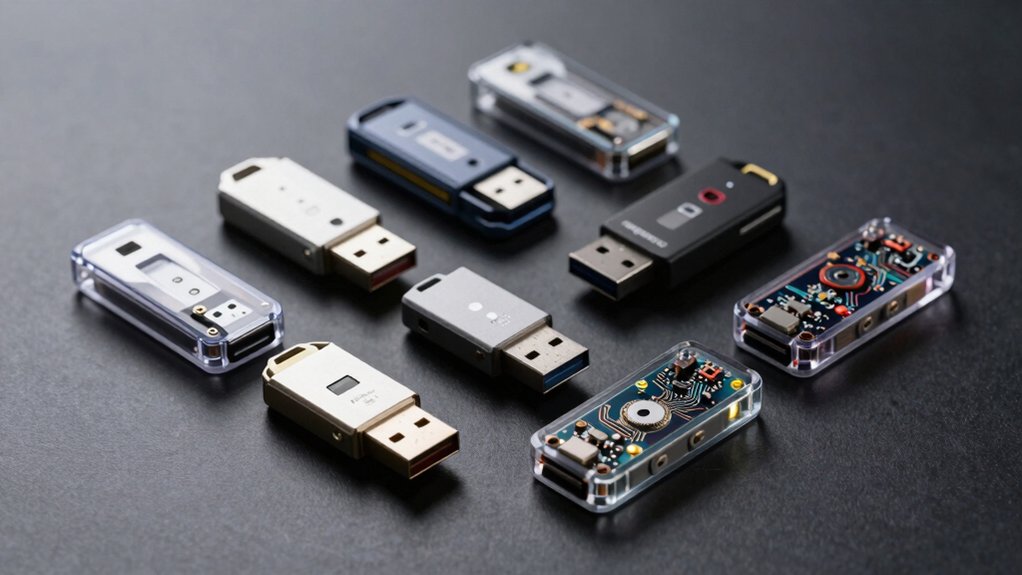

When you’re troubleshooting Zigbee network issues, you need the right tools to monitor device communication and identify problems. USB dongle sniffers let you capture and analyze network traffic in real time, whether you’re running Home Assistant, Zigbee2MQTT, or OpenHAB. You’ll find options ranging from affordable CC2531-based analyzers to advanced MG24 models with stronger transmit power. Each has distinct advantages—and picking the wrong one could waste your time and money.
| 2Pcs Zigbee CC2531 USB Dongle Wireless Analyzer Module |

| Budget-Friendly Pick | Primary Chipset: CC2531 | Operating Frequency: 2.405–2.485 GHz | Interface Type: USB dongle | VIEW LATEST PRICE | Read Our Analysis |
| SONOFF Zigbee 3.0 USB Dongle Gateway with Antenna |

| Best Overall | Primary Chipset: EFR32MG21 | Operating Frequency: 2.4 GHz (Zigbee 3.0) | Interface Type: USB dongle with antenna | VIEW LATEST PRICE | Read Our Analysis |
| SONOFF Zigbee 3.0 USB Dongle Plus Gateway Controller |

| Most Powerful | Primary Chipset: EFR32MG24 | Operating Frequency: 2.4 GHz (Zigbee 3.0) | Interface Type: USB 3.0 Type B with extension cable | VIEW LATEST PRICE | Read Our Analysis |
| Zigbee Sniffer USB Protocol Module CC2531 with Antenna |
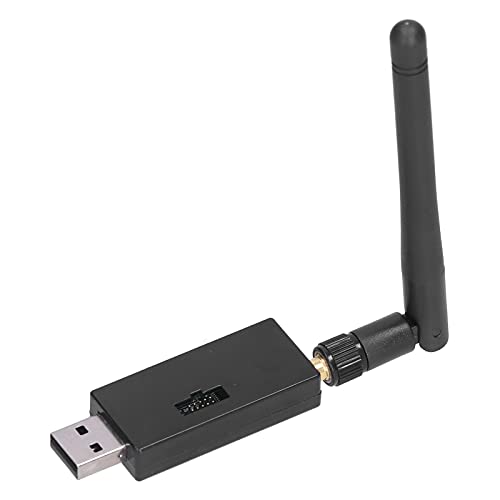
| Best Value | Primary Chipset: CC2531 | Operating Frequency: 2.405–2.485 GHz | Interface Type: USB dongle with antenna | VIEW LATEST PRICE | Read Our Analysis |
| Zigbee 3.0 USB Dongle Plus-E Smart Home Hub |

| Best For Beginners | Primary Chipset: EFR32MG21 | Operating Frequency: 2.4 GHz (Zigbee 3.0) | Interface Type: USB dongle with antenna | VIEW LATEST PRICE | Read Our Analysis |
| SONOFF Zigbee 3.0 USB Gateway Dongle with Antenna |

| Most Versatile | Primary Chipset: TI CC2652P | Operating Frequency: 2.4 GHz (IEEE 802.15.4) | Interface Type: USB dongle with SMA antenna | VIEW LATEST PRICE | Read Our Analysis |
| Zigbee 3.0 USB Dongle with High Gain Antenna |

| Professional Grade | Primary Chipset: EFR32MG24 | Operating Frequency: 2.4 GHz (Zigbee 3.0) | Interface Type: USB dongle with detachable antenna | VIEW LATEST PRICE | Read Our Analysis |
| Zigbee 3.0 USB Dongle Gateway with Antenna (MG24) |

| Best For Enterprise | Primary Chipset: EFR32MG21 | Operating Frequency: 2.4 GHz (Zigbee 3.0) | Interface Type: USB 2.0 dongle with antenna | VIEW LATEST PRICE | Read Our Analysis |
More Details on Our Top Picks
2Pcs Zigbee CC2531 USB Dongle Wireless Analyzer Module
Looking for a budget-friendly pick that doesn’t compromise on capability? You’ll get two CC2531 USB dongles with external antennas, each measuring 41 × 16 × 1.6 mm. These modules operate across 2.405–2.485 GHz at 250 Kbaud transmission rates while consuming under 20 mA receiving and under 25 mA transmitting. Load Sniffer or BTool firmware to activate protocol analysis or Bluetooth adapter functions. You can extend eight IO ports for custom applications. The CC2531EMK compatibility ensures seamless integration with existing setups. Use these dongles to capture and analyze Zigbee network traffic, troubleshoot connectivity issues, or monitor wireless communication patterns. Their compact design fits easily into tight spaces while delivering reliable performance for serious network debugging work.
- Primary Chipset:CC2531
- Operating Frequency:2.405–2.485 GHz
- Interface Type:USB dongle
- Antenna Type:External antenna
- Platform Compatibility:Sniffer and BTool firmware
- Warranty Coverage:Limited (specific terms vary)
- Additional Feature:Dual dongle package included
- Additional Feature:8 IO ports extendable
- Additional Feature:Sniffer and BTool firmware compatible
SONOFF Zigbee 3.0 USB Dongle Gateway with Antenna
Need a Zigbee sniffer that works across multiple smart home platforms? The SONOFF Zigbee 3.0 USB Dongle Plus-E serves as a universal wireless adapter compatible with Home Assistant, OpenHAB, and Zigbee2MQTT. The device features pre-flashed EZNet 6.10.3 coordinator firmware and operates on the EFR32MG21 chipset with +20 dBm output power. Its aluminum housing minimizes signal interference during network debugging. You’ll connect it via USB interface using IEEE 802.15.4 protocol. The compact dimensions (2.95 x 1 x 0.53 cm) fit easily into any setup. The manufacturer provides a one-year warranty and supports a thirty-day return policy. This model works reliably for capturing and analyzing Zigbee network traffic across your smart home ecosystem.
- Primary Chipset:EFR32MG21
- Operating Frequency:2.4 GHz (Zigbee 3.0)
- Interface Type:USB dongle with antenna
- Antenna Type:Built-in antenna
- Platform Compatibility:Home Assistant, OpenHAB, Zigbee2MQTT
- Warranty Coverage:1 year
- Additional Feature:Pre-flashed EZNet 6.10.3 firmware
- Additional Feature:Aluminum housing reduces interference
- Additional Feature:5 Gbps data transfer rate
SONOFF Zigbee 3.0 USB Dongle Plus Gateway Controller
The SONOFF Zigbee 3.0 USB Dongle Plus delivers the most powerful performance you’ll find in a compact USB sniffer, making it ideal if you’re managing complex home automation networks across multiple device brands. Its EFR32MG24 chip processes data faster than standard models, letting you handle demanding automation tasks smoothly. The antenna reaches up to 4.5 dBi gain, which strengthens your signal range and connection reliability throughout your space. You can place the dongle flexibly using its USB extension cable to reduce electromagnetic interference. The device works with Home Assistant, Zigbee2MQTT, and openHAB platforms, plus supports thousands of Zigbee 3.0 devices including Philips Hue, Aqara, and IKEA Tradfri. You can also reflash its firmware to switch between coordinator, router, or Thread RCP modes depending on your network needs.
- Primary Chipset:EFR32MG24
- Operating Frequency:2.4 GHz (Zigbee 3.0)
- Interface Type:USB 3.0 Type B with extension cable
- Antenna Type:Optimized up to 4.5 dBi
- Platform Compatibility:Home Assistant, Zigbee2MQTT, openHAB
- Warranty Coverage:Standard (details on product page)
- Additional Feature:EFR32MG24 chip architecture
- Additional Feature:Optimized antenna gain 4.5 dBi
- Additional Feature:Thread RCP mode capable
Zigbee Sniffer USB Protocol Module CC2531 with Antenna
Akozon’s CC2531 module delivers reliable packet capture at a competitive price point for developers analyzing 802.15.4 and Zigbee networks. This USB dongle operates across the 2.405–2.485 GHz frequency band with 250 Kbps data transfer rates. The device features eight IO ports and includes a BALUN design for superior performance. You’ll connect it directly to your computer via USB, then use compatible firmware to capture and analyze wireless packets. The integrated antenna enables effective signal reception. At 0.03 kilograms, it’s portable for field testing. The 30-day return guarantee provides purchase confidence. Customer ratings stand at 3.1 out of 5 stars, reflecting mixed user experiences with setup and compatibility requirements.
- Primary Chipset:CC2531
- Operating Frequency:2.405–2.485 GHz
- Interface Type:USB dongle with antenna
- Antenna Type:External antenna
- Platform Compatibility:802.15.4 protocol analysis
- Warranty Coverage:Standard (details via link)
- Additional Feature:2450BM15A0002E BALUN design
- Additional Feature:802.15.4 protocol analysis capable
- Additional Feature:Self-programmable transceiver dongle
Zigbee 3.0 USB Dongle Plus-E Smart Home Hub
Want plug-and-play setup without complicated configurations? The Zigbee 3.0 USB Dongle Plus-E delivers immediate functionality on Linux and Raspberry Pi systems. Windows and macOS users install drivers quickly using CP2102N or CH9102F modules. This EFR32MG21-powered coordinator supports Home Assistant, Zigbee2MQTT, and openHAB platforms. You’ll achieve millisecond response times with 100% local control—no cloud dependencies or external data transmission. The aluminum housing blocks Wi-Fi interference, maintaining rock-solid connections to 40 direct devices, expandable to 100+ units in larger homes. Alternatively, flash router firmware to repurpose it as a signal repeater. The manufacturer provides two-year warranty coverage with Amazon’s 30-day return guarantee included.
- Primary Chipset:EFR32MG21
- Operating Frequency:2.4 GHz (Zigbee 3.0)
- Interface Type:USB dongle with antenna
- Antenna Type:External antenna
- Platform Compatibility:Home Assistant, Zigbee2MQTT, openHAB, ioBroker, pimatic, Homey
- Warranty Coverage:2 years
- Additional Feature:Native Linux plug-and-play setup
- Additional Feature:Supports 100+ device expansion
- Additional Feature:2-year manufacturer warranty included
SONOFF Zigbee 3.0 USB Gateway Dongle with Antenna
Looking for a Zigbee sniffer that’s most versatile across multiple platforms? The SONOFF Zigbee 3.0 USB Gateway Dongle with Antenna delivers reliable network debugging across Linux, MacOS, and Windows systems. Built on TI CC2652P and CP2102N chipsets with 20 dBm output power, you’ll capture packets effectively in your environment. The aluminum housing reduces interference while the external SMA antenna extends your monitoring range. Install Z-Stack 3.x.0 coordinator firmware—already pre-flashed. Connect to Home Assistant via ZHA or use Zigbee2MQTT for detailed traffic analysis. The included QR code in the manual guides your setup process. This compact device measures 3.4 by 1 inches and weighs just 1.3 ounces, making it portable for testing different network locations.
- Primary Chipset:TI CC2652P
- Operating Frequency:2.4 GHz (IEEE 802.15.4)
- Interface Type:USB dongle with SMA antenna
- Antenna Type:SMA external antenna
- Platform Compatibility:Home Assistant (ZHA), Zigbee2MQTT, IoBroker
- Warranty Coverage:1 year
- Additional Feature:TI CC2652P + CP2102N chipset
- Additional Feature:Z-Stack 3.x.0 coordinator firmware
- Additional Feature:SMA external antenna included
Zigbee 3.0 USB Dongle with High Gain Antenna
This professional-grade dongle delivers the range and stability you need for complex mesh networks. The EFR32MG24 chipset processes data quickly, while the detachable 5 dBi antenna and +20 dBm amplifier extend your signal through walls and multiple floors. You’ll connect up to 32 direct devices and over 200 route devices, building a scalable network. The aluminum housing shields interference and dissipates heat effectively. Install it on Raspberry Pi, NUC, or Mini-PCs with zero configuration. Works with Home Assistant, Zigbee2MQTT, and OpenHAB for local control without cloud dependency. The slim design won’t block adjacent USB ports, making it ideal for compact setups.
- Primary Chipset:EFR32MG24
- Operating Frequency:2.4 GHz (Zigbee 3.0)
- Interface Type:USB dongle with detachable antenna
- Antenna Type:Detachable 5 dBi high-gain antenna
- Platform Compatibility:Home Assistant (ZHA), Zigbee2MQTT, OpenHAB
- Warranty Coverage:Standard (implied coverage)
- Additional Feature:EFR32MG24 ARM Cortex-M33 core
- Additional Feature:Matter and Thread hardware-ready
- Additional Feature:5 dBi detachable high-gain antenna
Zigbee 3.0 USB Dongle Gateway with Antenna (MG24)
The MG24 coordinates up to 128 Zigbee devices across enterprise-scale deployments. This USB dongle features an EFR32MG21 chip with +20dBm output gain and a 5dBi external antenna for reliable signal coverage. You’ll appreciate its slim aluminum housing that won’t block adjacent ports. The pre-flashed coordinator firmware enables quick setup with Home Assistant, ZHA, or Zigbee2MQTT. You can connect 32 devices directly to the coordinator, then route 96 additional devices through extended coverage modes. Its compact dimensions—7 inches long by 1.6 inches wide—fit standard USB ports easily. Documentation and setup instructions are available on GitHub, ensuring straightforward network deployment and device management.
- Primary Chipset:EFR32MG21
- Operating Frequency:2.4 GHz (Zigbee 3.0)
- Interface Type:USB 2.0 dongle with antenna
- Antenna Type:External 5 dBi antenna
- Platform Compatibility:Home Assistant (ZHA), Zigbee2MQTT
- Warranty Coverage:30-day Amazon return guarantee
- Additional Feature:EFR32MG21 chipset with +20dBm
- Additional Feature:Supports 128 Zigbee devices
- Additional Feature:Ultra-slim USB port design
Factors to Consider When Choosing a Zigbee USB Dongle Sniffer
When you’re selecting a Zigbee USB dongle sniffer, you’ll want to evaluate five key factors: chipset performance and power consumption, frequency range and bandwidth capabilities, antenna design and signal strength, compatibility with your existing platforms, and the device’s physical size for portability. Start by checking the chipset specifications to ensure it handles your network’s data volume without draining excessive power, then verify the frequency range matches your region’s standards and bandwidth needs. Finally, confirm the antenna quality supports strong signal reception, the dongle integrates with your software tools, and the form factor fits your workspace or mobile debugging requirements.
Chipset Performance And Power
Two key hardware components—the chipset and power output—directly control how well your Zigbee sniffer captures data and communicates across your network. Newer chipsets like the EFR32MG24 process information faster and maintain more stable connections to sub-devices, which improves your debugging accuracy. For power output, look for dongles with +20 dBm gain. This increased transmit strength extends your signal range significantly, making it easier to monitor larger homes or multi-story buildings. You’ll also want external antennas rated between 4.5 dBi and 5 dBi instead of integrated antennas. These external options further boost your network reach. Together, a modern chipset and strong power output ensure your sniffer performs reliably during network testing and troubleshooting.
Frequency Range And Bandwidth
Beyond the hardware’s processing power and transmission strength, you’ll need to verify your sniffer’s frequency range and bandwidth capabilities to guarantee it captures all the traffic on your network. Most Zigbee USB dongles operate within the 2.405–2.485 GHz ISM band, which covers all IEEE 802.15.4 Zigbee channels. Confirm your dongle supports this full range rather than partial coverage. Check the data transfer rate—standard sniffers handle 250 Kbaud, matching Zigbee’s physical layer requirements. Examine whether your device can monitor multiple channels simultaneously or switches between them. Review antenna specifications, including gain ratings (typically 3–5 dBi) and external antenna options. Consider RF front-end design elements like aluminum shielding, which improve reception sensitivity and effective bandwidth observation during network debugging.
Antenna Design And Signal Strength
How much signal strength you’ll actually receive from your Zigbee sniffer depends largely on its antenna design and output power specifications. Look for dongles with detachable high-gain antennas rated at 4.5 dBi or higher, which extend your network range significantly. Choose hardware offering +20 dBm output power to boost transmit strength for distant or obstructed devices. Verify the dongle features an aluminum housing that shields against electromagnetic interference from Wi-Fi and other radios in crowded environments. Position your external antenna away from metal obstacles to maintain consistent signal coverage. Consider how your network topology—direct versus routed devices—interacts with antenna performance. Test placement options to identify optimal locations that maximize reliability across multiple floors and larger deployments.
Platform Compatibility And Integration
What platform are you currently running for your Zigbee network? You’ll need to verify that your dongle supports your chosen automation stack—Home Assistant (ZHA), Zigbee2MQTT, or OpenHAB. Next, check the firmware compatibility to confirm whether the device arrives pre-flashed for coordinator, router, or sniffer roles. Confirm USB interface compatibility by identifying whether you need USB 2.0 or USB 3.0 support, then verify driver requirements for your operating system. Windows, macOS, and Linux systems may need CP2102N or CH9102F drivers installed. Finally, assess the device’s chipset—EFR32MG21/MG24 or CC2652P models offer better Zigbee 3.0 and Thread support. Prioritize dongles offering native plug-and-play operation on Linux and local control without cloud dependencies for reliable, independent network debugging.
Physical Size And Portability
When you’re selecting a Zigbee USB dongle sniffer, you’ll want to contemplate whether the device’s physical dimensions fit your setup constraints. Most sniffers come in compact stick designs measuring around 41 × 16 × 1.6 mm, weighing under 20 grams for easy portability. Check if the dongle fits your USB port without blocking adjacent ports in multi-device setups. Consider models with detachable extension cables, which improve placement flexibility without adding bulk to the core device. If you need extended range, external antenna options like 5 dBi models provide better coverage while maintaining a small footprint. Aluminum shielding reduces interference while preserving the low-profile design. Evaluate whether USB 2.0 or USB 3.0 interfaces meet your speed requirements without compromising the compact form factor you need.
Firmware Flexibility And Updates
Consider whether your Zigbee USB dongle sniffer supports multiple firmware variants, since this capability determines how adaptable the device is to your specific needs. Look for dongles that offer pre-flashed or easily flashable firmware options like EZNet 6.10.3, which enable quick setup as a coordinator, router, or GATT-capable sniffer without extensive manual configuration. Verify that the device supports self-burning capabilities, allowing you to swap programs directly on the hardware for different protocols including Zigbee 3.0 and 802.15.4. Check firmware compatibility with major ecosystems such as Home Assistant, Zigbee2MQTT, and openHAB to ensure smooth integration. Finally, confirm that the manufacturer provides regular firmware updates with security patches and support for evolving Zigbee standards to maintain long-term viability.
Network Capacity And Scalability
How you’ll use your Zigbee network—whether you’re managing a small apartment or a sprawling multi-story home—directly determines which dongle’s capacity you’ll need. Check your dongle’s specifications for direct child device support (typically 32 devices) and total routable devices (often 200+). These numbers tell you the network’s maximum size. Higher-gain antennas extend coverage across larger properties and multiple floors, maintaining reliable connections as your mesh grows. Faster processors and ample memory handle frequent communications in dense networks without bottlenecks. Zigbee 3.0 and EmberZNet firmware support influences routing efficiency and device management. Match your dongle’s capacity to your actual device count, accounting for future expansion. Undersized dongles cause routing failures and connection drops in growing networks.
Interference Shielding And Housing Quality
What’s blocking your Zigbee signal—the microwave next door, the Wi-Fi router in the corner, or cheap plastic housing that lets electromagnetic interference (EMI) right through? Choose a dongle with aluminum housing to shield your radio from surrounding electronics. Aluminum enclosures reduce peripheral interference and protect signal integrity across walls and multiple floors. Verify that your sniffer includes quality shielding materials, which directly impact connection stability in dense home networks with competing wireless signals. Pair shielding with external or integrated antennas rated between 5 dBi to +20 dBm gain for maximized range. Select a slim, compact design that won’t block adjacent USB ports while maintaining adequate thermal dissipation. These features prevent performance throttling and ensure reliable network debugging.
Final Thoughts
You’ll select the right Zigbee USB dongle sniffer by matching your needs to key specs: choose CC2531 models for basic debugging on a budget, or pick MG21/MG24 variants for advanced monitoring and higher range. Verify USB compatibility with your system, confirm antenna type (detachable preferred), and ensure the firmware supports your platform—Home Assistant, Zigbee2MQTT, or OpenHAB. Test range and network capacity against your deployment size before committing.

Meet Ry, “TechGuru,” a 36-year-old technology enthusiast with a deep passion for tech innovations. With extensive experience, he specializes in gaming hardware and software, and has expertise in gadgets, custom PCs, and audio.
Besides writing about tech and reviewing new products, he enjoys traveling, hiking, and photography. Committed to keeping up with the latest industry trends, he aims to guide readers in making informed tech decisions.