
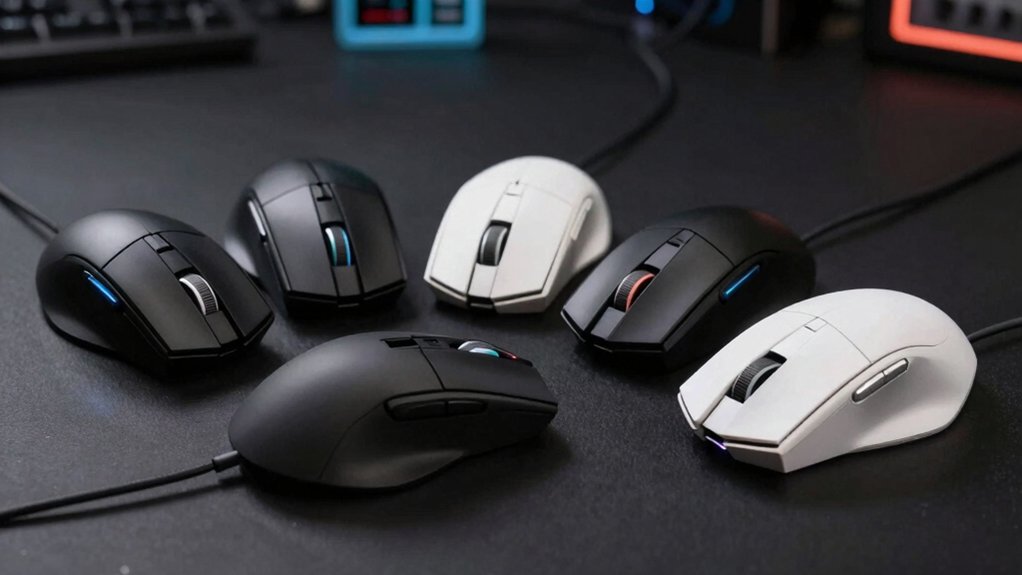

Choose the five best analog mice and compare features you need. Start with TRELC 5-Button 10000 DPI for ergonomic grip, 11 programmable buttons, and on-board profiles; use it for multi-computer setups. Consider TRELC 5-D Rocker for a 5-direction rocker and dual connectivity up to 24000 DPI. Add Logitech G502 Hero for a high-precision 25K/16K sensor, 11 buttons, and on-board profiles. ZLOT Vertical offers a comfortable vertical grip with 11 buttons; Redragon M908 covers 18 buttons and profiles. Next, assess build quality, cross-device profiles, and software needs to choose confidently; more details follow.
| TRELC 5-Button 10000 DPI Ergonomic Gaming Mouse |
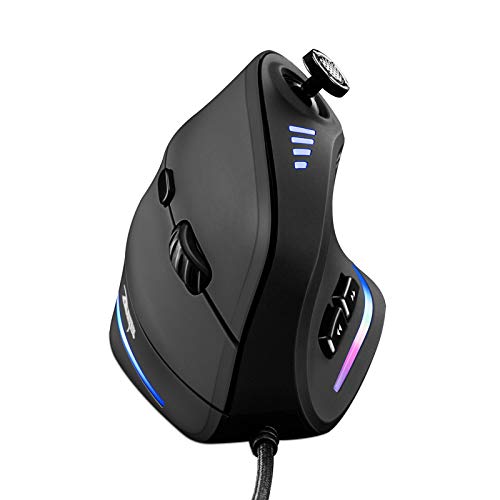
| Best Ergonomic | Wired/Wireless: Wired | DPI Range: 1500–10000 | Programmable Buttons: 11 programmable | VIEW LATEST PRICE | Read Our Analysis |
| Logitech G502 Hero Wired Gaming Mouse with 25K Sensor |

| Ultra-Precision Pro | Wired/Wireless: Wired | DPI Range: Up to 25,600 (or 16,000 in some specs) | Programmable Buttons: 11 programmable | VIEW LATEST PRICE | Read Our Analysis |
| ZLOT Vertical Gaming Mouse with 11 Buttons |
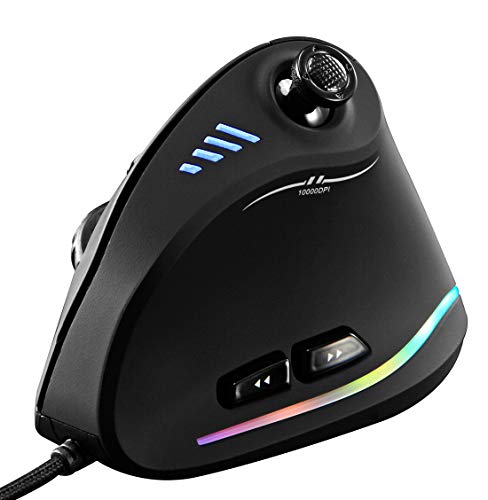
| Comfort Front-Runner | Wired/Wireless: Wired | DPI Range: 1000–10000 | Programmable Buttons: 11 programmable | VIEW LATEST PRICE | Read Our Analysis |
| Redragon M908 RGB MMO Gaming Mouse with 12 Buttons |

| MMO Legend | Wired/Wireless: Wired | DPI Range: Up to 12,400 | Programmable Buttons: 18 programmable | VIEW LATEST PRICE | Read Our Analysis |
| TRELC 5-D Rocker Wireless Gaming Mouse (24000 DPI) |

| Wireless Powerhouse | Wired/Wireless: Wireless (Tri-mode: BT5.0, 2.4 GHz, wired USB) | DPI Range: 1600–24000 | Programmable Buttons: 11 programmable | VIEW LATEST PRICE | Read Our Analysis |
More Details on Our Top Picks
TRELC 5-Button 10000 DPI Ergonomic Gaming Mouse
The TRELC 5-Button 10000 DPI Ergonomic Gaming Mouse is best for players who want precise control and reduced wrist strain. You set up the device by connecting it to a PC or laptop. Use the 5-direction rocker to access five keys, including front, rear, left, right, and down. Install the software to customize 11 programmable buttons and intelligent macros. Save your profiles on the mouse so settings persist across computers. Choose 1500 to 10000 DPI for precision, or adjust speed up to 100 IPS with 20G acceleration. Enable RGB effects and store configurations for each game profile.
- Wired/Wireless:Wired
- DPI Range:1500–10000
- Programmable Buttons:11 programmable
- Onboard Memory:Yes (profiles stored in mouse)
- Polling Rate:1000 Hz (implied by 5000 FPS and 100 IPS specs)
- Ergonomic Design:Ergonomic vertical design
- Additional Feature:5 Direction Rocker actions
- Additional Feature:Onboard memory saves settings
- Additional Feature:5 RGB lighting effects
Logitech G502 Hero Wired Gaming Mouse with 25K Sensor
Choose the Logitech G502 Hero wired gaming mouse when you need precise, high-speed tracking and customizable weight balance for intense play. You will set up the 25K/16K sensor for your DPI needs, selecting from 200 to 16,000 (or 25,600) depending on model. Configure 11 programmable buttons and a dual-mode scroll wheel for quick scrolling. Adjust balance with up to five 3.6 g weights to fit your grip and play style. Enable LIGHTSYNC RGB to match your setup. Use on-board memory to save profiles, and connect via USB for consistent performance on PC or Mac.
- Wired/Wireless:Wired
- DPI Range:Up to 25,600 (or 16,000 in some specs)
- Programmable Buttons:11 programmable
- Onboard Memory:On-Board Memory
- Polling Rate:Not explicitly stated (typical high range; often 1000 Hz)
- Ergonomic Design:Ergonomic design
- Additional Feature:25K/16K sensor range
- Additional Feature:On-board memory profiles
- Additional Feature:Adjustable weights
ZLOT Vertical Gaming Mouse with 11 Buttons
If you want a vertical mouse that reduces wrist strain and supports long sessions, the ZLOT Vertical Gaming Mouse with 11 Buttons is a solid choice, thanks to its ergonomic design and programmable controls. You will connect it via USB and install, if needed, the on-board memory for presets. The 1000 Hz polling rate and 10000 DPI offer precise tracking, while 11 programmable buttons let you customize functions. Use the 6+1 design for easy access, and pair with the Pixart PMW3325 sensor for accuracy. Verify compatibility with Windows or Linux, peel the bottom film, and save profiles on-board.
- Wired/Wireless:Wired
- DPI Range:1000–10000
- Programmable Buttons:11 programmable
- Onboard Memory:On-Board Memory
- Polling Rate:1000 Hz
- Ergonomic Design:Ergonomic vertical design
- Additional Feature:6+1 button design
- Additional Feature:1000 Hz polling rate
- Additional Feature:Peel-off bottom film
Redragon M908 RGB MMO Gaming Mouse with 12 Buttons
For gamers who need maximum customization and speed across MMO play, the Redragon M908 RGB MMO Gaming Mouse stands out with 18 programmable buttons and five memory profiles, letting you map macros and actions across multiple roles. You will set DPI to 200–12,400, choose five levels, and adjust ±100 via software. Use 1000 Hz polling for smooth input. Program macros and assign them to MMO side buttons or main buttons. Save profiles with distinct colors, and swap on the fly. Use the weight kit to balance feel, and enable lighting or disable it for focus. Guarantee compatibility with Windows; use Mac for basic tasks.
- Wired/Wireless:Wired
- DPI Range:Up to 12,400
- Programmable Buttons:18 programmable
- Onboard Memory:Profiles stored in device (memory)
- Polling Rate:1000 Hz
- Ergonomic Design:Ergonomic shape
- Additional Feature:18 programmable buttons
- Additional Feature:5 weight-tuning set
- Additional Feature:16.8M RGB backlight
TRELC 5-D Rocker Wireless Gaming Mouse (24000 DPI)
The TRELC 5-D Rocker Wireless Gaming Mouse is ideal for gamers who want a single device that handles multiple playstyles and devices. You switch modes and profiles to fit your game. Start by noting it offers 11 programmable buttons and a 5-direction rocker, so map actions per title. Use tri-mode connectivity: BT5.0, 2.4 GHz, or wired USB. Pair with two devices, switch with a button, but don’t run them simultaneously. Set DPI from 1600 to 24000 using the PMW3325 sensor. Save profiles in-mouse, connect to different computers, and test FPS, MOBA, and MMO layouts for comfort and efficiency.
- Wired/Wireless:Wireless (Tri-mode: BT5.0, 2.4 GHz, wired USB)
- DPI Range:1600–24000
- Programmable Buttons:11 programmable
- Onboard Memory:Yes (profiles saved in mouse)
- Polling Rate:1000 Hz
- Ergonomic Design:Ergonomic vertical design
- Additional Feature:Tri-mode connectivity (BT, 2.4G, wired)
- Additional Feature:2-device switching between PCs
- Additional Feature:Rechargeable vertical design
Factors to Consider When Choosing Analog Gaming Mice
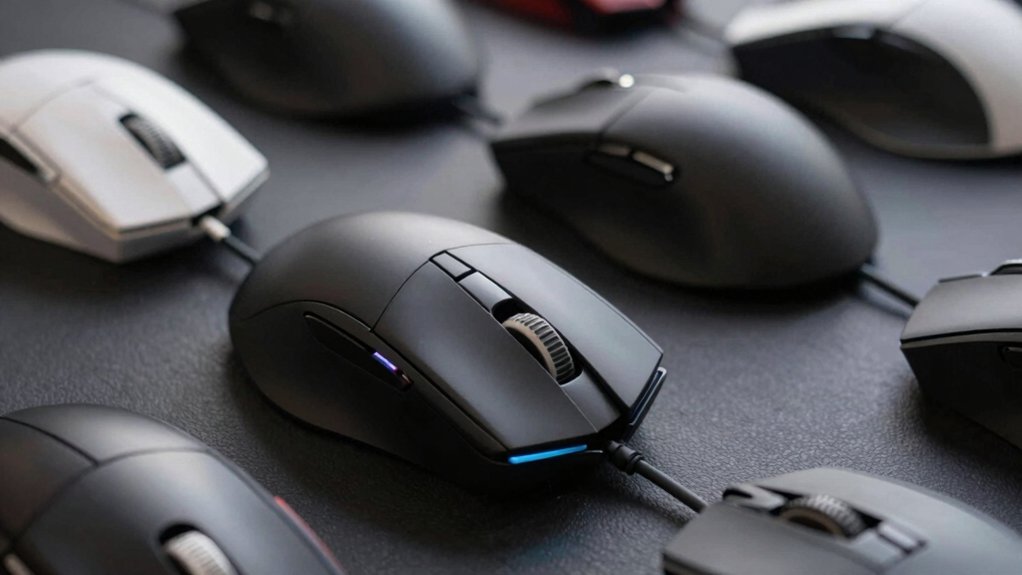
When selecting an analog gaming mouse, start by evaluating Sensor Precision and DPI to ensure accurate tracking, test at common in-game speeds, and choose a model with adjustable DPI steps. Consider Ergonomic Comfort Design by checking grip shape, palm or claw style, and weight distribution, then compare measurements against your hand size and play posture. Finally, review Button Customization Options, Weight and Balance, and Connectivity Modes to confirm programmable buttons, optional weights, and preferred wired or wireless setup align with your typical gaming sessions.
Sensor Precision and DPI
Choosing the right sensor precision and DPI starts with understanding your goals: do you need fine aiming for precise shots or quick, large movements for fast tracking? Start by noting your preferred DPI range. Most mice offer 400–800 DPI for precise control, and 16,000–25,600 DPI for rapid movement. Consider your monitor resolution and game type to select a base range. Evaluate sensor types like PMW3325 and PAW3327 for reliable tracking and responsiveness; these are common choices in gaming mice. Check if the mouse supports 1000 Hz polling rate, which improves input responsiveness by reporting data every millisecond. Use on-board memory to store DPI profiles, enabling consistent settings across devices. Create at least two profiles: one for precision, one for fast movement.
Ergonomic Comfort Design
Ergonomic comfort should guide your selection from the start. Choose a vertical design to reduce wrist strain and forearm twisting during long sessions. A natural handshake grip supports a neutral wrist position, lowering risk of carpal tunnel symptoms and tendinitis. Look for on-device memory to save profiles, ensuring consistent comfort settings across different computers without reconfiguration. Check for a larger thumb rest and angled buttons, which improve reach and reduce fatigue over extended play. Consider customizable weight or balance features that let you tailor the mouse feel, reducing muscle effort and improving control. Ensure the layout suits your hand size and grip style, then test for comfort, stability, and ease of transition between tasks and games.
Button Customization Options
To tailor your analog gaming mouse for different playstyles, start by evaluating how many programmable buttons you need and what actions each should perform. Look for mice with a high button count, such as 11, to enable extensive macros and quick in-game access. Check that on-board memory stores user profiles so settings persist across computers without reinstalling software. Verify you can customize per-button functions via dedicated software, including creating and saving custom macros. Ensure the device supports multiple button layouts, like a 5-direction rocker or side button arrays, to suit different genres. Confirm on-device macro support and profile switching, allowing separate configurations for FPS, MOBA, or MMO gameplay. Plan your layout, test under practice sessions, and save preferred profiles for rapid deployment.
Weight and Balance
Weight and balance directly affect control and comfort, so start by evaluating your grip style and typical play duration. If you favor a palm grip, consider heavier mice for stability and precise aiming, then test how the weight feels during long sessions. If you use a claw grip, lighter options reduce fatigue and speed up micro-adjustments. Customizable weights let you fine-tune balance toward your preferred grip; add mass toward the front for momentum, or toward the back for steady control. Ensure even distribution front-to-back and side-to-side to let the mouse rest naturally in your hand. A compact, balanced center of gravity helps minimize forearm strain over extended gaming bouts. Test across several game types to confirm comfort and responsiveness.
Connectivity Modes
Connectivity modes affect how you use the mouse across devices and setups. You choose wired USB for zero input latency and plug-and-play compatibility with most PCs and laptops. If you prefer wireless, pick Bluetooth, a 2.4 GHz USB dongle, or dual-mode (BT + 2.4 GHz) for multi-device pairing. Consider tri-mode mice, which combine BT, 2.4 GHz, and wired USB, enabling switching between devices without re-pairing. Wireless mice require charging or batteries, which can affect weight, balance, and usage time. Look for onboard memory in some models, which lets you save profiles for use on different computers without reconfiguration. Evaluate whether you need continuous latency, battery life, or easy multi-device switching in your setup. Plan your selection around device compatibility and daily use scenarios.
Build Quality and Durability
You should start with build quality as the foundation for dependable performance. Begin by examining materials, prioritizing high-strength plastics and reinforced frames that resist long sessions and frequent grip changes. Check for a solid chassis and secure button housings to minimize flex, click lag, and component wear over time. Look at the interconnects: ensure the cable is braided or, if wireless, that the internal connections are shielded and durable. Evaluate mechanical switch quality and lifetime; a 20M+ click rating indicates reliable tactile feedback across years of use. Inspect finishes and tolerances; premium coatings reduce wear, while durable feet (PTFE or TEFLON) maintain glide consistency. Choose models with proven durability in real-world testing and reputable build standards.
Software and Memory Profiles
Software customization lets you tailor a mouse to your games and workflow. You start by configuring macros and button mappings in the software, then save these as profiles for each title or task. Use on-device memory to store important data, so settings carry over to another computer without reconfiguring. Check how many onboard profiles the model supports; most devices offer 3–5, which you can swap without software. Review whether per-button macros work offline or require the companion app. See if you can import and export profiles for cross-device consistency. Some models need software to enable full programmability; basic functions work without it, but advanced features won’t. Plan profiles for different games, then test across setups to verify reliability.
Final Thoughts
To pick an analog gaming mouse, start by define your needs: buttons, DPI, and grip. Compare options: TRELC 5-Button for budget, Logitech G502 Hero for precision, ZLOT for vertical comfort, Redragon M908 for MMO heavy use, TRELC 5-D Rocker for wireless. Check sensor accuracy, polling rate, and software. Test surface compatibility, assign profiles, and map macros. Decide wired vs wireless, budget range, and future-proofing. Make a final note of warranty, then buy from a trusted retailer.

Meet Ry, “TechGuru,” a 36-year-old technology enthusiast with a deep passion for tech innovations. With extensive experience, he specializes in gaming hardware and software, and has expertise in gadgets, custom PCs, and audio.
Besides writing about tech and reviewing new products, he enjoys traveling, hiking, and photography. Committed to keeping up with the latest industry trends, he aims to guide readers in making informed tech decisions.