
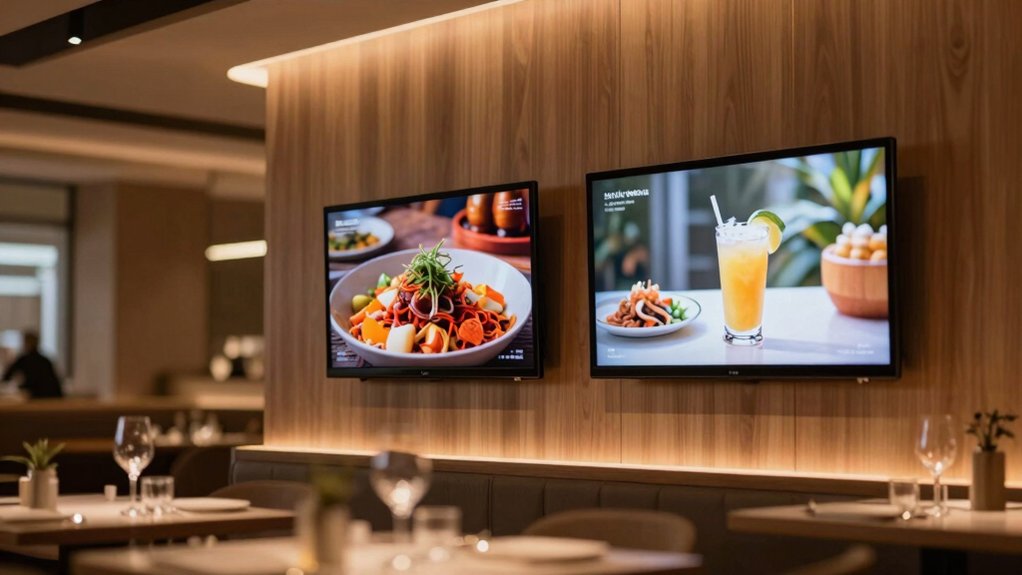

You’re looking to upgrade your restaurant’s menu displays, and you’ve got two solid options to contemplate. A 16:9 4K LED signage player offers cloud-based reliability with remote scheduling, while a weatherproof LED message board delivers vibrant, multi-color visuals. Both come with distinct advantages—but which one actually fits your needs depends on several critical factors you’ll need to evaluate first.
| Digital Signage Player for Restaurants with Menu Scheduler |
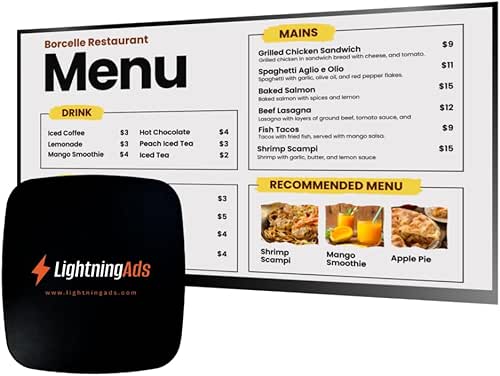
| Smart Automation Leader | Display Technology: LED display with 4K/1080p resolution | Content Management: Remote content management with scheduling capabilities | Power Options: USB-C power supply (single option) | VIEW LATEST PRICE | Read Our Analysis |
| VEVOR 32″x24″ LED Message Writing Board with Remote Control |
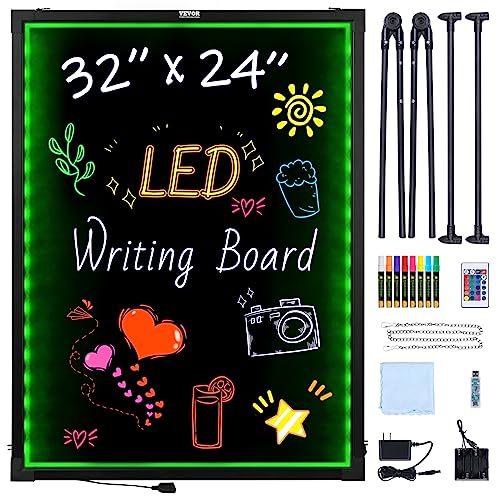
| Manual Display Classic | Display Technology: 16-color LED neon with 4 flash modes | Content Management: Remote control for display effects | Power Options: Four power options (AC, USB, power bank, battery box) | VIEW LATEST PRICE | Read Our Analysis |
More Details on Our Top Picks
Digital Signage Player for Restaurants with Menu Scheduler
How do you want to manage your restaurant’s digital menus without hiring a tech specialist? The Digital Signage Player for Restaurants with Menu Scheduler solves this problem. You plug in the HDMI power cable, connect to Wi-Fi, and you’re ready to start. Use the built-in Canvas Menu Designer to create menus directly—no extra software required. The free LightningAds tool lets you upload and schedule content at no cost. You can also upload PowerPoint files. The 16:9 LED display delivers 4K resolution with 300 candela/m2 brightness. Manage everything remotely from anywhere. Premium upgrades like the AI Image Enhancer improve picture quality automatically. You get a 1-year warranty and 30-day return guarantee.
- Display Technology:LED display with 4K/1080p resolution
- Content Management:Remote content management with scheduling capabilities
- Power Options:USB-C power supply (single option)
- Brightness Control:300 candela/m2 brightness
- Display Size:16:9 aspect ratio (TV size not specified)
- Durability:1-year standard warranty with ongoing coverage via monthly plan
- Additional Feature:Built-in Canvas Menu Designer
- Additional Feature:AI Image Enhancement Technology
- Additional Feature:Remote Content Management Anywhere
VEVOR 32″x24″ LED Message Writing Board with Remote Control
If you’re running a restaurant on a tight budget but still want eye-catching digital displays, the VEVOR 32″x24″ LED Message Writing Board delivers professional results without the premium price tag. You’ll get 16 LED colors, 4 flash modes, and 5 brightness levels to customize your menu presentation. The tempered glass construction resists impacts and temperature changes better than acrylic alternatives. Power your board through four options: AC outlet, USB, power bank, or battery box for outdoor placement. Eight fluorescent markers let you write directly on the board, and the included remote control adjusts all effects. Clean the glass with ease—no chalk dust residue remains.
- Display Technology:16-color LED neon with 4 flash modes
- Content Management:Remote control for display effects
- Power Options:Four power options (AC, USB, power bank, battery box)
- Brightness Control:5 adjustable brightness levels
- Display Size:32″x24″ dimensions
- Durability:Tempered glass construction with impact and high-temperature resistance
- Additional Feature:16 Colors, 4 Flash Modes
- Additional Feature:Multiple Power Supply Options
- Additional Feature:High-Performance Tempered Glass
Factors to Consider When Choosing Digital Menu Boards
When you’re selecting digital menu boards for your restaurant, you’ll need to evaluate display quality and resolution to ensure customers can read items from various distances, examine installation and setup complexity to determine if you need professional help or can handle it yourself, and assess content management capabilities so you can update menus quickly and efficiently. You should also calculate your budget and total cost, including the initial purchase price plus ongoing software fees and support, while confirming the system’s durability and maintenance requirements won’t create unexpected expenses down the road. These five factors work together to help you choose a system that fits your restaurant’s specific needs and operational capacity.
Display Quality And Resolution
What makes a digital menu board actually readable from across your restaurant? Resolution and brightness work together to deliver sharp, legible content. Choose 4K or 1080p displays that support up to 3840×2160 rendering for crisp menu text and images. Next, select brightness levels of at least 300 candela per square meter so customers read menus clearly under bright interior lighting or daylight. LED panel technology ensures uniform brightness and color accuracy across the entire screen surface, preventing dark spots or color shifts. Finally, opt for matte screen finishes that reduce glare and reflections, improving readability from multiple angles and varying lighting conditions. Screen size and 16:9 aspect ratio determine how much content fits onscreen while maintaining readable text scaling.
Installation And Setup Complexity
How you’ll set up your digital menu board depends on your technical comfort level and available resources. Plug & Play systems require only HDMI power cables and Wi-Fi connection, eliminating complicated installation steps. You connect the display, link it to your network, and you’re ready to load content. The built-in Canvas Menu Designer lets you create and edit menus directly without purchasing additional software. Remote content management means you update menus and schedule changes from anywhere, reducing trips to your location. If you choose optional premium tools like template builders or AI image enhancers, plan extra time for learning these features. Assess your team’s technical skills first, then select a setup approach matching your capability level and budget constraints.
Content Management Capabilities
Can you update your menu from your office, home, or anywhere with internet access? Remote content management makes this possible. You’ll schedule menu changes and promotions without visiting your restaurant in person. Built-in design tools like Canvas Menu Designer let you create menus directly within the system, eliminating the need for external software and reducing time to publication. You can upload different content formats, including PowerPoint files, to expand your menu options. Free scheduling features allow you to control when content appears on your displays at no extra cost. Premium options provide templates and AI enhancements if you need them. Display quality matters too—4K and 1080p screens render updated menus clearly, ensuring customers see your offerings attractively.
Budget And Total Cost
Once you’ve determined what content management features you need, you’ll want to assess the financial investment required for digital menu boards. Calculate the upfront hardware costs, including the display unit, power supply, and any cables like HDMI extensions. Next, identify ongoing subscription fees for content scheduling, AI enhancements, and template builders. Compare warranty options—a 1-year warranty versus extended coverage affects long-term expenses. Review display specifications that fit your budget, such as 1080p or 4K LED screens with 300 cd/m2 brightness. Check what accessories come included to avoid unexpected purchases. Finally, factor in cloud or software access fees for remote management. Total these expenses to determine your complete cost of ownership before committing to a system.
Durability And Maintenance Requirements
Because digital menu boards face constant exposure to temperature fluctuations, moisture, and physical contact in busy restaurant environments, you’ll want to prioritize materials and construction that can withstand these conditions. Select tempered glass surfaces instead of acrylic, as tempered glass offers superior impact and temperature resistance. Choose boards with easy-to-clean finishes that resist chalk dust and particulate buildup, reducing maintenance frequency. Apply protective matte or reduced-glare coatings to minimize wear from handling and environmental exposure. Verify power options including AC, USB, and battery capabilities to maintain operation during outages. Shield vulnerable components—hinges, connectors, and pens—with protective accessories that guard against moisture and dust infiltration. These measures directly extend your board’s lifespan and reduce long-term maintenance costs.
Connectivity And Power Options
When selecting a digital menu board, you’ll need to evaluate power delivery and network connectivity as foundational requirements for reliable operation. First, identify your location’s constraints: indoor installations typically support AC power, while outdoor setups benefit from USB-C, battery, or power bank options. Second, verify remote management capabilities through Wi-Fi or wired networks, allowing you to update menus without physical access to the device. Third, confirm that included peripherals—such as HDMI extensions and power supplies—match your mounting needs and installation environment. Finally, check for certified power supplies bearing FCC approval and durability ratings designed for continuous public-space operation. These steps ensure your menu board functions reliably while minimizing cable clutter and placement restrictions.
Remote Control And Scheduling Features
How much time do you spend manually updating menus at each location? Remote control and scheduling features eliminate this burden by letting you manage all displays from a single platform. You can upload content, including PowerPoint files, and schedule menu changes for specific dates and times without visiting each site. This automation handles promotional updates and seasonal changes automatically. Cloud-based systems provide real-time updates across multiple locations simultaneously. If your internet connection drops, offline fallbacks keep displays running without interruption. Built-in design tools let you create menus directly in the platform, removing the need for external software. You simply plan your updates, set the schedule, and the system executes changes automatically, freeing your team for other tasks.
Warranty And Long-Term Support
What’s actually covered when your digital menu board malfunctions or fails? Most manufacturers offer a standard one-year warranty covering parts and labor defects. You’ll want to verify what components are included—typically the display, processor, and internal components—versus what’s excluded, such as software issues or physical damage from mishandling.
Check whether warranty coverage continues if you’re on a subscription or premium plan for content management. Some providers tie warranty retention to active subscriptions, meaning your coverage lapses if you cancel services.
Review the return policy window, usually 30 days from purchase. Confirm any restocking fees or eligibility conditions. Identify available support channels—email, phone, or online portals—and expected response times. Ask about upgrade options if your device’s lifecycle ties to a content service.
Final Thoughts
You’ll transform your restaurant’s customer experience by selecting the right digital menu board for your specific needs. Evaluate display quality, installation requirements, durability, connectivity options, and scheduling capabilities before deciding. The 16:9 4K LED signage player suits multi-location operations needing cloud-based updates, while the weatherproof LED message board works well for outdoor or high-moisture environments. Match your choice to your restaurant’s layout, budget, and operational demands for optimal results.

Meet Ry, “TechGuru,” a 36-year-old technology enthusiast with a deep passion for tech innovations. With extensive experience, he specializes in gaming hardware and software, and has expertise in gadgets, custom PCs, and audio.
Besides writing about tech and reviewing new products, he enjoys traveling, hiking, and photography. Committed to keeping up with the latest industry trends, he aims to guide readers in making informed tech decisions.