
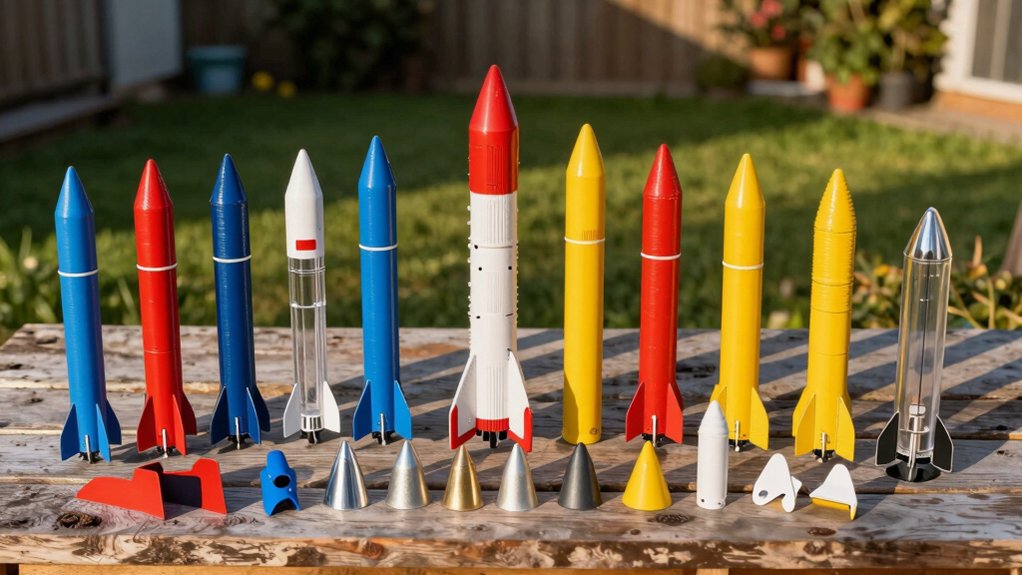

You can launch model rockets from your backyard if you select the right kit for your skill level and available space. Beginner kits like the Estes Alpha III come with launch pads and controllers, while mid-range options offer greater altitude potential. Before you commit to a purchase, you need to understand what each kit includes, how assembly time compares, and which engines suit your environment. What separates a safe, successful launch from a disappointing one?
| Estes 1980 Designer’s Special Rocket Model Kit Parts |

| Best For Designers | Skill Level: Intermediate | Maximum Altitude: Varies by rocket (multiple builds) | Included Launch System: Not included (sold separately) | VIEW LATEST PRICE | Read Our Analysis |
| Estes Athena Rocket-Building Kit for Ages 10 |

| Ready-to-Fly Pick | Skill Level: Beginner | Maximum Altitude: 1,125 ft (343 m) | Included Launch System: Not included (sold separately) | VIEW LATEST PRICE | Read Our Analysis |
| Estes Alpha III Beginner Rocket-Building Kit with Launch Pad |

| Best Beginner Bundle | Skill Level: Beginner | Maximum Altitude: 1,150 ft (351 m) | Included Launch System: Porta Pad II + Electron Beam Controller | VIEW LATEST PRICE | Read Our Analysis |
| Estes Taser Rocket Launch Set for Beginners |
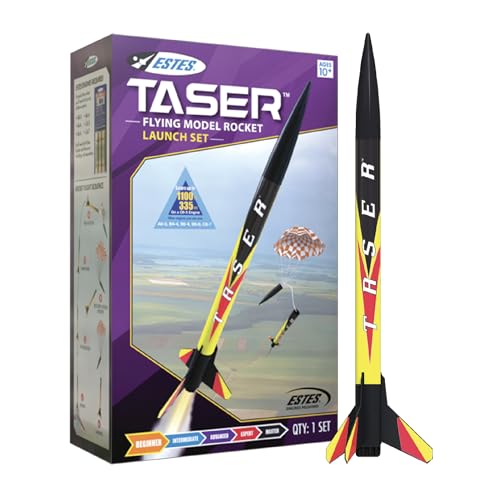
| Quick-Launch Option | Skill Level: Beginner | Maximum Altitude: 1,100 ft (335 m) | Included Launch System: Porta Pad II + Electron Beam Controller | VIEW LATEST PRICE | Read Our Analysis |
| Estes 2008 E2X Beginner Rocket Building Kit |

| Customizable Starter | Skill Level: Beginner | Maximum Altitude: 1,100 ft (335 m) | Included Launch System: Not included (sold separately) | VIEW LATEST PRICE | Read Our Analysis |
| Estes 1948 Big Bertha Rocket-Building Kit (Ages 10+) |

| Most Powerful Flight | Skill Level: Intermediate | Maximum Altitude: 500 ft | Included Launch System: Not included (sold separately) | VIEW LATEST PRICE | Read Our Analysis |
| National Geographic Motorized Air Rocket Launcher Toy |

| Best Non-Traditional | Skill Level: Beginner | Maximum Altitude: 200 ft | Included Launch System: Motorized launch pad (rechargeable) | VIEW LATEST PRICE | Read Our Analysis |
| Estes Rascal and Hijinks Rocket Launch Set (Ages 10+) |

| Best Dual-Pack | Skill Level: Beginner | Maximum Altitude: 1,100 ft (335 m) | Included Launch System: Porta Pad II + Electron Beam Controller | VIEW LATEST PRICE | Read Our Analysis |
| BAPHILE 12 Pack DIY Wood Rocket Craft Kits |

| Best Craft Activity | Skill Level: Beginner (craft/non-flying) | Maximum Altitude: Non-flying craft kit | Included Launch System: Not applicable (craft kit) | VIEW LATEST PRICE | Read Our Analysis |
| SainSmart Jr. 3D Wooden Puzzle SpaceX Starship Rocket Model |

| Advanced Puzzle Build | Skill Level: Advanced (adult) | Maximum Altitude: Non-flying display model | Included Launch System: Not applicable (display model) | VIEW LATEST PRICE | Read Our Analysis |
More Details on Our Top Picks
Estes 1980 Designer’s Special Rocket Model Kit Parts
For aspiring rocket builders who want to design multiple unique rockets, the Estes 1980 Designer’s Special supplies you with over 100 parts to construct up to eight different models. The kit includes assorted body tubes in five sizes, engine-mount tubes, centering rings, nose cones, wood fin sheets with templates, parachutes, streamers, and shock cords. You’ll need to purchase engines, igniters, a launch system, and recovery wadding separately. Assembly requires adult supervision for children under twelve. Follow NAR safety code guidelines, launch from an appropriate site, stand back at least fifteen feet, insert the safety key, issue a countdown, and proceed with launch. Estes has manufactured educational rocket kits since 1958, emphasizing hands-on STEM learning suitable for ages ten and up.
- Skill Level:Intermediate
- Maximum Altitude:Varies by rocket (multiple builds)
- Included Launch System:Not included (sold separately)
- Assembly Time:Multiple hours (build up to 8 rockets)
- Included Parachute/Recovery System:Parachutes and streamers included
- Recommended Age:10+ (adult supervision under 12)
- Additional Feature:Build up to 8 rockets
- Additional Feature:Over 100 included parts
- Additional Feature:Wood fin sheets with templates
Estes Athena Rocket-Building Kit for Ages 10
The Estes 2452 Athena’s ready-to-fly design makes it the ideal choice for beginners aged 10 and up who want to launch rockets without assembly work. This blue model includes a 12-inch parachute and requires only 15 minutes of preparation. You’ll need to purchase compatible engines separately—options range from A8-3 to C6-7, with the C6-7 reaching 1,125 feet. You must also buy a launch pad, controller, starters, recovery wadding, and batteries separately. The kit follows NAR safety codes and requires adult supervision for users under 12. Maintain a 15-foot launch distance minimum to ensure safe operations.
- Skill Level:Beginner
- Maximum Altitude:1,125 ft (343 m)
- Included Launch System:Not included (sold separately)
- Assembly Time:15 minutes
- Included Parachute/Recovery System:12-inch parachute included
- Recommended Age:10+ (adult supervision under 12)
- Additional Feature:Ready-to-fly, no building
- Additional Feature:Reusable plastic components
- Additional Feature:12-inch bright parachute
Estes Alpha III Beginner Rocket-Building Kit with Launch Pad
Wondering where to start your model rocket journey? The Estes Alpha III Beginner Rocket-Building Kit with Launch Pad offers everything you need for your first launch. This E2X design assembles in about one hour using basic tools. You’ll receive the rocket parts, Porta-Pad II Launch Pad, and Electron Beam Launch Controller. Before flying, purchase compatible engines like A8-3 or B6-4 and four AA batteries separately. The Alpha III reaches altitudes up to 1,150 feet. Follow NAR safety codes: launch from appropriate sites, maintain 15-foot distance, insert the safety key, and count down before launch. Adult supervision is recommended for builders under twelve years old.
- Skill Level:Beginner
- Maximum Altitude:1,150 ft (351 m)
- Included Launch System:Porta Pad II + Electron Beam Controller
- Assembly Time:About 1 hour
- Included Parachute/Recovery System:Parachute included
- Recommended Age:10+ (adult supervision under 12)
- Additional Feature:E2X Easy to Assemble
- Additional Feature:Launch pad included
- Additional Feature:One-piece fin unit
Estes Taser Rocket Launch Set for Beginners
Aspiring young rocketeers aged 10 and up’ll find a quick-launch option in the Estes Taser, a complete beginner kit that eliminates lengthy assembly and gets you airborne in about 10 minutes. The set includes a precolored body tube, molded fins, decals, recovery parachute, Porta-Pad II launch pad, and Electron Beam launch controller. You’ll need to purchase Estes rocket engines (A8-3, B4-4, B6-4, B6-6, or C6-5), starters, recovery wadding, and four AA batteries separately. The Taser reaches altitudes up to 1,100 feet with appropriate engine selection. Follow NAR safety code guidelines, maintain 15-foot clearance from the launch site, insert the safety key, count down, and launch. Adult supervision is recommended for users under 12.
- Skill Level:Beginner
- Maximum Altitude:1,100 ft (335 m)
- Included Launch System:Porta Pad II + Electron Beam Controller
- Assembly Time:About 10 minutes
- Included Parachute/Recovery System:Parachute included
- Recommended Age:10+ (adult supervision under 12)
- Additional Feature:10 minutes prep time
- Additional Feature:Self-stick decals included
- Additional Feature:3-fin configuration design
Estes 2008 E2X Beginner Rocket Building Kit
For beginners aged 10 and up, Estes offers a customizable starter rocket that you’ll build from individual components. This 13.5-inch model includes a nose cone, plastic fins, body tube, and recovery parachute. You’ll need to purchase engines separately—compatible options range from 1/2A6-2 to C6-7—which determine your rocket’s altitude performance, reaching up to 1,100 feet with proper selection. The kit requires a launch pad system, starters, recovery wadding, and batteries, all sold separately. Self-stick decals let you personalize the all-white design before launching. Follow NAR safety guidelines, maintain 15-foot launch distances, and supervise children under 12 throughout assembly and flight operations.
- Skill Level:Beginner
- Maximum Altitude:1,100 ft (335 m)
- Included Launch System:Not included (sold separately)
- Assembly Time:Quick prep (minimal assembly)
- Included Parachute/Recovery System:Recovery parachute included
- Recommended Age:10+ (adult supervision under 12)
- Additional Feature:All-white customizable design
- Additional Feature:Self-stick decals included
- Additional Feature:13.5-inch tall model
Estes 1948 Big Bertha Rocket-Building Kit (Ages 10+)
The Big Bertha delivers the most powerful flight performance for intermediate builders seeking serious altitude. You’ll assemble the durable body tube, molded nose cone, and laser-cut balsa fins in about one hour. The kit includes an 18-inch recovery parachute and decals but requires separate purchases: engines (B4-2, B4-4, B6-2, B6-4, or C6-5), starters, recovery wadding, launch pad, and four AA batteries. Your rocket reaches 500 feet with standard engines, displaying slow, realistic liftoff. You’ll need a launch site with 15-foot minimum distance and must follow NAR safety codes. Adult supervision applies for builders under twelve. Pair your kit with the Estes Porta-Pad II and Electron Beam Controller for optimal launching.
- Skill Level:Intermediate
- Maximum Altitude:500 ft
- Included Launch System:Not included (sold separately)
- Assembly Time:About 1 hour
- Included Parachute/Recovery System:18-inch parachute included
- Recommended Age:10+ (adult supervision under 12)
- Additional Feature:Laser-cut balsa fins
- Additional Feature:18-inch recovery parachute
- Additional Feature:500 ft liftoff profile
National Geographic Motorized Air Rocket Launcher Toy
Kids ages 8–12 who want hands-on STEM learning without building from scratch will find this motorized launcher stands apart from traditional assembly kits. The rechargeable rocket features three flight settings, allowing you to select launch heights that suit outdoor space constraints. You’ll get up to twenty flights per charge, making extended play sessions possible without interruption. The included launch pad, charging cable, and customization decals complete the package. Helicopter-like rotor blades ensure safe landings, reducing damage risk. Simply charge the battery, select your flight mode using the button control, and launch. This educational toy delivers practical aerospace exploration without assembly requirements.
- Skill Level:Beginner
- Maximum Altitude:200 ft
- Included Launch System:Motorized launch pad (rechargeable)
- Assembly Time:Ready-to-use (no assembly)
- Included Parachute/Recovery System:Helicopter rotor blades (motorized design)
- Recommended Age:8+ (ages 8-12)
- Additional Feature:Rechargeable motorized design
- Additional Feature:20 flights per charge
- Additional Feature:3 adjustable flight settings
Estes Rascal and Hijinks Rocket Launch Set (Ages 10+)
Looking to launch your first model rockets without building from scratch? The Estes Rascal and Hijinks set gives you two ready-to-fly rockets, each about 14.5 inches tall. You’ll get a launch pad and controller included. Before launching, you’ll need to purchase engines (A8-3 through C6-7 options available), starters, recovery wadding, and four AA batteries separately. The rockets reach altitudes up to 1,100 feet with appropriate engines. Each includes a 12-inch recovery parachute. Follow NAR safety codes: choose an open site, maintain 15-foot distance, insert the safety key, and countdown before launch. This set suits ages 10 and up, with adult supervision recommended for younger flyers.
- Skill Level:Beginner
- Maximum Altitude:1,100 ft (335 m)
- Included Launch System:Porta Pad II + Electron Beam Controller
- Assembly Time:Minimal setup (ready-to-fly)
- Included Parachute/Recovery System:12-inch parachute (2 rockets)
- Recommended Age:10+ (adult supervision under 12)
- Additional Feature:Two ready-to-fly rockets
- Additional Feature:Dual rocket set included
- Additional Feature:No building required
BAPHILE 12 Pack DIY Wood Rocket Craft Kits
Want an activity that combines creativity, learning, and hands-on fun in one package? The BAPHILE 12 Pack DIY Wood Rocket Craft Kits delivers exactly that. You receive twelve wooden rockets, colored pencils, cartoon stickers, and diamond stickers to customize each piece. Start by decorating the blank wood rockets with the included pencils, applying stickers for detail, then inserting foil to complete assembly. This straightforward two-step process takes minimal time. You’ll find these kits suitable for rainy days, birthday parties, or goody bag fillers. Kids and adults alike develop creative skills while building decorative rockets. The small, portable design makes storage and transport convenient for various settings.
- Skill Level:Beginner (craft/non-flying)
- Maximum Altitude:Non-flying craft kit
- Included Launch System:Not applicable (craft kit)
- Assembly Time:10-15 minutes (craft assembly)
- Included Parachute/Recovery System:Not applicable (craft kit)
- Recommended Age:Kids/all ages
- Additional Feature:12 wooden rockets included
- Additional Feature:12 colored pencils included
- Additional Feature:3D cartoon stickers included
SainSmart Jr. 3D Wooden Puzzle SpaceX Starship Rocket Model
The SainSmart Jr. 3D Wooden Puzzle SpaceX Starship Rocket Model offers a stationary building experience rather than a launch-capable kit. You receive precision-cut wooden pieces that you assemble into a detailed 24-inch display model of SpaceX’s Super Heavy booster. The assembly process requires several hours of focused work, providing mental engagement without outdoor launch preparation. Once completed, you display the finished model on your desk or shelf as a decorative centerpiece. This puzzle suits space enthusiasts and model builders aged 14 and older seeking a challenging construction project. The eco-friendly wood materials remain durable for long-term exhibition, making this option ideal for collectors prioritizing detailed craftsmanship over functional rocket performance.
- Skill Level:Advanced (adult)
- Maximum Altitude:Non-flying display model
- Included Launch System:Not applicable (display model)
- Assembly Time:Hours (3D puzzle assembly)
- Included Parachute/Recovery System:Not applicable (display model)
- Recommended Age:14+ (teens and adults)
- Additional Feature:Premium eco-friendly wood
- Additional Feature:SpaceX Starship themed model
- Additional Feature:Display-quality finished model
Factors to Consider When Choosing a DIY Model Rocket Kit
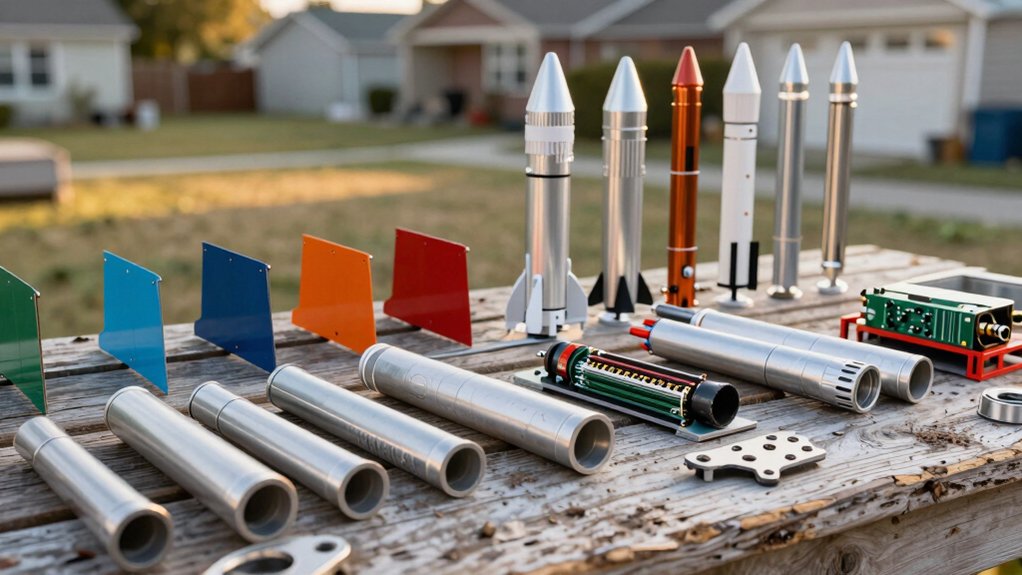
You’ll want to evaluate your age and skill level first, since beginner kits use simpler designs and fewer parts, while advanced kits require more technical knowledge and precision assembly. Next, check the assembly time required—some kits take 30 minutes to complete, while others demand 5+ hours—and confirm whether the launch system comes included or if you must purchase it separately, plus verify that engine compatibility options match the engines available in your area. Finally, review the flight altitude performance specifications to understand how high each kit can launch, which typically ranges from 500 feet for basic models to 2,000+ feet for high-performance rockets.
Age And Skill Level
How do you match a model rocket kit to the builder’s age and experience? Start by checking the manufacturer’s recommended age range, which typically begins at age 10 with adult supervision for younger builders. For first-time rocketeers, select beginner kits labeled E2X or similar, featuring straightforward assembly and minimal parts. These kits require one to two hours of build time and basic tools. For intermediate builders aged 12 and up with prior experience, choose kits with more components and detailed instructions requiring several hours of assembly. Advanced builders can handle complex designs demanding precise fin alignment and engine compatibility understanding. Always verify that your chosen kit aligns with the NAR model-rocket safety code and includes appropriate supervision guidelines for your builder’s age.
Assembly Time Required
Once you’ve selected a kit matching your builder’s age and experience level, you’ll need to contemplate how much time the assembly process actually takes. Most DIY model rocket kits require one to two hours for complete assembly, though complexity varies significantly. E2X and ready-to-fly models demand minimal prep time and launch sooner. Prebuilt options eliminate construction entirely but still require launch equipment setup. Detailed instructions, decals, and fin templates extend assembly duration through precision work and finishing touches. Before your first launch, allocate additional time for safety inspections, engine mounting, and recovery system attachment. Calculate total preparation by identifying your kit’s complexity level, then add buffer time for these critical preflight procedures.
Launch System Included
A launch system included with your model rocket kit typically consists of a Porta-Pad II launch pad and an electronic launch controller, both of which enable you to set up and operate your rocket immediately after assembly. Some kits bundle the complete launch system, while others require you to purchase the pad and controller separately. Included systems work with standard Estes engines and incorporate safety keys and countdown procedures that follow NAR safety guidelines. Ready-to-fly or ready-to-assemble kits with integrated launch systems minimize additional purchases for beginning rocketeers. The quality and features of your launch system directly affect ease of use, preparation time, and flight readiness, so examine these components carefully when selecting your kit.
Engine Compatibility Options
What engines‘ll your rocket actually use? Check your kit’s manual for compatible engine classes and model numbers, such as A6-3, B4-4, or C6-5. Different engines deliver different thrust levels, affecting your rocket’s altitude and flight performance. Some kits include specific engines; others require you to purchase them separately. Higher-numbered engines generally produce greater thrust, enabling flights exceeding 1,100 feet, while lower-numbered options stay below 1,000 feet. Before buying engines, verify three things: the engine’s thrust class matches your kit’s specifications, the mount type fits your airframe, and the engine length accommodates your rocket’s design. You’ll also need starters and recovery wadding sold with compatible engines. Cross-reference your kit’s documentation with engine packaging to confirm proper pairing.
Flight Altitude Performance
Your engine choice directly determines how high your rocket will fly, so understanding altitude performance becomes your next planning step. DIY model rocket kits typically reach 500 to over 1,100 feet depending on engine class and airframe design. A 1/2A engine produces lower altitudes, while B and C-class engines achieve higher performance. You’ll also need to consider airframe weight, fin configuration, and stability—heavier rockets climb less efficiently than lighter ones. Check the manufacturer’s specifications for projected maximum altitude with specific engine combinations. For example, certain B/C engine pairings deliver 1,100–1,125 feet. Remember that higher altitudes demand appropriate recovery systems and adherence to NAR safety codes, plus suitable launch sites for safe operations.
Safety Code Compliance
Before you assemble or launch any DIY model rocket kit, you’ll need to verify that it meets National Association of Rocketry (NAR) safety code standards. Check the kit’s documentation to confirm it includes a certified launch system with safety devices like a safety key, launch pad, and recovery wadding. Verify that recommended age and supervision levels match your experience—kits for ages under 12 require adult supervision. Confirm all engines and accessories are approved for model rocketry use and follow specific handling instructions. Review included safety warnings covering site selection, stand-back distance, and countdown protocol. These compliance steps ensure your launches remain safe and legally sound before ignition.
Educational Value Offered
Learning potential should guide your kit selection because it determines what skills and concepts you’ll actually develop during assembly and flight. Choose kits with multi-step assembly that require problem-solving rather than simple snap-together designs. Look for explicit learning objectives tied to STEM concepts like aerodynamics, thrust, and impulse. E2X Easy-to-Assemble kits reduce initial complexity, letting you focus on experimentation and understanding flight principles. Select kits offering different engine compatibilities so you can explore how varying thrust and mass affect altitude and flight stability. These hands-on comparisons reinforce physics concepts directly. Verify that your kit aligns with the National Association of Rocketry safety code, which reinforces proper safety practices during launches and site selection. Educational value increases when you apply what you’ve learned to actual flights.
Component Quality Materials
The materials that make up your rocket’s structure directly affect how well it flies and how many times you can launch it. Look for kits with durable body tubes, molded nose cones, and wood or laser-cut fins—these components ensure structural integrity and stable flight. Check whether the kit includes high-quality recovery equipment, such as an 18-inch parachute, which guarantees safe, controlled landings. Examine what’s reusable across flights: parachutes, nose cones, and body tubes reduce costs when you launch multiple times. Verify that decals are precolored or self-stick to maintain proper component alignment during assembly. Choose E2X designs with clear instructions to minimize assembly errors and improve overall build quality. Quality materials directly support both performance and affordability.
Final Thoughts
You’ll want to select a kit that matches your experience level and available space. Beginner kits like the Estes Alpha III offer simple assembly and safe launches in smaller yards. Mid-range options provide more customization and higher altitude flights. Verify you’ve got the engines, launch pad, and controller included. Check NAR guidelines for your area, and always supervise launches. Start simple, then progress to advanced kits as your skills improve.

Meet Ry, “TechGuru,” a 36-year-old technology enthusiast with a deep passion for tech innovations. With extensive experience, he specializes in gaming hardware and software, and has expertise in gadgets, custom PCs, and audio.
Besides writing about tech and reviewing new products, he enjoys traveling, hiking, and photography. Committed to keeping up with the latest industry trends, he aims to guide readers in making informed tech decisions.