
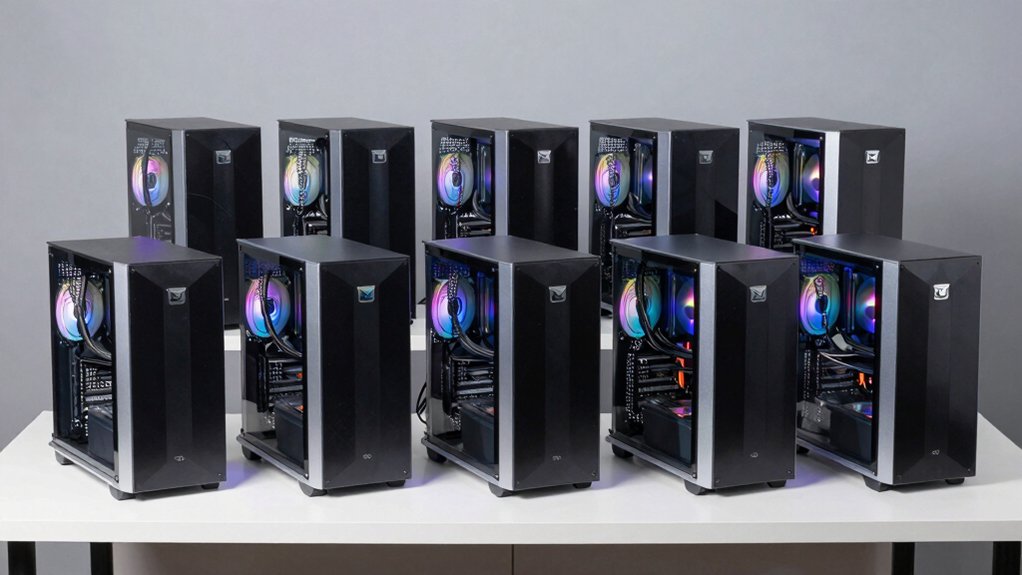

Here are the 10 best dual-system PC cases you should consider today, each built for back-to-back layouts, dual PSUs, and independent cooling paths. Start with Thermaltake Core W200 for two 600mm radiators and modular panels, then Hyte Y70 for dual-system aesthetics and a 2.5K LCD. Consider Rack Mount 3U for dual mini-ITX boards, CORSAIR AIR 5400 RS‑R for isolated heat zones, and MUSETEX with seven ARGB fans. Then evaluate NZXT H9 Flow, Lian Li LANCOOL 217, CORSAIR Frame 4500X RS, and note the key factors. If you want more, you’ll find further details below.
| Thermaltake Core W200 Dual-System Extreme Water Cooling Case |
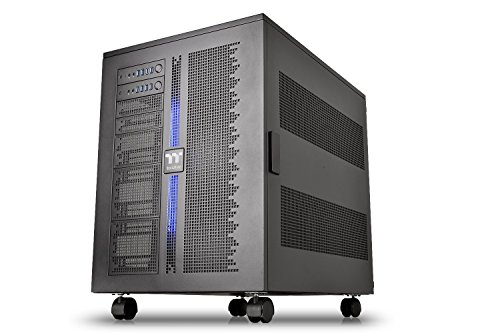
| Dual-System Powerhouse | Type/Category: Dual-system PC case | Dual-Systems / Dual- chamber capability: Dual-system capable | Radiator/CPU cooling support: Supports up to two 600mm radiators | VIEW LATEST PRICE | Read Our Analysis |
| Hyte Y70 ATX Case with 2.5K LCD Screen |

| Ultra-Wlim de Dual-Display | Type/Category: ATX case | Dual-Systems / Dual- chamber capability: Not explicitly dual-system | Radiator/CPU cooling support: Up to 360mm radiator on side/top | VIEW LATEST PRICE | Read Our Analysis |
| Rack Mount PC 3U Case with Dual PSU (Industrial) |
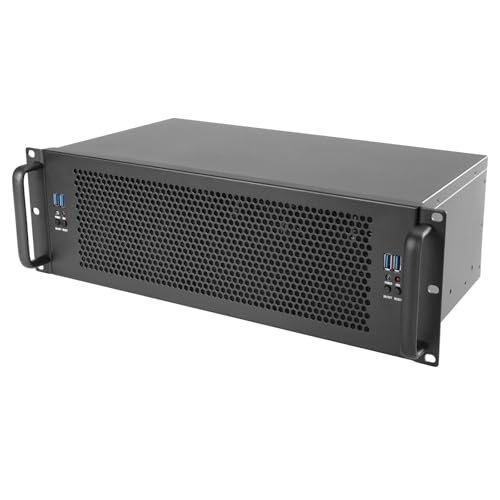
| Rack-Ready Dual-Node | Type/Category: 3U rack-mount PC case | Dual-Systems / Dual- chamber capability: Dual-mini-ITX within one chassis | Radiator/CPU cooling support: CPU cooler height max 54 mm; no radiator spec listed | VIEW LATEST PRICE | Read Our Analysis |
| CORSAIR AIR 5400 RS-R ARGB Mid-Tower Case |

| Superior Cooling Zoning | Type/Category: Mid-tower PC case | Dual-Systems / Dual- chamber capability: Single-system (standard) | Radiator/CPU cooling support: Supports 360mm radiator in front chamber | VIEW LATEST PRICE | Read Our Analysis |
| MUSETEX ATX PC Case with 7 ARGB Fans |

| High-ARGB Showpiece | Type/Category: ATX gaming PC case | Dual-Systems / Dual- chamber capability: Single-system | Radiator/CPU cooling support: Not specified (focus on fans) | VIEW LATEST PRICE | Read Our Analysis |
| ASUS TUF GT502 Horizon Mid-Tower PC Case |

| Panoramic Modular | Type/Category: ATX mid-tower PC case | Dual-Systems / Dual- chamber capability: Single-system | Radiator/CPU cooling support: Supports up to many fans; radiator specifics not listed | VIEW LATEST PRICE | Read Our Analysis |
| HAVN HS 420 VGPU Dual-Chamber Case with Cooling |

| GPU-Heavy Dual-Chamber | Type/Category: Dual-chamber case | Dual-Systems / Dual- chamber capability: Dual-chamber, supports two systems via VGPU kit option | Radiator/CPU cooling support: GPU-focused cooling with general airflow; radiator not specified | VIEW LATEST PRICE | Read Our Analysis |
| NZXT H9 Flow RGB 2025 PC Case |

| H9 Flow Integration | Type/Category: Mid-tower PC case | Dual-Systems / Dual- chamber capability: Single-system | Radiator/CPU cooling support: Supports up to 420mm radiator (top/front-right) | VIEW LATEST PRICE | Read Our Analysis |
| Lian Li LANCOOL 217 Walnut PC Case with Fans |
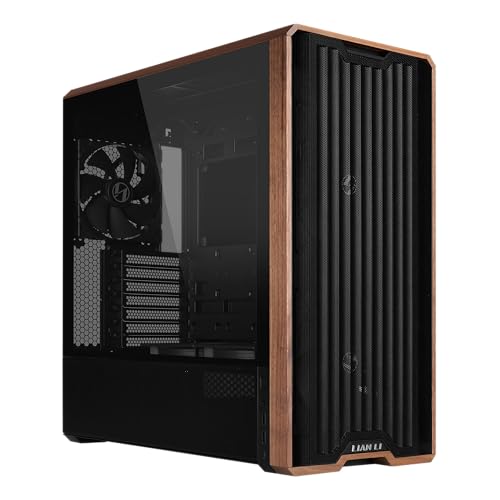
| Wooden Aesthetic Flex | Type/Category: ATX case | Dual-Systems / Dual- chamber capability: Dual-PSU capable, back-connect layout (dual power paths) | Radiator/CPU cooling support: Not specified (mentions airflow and PSU cooling) | VIEW LATEST PRICE | Read Our Analysis |
| CORSAIR Frame 4500X RS Mid-Tower ARGB Case |

| Frame-Driven Modularity | Type/Category: ARGB mid-tower case | Dual-Systems / Dual- chamber capability: Single-system | Radiator/CPU cooling support: Supports dual 360mm radiators; broad modular cooling | VIEW LATEST PRICE | Read Our Analysis |
More Details on Our Top Picks
Thermaltake Core W200 Dual-System Extreme Water Cooling Case
The Thermaltake Core W200 is ideal if you need two independent PC systems in one case. You set up two back-to-back systems, each with its own motherboard, power supply, and VGA card. It is fully modular and dismantles into multiple configurations, so you choose how to arrange components. You can install two sets of I/O panels, USB 3.0 and HD audio, for each system. The large acrylic window lets you view cooling and cable routing clearly. It supports extreme water cooling with up to two 600mm radiators, and it offers hidden drive locations for airflow. Warranty is three years.
- Type/Category:Dual-system PC case
- Dual-Systems / Dual- chamber capability:Dual-system capable
- Radiator/CPU cooling support:Supports up to two 600mm radiators
- Internal layout concept:Dual back-to-back systems
- Visual features/glassthemed visibility:Large acrylic window
- ARGB / lighting:Interchangeable LED lighting strips
- Additional Feature:Dual-system stacked back-to-back
- Additional Feature:Fully modular/dismantle design
- Additional Feature:Interchangeable LED strips
Hyte Y70 ATX Case with 2.5K LCD Screen
If you’re building a dual-system PC and need a clearly visible control surface, the Hyte Y70 stands out with its 14.9-inch 2.5K LCD touchscreen. You use the 682 x 2560 resolution, 60Hz refresh, and 10-point touch to monitor and adjust settings with HTYE Nexus software. Choose from four colorways and a 3-piece panoramic glass design for a unified look. The dual chamber interior supports a massive 4-slot vertical GPU with the PCIe 4.0 x16 riser. Install up to 360mm side radiators or 68mm top radiators, plus cold-floor cooling for three 120mm or two 140mm fans.
- Type/Category:ATX case
- Dual-Systems / Dual- chamber capability:Not explicitly dual-system
- Radiator/CPU cooling support:Up to 360mm radiator on side/top
- Internal layout concept:Dual chambers with panoramic glass
- Visual features/glassthemed visibility:3-piece panoramic glass
- ARGB / lighting:HTYE Nexus software for screen; lighting not stated
- Additional Feature:14.9” integrated LCD touchscreen
- Additional Feature:Dual chamber interior
- Additional Feature:PCIe 4.0 x16 riser included
Rack Mount PC 3U Case with Dual PSU (Industrial)
This 3U rack-mount PC case with dual PSU is ideal for users who need two independent systems inside a single chassis. You install two mini-ITX motherboards, each with its own dual PCI full-height slots. Ensure both boards fit the 9.45-inch depth and 54 mm CPU cooler height. Fit two Flex ATX PSUs for independent power. Use front 3×120 mm fans with filters to maintain airflow, and keep M.2/PCIe NVMe storage for fast access. Mount the unit in a standard 19-inch rack, or convert to wall-mount if needed. Include wall-mount brackets if required for installation.
- Type/Category:3U rack-mount PC case
- Dual-Systems / Dual- chamber capability:Dual-mini-ITX within one chassis
- Radiator/CPU cooling support:CPU cooler height max 54 mm; no radiator spec listed
- Internal layout concept:Dual mini-ITX with dual PCIe slots
- Visual features/glassthemed visibility:Glass panel? (not specified; industrial)
- ARGB / lighting:Not specified
- Additional Feature:Wall-mount capability
- Additional Feature:Dual mini-ITX motherboards
- Additional Feature:Supports two Flex ATX PSUs
CORSAIR AIR 5400 RS-R ARGB Mid-Tower Case
Choose the CORSAIR AIR 5400 RS-R ARGB Mid-Tower Case when you need strong cooling with distinct, isolated chambers. This case uses a triple-chamber design with a front CPU cooling chamber for a 360mm radiator, a central GPU/motherboard chamber for vertical airflow, and a PSU/storage chamber with separate intake and exhaust. It ships with three RS120-R ARGB fans and a reverse-rotor airflow layout for efficiency. Benefit from isolated heat zones that prevent heat transfer, and from a bottom duct that accelerates airflow. Use the dedicated ducts to maximize cooling while keeping noise low and components stable.
- Type/Category:Mid-tower PC case
- Dual-Systems / Dual- chamber capability:Single-system (standard)
- Radiator/CPU cooling support:Supports 360mm radiator in front chamber
- Internal layout concept:Triple-chamber/isolated cooling zones
- Visual features/glassthemed visibility:Panoramic/isolated chambers; not explicit glass emphasis
- ARGB / lighting:ARGB in fans (RS120-R ARGB)
- Additional Feature:Triple-chamber layout
- Additional Feature:Isolated CPU and GPU cooling
- Additional Feature:Bottom ducted airflow
MUSETEX ATX PC Case with 7 ARGB Fans
MUSETEX’s K2 ATX PC case stands out for its 270° panoramic full-view design and seven pre-installed PWM ARGB fans, which collectively deliver strong cooling right out of the box and room to expand up to 10 fans if needed. You’ll install ATX, Micro-ATX, or Mini-ITX boards in the orderly internal layout. Connect the upgraded IO panel: Type-C, USB 3.0 ports, mic and audio, plus power and reset. Seven ARGB fans provide airflow: three side, three top, one rear. Use magnetic top dust filter and bottom PSU filter to reduce dust while maintaining cooling. Follow included screws and manual for assembly.
- Type/Category:ATX gaming PC case
- Dual-Systems / Dual- chamber capability:Single-system
- Radiator/CPU cooling support:Not specified (focus on fans)
- Internal layout concept:Dual-view tempered glass; standard internal layout
- Visual features/glassthemed visibility:Full-view dual tempered glass
- ARGB / lighting:7 ARGB fans
- Additional Feature:7 ARGB fans pre-installed
- Additional Feature:Magnetic dust filters
- Additional Feature:Side-panel air ducts
ASUS TUF GT502 Horizon Mid-Tower PC Case
If you need a dual-chamber design that keeps CPU and GPU cooling separate, the ASUS TUF GT502 Horizon mid-tower is a strong candidate. This case uses a dual-chamber chassis to separate cooling zones, improving airflow. It supports up to 13 fans and offers a panoramic tempered glass view. Its fully modular design lets you detach most panels and mounting components, and it includes tool-free side panels with a rear-hidden release button. The front panel provides a USB 10 Gbps Type-C port. Follow the instructions to install components, route cables, and configure ARGB lighting for a clean build.
- Type/Category:ATX mid-tower PC case
- Dual-Systems / Dual- chamber capability:Single-system
- Radiator/CPU cooling support:Supports up to many fans; radiator specifics not listed
- Internal layout concept:Dual-chamber / panoramic glass design
- Visual features/glassthemed visibility:Panoramic tempered glass
- ARGB / lighting:Custom ARGB lighting
- Additional Feature:Dual-Chamber design
- Additional Feature:Up to 13 fans supported
- Additional Feature:Panoramic tempered glass
HAVN HS 420 VGPU Dual-Chamber Case with Cooling
The HAVN HS 420 VGPU Dual-Chamber Case with Cooling stands out for its dual-chamber design that directs cool air precisely where the GPU needs it most. You follow the core design: use the dual chamber for GPU cooling, ensure bottom intake feeds the center GPU, and rely on angled bottom fan brackets and the glass airflow guide to keep air on the GPU intake. Plan for eleven 140mm fans total and up to 420mm radiators on top and right. Use the VGPU kit and PCIe 5.0 X16 riser cable to showcase the GPU without losing performance.
- Type/Category:Dual-chamber case
- Dual-Systems / Dual- chamber capability:Dual-chamber, supports two systems via VGPU kit option
- Radiator/CPU cooling support:GPU-focused cooling with general airflow; radiator not specified
- Internal layout concept:Dual-chamber with VESA/GPu showcase
- Visual features/glassthemed visibility:UniSheet glass panel
- ARGB / lighting:VGPU kit lighting not specified
- Additional Feature:VGPU kit and PCIe 5.0 riser
- Additional Feature:11x 140mm fan support
- Additional Feature:Vibration isolation brackets
NZXT H9 Flow RGB 2025 PC Case
The NZXT H9 Flow RGB 2025 PC Case stands out for its dual-chamber design that keeps the PSU and drives separate from the main components, enabling cleaner cable routing and better thermal management. You’ll install components with the main chamber and the PSU chamber kept separate. Use the panoramic wraparound glass for visibility, and plan cable routing through the extra-wide channels. Choose airflow by leveraging perforated panels and angled front-right fans. Install up to a 420mm radiator top or front-right, then add the included F420 RGB Core and F120Q CV fans. Manage cables with Velcro straps and tie-down points for a tidy build.
- Type/Category:Mid-tower PC case
- Dual-Systems / Dual- chamber capability:Single-system
- Radiator/CPU cooling support:Supports up to 420mm radiator (top/front-right)
- Internal layout concept:Dual-chamber with panoramic glass
- Visual features/glassthemed visibility:Tempered glass wraparound
- ARGB / lighting:F420 RGB Core included; ARGB lighting theme
- Additional Feature:10-fan capacity
- Additional Feature:Rear 120mm CV fan
- Additional Feature:Back-connect motherboard support
Lian Li LANCOOL 217 Walnut PC Case with Fans
This model balances airflow and cable management with its five pre-installed fans, making the Lian Li LANCOOL 217 Walnut a strong choice if you want strong cooling without extra fan installation. You install components by using the tool-less mounts and flexible fan locations. Front fans can be left as-is for balanced CPU/GPU cooling, or adjusted toward the CPU for higher CPU cooling. The case hides cables with back-connect motherboard support, and you choose PSU orientation to suit cable management. It supports PSUs up to 220mm and offers dual power buttons for easy access.
- Type/Category:ATX case
- Dual-Systems / Dual- chamber capability:Dual-PSU capable, back-connect layout (dual power paths)
- Radiator/CPU cooling support:Not specified (mentions airflow and PSU cooling)
- Internal layout concept:Back-connect motherboard and dual PSU mounting
- Visual features/glassthemed visibility:Back-connect motherboard with wood/fiber aesthetic; glass not emphasized
- ARGB / lighting:Lighting not specified
- Additional Feature:Real wood accents
- Additional Feature:Dual PSU mounting options
- Additional Feature:Back-connect motherboard support
CORSAIR Frame 4500X RS Mid-Tower ARGB Case
Looking for a case that blends modularity with strong airflow? You choose the CORSAIR Frame 4500X RS. Start by noting its 3 RS120R ARGB fans and the panoramic glass for a clear view of components. Use FRAME’s modular system to upgrade the motherboard tray, swap side fans with a cable cover, or replace the PSU shroud for vertical GPU mounting. Plan cooling around InfiniRail: mount 120mm or 140mm fans with targeted airflow. Check compatibility: supports ATX, E-ATX boards, dual 360mm radiators, and up to 10x 120mm fans. Verify dimensions and drive slots before assembly.
- Type/Category:ARGB mid-tower case
- Dual-Systems / Dual- chamber capability:Single-system
- Radiator/CPU cooling support:Supports dual 360mm radiators; broad modular cooling
- Internal layout concept:Frame Modular interior with InfiniRail
- Visual features/glassthemed visibility:Single-piece curved glass; panoramic view
- ARGB / lighting:Reverse-rotor ARGB fans (RGB)
- Additional Feature:InfiniRail mounting system
- Additional Feature:Dual 360mm radiator support
- Additional Feature:Fram e modular expansion
Factors to Consider When Choosing Dual-System PC Cases
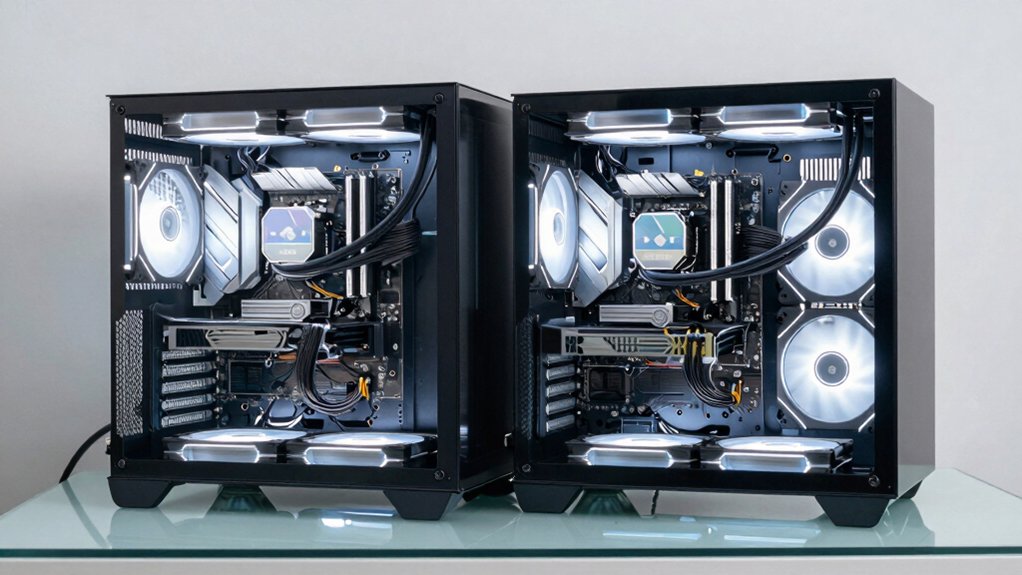
Choose dual-system cases by evaluating versatility, modularity, and how you’ll break down components for upgrades. Assess cooling capacity options, interior layout flexibility, and how visual accessibility affects wiring and maintenance, then map steps to your needs. For each option, outline concrete actions: compare available bays and brackets, test airflow paths, and verify clearances for GPUs and radiators.
Dual-System Versatility
Are you selecting a dual-system PC case? Start by evaluating versatility: ensure the case can house two separate motherboards, power supplies, and GPUs in back-to-back configurations for independent or synchronized builds. Check for a fully modular, dismantle design that enables reconfiguration into multiple layouts to optimize space, airflow, and component access for both systems. Confirm dual motherboard and I/O panel support, so each system has its own input/output ports, often including two 4x USB 3.0+HD Audio panels per system. Look for separate cooling and airflow paths for each chamber to manage heat without cross-interference. Assess back-panel accessibility and hidden drive locations to maximize visibility and airflow while maintaining organized segregation between the two systems.
Modularity And Breakdown
Modularity and breakdown are core to choosing a dual-system PC case. You look for a design that houses two separate motherboards, power supplies, and GPUs in a back-to-back setup for independent operation. Fully modular or dismantle-friendly builds enable multiple configurations and easy breakdown for customization or maintenance. Some models explicitly support dual motherboard panels and I/O per system, allowing independent peripheral layouts. Back-panel and perforated sections often conceal drives while improving airflow between the two systems. The ability to stack or reconfigure components without cross-system interference is a key modularity benefit in dual-system cases. Choose a model with removable drive bays and labeled, accessible panels to simplify repairs, upgrades, and reconfiguration tasks.
Cooling Capacity Options
Cooling capacity options are critical when you’re choosing a dual-system PC case. Look for cases that explicitly support two separate systems with back-to-back motherboards, so you can design independent cooling paths and radiator configurations per system. Consider extreme setups that permit large radiators, up to 600 mm, to maximize liquid cooling capacity in a single chassis. Evaluate dual-chamber designs that isolate CPU/GPU cooling regions to reduce thermal transfer between subsystems. Check for high-capacity cases with room for multiple radiators on side, top, or front placements, enabling sequential or parallel cooling loops for both systems. Favor modular layouts and upgradeable fans or radiators to scale cooling capacity, adding larger radiators and extra fans as thermal demands grow.
Interior Layout Flexibility
Internal layout flexibility lets you set up two separate systems without interference. Dual-system cases often feature back-to-back motherboard and I/O panel support to isolate components and manage two separate systems within one chassis. Look for modular panels and removable sections that allow reconfiguration for Mini-ITX to XL-ATX boards or dual PSU placements. Consider separate or dual-chamber designs to route airflow independently for each system, improving cooling management and cabling organization. Check for dedicated PCIe risers or dual mini-ITX motherboards to enable independent operation while sharing power or storage options. Evaluate adjustable or configurable drive bays and side/top panel access to reallocate space for radiators, fans, and storage between the two systems. Ensure layouts support your preferred motherboard sizes and cooling plans.
Visual Accessibility
How can you quickly assess a dual-system case for visual accessibility?
Start by evaluating viewing panels. Look for large acrylic windows or panoramic glass that let you see internal components at a glance, and check if panels are clear and unobstructed. Next, inspect the layout. Prefer back-to-back motherboard and I/O panels for separate access points, and consider dual-chamber or segmented interiors that keep heat paths distinct while keeping components visible. Assess lighting. Integrated RGB and color-matched canopies help you identify components and zones quickly. Finally, test modularity. Choose designs with dismantleable construction so you can remove and reseat hardware with minimal effort. Prioritize cases that combine visibility with practical access and orderly component zoning.
Expansion And Radiators
Consider how radiator support affects dual-system performance. Check each case for radiator capacity, noting sizes like up to dual 600mm radiators or up to 360mm on certain models. Identify available placements in your build: front, top, side, or bottom radiators, and confirm clearance for side-mounted options up to 360mm or 420mm wide. Evaluate layout choices, including vertical or dual-chamber designs, which influence how many radiators fit and where they mount per system. Look for dedicated mounting zones that separate CPU and GPU cooling to improve airflow across both systems. Review radiator thickness allowances, such as up to 68–125mm for top or side radiators, and verify matching fan slot counts for the chosen sizes. Ensure compatibility with your planned cooling configuration before purchasing.
Cable Management Ease
Start by planning how you’ll separate cables for each system. Dual-system cases often feature separate I/O panels and internal routing paths to keep cabling isolated and organized. Use modular designs to enable clean cable management by removing or reconfiguring panels and mounting rails for both systems. Back-panel access and concealed drive locations help hide power and data cables, reducing visible clutter in dual setups. Large interior space plus thoughtfully placed cable channels or Velcro tie-downs support tidy routing for multiple PSU and motherboard configurations. Consider dual-chamber or separated airflow designs, which allocate distinct paths for power, data, and cooling cables, minimizing interference between systems. Follow these steps to maintain neat, accessible cable management throughout setup.
Build Quality And Materials
Build quality and materials set the backbone of a reliable dual-system PC case. Start by evaluating panels and chassis rigidity, noting that large, rigid panels like 3/16″ acrylic and reinforced frames prevent flex when housing two boards and PSUs. Check for fully modular or dismantlable designs to ensure precise alignment and secure mounting of back-to-back components. Assess material choice: heavy-duty metals, tempered glass, or acrylic windows add rigidity and clear visibility of internals. Look for separate, well-braced chambers to minimize vibration transfer and improve mechanical stability. Verify integrated cable management features and robust I/O panel mounting, which support lasting hardware alignment and reduce stress on connectors. Compare build options and choose a layout that maintains spacing, airflow, and structural integrity.
Final Thoughts
You should evaluate dual-system PC cases by identifying your needs first, then comparing options. Start with form factor and cooling; ensure space supports two systems and adequate airflow. Check drive bays, PSU placement, and cable routing for clean builds. Consider display features and expansion options, like ARGB control or dual PSU support. Test mounting methods and warranty terms, then shortlist two to three models. Finally, plan your build steps, assemble components in logical order, and verify system stability after setup.

Meet Ry, “TechGuru,” a 36-year-old technology enthusiast with a deep passion for tech innovations. With extensive experience, he specializes in gaming hardware and software, and has expertise in gadgets, custom PCs, and audio.
Besides writing about tech and reviewing new products, he enjoys traveling, hiking, and photography. Committed to keeping up with the latest industry trends, he aims to guide readers in making informed tech decisions.