
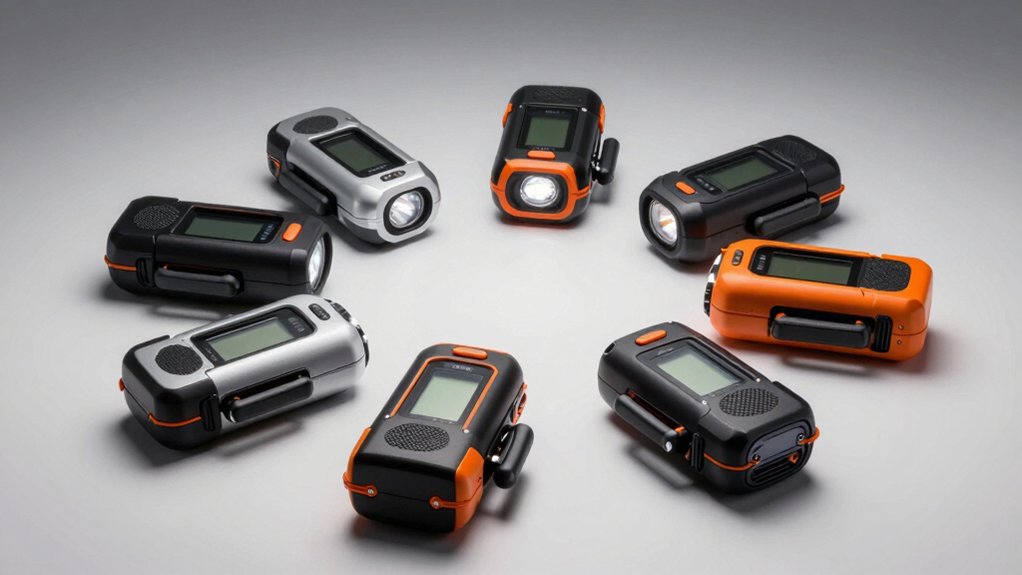

When the power goes out, you need a radio that works without electricity. Hand crank emergency radios combine multiple charging methods—solar, USB, and manual cranking—with essential features like NOAA weather alerts, AM/FM bands, and LED lighting. You’ll find nine proven models that deliver reliable performance when you need it most. The key is knowing which features matter for your situation and how to pick one that’ll actually work during an emergency.
| FosPower NOAA Emergency Weather Radio Power Bank |

| Reliable Budget Option | Battery Capacity: 7400mAh | Radio Bands: AM/FM/NOAA Weather | Power Sources: Solar, hand crank, AAA batteries | VIEW LATEST PRICE | Read Our Analysis |
| Solar Radio Emergency Hand Crank 12000mAh Power Bank |

| Premium Solar Power | Battery Capacity: 12000mAh | Radio Bands: AM/FM/NOAA Weather | Power Sources: Solar, hand crank, USB | VIEW LATEST PRICE | Read Our Analysis |
| RunningSnail Emergency Hand Crank Radio with LED Flashlight |
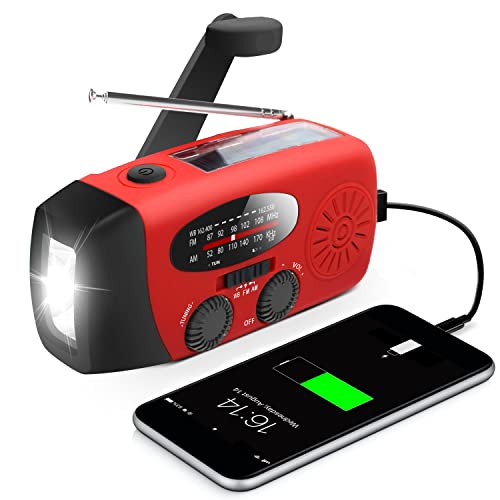
| Compact & Portable | Battery Capacity: 2000mAh | Radio Bands: AM/FM/NOAA Weather | Power Sources: Solar, hand crank, USB rechargeable | VIEW LATEST PRICE | Read Our Analysis |
| Emgykit 086S Hand Crank Emergency Radio with Flashlight |

| Best Overall Value | Battery Capacity: 2000mAh | Radio Bands: AM/FM/NOAA Weather | Power Sources: Solar, hand crank, USB Type-C | VIEW LATEST PRICE | Read Our Analysis |
| Raynic Emergency Weather Radio with Solar Hand Crank |

| Most Features Included | Battery Capacity: 5000mAh | Radio Bands: AM/FM/SW/NOAA Weather | Power Sources: Solar, hand crank, AC adapter, USB, AAA batteries | VIEW LATEST PRICE | Read Our Analysis |
| Midland ER310 Emergency Crank Weather Radio |

| Best For Families | Battery Capacity: 2600mAh | Radio Bands: AM/FM/NOAA Weather | Power Sources: Solar, hand crank, rechargeable battery, AA batteries | VIEW LATEST PRICE | Read Our Analysis |
| 12000mAh Emergency Radio NOAA Approved with Solar Panel |
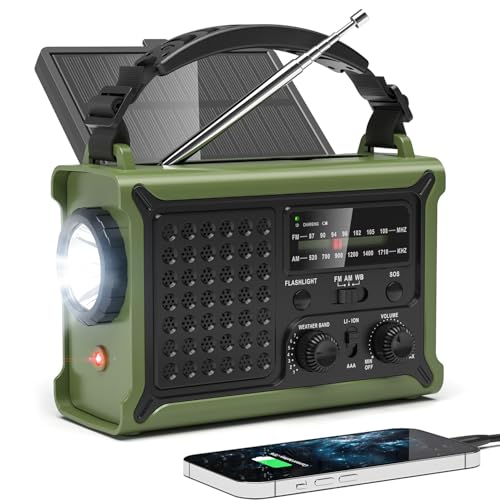
| Longest Battery Life | Battery Capacity: 12000mAh | Radio Bands: AM/FM/NOAA Weather | Power Sources: Solar, hand crank, AC input, AAA batteries | VIEW LATEST PRICE | Read Our Analysis |
| Emergency Crank Weather Radio with Solar Charger |

| Most Advanced Design | Battery Capacity: 4000mAh | Radio Bands: AM/FM/NOAA Weather | Power Sources: Solar, hand crank, Micro USB, battery | VIEW LATEST PRICE | Read Our Analysis |
| NITIGO Emergency Radio with Power Bank & Solar Charging |

| Best For Outdoor Adventures | Battery Capacity: 10000mAh | Radio Bands: AM/FM/NOAA Weather | Power Sources: Solar, hand crank, USB cable | VIEW LATEST PRICE | Read Our Analysis |
More Details on Our Top Picks
FosPower NOAA Emergency Weather Radio Power Bank
Looking for a reliable budget option that keeps you informed during emergencies? The FosPower NOAA Emergency Weather Radio Power Bank delivers essential features in a compact 14.8 oz device. You’ll access NOAA weather broadcasts plus AM/FM radio for news and forecasts. The 7400mWh power bank charges your phone or tablet when needed. You can power this radio three ways: solar panel, hand crank, or four AAA batteries. For visibility, you get a 1W flashlight and 4-LED reading light. An SOS alarm provides signaling capability. Measuring 6.2 x 2.1 x 2.9 inches, it fits easily in emergency kits or bags, making it practical for both indoor and outdoor use during weather events or disasters.
- Battery Capacity:7400mAh
- Radio Bands:AM/FM/NOAA Weather
- Power Sources:Solar, hand crank, AAA batteries
- Flashlight Output:1W flashlight + 4 LED reading light
- SOS/Emergency Alert:SOS alarm included
- Dimensions:6.2″ L x 2.1″ W x 2.9″ H
- Additional Feature:2000mAh smartphone/tablet charging
- Additional Feature:Dual light sources included
- Additional Feature:Water resistant design
Solar Radio Emergency Hand Crank 12000mAh Power Bank
When power fails and you need reliable communications fast, this premium solar power radio delivers. You’ll receive clear NOAA, AM, and FM broadcasts through high-sensitivity signal processing and noise-reduction technology. The 8500 mm² monocrystalline solar panel—over four times larger than standard panels—captures maximum sunlight for faster charging in low-light conditions. If sunlight’s unavailable, crank the hand generator for three minutes to power your phone or radio. The 12000 mAh lithium battery supports extended operation during storms and outages. You get a 260-foot flashlight beam plus a two-level reading lamp. The ergonomic 6.8 × 2.9 × 4.7 inch design fits comfortably in your grip, featuring a large tuning knob and responsive buttons for straightforward operation.
- Battery Capacity:12000mAh
- Radio Bands:AM/FM/NOAA Weather
- Power Sources:Solar, hand crank, USB
- Flashlight Output:260-foot beam flashlight + reading lamp
- SOS/Emergency Alert:N/A (not mentioned)
- Dimensions:6.8″ x 2.9″ x 4.7″
- Additional Feature:8500mm² oversized solar panel
- Additional Feature:Nearly 2× crank efficiency
- Additional Feature:260-foot flashlight beam range
RunningSnail Emergency Hand Crank Radio with LED Flashlight
The RunningSnail Emergency Hand Crank Radio with LED Flashlight delivers reliable emergency alerts through its compact, portable 5 x 1.8 x 2.4-inch design that you can keep in a go-bag, vehicle, or home emergency kit. You’ll receive timely NOAA weather alerts for hurricanes, wildfires, and storms. Power the radio three ways: hand crank when batteries drain, solar panel during daylight, or the built-in 2000mAh rechargeable battery. The 1W LED flashlight provides visibility during outages. Use the USB port to charge your phone or other devices when needed. The 18-month warranty and 24/7 customer support ensure you’ve got backup assistance if problems arise.
- Battery Capacity:2000mAh
- Radio Bands:AM/FM/NOAA Weather
- Power Sources:Solar, hand crank, USB rechargeable
- Flashlight Output:1W LED flashlight
- SOS/Emergency Alert:N/A (not mentioned)
- Dimensions:5″ x 1.8″ x 2.4″
- Additional Feature:2000mAh device charging capability
- Additional Feature:Rugged cover design
- Additional Feature:3 Watts speaker output
Emgykit 086S Hand Crank Emergency Radio with Flashlight
Need reliable communication and light during power outages or natural disasters? The Emgykit 086S delivers three power options: hand crank, solar panel, and Type-C charging. Its 2000mAh battery supports AM/FM/NOAA weather radio access for emergency alerts. The 3W LED flashlight produces 140 lumens for visibility. Press the SOS button for three seconds to activate an 80+ decibel siren. You can charge your smartphone using the built-in battery during emergencies. At 5.1 x 2.1 x 2.4 inches and 0.51 pounds, it fits in your pocket. The one-year warranty and 30-day return policy provide purchase protection.
- Battery Capacity:2000mAh
- Radio Bands:AM/FM/NOAA Weather
- Power Sources:Solar, hand crank, USB Type-C
- Flashlight Output:3W LED flashlight (3 LEDs, 140LM)
- SOS/Emergency Alert:SOS distress function (>80 decibels)
- Dimensions:5.1″ x 2.1″ x 2.4″
- Additional Feature:3W upgraded LED flashlight
- Additional Feature:>80 decibel SOS siren
- Additional Feature:Type-C charging capability
Raynic Emergency Weather Radio with Solar Hand Crank
For users who want the most features included without choosing between power sources, Raynic’s model delivers six charging methods: solar panel, hand crank, AC adapter, USB input, AAA batteries, and a built-in 5000mAh rechargeable battery. The large HD LCD display shows battery level, frequency, and digital tuning across AM/FM/SW/NOAA bands. You’ll receive automatic weather alerts on power-up, and the SOS button triggers both a loud alarm and flashing red light during emergencies. The 3W flashlight and 2.5W reading lamp provide illumination, while the USB port charges your devices. Weighing 1.2 pounds with IPX3 water resistance, you can transport this radio anywhere and use the headphone jack for private listening.
- Battery Capacity:5000mAh
- Radio Bands:AM/FM/SW/NOAA Weather
- Power Sources:Solar, hand crank, AC adapter, USB, AAA batteries
- Flashlight Output:3W flashlight + 2.5W reading lamp
- SOS/Emergency Alert:SOS light and loud alert
- Dimensions:6.8″ x 3.7″ x 2.9″
- Additional Feature:6-way charging options
- Additional Feature:Large HD LCD display
- Additional Feature:Auto-scan weather alert function
Midland ER310 Emergency Crank Weather Radio
Wondering how you’d stay informed during a power outage? The Midland ER310 gives you three charging options: solar panel, hand crank, or its built-in 2600 mAh rechargeable battery that runs up to 32 hours. You can also use six AA batteries for backup power. The radio automatically scans seven NOAA weather channels and alerts you to severe weather threats in your area. Beyond weather updates, you’ll access AM/FM radio. The built-in CREE LED flashlight produces 130 lumens on high or low settings. You can charge external devices like phones through the included USB cable. An ultrasonic dog whistle helps search and rescue teams locate you during emergencies.
- Battery Capacity:2600mAh
- Radio Bands:AM/FM/NOAA Weather
- Power Sources:Solar, hand crank, rechargeable battery, AA batteries
- Flashlight Output:CREE LED flashlight (130 lumens) + SOS beacon
- SOS/Emergency Alert:SOS beacon with Morse code flash
- Dimensions:Not specified
- Additional Feature:32-hour radio operation time
- Additional Feature:Ultrasonic dog whistle included
- Additional Feature:130 Lumen CREE LED
12000mAh Emergency Radio NOAA Approved with Solar Panel
The 12000mAh battery gives you the longest battery life available in this category, making it ideal for anyone who can’t rely on frequent recharging during extended emergencies. You’ll get roughly 60 hours of FM/AM radio or flashlight use per charge. The solar panel recharges the battery during daylight, while the hand crank provides immediate power when you need it. You can also use the AC adapter or three AAA batteries as backup options. The radio includes NOAA weather channels, AM/FM bands, a 5W speaker, and a 600-lumen light. Its waterproof design and large analog dial make it reliable in harsh conditions.
- Battery Capacity:12000mAh
- Radio Bands:AM/FM/NOAA Weather
- Power Sources:Solar, hand crank, AC input, AAA batteries
- Flashlight Output:Flashlight (up to 600LM) + separate lamp
- SOS/Emergency Alert:SOS alarm/siren
- Dimensions:4.7″ L x 2.9″ W x 6.8″ H
- Additional Feature:57mm 5W stereo speaker
- Additional Feature:7 preset NOAA channels
- Additional Feature:600LM flashlight/lamp brightness
Emergency Crank Weather Radio with Solar Charger
When storms threaten your family’s safety, you’ll need reliable weather-alert equipment that won’t fail you. The MD-090P model delivers NOAA weather alerts through seven stations with crystal-clear sound quality. You’ll charge it using four methods: micro USB, solar panel, hand crank, or stored battery power. Its 14800mWh battery capacity charges multiple smartphones and powers the radio for days after outages. The super-bright 3-mode flashlight projects light over 10 meters, and the motion-sensor reading lamp operates hands-free at night. You receive an 18-month warranty plus 24/7 customer support, backed by over 10 million users who’ve relied on this radio during hurricanes and tornadoes.
- Battery Capacity:4000mAh
- Radio Bands:AM/FM/NOAA Weather
- Power Sources:Solar, hand crank, Micro USB, battery
- Flashlight Output:3-mode super-bright flashlight + motion-sensor reading lamp
- SOS/Emergency Alert:N/A (not mentioned)
- Dimensions:Not specified
- Additional Feature:14800mWh battery capacity
- Additional Feature:Motion-sensor reading lamp
- Additional Feature:>10m lighting range
NITIGO Emergency Radio with Power Bank & Solar Charging
Your outdoor adventures demand a radio that won’t fail you when weather turns dangerous or you lose cell service. The NITIGO Emergency Radio delivers with a 10000mAh battery and three charging methods: USB cable, solar panel, and hand crank. You’ll receive NOAA weather alerts for hurricanes, tornadoes, and floods when you select the WB band. The radio includes an SOS alarm with flashing light, 3-mode LED flashlight, and rotating reading lamp for nighttime use. Its waterproof, drop-proof design handles harsh conditions. You can also charge phones and tablets through the solar crank feature, making this unit essential for emergencies and outdoor activities.
- Battery Capacity:10000mAh
- Radio Bands:AM/FM/NOAA Weather
- Power Sources:Solar, hand crank, USB cable
- Flashlight Output:3-mode ultra-bright LED flashlight + rotating reading lamp
- SOS/Emergency Alert:Loud SOS alarm with flashing light
- Dimensions:Not specified
- Additional Feature:10000mAh smartphone charging
- Additional Feature:Retractable rotating reading lamp
- Additional Feature:Waterproof and drop-proof
Factors to Consider When Choosing an Emergency Hand Crank Radio
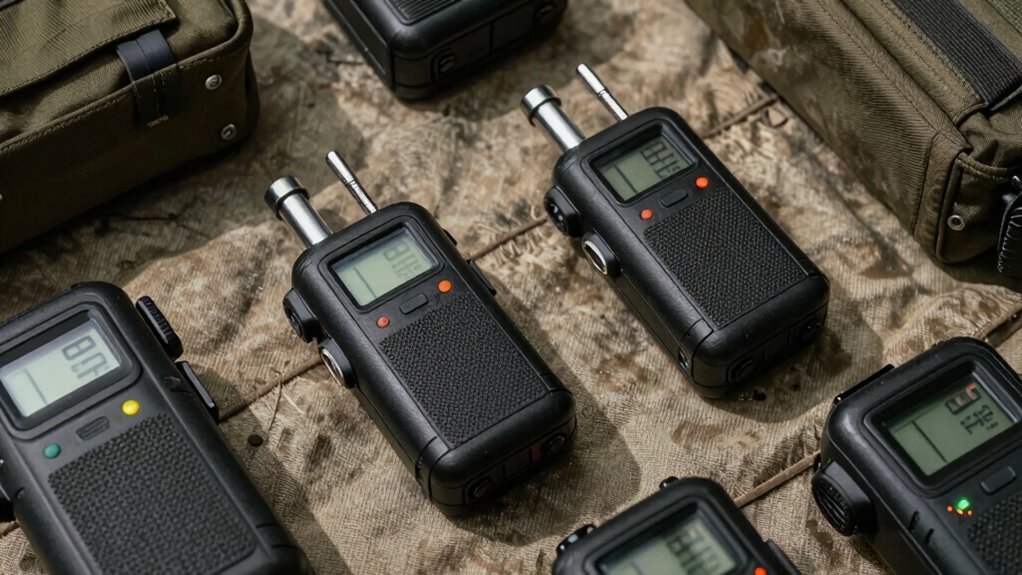
When you’re selecting an emergency hand crank radio, you’ll need to evaluate five key factors that directly affect how well the radio performs during a crisis: power source reliability (whether the crank mechanism and batteries work consistently), battery capacity (how long the radio runs on a full charge), radio reception quality (the clarity and range of stations you can receive), emergency lighting features (built-in flashlights or strobe lights for visibility), and portability and weight (how easily you can carry and store the device). Each of these factors plays a specific role in determining whether the radio will function reliably when you actually need it. Start by ranking these factors based on your particular situation—for example, if you live in a remote area, reception quality becomes more important, while weight matters more if you need to evacuate quickly.
Power Source Reliability
How do you choose an emergency hand crank radio that’ll actually power up when the grid goes down? Look for models with multiple charging options: hand crank, solar panels, and USB or battery inputs. This redundancy ensures you can charge your radio regardless of which power source remains available during an outage. Check the battery capacity—aim for 6000–12000 mAh to extend runtime during extended emergencies. Evaluate the hand crank’s design by examining its torque rating and crank arm length; higher-torque, extended-arm models charge faster and reduce your fatigue. Verify the battery is replaceable or serviceable so you can maintain the radio after years of use. Finally, confirm the radio includes a USB output port and a battery level indicator for charging other devices and monitoring power status.
Battery Capacity Matters
Once you’ve confirmed your radio offers multiple charging options, the next step is evaluating battery capacity, since a larger mAh or mWh rating directly determines how long you can operate the radio and charge other devices between cranking sessions. A 12000 mAh model provides substantially more runtime than a 2000 mAh unit for both radio use and USB charging. Some radios feature dual batteries ranging from 5000–12000 mAh to extend endurance during extended outages. However, real-world capacity decreases under heavy load from speakers, LEDs, and charging, so advertised ratings often overestimate usable runtime. Weigh this against portability: larger capacity means heavier, bulkier units. Choose based on your situation’s duration and how much you’ll move the radio.
Radio Reception Quality
What determines whether you’ll actually receive a weather alert when you need it most? Radio reception quality. You’ll want to prioritize an external antenna, which dramatically improves Weather Band and AM/FM signal strength compared to built-in models. Check that your radio includes a high-sensitivity signal chip and noise-reduction circuitry to cut through static during storms. Next, verify the tuning range covers all active NOAA channels in your area and that the dial offers accurate, responsive tuning. Test channel stability by confirming the radio maintains consistent reception across AM, FM, and Weather Band frequencies, even in weak-signal conditions. Look for large tuning knobs and clear labeling so you can locate stations quickly under stress. These features ensure reliable alerts when conditions matter most.
Emergency Lighting Features
Beyond reliable radio reception, you’ll also need adequate lighting during an extended outage, and your hand crank radio’s built-in light source can serve as a critical backup. Look for models with flashlights rated 1W to 3W output and multiple brightness modes to match different tasks. Check the lumens rating—higher lumens mean brighter illumination but faster battery drain. Verify whether the unit includes a reading lamp for softer light during extended use, which preserves power reserves. Confirm if the radio offers rechargeable batteries alongside dual LED options for versatility. Some models feature SOS beacons or sirens for emergency signaling; evaluate whether you need this urgent function. Prioritize units combining focused beam flashlights with auxiliary lighting to maximize your emergency preparedness without overextending battery capacity.
Portability And Weight
How much weight can you comfortably carry during an emergency evacuation or extended outdoor situation? Most portable hand crank radios weigh between 0.5 and 1 pound, making them suitable for backpacks or car kits. Lighter models improve portability but may sacrifice battery capacity or speaker volume. Heavier units accommodate larger batteries for extended operation, though they require more effort during extended cranking sessions.
Consider the radio’s footprint when evaluating storage space. Compact dimensions reduce bulk in emergency bags. Evaluate the grip design and weight distribution to minimize hand fatigue during prolonged cranking. Textured surfaces and rounded edges enhance one-handed operation. Test the balance point before purchasing. Choose a model that matches your carrying capacity and intended use, whether for hiking, vehicle storage, or home emergency kits.
Charging Speed Options
When you’re selecting an emergency hand crank radio, the speed at which you can generate usable power directly affects how quickly you’ll access critical information during an outage. Hand crank efficiency varies significantly based on design—models with larger copper coils and reinforced magnets deliver nearly twice the charging speed of standard units. Extended crank arms reduce the physical effort required to produce usable power. Beyond manual cranking, evaluate supplemental charging options like solar panels, USB input, or Type-C connectivity that accelerate battery restoration. Your charging speed depends on three factors: how long you crank, the torque you apply, and your generator’s internal efficiency. Prioritize radios offering multiple charging methods to minimize downtime during emergencies.
Water Resistance Standards
What’s the difference between a radio that survives a sudden rainstorm and one that fails when you need it most? Water resistance ratings. Look for an IP rating on your radio’s specifications. IPX4 handles light splashes, but IPX7 or IPX8 offers full immersion protection during floods or heavy downpours. Check whether your radio lists both water and dust ratings, since water resistance alone doesn’t guarantee dust protection. Some radios claim “splash-proof” or “rainproof” without formal IP codes—avoid these for serious emergencies. Remember that seals degrade over time. Inspect your radio regularly for cracks or damaged gaskets, and replace units showing wear. This maintenance ensures your radio actually performs when disaster strikes.
Final Thoughts
You’ll want to pick an emergency radio with multiple charging options—hand crank, solar, and USB—so you’re never stuck without power. Check the battery capacity: 6000–12000 mAh gives you extended operation. Verify it has NOAA weather alerts, AM/FM bands, and reliable LED lighting. Test the crank ergonomics before buying. Keep your radio in an emergency kit or vehicle where you can access it quickly when storms hit.

Meet Ry, “TechGuru,” a 36-year-old technology enthusiast with a deep passion for tech innovations. With extensive experience, he specializes in gaming hardware and software, and has expertise in gadgets, custom PCs, and audio.
Besides writing about tech and reviewing new products, he enjoys traveling, hiking, and photography. Committed to keeping up with the latest industry trends, he aims to guide readers in making informed tech decisions.