
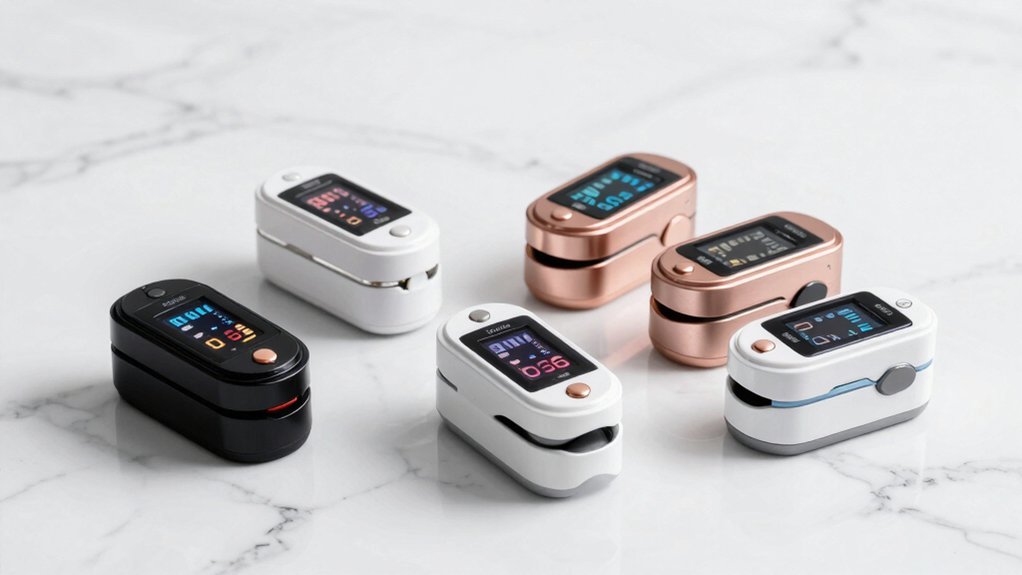

You monitor your oxygen levels for a reason—whether you’re managing a health condition or staying proactive about wellness. A quality fingertip pulse oximeter gives you fast, accurate SpO2 and heart-rate readings right at home. But with several models available, you need to know which features matter most for your situation. Here’s what separates the reliable performers from the rest.
| Zacurate Pro Series 500DL Fingertip Pulse Oximeter |

| Best Overall | Measurements: SpO2, pulse rate, pulse strength | Display Type: Large digital LED display | Reading Speed: 10 seconds | VIEW LATEST PRICE | Read Our Analysis |
| Innovo Deluxe iP900AP Fingertip Pulse Oximeter Monitor |

| Most Advanced Features | Measurements: SpO2, pulse rate, pulse strength (PI) | Display Type: OLED with six multidirectional display choices | Reading Speed: Stabilizes when wave height stops fluctuating | VIEW LATEST PRICE | Read Our Analysis |
| Healthtree JKS50B Fingertip Pulse Oximeter Blood Oxygen Monitor |

| Best Budget Pick | Measurements: SpO2, heart rate | Display Type: OLED screen | Reading Speed: Approximately 10 seconds | VIEW LATEST PRICE | Read Our Analysis |
| HealthTree JKS50B Fingertip Pulse Oximeter Blood Oxygen Monitor |

| Best for Beginners | Measurements: SpO2, heart rate | Display Type: OLED screen | Reading Speed: 10 seconds | VIEW LATEST PRICE | Read Our Analysis |
| Alecaremed Pulse Oximeter with OLED Display & Memory |

| Best Memory Function | Measurements: SpO2, pulse rate, pulse strength (PI) | Display Type: 1.3″ TFT-OLED display with adjustable brightness (5 levels) | Reading Speed: Faster detection with advanced intelligent chips | VIEW LATEST PRICE | Read Our Analysis |
More Details on Our Top Picks
Zacurate Pro Series 500DL Fingertip Pulse Oximeter
Are you an athlete or outdoor enthusiast who needs reliable oxygen monitoring? The Zacurate Pro Series 500DL measures your blood oxygen saturation and pulse rate in ten seconds using a large LED display. This device fits finger sizes across a wide range through its SMART Spring System chamber. You’ll receive two AAA batteries, a protective silicone cover, and a lanyard for portability. The monitor reads SpO2 levels up to 100% accurately. It’s suitable for ages twelve and above. Mountain climbers, skiers, and bikers use this monitor to track oxygen levels during physical activity. The device includes a twelve-month warranty and USA-based technical support for troubleshooting.
- Measurements:SpO2, pulse rate, pulse strength
- Display Type:Large digital LED display
- Reading Speed:10 seconds
- Battery & Accessories:2x AAA batteries, silicone cover, lanyard
- Target Users:Sports/health enthusiasts (ages 12+), mountain climbers, skiers, bikers
- Warranty:12-month warranty with USA-based technical support
- Additional Feature:SMART Spring System design
- Additional Feature:Accommodates wide finger sizes
- Additional Feature:Silicone protective cover included
Innovo Deluxe iP900AP Fingertip Pulse Oximeter Monitor
The Innovo Deluxe iP900AP offers most advanced features in a compact device that measures your blood oxygen saturation and pulse rate in seconds. Place your finger under the LED sensor and remain still while the OLED display shows results in one of six orientations. The plethysmograph and Perfusion Index features indicate pulse strength and reading stability. If your PI reads below 0.2%, warm your finger and reposition it. The device includes two AAA batteries, delivers accuracy within ±2% for readings between 70–100% SpO2, and suits climbers, athletes, and home users alike.
- Measurements:SpO2, pulse rate, pulse strength (PI)
- Display Type:OLED with six multidirectional display choices
- Reading Speed:Stabilizes when wave height stops fluctuating
- Battery & Accessories:2x AAA batteries, lanyard
- Target Users:Climbers, skiers, bikers, aviators, home use
- Warranty:1-year manufacturer warranty
- Additional Feature:Six multidirectional display choices
- Additional Feature:Low perfusion accuracy improvement
- Additional Feature:Plethysmograph and Perfusion Index
Healthtree JKS50B Fingertip Pulse Oximeter Blood Oxygen Monitor
Looking for a portable oxygen monitor that won’t drain your wallet? The Healthtree JKS50B delivers reliable blood oxygen and heart rate measurements in a compact, lightweight design. You’ll get results in approximately ten seconds using its one-button operation. Simply place your finger on the photoelectric sensor, and the OLED display shows your readings clearly. The device runs on two AAA batteries, providing flexibility for use anywhere. Your package includes the pulse oximeter, batteries, a detachable lanyard for portability, and a user manual. This straightforward setup makes it ideal for health-conscious individuals who need quick, accessible oxygen monitoring without complicated features or high costs.
- Measurements:SpO2, heart rate
- Display Type:OLED screen
- Reading Speed:Approximately 10 seconds
- Battery & Accessories:2x AAA batteries, lanyard, user manual
- Target Users:General portable use anywhere
- Warranty:Not specified
- Additional Feature:One-button control operation
- Additional Feature:Lightweight, compact portable design
- Additional Feature:Auto power-off feature
HealthTree JKS50B Fingertip Pulse Oximeter Blood Oxygen Monitor
For straightforward blood oxygen monitoring, you’ll find the HealthTree JKS50B ideal for starting your health tracking routine. Place your finger on the photoelectric sensor and press the single button to begin measurement. The OLED screen displays your SpO2 level and heart rate within ten seconds. The device automatically powers off after ten seconds of inactivity, conserving battery life. You’ll receive two AAA batteries with your purchase, plus a detachable lanyard for portable monitoring. The compact, lightweight design fits easily in your pocket or bag. This straightforward approach eliminates complicated features, making daily oxygen tracking accessible and efficient.
- Measurements:SpO2, heart rate
- Display Type:OLED screen
- Reading Speed:10 seconds
- Battery & Accessories:2x AAA batteries, lanyard, user manual
- Target Users:General portable use anywhere
- Warranty:Not specified
- Additional Feature:One-button control operation
- Additional Feature:Auto power-off after inactivity
- Additional Feature:Environmentally friendly design
Alecaremed Pulse Oximeter with OLED Display & Memory
Alecaremed’s pulse oximeter stands out for families and individuals who need to track oxygen levels over time without constantly writing down results. The 1.3″ OLED display shows SpO2, pulse rate, and pulse strength with adjustable brightness across five levels. You’ll access settings by long-pressing the button for two seconds, then use short presses to navigate options. The device stores your last 20 measurements automatically, letting you review trends spanning up to 20 days. Dual light-blocking shields reduce external interference for accuracy across different skin tones. The oximeter powers off after eight seconds when you remove your finger, preserving battery life for extended use.
- Measurements:SpO2, pulse rate, pulse strength (PI)
- Display Type:1.3″ TFT-OLED display with adjustable brightness (5 levels)
- Reading Speed:Faster detection with advanced intelligent chips
- Battery & Accessories:2x batteries, lanyard, protective cover, quick start guide, user manual
- Target Users:Adults and kids (6+), family use
- Warranty:Not specified
- Additional Feature:20-measurement memory function
- Additional Feature:Five-level brightness adjustment
- Additional Feature:Dual light-blocking shield
Factors to Consider When Choosing a Fingertip Oxygen Monitor
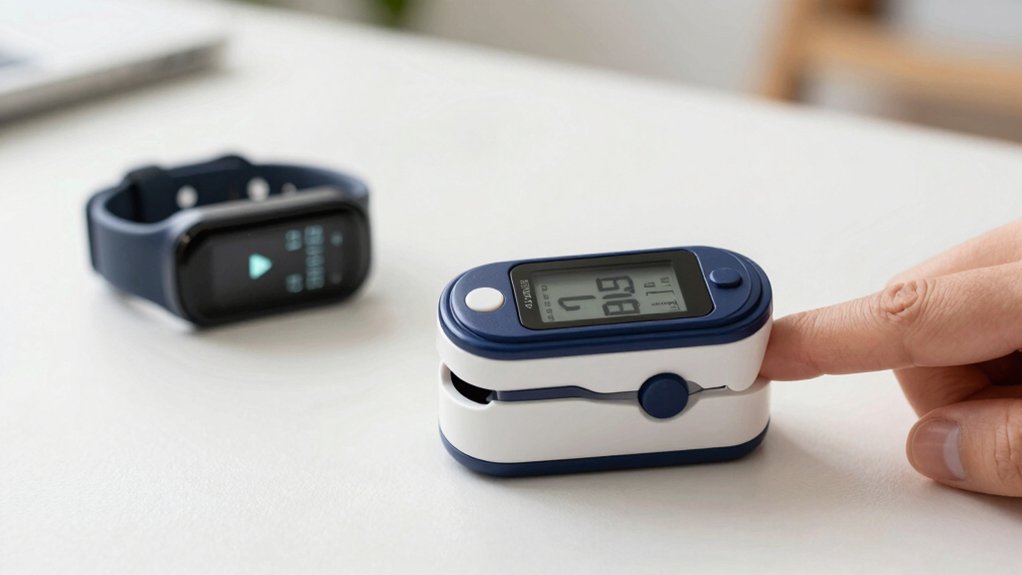
When selecting a fingertip oxygen monitor, you’ll want to evaluate five key factors: display type and readability so you can easily read your results, measurement speed and accuracy to ensure reliable health data, battery life and power options for consistent daily use, portability and design features that fit your lifestyle, and finger size compatibility range to guarantee the device works properly for you. Start by identifying your primary use—whether you need a monitor for home monitoring, travel, or athletic performance—because this determines which features matter most. Then compare specific models against each factor to find the device that best matches your needs and circumstances.
Display Type And Readability
How should you evaluate a fingertip oxygen monitor’s display to ensure you can read your results clearly? First, examine the screen type—OLED displays offer sharp contrast and adjustable brightness for various lighting conditions, while LED displays feature large numerals suited for low-light environments and activity. Second, check pixel density and screen size; larger screens with higher pixel density improve readability of SpO2, pulse rate, and PI values at a glance. Third, consider display orientation options. Multidirectional or color-contrast displays let you interpret results from different angles and positions. Fourth, verify memory capability; models showing trends and recent measurements help you track historical data alongside current readings, supporting informed health decisions.
Measurement Speed And Accuracy
Beyond selecting a display you can read easily, you’ll want to verify how quickly and accurately your fingertip oxygen monitor delivers results. Most devices report SpO2 and pulse rate within about 10 seconds, which suits routine health checks. Check the manufacturer’s accuracy specifications—typically stated as ±2% or similar ranges—to understand expected performance margins. Recognize that accuracy depends on conditions: adequate finger perfusion, minimal movement, and proper finger size compatibility all matter. Look for models with enhanced sensors or dual light-blocking shields if you have varying perfusion or use the device in bright environments. Some monitors include perfusion index indicators or plethysmograph displays that flag low-readability scenarios, helping you identify when results may be unreliable. Stillness and finger warming improve measurement reliability when perfusion is compromised.
Battery Life And Power
What’s your device’s battery capacity, and how does it affect your monitoring routine? Most fingertip oximeters run on 2 AAA batteries, offering several to dozens of hours per set depending on display brightness and usage patterns. To maximize battery life, choose models with auto power-off features that shut down after 8–10 seconds of inactivity or when you remove your finger. Basic models consume less power than devices with high-resolution displays, memory storage, PI readings, and alarms. Select oximeters with improved LED and sensor efficiency for stable low-perfusion readings while reducing power drain. Check that your device includes a battery status indicator and low-battery alert to prevent unexpected power loss during measurement sessions.
Portability And Design Features
When you’re choosing a fingertip oxygen monitor, size and weight matter just as much as accuracy because you’ll likely carry it with you throughout your day. Look for compact, lightweight models that fit easily in a pocket or bag without adding bulk. Check whether the device includes a detachable lanyard or integrated strap for hands-free carrying and quick access when you need readings. Examine the form factor to ensure it accommodates various finger sizes comfortably during use. Verify that durable housing protects the monitor from drops and daily wear. Consider models with included silicone covers or protective cases that shield the device during travel. Confirm that battery compartments are secure and that standard batteries like AAA are readily available for replacement, ensuring you’re never without power when monitoring your oxygen levels.
Finger Size Compatibility Range
How do you know if a fingertip oxygen monitor will fit your finger properly? Check the product specifications for finger slit diameter and chamber width before purchasing. Most devices suit ages 12 and above, so verify age recommendations match your needs. If you have small fingers or need monitoring for young children, look for models with adjustable or flexible finger chambers, like those using a SMART Spring System. These accommodate a broader range of sizes. Measure your finger diameter and compare it to the device’s listed compatibility range. Avoid monitors that don’t specify size limits, as improper fit causes unreliable readings. Contact manufacturers directly if specifications aren’t clear. Proper fit prevents excessive movement during measurement, ensuring accurate results consistently.
Memory And Data Tracking
Memory capacity is a key feature you’ll want to evaluate when selecting a fingertip oxygen monitor because it determines how many past readings you can store and review. Many models store up to 20 total measurements, with some saving your latest 5 readings automatically on startup. This on-device memory lets you quickly check SpO2, pulse rate, and PI values without downloading external apps. Auto-save functions manage your data by either overwriting old measurements or appending new ones, ensuring continuous tracking. Review your stored readings during rest or after exercise to identify trends and monitor changes over time. Choose a monitor with sufficient memory capacity that matches your tracking needs and usage frequency.
Durability And Warranty Coverage
Longevity and protection matter when you’re investing in a health monitoring device, so you’ll want to examine both the physical build and the manufacturer’s warranty before making your purchase. Check the warranty length and determine what it covers—defects versus wear damage. Look for models with durable housings and protective features like silicone covers that resist dirt and impact. Examine the display quality and sensor reliability to ensure accuracy after minor drops. Verify that the manufacturer offers USA-based technical support accessible during warranty periods. Confirm replacement parts and service options are available within the warranty framework. These steps ensure your oxygen monitor withstands daily use and receives proper support if problems occur.
Final Thoughts
You can choose a fingertip oxygen monitor by comparing key features: display type (OLED or LED), reading speed (around ten seconds), memory capacity (up to 20 readings), battery type (AAA), and warranty coverage. Evaluate your specific needs—whether you need portability, frequent monitoring, or data storage. Select a model offering USA-based support and a durable case. All five options deliver reliable SpO2 and heart-rate readings for consistent health tracking.

Meet Ry, “TechGuru,” a 36-year-old technology enthusiast with a deep passion for tech innovations. With extensive experience, he specializes in gaming hardware and software, and has expertise in gadgets, custom PCs, and audio.
Besides writing about tech and reviewing new products, he enjoys traveling, hiking, and photography. Committed to keeping up with the latest industry trends, he aims to guide readers in making informed tech decisions.