
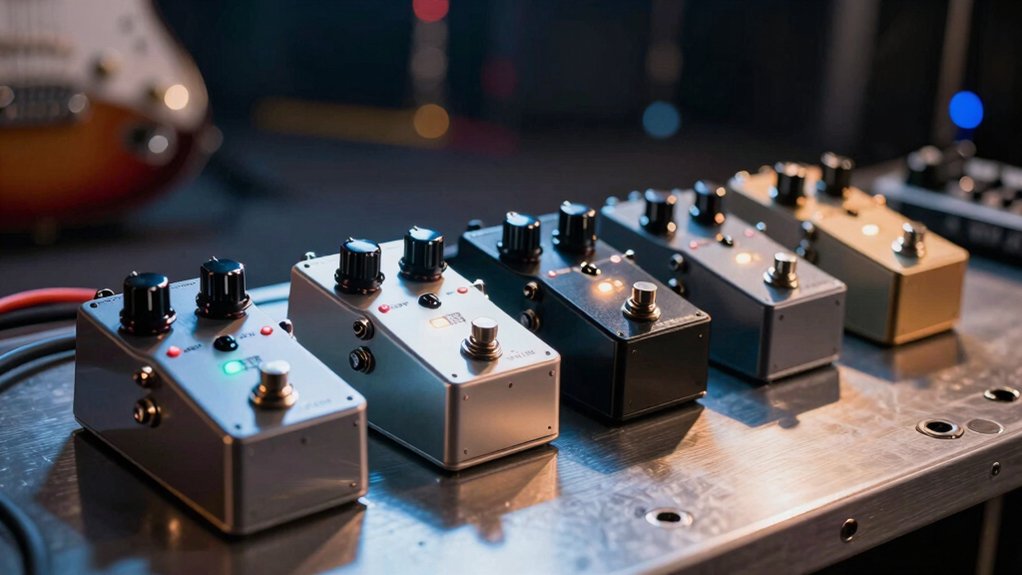

You’re looking for a high gain distortion pedal that delivers heavy tones without compromising your signal. The right pedal depends on what you need: compact size for portability, multiple modes for versatility, or specific EQ controls for metal precision. You’ll encounter five solid options that address these requirements differently. Each one offers distinct features that affect how your guitar sounds on stage or in the studio. Understanding what separates these pedals helps you choose the right fit for your playing style.
| JOYO High Gain Distortion Pedal (JF-04) |

| Versatile Workhorse | Distortion Character: AC/DC crunch to Metallica-style heavy distortion | Tone Control: Full EQ range and tone control | Build Quality: Aluminum-alloy housing with stoving varnish finish | VIEW LATEST PRICE | Read Our Analysis |
| RVONE High Gain Distortion Guitar Pedal with True Bypass |

| Analog Purist’s Choice | Distortion Character: Edge-of-breakup warmth to high-gain saturation | Tone Control: Intuitive knob layout for tone sculpting | Build Quality: Tour-tough aluminum construction | VIEW LATEST PRICE | Read Our Analysis |
| JOYO Metal Distortion Pedal with 3 Band EQ (JF-17) |
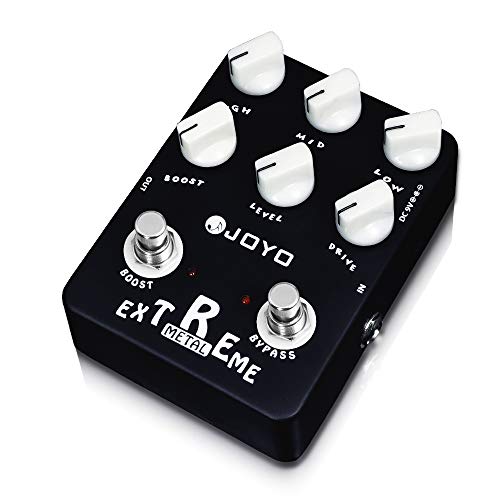
| Metal Specialist | Distortion Character: Hard rock to extreme metal tones | Tone Control: 3-band EQ with High, Mid, Low, Boost, Level, Drive controls | Build Quality: Aluminum chassis (model JF-17) | VIEW LATEST PRICE | Read Our Analysis |
| Donner Morpher Mini Distortion Guitar Pedal (3 Modes) |

| Compact Powerhouse | Distortion Character: Hair metal, glam metal, pop metal | Tone Control: 3 selectable modes (Natural, Tight, Classic Crunch) | Build Quality: Solid aluminum-alloy chassis | VIEW LATEST PRICE | Read Our Analysis |
| Satone S811 High Gain Distortion Guitar Effect Pedal |
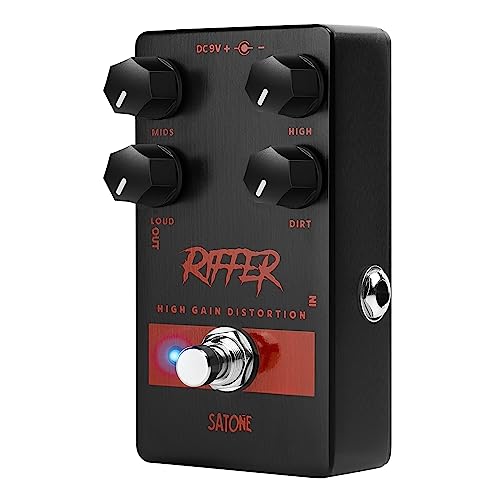
| Extreme Gain Beast | Distortion Character: Hard rock to thrash metal | Tone Control: Mids, High, Dist, and Loud controls | Build Quality: Solid aluminum alloy shell | VIEW LATEST PRICE | Read Our Analysis |
More Details on Our Top Picks
JOYO High Gain Distortion Pedal (JF-04)
Are you looking for a high-gain distortion pedal that won’t drain your wallet? The JOYO High Gain Distortion Pedal (JF-04) delivers versatile sound shaping with its full EQ range and tone controls. You can dial in AC/DC-style crunch or push toward Metallica-level heavy distortion. The aluminum-alloy housing provides durability for regular use. To get started, connect your guitar fully before playing, and use a JOYO power adapter for optimal operation and reduced noise. If you’re using single-coil pickups on lower gain settings, be aware of potential interaction with vintage overdrive pedals. This budget-friendly option works well for blues-rock applications and heavy distortion needs.
- Distortion Character:AC/DC crunch to Metallica-style heavy distortion
- Tone Control:Full EQ range and tone control
- Build Quality:Aluminum-alloy housing with stoving varnish finish
- Signal Path Technology:Standard bypass design
- Power Requirements:Single pedal power requirements (adapter recommended)
- Visual Feedback:Clear LED indicator for operating state
- Additional Feature:AC/DC to Metallica versatility
- Additional Feature:Full EQ range included
- Additional Feature:Decade-plus brand reputation
RVONE High Gain Distortion Guitar Pedal with True Bypass
The RVONE High Gain Distortion Pedal is your best choice if you need a compact, reliable pedal that delivers tube-amp tones without the bulk of a full amplifier. This aluminum pedal uses analog circuits to recreate vintage amplifier breakup, eliminating digital artifacts. You’ll find intuitive controls that let you shift from warm, bluesy edge-of-breakup tones to high-gain saturation while maintaining note clarity for riff-driven playing. The lightweight construction handles both bedroom practice and festival stages. You’ll need a 9V power supply (sold separately) to operate it. Weighing only 160 grams with dimensions of 3.62 x 1.93 x 1.81 inches, it fits easily on any pedalboard.
- Distortion Character:Edge-of-breakup warmth to high-gain saturation
- Tone Control:Intuitive knob layout for tone sculpting
- Build Quality:Tour-tough aluminum construction
- Signal Path Technology:True bypass
- Power Requirements:9V, 100 mA, center-negative (adapter not included)
- Visual Feedback:Power source corded
- Additional Feature:Tube-amp soul recreation
- Additional Feature:Preserves note clarity dynamics
- Additional Feature:Lightweight 160g construction
JOYO Metal Distortion Pedal with 3 Band EQ (JF-17)
If you’re searching for a budget-friendly metal distortion pedal that doesn’t compromise on control, JOYO’s Metal Distortion Pedal with 3 Band EQ (JF-17) delivers the tools you need. This pedal features six independent knobs—High, Mid, Low, Boost, Level, and Drive—that let you shape your tone precisely. Set your gain at 12 o’clock for brilliant hard rock tones, or dial it to 9 o’clock with a bridge-position humbucker for classic rock sounds. The adjustable 3-band EQ with a sweep Mid-Freq knob gives you strong low-end response and clear, transparent highs. Before playing, ensure your guitar connects fully to the pedal. Consider pairing it with a reliable JOYO power adapter and quality audio cable to minimize noise during operation.
- Distortion Character:Hard rock to extreme metal tones
- Tone Control:3-band EQ with High, Mid, Low, Boost, Level, Drive controls
- Build Quality:Aluminum chassis (model JF-17)
- Signal Path Technology:Bypass feature
- Power Requirements:Single pedal current requirements (adapter recommended)
- Visual Feedback:Standard bypass indicator
- Additional Feature:Adjustable 3-band EQ
- Additional Feature:Sweep Mid-Freq control
- Additional Feature:Six independent control knobs
Donner Morpher Mini Distortion Guitar Pedal (3 Modes)
Looking for a compact distortion pedal that won’t drain your budget while delivering professional-grade high-gain tones? The Donner Morpher Mini offers three distinct modes—Natural, Tight, and Classic Crunch—each designed for different playing styles. You’ll benefit from wide dynamic range and high definition whether you’re shredding solos or laying down riffs. The solid aluminum chassis withstands heavy use, while true bypass preserves your signal integrity without unwanted noise. Connect a 9V DC adapter with center negative polarity and minimum 500mA current to power the unit. This pedal bridges the gap between crunch and metal tones, making it suitable for hair metal, glam metal, and pop metal genres.
- Distortion Character:Hair metal, glam metal, pop metal
- Tone Control:3 selectable modes (Natural, Tight, Classic Crunch)
- Build Quality:Solid aluminum-alloy chassis
- Signal Path Technology:True bypass design
- Power Requirements:9V DC, center negative, minimum 500mA (not included)
- Visual Feedback:LED indicators illuminate working state
- Additional Feature:Three selectable distortion modes
- Additional Feature:Wide dynamic range definition
- Additional Feature:Hair/glam metal focus
Satone S811 High Gain Distortion Guitar Effect Pedal
Want a distortion pedal that delivers seared, brutal tone without compromising your low-end punch? The Satone S811 offers virtually limitless gain for heavy genres like hard rock and thrash metal. You’ll control four key parameters: adjust the Dist knob to set your gain level, use Mids and High controls to shape your frequencies, and set Loud for overall volume. The pedal features a solid aluminum alloy shell, true bypass circuit, and LED indicator. You’ll need a 9V DC power supply, which isn’t included. Place it front-of-amp or in your effects loop for broader tonal options.
- Distortion Character:Hard rock to thrash metal
- Tone Control:Mids, High, Dist, and Loud controls
- Build Quality:Solid aluminum alloy shell
- Signal Path Technology:True bypass circuit design
- Power Requirements:9V DC power supply (not included)
- Visual Feedback:LED working indicator
- Additional Feature:Effects-loop preamp capability
- Additional Feature:Advanced IC chip design
- Additional Feature:Tuned mids/highs balance
Factors to Consider When Choosing High Gain Distortion Pedals
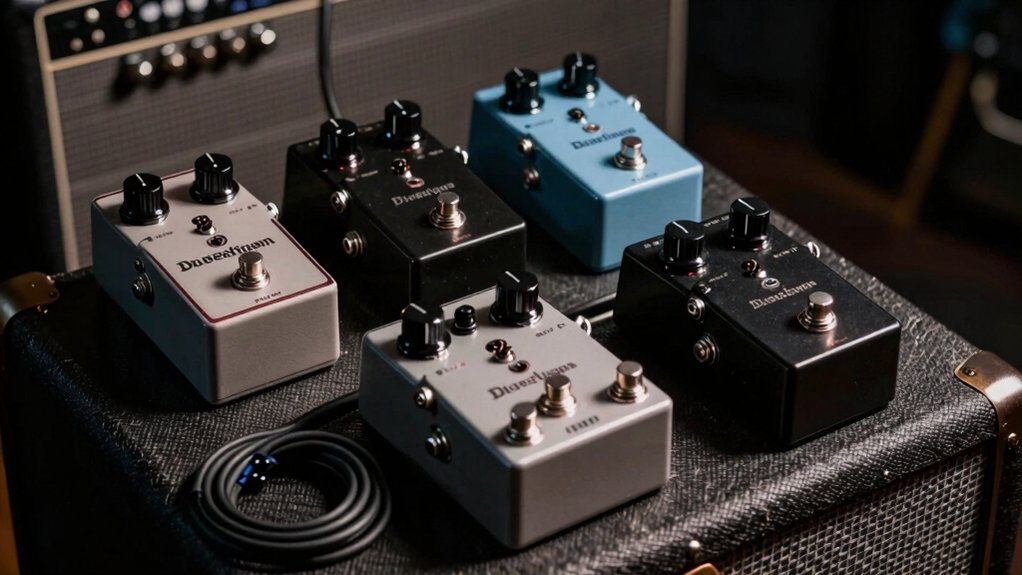
When selecting a high gain distortion pedal, you’ll want to evaluate five key factors that directly affect your playing experience and sound quality. First, examine the tone shaping capabilities by checking how many knobs control frequency adjustments, the power supply requirements to assure compatibility with your setup, the build quality materials used in the casing and components, whether the pedal offers true bypass functionality to preserve your signal when disengaged, and the frequency response control options that let you shape your distortion from low rumble to high-end presence. These considerations will guide you toward a pedal that matches your specific needs and rig configuration.
Tone Shaping Capabilities
How do you sculpt a distortion sound that fits your playing style and musical genre? Start by examining the EQ controls available on your pedal. Most distortion pedals include a 3-band EQ with high, mid, and low frequency controls, plus a sweepable mid parameter. Adjust the highs to tighten or brighten your tone. Next, use the gain and boost controls independently to shift between crunch, edge-of-breakup, and high-gain saturation while maintaining note clarity. Then explore any built-in mode selections—natural, tight, or classic crunch—to establish your foundational tonal framework. Finally, verify the pedal uses true bypass design to preserve your original signal tone when disengaged. This systematic approach ensures clean integration with your amp and other effects.
Power Supply Requirements
Most high-gain distortion pedals need a 9V DC power supply with center-negative polarity to operate properly. Check your pedal’s specifications for current draw requirements, which typically range from 12 mA to 500 mA. Some pedals don’t include a power adapter, so you’ll need to purchase one separately. You have two main options: use a dedicated power adapter for a single pedal, or invest in a compatible multi-pedal power supply if you’re building a board. A multi-pedal supply reduces noise and ensures stable operation across multiple effects. True bypass designs don’t affect your power draw, so this feature won’t influence your power supply choice. Always match your adapter’s polarity and voltage specifications exactly to avoid damaging your pedal.
Build Quality Materials
You’ll want to prioritize enclosure material and construction methods when evaluating high-gain distortion pedals, as these directly affect durability and longevity during regular use. Look for aluminum or aluminum-alloy enclosures, which offer lightweight strength and withstand repeated transport and stage impacts. Examine the chassis construction carefully—reinforced designs with true-bypass circuitry provide better signal integrity and reliability. Check that the pedal features a solid metal housing rather than plastic components, as metal resists damage from drops and constant handling. Verify the internal wiring and component mounting are secure and protected from moisture. Built-in LED indicators also signal build quality, showing the manufacturer invested in user-friendly features. These material choices directly determine whether your pedal survives years of gigging or fails prematurely.
True Bypass Functionality
When evaluating a high-gain distortion pedal, what’s the actual difference between true bypass and buffered bypass? True bypass completely removes the pedal from your signal chain when it’s off, preserving your guitar’s original tone. Buffered bypass keeps the pedal’s circuitry active, which can slightly color your sound. For your setup, choose true bypass if you’re using multiple high-gain pedals together, as it reduces cumulative tone loss and maintains clarity. Check the pedal’s specifications or contact the manufacturer to verify true bypass claims, since some pedals advertise this feature but still introduce minimal signal coloration. Test the pedal in your actual rig before purchasing to confirm switching behavior matches your needs.
Frequency Response Control
How can you shape a high-gain distortion’s tone to match your playing style and rig? Start by using the 3-band EQ controls—Low, Mid, and High knobs—to sculpt your sound across the frequency spectrum. Adjust the Low knob first to tighten your bottom end and prevent muddiness. Next, use the sweepable Mid control to dial in articulate midrange frequencies that suit your style, whether metal, hard rock, or punk. Then set the High knob to achieve crisp, clear treble that preserves note definition. Finally, interact these EQ settings with your Boost, Level, and Drive controls to push specific frequency ranges into saturation. This layered approach lets you maintain clarity and attack even under heavy distortion.
Gain Range Versatility
What separates a versatile high-gain distortion pedal from a one-trick device? A broad gain range that transitions from bluesy crunch to saturated metal tones. You’ll want a pedal offering adjustable gain paired with independent EQ controls—bass, mids, and treble—so you can shape your tone across the entire spectrum. True-bypass design protects your signal integrity at higher gain settings, preventing tone loss. Look for pedals featuring sweepable mid and presence controls; these tools let you adjust how gain interacts with specific frequencies, changing your perceived tone without tweaking the gain knob itself. Multi-mode designs offering natural, tight, or classic crunch textures provide distinct gain textures. Evaluate each option systematically: check the gain range, test EQ flexibility, and confirm bypass type before purchasing.
Size And Portability
Two main pedal formats dominate the high-gain distortion market: compact mini pedals and standard full-size units. Mini pedals like the Donner Morpher prioritize portability with dimensions around 3.62 x 1.93 x 1.81 inches and weighing approximately 160 grams. Their aluminum-alloy housings withstand transport while maintaining durability. You’ll find these ideal for gigging musicians who need quick setup and minimal board space. Standard units offer larger control surfaces but sacrifice mobility. Consider your typical setup: if you transport your gear frequently, choose a mini pedal. If you stay in one location, a full-size model provides easier tweaking. Both formats use 9V DC adapters with center-negative polarity, drawing 100–500 mA depending on the model.
Compatibility With Amplifiers
When you’re selecting a high-gain distortion pedal, ensuring it’ll work properly with your amp requires checking three critical compatibility factors: power specifications, signal path design, and input sensitivity matching.
First, verify the pedal’s power requirements match your amp’s setup. Check whether it needs 9V center-negative power and confirm your amplifier or power supply can deliver the required current. Second, confirm the pedal uses true bypass design so your amp’s tone stays intact when the pedal’s disengaged, preventing unwanted signal loss before your amp input. Third, test how the pedal’s output level and drive control interact with your amp’s input sensitivity. Adjust these settings to control how hard your amp gets driven and the resulting distortion character you’ll achieve.
Final Thoughts
You’ll want to match your pedal choice to your playing style and budget. If you need portability, pick the Donner Morpher Mini. For metal precision, choose between the JOYO JF-04 or JF-17. If you prefer tube-amp warmth, select the RVONE model. The Satone S811 works best for aggressive tones. Check your pedalboard space, power supply compatibility, and EQ options before purchasing to ensure the pedal fits your rig.

Meet Ry, “TechGuru,” a 36-year-old technology enthusiast with a deep passion for tech innovations. With extensive experience, he specializes in gaming hardware and software, and has expertise in gadgets, custom PCs, and audio.
Besides writing about tech and reviewing new products, he enjoys traveling, hiking, and photography. Committed to keeping up with the latest industry trends, he aims to guide readers in making informed tech decisions.