

You need an industrial PC case that can handle demanding environments without failing. When you’re selecting one, you’ll want to evaluate steel or aluminum construction, dust filtration systems, and thermal management capabilities. Each case type offers different advantages depending on your space and cooling requirements. The right choice depends on understanding what features matter most for your specific setup. Here’s what you should know.
| Hyte X50 Air ATX Gaming PC Case |

| Premium Airflow Design | Motherboard Compatibility: Micro ATX, ATX | GPU Clearance: Up to 360mm | Cooling Method Support: Air, Water | VIEW LATEST PRICE | Read Our Analysis |
| Cooler Master QUBE 540 ATX Mid-Tower PC Case |

| Most Versatile Build | Motherboard Compatibility: ITX, ATX, E-ATX (up to 11″ wide) | GPU Clearance: Up to 415mm without front fan | Cooling Method Support: Air, Water | VIEW LATEST PRICE | Read Our Analysis |
| Antec P7 S Mid-Tower ATX PC Case |
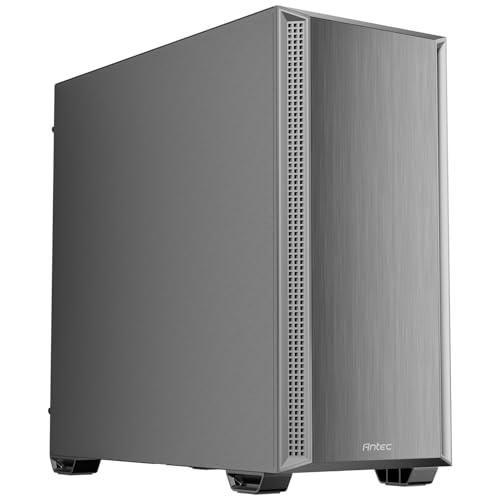
| Quiet Performance Choice | Motherboard Compatibility: ATX | GPU Clearance: Up to 405mm | Cooling Method Support: Air, Water (up to 360mm radiator) | VIEW LATEST PRICE | Read Our Analysis |
| Zalman CUBIX Compact Mini Tower mATX PC Case |

| Most Compact Option | Motherboard Compatibility: Micro ATX, Mini ITX | GPU Clearance: Up to 260mm | Cooling Method Support: Air | VIEW LATEST PRICE | Read Our Analysis |
| Cooler Master QUBE 540 ATX Mid-Tower PC Case |
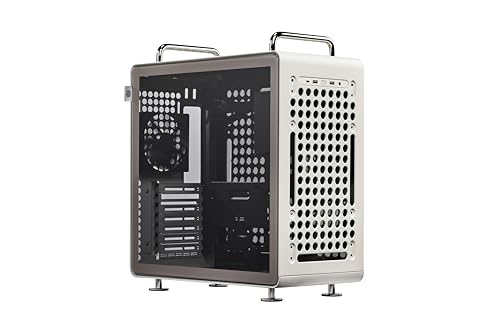
| Best Customization Features | Motherboard Compatibility: ITX, ATX, E-ATX (up to 11″ wide) | GPU Clearance: Up to 415mm without front fan | Cooling Method Support: Air, Water | VIEW LATEST PRICE | Read Our Analysis |
| JONSBO Z20 Black Micro-ATX Mini Tower PC Case |

| Best Mini Tower | Motherboard Compatibility: Micro ATX, Mini-ITX | GPU Clearance: Up to 363mm | Cooling Method Support: Air, Water | VIEW LATEST PRICE | Read Our Analysis |
| Antec VSK4000E-U3 US Black SGCC Steel ATX Mid Tower Computer Case |

| Budget-Friendly Workhorse | Motherboard Compatibility: Micro ATX | GPU Clearance: Not specified | Cooling Method Support: Air | VIEW LATEST PRICE | Read Our Analysis |
More Details on Our Top Picks
Hyte X50 Air ATX Gaming PC Case
If you’re building a high-performance gaming PC and you’re concerned about heat management and airflow efficiency, the Hyte X50 Air ATX case delivers the cooling performance you’ll need. The front micro-mesh panel pulls cool air with minimal resistance, while louvered blades at the exhaust slice through hot air efficiently. You can mount up to three 120mm fans at the bottom to direct airflow straight to your GPU. The top-mounted PSU shroud positions your power supply out of the way, allowing 360mm of fresh intake air to reach your graphics card. This mid-tower case supports ATX and Micro ATX motherboards, accommodates GPUs up to 360mm, and weighs 23.6 pounds for manageable transport and installation.
- Motherboard Compatibility:Micro ATX, ATX
- GPU Clearance:Up to 360mm
- Cooling Method Support:Air, Water
- Weight:23.6 pounds
- Case Type:Mid Tower
- Front I/O Connectivity:Not specified
- Additional Feature:Patent-pending louvered blade ventilation
- Additional Feature:Top-mounted PSU shroud
- Additional Feature:Curved micro-mesh side panel
Cooler Master QUBE 540 ATX Mid-Tower PC Case
The Cooler Master QUBE 540 stands out for builders who need flexibility without sacrificing cooling performance or component compatibility. You’ll appreciate its reversible I/O panel and movable handles, which let you customize your layout for your workspace. The case supports GPUs up to 415mm, motherboards from ITX to E-ATX up to 11″ wide, and radiators in 140/280/360mm configurations. Its mesh front panel optimizes airflow, while pre-installed SickleFlow 120mm fans provide immediate cooling. Front USB ports include two 3.2 Gen1 connections and one Gen2 Type-C for quick data transfers. The tempered glass panel displays your build, and you can orient the case horizontally or vertically based on your space requirements.
- Motherboard Compatibility:ITX, ATX, E-ATX (up to 11″ wide)
- GPU Clearance:Up to 415mm without front fan
- Cooling Method Support:Air, Water
- Weight:17.9 pounds
- Case Type:Mid Tower
- Front I/O Connectivity:2× USB 3.2 Gen1, 1× USB 3.2 Gen2 Type-C
- Additional Feature:Flexible horizontal/vertical orientation
- Additional Feature:Reversible I/O panel design
- Additional Feature:3D-printed accessory compatibility
Antec P7 S Mid-Tower ATX PC Case
Looking for a mid-tower case that balances cooling performance with noise reduction? The Antec P7 S delivers both through its dual-side mesh design and sound-dampening foam panels. You’ll get four pre-installed 120mm PWM fans handling front and rear airflow. The case supports ATX motherboards and accommodates graphics cards up to 405mm, making it compatible with RTX 50 Series cards. A 30mm GPU clearance at the bottom ensures proper cooling airflow. You can mount liquid coolers up to 360mm on the top. The brushed front panel and modern design fit professional environments. Its 2-year warranty covers manufacturing defects. Dimensions measure 18.82″ deep by 8.74″ wide by 18.31″ high, weighing 12.7 pounds.
- Motherboard Compatibility:ATX
- GPU Clearance:Up to 405mm
- Cooling Method Support:Air, Water (up to 360mm radiator)
- Weight:12.7 pounds
- Case Type:Mid Tower
- Front I/O Connectivity:1× USB 3.0, 1× Type-C 3.2 Gen 2
- Additional Feature:Sound-dampening foam panels
- Additional Feature:4 pre-installed PWM fans
- Additional Feature:Dual-mode top filters
Zalman CUBIX Compact Mini Tower mATX PC Case
Build a compact desktop system without sacrificing durability or component support, and you’ll find the Zalman CUBIX delivers a heavy-duty 0.8T steel chassis that won’t flex or bend under pressure. This mini tower accepts Micro-ATX and Mini-ITX motherboards while supporting standard ATX power supplies, GPUs up to 260mm, and CPU coolers up to 137mm tall. The 17.1-liter internal volume fits three bays for storage expansion. You get one preinstalled 80mm fan for airflow through the perforated front panel, plus USB 3.0 and USB 2.0 ports for connectivity. At 5.73 pounds with dimensions of 11.96″ deep by 6.29″ wide by 13.85″ high, it’s genuinely portable for a steel-built case. The one-year manufacturer warranty backs your investment.
- Motherboard Compatibility:Micro ATX, Mini ITX
- GPU Clearance:Up to 260mm
- Cooling Method Support:Air
- Weight:5.73 pounds
- Case Type:Mini Tower
- Front I/O Connectivity:1× USB 3.0, 1× USB 2.0
- Additional Feature:Heavy-duty 0.8T steel chassis
- Additional Feature:Fits standard ATX PSU
- Additional Feature:Perforated front panel design
Cooler Master QUBE 540 ATX Mid-Tower PC Case
Ever need a PC case that adapts to your workspace instead of forcing you to adapt to it? The Cooler Master QUBE 540 delivers flexible orientation—position it horizontal or vertical based on your desk layout. Its reversible I/O panel adjusts for ergonomic access in either setup. You’ll fit ATX, ITX, and E-ATX motherboards up to 11 inches wide. The front mesh panel supports three 120mm or two 140mm fans, plus radiators up to 360mm. GPU clearance reaches 415mm without front fans, accommodating high-end graphics cards. The included SickleFlow 120mm fan improves airflow immediately. Fully modular interior components rearrange for cable management and custom builds. Stainless steel and tempered glass construction withstand daily use. Front connectivity includes two USB 3.2 Gen1 ports and one USB-C port for device charging and data transfer.
- Motherboard Compatibility:ITX, ATX, E-ATX (up to 11″ wide)
- GPU Clearance:Up to 415mm without front fan
- Cooling Method Support:Air, Water
- Weight:17.86 pounds
- Case Type:Mid Tower
- Front I/O Connectivity:2× USB 3.2 Gen1, 1× USB 3.2 Gen2 Type-C
- Additional Feature:Multi-position PSU mount capability
- Additional Feature:Portable handles included
- Additional Feature:Full front mesh panel
JONSBO Z20 Black Micro-ATX Mini Tower PC Case
Need a compact case that doesn’t sacrifice cooling options or internal flexibility? The JONSBO Z20 delivers a ~20L footprint with extensive thermal support. You’ll find mounting options for up to two 140mm or 120mm fans on top and bottom, plus rear fan slots. The case accommodates a 240mm AIO cooler up to 60mm thick and supports CPU coolers reaching 164mm (Intel) or 163mm (AMD). For storage, you’ll install four 2.5″ SSDs and one 3.5″ HDD across internal bays. The case accepts Micro-ATX motherboards and SFX/ATX power supplies with bottom or side mounting. Its 2mm steel construction, magnetic dust filter, and detachable carrying handle enhance durability and portability for industrial environments.
- Motherboard Compatibility:Micro ATX, Mini-ITX
- GPU Clearance:Up to 363mm
- Cooling Method Support:Air, Water
- Weight:Not specified
- Case Type:Mini Tower
- Front I/O Connectivity:USB 3.2 Gen1 Type-A, USB 3.2 Gen2 Type-C, Audio/Mic
- Additional Feature:Detachable carrying handle
- Additional Feature:Magnetic dust filter
- Additional Feature:2mm thick bent steel
Antec VSK4000E-U3 US Black SGCC Steel ATX Mid Tower Computer Case
The Antec VSK4000E-U3 US Black works best for users who’re running multiple storage drives and expansion cards simultaneously. This mid-tower case accommodates five internal 3.5″ hard drive bays and three external 5.25″ drive bays, giving you substantial storage flexibility. The seven expansion slots support graphics cards, sound cards, and network cards. Front-mounted USB 2.0 and USB 3.0 ports provide quick device connectivity. The case supports up to seven fans for advanced cooling, with front-side vents directing airflow efficiently. SGCC steel construction ensures durability. A bottom-mounted power supply keeps cable management organized and maximizes internal space for your components.
- Motherboard Compatibility:Micro ATX
- GPU Clearance:Not specified
- Cooling Method Support:Air
- Weight:Not specified
- Case Type:Mid Tower
- Front I/O Connectivity:2× USB 2.0, 2× USB 3.0
- Additional Feature:Front-side cooling vents
- Additional Feature:5 internal 3.5″ HDD bays
- Additional Feature:7 expansion slots supported
Factors to Consider When Choosing an Industrial PC Case
When you’re selecting an industrial PC case, you’ll need to evaluate five key factors: thermal management performance to keep components cool under heavy loads, motherboard compatibility standards to ensure your hardware fits properly, expansion slot capacity for future upgrades, airflow design efficiency to move heat away from critical parts, and material durability quality to withstand harsh environments. Start by checking your motherboard’s form factor against the case’s supported standards, then assess the number and placement of intake and exhaust fans to confirm adequate cooling flow. Finally, examine the case’s construction materials and internal layout to verify you have enough slots for all current components plus room for future additions.
Thermal Management Performance
Since cooling directly impacts your industrial PC’s stability and lifespan, you’ll want to evaluate several key design features that determine how effectively a case dissipates heat. Check for front mesh panels and louvered blades that reduce airflow resistance. Look for bottom-mounted fan layouts and top-mounted PSU shrouds that direct fresh air toward your GPU and other critical components. Verify the case supports multiple radiator sizes—120/140 mm up to 360 mm options—matching your thermal load requirements. Confirm GPU clearance reaches 360–415 mm and that front-to-back mesh pathways remain unobstructed. Finally, examine modular interiors and cable-management systems that prevent airflow obstruction and maintain consistent component temperatures throughout your system.
Motherboard Compatibility Standards
Four primary motherboard form factors—Micro ATX, ATX, ITX, and E-ATX—determine whether your chosen case’ll support your build, so you’ll need to verify your case specifications match your motherboard’s dimensions before purchasing. Check the case’s maximum motherboard width, especially for E-ATX boards that can reach 11 inches wide. Confirm that internal standoff locations align with your motherboard’s mounting holes. Verify that I/O cutouts on the case’s rear panel match your board’s port layout for proper accessibility. Review PSU and PCIe slot arrangements to ensure they won’t obstruct your expansion cards. Look for cases with removable trays or adjustable standoffs, which provide flexibility across multiple form factors and simplify installation within the same chassis family.
Expansion Slot Capacity
Beyond confirming your motherboard fits properly in the case, you’ll need to evaluate how many expansion cards the chassis can actually hold. Count the available PCIe slots on your case and compare that number against your planned components—graphics cards, RAID controllers, or sound cards. Larger eATX cases typically provide 7 or more slots, while compact micro-ATX cases offer fewer options. Check the slot spacing to ensure full-length cards won’t interfere with each other. Examine whether the case features vertical or modular slot configurations that affect GPU height and airflow patterns. Verify that quick-release or tool-less brackets are available for faster installation and maintenance. This ensures your industrial PC can accommodate current and future expansion needs without case limitations.
Airflow Design Efficiency
How does your industrial PC case move heat away from critical components? You’ll want to examine the intake design first. A micro-mesh front panel creates low-pressure airflow while reducing noise, so your system stays cool without excessive fan speed. Next, check for louvered blade ventilation that actively directs hot exhaust away from sensitive parts. Curved mesh side panels offer additional high-flow pathways that lower component temperatures. For GPU-intensive applications, position multiple 120mm intake fans at the front to strengthen cooling efficiency. Finally, verify that top-mounted shrouds and cable routing don’t obstruct airflow across the chassis interior. These design elements work together to maximize heat dissipation while maintaining operational stability in demanding industrial environments.
Material Durability Quality
Durability in industrial PC cases depends heavily on the materials you choose and how they’re constructed. Look for steel or alloy chassis, such as 0.8T steel, which provide superior impact resistance compared to thin plastic enclosures. Evaluate panel thickness—2mm bent steel and reinforced front panels enhance rigidity and reduce flex during mounting or transport. Heavier weight typically indicates more robust construction and better vibration damping, extending component lifespan in demanding environments. Check for integrated features like magnetic dust filters and sound-dampening materials that reduce particulate ingress and stress on internal components. Verify that the case supports wide temperature and humidity ranges with sturdy mounting options to maintain structural integrity throughout its operational life.
Cable Organization Systems
Why does cable management matter in industrial PC cases? Proper cable organization prevents airflow obstruction, reduces component strain, and simplifies maintenance. When selecting a case, look for integrated features like grommets and velcro straps that secure cables without damage. Choose cases with removable panels behind the motherboard tray, enabling you to route cables out of sight efficiently. Verify the case includes modular drive bays so you can reposition components and adjust cable paths as needed. Check for top-mounted shrouds and PSU canopies that create defined tie-down points and guide cables naturally. Ensure the layout accommodates power cables without impeding fan performance. These systematic features keep your industrial PC organized, operational, and ready for demanding environments.
Power Supply Mounting Options
Power supply placement fundamentally shapes your industrial PC’s internal layout, airflow efficiency, and maintenance accessibility. You’ll find three primary mounting options. Bottom-mounted PSUs require a shroud or compartment to organize cables and direct airflow from front to back. Top-mounted configurations use gravity to assist cooling exhaust and simplify cabling runs. Modular or flexible trays let you adjust PSU orientation and offset to match your specific components. High-clearance designs accommodate longer server-grade units without compromising space for front radiators or intake fans. Evaluate your case’s depth, cable routing paths, and cooling requirements before selecting placement. Match your PSU dimensions and power output to the mounting position to ensure proper ventilation and component access during maintenance.
GPU Clearance Requirements
How much space does your graphics card actually need to fit in your case? Check your case’s maximum GPU length specification, which typically ranges from 360 mm to 415 mm. Measure your graphics card’s actual length to ensure it fits without obstruction. Account for front-mounted fans or radiators, as these reduce effective clearance and may require separate measurements. Verify that your motherboard size (ATX, Micro-ATX, or ITX) doesn’t impact GPU installation. Examine internal components like PSU shrouds and drive cages that could constrain length. For tall GPUs, confirm clearance near top-mounted radiators and power connectors at the PCIe slot. If you’re installing ultra-long cards like the RTX 5090, select cases explicitly rated for extended GPU support. These steps ensure unobstructed installation.
Final Thoughts
You’ll want to match your case choice to your environment’s demands. Consider panel thickness, cooling capacity, and dust protection for harsh conditions. Evaluate your current components and future upgrades when selecting internal layout flexibility. Compare cost against durability features like steel construction and sealed filters. Test cable management space before purchasing. These criteria help you pick a case that’ll reliably protect your equipment for years.

Meet Ry, “TechGuru,” a 36-year-old technology enthusiast with a deep passion for tech innovations. With extensive experience, he specializes in gaming hardware and software, and has expertise in gadgets, custom PCs, and audio.
Besides writing about tech and reviewing new products, he enjoys traveling, hiking, and photography. Committed to keeping up with the latest industry trends, he aims to guide readers in making informed tech decisions.