
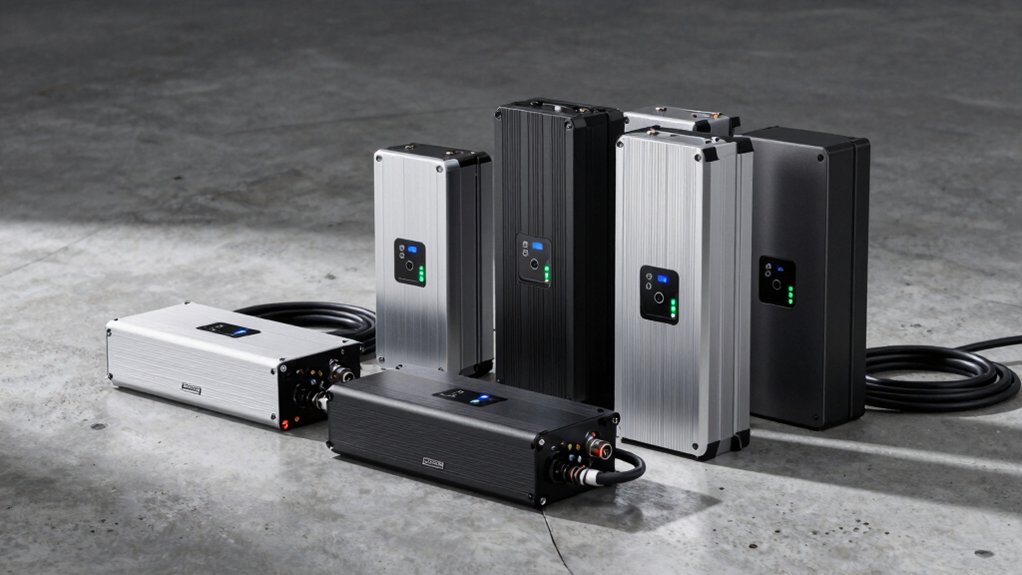

When the power goes out, you need an inverter with an automatic transfer switch (ATS) to keep your essential devices running without interruption. You’ll find models ranging from 1000W to 3000W, each offering pure sine wave output that protects your electronics. The right choice depends on your power needs, budget, and whether you want UPS capability or remote monitoring. Understanding your options takes just a few key factors.
| 2500W Pure Sine Wave RV Inverter with ATS |

| Best for RV Integration | Continuous Power Output: 2500W | Peak/Surge Power: 5000W | Input/Output Voltage: 12V DC to 110V/120V AC | VIEW LATEST PRICE | Read Our Analysis |
| Renogy 3000W Pure Sine Wave Power Inverter with UPS |

| Most Advanced Features | Continuous Power Output: 3000W | Peak/Surge Power: 6000W | Input/Output Voltage: 12V DC to 120V AC | VIEW LATEST PRICE | Read Our Analysis |
| Renogy 1000W Pure Sine Wave Power Inverter with UPS |

| Best Budget Option | Continuous Power Output: 1000W | Peak/Surge Power: 2000W | Input/Output Voltage: 12V DC to 110V AC | VIEW LATEST PRICE | Read Our Analysis |
| Renogy 2000W Pure Sine Wave Power Inverter with UPS |

| Best Mid-Range Choice | Continuous Power Output: 2000W | Peak/Surge Power: 4000W | Input/Output Voltage: 12V DC to 120V AC | VIEW LATEST PRICE | Read Our Analysis |
| Litime 2000W Pure Sine Wave Power Inverter with ATS |
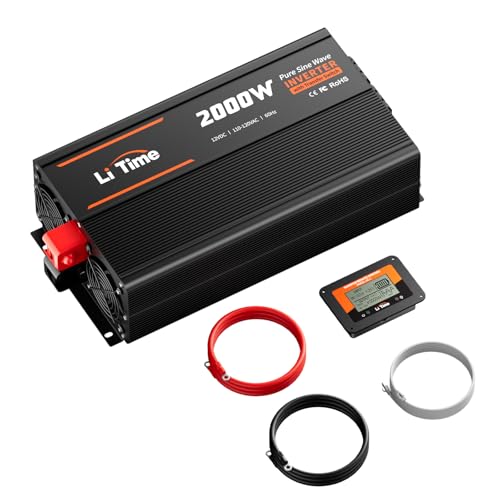
| Best Off-Grid Solution | Continuous Power Output: 2000W | Peak/Surge Power: 4000W | Input/Output Voltage: 12V DC to 120V AC | VIEW LATEST PRICE | Read Our Analysis |
More Details on Our Top Picks
2500W Pure Sine Wave RV Inverter with ATS
You’re looking for an inverter that’ll integrate seamlessly into your RV’s electrical system. This 2500W unit converts 12V DC battery power into clean 110V/120V AC electricity, delivering continuous 2500W with 5000W peak output. The built-in automatic transfer switch (ATS) handles shore power and battery switching automatically—when shore power connects, it bypasses the inverter; when shore power cuts, it switches to battery instantly. Hardwire the AC input terminal block (Live, Neutral, Ground) directly into your RV breaker panel for permanent installation. Dual cooling fans and smart protections against overload, overvoltage, low voltage, and overtemperature keep your system running reliably. You’ll receive the inverter, battery cables, and manual, plus 24/7 customer support.
- Continuous Power Output:2500W
- Peak/Surge Power:5000W
- Input/Output Voltage:12V DC to 110V/120V AC
- Transfer Switch Type:Built-in ATS with automatic shore power switching
- Cooling System:Dual intelligent cooling fans
- Primary Protection Features:Overload, over-voltage, low-voltage, over-temperature, short-circuit
- Additional Feature:Supports multiple battery types
- Additional Feature:24/7 professional customer support
- Additional Feature:Hardwired AC terminal block
Renogy 3000W Pure Sine Wave Power Inverter with UPS
The Renogy 3000W Pure Sine Wave Power Inverter with UPS delivers the most advanced features for anyone needing reliable backup power during outages. This unit converts 12V DC to 120V AC while supporting seamless switching between grid and off-grid power. You’ll benefit from 6000W surge capacity and 92% efficiency for RVs, trucks, and homes. Built-in Bluetooth lets you monitor performance through the Renogy App. The inverter operates quietly under 51dB and includes comprehensive protections: low/high voltage, low/high current, and short-circuit safeguards. Cooling fans maintain optimal temperatures during extended use.
- Continuous Power Output:3000W
- Peak/Surge Power:6000W
- Input/Output Voltage:12V DC to 120V AC
- Transfer Switch Type:On-Grid Transfer Switch
- Cooling System:Cooling/heating sink fans
- Primary Protection Features:Low/high voltage, low/high current, short-circuit protection
- Additional Feature:Built-in Bluetooth connectivity
- Additional Feature:Renogy App monitoring capability
- Additional Feature:Under 51dB quiet operation
Renogy 1000W Pure Sine Wave Power Inverter with UPS
Looking for affordable backup power that won’t drain your budget? The Renogy 1000W Pure Sine Wave Power Inverter delivers reliable performance at a lower price point. This unit converts 12V DC to 110V AC with over 92% efficiency, powering sensitive electronics without damage. Its built-in UPS transfer switch automatically shifts between grid and battery power, protecting refrigerators and servers from interruptions. You’ll monitor voltage and load in real-time via the Renogy App or included remote. The inverter includes three AC outlets, one USB port, and a DC port for flexible connectivity. Multiple safety certifications and ultra-quiet operation at 51dB make it ideal for RVs, homes, and emergency backup.
- Continuous Power Output:1000W
- Peak/Surge Power:2000W
- Input/Output Voltage:12V DC to 110V AC
- Transfer Switch Type:Built-in UPS transfer switch
- Cooling System:Dual aluminum heatsinks and fan
- Primary Protection Features:Over-voltage, over-current, short-circuit, overheating protection
- Additional Feature:Plug & Play installation
- Additional Feature:UL/CE/FCC certified
- Additional Feature:USB charging port included
Renogy 2000W Pure Sine Wave Power Inverter with UPS
Need reliable backup power without breaking your budget? The Renogy 2000W Pure Sine Wave Inverter with UPS handles double the output of its 1000W counterpart. You’ll get 2000W continuous power and 4000W surge capacity, making it suitable for RVs, trucks, and homes. The built-in transfer switch automatically switches between on-grid and off-grid power. Monitor performance through the Renogy App or wired remote switch. Pure sine wave output protects sensitive electronics, while multiple safety features prevent damage from voltage fluctuations and short circuits. At 11.9 pounds and under 12% standby consumption, this inverter delivers efficient, portable backup power for demanding applications.
- Continuous Power Output:2000W
- Peak/Surge Power:4000W
- Input/Output Voltage:12V DC to 120V AC
- Transfer Switch Type:UPS Transfer Switch
- Cooling System:Cooling/heatsink fans
- Primary Protection Features:Low/high voltage, low/high current, short-circuit protection
- Additional Feature:Standby shutoff feature
- Additional Feature:Wired remote switch included
- Additional Feature:4.4 customer rating average
Litime 2000W Pure Sine Wave Power Inverter with ATS
Want reliable backup power that handles the shift from grid to battery automatically? The Litime 2000W Pure Sine Wave Power Inverter with ATS delivers exactly that. This unit converts 12V DC to 120V AC, providing 2000W continuous power and 4000W peak surge capacity. The built-in ATS transfer switch shifts between grid and battery power within 20ms, keeping critical devices running without interruption. You’ll monitor performance through the remote LCD controller displaying battery status and load conditions. The inverter includes comprehensive protections against low voltage, overvoltage, overheating, overload, and short circuits. Dual cooling fans enable operation from -20°C to 40°C, making it suitable for RVs, off-grid solar systems, camping, and home use. Installation includes two AC outlets, battery cables, and mounting hardware for straightforward setup.
- Continuous Power Output:2000W
- Peak/Surge Power:4000W
- Input/Output Voltage:12V DC to 120V AC
- Transfer Switch Type:Built-in ATS with utility bypass
- Cooling System:Dual intelligent cooling fans
- Primary Protection Features:Low voltage, overvoltage, overheating, overload, short circuit
- Additional Feature:Remote LCD controller display
- Additional Feature:20ms transfer switch speed
- Additional Feature:Wide temperature range operation
Factors to Consider When Choosing an Inverter With Transfer Switch
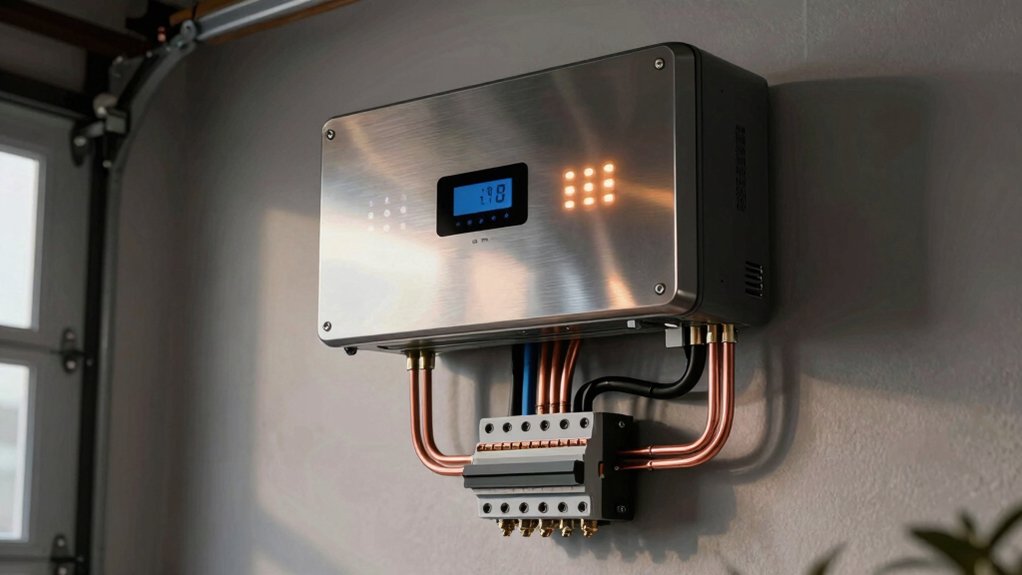
You’ll need to appraise your power output requirements by calculating the total wattage of devices you plan to run simultaneously, then match that figure to the inverter’s continuous power rating. Next, confirm that the inverter’s battery voltage (12V, 24V, or 48V) aligns with your existing battery bank, and check the transfer switch speed—measured in milliseconds—to ensure seamless transitions between grid and battery power without disrupting sensitive equipment. Finally, assess your installation space and cooling needs, since units with passive cooling require adequate ventilation while those with active cooling systems demand access to electrical outlets and may produce noise.
Power Output Requirements
Matching your inverter’s continuous wattage to your essential load is the foundation of reliable backup power. Calculate your total running power by adding up all devices you’ll operate simultaneously—typically 2000–2500W covers daily RV needs. Next, apply a safety margin of 20–25% above this total to prevent overload conditions. You’ll also need to account for peak surge ratings, which handle startup demands from motors and compressors. Most quality inverters deliver 4000–5000W surge capacity to manage these spikes without tripping. Review your specific appliances’ power requirements, then select an inverter that comfortably exceeds your calculated needs. This approach ensures your system sustains continuous operation while accommodating unexpected power demands during critical moments.
Battery Voltage Compatibility
Your inverter‘s input voltage must match your battery bank’s voltage to function safely and efficiently. Most RV and off-grid systems use 12V DC, though some installations run 24V or 48V setups. Check your battery bank’s voltage rating first, then select an inverter with matching input specifications.
Next, verify that your transfer switch can handle continuous loads at your chosen voltage without tripping. Higher voltages allow thinner wiring and reduce power losses, but require compatible components throughout your system.
Also confirm your inverter’s peak surge rating aligns with startup surges from connected devices. Finally, match the inverter to your battery chemistry—lithium, AGM, or lead-acid—since some inverters optimize performance for specific types. Properly sized DC cabling is essential to safely carry the input current your system demands.
Transfer Switch Speed
How fast does an automatic transfer switch (ATS) need to be? Your answer depends on what you’re powering. Most ATS models switch between grid and battery in 10–20 milliseconds, which works well for standard appliances. However, sensitive electronics like servers or refrigerators require faster switching to avoid data loss or equipment resets. Check your device specifications first. If you’re protecting basic loads, a standard ATS around 20 ms suffices. For critical equipment, choose models advertising sub-20 ms switching speeds. Avoid units exceeding 50 ms unless you’re only backing up non-sensitive devices. Match the ATS speed to your most demanding connected load. This ensures seamless power continuity and prevents costly downtime or damage.
Installation Complexity
When you’re choosing an inverter with a built-in transfer switch, installation demands deserve serious attention because they directly affect safety, performance, and long-term reliability. You’ll need to connect the unit to your shore power input and your RV’s main breaker panel, which requires precise wiring work. Many models use 3-wire AC input blocks that demand careful separation of live, neutral, and ground connections—mistakes here create serious hazards. You must verify proper grounding, select correct fuse sizes, and use appropriate cable gauges to handle surge loads safely. Some units offer bypass modes or utility interfaces that change where you install them in your electrical system. Assess whether you’ll hire a professional electrician or handle installation yourself, as improper setup compromises both safety and equipment longevity.
Cooling System Efficiency
Why does an inverter’s cooling system matter when you’re selecting a unit with a transfer switch? Your inverter generates heat during continuous operation, and inadequate cooling causes thermal throttling—automatic power reductions that compromise performance when you need it most.
When evaluating cooling systems, examine two key components: dual intelligent fans and heat sink design. Dual fans maintain consistent temperatures under sustained loads and peak demand periods. Heat sinks with efficient fan placement reduce thermal buildup during grid-to-battery transfers.
Match your cooling capacity to the inverter’s continuous power rating and surge requirements. Undersized cooling systems lead to thermal overload during transfers. Look for units operating at 51 dB or quieter, indicating optimized fan efficiency. Lower operating temperatures directly extend inverter lifespan and prevent automatic shutdowns that leave you without backup power.
Protection Features Quality
Multi-layer protection stands as your inverter’s first defense against electrical damage, and you’ll want to verify that your unit includes over-voltage, under-voltage, short-circuit, overheating, and overload protections. Check that your model features automatic shutdown and restart capabilities during fault conditions to prevent damage and enable safe recovery without manual intervention.
Next, confirm protection coordination with your transfer switch to guarantee seamless handoffs without backfeed or sudden load drops on critical equipment. Review real-time monitoring indicators—whether LEDs or app-based displays—that clearly show protection status and fault codes for quick diagnostics when issues arise.
Finally, prioritize models with dual intelligent cooling systems, such as fans or heatsinks, to maintain protection reliability during continuous or high-load operation. These cooling features prevent thermal failures that compromise your system’s safety mechanisms.
Monitoring And Control Options
How you’ll monitor and control your inverter with transfer switch directly impacts your ability to respond to power events and maintain system reliability. Look for built-in monitoring capabilities like Bluetooth and app access that let you track voltage, load, and error codes in real time from your phone. Check whether the system includes a dedicated remote controller or wired remote switch for on-site adjustments. Verify the inverter has a touchscreen or LCD display showing battery status, performance metrics, and load conditions. Confirm compatibility with Renogy apps for mobile alerts during power transitions. Ensure you can monitor and adjust transfer-switch operation remotely to optimize switching times and prevent power interruptions.
Operating Temperature Range
While remote monitoring keeps you informed about your inverter’s performance, the ambient conditions surrounding your equipment determine whether it’ll actually perform reliably when you need it most. Check your inverter’s operating temperature range—typically -20°C to 40°C for quality models—to guarantee it matches your climate. Dual intelligent cooling fans help maintain safe operation across varying loads and temperatures, protecting components during high-current transfers. Excessive ambient temperatures reduce inverter efficiency and shorten component lifespan, particularly during peak demand periods. Temperature ratings directly impact automatic transfer switching reliability; high loads combined with elevated temperatures may trigger protection mechanisms or slow switching response. Select an inverter rated for your region’s extreme conditions to prevent performance loss and ensure dependable backup power year-round.
Final Thoughts
You’ll want to select an inverter based on your power needs, budget, and installation space. Match your wattage requirements to the unit’s continuous and surge capacity. Verify the transfer switch responds within milliseconds to prevent equipment damage. Install proper grounding, fusing, and cable sizing according to manufacturer specs. Consider Renogy or Litime models with monitoring features for reliability. Schedule professional installation if you’re unfamiliar with electrical work.

Meet Ry, “TechGuru,” a 36-year-old technology enthusiast with a deep passion for tech innovations. With extensive experience, he specializes in gaming hardware and software, and has expertise in gadgets, custom PCs, and audio.
Besides writing about tech and reviewing new products, he enjoys traveling, hiking, and photography. Committed to keeping up with the latest industry trends, he aims to guide readers in making informed tech decisions.