
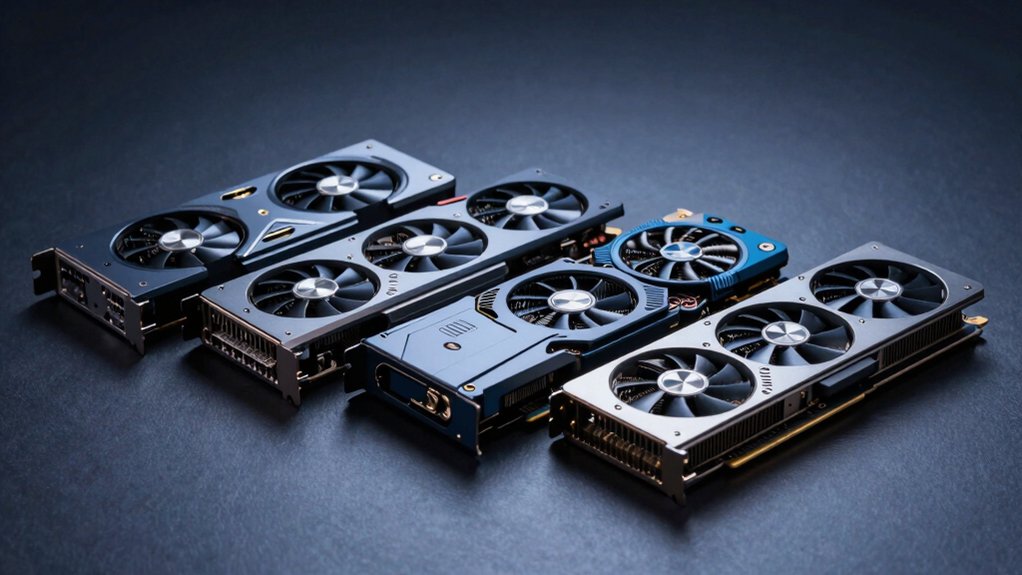

You’re looking for a graphics card that delivers solid performance without inflating your electricity bills. Low-powered options exist across different price points and performance levels, each designed for specific tasks. Whether you need basic display support, efficient everyday computing, or modest gaming capabilities, you’ll find a card that fits your build and budget. The right choice depends on your monitor setup, desired performance level, and case constraints—factors we’ll examine next.
| QTHREE GeForce GT 210 Graphics Card 1024MB DDR3 |

| Entry-Level Compact | Memory Capacity: 1 GB DDR3 | Core Clock Speed: 589 MHz | Video Outputs: VGA, HDMI | VIEW LATEST PRICE | Read Our Analysis |
| SOYO GeForce GT 740 4GB Graphics Card Low Profile |

| Best Value | Memory Capacity: 4 GB DDR3 | Core Clock Speed: 993 MHz | Video Outputs: HDMI, DVI-D, VGA | VIEW LATEST PRICE | Read Our Analysis |
| Glorto GeForce GT 730 4GB Low Profile Graphics Card |

| Most Versatile | Memory Capacity: 4 GB DDR3 | Core Clock Speed: 902 MHz | Video Outputs: HDMI (x2), DisplayPort, VGA | VIEW LATEST PRICE | Read Our Analysis |
| GeForce GT 610 2GB Low Profile Graphics Card |

| Budget Pick | Memory Capacity: 2 GB DDR3 | Core Clock Speed: 523 MHz | Video Outputs: HDMI, VGA | VIEW LATEST PRICE | Read Our Analysis |
| Maxsun GeForce RTX 3050 6GB Graphics Card |

| Best Performance | Memory Capacity: 6 GB GDDR6 | Core Clock Speed: 1042 MHz | Video Outputs: HDMI 2.1, DisplayPort 1.4a | VIEW LATEST PRICE | Read Our Analysis |
More Details on Our Top Picks
QTHREE GeForce GT 210 Graphics Card 1024MB DDR3
Are you building a compact PC but worried about power consumption? The QTHREE GeForce GT 210 delivers efficient performance without requiring external power. This low-profile card fits small form factor cases and features a 64-bit architecture with 1024MB DDR3 memory. You’ll get adequate performance for basic tasks like photo editing and daily work. The card supports two monitors via VGA and HDMI outputs. Installation’s straightforward—you simply insert it into your PCIe 2.0 x16 slot. It’s compatible with Windows 10, 8, 7, Vista, and XP. Choose this option when you need reliable graphics for everyday computing while minimizing energy costs and system heat.
- Memory Capacity:1 GB DDR3
- Core Clock Speed:589 MHz
- Video Outputs:VGA, HDMI
- Form Factor:Low Profile SFF
- Windows Compatibility:Windows 10/8/7/Vista/XP
- External Power Requirement:None (PCIe powered)
- Additional Feature:Dual monitor support capability
- Additional Feature:All-solid-state capacitors
- Additional Feature:Includes low profile bracket
SOYO GeForce GT 740 4GB Graphics Card Low Profile
The SOYO GeForce GT 740 4GB Low Profile card delivers solid value if you’re upgrading an older desktop or building a compact system without upgrading your power supply. This half-height card requires no external power connectors, drawing only from your PCIe slot. It features 384 CUDA cores, a 128-bit memory bus, and 4GB DDR3 memory for smooth 1080p video playback and office multitasking. The single cooling fan operates quietly, making it suitable for HTpcs or professional environments. Install certified NVIDIA drivers and enable “Above 4G Decoding” in BIOS if needed. This card handles light gaming like League of Legends and basic design work effectively while maintaining long-term stability.
- Memory Capacity:4 GB DDR3
- Core Clock Speed:993 MHz
- Video Outputs:HDMI, DVI-D, VGA
- Form Factor:SFF Half-Height
- Windows Compatibility:Windows 11/10/8/7
- External Power Requirement:None (PCIe powered)
- Additional Feature:384 CUDA cores
- Additional Feature:Light gaming capable (1080p)
- Additional Feature:1-year manufacturer warranty
Glorto GeForce GT 730 4GB Low Profile Graphics Card
Looking for a graphics card that fits tight spaces? The Glorto GeForce GT 730 4GB Low Profile delivers entry-level performance in a compact form factor. This card features a 902 MHz core frequency, 4GB DDR3 memory, and dual HDMI ports alongside VGA and DisplayPort outputs. You’ll connect it via PCI Express x8, making installation straightforward in most standard and small form factor builds. The single-fan design keeps power consumption minimal, supporting your low-energy computing goals. With DirectX 12 and OpenGL 4.6 compatibility, you’ll handle general computing and light multimedia tasks efficiently. Its half-height bracket design accommodates most towers except micro form factor cases, providing reliable performance at negligible energy cost.
- Memory Capacity:4 GB DDR3
- Core Clock Speed:902 MHz
- Video Outputs:HDMI (x2), DisplayPort, VGA
- Form Factor:Low Profile Half-Height
- Windows Compatibility:Windows 11
- External Power Requirement:Not specified
- Additional Feature:NVIDIA Surround 4-screen output
- Additional Feature:3-year manufacturer warranty
- Additional Feature:28nm GK208 chipset
GeForce GT 610 2GB Low Profile Graphics Card
Wondering if you need graphics power without the electricity costs? The Glorto GeForce GT 610 offers entry-level performance for basic computing tasks. This card features 2GB DDR3 memory and a 523 MHz core clock, consuming minimal power. It connects via PCI-Express x16 (1.1) and includes HDMI and VGA outputs, supporting resolutions up to 2560×1600 on HDMI. The low-profile design fits small form factor and HTPC cases with its included half-height bracket. Windows 11 compatibility ensures modern system support. DirectX 11 and CUDA capabilities handle everyday applications efficiently. Choose this card if you’re building a compact system prioritizing energy efficiency over demanding graphics workloads.
- Memory Capacity:2 GB DDR3
- Core Clock Speed:523 MHz
- Video Outputs:HDMI, VGA
- Form Factor:Low Profile Half-Height
- Windows Compatibility:Windows 11
- External Power Requirement:Not specified
- Additional Feature:DirectX 11 support
- Additional Feature:2560×1600 HDMI resolution
- Additional Feature:1-year manufacturer warranty
Maxsun GeForce RTX 3050 6GB Graphics Card
Building a compact gaming PC without sacrificing performance? The Maxsun GeForce RTX 3050 6GB delivers. This card fits Mini ITX cases with its slim low-profile design measuring 6.65 × 2.71 inches. You’ll get 6GB GDDR6 memory, a 1470 MHz boost clock, and Ampere architecture for efficient gaming. The card connects via PCI-E X8 4.0, HDMI 2.1, and DisplayPort 1.4a, supporting 8K output and multiple monitors. DLSS technology boosts frame rates while maintaining image quality. Its modest power requirements make it ideal for building powerful small AI PCs without excessive electricity consumption. Install this card in your Mini ITX case and enjoy gaming without inflated power bills.
- Memory Capacity:6 GB GDDR6
- Core Clock Speed:1042 MHz
- Video Outputs:HDMI 2.1, DisplayPort 1.4a
- Form Factor:Slim Low Profile Mini SFF
- Windows Compatibility:Not specified
- External Power Requirement:Not specified
- Additional Feature:DLSS deep learning support
- Additional Feature:8K resolution output capable
- Additional Feature:Ampere architecture AI cores
Factors to Consider When Choosing Low Powered Graphics Cards
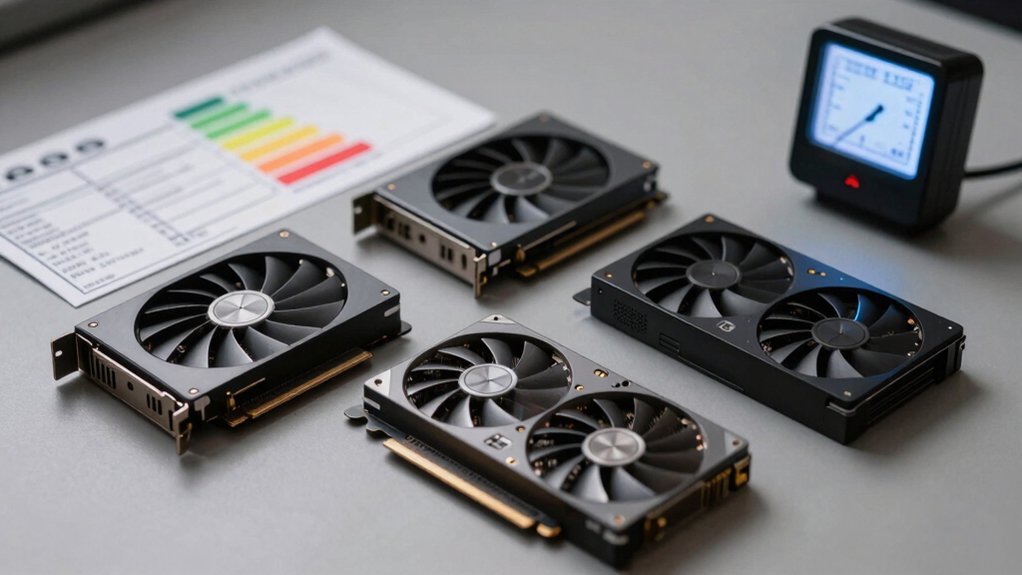
Before you purchase a low-powered graphics card, you’ll need to check your system’s power supply wattage, available slot space, and motherboard compatibility to ensure the card fits and functions properly. Next, determine how much VRAM you’d need based on your intended use—gaming, video editing, or general computing—since memory capacity directly affects performance for specific tasks. Finally, verify that your monitor connections match the card’s available ports, such as HDMI, DisplayPort, or DVI, so you can actually connect your display to the new hardware.
Power Consumption Requirements
What’s the first thing you should check when selecting a low-powered graphics card? You need to verify the card’s TDP (Thermal Design Power) rating, which tells you the maximum heat it generates. Most entry-level cards use 1.0–2.0 PCIe power budgets, meaning they draw power directly from the slot without external connectors. Check your power supply‘s capacity next. You should confirm whether your system supports external power connectors or relies solely on PCIe slot power. Review the card’s energy efficiency ratings to compare performance-per-watt across models. Finally, examine the cooling solution—single-fan designs typically consume less power than multi-fan alternatives. These steps ensure your card won’t exceed your system’s power limits.
Form Factor Compatibility
Since you’re working with limited space or a specific chassis type, you’ll need to verify your graphics card’s physical dimensions against your case’s available slots and clearance. Low-profile cards feature half-height brackets and compact designs built for slim ITX and small SFF builds. Check whether your case supports single-slot or dual-slot cards, as this directly affects neighboring component placement. Measure your case’s available depth, width, and height to ensure the card fits without blocking power supplies, storage drives, or cooling fans. Review your motherboard’s PCIe slot orientation and proximity to other hardware. Single-slot designs offer maximum flexibility in tight spaces, while dual-slot cards may require additional clearance. Verify bracket compatibility with your specific case model before purchasing to avoid installation problems and ensure proper airflow around your components.
Memory Capacity Needs
When you’re selecting a low-powered graphics card, memory capacity directly affects how smoothly your system handles textures, multi-frame buffers, and overall rendering quality. For basic office work and HTPC use, 2 GB to 4 GB of GDDR3 or DDR5 memory proves sufficient. If you’ll multitask across multiple displays at full HD resolution, allocate 6 GB or more for adequate headroom. Check the memory bus width—64-bit versus 128-bit configurations influence bandwidth performance. Narrower buses can create bottlenecks, limiting what your card accomplishes despite having sufficient memory. Balance memory capacity against your power budget; you don’t need excessive amounts if your workload remains modest. Select memory that matches your actual usage demands rather than overspending on capacity you won’t utilize.
Display Output Options
How you’ll connect your monitors to your graphics card determines which low-powered GPU works best for your setup. Most low-profile cards offer HDMI, DisplayPort, and VGA outputs in various combinations. Check your monitor types first—newer displays typically use HDMI or DisplayPort, while older ones may require VGA adapters. Many entry-level cards support dual or triple display configurations, letting you run 2–3 monitors simultaneously without additional hardware. Resolution capabilities vary by model; common maximums range from 1920×1080 to 2560×1600, with some supporting 8K over newer connections. Match your card’s output ports to your existing monitors before purchasing. Count how many displays you need and verify the card has adequate connections to avoid costly adapters or replacements.
System Compatibility Check
Before you purchase a low-powered graphics card, you’ll need to verify that it’s compatible with your current system—a critical step that prevents wasted money and installation problems. First, check your motherboard’s PCIe slot version and size, such as PCIe 3.0 x16 or PCIe 2.0 x8, to ensure physical fit and electrical compatibility. Next, review your power supply’s capacity and available connectors—some cards need only slot power, while others require external 6-pin or 8-pin connectors. Third, confirm your operating system has available drivers for your chosen card’s GPU model. Finally, verify your monitor’s input ports match the card’s outputs, such as HDMI, DisplayPort, or DVI, to avoid purchasing unnecessary adapters. These checks prevent compatibility failures before installation.
Thermal Management Solutions
Why does thermal management matter when selecting a low-powered graphics card? Proper cooling directly affects your GPU’s lifespan and performance stability. You’ll want to examine the card’s heatsink design—compact, optimized heatsinks dissipate heat efficiently in small chassis. Check fan specifications; smaller fans with low RPMs reduce noise while maintaining adequate airflow. Verify your case supports proper ventilation by ensuring front-to-back or bottom-to-top airflow patterns. Choose cards with lower core clocks and memory speeds, which generate less heat overall. Confirm your PSU provides sufficient case fan support for additional cooling if needed. Finally, monitor GPU temperatures during operation; aim for sustained temperatures below 75°C under typical workloads to ensure long-term reliability and prevent thermal throttling.
Performance For Your Workload
What workload’ll you actually run on your graphics card? Match your card’s core clock and memory bandwidth to your specific tasks. For basic office work and light design, 2–4 GB of VRAM suffices. If you’re doing photo-heavy editing or simple 3D tasks, get 6 GB or more. Higher MHz speeds and wider memory buses deliver smoother performance during video editing and multitasking. Check your display outputs next—ensure the card supports your monitor’s resolution and connection types like HDMI or DisplayPort. Verify 4K or 8K readiness if you handle high-resolution work. Finally, confirm the card’s power requirements align with your system’s capabilities, especially if you’re avoiding external power connectors in a compact build.
Warranty And Support Coverage
How long does the manufacturer guarantee its low-powered graphics card? Warranties typically span from 1 year to 3 years, with longer coverage indicating stronger manufacturer support. Check the product documentation to identify specific warranty terms before purchasing. A 3-year warranty provides extended protection, while a 1-year warranty covers basic defects. Review what’s included: most warranties cover hardware failures and defects but exclude physical damage or misuse. Understand the RMA (return merchandise authorization) process, which details how you’ll handle replacements or repairs. Manufacturers also include standard driver updates and basic troubleshooting support. For budget builds, longer warranties reduce replacement costs over time. Compare warranty lengths across models to determine which card offers the protection level matching your needs and budget constraints.
Final Thoughts
You’ll find your ideal low-powered graphics card by matching your specific needs to the options listed. Consider your monitor setup, preferred games, and case size first. Budget-conscious users should select the GT 210 or GT 610. Those needing better performance’ll choose the GT 730 or GT 740. If you want gaming capability without high power consumption, the RTX 3050 delivers solid results. Cross-reference your requirements against each card’s specifications before purchasing.

Meet Ry, “TechGuru,” a 36-year-old technology enthusiast with a deep passion for tech innovations. With extensive experience, he specializes in gaming hardware and software, and has expertise in gadgets, custom PCs, and audio.
Besides writing about tech and reviewing new products, he enjoys traveling, hiking, and photography. Committed to keeping up with the latest industry trends, he aims to guide readers in making informed tech decisions.