

You’re protecting your boat’s electrical system when you install an automatic charging relay between your starter and house batteries. This device isolates the banks when your engine shuts off, preventing battery drain while you’re docked. You’ll find five reliable options that offer different features and price points. The right choice depends on your voltage needs, amperage capacity, and budget—but before you decide, you need to understand what each model actually does.
| VEVOR Split Charge Relay Kit 12V Dual Battery Isolator |

| Best Overall | Maximum Current Rating: 140A continuous | Voltage System Compatibility: 12V DC | Waterproof/Weather Rating: IP65 | VIEW LATEST PRICE | Read Our Analysis |
| Blue Sea Systems 7610 SI-ACR Automatc Charging Relay – 12/24V DC / 120A |
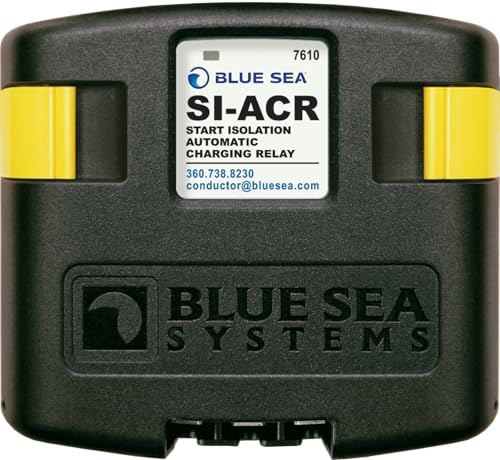
| Compact & Reliable | Maximum Current Rating: 120A | Voltage System Compatibility: 12/24V DC auto-ranging | Waterproof/Weather Rating: Hermetically sealed/vaporproof | VIEW LATEST PRICE | Read Our Analysis |
| Nilight 12V 140AMP Dual Battery Isolator Relay |

| Most Durable | Maximum Current Rating: 140A | Voltage System Compatibility: 12V | Waterproof/Weather Rating: IP66 | VIEW LATEST PRICE | Read Our Analysis |
| Blue Sea Systems 7611 AUTO CHARGE RELAY 120A 12/24V Black,Yellow |

| Premium Performance | Maximum Current Rating: 120A | Voltage System Compatibility: 12/24V DC auto-ranging | Waterproof/Weather Rating: Not specified | VIEW LATEST PRICE | Read Our Analysis |
| Blue Sea Systems Add-A-Battery Kit 120A Dual Circuit System 7650 |

| Complete System Solution | Maximum Current Rating: 120A | Voltage System Compatibility: 12V | Waterproof/Weather Rating: IP54 | VIEW LATEST PRICE | Read Our Analysis |
More Details on Our Top Picks
VEVOR Split Charge Relay Kit 12V Dual Battery Isolator
If you’re running dual batteries in your marine vessel, RV, or truck and need reliable automatic charging without draining your primary battery when the engine’s off, the VEVOR Split Charge Relay Kit is your best choice. This 140-amp voltage sense relay cuts in at 13.3V to charge both batteries simultaneously and cuts out at 12.8V to protect your primary battery. The kit includes a six-meter cable, terminals, fuses, and all installation hardware. Its IP65 waterproof rating handles marine spray and extreme weather. Installation requires mounting the compact relay unit and connecting cables per included instructions. The relay draws minimal standby power at 8mA, ensuring negligible battery drain when your vessel sits idle.
- Maximum Current Rating:140A continuous
- Voltage System Compatibility:12V DC
- Waterproof/Weather Rating:IP65
- Cut-In/Activation Voltage:13.3V
- Primary Application:Dual battery isolation/charging
- Warranty:Manufacturer’s warranty available
- Additional Feature:Compact 2.66″ footprint design
- Additional Feature:Complete installation accessories included
- Additional Feature:Low 8mA standby power draw
Blue Sea Systems 7610 SI-ACR Automatc Charging Relay – 12/24V DC / 120A
The Blue Sea Systems 7610 SI-ACR is built for boat owners who need reliable engine starting and battery protection without manual switching. This relay automatically isolates your house loads from the engine circuit during cranking, protecting sensitive electronics from voltage drops. It handles both 12V and 24V systems and supports alternators up to 120 amperes. The hermetically sealed contacts resist moisture and corrosion, critical for marine environments. You’ll get ignition protection suitable for gasoline-powered boats. Installation enhances your electrical system’s reliability and improves start-up performance while keeping auxiliary equipment safe during engine start sequences.
- Maximum Current Rating:120A
- Voltage System Compatibility:12/24V DC auto-ranging
- Waterproof/Weather Rating:Hermetically sealed/vaporproof
- Cut-In/Activation Voltage:Automatic isolation (voltage not specified)
- Primary Application:House load isolation during engine cranking
- Warranty:Not specified
- Additional Feature:Hermetically sealed vaporproof contacts
- Additional Feature:Auto-ranging 12/24V input
- Additional Feature:Ignition protected boat safety
Nilight 12V 140AMP Dual Battery Isolator Relay
Looking to run accessories without draining your engine’s starting battery? The Nilight 140AMP isolator manages dual 12V systems automatically. It cuts in at 13.3V when your engine charges the primary battery, then isolates both batteries when voltage drops to 12.8V. This setup lets you power accessories from a secondary battery while keeping your starter battery charged and ready. The relay handles 140 amps, features quick-connect terminals with screw mounting, and carries an IP66 waterproof rating for trucks, vans, RVs, and boats. Include mounting hardware in your installation. Note: incompatible with lithium batteries. A 2-year warranty backs your purchase.
- Maximum Current Rating:140A
- Voltage System Compatibility:12V
- Waterproof/Weather Rating:IP66
- Cut-In/Activation Voltage:13.3V
- Primary Application:Dual battery isolation/charging
- Warranty:2-year warranty
- Additional Feature:IP66 waterproof rating
- Additional Feature:2-year manufacturer warranty
- Additional Feature:Not compatible with lithium
Blue Sea Systems 7611 AUTO CHARGE RELAY 120A 12/24V Black,Yellow
Blue Sea Systems’ 7611 model delivers the automatic charging relay performance you’ll need if you’re operating dual-battery setups or managing power across 12V and 24V marine systems. This relay handles 120 amps continuous and features auto-ranging voltage input, so it works on either system without adjustment. The integrated LED displays your ACR status instantly. You’ll mount it using side and bottom knockouts for straightforward cable connections. With silver contacts and a 24-volt coil, this unit reliably isolates batteries during engine shutdown and reconnects them when charging begins. Installation takes minutes, and the quick-connect terminals speed up the process considerably.
- Maximum Current Rating:120A
- Voltage System Compatibility:12/24V DC auto-ranging
- Waterproof/Weather Rating:Not specified
- Cut-In/Activation Voltage:12V minimum switching
- Primary Application:Automatic charging relay
- Warranty:Limited warranty
- Additional Feature:Integrated LED status indicator
- Additional Feature:Silver contact material construction
- Additional Feature:1440 watts power capacity
Blue Sea Systems Add-A-Battery Kit 120A Dual Circuit System 7650
If you’re running two battery banks on your boat and want automatic management without installing separate regulators or isolators, the 7650 Add-A-Battery Kit handles both functions in one unit. The Automatic Charging Relay senses charge voltage, combines batteries during engine operation, and isolates them at rest to protect electronics and preserve starting power. The Dual Circuit Plus switch lets you manage starter and house banks independently using simple ON and OFF operation. In an emergency, you can link both batteries for engine starting if one bank discharges completely. The 120-amp continuous rating works for inboards and larger outboards, while tin-plated copper studs resist corrosion and ensure reliable conductivity throughout the system’s life.
- Maximum Current Rating:120A
- Voltage System Compatibility:12V
- Waterproof/Weather Rating:IP54
- Cut-In/Activation Voltage:Automatic sensing (voltage not specified)
- Primary Application:Dual battery bank management
- Warranty:Not specified
- Additional Feature:Emergency parallel battery function
- Additional Feature:Dual Circuit Plus switch management
- Additional Feature:Tin-plated corrosion-resistant copper studs
Factors to Consider When Choosing Marine Automatic Charging Relays
When selecting a marine automatic charging relay, you’ll need to evaluate five key factors: the voltage and amperage rating that matches your boat’s electrical system, the waterproof and durability standards required for your saltwater or freshwater environment, the installation complexity and what accessories you’ll need, compatibility with your specific battery type (lithium, AGM, or lead-acid), and the switching speed that determines how quickly the relay responds to charging conditions. Start by checking your boat’s battery specifications and electrical system voltage to ensure the relay you choose can handle your amperage demands without overloading. Next, verify that the relay meets marine-grade waterproof ratings and examine installation requirements alongside available space and tools, since some models require professional setup while others you can install yourself.
Voltage and Amperage Rating
The voltage and amperage rating of your marine charging relay determines whether it’ll work safely with your boat’s electrical system. You’ll need to match the relay’s voltage rating to your boat’s system—typically 12V or 24V—to ensure proper operation with your alternator and batteries. Check your system specifications before purchasing. For amperage, choose a relay with a continuous current rating at or above your highest expected charging load. If you’re running 120A or 140A systems, select accordingly to prevent voltage drop and failure. Consider relays with auto-ranging input capability (12/24V) for flexibility across different voltage levels. Higher intermittent capacity ratings, such as 160A, provide extra headroom during peak charging periods, protecting your system from overload conditions.
Waterproof and Durability Standards
Beyond matching voltage and amperage ratings, you’ll need to evaluate how well your relay can withstand the harsh marine environment where saltwater, moisture, and constant vibration threaten electrical equipment. Look for relays with an IP65 rating or higher, which provides reliable protection against dust and water ingress. Verify the housing uses durable materials like tough nylon or plastic that resist vibration and rough handling. Check that the relay features gasketed or hermetically sealed contacts to minimize moisture intrusion and corrosion. Confirm weather resistance specifications cover salt spray, which causes accelerated degradation in offshore conditions. Test compatibility with your boat’s wet, muddy, or spray-prone operating environment. These durability standards directly impact long-term reliability and prevent premature failure that could leave you stranded.
Installation Complexity and Accessories
A complete relay kit should include all the cables, terminals, fuses, lug connectors, ties, conduit, and mounting screws you’ll need to install the system without making additional trips to the hardware store. Review the manufacturer’s step-by-step instructions and access online manuals before beginning your installation. Check that the relay’s dimensions fit your vessel’s available space and verify mounting options—screw mounting or panel mounting—suit your setup. Confirm compatibility with your battery layout, including whether it supports dual-battery configurations without requiring external regulators. Inspect the relay’s weatherproof rating or IP classification to ensure it withstands marine conditions and vibration. These specifications directly impact installation ease and long-term reliability in your boat’s electrical system.
Battery Type Compatibility Needs
How do you know if your relay will work safely with your specific batteries? Check the relay’s specifications for battery type compatibility first. Some relays explicitly reject lithium batteries and require lead-acid or AGM types only. Next, match the relay’s voltage sense rating to your system—confirm it’s designed for 12V or 24V depending on your battery bank. Verify the relay can handle your maximum continuous current, typically 120–140A for marine setups. Review the voltage thresholds: cut-in should be around 13.3V and cut-out around 12.8V to protect your starter battery from deep discharge. Finally, confirm the unit supports dual-circuit or two-battery configurations if you’re managing both starter and house batteries. These compatibility checks prevent equipment damage and ensure safe operation.
Switching Speed and Response Time
When your relay detects voltage changes across your battery system, the speed at which it responds directly affects how well it protects your starter battery from deep discharge. Look for relays with switching speeds measured in milliseconds to seconds—faster response times prevent voltage drops that drain your main battery during engine shutdown. Choose relays rated for instantaneous currents of 120A or higher to handle fast transitions without overheating during engine start or heavy charging cycles. Voltage sense relays (VSR) or automatic charging relays (ACR) with sensitivity settings between 12.8–13.3V thresholds ensure your relay connects and disconnects at optimal points. Check specifications for coil voltage and actuation speed before purchasing, as these directly determine how quickly your relay isolates batteries during changing load conditions.
Size and Mounting Options
Once you’ve confirmed your relay’s switching speed and response capabilities, you’ll need to match it to your boat’s physical layout and electrical compartment. Marine relays offer three primary mounting methods: surface mount for exposed installation, panel mount for dashboard integration, and screw mounting for secure fastening to structural components. Check your relay’s footprint—most compact models measure two to four inches per dimension—against your available space. Select relays with side and bottom knockouts if your compartment restricts cable routing. Verify the IP rating: IP54 handles dusty conditions, while IP65 and IP66 suit wet marine environments. Integrated LED indicators let you confirm relay status during installation. Match these physical specifications to your boat’s constraints before purchasing to ensure proper fit and reliable long-term performance.
Warranty and Long-Term Support
Warranty coverage determines how well you’re protected if your marine charging relay fails or malfunctions after purchase. Check the warranty length first—Nilight offers a 2-year warranty, while VEVOR and Blue Sea provide manufacturer‘s warranty options you should compare. Verify whether coverage is automatic or requires registration with the manufacturer. Confirm the return window; many retailers like Amazon allow 30-day returns aligned with warranty claims. Review what support you’ll access, including manuals, product updates, and customer service responsiveness. Finally, confirm spare parts availability—fuses, mounting hardware, and connectors—covered under warranty. This ensures you can maintain your relay long-term without unexpected costs. Understanding these details protects your investment and keeps your battery system reliable.
Final Thoughts
You’ll want to choose a marine automatic charging relay that matches your boat’s voltage system—either 12V or 24V—and has enough amperage for your batteries, typically 120–140A. Check that it’s IP65-rated for water protection and includes the cables you need. Compare warranty lengths and spare parts availability. Install it between your starter and house batteries so it automatically isolates them when the engine stops, protecting your battery from drain.

Meet Ry, “TechGuru,” a 36-year-old technology enthusiast with a deep passion for tech innovations. With extensive experience, he specializes in gaming hardware and software, and has expertise in gadgets, custom PCs, and audio.
Besides writing about tech and reviewing new products, he enjoys traveling, hiking, and photography. Committed to keeping up with the latest industry trends, he aims to guide readers in making informed tech decisions.