
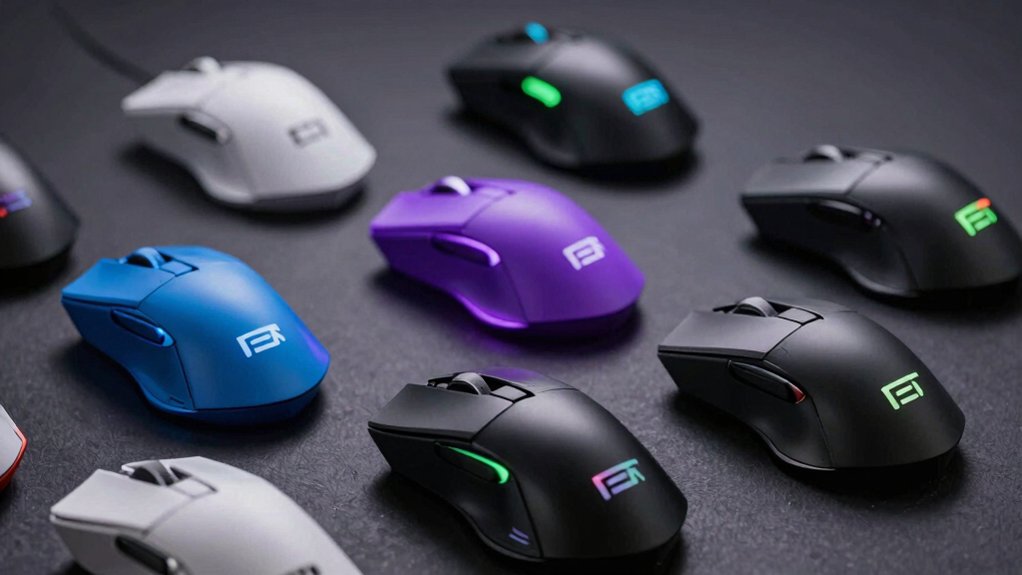

If you play Geometry Dash, you know that milliseconds matter. Your mouse directly impacts your timing, accuracy, and overall performance. The right gaming mouse combines low latency, precise DPI control, and an ergonomic design that reduces hand fatigue during long sessions. You’ll find several solid options available, each with specific strengths—but choosing the best one for your setup requires understanding what features actually boost your precision.
| MELOGAGA Wireless Gaming Mouse RGB Rechargeable |

| Best Wireless Option | Connection Type: Dual-mode (Bluetooth & 2.4G wireless) | DPI Range: 800–1600 DPI (3 levels) | Button Count: 6 buttons | VIEW LATEST PRICE | Read Our Analysis |
| Redragon M612 Predator RGB Gaming Mouse 8000 DPI |

| Best For Customization | Connection Type: Wired USB | DPI Range: 500–8000 DPI (customizable) | Button Count: 11 programmable buttons | VIEW LATEST PRICE | Read Our Analysis |
| Wired USB Mouse with RGB Lighting & Ergonomic Design |

| Budget Gaming Pick | Connection Type: Wired USB | DPI Range: 1200–3600 DPI (4 levels) | Button Count: 7 buttons | VIEW LATEST PRICE | Read Our Analysis |
| CHUYI Cool SUV Car Shaped Wireless Mouse 1600 DPI |

| Novelty Design Choice | Connection Type: 2.4G wireless | DPI Range: 1600 DPI fixed | Button Count: 2 buttons | VIEW LATEST PRICE | Read Our Analysis |
| Wireless Car-Shaped Ergonomic Gaming Mouse with USB Receiver |

| Portable & Compact | Connection Type: 2.4G wireless | DPI Range: 1200 DPI fixed | Button Count: 3 buttons | VIEW LATEST PRICE | Read Our Analysis |
| 3C Light Wireless Car Shape Mouse 1600 DPI |

| Best Car-Shaped Mouse | Connection Type: 2.4G wireless | DPI Range: 1600 DPI fixed | Button Count: 3 buttons | VIEW LATEST PRICE | Read Our Analysis |
| MROCO Premium Textured Waterproof Mouse Pad |
![MROCO Mouse Pad [30% Larger] with Anti-Fray Stitched Edges, Premium-Textured](https://m.media-amazon.com/images/I/51ximagrh6L._SL500_.jpg)
| Essential Accessory | Connection Type: N/A (mouse pad) | DPI Range: N/A (mouse pad) | Button Count: N/A (mouse pad) | VIEW LATEST PRICE | Read Our Analysis |
| Ai5G Race Car Wireless Mouse LED Light (Black) |

| Stylish Gaming Mouse | Connection Type: 2.4G wireless | DPI Range: Optical tracking (DPI not specified) | Button Count: 3 buttons | VIEW LATEST PRICE | Read Our Analysis |
More Details on Our Top Picks
MELOGAGA Wireless Gaming Mouse RGB Rechargeable
Are you searching for a wireless option that doesn’t compromise on responsiveness for Geometry Dash? The MELOGAGA Wireless Gaming Mouse offers dual connectivity through Bluetooth and 2.4G wireless, eliminating cable constraints. You’ll access three DPI settings—800, 1200, and 1600—allowing you to adjust precision for different gameplay sections. The mouse features six programmable buttons, including forward and backward options for navigation. Its rechargeable battery requires a two-hour initial charge, then sustains extended play sessions. Silent left and right buttons reduce noise during intense clicking sequences. The 7-color RGB backlight personalizes your setup while automatically entering sleep mode after ten minutes of inactivity to preserve battery life.
- Connection Type:Dual-mode (Bluetooth & 2.4G wireless)
- DPI Range:800–1600 DPI (3 levels)
- Button Count:6 buttons
- Lighting:RGB 7-color breathing backlight
- Power Source:Built-in rechargeable battery
- Operating System Compatibility:Windows, Mac OS, iPad, iPhone
- Additional Feature:Dual-mode Bluetooth/2.4G connectivity
- Additional Feature:Built-in rechargeable battery
- Additional Feature:Silent click buttons
Redragon M612 Predator RGB Gaming Mouse 8000 DPI
The Redragon M612 Predator gives you complete control over every button and DPI setting through customizable software. You can adjust your DPI from 500 to 8000 across five preset levels, then fine-tune further using the software. The mouse features 11 programmable buttons plus two side macro buttons, letting you assign custom actions to each. Its comfort grip with frosted coating keeps your hand steady during long sessions, while rubber texturing on the left side increases control. The wired optical design ensures consistent responsiveness, and dynamic RGB lighting syncs with other Redragon gear for a cohesive setup.
- Connection Type:Wired USB
- DPI Range:500–8000 DPI (customizable)
- Button Count:11 programmable buttons
- Lighting:5 backlit RGB modes
- Power Source:Wired (no battery needed)
- Operating System Compatibility:Windows (implied for gaming)
- Additional Feature:11 programmable buttons
- Additional Feature:Rapid-fire button included
- Additional Feature:Frosted comfort grip coating
Wired USB Mouse with RGB Lighting & Ergonomic Design
Looking for a budget gaming pick that doesn’t sacrifice performance? This wired USB mouse delivers reliable gameplay for Geometry Dash through its 7-button design and adjustable DPI settings. You’ll access four DPI levels—1200, 1800, 2400, and 3600—using the dedicated DPI buttons to match your preferred sensitivity. The honeycomb ergonomic grip reduces hand fatigue during extended sessions, while RGB lighting activates automatically when you plug it in. Setup requires only a USB port; no drivers or external power needed. The 21-million-click lifespan ensures durability through countless practice runs and competitive matches across Windows, Mac, and Linux systems.
- Connection Type:Wired USB
- DPI Range:1200–3600 DPI (4 levels)
- Button Count:7 buttons
- Lighting:Dynamic gradient RGB lighting
- Power Source:Wired (no battery needed)
- Operating System Compatibility:Windows, Mac, Linux
- Additional Feature:Honeycomb ergonomic design
- Additional Feature:21-million-click lifespan
- Additional Feature:Low light mode option
CHUYI Cool SUV Car Shaped Wireless Mouse 1600 DPI
If you want a novelty design choice that doubles as desk décor, the CHUYI Cool SUV Car Shaped Wireless Mouse offers practical functionality without sacrificing style. This 1600 DPI wireless mouse connects via 2.4GHz transmission up to 10 meters away, requiring no setup beyond inserting two AAA batteries and plugging in the USB receiver. The ambidextrous two-button design works with Windows, Mac, and Linux systems. Its blue LED headlights activate through light transmission, providing subtle illumination. Weighing 80 grams with compact dimensions of 4.53 x 2.0 x 1.65 inches, it’s portable for travel. Battery life reaches approximately six months with regular use, making it a low-maintenance option for casual gaming and office work.
- Connection Type:2.4G wireless
- DPI Range:1600 DPI fixed
- Button Count:2 buttons
- Lighting:Blue LED headlights (light transmission)
- Power Source:2 x AAA batteries required
- Operating System Compatibility:Windows, Mac OS, Linux
- Additional Feature:Car-shaped novelty design
- Additional Feature:Blue LED headlights
- Additional Feature:10-meter wireless range
Wireless Car-Shaped Ergonomic Gaming Mouse with USB Receiver
Compact at 11.5 x 5.0 x 4.0 centimeters and weighing just 0.1 kilograms, this wireless car-shaped mouse suits players who need portability without sacrificing precision. The 1200 DPI optical sensor delivers smooth, accurate cursor control essential for Geometry Dash’s demanding timing requirements. You’ll connect via the included USB receiver using 2.4G wireless technology with a 10-meter range, requiring two AAA batteries for operation. The ambidextrous three-button design accommodates both left and right-handed players. Silent mechanics prevent audio distractions during gameplay. This mouse works across Windows, Mac OS, Linux, and Chrome OS systems, making it compatible with most gaming setups you’ll encounter.
- Connection Type:2.4G wireless
- DPI Range:1200 DPI fixed
- Button Count:3 buttons
- Lighting:No lighting mentioned
- Power Source:2 x AAA batteries required
- Operating System Compatibility:Windows, Mac OS, Linux, Chrome OS
- Additional Feature:Car-shaped desk decoration
- Additional Feature:Silent operation design
- Additional Feature:Ambidextrous 3-button layout
3C Light Wireless Car Shape Mouse 1600 DPI
Want a mouse that combines functionality with distinctive style? The 3C Light Wireless Car Shape Mouse delivers 1600 DPI optical tracking for precise Geometry Dash gameplay. Its ergonomic symmetrical design with finger grooves fits comfortably in your hand during extended sessions. The wireless 2.4GHz connection operates up to 10 meters away, and the nano receiver stores inside the mouse for portability. Setup requires two AAA batteries and a USB plug-and-play connection—no drivers needed. The lightweight compact design works on Windows, Mac, and Linux systems, making it suitable for laptops and desktops alike.
- Connection Type:2.4G wireless
- DPI Range:1600 DPI fixed
- Button Count:3 buttons
- Lighting:Blue LED headlights
- Power Source:2 x AAA batteries required
- Operating System Compatibility:Windows, Mac OS, Linux
- Additional Feature:UV varnish mirror finish
- Additional Feature:Receiver stores inside mouse
- Additional Feature:Auto power-saving mode
MROCO Premium Textured Waterproof Mouse Pad
The MROCO mouse pad serves as an essential accessory for Geometry Dash players who need reliable surface control. This 8.5 x 11 inch pad features premium textured coating and a waterproof surface that prevents damage from spills. The 3mm thickness provides moderate friction, allowing smooth mouse glide while maintaining precise cursor tracking. Its reinforced stitched edges resist fraying during intense gameplay sessions. The non-slip rubber base keeps your pad stationary on your desk, preventing shifting during rapid movements. Compatible with all mouse types, this pad works immediately without setup. The 18-month warranty covers defects, ensuring long-term use for competitive play.
- Connection Type:N/A (mouse pad)
- DPI Range:N/A (mouse pad)
- Button Count:N/A (mouse pad)
- Lighting:N/A (mouse pad)
- Power Source:N/A (mouse pad)
- Operating System Compatibility:Universal (all mouse types)
- Additional Feature:360° reinforced stitched edges
- Additional Feature:Premium waterproof coating
- Additional Feature:18-month satisfaction assurance
Ai5G Race Car Wireless Mouse LED Light (Black)
If you’re seeking a stylish gaming mouse that combines form with function, the Ai5G Race Car Wireless Mouse delivers precision control through its optical tracking system and ergonomic design. This wireless 2.4 GHz mouse connects via USB 2.0 with a 10–12 meter range, requiring two AAA batteries. The ambidextrous layout accommodates left and right-handed users, while the three-button setup supports standard gaming actions. Its compact dimensions of 11.2 cm × 5.5 cm × 4 cm fit most hand sizes comfortably. Compatible with Windows and Mac OS systems, this mouse works immediately upon connection without driver installation. The low-voltage alarm alerts you when battery replacement is necessary, ensuring uninterrupted gameplay sessions.
- Connection Type:2.4G wireless
- DPI Range:Optical tracking (DPI not specified)
- Button Count:3 buttons
- Lighting:LED light
- Power Source:2 x AAA batteries required
- Operating System Compatibility:Windows, Mac OS
- Additional Feature:Race car styled design
- Additional Feature:Low-voltage alarming function
- Additional Feature:10-12 meter wireless range
Factors to Consider When Choosing a Mouse for Geometry Dash
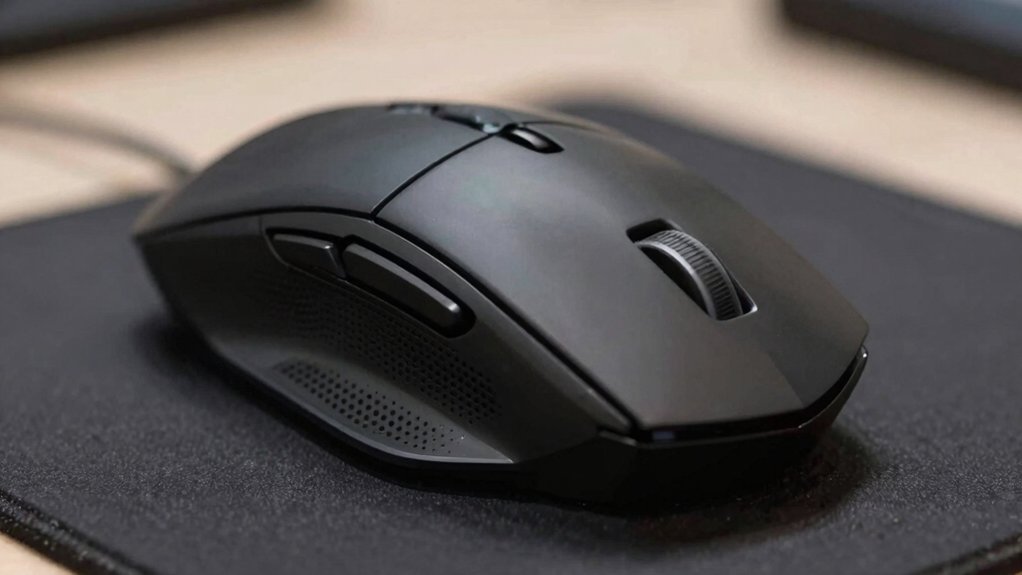
When selecting a mouse for Geometry Dash, you’ll want to evaluate five key factors: DPI sensitivity and precision to ensure you can make rapid, accurate movements; wired versus wireless connection to decide between lag-free performance and freedom of movement; button configuration and accessibility so you can execute commands without awkward hand positions; comfort during extended sessions to prevent fatigue during long practice runs; and response time and latency to guarantee your inputs register instantly. Each factor directly affects your ability to complete levels, so you should test your options before committing to a purchase. Prioritize the elements that matter most to your playstyle—for example, if you play for hours at a time, comfort becomes non-negotiable, while competitive players may prioritize response time above all else.
DPI Sensitivity And Precision
How does your mouse translate hand movement into on-screen cursor motion? DPI sensitivity controls this translation. You’ll find that higher DPI settings, like 8000, read fine details sharply but demand steady hand control to avoid twitchy movements. Mid-range DPI between 1200–2000 strikes a balance, giving you precise vertex placement without overshooting targets. Start by testing your mouse’s software presets to adjust DPI in real time. Match your DPI to your zoom level: increase DPI when zoomed out, decrease it when zoomed in for detailed work. Keep your DPI consistent across sessions to reduce cursor drift and improve your ability to repeat geometric constructions accurately. This consistency builds muscle memory and prevents frustrating precision errors.
Wired Versus Wireless Connection
Does your mouse connect via cable or through the air? Wired mice deliver lower input latency and consistent polling rates, giving you quicker reactions during geometry-based timing challenges. Wireless mice introduce potential input lag and signal interference, particularly in busy wireless environments or near USB hubs.
If you choose wireless, select a 2.4GHz model with a direct USB receiver positioned close to your PC to minimize latency spikes. Verify that your wireless mouse supports low-latency mode for competitive gameplay.
Consider battery management carefully. Wireless mice may power down unexpectedly, causing pauses during fast sequences and affecting your performance. For uninterrupted gameplay sessions, wired connections provide more reliable stability and dependable input throughout extended play.
Button Configuration And Accessibility
Why should you care about button placement and layout? Your mouse’s button configuration directly impacts your ability to execute precise macros for Jaw, Jump, and Clear commands without interrupting your keyboard rhythm.
Look for mice with programmable side buttons positioned within easy reach so you can access macros quickly. Ensure these buttons don’t interfere with your primary left and right click comfort during rapid tapping sequences.
Consider an ambidextrous or symmetric design if you switch hands during long sessions or use your non-dominant hand for micro-adjustments. This layout reduces fatigue and improves overall accessibility.
Locate the DPI button on your mouse—ideally in an easily reachable spot. You’ll adjust sensitivity on the fly for precise obstacle navigation. Silent or low-click buttons minimize auditory distraction during timed sequences, keeping your focus sharp.
Comfort During Extended Sessions
When you’re grinding through Geometry Dash levels for hours, your mouse’s ergonomic design becomes as critical as your skill level. You’ll want to prioritize an ambidextrous or symmetric shape that maintains natural hand positioning throughout extended play. Choose a lightweight mouse between 80–110 grams to minimize wrist strain during rapid, repeated movements. A comfortable grip paired with a supportive palm rest directly reduces fatigue as you progress through difficult sections. Textured side grips provide consistent control without requiring you to adjust your hold frequently. Verify the scroll wheel offers smooth feedback for any menu navigation you’ll encounter. These comfort features work together to keep your hands fresh and responsive, allowing you to focus entirely on timing and precision without physical distraction.
Response Time And Latency
How critical is your mouse’s response time to your Geometry Dash performance? Extremely. Lower latency mice deliver faster input-to-on-screen response, which you need for rhythm-based jumps and tight timing sequences.
First, prioritize wired mice over wireless options. Wireless mice introduce additional latency that impacts precision. If you choose wireless, select a stable 2.4 GHz or Bluetooth connection with minimal interference.
Next, check the polling rate. Higher polling rates—1000 Hz is ideal—reduce input lag by reporting your mouse position more frequently to your computer.
Finally, evaluate click latency. This measures how quickly your mouse registers a click after you press the button. Faster click registration helps you execute rapid-fire or repeated inputs in sequences without delay.
Combine these three factors for optimal response time.
Ergonomic Design Features
Your mouse’s ergonomic design directly affects your ability to maintain precision during extended Geometry Dash sessions. Look for mice with contoured finger grooves and textured side grips that enhance control during rapid micromovements and accurate tapping. Choose an ambidextrous, symmetrical shape if you’re left-handed, or select a right-handed design if you prefer that option. Verify the palm rest fits your hand size appropriately, as matching dimensions reduces tension and improves consistency across repeated jumps. Select a lightweight, compact mouse that minimizes fatigue without compromising button accessibility for quick actions. A comfortable grip reduces hand fatigue and enables precise wrist and finger movements throughout long play sessions. Test the mouse before purchasing to ensure all features support your specific playstyle and hand anatomy.
Durability For Intense Gaming
Because Geometry Dash demands rapid, repetitive clicking during extended sessions, you’ll need a mouse built to handle that punishment without failing. Look for mice with click lifespans rated at 21 million presses or higher to ensure longevity through intense practice. Check that the buttons feature reinforced design to withstand constant left and right clicks during geometry-based sequences. Verify the scroll wheel uses durable switches that resist wear from aggressive scrolling and repeated DPI adjustments. Examine the cable connection—either ensure it’s sturdy and well-secured, or choose a reliable wireless option to prevent input lag during precision moves. Finally, inspect the overall build quality, including textured grip and reinforced casing, which directly impact durability during tournament-style play and extended sessions.
RGB Lighting And Aesthetics
Several RGB features merit your attention when selecting a mouse for Geometry Dash, though you’ll want to weigh aesthetic preferences against practical performance concerns. Consider mice with lighting modes that deactivate during sleep or idle states, which conserves battery life during breaks. Choose customizable 7-color breathing backlights that provide visual feedback for DPI profile changes, helping you identify settings quickly mid-game. Avoid excessive RGB usage during extended gaming sessions, as it generates additional heat and drains battery power. Remember that backlit zones remain purely decorative and don’t affect precision or polling rate. If you game in low-light environments, select high-contrast lighting options to enhance visible tracking. Use software-controlled RGB customization to align lighting colors with your active DPI settings, reducing visual distractions while playing.
Final Thoughts
You’ll want to select a mouse that matches your grip style and sensitivity needs. Check the DPI range—800–1600 works best for most players. Verify the polling rate hits 1000 Hz for minimal lag. Test the button placement to confirm you can reach controls without moving your hand. Choose wired for zero latency or 2.4 GHz wireless for mobility. Finally, confirm the weight stays under 110 grams to reduce fatigue during extended sessions.

Meet Ry, “TechGuru,” a 36-year-old technology enthusiast with a deep passion for tech innovations. With extensive experience, he specializes in gaming hardware and software, and has expertise in gadgets, custom PCs, and audio.
Besides writing about tech and reviewing new products, he enjoys traveling, hiking, and photography. Committed to keeping up with the latest industry trends, he aims to guide readers in making informed tech decisions.