

When you’re capturing audio in the field, you need a recorder that handles demanding conditions without dropping essential details. You’ll want to evaluate key specs like bit depth, sample rate, and microphone configuration to match your recording environment. You should also consider battery life, storage capacity, and build quality before committing to a purchase. Understanding these factors helps you narrow down which recorder truly fits your needs—but knowing how specific models stack up against each other is where the real decision begins.
| Zoom H1essential Portable Recorder |

| Best Overall | Recording Format: WAV | Maximum Sample Rate: 96 kHz | Battery Type: 2 AAA batteries | VIEW LATEST PRICE | Read Our Analysis |
| Xvive XV1-R Portable Stereo Audio Recorder with Microphones |

| Professional Grade | Recording Format: WAV, AAC | Maximum Sample Rate: 96 kHz | Battery Type: 2 AA batteries | VIEW LATEST PRICE | Read Our Analysis |
| Zoom H1essential Handy Recorder Bundle with Lavalier Microphone |

| Best Value | Recording Format: WAV | Maximum Sample Rate: Not specified | Battery Type: 4 AAA batteries (included) | VIEW LATEST PRICE | Read Our Analysis |
| 136GB Digital Voice Recorder with Noise Reduction |

| Maximum Storage | Recording Format: MP3, WAV | Maximum Sample Rate: Not specified | Battery Type: Built-in 1100 mAh rechargeable | VIEW LATEST PRICE | Read Our Analysis |
| Sony ICD-PX370 Digital Voice Recorder with USB |

| Best Battery Life | Recording Format: MP3 | Maximum Sample Rate: Not specified | Battery Type: 2 AA batteries | VIEW LATEST PRICE | Read Our Analysis |
| Zoom PodTrak P4 Podcast Recorder with XLR Inputs |

| Best For Podcasters | Recording Format: WAV | Maximum Sample Rate: Not specified | Battery Type: 2 AA batteries | VIEW LATEST PRICE | Read Our Analysis |
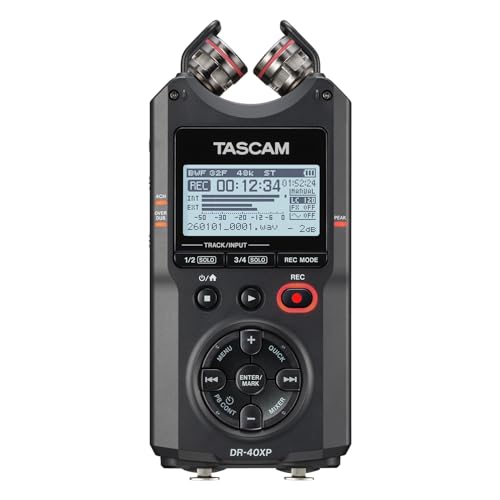
| TASCAM DR-40XP Portable Field Recorder & Audio Interface |
| Most Versatile | Recording Format: WAV | Maximum Sample Rate: 96 kHz | Battery Type: Not specified (batteries not included) | VIEW LATEST PRICE | Read Our Analysis |
| TASCAM DR-05XP Portable Field Recorder & Audio Interface |

| Best For Beginners | Recording Format: WAV | Maximum Sample Rate: 96 kHz | Battery Type: 2 AA alkaline batteries | VIEW LATEST PRICE | Read Our Analysis |
| Zoom F3 2-Input Field Recorder |

| Editor’s Choice | Recording Format: WAV | Maximum Sample Rate: 96 kHz | Battery Type: 2 AA batteries | VIEW LATEST PRICE | Read Our Analysis |
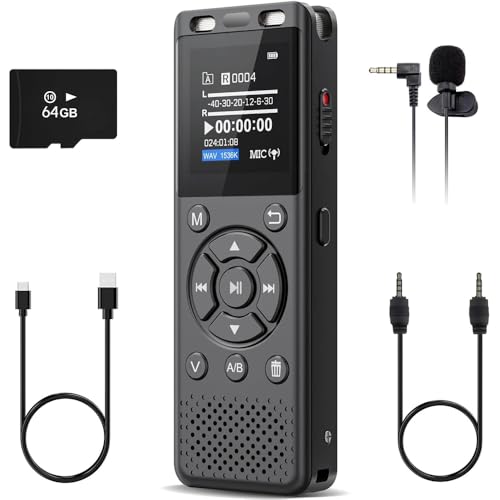
| Tonfarb 64GB Digital Voice Recorder with Playback |
| Budget-Friendly Pick | Recording Format: WAV, MP3 | Maximum Sample Rate: Not specified | Battery Type: 600 mAh built-in battery | VIEW LATEST PRICE | Read Our Analysis |
More Details on Our Top Picks
Zoom H1essential Portable Recorder
Looking for a recorder that won’t weigh you down? The Zoom H1essential captures stereo audio at 32-bit/96kHz quality in a compact 92-gram device. Its dual XY microphones record directly to SD cards, giving you up to 10 hours of recording time on two AAA batteries. You’ll connect it to cameras, computers, or smartphones via its USB audio interface. The built-in speaker and OLED screen let you monitor recordings immediately. A 3.5mm headphone jack provides audio feedback during sessions. This recorder handles WAV files and serves musicians, podcasters, and filmmakers who need portable, reliable equipment without sacrificing audio fidelity or portability.
- Recording Format:WAV
- Maximum Sample Rate:96 kHz
- Battery Type:2 AAA batteries
- Storage Capacity:1 TB (SD card)
- Weight:92 grams
- Primary Use Case:Musicians, podcasters, filmmakers, content creators
- Additional Feature:32-bit float recording capability
- Additional Feature:2×2 USB audio interface
- Additional Feature:Onboard XY stereo microphones
Xvive XV1-R Portable Stereo Audio Recorder with Microphones
Need a professional-grade recorder that doesn’t require gain adjustments? The Xvive XV1-R uses 32-bit float recording to capture audio without distortion across varying volumes. Its X/Y directional microphones handle up to 130 dB SPL, making it suitable for concerts, speeches, and high-dynamic-range environments. You’ll record in WAV format up to 96 kHz or use AAC for efficient storage. The device stores files on microSD cards up to 128GB, supporting 12-hour sessions. Connect it via USB-C to your computer, tablet, or smartphone for live streaming or online meetings. Two AA batteries power extended recording sessions. This compact recorder weighs just 0.4 pounds, fitting easily into your gear bag.
- Recording Format:WAV, AAC
- Maximum Sample Rate:96 kHz
- Battery Type:2 AA batteries
- Storage Capacity:128 GB (with microSD expansion)
- Weight:0.4 pounds (181 grams)
- Primary Use Case:Musicians, podcasters, filmmakers, live recording, streaming
- Additional Feature:Handles 130 dB SPL
- Additional Feature:USB-C microphone functionality
- Additional Feature:32-bit float lossless recording
Zoom H1essential Handy Recorder Bundle with Lavalier Microphone
The Zoom H1essential delivers solid recording capability at an affordable price point—ideal if you’re a podcaster, musician, or content creator who needs reliable audio without overspending. The bundle includes a lavalier microphone, windscreen, 32GB memory card, and batteries, so you’ll have everything to start recording immediately. Use the 32-bit float recording mode to capture consistent audio levels automatically. Switch to mono mode for interviews or attach the tripod mount for hands-free podcasting. Connect via USB-C to transfer files to your smartphone or computer. The onboard X/Y microphones handle up to 120 dB SPL, making them versatile for various recording environments and scenarios.
- Recording Format:WAV
- Maximum Sample Rate:Not specified
- Battery Type:4 AAA batteries (included)
- Storage Capacity:32 GB (microSDHC card included)
- Weight:Not specified
- Primary Use Case:Musicians, podcasters, filmmakers, interviews, content creators
- Additional Feature:Includes lavalier condenser microphone
- Additional Feature:32GB microSDHC card included
- Additional Feature:Tripod mounting capability
136GB Digital Voice Recorder with Noise Reduction
For professionals who need maximum storage without frequent file transfers, this 136GB digital voice recorder delivers up to 9,000 hours of recording capacity through its 8GB built-in memory combined with a 128GB TF card. The device captures PCM audio at 1536 kbps using dual noise reduction microphones with automatic filtering. You’ll activate voice-activated recording for hands-free operation in quiet settings, then transfer files to your computer via USB-C. The 1100 mAh battery provides 68 hours of continuous recording per charge. Its 97-gram metal body fits easily in your pocket, and the 1.44-inch LCD screen displays controls clearly. Password protection secures sensitive recordings. The A-B repeat function lets you revisit specific sections during playback.
- Recording Format:MP3, WAV
- Maximum Sample Rate:Not specified
- Battery Type:Built-in 1100 mAh rechargeable
- Storage Capacity:136 GB (8 GB built-in + 128 GB card)
- Weight:97 grams
- Primary Use Case:Lectures, meetings, interviews, classes, journalists
- Additional Feature:9000+ hours recording capacity
- Additional Feature:Voice-activated recording (VOR)
- Additional Feature:A-B repeat function
Sony ICD-PX370 Digital Voice Recorder with USB
Sony’s ICD-PX370 runs continuously for 57 hours on two AA batteries, making it ideal if you’re recording extended meetings, lectures, or conferences where you can’t frequently change power sources. The device features 4GB of built-in storage and records in MP3 format, allowing you to capture multiple sessions before transferring files. Its auto voice recording function reduces background noise, improving audio clarity during playback. The mono and stereo microphone options let you choose recording quality based on your needs. Simply connect the recorder to your PC via the built-in USB port to transfer files quickly without additional cables or adapters required.
- Recording Format:MP3
- Maximum Sample Rate:Not specified
- Battery Type:2 AA batteries
- Storage Capacity:4 GB built-in
- Weight:136 grams
- Primary Use Case:Meetings, lectures, voice recording
- Additional Feature:57-hour battery life
- Additional Feature:Built-in USB connection
- Additional Feature:Auto voice recording feature
Zoom PodTrak P4 Podcast Recorder with XLR Inputs
Need a recorder that handles multiple guests and remote callers simultaneously? The Zoom PodTrak P4 gives you four XLR microphone inputs with phantom power for professional-quality audio capture. You’ll manage four separate headphone outputs so each guest monitors their own mix independently. For remote interviews, you’ve got USB connectivity and a TRRS jack to bring in phone callers. The device records multiple tracks at once, letting you adjust individual levels in post-production. Sound pads add audio effects directly during recording. Battery power lasts up to 3.5 hours on two AA batteries, making it portable for studio sessions or field work. The automatic mix-minus feature ensures call-in guests don’t hear themselves delayed.
- Recording Format:WAV
- Maximum Sample Rate:Not specified
- Battery Type:2 AA batteries
- Storage Capacity:1 TB
- Weight:130 grams
- Primary Use Case:Podcast recording with multiple guests
- Additional Feature:4 XLR mic inputs
- Additional Feature:Automatic mix-minus capability
- Additional Feature:4 programmable sound pads
TASCAM DR-40XP Portable Field Recorder & Audio Interface
The TASCAM DR-40XP stands out as the most versatile portable recorder for musicians, video creators, and journalists who need flexible multi-track recording in the field. You’ll record up to four channels simultaneously using adjustable unidirectional condenser microphones in A-B or X-Y configurations, plus external inputs. The device captures 32-bit float audio at sample rates up to 96 kHz, eliminating clipping concerns. Its ultra-low noise HDDA preamps handle up to 125 dB SPL for loud environments. Store recordings on microSD cards and connect via USB-C as a 2-in/2-out audio interface directly to your computer or compatible mobile device. Long battery life supports extended recording sessions.
- Recording Format:WAV
- Maximum Sample Rate:96 kHz
- Battery Type:Not specified (batteries not included)
- Storage Capacity:microSD card (up to 512 GB)
- Weight:Not specified
- Primary Use Case:Musicians, music production, video, interviews
- Additional Feature:4-channel multi-track recording
- Additional Feature:Adjustable A-B/X-Y microphones
- Additional Feature:Ultra-low noise HDDA preamps
TASCAM DR-05XP Portable Field Recorder & Audio Interface
TASCAM’s DR-05XP offers newcomers an intuitive entry point into professional audio recording. You’ll appreciate its 32-bit float capability, which captures audio at 96kHz for superior quality. The device features built-in omnidirectional condenser microphones rated up to 125dB SPL, handling loud environments effectively. Connect it via USB-C directly to your computer for seamless recording sessions. With up to 512GB internal storage and 17 hours of battery life from two AA batteries, you’re equipped for extended fieldwork. Use it for music production, podcasting, video audio, or meetings. Its compact size—weighing just 0.28 pounds—makes portability straightforward for any recording situation.
- Recording Format:WAV
- Maximum Sample Rate:96 kHz
- Battery Type:2 AA alkaline batteries
- Storage Capacity:512 GB built-in
- Weight:0.28 pounds (127 grams)
- Primary Use Case:Music, audio-for-video, podcasting, fieldwork
- Additional Feature:512GB built-in memory
- Additional Feature:17-hour battery operation
- Additional Feature:USB-C audio interface
Zoom F3 2-Input Field Recorder
Looking for a compact recorder that doesn’t sacrifice professional quality? The Zoom F3 delivers 32-bit float recording at 96 kHz in a device weighing just 0.53 pounds. You’ll connect two XLR microphones directly into the built-in preamps and monitor audio through the 3.5mm headphone jack. The recorder supports stereo and mono modes, stores files on microSD cards up to 512GB, and runs on two AA batteries for up to 73 hours of recording time. An LCD screen displays your settings and levels. Bluetooth connectivity lets you control recording wirelessly. This model works well for field journalism, podcasting, and documentary work where you need professional audio capture in a portable format.
- Recording Format:WAV
- Maximum Sample Rate:96 kHz
- Battery Type:2 AA batteries
- Storage Capacity:microSD (up to 512 GB)
- Weight:0.53 pounds (240 grams)
- Primary Use Case:Professional field recording, music, video
- Additional Feature:73-hour digital recording time
- Additional Feature:Bluetooth wireless control
- Additional Feature:Dual AD converters
Tonfarb 64GB Digital Voice Recorder with Playback
Want professional-quality recordings without the premium price tag? The Tonfarb recorder delivers high-fidelity WAV format audio at up to 1536 kbps. You’ll get 64GB of built-in storage for up to 2,400 hours of recordings. The device features voice-activation, so it automatically starts and stops based on sound levels you set. Its 600 mAh battery lasts 32 hours on a single charge. Advanced noise reduction minimizes background interference for clearer playback. You can password-protect files to safeguard sensitive content. The 1.44-inch display makes navigation straightforward. Transfer files quickly via USB cable, and use the recorder as a portable storage drive. This pocket-sized device suits lectures, interviews, meetings, and field work equally well.
- Recording Format:WAV, MP3
- Maximum Sample Rate:Not specified
- Battery Type:600 mAh built-in battery
- Storage Capacity:64 GB (built-in TF card)
- Weight:Not specified
- Primary Use Case:Lectures, meetings, interviews, music creation, dictation
- Additional Feature:2400+ hours recording capacity
- Additional Feature:Password protection for files
- Additional Feature:1.44-inch display screen
Factors to Consider When Choosing Portable Recorders for Field Recording
When you’re selecting a portable recorder for field recording, you’ll need to evaluate five critical factors: audio quality standards that match your project requirements, microphone type selection based on your recording environment, battery life considerations for your session length, storage capacity requirements for file sizes, and portability and weight for your mobility needs. Start by determining what audio quality you need—whether professional-grade stereo or basic mono recording—then choose your microphone type, such as built-in, external condenser, or lavalier options, depending on whether you’re capturing interviews, ambient sound, or music. Next, calculate your battery needs by multiplying your typical recording sessions by the device’s stated runtime, verify the recorder has sufficient storage by checking gigabyte capacity against your file format’s size per minute, and finally confirm the unit’s weight and dimensions fit your carrying method and physical endurance.
Audio Quality Standards
Five key technical specifications determine whether a portable recorder’ll capture your field audio cleanly and preserve detail during post-production. First, prioritize 32-bit float recording to prevent clipping across dynamic ranges in unpredictable environments. Second, select 96 kHz sampling with 24-bit or 32-bit depth for superior transient capture compared to standard formats. Third, choose X/Y stereo microphones rated for 120–130 dB SPL handling when recording loud sources like concerts. Fourth, verify dual AD/HDDA preamps for multi-channel setups requiring precise mic separation. Fifth, confirm built-in noise reduction and voice-activated recording features for intelligibility in noisy conditions. These specifications directly impact your final audio quality and post-production flexibility.
Microphone Type Selection
Which microphone configuration’ll best serve your field recording needs depends on your primary recording scenario and the acoustic environment you’re working in. X/Y stereo mics capture wide ambient sound and ensemble performances effectively. Omnidirectional condensers provide natural room tone for in-the-round recordings. When recording loud sources close-up, choose recorders with robust preamps handling 125–130 dB SPL to prevent distortion. Built-in mics with 120–125 dB SPL tolerance support outdoor environments and loud instruments without clipping. For interviews and controlled recording, select recorders with XLR inputs or lavalier mic compatibility. Evaluate your primary use first—ambient recording, instrument capture, or interviews—then match the microphone type accordingly. This approach ensures you’ll preserve dynamic range and capture the detail your project requires.
Battery Life Considerations
How long’ll your recorder actually run in the field? Battery life ranges from 3–4 hours to 68+ hours depending on power mode and usage patterns. Consider your battery type: AA or AAA cells let you swap fresh batteries quickly, while built-in rechargeable batteries require charging equipment that may not be accessible during extended sessions.
High-sample-rate recording and multi-channel modes drain batteries faster, so factor in your specific needs. Use power-saving features strategically. Voice-activated recording, auto-record functions, and standby modes extend usable time significantly in real conditions. Match battery capacity to your session length. For longer recordings, choose models supporting external power options or larger capacity cells. Evaluate both total hours per charge and practical endurance under your actual recording demands.
Storage Capacity Requirements
Because recording time depends directly on bitrate, format, and available storage space, you’ll need to calculate your capacity requirements before selecting a portable recorder. First, determine your session length—whether you’re recording a two-hour interview or multi-day ambient captures. Next, check the bitrate and format you’ll use; 32-bit float WAV at 96 kHz consumes more space than compressed formats. Calculate approximate storage needs using your recorder’s specifications. Choose devices with sufficient built-in memory (64 GB to 136 GB) plus expandable microSD or SD card slots. For extended sessions, prioritize recorders supporting 128 GB cards or larger. Enable segmented file saving to prevent data loss when storage fills. Offload recordings to external media between sessions to maintain continuous recording capability.
Portability And Weight
When you’re selecting a portable recorder for field work, weight and size matter more than you might think. Handheld units typically range from 92 to 130 grams, making them easy to carry for extended periods. Check the recorder’s dimensions to confirm it fits comfortably in your bag or gear pack. Built-in XY microphones and palm-sized designs reduce the need for additional equipment, further minimizing what you transport. Evaluate battery type—AA, AAA, or built-in cells—and verify operation hours match your recording sessions. Longer battery life means fewer recharge interruptions during location work. Additionally, consider connectivity options like USB-C ports that allow you to connect peripherals without carrying adapters. These practical specifications directly determine whether you can efficiently move between recording locations while maintaining your workflow.
Input Connectivity Options
Your portable recorder’s input connectivity directly shapes what microphones and external sources you can use in the field. Check for XLR inputs if you plan to connect professional microphones or preamps—these balanced connections reject interference over longer cable runs. TRS inputs accept line-level signals from mixers or audio devices. A 3.5 mm headphone jack lets you monitor levels and ambient sound in real time, preventing recording errors. USB-C or USB 2.0 ports enable direct computer connection for live streaming or quick file transfers without additional hardware. Dual XLR/line-in options support multi-microphone setups for capturing richer audio during complex recording sessions. Built-in microphones provide backup recording capability when external mics aren’t available. Match your recorder’s inputs to your specific microphone types and recording sources before purchasing.
Recording Format Compatibility
Once you’ve confirmed which microphones and external sources your recorder can accept, you’ll need to evaluate the recording formats it supports—this directly affects audio quality, file size, and how you’ll use your recordings later. Most portable recorders offer WAV format at 24-bit or 32-bit float resolution with sample rates up to 96 kHz for professional archival work. MP3 and AAC options provide smaller files for quick reviews and sharing. Consider 32-bit float recording if you’re uncertain about gain staging, since it captures audio without clipping while maintaining consistent levels. Check your recorder’s maximum file size limits—many split files at 4 GB—and verify SD card capacity for extended sessions. Match your format choice to your workflow: WAV for quality, MP3 for convenience.
Budget And Warranty Coverage
How much you’ll actually spend on a portable recorder extends beyond the sticker price—you’ll need to factor in warranty protection and included accessories that determine your true upfront investment. Most recorders come with 1-year replacement warranties, so verify what damage or defects they cover before purchasing. Check bundled items like batteries, memory cards, and cables that either reduce or increase your initial costs. Review return policies carefully; many retailers offer 30-day voluntary return guarantees protecting you against fit and function issues. Consider battery type—AA or AAA options provide different runtimes from several hours to over 60 hours. Finally, examine memory capacity and expansion options like SD card compatibility to avoid expensive upgrades later.
Final Thoughts
You’ll find your ideal portable recorder by prioritizing your specific needs. First, determine your budget range. Next, identify whether you need 32-bit float capability or standard recording depth. Then, assess your microphone requirements—built-in mics, dual inputs, or XLR connections. Finally, evaluate battery life and storage options. Match these criteria against the recorders listed above. You’ll then select the model that best fits your field recording environment and professional standards.

Meet Ry, “TechGuru,” a 36-year-old technology enthusiast with a deep passion for tech innovations. With extensive experience, he specializes in gaming hardware and software, and has expertise in gadgets, custom PCs, and audio.
Besides writing about tech and reviewing new products, he enjoys traveling, hiking, and photography. Committed to keeping up with the latest industry trends, he aims to guide readers in making informed tech decisions.