
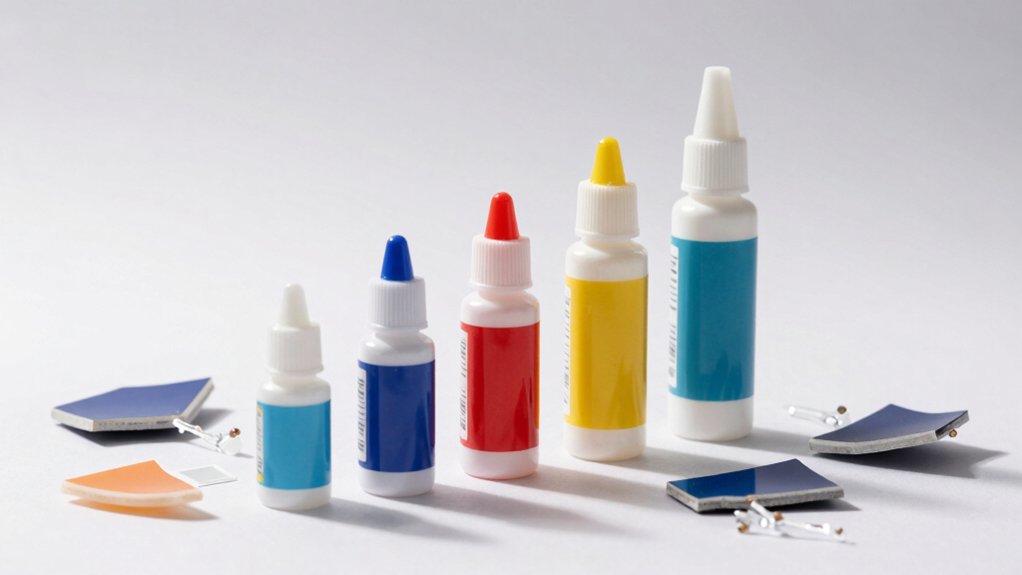

When you’re bonding 3D printed parts, you need the right adhesive to guarantee durable, lasting connections. Standard liquid super glues often run on vertical seams and miss tiny gaps, but gel formulas with precision tips solve these problems. You’ll find options designed specifically for PLA, ABS, PETG, and TPU filaments—each with different strengths and temperature ratings. To pick the best match for your prints, you need to understand what separates these five standout products.
| Super Glue Gel XXL Non-Drip All Purpose Adhesive |

| Best All-Purpose | Viscosity/Formula Type: High-viscosity gel | Bottle Size/Capacity: 1.76 oz (50 g) XXL tube | Cure/Set Time: 15 seconds full cure | VIEW LATEST PRICE | Read Our Analysis |
| 3D Printer Superglue Gel for All Filaments |

| Professional 3D Printing | Viscosity/Formula Type: Thick gel formula | Bottle Size/Capacity: 1.76 oz XXL tube | Cure/Set Time: Not specified | VIEW LATEST PRICE | Read Our Analysis |
| 3D Printer Super Glue for PLA ABS PETG TPU |

| Best Fine Details | Viscosity/Formula Type: Low-viscosity liquid (thin) | Bottle Size/Capacity: 1.76 oz XXL | Cure/Set Time: Ultra-fast drying (time not specified) | VIEW LATEST PRICE | Read Our Analysis |
| Plastic Glue for Models Miniatures Legos & 3D Printing |

| Best Budget Option | Viscosity/Formula Type: Standard cyanoacrylate | Bottle Size/Capacity: 20 g bottle | Cure/Set Time: Sets in seconds | VIEW LATEST PRICE | Read Our Analysis |
| Super Glue XXL All Purpose Liquid Adhesive |

| Best Industrial Strength | Viscosity/Formula Type: Medium-viscosity liquid | Bottle Size/Capacity: 1.76 oz (50 g) XXL | Cure/Set Time: 3 hours full cure | VIEW LATEST PRICE | Read Our Analysis |
More Details on Our Top Picks
Super Glue Gel XXL Non-Drip All Purpose Adhesive
If you’re working with 3D prints and need an adhesive that won’t run or drip on vertical surfaces, the Super Glue Gel XXL Non-Drip All Purpose Adhesive is your best choice. This 1.76 oz gel formula bonds plastic, wood, metal, and ceramic with a 15-second cure time and 25-pound tensile strength. The high-viscosity gel stays in place on overhead surfaces without spreading, making it ideal for detailed print repairs. You’ll appreciate the precision twist-lock tip that prevents clogging and keeps the adhesive ready to use. The airtight cap maintains freshness between applications. For professional workshops or frequent users, this XXL size offers three times more content than standard tubes, reducing replacement frequency and providing reliable, water-resistant bonding for your projects.
- Viscosity/Formula Type:High-viscosity gel
- Bottle Size/Capacity:1.76 oz (50 g) XXL tube
- Cure/Set Time:15 seconds full cure
- Heat Resistance:Water resistant; tensile strength 25 lbs
- Compatible Materials:Plastic, wood, metal, ceramic, glass
- Application Tip Design:Precision twist-lock tip; anti-clog
- Additional Feature:Non-drip gel formula
- Additional Feature:15-second full cure
- Additional Feature:25-pound tensile strength
3D Printer Superglue Gel for All Filaments
You’ll want the 3D Printer Superglue Gel for All Filaments if you’re working with multiple filament types and need a single adhesive that handles them all effectively. This gel bonds PLA, ABS, PETG, TPU, ASA, and Nylon without requiring different products for each material. The no-drip formula lets you apply it precisely to vertical seams and complex joints without mess. Use the precision tip to target specific areas on layer repairs and support structures. The XXL tube provides five times more capacity than standard bottles, making it practical for ongoing projects and frequent repairs. It withstands temperatures up to 110°C and resists moisture, so repaired parts perform reliably in demanding conditions.
- Viscosity/Formula Type:Thick gel formula
- Bottle Size/Capacity:1.76 oz XXL tube
- Cure/Set Time:Not specified
- Heat Resistance:Withstands up to 110°C and humidity
- Compatible Materials:PLA, ABS, PETG, TPU, ASA, Nylon
- Application Tip Design:Precision tip with anti-clog needle
- Additional Feature:Withstands 110°C temperatures
- Additional Feature:Up to 5× capacity
- Additional Feature:Anti-clog needle precision
3D Printer Super Glue for PLA ABS PETG TPU
Looking for a super glue that works reliably across all your 3D printing materials? The KRAFTPROTZ 3D Printer Super Glue delivers consistent bonding for PLA, ABS, PETG, TPU, and nylon filaments. Its ultra-thin formula uses capillary action to penetrate micro-gaps without blooming or warping your prints. The precision needle tip provides pinpoint application, preventing runs and waste on detailed models. You’ll get 1.76 fluid ounces—five times the volume of standard thin CA glues—extending your supply considerably. This glue resists heat up to 110°C and water damage, making it suitable for RC parts, drones, and outdoor components. Apply it directly to cracks and joints, let it cure quickly, and enjoy a clean, strong hold on your finished projects.
- Viscosity/Formula Type:Low-viscosity liquid (thin)
- Bottle Size/Capacity:1.76 oz XXL
- Cure/Set Time:Ultra-fast drying (time not specified)
- Heat Resistance:Bond strength up to 110°C
- Compatible Materials:PLA, ABS, PETG, TPU, ASA, Nylon
- Application Tip Design:Precision needle tip; no clogging
- Additional Feature:Capillary action flow
- Additional Feature:No blooming/warping residue
- Additional Feature:Best sellers rank #1
Plastic Glue for Models Miniatures Legos & 3D Printing
Plastic glue delivers the instant bonding strength you’ll need when you’re repairing 3D prints, model airplanes, miniatures, or intricate Lego structures that demand precision and durability. This cyanoacrylate adhesive formula works on PVC, ABS, acrylic, and other plastics commonly found in your workshop. The 20g bottle features a precision applicator tip that lets you place glue exactly where you need it without excess mess. It sets in seconds with only light pressure, eliminating the need for clamps and accelerating project completion. The professional-grade bond withstands everyday use and handles both delicate model repairs and household plastic fixes effectively.
- Viscosity/Formula Type:Standard cyanoacrylate
- Bottle Size/Capacity:20 g bottle
- Cure/Set Time:Sets in seconds
- Heat Resistance:Not specified
- Compatible Materials:PVC, ABS, acrylic, PLA, plastics
- Application Tip Design:Precision applicator tips
- Additional Feature:Sets in seconds
- Additional Feature:No clamping required
- Additional Feature:Professional-grade bonding strength
Super Glue XXL All Purpose Liquid Adhesive
If you’re bonding 3D-printed parts that need industrial-strength durability without visible seams, ARKA’s Super Glue XXL delivers the performance you’re after. This cyanoacrylate adhesive contains 50 grams—300% more than standard tubes—giving you extended supply for multiple projects. The medium viscosity formula dries clear and invisible on most materials, making it ideal for visible joints on models and miniatures. Apply a small amount to clean, dry surfaces, press together for seconds, and achieve full cure in three hours. The precision tip prevents waste, while the anti-clogging safety cap maintains product integrity between uses. With waterproof and weatherproof properties, your bonded 3D prints withstand environmental stress effectively.
- Viscosity/Formula Type:Medium-viscosity liquid
- Bottle Size/Capacity:1.76 oz (50 g) XXL
- Cure/Set Time:3 hours full cure
- Heat Resistance:Heat resistant; waterproof
- Compatible Materials:Aluminum, glass, plastic, wood, metal, rubber, ceramic, leather
- Application Tip Design:Airtight precision tip; anti-clogging safety cap
- Additional Feature:Crystal-clear invisible finish
- Additional Feature:300% more content
- Additional Feature:3-hour full cure
Factors to Consider When Choosing Super Glue for 3D Prints
You’ll need to evaluate five key factors before selecting your super glue: the filament material you’re bonding (PLA, ABS, PETG, or resin), the glue’s viscosity and flow control for precise application, the cure time that fits your project schedule, the heat resistance rating to ensure durability in your intended use, and the application method that gives you the precision you need. Start by matching the glue’s compatibility with your specific filament type, then assess whether you need a thick gel formula for vertical surfaces or a thin liquid for tight joints. Finally, confirm that the cure time and heat resistance meet your project’s functional requirements before you purchase.
Filament Material Compatibility
Since different 3D printing materials have distinct surface properties, you’ll need to match your super glue choice to the filament you’re working with. PLA bonds directly with standard cyanoacrylate without preparation. ABS requires surface cleaning or primer to prevent blooming and improve adhesion. PETG works reliably with cyanoacrylate, but keep it dry during application since moisture weakens the cure. TPU’s flexibility demands gap-filling formulas or specialized adhesives to prevent cracking at joints. Nylon presents the greatest challenge due to low surface energy; apply primer first or switch to alternative adhesives entirely. Check your filament type before selecting glue, and prepare surfaces accordingly to ensure strong, lasting bonds across all materials.
Viscosity And Flow Control
What viscosity level works best for your 3D print repair? You’ll choose between high, medium, and low options based on your project’s needs. High-viscosity glues work well for vertical surfaces and angled joints because they flow slowly and won’t drip or run. Use these when you need precision and control. Medium-viscosity formulas balance placement ease with penetration capability. Low-viscosity glues penetrate micro gaps through capillary action, making them ideal for fine details and tight seams. Gel-based formulas provide no-drip performance and superior gap-filling for vertical repairs. Match your choice to your joint orientation and gap size. Consider precision tips and anti-clog features to maintain controlled flow during delicate repairs and prevent unintended spreading.
Cure Time Requirements
How fast does your repair need to set? Consider your project timeline when selecting cure time. Ultra-fast formulas reach handling strength in 15 seconds to minutes, allowing immediate post-processing and assembly. These suit rapid prototyping workflows where you need quick results. Longer-curing adhesives develop maximum bond strength over hours, making them better for load-bearing or high-stress parts requiring full durability. Check the product label for both handling time and final cure duration. Environment matters too: higher humidity and temperature accelerate curing, while cooler or damp conditions slow it down. For 3D prints with vertical seams or intricate joints, gel formulas may extend effective cure start times compared to liquid variants. Match your adhesive’s cure speed to your specific application demands.
Heat Resistance Specifications
Temperature limits define whether your bonded 3D print can withstand the environments you’ll expose it to. Standard CA glues handle up to 110 °C, suitable for moderate-heat applications and outdoor use. Beyond this threshold, bond strength degrades and micro-cracking occurs.
Match your adhesive’s heat rating to your filament or resin material. For components near heat sources, verify the glue’s maximum operating temperature before purchasing.
Improve thermal performance by using a thicker bond line and preparing surfaces thoroughly. These steps maximize the adhesive’s heat tolerance.
For high-heat parts exceeding 110 °C, switch to adhesives explicitly rated for elevated temperatures or epoxy systems designed for thermal resistance. Select based on your actual temperature requirements, not assumed safety margins.
Application Precision Methods
Precision application separates successful 3D print repairs from messy failures, so you’ll want to match your glue’s delivery system to the complexity of your project. Select a gel or thick-viscosity formula with a precision twist-tip or anti-clog needle for vertical seams and fine details. This design minimizes runs and controls flow on delicate areas. For layered prints with tiny gaps, use a capillary-action adhesive that penetrates without squeezing. Choose no-drip, low-wicking formulas for small joints and fragile lattice structures to prevent over-application. Verify the applicator supports repeat-use on complex geometries and features an airtight cap to prevent clogging between sessions. Ultra-thin, quick-curing variants deliver clear, residue-free bonds on high-detail repairs.
Bond Strength Performance
Once you’ve selected an applicator that controls flow precisely, you’ll need to assess the actual holding power that’ll keep your 3D print intact. Tensile strength measures how much force a bond can withstand before breaking. Most all-purpose CA glues deliver around 25 pounds of tensile strength, which handles typical small-to-medium print repairs. Check product labels for specific tensile ratings to match your project’s demands. Stronger bonds prevent parts from separating under stress or weight. Consider your print’s intended use: decorative pieces need less holding power than functional parts exposed to handling or movement. Select glues rated for your specific stress requirements, ensuring your repair lasts as long as the original print.
Long-Term Durability Factors
How long’ll your 3D print repair actually last? Several factors determine durability. First, choose a glue rated for heat resistance up to 110 °C to withstand temperature fluctuations. Second, select either a high-viscosity gel or thin formula—gels control flow and minimize gaps that weaken joints over time. Third, prioritize formulas with capillary action that penetrate micro-gaps, creating stronger interfacial bonds in fine details. Fourth, use applicators with anti-clog, precision tips and tight seals to maintain consistent bond quality across repeated applications. Finally, pick clear, weatherproof formulations for outdoor or visible prints to prevent discoloration and degradation. These factors work together to extend your repair’s lifespan and preserve both strength and appearance.
Final Thoughts
You’ve reviewed five top super glue options designed for 3D prints. Choose gel formulas with precision tips for vertical seams and tight gaps. Verify the adhesive bonds your specific filament—PLA, ABS, PETG, or TPU. Apply small amounts to avoid runs. Let the bond cure fully before handling. Store caps tightly to prevent clogs. Select weatherproof formulas rated for heat if you’ll expose prints to temperature changes.

Meet Ry, “TechGuru,” a 36-year-old technology enthusiast with a deep passion for tech innovations. With extensive experience, he specializes in gaming hardware and software, and has expertise in gadgets, custom PCs, and audio.
Besides writing about tech and reviewing new products, he enjoys traveling, hiking, and photography. Committed to keeping up with the latest industry trends, he aims to guide readers in making informed tech decisions.