

To eliminate termites effectively, you’ll need to select a treatment that provides lasting protection beyond the initial application. You can choose from sprays, granules, or foams—each designed for specific areas like cracks, perimeters, or wall voids. The key difference lies in the active ingredients: some formulations repel termites while others penetrate deep into nests. Understanding which option matches your infestation’s severity determines whether you’ll achieve long-term control or face repeated problems.
| Spectracide Terminate Termite and Carpenter Ant Killer |

| Best Extended Protection | Target Pests: Termites, carpenter ants, carpenter bees, spiders, roaches, fleas, ticks | Indoor/Outdoor Use: Both indoor and outdoor | Active Ingredient: Lambda-Cyhalothrin | VIEW LATEST PRICE | Read Our Analysis |
| TERRO Carpenter Ant and Termite Killer Spray (2-Pack) |
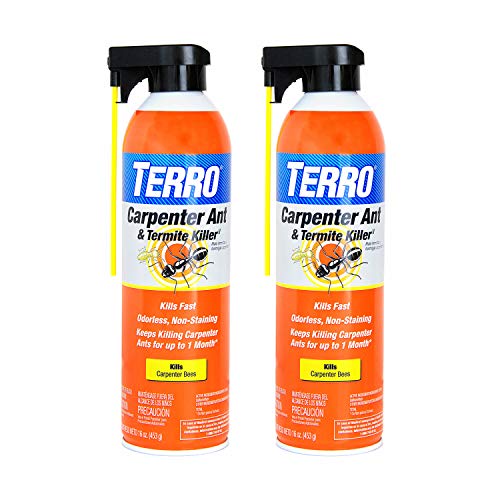
| Fast-Acting Spray | Target Pests: Carpenter ants, termites, carpenter bees | Indoor/Outdoor Use: Both indoor and outdoor | Active Ingredient: Deltamethrin 0.03% | VIEW LATEST PRICE | Read Our Analysis |
| BioAdvanced Termite Killer Granules Termite Treatment 9 LB |

| Best Coverage Area | Target Pests: Termites, ants, roaches, and other listed insects | Indoor/Outdoor Use: Outdoor only | Active Ingredient: Not specified in details | VIEW LATEST PRICE | Read Our Analysis |
| BioAdvanced Carpenter Ant & Termite Killer Ready-to-Use |

| Best Versatile Option | Target Pests: Termites, carpenter ants, carpenter bees, fleas, ticks, spiders, stink bugs, and other listed pests | Indoor/Outdoor Use: Both indoor and outdoor | Active Ingredient: Deltamethrin 0.02% | VIEW LATEST PRICE | Read Our Analysis |
| BASF Termidor Foam Termiticide Insecticide 20 oz |

| Professional-Grade Foam | Target Pests: Termites (all types), carpenter ants, old house borers, powder post beetles, wharf borers | Indoor/Outdoor Use: Both residential and commercial structures | Active Ingredient: Fipronil | VIEW LATEST PRICE | Read Our Analysis |
More Details on Our Top Picks
Spectracide Terminate Termite and Carpenter Ant Killer
Looking for long-lasting indoor and outdoor termite control? Spectracide Terminate offers a 1.33-gallon spray with an included AccuShot battery-powered sprayer. You’ll apply it to baseboards, cracks, and crevices indoors, or around foundations and wooden structures outdoors. The formula contains Lambda-Cyhalothrin and provides protection up to nine months. The AccuShot sprayer features a two-finger trigger that reduces hand fatigue without pumping. You can extend the wand for hard-to-reach areas. It also kills carpenter ants, carpenter bees, spiders, roaches, fleas, and ticks, making it effective for multiple pest problems simultaneously.
- Target Pests:Termites, carpenter ants, carpenter bees, spiders, roaches, fleas, ticks
- Indoor/Outdoor Use:Both indoor and outdoor
- Active Ingredient:Lambda-Cyhalothrin
- Application Format:Battery-powered spray with AccuShot sprayer
- Duration of Protection:Up to 9 months indoors
- Unit Size:1.33 gallons (170.24 fl oz)
- Additional Feature:AccuShot battery-powered sprayer
- Additional Feature:Reduces hand fatigue significantly
- Additional Feature:Up to 9 months protection
TERRO Carpenter Ant and Termite Killer Spray (2-Pack)
The TERRO spray is your fast-acting option for treating active infestations of carpenter ants, termites, and carpenter bees around your home’s vulnerable entry points. This 2-pack delivers 32 total ounces of deltamethrin-based formula that kills on contact and provides residual protection for up to one month. You can apply it indoors and outdoors using the two-way nozzle to spray broadly or precisely into cracks, crevices, and wall voids. The non-staining, odorless formula won’t leave unpleasant smells. However, this spray isn’t a standalone termite solution; for active termite infestations, obtain a professional inspection to assess the full scope before treating.
- Target Pests:Carpenter ants, termites, carpenter bees
- Indoor/Outdoor Use:Both indoor and outdoor
- Active Ingredient:Deltamethrin 0.03%
- Application Format:Aerosol spray with two-way nozzle
- Duration of Protection:Up to 1 month
- Unit Size:32 fluid ounces (2-pack)
- Additional Feature:Two-way spray nozzle design
- Additional Feature:Fast-acting contact formula
- Additional Feature:Non-staining, odorless formula
BioAdvanced Termite Killer Granules Termite Treatment 9 LB
BioAdvanced Termite Killer Granules cover up to 4,500 square feet, making them ideal for homeowners who need all-encompassing outdoor perimeter protection. You’ll sprinkle the granules around your home’s foundation, then water them in to activate the formula. The fast-acting treatment kills termites, ants, roaches, and other listed insects on contact while providing long-lasting protection for up to 30 days outdoors. This product works well for DIY termite control programs because it requires no special equipment or technical knowledge. Simply apply the granules as part of your home barrier treatment strategy to establish a protective zone around your property’s exterior.
- Target Pests:Termites, ants, roaches, and other listed insects
- Indoor/Outdoor Use:Outdoor only
- Active Ingredient:Not specified in details
- Application Format:Granules (sprinkle and water in)
- Duration of Protection:Up to 30 days outdoors
- Unit Size:9 pounds granules
- Additional Feature:Covers up to 4500 sq ft
- Additional Feature:Easy water-in application method
- Additional Feature:Granule-based treatment formula
BioAdvanced Carpenter Ant & Termite Killer Ready-to-Use
For homeowners who need one spray to handle multiple wood-destroying pests indoors and outdoors, this ready-to-use formula delivers versatile protection across different surfaces and spaces. The pump-style sprayer with adjustable nozzle makes application straightforward. Spray directly on insects for immediate results, or treat baseboards, cabinets, and areas beneath appliances inside your home. Outside, apply to exterior building surfaces, decks, and around structural foundations. The deltamethrin active ingredient at 0.02% concentration provides long-lasting protection without leaving staining or oily residue. This 1-gallon container covers carpenter ants, termites, fleas, ticks, spiders, and stink bugs effectively.
- Target Pests:Termites, carpenter ants, carpenter bees, fleas, ticks, spiders, stink bugs, and other listed pests
- Indoor/Outdoor Use:Both indoor and outdoor
- Active Ingredient:Deltamethrin 0.02%
- Application Format:Pump-style spray with adjustable nozzle
- Duration of Protection:Long-lasting (duration not specified)
- Unit Size:1 gallon (128 fluid ounces)
- Additional Feature:Adjustable nozzle pump sprayer
- Additional Feature:Non-staining, no oily residue
- Additional Feature:Immediate results on contact
BASF Termidor Foam Termiticide Insecticide 20 oz
BASF Termidor Foam‘s professional-grade foam formulation addresses termite infestations you can’t reach with standard liquid treatments. The 30:1 expansion ratio allows the foam to penetrate deep into wall voids, galleries, and nests where termites hide. You’ll apply it directly to affected areas—wooden elements, decks, fencing, and utility poles—without disrupting your entire home. The non-repellent fipronil works through contact and ingestion, eliminating termites, carpenter ants, and wood-destroying beetles. The foam’s thick cell walls stay intact six times longer than competing products, extending treatment effectiveness. One 20-ounce can covers multiple applications across residential and commercial structures, making it cost-effective for targeted pest control.
- Target Pests:Termites (all types), carpenter ants, old house borers, powder post beetles, wharf borers
- Indoor/Outdoor Use:Both residential and commercial structures
- Active Ingredient:Fipronil
- Application Format:Foam aerosol (expands 30:1)
- Duration of Protection:Up to 6 times longer cell wall retention than competitors
- Unit Size:20 ounces aerosol
- Additional Feature:Expands 30:1 penetrating foam
- Additional Feature:Thicker cell walls last longer
- Additional Feature:Targets multiple wood-destroying pests
Factors to Consider When Choosing Termite Treatment
You’ll need to identify whether you’re dealing with subterranean, drywood, or dampwood termites, since each type requires different treatment approaches and products. Determine if you’re treating indoor areas like walls and furniture or outdoor zones like foundation perimeters and soil, then decide whether you need a one-time application or a long-term prevention system that lasts several years. Finally, evaluate your preferred application method—liquid barriers, foam injections, or bait stations—and measure the square footage you’re treating to select the right product size and quantity.
Type Of Infestation
What type of termite or wood-destroying pest you’re dealing with fundamentally shapes which treatment method will work best for your situation. Subterranean termites require barrier or trench treatments around your foundation and soil because they travel underground. Drywood termites need localized injections directly into infested wood and wall voids. Carpenter ants and carpenter bees respond to surface sprays applied at entry points and affected areas. To determine your pest type, you’ll need professional inspection since identification affects everything downstream. Once confirmed, your pest control provider selects the appropriate formulation—foam for deep voids, granular for soil penetration, or ready-to-use sprays for surface application. Matching treatment type to pest species ensures you’re targeting the infestation effectively rather than wasting resources on ineffective methods.
Indoor Versus Outdoor
Should you treat your home’s interior, exterior, or both? The answer depends on where you’ve found termite activity. Indoor treatments create barriers inside walls and around baseboards, protecting living spaces for several months. You’ll apply these formulations to vulnerable entry points and infested areas within your home. Outdoor treatments focus on your foundation perimeter, woodpiles, and deck structures, establishing a first-line defense before termites reach your house. Apply these products around the exterior’s structural edges. Some products work indoors and outdoors, offering flexibility if you’ve detected activity in multiple locations. Foam formulations penetrate voids effectively indoors, while non-foam options work well on exterior wood. Assess your infestation’s location first, then select the treatment that matches your specific pest activity zones.
Treatment Duration Needed
How long’ll your termite treatment actually last? Duration depends on the product type and application method you choose. Indoor barrier treatments typically protect for up to nine months, making them a solid long-term option. Outdoor treatments vary substantially—foam or aerosol formulations deliver quick results but require frequent reapplication, while granular barriers last several weeks to months depending on weather exposure. To maintain effectiveness, plan follow-up inspections and reapplication schedules rather than relying on a single treatment. Consider products specifically designed for long-lasting residual effects. Check product labels for expected duration before purchasing. Match your treatment choice to how often you’re willing to reapply—frequent applications versus longer intervals between treatments. This determines your overall maintenance commitment and cost.
Application Method Preference
Once you’ve determined how long you need your treatment to last, selecting the right application method becomes your next decision point. You’ll choose between sprays, foams, or granules based on your specific situation. Sprays work best for direct insect contact and reaching wall voids using precision nozzles. Foams expand to fill gaps and cavities effectively. Granules create foundation barriers when watered in. Next, decide whether you need indoor, outdoor, or both applications. For interiors, select non-staining, low-odor formulas suitable for baseboards and crevices. For targeted spot treatments like nests or galleries, choose products with crack-and-crevice spray features. Match your chosen method to the treatment duration you selected earlier, ensuring the formulation delivers the residual control period you require.
Coverage Area Required
Calculating your treatment coverage area is essential before purchasing any termite product, since you’ll need enough material to protect your entire property. Start by measuring your home’s square footage and identifying all areas requiring treatment—foundation perimeters, crawl spaces, and interior zones. Next, check each product’s coverage claims, which typically range from 1,000 to 4,500 square feet per container. Account for application method differences: sprays, granules, and foams cover space differently. Divide your total square footage by the product’s stated coverage to determine how many containers you’ll need. For irregular layouts or multiple structures, calculate coverage for each section separately, then add totals together. Always purchase slightly extra to ensure complete protection without running short mid-application.
Active Ingredient Effectiveness
What’s the right active ingredient for your termite treatment? You’ll find three main options, each with distinct advantages. Lambda-cyhalothrin delivers broad-spectrum residual control both indoors and outdoors, making it versatile for barrier applications. Deltamethrin works faster, killing on contact while maintaining residual effects for up to one month—a 0.03% concentration provides high potency despite the low percentage. Fipronil-based foams function as non-repellent termiticides, penetrating deep into voids and nest areas for thorough treatment. Choose based on your specific needs: select lambda-cyhalothrin for comprehensive coverage, deltamethrin for quick results with lasting protection, or fipronil for difficult-to-reach infestations. Many formulations come odorless and non-staining, allowing effective indoor application without disrupting your space.
Final Thoughts
You’ve reviewed five effective termite treatments. Now select one based on your specific needs: use granules for perimeter protection, sprays for cracks and crevices, or foams for wall voids. Apply the product according to label directions, ensuring you cover the recommended square footage. Plan to retreat slightly beyond the warranty period to maintain continuous protection. Monitor treated areas regularly for signs of returning termites.

Meet Ry, “TechGuru,” a 36-year-old technology enthusiast with a deep passion for tech innovations. With extensive experience, he specializes in gaming hardware and software, and has expertise in gadgets, custom PCs, and audio.
Besides writing about tech and reviewing new products, he enjoys traveling, hiking, and photography. Committed to keeping up with the latest industry trends, he aims to guide readers in making informed tech decisions.