
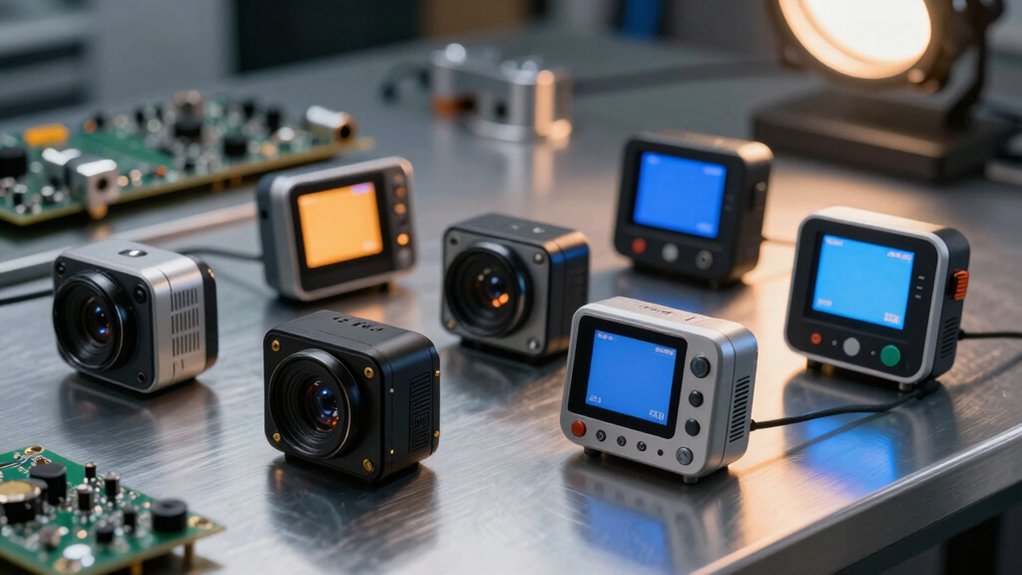

You’re inspecting solder joints and welds, and you need the right thermal camera to catch temperature irregularities that indicate defects. A quality thermal imaging camera lets you spot hotspots and cold spots instantly, documenting problems before they become costly failures. But not all thermal cameras deliver the precision and durability you’ll need. Let’s examine five reliable options and the key features that’ll help you choose the best tool for your inspections.
| TOPDON TC004 Mini Thermal Imaging Camera with IR Resolution |

| Portable Precision Pick | Temperature Range: -4°F to 842°F (-20°C to 450°C) | Thermal Resolution: 240 x 240 TISR; 128 x 128 IR | Battery Life: 15 hours | VIEW LATEST PRICE | Read Our Analysis |
| GT14S Thermal Imaging Camera for HVAC & Electrical Inspection |

| Lightweight Professional Choice | Temperature Range: -4°F to 1022°F | Thermal Resolution: Not explicitly specified | Battery Life: Up to 14 hours | VIEW LATEST PRICE | Read Our Analysis |
| H128 Handheld Thermal Imaging Camera with Temperature Alarm |

| Best Battery Life | Temperature Range: -4°F to 842°F | Thermal Resolution: 240 x 240 TISR | Battery Life: 24 hours | VIEW LATEST PRICE | Read Our Analysis |
| Thermal Master Handheld Thermal Camera with Laser (Thor 002) |

| Advanced Pro Grade | Temperature Range: -4°F to 1022°F | Thermal Resolution: 512 x 384 X³IR | Battery Life: Up to 10.5 hours | VIEW LATEST PRICE | Read Our Analysis |
| FOXWELL RT280 Thermal Imaging Camera with Laser |

| Best Overall | Temperature Range: -4°F to 1022°F | Thermal Resolution: 240 x 180 TISR | Battery Life: Approximately 8 hours | VIEW LATEST PRICE | Read Our Analysis |
More Details on Our Top Picks
TOPDON TC004 Mini Thermal Imaging Camera with IR Resolution
If you’re inspecting solder joints and welds in tight spaces or on job sites where portability matters, the TOPDON TC004 Mini delivers the resolution and durability you need without the bulk. The camera captures thermal images at 240 x 240 TISR resolution, showing temperature variations from -4°F to 842°F. Its 25 Hz refresh rate provides smooth, real-time visuals for detecting heat anomalies in joints. The pocket-friendly design weighs just 1.03 pounds, and the IP54 waterproof rating handles workshop conditions. You get 15-hour battery life, automatic high/low temperature alerts, and storage for up to 8,000 photos. The device withstands drops up to 2 meters, making it reliable for field work.
- Temperature Range:-4°F to 842°F (-20°C to 450°C)
- Thermal Resolution:240 x 240 TISR; 128 x 128 IR
- Battery Life:15 hours
- Frame Rate:25 Hz
- Durability Rating:IP54; 2-meter drop resistance
- Photo Storage Capacity:512MB eMMC (up to 8,000 photos)
- Additional Feature:Five selectable color palettes
- Additional Feature:Pocket-friendly mini design
- Additional Feature:2-meter drop resistance
GT14S Thermal Imaging Camera for HVAC & Electrical Inspection
Are you performing frequent HVAC, electrical, or machinery inspections where you need reliable temperature detection without carrying heavy equipment? The GT14S delivers precision in a 240-gram package. Its dual-mode system lets you toggle between full-screen thermal imaging for scanning large areas and Thermometer Mode for pinpoint readings. You’ll detect temperature differences as small as 0.05°C using high-precision sensors. Set customizable alarms to flag anomalies instantly. The 50-degree field of view captures insulation gaps and heat loss efficiently. Adjust emissivity settings for different materials like cement or ceramic. With 14 hours of battery life per charge, you’ll complete extended projects without interruption.
- Temperature Range:-4°F to 1022°F
- Thermal Resolution:Not explicitly specified
- Battery Life:Up to 14 hours
- Frame Rate:Not explicitly specified
- Durability Rating:Not specified
- Photo Storage Capacity:Not specified
- Additional Feature:Dual Mode Diagnosis capability
- Additional Feature:7 color palette options
- Additional Feature:Edge-enhanced real-time display
H128 Handheld Thermal Imaging Camera with Temperature Alarm
The H128 delivers the imaging precision you’ll need when inspecting solder joints and welds in tight manufacturing or repair environments. Its 240 x 240 resolution captures fine temperature details with 40 millikelvin sensitivity, letting you spot thermal inconsistencies that indicate weak joints or incomplete welds. The camera reads temperatures from -4°F to 842°F with ±3% accuracy and 0.1°C resolution. You’ll adjust emissivity settings for different material surfaces, then use the automatic max/min display to identify problem areas quickly. The built-in temperature alarm alerts you to anomalies without constant monitoring. With 24-hour battery life and IP65 durability, you’ll work confidently through extended inspection sessions.
- Temperature Range:-4°F to 842°F
- Thermal Resolution:240 x 240 TISR
- Battery Life:24 hours
- Frame Rate:25 Hz
- Durability Rating:IP65; 6.56-foot drop resistance
- Photo Storage Capacity:Not specified
- Additional Feature:0.1°C temperature resolution
- Additional Feature:Standard tripod mount included
- Additional Feature:24-hour battery life
Thermal Master Handheld Thermal Camera with Laser (Thor 002)
Looking for a thermal camera that’ll capture precise details on tight inspection jobs? The Thor 002 delivers 512×384 resolution—double the standard—so you’ll spot temperature variations in solder joints clearly. You can measure temperatures from -4°F to 1022°F with ±3.6°F accuracy, then set six distinct measurement points across your workpiece. The laser positioning feature helps you aim correctly in confined spaces. WiFi connectivity lets you transfer images directly to your phone for documentation. Its 5000mAh battery runs 10.5 hours, supporting extended inspection sessions without interruption or recharging delays mid-project.
- Temperature Range:-4°F to 1022°F
- Thermal Resolution:512 x 384 X³IR
- Battery Life:Up to 10.5 hours
- Frame Rate:60 Hz & 25 Hz options
- Durability Rating:IP54; 2-meter drop resistance
- Photo Storage Capacity:32GB with 8GB RAM
- Additional Feature:WiFi smartphone/tablet connectivity
- Additional Feature:512×384 X³IR resolution
- Additional Feature:32GB on-device storage
FOXWELL RT280 Thermal Imaging Camera with Laser
If you’re inspecting solder joints and welds in tight or poorly lit spaces, you’ll benefit from the FOXWELL RT280’s built-in laser targeting and LED illumination, which give you precise guidance when positioning the camera on small components. The device captures thermal images at 240×180 resolution with accuracy within ±3.6°F, letting you detect temperature irregularities that indicate weak joints or improper welds. Its 2.8-inch LCD screen displays nine color palettes, helping you distinguish subtle heat variations. The camera stores over 20,000 images on 8 GB of internal storage, and you can export data to Windows PC software for detailed 2D/3D analysis and automated reports. Battery life reaches eight hours per charge, supporting extended inspection sessions.
- Temperature Range:-4°F to 1022°F
- Thermal Resolution:240 x 180 TISR
- Battery Life:Approximately 8 hours
- Frame Rate:25 Hz
- Durability Rating:IP54; 6.6-foot drop resistance
- Photo Storage Capacity:8GB eMMC (over 20,000 images/videos)
- Additional Feature:PC software with 2D/3D analysis
- Additional Feature:Laser targeting and LED illumination
- Additional Feature:20,000+ image/video capacity
Factors to Consider When Choosing a Thermal Camera for Inspecting Solder Joints and Welds
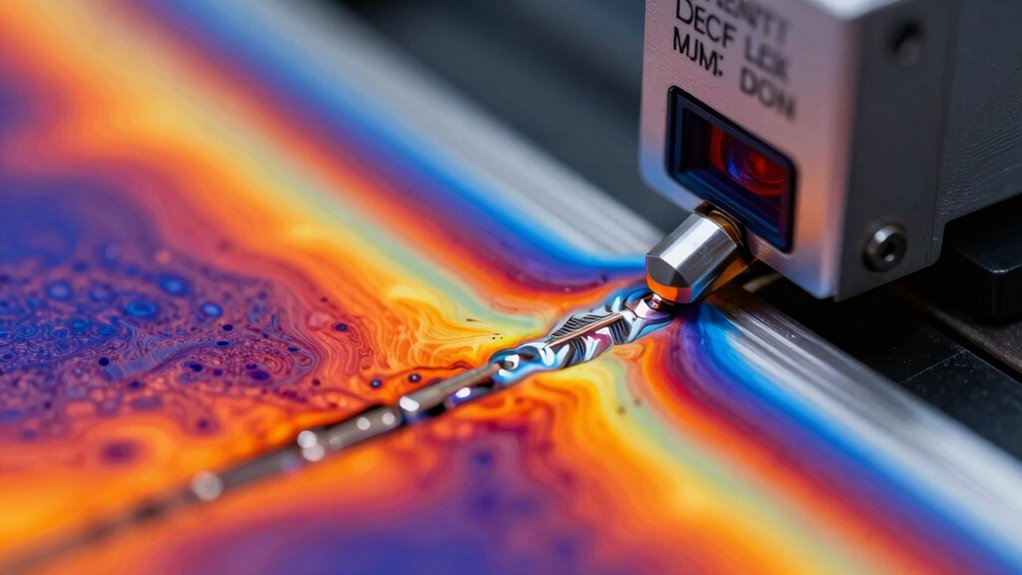
When selecting a thermal camera for solder joints and welds, you’ll need to evaluate five critical factors: thermal sensitivity and resolution (which determine how clearly you can detect temperature variations), temperature range requirements (to ensure the camera can measure your specific application’s heat levels), real-time imaging capability (so you can monitor joints as they’re being created), portability for tight spaces (since many inspection areas have limited access), and data storage and analysis features (to document findings and track quality over time). Each factor directly impacts how effectively you’ll identify defects, from cold solder joints to incomplete welds. Your choice depends on matching these specifications to your inspection environment and the precision your project demands.
Thermal Sensitivity and Resolution
How do you know which thermal camera will catch the defects you’re looking for? Start by checking the thermal sensitivity, measured in millikelvin (mK). A camera rated at 40 mK detects smaller temperature differences than one rated at 100 mK, making it better for spotting subtle heat variations in solder joints.
Next, examine the resolution. A 240×240 pixel camera reveals finer details than a 128×128 model, helping you identify microcracks and joint gaps more clearly. Higher resolution means you see smaller problem areas.
Finally, verify the temperature measurement resolution—aim for 0.1°C or better. This precision lets you pinpoint heat irregularities accurately. Together, these three specifications determine whether you’ll catch defects reliably or miss critical flaws in your welds and solder joints.
Temperature Range Requirements
Your thermal camera’s temperature range directly determines whether you’ll capture the full spectrum of heat signatures across solder joints and welds. You need a minimum range of –4°F to 1022°F (–20°C to 550°C) to detect both cold spots and hot bridges without clipping data. This coverage lets you identify undersolderd areas and overheated connections in a single inspection. For steel welds, the upper limit of 842–1022°F (450–550°C) helps you spot overloaded joints exceeding standard temperatures. When selecting equipment, verify the camera’s maximum temperature specification matches your application. Check manufacturer specs to confirm the range covers your specific solder type and weld material. Adequate range prevents missed defects and ensures complete thermal mapping across all joint areas.
Real-Time Imaging Capability
What makes real-time imaging essential for solder and weld inspection? You need to see live thermal activity as it happens, not after the fact. Choose a camera with a frame rate of 25 Hz or higher to ensure smooth visualization of solder joints and welds during inspection. Higher frame rates reduce motion blur when you’re observing heat patterns around moving components or during dynamic thermal events. Select a camera with a wide field of view, such as 40°×30°, to capture context around joints and identify surrounding heat sources affecting joint integrity. Prioritize real-time thermal streaming with immediate on-screen temperature readouts and alarm prompts. This capability enables rapid decision-making on potential defects. Ensure low thermal lag and fast data processing so current temperature readings match actual joint conditions.
Portability for Tight Spaces
When you’re inspecting solder joints and welds in confined spaces—such as densely packed circuit boards, tight equipment cabinets, or narrow panel assemblies—portability becomes a critical factor in your camera selection.
A compact, lightweight thermal camera reduces arm fatigue during extended inspections in cramped areas. Slim profiles allow you to maneuver the device into tight corners without obstruction. Choose models with ergonomic grips and balanced weight distribution to maintain steady aiming and accurate temperature readings in restricted positions.
Smaller dimensions enable closer proximity to solder joints, improving your detection of localized hotspots. You’ll achieve better accuracy without the bulk of larger instruments interfering with your workspace.
Select ruggedized, compact models with strong IP ratings. These protect your equipment during close-quarters industrial work while maintaining the portability you need for efficient inspections.
Data Storage and Analysis
Several critical storage and analysis features’ll determine whether you can efficiently capture, organize, and review your inspection data. Select cameras with at least 32GB onboard storage to hold high-resolution images and videos without frequent transfers. Verify the unit exports files in standard formats like JPEG and MP4 for compatibility with your documentation systems. Check that the camera includes timestamped captures and alarm annotations so you can track when defects occur. Prioritize models with built-in or companion PC software capable of performing 2D and 3D thermal analysis. This software should generate detailed reports automatically. Confirm USB or wireless connectivity options exist for streamlined data transfer to your computer. These features transform raw thermal data into actionable inspection reports you can reference and share with your team.
Durability Under Industrial Conditions
How’ll you ensure your thermal camera survives the demanding environment of a soldering or welding facility? Select models with IP54 ratings or higher to block dust and water ingress. Verify the camera withstands drops from at least 2 meters, protecting against accidental falls on concrete floors. Choose rugged housings with sealed connectors that resist chemical splatter from flux and cleaning agents. Look for reinforced lens housings and impact-resistant displays that tolerate tool strikes and debris contact. Confirm the unit operates reliably in high-temperature zones near active welding stations. Check that the camera handles vibration from machinery without losing calibration or image stability. Verify battery life extends several hours for extended on-site inspections, and confirm auto-shutdown features prevent unnecessary drain during idle periods.
Final Thoughts
You’ve now reviewed five thermal cameras designed for inspecting solder joints and welds. Select a camera that matches your specific needs: prioritize resolution above 240 x 240, temperature accuracy within 0.1°C, and an IP rating between IP54–IP65 for durability. Verify the unit includes emissivity adjustment for metals and laser targeting. Compare battery life and software capabilities before purchasing to ensure you’re investing in reliable equipment for your inspection work.

Meet Ry, “TechGuru,” a 36-year-old technology enthusiast with a deep passion for tech innovations. With extensive experience, he specializes in gaming hardware and software, and has expertise in gadgets, custom PCs, and audio.
Besides writing about tech and reviewing new products, he enjoys traveling, hiking, and photography. Committed to keeping up with the latest industry trends, he aims to guide readers in making informed tech decisions.