
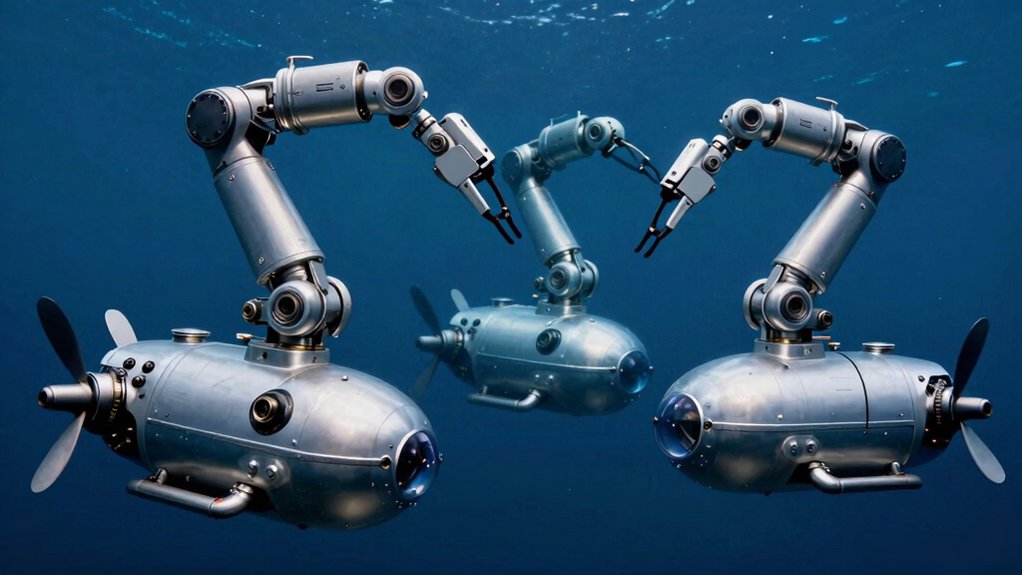

You’re exploring deep-sea environments and need reliable equipment that combines imaging capability with mechanical precision. Underwater drones with robotic arms let you document discoveries and manipulate objects at extreme depths. You’ll find various models that differ in depth rating, battery life, camera quality, and arm functionality. Your choice depends on matching these features to your specific mission requirements. Here’s what you need to know about five top contenders.
| FIFISH V-EVO 4K Underwater Drone with Robotic Arm |
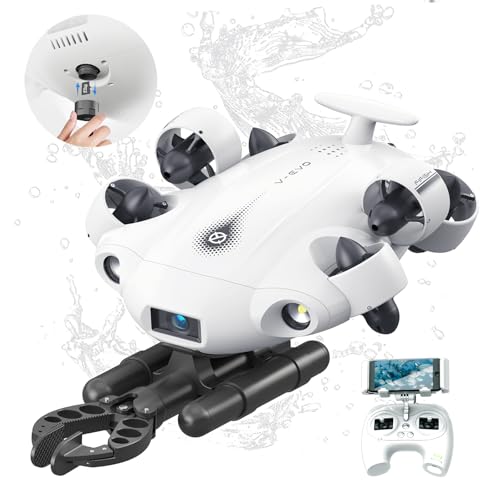
| Best for Innovation | Maximum Depth Capability: Not specified | Video Resolution: 4K 60FPS | LED Lighting System: Two 5000-lumen LEDs (5500K white) | VIEW LATEST PRICE | Read Our Analysis |
| FIFISH V6 Expert Underwater Drone with Robotic Arm |
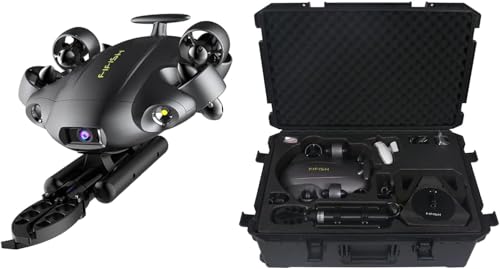
| Professional Grade | Maximum Depth Capability: 660 ft | Video Resolution: 4K | LED Lighting System: Not specified | VIEW LATEST PRICE | Read Our Analysis |
| Chasing Gladius MINI S Professional Underwater Drone 4K Camera |
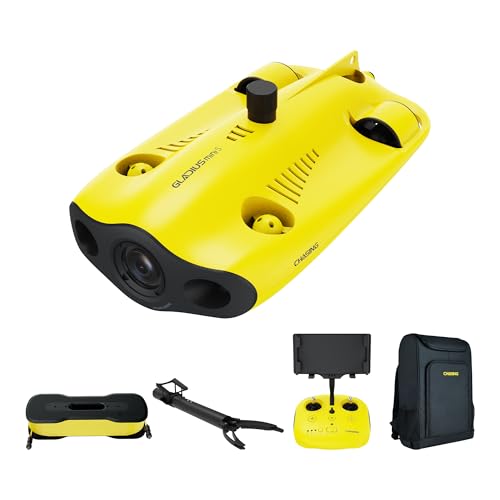
| Best Overall | Maximum Depth Capability: 330 ft | Video Resolution: 4K UHD + 1080P | LED Lighting System: Two 1200-lumen LEDs | VIEW LATEST PRICE | Read Our Analysis |
| Underwater Drone with 4K Camera & 330ft Depth Capability |

| Best Value | Maximum Depth Capability: 330 ft | Video Resolution: 4K | LED Lighting System: Two 1200-lumen LEDs | VIEW LATEST PRICE | Read Our Analysis |
| V-EVO 4K60FPS Underwater Drone with AI Vision Lock |

| Advanced AI Features | Maximum Depth Capability: Not specified | Video Resolution: 4K 60FPS | LED Lighting System: Two 5000-lumen LEDs (5500K) | VIEW LATEST PRICE | Read Our Analysis |
More Details on Our Top Picks
FIFISH V-EVO 4K Underwater Drone with Robotic Arm
Are you searching for cutting-edge underwater exploration technology? The FIFISH V-EVO 4K captures professional-quality footage with its 4K 60FPS camera and 166° ultra-wide lens, giving you expanded underwater perspectives. You’ll benefit from two 5000-lumen LED lights that restore color in deep or turbid water. The drone’s hydrodynamic design reduces current resistance for extended dives, while 360° omnidirectional mobility lets you hover and maneuver freely. You can attach various tools to the expansion port for multiple tasks. The drone maintains stable depth, and you’ll store footage on removable SD cards. If you encounter issues, Amazon customer service responds within 24 hours with solutions.
- Maximum Depth Capability:Not specified
- Video Resolution:4K 60FPS
- LED Lighting System:Two 5000-lumen LEDs (5500K white)
- Omnidirectional Mobility:360° omnidirectional with hovering and posture hold
- Storage & Recording Format:Removable SD card; format not specified
- Battery & Operation Time:Not specified
- Additional Feature:AI Vision Lock subject tracking
- Additional Feature:VR immersive control option
- Additional Feature:Water droplet hydrodynamic design
FIFISH V6 Expert Underwater Drone with Robotic Arm
Need professional-grade deep-sea exploration equipment that won’t compromise on capability? The FIFISH V6 Expert delivers 660 feet of dive depth with a 4K camera and six-hour operational window. You’ll choose between M200A or M100A packages; both include industrial cases and robotic arms for task execution. The drone features omnidirectional movement enabling 360-degree maneuverability in tight spaces. You can integrate 20+ professional tools for offshore and diving work. Your 128GB Micro SD card captures high-definition video in MP4 format. Battery charging reaches 90% within one hour, minimizing downtime. You control the unit remotely via RF wireless connectivity. Amazon’s customer service responds within 24 hours for technical issues, backed by their 30-day return policy.
- Maximum Depth Capability:660 ft
- Video Resolution:4K
- LED Lighting System:Not specified
- Omnidirectional Mobility:Patented 360° omnidirectional movement
- Storage & Recording Format:Removable Micro SD card (128GB included); MP4 format
- Battery & Operation Time:6 hours operation; 90% charge in 1 hour
- Additional Feature:20+ professional tool integrations
- Additional Feature:6 hours operation time
- Additional Feature:Industrial case packaging included
Chasing Gladius MINI S Professional Underwater Drone 4K Camera
Looking for a drone that captures professional-quality underwater footage down to 330 feet? The Chasing Gladius MINI S delivers 4K video and 12MP photos using a Sony CMOS sensor with dual 1200-lumen LED lights. You’ll operate it via professional remote control with wired transmission for stable, interference-free signals up to 660 feet away. The included mechanical arm lets you manipulate objects during dives. Two 4800 mAh lithium batteries provide 2 to 4 hours of operation. Store footage on the removable 64GB SD card, expandable to 512GB. The aluminum alloy body weighs under 6.6 pounds, and you’ll transport everything in the waterproof backpack. A one-year manufacturer warranty covers your investment.
- Maximum Depth Capability:330 ft
- Video Resolution:4K UHD + 1080P
- LED Lighting System:Two 1200-lumen LEDs
- Omnidirectional Mobility:360° maneuverability with adjustable attitude
- Storage & Recording Format:Removable 64GB SD card (up to 512GB); MP4 video, JPEG photos
- Battery & Operation Time:Two 4800 mAh batteries; 2-4 hours operation
- Additional Feature:Mechanical arm included standard
- Additional Feature:2 hour to 4 hour operation
- Additional Feature:Waterproof backpack carrying case
Underwater Drone with 4K Camera & 330ft Depth Capability
The Mini S submarine delivers exceptional value through its 4K camera, 330-foot depth capability, and dual 1200-lumen LED lights—making it the ideal choice for underwater photographers, scientific researchers, and inspection professionals who demand high-quality imaging without premium pricing. You’ll operate the drone via wired remote control, ensuring stable connectivity throughout your dive. The 4K SONY CMOS camera with F2.8 lens captures 12 MP photos and stabilized video. Two 4800 mAh batteries provide up to 4 hours of flight time per charge. Five thrusters deliver 4-knot maximum speed while patented motor technology prevents rolling on sand or pebbles. You can expand storage from 64 GB to 512 GB using SD cards, then edit footage directly through the app. Deploy the unit within three minutes for single-person operation in complex underwater environments.
- Maximum Depth Capability:330 ft
- Video Resolution:4K
- LED Lighting System:Two 1200-lumen LEDs
- Omnidirectional Mobility:5 thrusters with patented motor tech; maximum 4 knots
- Storage & Recording Format:Built-in 64GB SD card (up to 512GB); MP4 video, JPEG photos
- Battery & Operation Time:Two 4800 mAh batteries; up to 4 hours flight time
- Additional Feature:Real-time depth/temperature data display
- Additional Feature:Grabber claw attachment compatible
- Additional Feature:3-minute quick deployment capability
V-EVO 4K60FPS Underwater Drone with AI Vision Lock
FIFISH’s V-EVO combines advanced AI features with professional-grade imaging capabilities that make it ideal for underwater photographers and videographers exploring deep-sea environments. The drone captures 4K video at 60 frames per second using a 166° ultra-wide lens, while dual 5000-lumen LED lights restore accurate colors in deep water. The AI Vision Lock feature automatically tracks and positions your subject in real-time, eliminating manual adjustment during footage. You’ll control the drone through the FIFISH app with VR immersive controls, using head movements to direct the camera’s FPV view. The drone maintains depth automatically and accepts tool attachments for various underwater tasks, making it versatile for exploration and documentation missions.
- Maximum Depth Capability:Not specified
- Video Resolution:4K 60FPS
- LED Lighting System:Two 5000-lumen LEDs (5500K)
- Omnidirectional Mobility:360° omnidirectional with hover and posture lock
- Storage & Recording Format:Removable SD card; 4K MP4 video capture
- Battery & Operation Time:18800 mAh rechargeable lithium battery; operation time not specified
- Additional Feature:Posture lock stabilization feature
- Additional Feature:18800 mAh rechargeable battery
- Additional Feature:Attachment port tool versatility
Factors to Consider When Choosing an Underwater Drone With a Robotic Arm
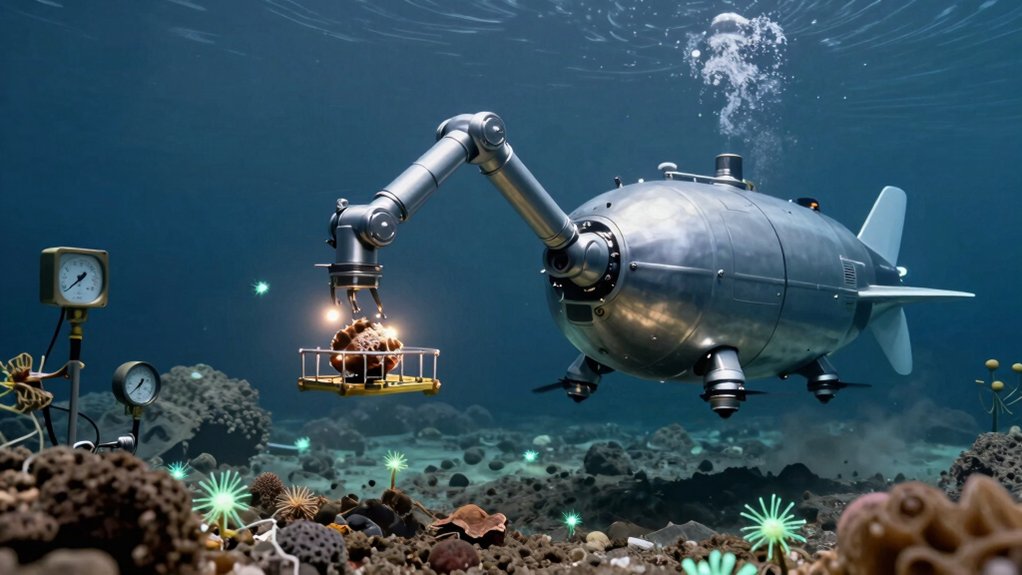
When you’re selecting an underwater drone with a robotic arm, you’ll need to evaluate five key factors: depth and pressure ratings that match your exploration environment, robotic arm capabilities including reach and grip strength for your specific tasks, camera quality and resolution to ensure you capture clear footage at depth, battery life and runtime to determine how long you can operate before resurfacing, and tether length and mobility options that suit your workspace constraints. Start by identifying the maximum depth you’ll explore, then check whether the drone’s pressure rating exceeds that depth by a safe margin. Next, assess whether the arm’s specifications—such as payload capacity and articulation range—align with the objects or samples you plan to manipulate.
Depth and Pressure Ratings
How deep do you need your underwater drone to operate? Your answer determines which model you should select. Consumer drones typically handle depths from 100 to 330 feet, while professional units reach beyond 330 feet. Deeper operations require stronger pressure tolerance, robust seals, and reinforced housings to prevent water damage.
Match your drone’s depth rating to your mission requirements. Deeper tasks demand more powerful thrusters and better energy management for stability and control. Check that your drone’s tether length and buoyancy work together at your target depth—incompatible combinations cause excessive weight or loss of control.
Verify real-time depth readouts and reliable depth-hold capabilities. These features maintain your drone’s position during robotic arm tasks, ensuring precision work at target depths. Select equipment rated for depths exceeding your planned operations by a safety margin.
Robotic Arm Capabilities
What work do you need your robotic arm to accomplish underwater? Start by identifying your primary tasks: grabbing samples, manipulating objects, or assembling equipment. Next, evaluate reach and payload capacity. Longer arms extend your work range but reduce stability; heavier payloads require more powerful systems. Consider the tooling options available. Most professional models support multiple attachments like grippers, claws, and samplers—some integrate 20+ tools. Then assess arm weight and buoyancy effects on your drone’s overall performance. Heavier arms drain endurance and reduce maneuverability. Finally, match arm capabilities to your tether length and power supply. Extended operations at greater depths require adequate power reserves. Match these factors to your specific mission requirements before selecting your system.
Camera Quality and Resolution
Your drone’s camera determines what you’ll actually see during deep-sea operations, so you’ll need to evaluate several key specifications before making a purchase. Start by checking the resolution and frame rate—4K at 60fps or higher captures sharper, more fluid footage for detailed analysis. Next, examine the lens width; a 166° wide-angle lens expands your viewing area considerably. Assess the lighting system carefully, as high-luminance LED pairs rated 5000+ lumens restore accurate colors in dark or cloudy water. Review stabilization technology like EIS to eliminate motion blur during active dives. Finally, confirm the recording formats and storage options; MP4 files with SD card compatibility simplify data transfer and archival. These factors directly impact your ability to observe and document deep-sea environments effectively.
Battery Life and Runtime
While your camera captures the visual data you need, the battery system determines how long you can actually operate in the depths. Most underwater drones use multiple batteries rated between 4800 mAh to extend flight time across 2–6 hours depending on your specific setup. You’ll want to evaluate quick-charge capabilities—many systems reach 90% capacity in about one hour, minimizing downtime between dives. Consider how tether length and operating depth affect power draw; deeper operations require more energy from your batteries. Additionally, the weight of your robotic arm and drone body directly reduces endurance, so heavier configurations demand larger battery capacity. Match your battery specifications to your planned mission duration and depth requirements before purchasing your system.
Tether Length and Mobility
How far do you need to explore from your control station? Your tether length directly determines your operational range underwater. Longer tethers let you reach greater distances and depths, but they add weight and require better management systems. Consider your mission scope first: shallow inspections need shorter tethers, while deep exploration demands extended lengths.
Next, evaluate cable flexibility and recoil properties to prevent entanglement when your robotic arm moves simultaneously with the drone. Choose materials resistant to saltwater corrosion, such as specialized polymers and protective coatings, to extend system longevity.
Finally, select modular or quick-release tether connections. These systems reduce downtime when swapping batteries or tools between dives, improving your mission efficiency and overall uptime during extended operations.
Tool Attachment Compatibility
When selecting an underwater drone with a robotic arm, you’ll need to verify that the drone’s attachment ports match the specific tools required for your missions. Check whether the system supports multiple tool integrations—20 or more options give you greater flexibility. Determine if hot-swapping is available, allowing you to change tools without reconfiguring the entire system, or if you’ll need mission-specific setups instead. Confirm the robotic arm’s payload capacity, reach, and precision align with your tasks, including grip strength and articulation range. Review control integration methods: direct remote operation, integrated software, or tethered interfaces ensure reliable coordination with the drone’s navigation. Finally, clarify whether tool attachments come included or require separate purchases, and verify compatibility with third-party mounting options.
Final Thoughts
You’ll choose your underwater drone by matching your needs to key specs. First, determine your required depth—select FIFISH V6 Expert for 660 ft or Chasing Gladius Mini S for 330 ft. Next, assess mission duration and pick based on endurance hours. Finally, evaluate arm capability and camera quality for your specific tasks. Compare tether requirements and power consumption against your operational constraints before purchasing.

Meet Ry, “TechGuru,” a 36-year-old technology enthusiast with a deep passion for tech innovations. With extensive experience, he specializes in gaming hardware and software, and has expertise in gadgets, custom PCs, and audio.
Besides writing about tech and reviewing new products, he enjoys traveling, hiking, and photography. Committed to keeping up with the latest industry trends, he aims to guide readers in making informed tech decisions.