

You’re dealing with weak signals blocked by concrete barriers. Standard routers won’t cut it. You need equipment designed specifically to push through dense building materials while maintaining speed and coverage. This guide walks you through seven routers engineered for concrete penetration, explains what makes each one effective, and shows you which features matter most for your situation. Let’s find the right solution for your home.
| TP-Link Archer AX55 Dual-Band Wi-Fi 6 Router |
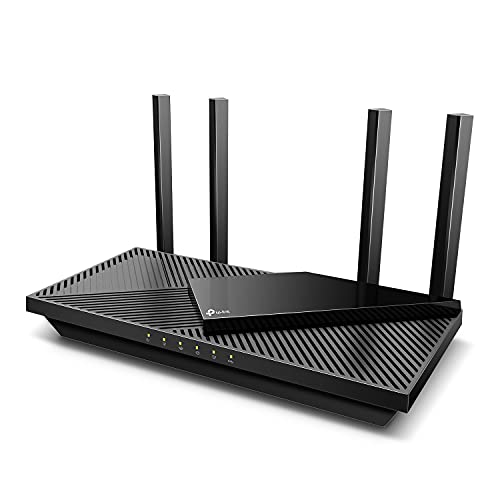
| Best Overall | WiFi Standard: WiFi 6 (802.11ax) | Total Bandwidth/Speed: AX2976 (2402 Mbps + 574 Mbps) | Coverage Area: Whole home (specific sq. ft. not stated) | VIEW LATEST PRICE | Read Our Analysis |
| TP-Link AX1800 WiFi 6 Router (Archer AX21) |

| Budget Pick | WiFi Standard: WiFi 6 (802.11ax) | Total Bandwidth/Speed: AX1800 (1200 Mbps + 574 Mbps) | Coverage Area: Whole home (specific sq. ft. not stated) | VIEW LATEST PRICE | Read Our Analysis |
| TP-Link Deco X55 AX3000 WiFi 6 Mesh System |

| Best Mesh System | WiFi Standard: WiFi 6 (802.11ax) | Total Bandwidth/Speed: AX3000 (2402 Mbps + 574 Mbps) | Coverage Area: Up to 2,500 sq. ft. (1 unit) | VIEW LATEST PRICE | Read Our Analysis |
| GL.iNet GL-BE6500 WiFi 7 Router with VPN |

| Best Performance | WiFi Standard: WiFi 7 | Total Bandwidth/Speed: BE6500 (up to 6.5 Gbps) | Coverage Area: Up to 2,500 sq. ft. | VIEW LATEST PRICE | Read Our Analysis |
| TP-Link Archer A6 AC1200 WiFi Router |

| Best Value | WiFi Standard: WiFi 5 (802.11ac) | Total Bandwidth/Speed: AC1200 (867 Mbps + 300 Mbps) | Coverage Area: Long-range (specific sq. ft. not stated) | VIEW LATEST PRICE | Read Our Analysis |
| TP-Link AX3000 Wi-Fi 6 Router (Archer Air R5) |

| Most Compact | WiFi Standard: WiFi 6 (802.11ax) | Total Bandwidth/Speed: AX3000 (speeds not specified separately) | Coverage Area: Whole home (specific sq. ft. not stated) | VIEW LATEST PRICE | Read Our Analysis |
| Amazon eero 6 Mesh WiFi Router (1-pack) |
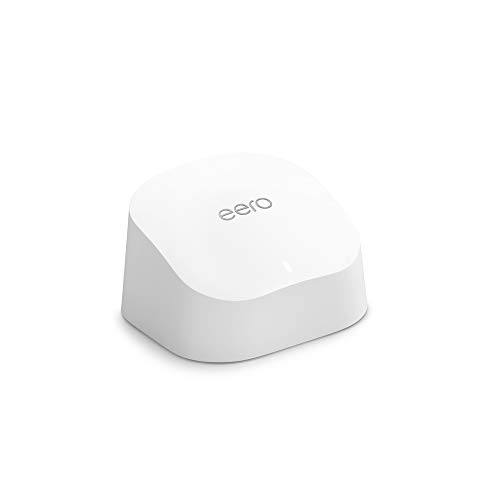
| Best Smart Home | WiFi Standard: WiFi 6 (802.11ax) | Total Bandwidth/Speed: AX1800 (1200 Mbps + 600 Mbps) | Coverage Area: Up to 1,500 sq. ft. | VIEW LATEST PRICE | Read Our Analysis |
More Details on Our Top Picks
TP-Link Archer AX55 Dual-Band Wi-Fi 6 Router
If you need a router that delivers strong signal penetration through concrete walls without breaking your budget, the TP-Link Archer AX55 is an effective choice. Its four high-gain external antennas with beamforming technology direct signals through obstacles efficiently. The Wi-Fi 6 speeds reach 2402 Mbps on 5 GHz and 574 Mbps on 2.4 GHz, supporting multiple devices simultaneously through MU-MIMO and OFDMA. A larger heat sink prevents performance throttling during sustained use. HomeShield provides network security with IoT device identification and parental controls. Setup works with major ISPs including AT&T, Verizon, and Xfinity. Contact support at +1 866-225-8139 for assistance.
- WiFi Standard:WiFi 6 (802.11ax)
- Total Bandwidth/Speed:AX2976 (2402 Mbps + 574 Mbps)
- Coverage Area:Whole home (specific sq. ft. not stated)
- Antennas:Four high-gain external antennas
- Gigabit Ethernet Ports:Not specified
- Security Features:TP-Link HomeShield (network/IoT protection, parental controls)
- Additional Feature:VPN server and client
- Additional Feature:Target Wake Time battery savings
- Additional Feature:HomeShield IoT protection
TP-Link AX1800 WiFi 6 Router (Archer AX21)
The TP-Link AX1800 WiFi 6 Router (Archer AX21) delivers solid performance for households that need reliable coverage through concrete walls without breaking the budget. Its four high-gain antennas with Beamforming focus signals toward distant devices, improving penetration through obstacles. You’ll get up to 1200 Mbps on 5 GHz and 574 Mbps on 2.4 GHz. The device works with all major ISPs including Comcast, Charter, and Verizon. Keep firmware updated via the Tether app for optimal performance. TP-Link backs this router with free expert support and designed it following CISA security standards, ensuring both coverage and protection for your network.
- WiFi Standard:WiFi 6 (802.11ax)
- Total Bandwidth/Speed:AX1800 (1200 Mbps + 574 Mbps)
- Coverage Area:Whole home (specific sq. ft. not stated)
- Antennas:Four high-gain antennas
- Gigabit Ethernet Ports:Not specified
- Security Features:CISA Secure-by-Design pledge; VPN Server support
- Additional Feature:CISA Secure-by-Design pledge
- Additional Feature:OpenVPN and PPTP support
- Additional Feature:Advanced FEM chipset
TP-Link Deco X55 AX3000 WiFi 6 Mesh System
Looking to blanket your entire home with strong WiFi that doesn’t fade behind concrete walls? The TP-Link Deco X55 AX3000 mesh system solves this problem by using multiple units that work together. Each unit covers up to 2,500 square feet, and you can add more units to expand coverage throughout larger homes. Set up the system using the Deco app, which provides visual guidance for installation. Connect units via ethernet backhaul for stronger performance, or use wireless connection. The WiFi 6 technology delivers 3,000 Mbps combined speeds across two bands. With three gigabit ethernet ports per unit, you’ll connect wired devices easily. HomeShield security features protect your network without extra cost.
- WiFi Standard:WiFi 6 (802.11ax)
- Total Bandwidth/Speed:AX3000 (2402 Mbps + 574 Mbps)
- Coverage Area:Up to 2,500 sq. ft. (1 unit)
- Antennas:Not specified
- Gigabit Ethernet Ports:Three Gigabit ports per unit (6 total in 2-pack)
- Security Features:TP-Link HomeShield; CISA Secure-by-Design participation
- Additional Feature:AI-Driven Mesh learning
- Additional Feature:Wired Ethernet Backhaul support
- Additional Feature:Eliminates dead zones
GL.iNet GL-BE6500 WiFi 7 Router with VPN
Want a router that handles both powerful VPN performance and extensive concrete-wall penetration in one device? The GL-BE6500 delivers WiFi 7 speeds up to 6.5 Gbps with advanced features like MLO and enhanced OFDMA that improve signal strength through barriers. You’ll get reliable coverage across 2,500 square feet and support for over a hundred devices simultaneously. The router includes five 2.5G Ethernet ports for fiber connectivity and supports rapid OpenVPN and WireGuard speeds up to 680 Mbps. Setup takes minutes—connect via Ethernet to the admin panel and configure your network. Built-in AdGuard Home and parental controls with Bark integration add security layers for your household or workplace.
- WiFi Standard:WiFi 7
- Total Bandwidth/Speed:BE6500 (up to 6.5 Gbps)
- Coverage Area:Up to 2,500 sq. ft.
- Antennas:Not specified
- Gigabit Ethernet Ports:Five 2.5G Ethernet ports
- Security Features:AdGuard Home; Parental controls with Bark integration
- Additional Feature:OpenVPN/WireGuard VPN speeds
- Additional Feature:AdGuard Home DNS blocking
- Additional Feature:Bark parental control integration
TP-Link Archer A6 AC1200 WiFi Router
If you’re setting up a home network across multiple rooms with concrete walls between them, the TP-Link Archer A6 AC1200 delivers solid performance without breaking your budget. Its four external antennas and beamforming technology strengthen signal penetration through dense materials. The dual-band system offers 300 Mbps on 2.4GHz for extended range and 867 Mbps on 5GHz for faster speeds. Use the TP-Link Tether app to configure your network and enable OneMesh mode for seamless coverage expansion. The router includes four Gigabit LAN ports for wired connections, reducing latency for devices needing stable links through concrete barriers.
- WiFi Standard:WiFi 5 (802.11ac)
- Total Bandwidth/Speed:AC1200 (867 Mbps + 300 Mbps)
- Coverage Area:Long-range (specific sq. ft. not stated)
- Antennas:Four external antennas
- Gigabit Ethernet Ports:Four Gigabit LAN ports
- Security Features:WPA3 security
- Additional Feature:OneMesh whole-home network
- Additional Feature:WPA3 personal network security
- Additional Feature:Access Point conversion mode
TP-Link AX3000 Wi-Fi 6 Router (Archer Air R5)
The Archer Air R5 delivers strong performance through concrete walls for users who need seamless connectivity across multiple rooms without sacrificing a compact footprint. Its Wi-Fi 6 AX3000 dual-band technology provides reliable signal penetration across barriers. Smart Beamforming Antennas automatically adjust to your location, maintaining consistent speeds as you move. The minimalist design mounts flat against walls using included 3M adhesive pads, eliminating visible cables. Two Gigabit Ethernet ports connect wired devices directly. TP-Link HomeShield protects your network with real-time threat detection. Set up and manage everything through the free Tether App on your smartphone.
- WiFi Standard:WiFi 6 (802.11ax)
- Total Bandwidth/Speed:AX3000 (speeds not specified separately)
- Coverage Area:Whole home (specific sq. ft. not stated)
- Antennas:Smart Beamforming antennas (quantity not specified)
- Gigabit Ethernet Ports:Two Gigabit WAN/LAN ports
- Security Features:TP-Link HomeShield; Built-in VPN Server
- Additional Feature:Wall-mountable minimalist design
- Additional Feature:EasyMesh router compatibility
- Additional Feature:Granular VPN functionality
Amazon eero 6 Mesh WiFi Router (1-pack)
You’ll want to contemplate the Amazon eero 6 if you’re looking for a single mesh router that covers up to 1,500 square feet and handles 75+ connected devices without dropping your connection. This Wi-Fi 6 router supports internet speeds up to 900 Mbps and features dual-band concurrent technology. Set it up through the eero app and activate automatic security updates for protection. The router includes two gigabit Ethernet ports for wired connectivity, built-in Zigbee and Thread radios for smart home devices, and works seamlessly with Alexa. Contact support seven days a week via email or phone if you encounter issues. Add additional eero products to expand coverage as needed.
- WiFi Standard:WiFi 6 (802.11ax)
- Total Bandwidth/Speed:AX1800 (1200 Mbps + 600 Mbps)
- Coverage Area:Up to 1,500 sq. ft.
- Antennas:Not specified
- Gigabit Ethernet Ports:Two auto-sensing Gigabit ports (WAN/LAN)
- Security Features:WPA3, WPA2, VPN passthrough; automatic security updates
- Additional Feature:Built-in Zigbee/Thread radio
- Additional Feature:TrueMesh traffic routing
- Additional Feature:Cross-compatible hardware expandability
Factors to Consider When Choosing a WiFi Router for Concrete Walls
When you’re selecting a WiFi router for concrete walls, you’ll need to evaluate five key factors: signal penetration capability (how well the router transmits through dense materials), antenna configuration quality (the number and type of antennas that boost range), power and coverage range (measured in watts and square feet), advanced beamforming technology (which directs signals toward your devices), and frequency band performance (comparing 2.4GHz for distance versus 5GHz for speed). Each factor directly affects whether your router can maintain strong connections throughout a concrete-heavy space, so you should assess your home’s layout and identify which factors matter most for your specific needs. Start by measuring your home’s square footage, noting where concrete walls create dead zones, and then match these requirements against each router’s specifications.
Signal Penetration Capability
How much signal loss can you actually expect when Wi-Fi travels through concrete? Concrete walls reduce signal strength by 15–35 dB depending on thickness and rebar presence. You’ll notice shorter range with higher frequency bands like 5 GHz compared to 2.4 GHz, which penetrates concrete more effectively.
To improve penetration, you have three main options. First, choose routers with high transmit power and strong receiver sensitivity. Second, select models featuring external high-gain antennas and beamforming technology that focuses signals around obstacles. Third, consider mesh systems with wired backhaul, which reduces dependence on through-wall signals by connecting units via ethernet.
Evaluate your wall composition and building structure before purchasing, as real-world performance varies significantly based on these factors.
Antenna Configuration Quality
The antenna setup on your router directly affects how well Wi-Fi signals penetrate concrete walls, making it one of the most important hardware specifications to evaluate. Look for routers with multiple high-gain external antennas rather than internal ones, as external antennas provide better wall penetration. Check the antenna count—routers with four or more antennas typically outperform those with fewer. Verify that your router supports beamforming technology, which focuses signal energy toward your devices and strengthens connections through dense barriers. Additionally, confirm MU-MIMO and OFDMA capabilities, as these technologies manage multiple devices simultaneously while reducing wall-induced signal loss. Finally, consider antenna placement options in your router’s design, ensuring you can position antennas vertically and horizontally for optimal diversity and coverage across concrete obstacles.
Power and Coverage Range
Why does transmit power matter when you’re dealing with concrete walls? Higher transmit power lets your router push signals through dense barriers more effectively than low-power models. You’ll want routers rated for at least 20 dBm (100 mW) of transmit power to achieve reliable penetration. Check the router’s specifications for wattage ratings, which directly impact signal strength. Coverage range claims vary by conditions, but concrete walls reduce stated ranges by 30–50 percent. Choose a router advertised for larger square footage than your actual space requires—this buffer accounts for attenuation losses. Dual-band routers help here: use 2.4 GHz for concrete penetration and 5 GHz for speed in open areas.
Advanced Beamforming Technology
Beamforming technology builds on raw transmit power by directing your router’s signal toward specific devices rather than broadcasting equally in all directions. When you enable beamforming, your router focuses concentrated signal beams toward connected devices, strengthening reception behind concrete walls. This targeted approach improves signal-to-noise ratio, enabling faster, more stable connections through dense construction. Your router tracks device locations and adjusts beam angles dynamically as devices move. To maximize beamforming effectiveness, verify your router has quality antennas and sufficient processor power to handle calculations accurately. Check that beamforming is enabled in your router settings—many models activate it by default. Positioning your router centrally helps beamforming reach multiple rooms efficiently, reducing dead zones created by concrete obstacles.
Frequency Band Performance
How you choose between 2.4 GHz and 5 GHz bands will directly impact your WiFi performance through concrete walls. The 2.4 GHz band travels farther and penetrates obstacles more effectively, making it your better choice for reaching rooms behind multiple concrete barriers. The 5 GHz band offers higher speeds but weakens appreciably when passing through dense walls, limiting its usefulness in concrete-heavy homes. Select routers supporting dual-band or tri-band configurations, which let you use 2.4 GHz for range-critical areas and 5 GHz for nearby, open spaces. Prioritize models with Wi-Fi 6 or 7 standards, as they employ wider channels and advanced modulation to improve throughput even on lower-performing bands. This combination ensures you maintain both coverage and speed across your concrete-walled home.
Mesh System Expandability
When you’re dealing with concrete walls that block your signal, a single router often can’t reach every room, and that’s where mesh systems make a real difference. You’ll want to choose mesh units that support wired Ethernet backhaul between nodes. This connection preserves speed across long distances and through dense walls better than wireless-only systems. Add extra nodes strategically in rooms where signal weakens behind concrete barriers. Select systems where all nodes perform uniformly—inconsistent backhaul creates dead zones. Some advanced mesh systems use AI to learn your home’s layout and optimize node placement automatically. Before purchasing, calculate your total coverage area and determine how many nodes you’ll need to maintain strong signal throughout your concrete-walled spaces.
Final Thoughts
You’ll want to choose a router based on your space’s concrete barriers and your budget. Select TP-Link models for affordability and reliability, mesh systems like eero 6 or Deco X55 for larger areas, or GL.iNet for VPN needs. Install your router centrally and elevated to maximize wall penetration. Test coverage in problem areas before finalizing placement. Prioritize Wi-Fi 6 technology for better concrete wall performance.

Meet Ry, “TechGuru,” a 36-year-old technology enthusiast with a deep passion for tech innovations. With extensive experience, he specializes in gaming hardware and software, and has expertise in gadgets, custom PCs, and audio.
Besides writing about tech and reviewing new products, he enjoys traveling, hiking, and photography. Committed to keeping up with the latest industry trends, he aims to guide readers in making informed tech decisions.