
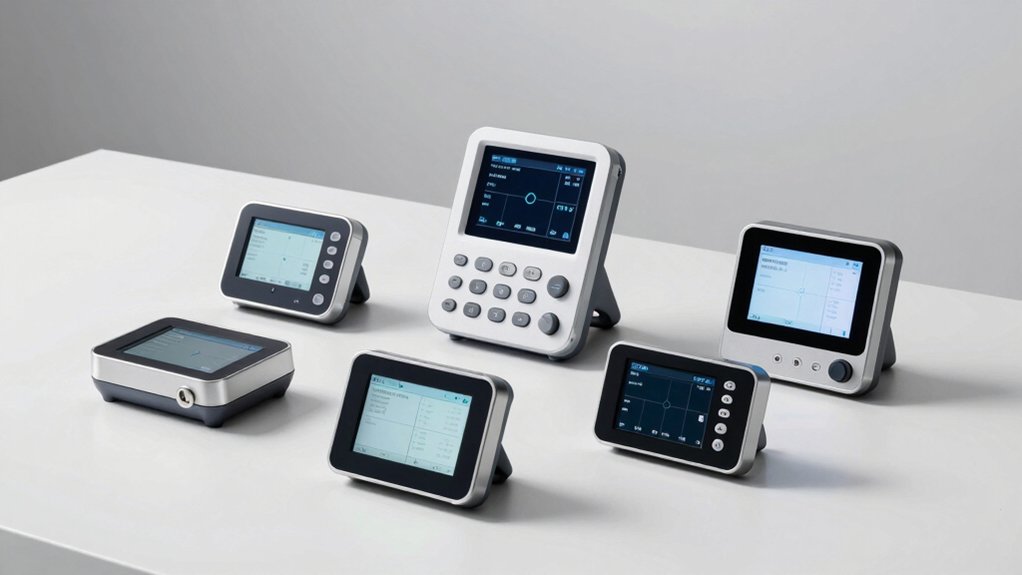

You need a WiFi signal meter that gives you accurate, real-time data without guesswork. Whether you’re checking RF exposure levels in your home, office, or outdoor spaces, the right device measures what actually matters: signal strength across multiple frequency bands, clear visual alerts, and reliable battery life. But not all meters deliver the same quality or features. Here’s what separates the devices that genuinely work from the rest.
| ERICKHILL 3-in-1 EMF Detector with Triple Alarm Modes |

| Best All-in-One | Detection Capabilities: EF, MF, RF (up to 10 GHz) | Display Type: Color LCD with three-color backlight (green, orange, red) | Power Source: Type-C rechargeable | VIEW LATEST PRICE | Read Our Analysis |
| ERICKHILL EMF Meter 3-in-1 Electromagnetic Field Detector |

| Best for Beginners | Detection Capabilities: EF, MF, RF (up to 10 GHz) | Display Type: Black and white LCD with backlight | Power Source: Lithium Polymer rechargeable | VIEW LATEST PRICE | Read Our Analysis |
| GQ EMF-390 Multi-Field Electromagnetic Radiation Meter & Detector |
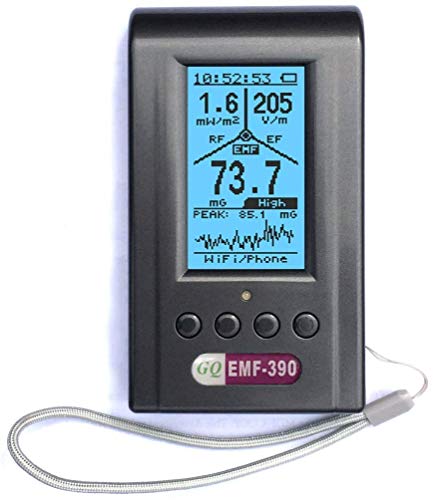
| Professional Grade | Detection Capabilities: EF, MF, RF (up to 10 GHz) + spectrum analyzer | Display Type: LCD display with backlight | Power Source: Lithium-Ion battery + LR44 | VIEW LATEST PRICE | Read Our Analysis |
| TESMEN EMF Meter Hound-200 Electromagnetic Field Detector |

| Best Budget Pick | Detection Capabilities: EF, MF, RF (below 3.5 GHz) | Display Type: 2.26-inch LCD with three-color backlight | Power Source: Three AAA batteries | VIEW LATEST PRICE | Read Our Analysis |
| ERICKHILL 3-in-1 EMF Detector with Radiation Detection |

| Advanced Features | Detection Capabilities: EF, MF, RF (one field type at a time) | Display Type: 3.1-inch LCD with tri-color backlight (green, yellow, red) | Power Source: 1200mAh Type-C rechargeable | VIEW LATEST PRICE | Read Our Analysis |
More Details on Our Top Picks
ERICKHILL 3-in-1 EMF Detector with Triple Alarm Modes
If you’re concerned about electromagnetic radiation in your home or office, the ERICKHILL 3-in-1 EMF Detector is your best choice because it measures all three types of radiation exposure you’ll encounter daily: electric fields from appliances like microwaves and refrigerators, magnetic fields from motors and devices, and radio frequencies from Wi-Fi routers, cell phones, and 5G signals. The device powers on instantly with no setup required, displaying all three field strengths simultaneously on a color-coded screen using green, orange, and red zones to indicate low, moderate, and high radiation levels. You’ll activate triple alarm modes—sound, screen, and light alerts—to identify high-radiation areas, with the option to disable audio while maintaining visual indicators. The Type-C charging port enables quick recharging, and automatic shutoff preserves battery life during frequent use throughout your space.
- Detection Capabilities:EF, MF, RF (up to 10 GHz)
- Display Type:Color LCD with three-color backlight (green, orange, red)
- Power Source:Type-C rechargeable
- Alarm System:Triple alarm (sound, screen, light); mutable
- Primary Applications:Home, office, outdoor radiation monitoring; paranormal investigations
- Auto-Shutoff Function:Automatic shutoff enabled
- Additional Feature:Type-C fast charging port
- Additional Feature:Color-coded radiation level zones
- Additional Feature:Customizable unit switching option
ERICKHILL EMF Meter 3-in-1 Electromagnetic Field Detector
The ERICKHILL EMF Meter ER02 works best for you if you need to measure electromagnetic radiation from multiple sources in your home or office. This rechargeable detector measures electric fields, magnetic fields, and radiofrequency radiation up to 10 GHz. You’ll view readings on its backlit LCD display, which shows average, peak, and maximum values. The device alerts you through sound and light warnings when radiation exceeds safe levels. After detecting radiation from appliances like microwaves or computers, you can hold data with one button press. The meter powers off automatically after 15 minutes of inactivity, preserving battery life between your charging sessions.
- Detection Capabilities:EF, MF, RF (up to 10 GHz)
- Display Type:Black and white LCD with backlight
- Power Source:Lithium Polymer rechargeable
- Alarm System:Sound and light warnings
- Primary Applications:Home, office EMF inspections; ghost hunting
- Auto-Shutoff Function:Auto power off after 15 minutes idle
- Additional Feature:Monitors average/peak/maximum readings
- Additional Feature:One-key data hold function
- Additional Feature:Two-color black/white display
GQ EMF-390 Multi-Field Electromagnetic Radiation Meter & Detector
For users who need to measure electromagnetic fields from multiple sources in a single device, you’ll want to contemplate the GQ EMF-390, which combines three detection capabilities in one meter. This model detects power lines, cell towers, microwaves, and 5G signals up to 10 GHz. The built-in RF spectrum analyzer provides real-time monitoring within a 10-meter range. Data logging lets you record measurements over time, and the safety suggestions help you interpret results quickly. It runs on one lithium-ion battery and one LR44 battery, operates as a tabletop unit, and connects to your computer for analysis.
- Detection Capabilities:EF, MF, RF (up to 10 GHz) + spectrum analyzer
- Display Type:LCD display with backlight
- Power Source:Lithium-Ion battery + LR44
- Alarm System:Safety suggestion guidance
- Primary Applications:Home, office EMF inspections; 5G network detection
- Auto-Shutoff Function:Not specified
- Additional Feature:Built-in RF spectrum analyzer
- Additional Feature:Real-time RF monitoring capability
- Additional Feature:Data logger with 2.5GHz analysis
TESMEN EMF Meter Hound-200 Electromagnetic Field Detector
You’ll find the Hound-200 especially useful if you’re concerned about electromagnetic radiation in your home or office, since it detects three types of fields—radiofrequency (RF), electric fields (EF), and magnetic fields (MF)—with a single portable device. The RF mode identifies WiFi and 5G signals below 3.5 GHz plus microwave radiation from appliances. Use the ELEC and MAG modes to measure emissions from televisions, computers, induction cookers, and power lines. The 2.26-inch LCD screen displays numerical readings and trend graphs, while visual and audible alarms adapt to measured values. You can disable audible alerts if preferred. Additional features include MAX measurement, Peak measurement, and Data Hold functions for tracking field strength changes.
- Detection Capabilities:EF, MF, RF (below 3.5 GHz)
- Display Type:2.26-inch LCD with three-color backlight
- Power Source:Three AAA batteries
- Alarm System:Visual and audible alarm with adaptive intensity; mutable
- Primary Applications:Home, office EMF inspections; ghost hunting
- Auto-Shutoff Function:Automatic shutdown enabled
- Additional Feature:Adaptive alarm intensity/frequency adjustment
- Additional Feature:Trend graphs for field strength
- Additional Feature:Included storage case included
ERICKHILL 3-in-1 EMF Detector with Radiation Detection
ERICKHILL’s 3-in-1 EMF Detector works best if you need to measure WiFi radiation alongside other electromagnetic fields in your home or office. This portable meter detects electric fields from appliances, magnetic fields from motors, and RF radiation from WiFi routers and 5G signals. The 3.1-inch LCD display shows measurements in multiple units. Select your detection mode—EF, MF, or RF—to avoid interference and ensure accuracy. The tri-color alarm (green/yellow/red) indicates radiation levels, triggering audible alerts when readings exceed safe thresholds. Use MAX mode to lock peak readings. The rechargeable battery lasts through extended testing sessions.
- Detection Capabilities:EF, MF, RF (one field type at a time)
- Display Type:3.1-inch LCD with tri-color backlight (green, yellow, red)
- Power Source:1200mAh Type-C rechargeable
- Alarm System:Audible and visual alarm; mutable
- Primary Applications:Home, office, WiFi signal detection; ghost hunting
- Auto-Shutoff Function:15-minute auto-shutoff
- Additional Feature:3.1-inch large LCD display
- Additional Feature:1200mAh rechargeable lithium polymer
- Additional Feature:Multi-unit measurement support (4)
Factors to Consider When Choosing a WiFi Signal Meter
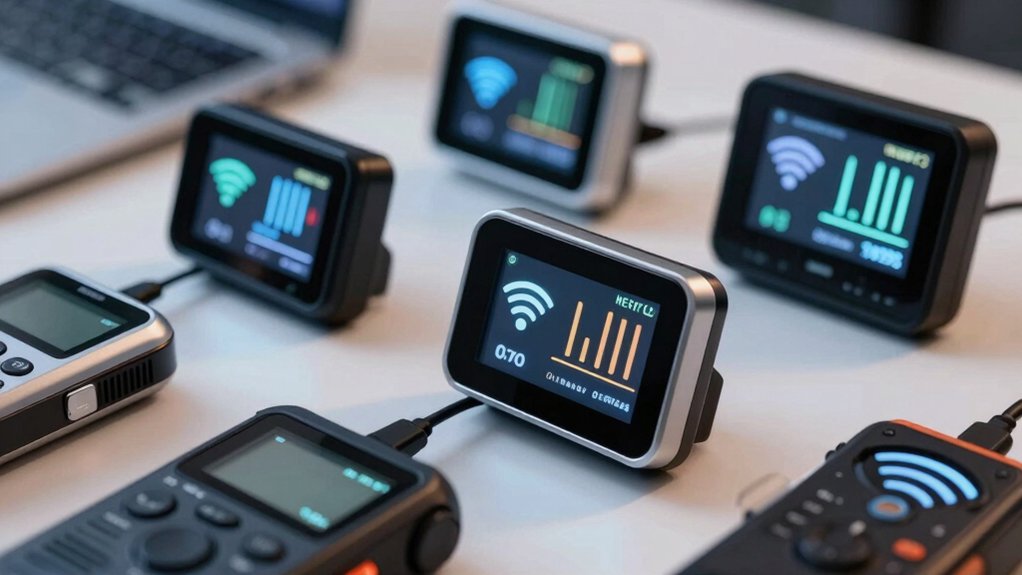
When you’re selecting a WiFi signal meter, you’ll need to evaluate five key factors: detection range and coverage (how far the device can measure signals), display clarity and readability (whether you can easily see the readings), measurement accuracy and precision (how reliable the data is), battery life and charging capabilities (how long it operates between charges), and portability and design features (whether it fits your intended use). Start by assessing your specific needs—if you’re troubleshooting a large home, prioritize detection range, but if you’re moving between locations frequently, prioritize portability and battery life. Next, compare the technical specifications and user reviews for each meter to determine which combination of these factors best matches your situation.
Detection Range And Coverage
How far can your WiFi signal meter actually measure? Detection range determines whether you’ll map your entire space or just nearby zones. Most meters reliably measure RF strength between 5–10 meters from routers and devices, which affects how thoroughly you can identify weak spots. Consider your room layout when selecting a meter. A wider detection range lets you assess multiple rooms and furniture arrangements to locate high-RF exposure areas. Real-time RF monitoring with spectrum analysis helps you visualize signals across 2.4 GHz and 5 GHz bands simultaneously. When evaluating range, check both the maximum measurable distance and the ability to detect nearby sources like routers, cell towers, and wireless devices without interference. Choose based on your space size and assessment goals.
Display Clarity And Readability
Display clarity matters because you’ll need to read measurements quickly and accurately in different lighting conditions. Look for meters with large LCD screens and backlighting to ensure visibility indoors and outdoors. Two-color or color-coded backlights work best—they use green for low signals, yellow for moderate levels, and red for high levels, letting you assess readings instantly without studying numbers. Choose models with one-key data hold functions so you can freeze fluctuating measurements for review. Peak or max reading features capture the highest values automatically. Select meters with compact, legible typography and clear unit labels (V/m, µT, mG, mW/m²) to prevent misreading results. Visual alarms with three-color backlights provide quick notifications. Optional silent mode eliminates audio distraction during assessment.
Measurement Accuracy And Precision
Accuracy matters most when you’re measuring WiFi signals because a meter’s core job is detecting radiofrequency (RF) energy across the bands your devices actually use. Look for meters detecting RF up to at least 10 GHz to cover modern WiFi and 5G frequencies. Check whether the device measures RF, electric field (EF), and magnetic field (MF) separately or concurrently—3-in-1 meters typically optimize for one field type at a time to prevent interference. Prioritize models offering average, peak, and maximum reading data to validate consistency across multiple samples. Real-time RF spectrum analysis and built-in RF browsers let you identify specific signal sources and frequencies. Finally, verify the meter uses high-sensitivity sensors and two or three-color backlit displays, which directly influence both readability and measurement reliability.
Battery Life And Charging
When you’re monitoring WiFi signals across your home or workplace, you’ll want a meter that won’t die mid-measurement. Choose a rechargeable model with a clearly stated capacity rating, like 1200mAh, and USB-C fast charging to reduce downtime. Verify the battery type—lithium polymer batteries offer reliable performance. Check the estimated runtime under typical measurement conditions to plan extended monitoring sessions accordingly. Look for auto-shutoff features that activate during idle periods, markedly extending battery life between charges. Select devices with low power consumption and efficient two-color LCD displays that balance visibility without draining the battery quickly. Confirm the included charger and accessories use standard, reliable connections. This approach ensures your meter stays operational throughout your work without unexpected shutdowns.
Portability And Design Features
How much of your day will you spend moving between rooms, buildings, or outdoor areas while measuring WiFi signals? Choose a meter with a compact, lightweight design that fits in your pocket or tool bag. Look for a 2.0–3.5 inch LCD display that you can read in sunlight or dim conditions. Select a model with clip or strap compatibility so you can carry it hands-free during inspections. Prioritize integrated rechargeable batteries with USB-C charging to avoid carrying spare batteries. Check that the display uses color-coded backlighting—green for safe levels, orange for moderate, and red for high exposure—so you assess RF signals quickly without studying numbers. These features combined let you work efficiently throughout your inspection route.
Alarm Systems And Alerts
Once you’ve selected a meter that fits your work style and environment, you’ll want one that alerts you when RF exposure reaches unsafe levels. Most quality meters include audible alerts, visual indicators, and tri-color backlighting that displays low, moderate, or high radiation levels. You can mute sound alerts on certain models while maintaining visual warnings for discreet monitoring. Peak and MAX features track sudden spikes in RF exposure, while data-hold capability lets you retain critical readings for later review. Low-battery indicators and auto-shutoff functions keep your device ready and reliable. Choose a meter with integrated spectrum monitoring across 2.4 GHz to 10 GHz bands that triggers alerts when exposure surpasses your preset safety thresholds.
Multi-Field Detection Capabilities
What should you look for in a WiFi signal meter’s detection range? You need a device that measures three distinct field types: electric field (EF), magnetic field (MF), and radiofrequency (RF). This multi-field approach gives you comprehensive exposure data rather than incomplete readings.
For RF measurement, ensure your meter covers at least 2.4–5 GHz to capture standard Wi-Fi bands. Some models extend to 10 GHz, providing broader signal monitoring if you need it.
Check that your meter displays separate readings for each field type simultaneously. This separation lets you identify which exposure source dominates your environment. Look for alert indicators that highlight high-radiation hotspots instantly, enabling quick assessment without manual interpretation.
Price And Value Proposition
When you’re deciding between WiFi signal meters, price alone shouldn’t drive your choice—you’ll want to match the cost against what features you actually need. Start by identifying which capabilities matter most: a rechargeable battery with Type-C charging reduces long-term costs, while auto-shutoff extends battery life. Next, compare essential functions like MAX/Peak data, data hold, and audible alarms—these directly improve usability. If you need advanced readings, prioritize RF range up to 10 GHz and spectrum analysis, which justify higher prices for professional-grade work. Check what’s included: charging cables, protective cases, and manuals add value. Finally, verify warranty support and whether the meter is passive (non-transmitting). Assess alarm customization options like mute settings and tri-color backlights against your budget to find the best fit.
Final Thoughts
You’ve reviewed five reliable WiFi signal meters that detect RF exposure across 2.4–5 GHz ranges. When selecting your meter, prioritize USB-C rechargeability, simultaneous EF/MF/RF readouts, and tri-color alert systems. Check that your chosen model includes data logging or peak-hold features for accurate measurements. Verify the display remains readable in different lighting conditions. These specifications ensure you’ll get practical, dependable exposure insights for effective WiFi testing in your home or workspace.

Meet Ry, “TechGuru,” a 36-year-old technology enthusiast with a deep passion for tech innovations. With extensive experience, he specializes in gaming hardware and software, and has expertise in gadgets, custom PCs, and audio.
Besides writing about tech and reviewing new products, he enjoys traveling, hiking, and photography. Committed to keeping up with the latest industry trends, he aims to guide readers in making informed tech decisions.