
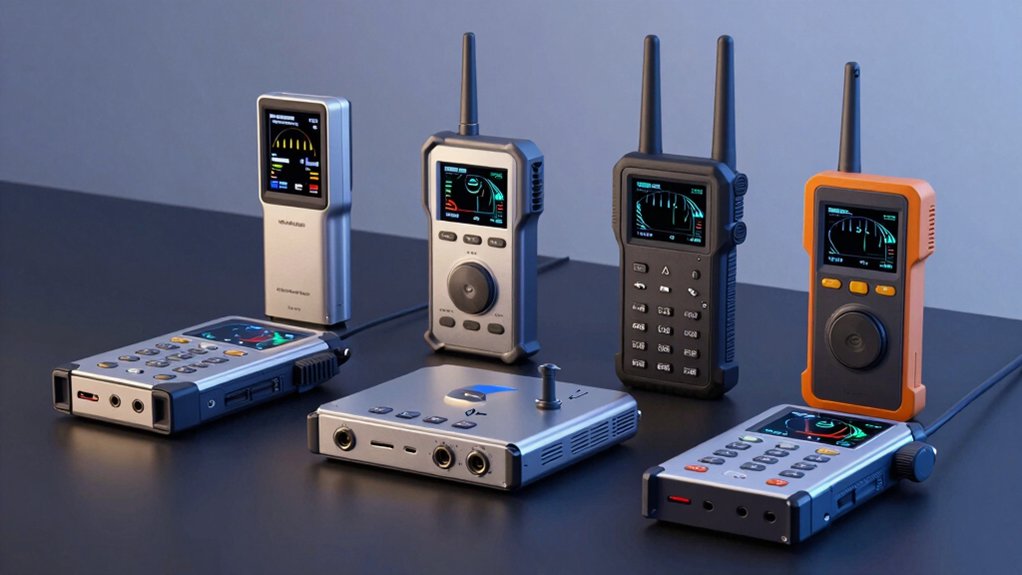

When you’re troubleshooting network problems on the job, you need a tester that gives you accurate data fast. You’ve got several solid options to choose from—each one handles different tasks, from basic signal checking to advanced spectrum analysis. The right tool depends on what you’re testing, your budget, and whether you need portability or desktop power. Let’s break down what sets these testers apart and how they can help you work more efficiently.
| NetAlly AirCheck G3 Pro Wi-Fi Wireless Tester |

| Professional Grade | Primary Testing Capability: Wi-Fi 6/6E and Bluetooth/BLE analysis | Display Type: Advanced digital interface (details not specified) | Frequency Band Support: 2.4 GHz, 5 GHz, and 6 GHz | VIEW LATEST PRICE | Read Our Analysis |
| 2.4G 5G Network Analyzer with TFT Color Screen |

| Budget-Friendly Pick | Primary Testing Capability: 2.4G and 5G network analysis | Display Type: 2.4-inch TFT color screen | Frequency Band Support: 2.4G and 5G bands | VIEW LATEST PRICE | Read Our Analysis |
| TREND Networks SignalTEK QT Pro Network Tester (R166001) |
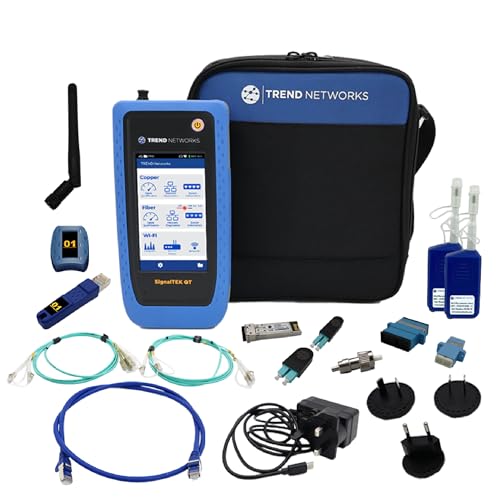
| Best Overall | Primary Testing Capability: Copper, fiber, and Wi-Fi testing | Display Type: Digital display with multiple testing modes | Frequency Band Support: Multi-band Wi-Fi testing | VIEW LATEST PRICE | Read Our Analysis |
| 5G WiFi Signal Analyzer with 2.4 Inch Display |

| Compact Essential | Primary Testing Capability: 2.4G and 5G WiFi signal analysis | Display Type: 2.4-inch TFT color display | Frequency Band Support: 2.4G and 5G bands | VIEW LATEST PRICE | Read Our Analysis |
| 2.4G 5G Spectrum Analyzer WiFi Network Analysis |

| Best Value | Primary Testing Capability: 2.4G and 5G spectrum analysis | Display Type: 2.4-inch TFT color screen | Frequency Band Support: 2.4G and 5G bands | VIEW LATEST PRICE | Read Our Analysis |
More Details on Our Top Picks
NetAlly AirCheck G3 Pro Wi-Fi Wireless Tester
Need professional-grade wireless testing that handles Wi-Fi 6/6E networks? The AirCheck G3 Pro delivers real-time RF visibility and forensic-level insights for comprehensive analysis. You’ll locate access points and clients across 2.4 GHz, 5 GHz, and 6 GHz bands quickly using its speedy physical location features. The device supports spectrum analysis with the optional NXT-2000 Portable Spectrum Analyzer, giving you deeper network visibility. You can automatically generate wired and Wi-Fi topology maps through Link-Live, eliminating manual documentation. For site surveys, you’ll use AirMapper to conduct faster Bluetooth/BLE assessments while remote engineers collaborate with your on-site team. The platform consolidates field test data seamlessly, integrating with your network management systems. Your purchase includes one year of AllyCare Support, ensuring sustained technical assistance throughout your deployment and troubleshooting operations.
- Primary Testing Capability:Wi-Fi 6/6E and Bluetooth/BLE analysis
- Display Type:Advanced digital interface (details not specified)
- Frequency Band Support:2.4 GHz, 5 GHz, and 6 GHz
- Battery Technology:Rechargeable (AllyCare Support included)
- Charging Port:Not specified
- Portability:Professional handheld device with remote collaboration
- Additional Feature:Wi-Fi 6/6E and Bluetooth support
- Additional Feature:Automatic topology map generation
- Additional Feature:Remote engineer collaboration capability
2.4G 5G Network Analyzer with TFT Color Screen
Looking for a budget-friendly pick that delivers professional-grade WiFi analysis? This 2.4G 5G Network Analyzer combines essential features into a compact device. You’ll view real-time network data on its 2.4-inch TFT color screen, making channel identification straightforward. The analyzer displays frequency points, enabling you to switch to less congested channels and improve performance. Its 600mAh lithium battery provides approximately four hours of standby time, while the battery indicator in the upper right corner keeps you informed. You charge via USB Type-C, with red indicating charging status and green showing full capacity. This lightweight tester handles daily optimization tasks without unnecessary complexity or expense.
- Primary Testing Capability:2.4G and 5G network analysis
- Display Type:2.4-inch TFT color screen
- Frequency Band Support:2.4G and 5G bands
- Battery Technology:600mAh lithium battery
- Charging Port:Type-C charging
- Portability:Compact design with light indication
- Additional Feature:Channel optimization and switching
- Additional Feature:Light indication charging status
- Additional Feature:4-hour standby time
TREND Networks SignalTEK QT Pro Network Tester (R166001)
The TREND Networks SignalTEK QT Pro handles copper, fiber, and Wi-Fi testing in one device—making it the leading choice for network professionals who need complete network qualification without carrying multiple tools. You’ll test copper connections up to 10 Gb/s and fiber links up to 100 Gb/s using high-accuracy SFP modules. For Wi-Fi diagnostics, you’ll run site surveys, identify channel conflicts, and locate hidden access points with internal and external antennas. The device verifies PoE power delivery up to 90W and includes built-in tools for ping, traceroute, device discovery, and VLAN detection. Its cloud-enabled remote access lets you share results securely and access support via TeamViewer and VNC.
- Primary Testing Capability:Copper, fiber, and Wi-Fi testing
- Display Type:Digital display with multiple testing modes
- Frequency Band Support:Multi-band Wi-Fi testing
- Battery Technology:Rechargeable via USB-C
- Charging Port:USB-C charger with changeable plugs
- Portability:Complete professional kit with soft carry case
- Additional Feature:Multi-Gigabit copper/fiber testing
- Additional Feature:Built-in Visual Fault Locator
- Additional Feature:PoE power delivery verification
5G WiFi Signal Analyzer with 2.4 Inch Display
Want a compact essential tool that fits in your pocket while you troubleshoot network issues? The G WiFi Signal Analyzer delivers exactly that. You’ll monitor both 2.4G and 5G frequencies on its 2.4-inch TFT color display, which automatically refreshes to show you how many networks occupy each frequency. The device uses a 600mAh lithium battery that runs for approximately four hours on standby. You charge it through a TYPE-C port in about two hours. Red indicates charging; green signals full capacity. With 160mA operating current, you’ll track router performance and understand wifi occupancy across all frequency points quickly and efficiently.
- Primary Testing Capability:2.4G and 5G WiFi signal analysis
- Display Type:2.4-inch TFT color display
- Frequency Band Support:2.4G and 5G bands
- Battery Technology:600mAh Li-ion battery
- Charging Port:Type-C port
- Portability:Compact handheld analyzer
- Additional Feature:Automatic refresh frequency display
- Additional Feature:Network occupancy visualization
- Additional Feature:Router management assistant tool
2.4G 5G Spectrum Analyzer WiFi Network Analysis
For network diagnostics without breaking your budget, this 2.4G/5G spectrum analyzer delivers solid value through its core strengths. The 2.4-inch TFT color screen displays frequency data clearly, letting you identify congested channels quickly. Check your current frequency point, then switch to a relatively empty band to improve connection quality. The Type-C charging port supports standard 5V power, with a red indicator showing charging status and green indicating full capacity. With a 600 mAh battery providing approximately four hours of standby time, you’ll manage moderate daily use efficiently. Working current around 160 mA ensures reasonable performance for field diagnostics work.
- Primary Testing Capability:2.4G and 5G spectrum analysis
- Display Type:2.4-inch TFT color screen
- Frequency Band Support:2.4G and 5G bands
- Battery Technology:600mAh lithium battery
- Charging Port:Type-C interface (5V)
- Portability:Portable WiFi network analysis device
- Additional Feature:Frequency point adjustment capability
- Additional Feature:Empty frequency point identification
- Additional Feature:IT diagnostics support
Factors to Consider When Choosing a WiFi Tester and Analyzer
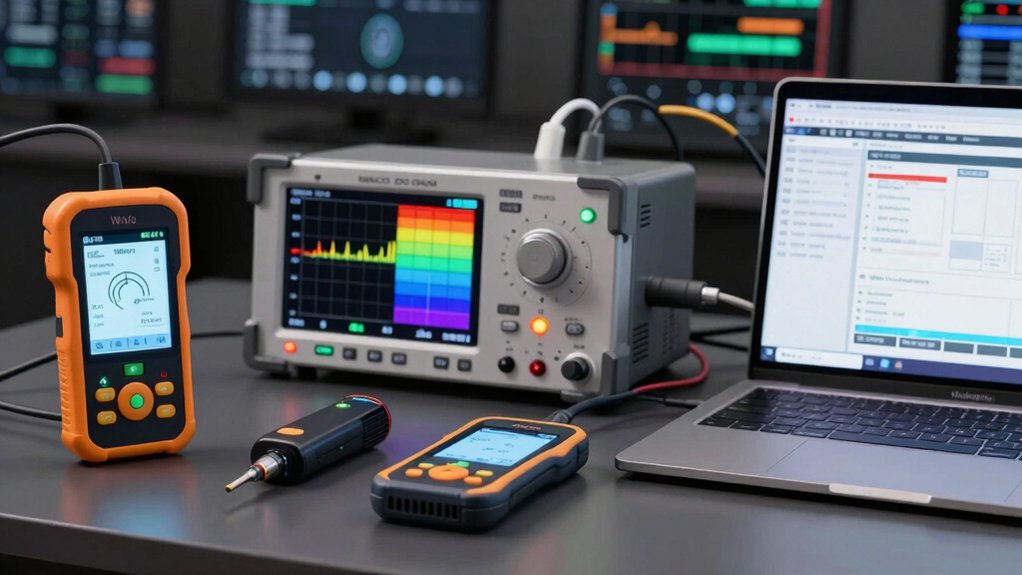
When you’re selecting a WiFi tester, you’ll need to evaluate your budget first, then match it against the device’s compatibility with your network type, the frequency bands it can test, and the quality of its display for reading results in various lighting conditions. Next, consider the battery life duration, since you’ll want your tester to function through a full workday without constant recharging, especially if you’re testing multiple locations. These five factors work together to determine whether a tester will serve your daily needs efficiently and cost-effectively.
Budget And Price Range
How much you’re willing to spend on a WiFi tester directly shapes which features and capabilities you’ll actually access. Budget-friendly options under $500 deliver basic spectrum viewing on small color displays and battery-powered handheld operation for straightforward frequency monitoring. Mid-range testers between $500 and $2,000 add Wi-Fi 6/6E support, Bluetooth/BLE detection, and improved data management. Premium models exceeding $2,000 include multi-Gigabit copper/fiber testing, cloud collaboration, remote support, and topology mapping. Calculate your total cost of ownership by adding optional accessories like portable spectrum analyzers, VFLs, and microscopy tools. Factor in required licenses, remote services, and warranty terms. Determine which features your network demands before committing funds to ensure you’re purchasing appropriate capability for your actual testing needs.
Network Type Compatibility
What network standards does your environment actually run today, and what’ll you need to support in the next few years? You need a tester that handles Wi-Fi 6/6E and Bluetooth/BLE standards matching your current setup. Check whether the device covers multiple frequency bands: 2.4 GHz, 5 GHz, and 6 GHz for complete deployment visibility. If you’re managing mixed environments, verify the tester performs both copper/fiber and wireless diagnostics. Confirm it can execute site surveys and topology mapping across Wi-Fi and Bluetooth networks simultaneously. Finally, ensure compatibility with your management platforms—whether cloud-based or remote access systems—so you can share data and coordinate projects efficiently across your team.
Testing Frequency Bands
You’ll want to prioritize frequency band support as one of your first evaluation criteria, since your tester must match the bands your network actually uses. Most networks operate on 2.4 GHz and 5 GHz, so confirm your device covers both. If you’re deploying Wi-Fi 6E networks, select a tester that also supports 6 GHz. Dual-band or tri-band capability lets you monitor multiple frequencies simultaneously, revealing interference patterns and channel congestion across your entire network. Look for spectrum analysis features that display channel utilization for each band. This shows you which channels are crowded and which remain available. Battery life matters too—longer battery enables extended on-site surveys without interruption, ensuring accurate, continuous band occupancy monitoring throughout your testing period.
Display Quality Features
Once you’ve confirmed your tester supports the right frequency bands, the display itself becomes your window into real-time network data. Look for a 2.4-inch TFT color display that renders frequency information clearly and updates automatically. Check that the screen shows battery status in the upper right corner so you’ll know your power level at a glance. Select models with color differentiation that highlights how many networks occupy each frequency—this speeds up your assessment during troubleshooting. Verify the display presents 2.4 GHz and 5 GHz data side-by-side for easy comparison. A quality display reduces eye strain during extended optimization work and ensures you don’t miss critical signal details when analyzing network occupancy patterns.
Battery Life Duration
How much runtime can you realistically expect from a WiFi tester before it needs recharging? Most analyzers feature a 600 mAh lithium battery supporting approximately 3.75 hours of continuous operation at standard 160 mA draw rates. However, actual battery life depends on your usage pattern. During active scanning and data logging, you’ll experience shorter runtimes than advertised standby estimates. USB Type-C charging is standard across models, indicated by red during charging and green when fully charged. Plan your site surveys accordingly by charging before fieldwork or carrying a backup power source. Check the device’s power consumption specifications for your specific measurement tasks, since manufacturer estimates often reflect lighter loads than real-world conditions demand.
Portability And Design
What makes a WiFi tester practical for daily fieldwork? Compact handheld design with integrated displays. You’ll find 2.4-inch TFT color screens on most models, letting you read results on-site without extra equipment. Lightweight construction means you’ll carry it comfortably between locations during surveys. Quick-read interfaces minimize workflow disruption—you get data fast without navigating complex menus. USB-C charging with red/green indicator lights lets you check power status instantly during work. Built-in carrying cases protect your device while traveling between sites. Some models include remotes and adapters for testing copper, fiber, and wireless connections, eliminating the need for multiple tools. Choose a tester that fits your testing environment and supports the link types you’ll encounter regularly.
Advanced Diagnostic Capabilities
Beyond the portability features that get you on-site efficiently, you’ll need diagnostic power to uncover what’s actually happening with your network. Look for testers offering live RF visibility and spectrum analysis across 2.4 GHz, 5 GHz, and 6 GHz bands. These capabilities let you identify channel conflicts and measure spectrum occupancy instantly. Choose devices with topology discovery that automatically generate wired and Wi-Fi network maps. Built-in fault localization tools—including Visual Fault Locator, TDR fault location, and multi-gigabit wiremap functionality—speed up problem isolation. Verify the tester combines WiFi site surveys, device discovery, VLAN identification, PoE verification, and interference analysis in one platform. Cloud-enabled remote access and data management integrations enable you to consolidate results and collaborate across multiple sites efficiently.
Software Integration Options
When you’re selecting a WiFi tester, the software capabilities matter just as much as the hardware specs—they’re what transform raw data into actionable intelligence. Check whether the device offers cloud-based or on-premises software for managing, analyzing, and reporting test results. Verify that it supports integration with your existing network management systems, project platforms, and secure data sharing tools. Look for real-time RF visibility and spectrum analysis features that align with your validation workflows. Confirm automatic topology discovery capabilities and wired/wireless mapping tools that enable team collaboration. Finally, assess compatibility with remote support tools like TeamViewer or APIs that connect test results directly to your ITSM or NMS systems. These integration options centralize your data and streamline troubleshooting across departments.
Final Thoughts
You’ve reviewed five capable WiFi testers serving different needs. You’ll select based on your budget, required features, and testing scope. You should prioritize tools offering real-time RF visibility and topology mapping for thorough diagnostics. You’ll benefit most from cross-platform compatibility and cloud integration for remote collaboration. You can start with budget-friendly analyzers or invest in forensic-level systems like the AirCheck G3 Pro depending on your professional requirements.

Meet Ry, “TechGuru,” a 36-year-old technology enthusiast with a deep passion for tech innovations. With extensive experience, he specializes in gaming hardware and software, and has expertise in gadgets, custom PCs, and audio.
Besides writing about tech and reviewing new products, he enjoys traveling, hiking, and photography. Committed to keeping up with the latest industry trends, he aims to guide readers in making informed tech decisions.