
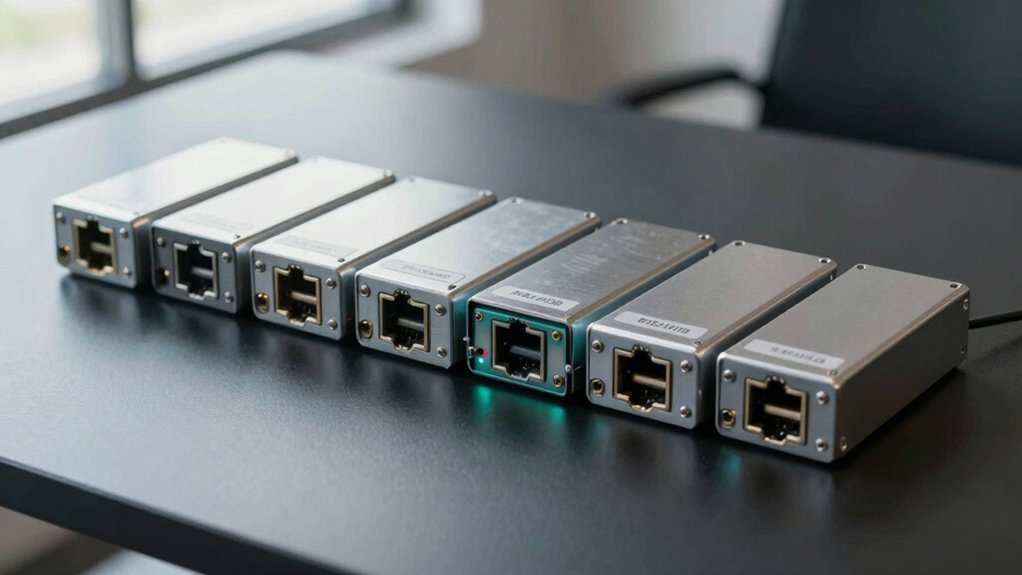

You’re evaluating RS485 to Ethernet converters for daily reliability. Start by confirming Modbus RTU to TCP bridging, then check network modes (TCP/UDP/HTTP), security options (TLS/SSL, mutual auth), and mounting style (DIN-rail or wall) for your environment. Assess isolation, temp range, power use, heartbeat/keep-alive, DHCP/static IP, diagnostics, and firmware updateability. Compare models listed, note web plus VCOM config and automatic status signals. Decide which option fits your setup, then prepare to implement and monitor performance, with a clear next step to proceed.
| RS232/RS485 to Ethernet Adapter/IP Device Server |
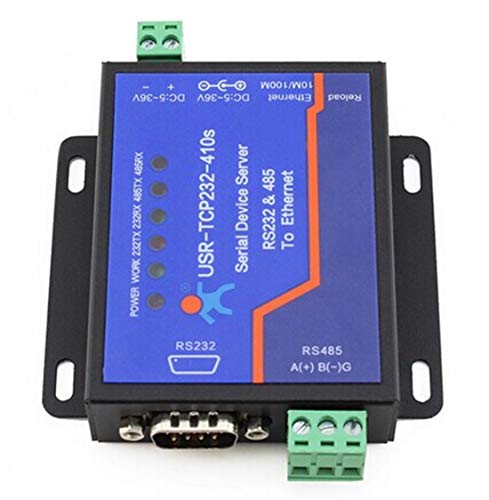
| Best Modbus Gateway | Protocol support: Modbus RTU/Modbus TCP | Ethernet interface: 1 RJ45 | Serial interfaces supported: RS232 and RS485 (dual ports) | VIEW LATEST PRICE | Read Our Analysis |
| RS485 to Ethernet Converter with High-Speed Stability |

| High-Speed Stability | Protocol support: (Modbus not supported) → Note: This product specifically states Modbus not supported; still included in the roundup | Ethernet interface: 10/100M Ethernet | Serial interfaces supported: RS485 | VIEW LATEST PRICE | Read Our Analysis |
| RS485 to Ethernet Modbus Gateway Transmit Data between TCP/IP |

| Transparent Bridging | Protocol support: Modbus RTU to TCP | Ethernet interface: TCP/IP Ethernet (Implied RJ45) | Serial interfaces supported: RS485 | VIEW LATEST PRICE | Read Our Analysis |
| RS232/RS485/RS422 to Ethernet Modbus Gateway |

| Reliable Modbus Bridge | Protocol support: Modbus RTU to Modbus TCP | Ethernet interface: 10/100 Mbps Ethernet | Serial interfaces supported: RS232, RS485, RS422 | VIEW LATEST PRICE | Read Our Analysis |
| LINOVISION RS485/RS232 to Ethernet Converter with RJ45 |
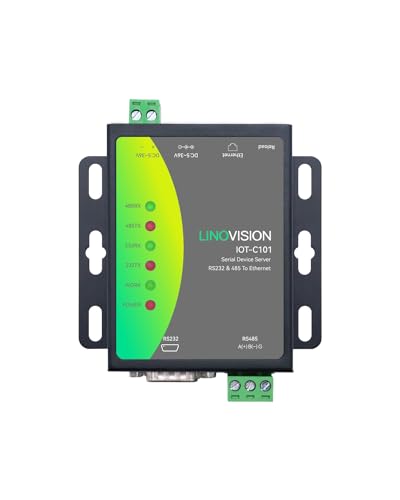
| Industrial-Certified | Protocol support: Modbus Gateway (Modbus RTU/TCP) | Ethernet interface: RJ45 Ethernet | Serial interfaces supported: RS232, RS485 | VIEW LATEST PRICE | Read Our Analysis |
| Waveshare RS485 to Ethernet TCP/IP Serial Server |

| PoE Ready Gateway | Protocol support: Modbus gateway/Modbus bridge via TCP/IP | Ethernet interface: RJ45 Ethernet | Serial interfaces supported: RS485 | VIEW LATEST PRICE | Read Our Analysis |
More Details on Our Top Picks
RS232/RS485 to Ethernet Adapter/IP Device Server
To bridge RS232 or RS485 devices with Ethernet efficiently, choose an adapter that supports both serial standards and acts as a versatile IP device server. You select the RS232/RS485 to Ethernet Adapter/IP Device Server for dual serial ports, one RS232 and one RS485, with a single RJ45 Ethernet port. Configure via Web Browser or Virtual COM software interface. It handles Modbus RTU to Modbus TCP, and can report data in JSON using MQTT, TCP/UDP, or HTTP. It supports SSL/TLS, two-way certificates, DHCP/DNS, and up to 128 data points. Use it to connect PLCs, SCADA, or private servers.
- Protocol support:Modbus RTU/Modbus TCP
- Ethernet interface:1 RJ45
- Serial interfaces supported:RS232 and RS485 (dual ports)
- Industrial/operational suitability:-40 to 85°C
- Power/Power options:Low power (<1W)
- Data transport features:Data in JSON over MQTT/TCP/UDP/HTTP; SSL/TLS; Modbus gateway
- Additional Feature:Multi-host Modbus polling
- Additional Feature:SSL/TLS data encryption
- Additional Feature:Web/VCOM configuration access
RS485 to Ethernet Converter with High-Speed Stability
If you need stable, high-speed RS485-to-Ethernet communication, the Waveshare RS485 to Ethernet Converter stands out for its high-speed stability and flexible network options. You set the baudrate from 600bps to 230.4Kbps, choose parity none, odd, even, mark, or space, and connect via the RJ45 port. Use RFC2217-like protocol to adjust serial settings remotely, or configure via the web page, AT commands, serial protocol, or network protocol. Pick TCP Server, TCP Client, UDP Server, UDP Client, or HTTPD Client, with KeepAlive and auto-reconnect. Enable DHCP or static IP, upgrade firmware over the network, and customize heartbeat packets for reliability.
- Protocol support:(Modbus not supported) → Note: This product specifically states Modbus not supported; still included in the roundup
- Ethernet interface:10/100M Ethernet
- Serial interfaces supported:RS485
- Industrial/operational suitability:Industrial-grade design (implied)
- Power/Power options:Power via Ethernet (PoE option not stated; separate power not specified)
- Data transport features:TCP/UDP/HTTP with heartbeat; DNS/DHCP; customizable packets
- Additional Feature:RFC2217-like protocol
- Additional Feature:Customized heartbeat packets
- Additional Feature:Webpage/AT/serial/network config
RS485 to Ethernet Modbus Gateway Transmit Data between TCP/IP
A key feature to note is the ability of the Din Rail RS485 to Ethernet Converter to bridge Modbus RTU over RS485 with Modbus TCP across TCP/IP networks, enabling seamless data transmission between field devices and control systems. You configure the device in Modbus TCP work mode, using the serial port to bridge TCP/IP and RS485. Set up a TCP server or client, or UDP, HTTPD as needed, then assign baud rate from 600bps to 460.8Kbps and parity options. Use the webpage or AT commands to adjust heartbeat, keep connections stable, and enable transparent data transmission between networks.
- Protocol support:Modbus RTU to TCP
- Ethernet interface:TCP/IP Ethernet (Implied RJ45)
- Serial interfaces supported:RS485
- Industrial/operational suitability:(Stability-focused; serial bridge)
- Power/Power options:Power options not specified
- Data transport features:Transparent data transmission between TCP/IP and RS485
- Additional Feature:Transparent bridge mode
- Additional Feature:5 group organization
- Additional Feature:Web/AT/serial/network config
RS232/RS485/RS422 to Ethernet Modbus Gateway
This RS232/RS485/RS422 to Ethernet Modbus Gateway provides a practical path to connect legacy serial devices to an Ethernet network, converting Modbus RTU to Modbus TCP with reliable performance. You install the gateway between serial equipment and Ethernet, using a 10/100 Mbps port with Auto MDI/MDIX. Choose RS232, RS485, or RS422 on the serial side, then configure Modbus RTU to Modbus TCP translation. Enable multi-host polling if needed, and set hardware or software watchdogs for reliability. If the device goes down, rely on automatic restart to resume operations quickly. This solution is scalable and stable.
- Protocol support:Modbus RTU to Modbus TCP
- Ethernet interface:10/100 Mbps Ethernet
- Serial interfaces supported:RS232, RS485, RS422
- Industrial/operational suitability:Industrial-grade/robust
- Power/Power options:Power options not specified
- Data transport features:Hardware/software watchdog; auto-restart
- Additional Feature:Multi-interface support (RS232/RS485/RS422)
- Additional Feature:Hardware watchdog
- Additional Feature:Auto restart on failure
LINOVISION RS485/RS232 to Ethernet Converter with RJ45
The LINOVISION RS485/RS232 to Ethernet Converter with RJ45 stands out for its Modbus gateway capability, enabling seamless RTU/TCP conversion and reliable cross‑network communication. You connect RS232 or RS485 devices to Ethernet, enabling remote monitoring and control over distance. Use the Modbus Gateway to convert RTU to TCP, and ensure signals transmit transparently between devices and networks. It supports up to 16 hosts, so poll multiple endpoints. For cloud use, leverage the free Linovision AIoT RemoteMonit service for up to 30 devices, with options to add more or customize features. Mount on wall or rail, operate between -40°F and 185°F.
- Protocol support:Modbus Gateway (Modbus RTU/TCP)
- Ethernet interface:RJ45 Ethernet
- Serial interfaces supported:RS232, RS485
- Industrial/operational suitability:Industrial design with wide temperature range
- Power/Power options:Power details not specified
- Data transport features:Cloud service support (Linovision AIoT RemoteMonit)
- Additional Feature:Cortex-M7 400MHz
- Additional Feature:Free cloud service (RemoteMonit)
- Additional Feature:Wall/rail mountable IP30
Waveshare RS485 to Ethernet TCP/IP Serial Server
Waveshare RS485 to Ethernet TCP/IP Serial Server stands out for its rail-mount design and PoE option, making it a solid choice when you need a compact, network-powered device in industrial spaces. You install the rail-m mount in your panel and connect the RS485 devices to the terminal block. If you use PoE, you attach the Ethernet cable and power comes from the network. The unit supports a TCP/IP bridge and acts as a gateway for Modbus, MQTT, and RS485 to JSON. Use the screw terminals for power input and enable electrical isolation between power and signal for safety. Use cases include industrial data acquisition and IoT gateways.
- Protocol support:Modbus gateway/Modbus bridge via TCP/IP
- Ethernet interface:RJ45 Ethernet
- Serial interfaces supported:RS485
- Industrial/operational suitability:Industrial/rugged rail-mount design
- Power/Power options:Power input via screw terminals (external power)
- Data transport features:Bi-directional transparent data transmission; MQTT gateway/RS485 to JSON
- Additional Feature:PoE option available
- Additional Feature:RJ45 industrial rail mount case
- Additional Feature:MQTT gateway / RS485 to JSON
Factors to Consider When Choosing RS485 to Ethernet Converter
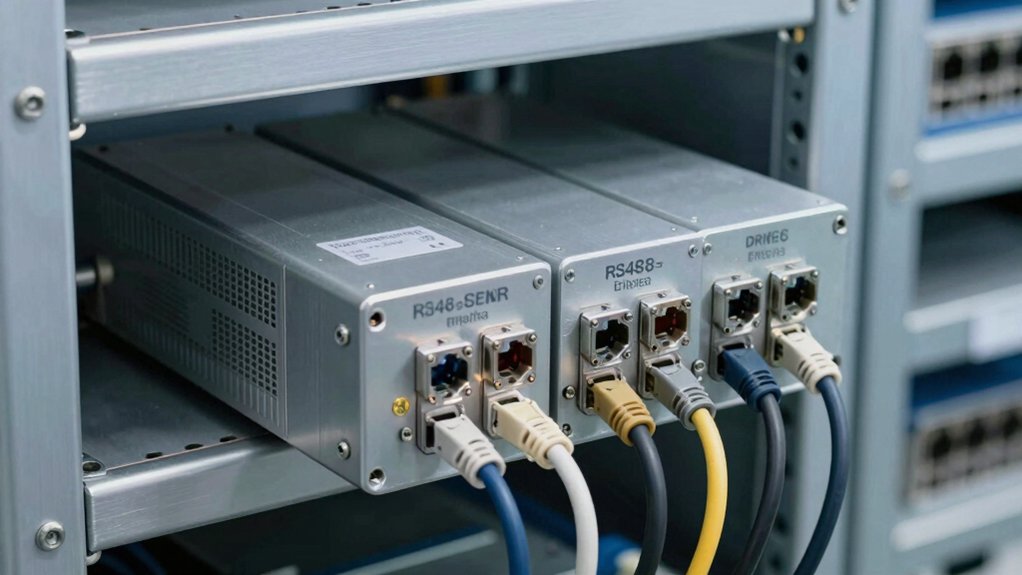
Start by checking Connector Compatibility to confirm physical interfaces and pinouts match your setup, and note any needed adapters or cable lengths. Then assess Protocol Support Range, noting which standards and device profiles the converter supports, and plan for future needs or field upgrades. Finally, evaluate Throughput & Latency, Reliability & Stability, and Power & Environment by setting targets, comparing specs like data rates, jitter, MTBF, operating temperature, and power efficiency, then test with representative loads.
Connector Compatibility
Connector compatibility starts with matching your RS485 wiring to the converter’s interface. First, verify the RS485 interface type, noting terminated pair count and whether you have 2-wire or 4-wire wiring, to avoid polarity or signaling mismatches. Next, check connector physicals: determine if your device uses standard 9-pin or 25-pin D-sub, or screw-terminal blocks, so you pick a unit with the proper cabling that fits your setup. Then assess electrical isolation and shielding: confirm isolation levels and decide between shielded or unshielded Ethernet to reduce ground loops and EMI. Also verify Ethernet capabilities: ensure the port supports 10/100 Mbps and auto MDI/MDIX so you can use straight or crossover cables without extras. Finally, confirm baud rate, parity, and data format compatibility to maintain reliable transmission.
Protocol Support Range
When choosing an RS485 to Ethernet converter, consider the protocol support range and how it fits your network needs. Look for Modbus RTU to Modbus TCP gateway functionality to bridge RS485 devices with TCP/IP networks. Check RFC2217-like protocol support so remote devices can adjust serial settings over the network, enabling dynamic configuration. Verify options for TCP server/client, UDP client/server, and HTTPD client modes to support versatile network communication. Confirm Modbus TCP work mode for transparent data transmission across bridges, allowing seamless RTU to TCP data flow. Explore custom heartbeat and registration packets to maintain reliable, continuous transfer in networked setups. Ensure these features align with your existing devices and future expansion plans.
Throughput & Latency
To choose the right RS485 to Ethernet converter, start by evaluating throughput and latency as you would a workflow you must optimize. Check throughput by confirming serial baud rate support (up to 460.8Kbps) and assess how efficiently the TCP/IP stack converts RS485 data into network packets. For latency, determine if the device operates in transparent bridging or Modbus gateway mode; gateway mode adds processing delays. Consider heartbeat and keep-alive features, which add minimal signaling overhead that can affect apparent latency. Note that TCP-based transmission offers reliability but can introduce microsecond-to-millisecond delays from buffering or network congestion. Review RFC2217-like or AT-command configurations, which can adjust timing and retries, indirectly affecting effective throughput and end-to-end latency. Compare models using these criteria to select predictable performance.
Reliability & Stability
Reliability and stability are essential when choosing an RS485 to Ethernet converter. Look for keep-alive mechanisms, auto-reconnect, and watchdog resets to maintain stable connections during long-term operation. Ensure the device supports a self-defined heartbeat or registration packets for continuous monitoring and quick fault detection. Verify compatibility with TCP server/client, UDP, and HTTPD client, and confirm robust timeout handling to prevent hangs. Check DNS and DHCP support, plus auto IP provisioning to minimize configuration errors that disrupt communication. Favor platforms with firmware upgradeability and error recovery, including time-out reboot, so you can recover from instability quickly. Ensure clear factory reset procedures are documented, and test them during setup. Choose a unit that demonstrates consistent performance under typical network conditions and provides straightforward diagnostic options.
Power & Environment
Power and environment are critical when selecting an RS485 to Ethernet converter. You start by checking operating temperature ranges, ensuring they cover your deployment, such as -40°C to 85°C or -40°F to 185°F for industrial use. Next, verify power consumption is low, ideally under 1 W, to support energy efficiency or remote installations. Confirm electrical isolation between power and signal to improve safety in harsh environments. Look for industrial enclosures or DIN-rail or rail-mount options to align with existing systems. Consider supported power options, deciding between PoE or external DC supply based on network layout and constraints. Finally, note any additional environmental certifications or ratings relevant to your site, and match them to your installation plan.
Management & Security
What security features matter most when selecting an RS485 to Ethernet converter, and how should you verify them in practice? You verify TLS/SSL support for TCP, HTTP, and MQTT modes to protect data in transit over Ethernet. Check two-way certificate authentication to ensure mutual trust between the device and servers or clients, and test the handshake process during setup. Look for heartbeat and keep-alive mechanisms to detect broken connections and recover without manual intervention. Ensure DNS, DHCP, and static IP options are available so you can address devices reliably and integrate them into existing networks smoothly. Confirm web-based configuration plus VCOM/host software for secure remote management, monitoring, and updates, and perform regular firmware checks to maintain security.
Final Thoughts
To choose reliably, compare models by Modbus RTU/TCP bridging, multiple network modes, TLS/SSL with mutual authentication, and I/O isolation. Check DIN-rail or wall-mount form, wide temps, low power, and power-signal isolation for harsh environments. Verify web plus VCOM config, automatic heartbeat, DHCP/static IP, clear diagnostics, and easy firmware updates. Prioritize devices with web management, robust security, and long-term support. Match duties to your site: pick one with TCP/UDP/HTTP, and confirm firmware upgrade paths.

Meet Ry, “TechGuru,” a 36-year-old technology enthusiast with a deep passion for tech innovations. With extensive experience, he specializes in gaming hardware and software, and has expertise in gadgets, custom PCs, and audio.
Besides writing about tech and reviewing new products, he enjoys traveling, hiking, and photography. Committed to keeping up with the latest industry trends, he aims to guide readers in making informed tech decisions.