
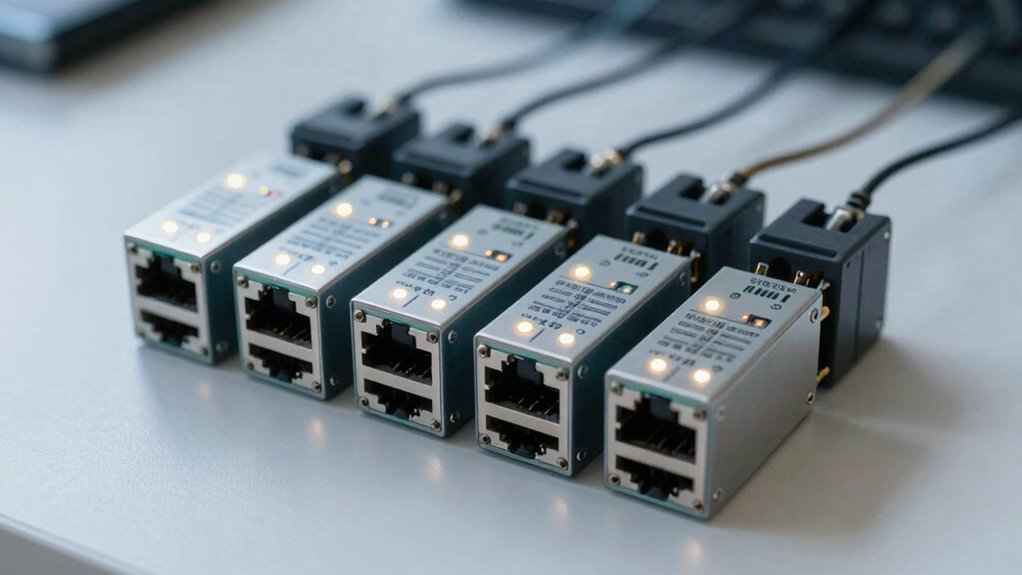

You’re selecting an Ethernet relay module that won’t fail under load, so start by comparing 8-channel vs. multi-channel options and check for Modbus RTU/TCP, MQTT, and HTTP compatibility. Verify on-board isolation, surge protection, and 7–36V (or PoE) power, then review per-channel modes (Normal, Flash, Linkage, Toggle) and rail-mount durability. Consider PoE for power efficiency, splash-proof enclosures for environment, and clear status indicators for reliable operation. Start with these options, then decide what fits your system and goals without surprises, and keep options concise.
| 8-CH Ethernet Relay Module with Modbus RTU/TCP PoE Protection |

| Best Overall | Channel Count: 8-channel | Modbus Support: Modbus RTU/Modbus TCP | PoE Option: PoE optional | VIEW LATEST PRICE | Read Our Analysis |
| Waveshare 8-Ch Ethernet Relay Module with PoE |

| Industrial Toughness | Channel Count: 8-channel | Modbus Support: Modbus RTU/Modbus TCP | PoE Option: PoE | VIEW LATEST PRICE | Read Our Analysis |
| Industrial 8-CH Ethernet Relay Module with PoE Modbus Rail-Mount |

| Feature-Rich Suite | Channel Count: 8-channel | Modbus Support: Modbus RTU/Modbus TCP | PoE Option: PoE | VIEW LATEST PRICE | Read Our Analysis |
| 8-CH Ethernet Relay Module with Modbus Protocol |

| Modbus Specialist | Channel Count: 8-channel | Modbus Support: Modbus RTU/Modbus TCP | PoE Option: PoE | VIEW LATEST PRICE | Read Our Analysis |
| Ethernet TCP/UDP Controller Module with 2-Way Relay |

| Starter Compatibility | Channel Count: 2-channel | Modbus Support: Not specified | PoE Option: Not mentioned | VIEW LATEST PRICE | Read Our Analysis |
| Modbus POE Ethernet Relay Module with 8 Channels |

| Power-User Pro | Channel Count: 8-channel | Modbus Support: Modbus RTU/Modbus TCP | PoE Option: PoE | VIEW LATEST PRICE | Read Our Analysis |
More Details on Our Top Picks
8-CH Ethernet Relay Module with Modbus RTU/TCP PoE Protection
If you need a reliable Ethernet relay that handles Modbus RTU/TCP with PoE protection, the CH Ethernet Relay Module stands out for its 8-channel design and built-in isolation. You wire it to an Ethernet network and choose Modbus RTU or Modbus TCP as your protocol. Power options include DC 7–36V or PoE, and the onboard optocoupler isolation protects your system from interference. Use the flash-on/flash-off mode for timed outputs, or send on/off commands directly. MQTT support adds remote control, with tutorials available to speed setup. Install, test each channel, then document configurations for reinforcement.
- Channel Count:8-channel
- Modbus Support:Modbus RTU/Modbus TCP
- PoE Option:PoE optional
- Relay Contact Rating:≤10A 250VAC / 30VDC
- Isolation Method:Onboard optocoupler isolation
- Rack/Enclosure Type:ABS rail-mount enclosure
- Additional Feature:MQTT compatibility
- Additional Feature:Alibaba Cloud MQTT demo
- Additional Feature:Flash-on/flash-off timing
Waveshare 8-Ch Ethernet Relay Module with PoE
The Waveshare 8-Ch Ethernet Relay Module with PoE stands out for environments that require reliable, power-over-network operation. You install the module in a rail-mounted ABS case, connect it to a PoE switch, and supply DC 7–36V as needed. You monitor status with 4 LEDs and network indicators to confirm MCU activity and transceiving. You control relays through Modbus RTU/TCP or MQTT, including Alibaba Cloud demos, and you can use the flash-on, flash-off feature for timed actions. You gain protection from onboard optocouplers and a reverse-proof circuit. Use the supported 10A/250VAC or 30VDC ratings for safe switching.
- Channel Count:8-channel
- Modbus Support:Modbus RTU/Modbus TCP
- PoE Option:PoE
- Relay Contact Rating:≤10A 250VAC / 30VDC
- Isolation Method:Onboard optocoupler isolation
- Rack/Enclosure Type:ABS rail-mount enclosure
- Additional Feature:LEDs indicate MCU status
- Additional Feature:Network indicators
- Additional Feature:PoE power/communication
Industrial 8-CH Ethernet Relay Module with PoE Modbus Rail-Mount
This 8-channel Ethernet relay module with PoE and Modbus is ideal when you need a compact, rail-mount solution for factory or control cabinet setups. You install it in an ABS rail-mount case and connect the Ethernet port for control. Use Modbus RTU or TCP to send relay commands over Ethernet, and choose TCP Server, TCP Client, UDP, HTTP, or MQTT modes as needed. Configure via software or Web Browser, enable DHCP for dynamic IP, and resolve DNS names. Power options include PoE (IEEE 802.3af) or a 7–36 V DC input, with onboard isolation for protection.
- Channel Count:8-channel
- Modbus Support:Modbus RTU/Modbus TCP
- PoE Option:PoE
- Relay Contact Rating:8-channel relay (rating implied the same)
- Isolation Method:Onboard optocoupler isolation
- Rack/Enclosure Type:ABS rail-mount enclosure
- Additional Feature:TCP Server / Client modes
- Additional Feature:DHCP DNS support
- Additional Feature:Web browser configuration
8-CH Ethernet Relay Module with Modbus Protocol
Choosing the 8-Channel Ethernet Relay Module with Modbus Protocol makes sense when you need scalable control in industrial environments. You connect the 8-relay device via Modbus RTU or TCP, choosing TCP Server or Client as needed. You power it from DC 7–36V, or use PoE for convenience. You enable 8 digital inputs with isolation, and you wire signals as passive or active per channel. You configure through software or a web browser, and you monitor LEDs for status. You can run HTTP or MQTT for remote monitoring, and each channel supports independent modes like Normal, Toggle, or Flash.
- Channel Count:8-channel
- Modbus Support:Modbus RTU/Modbus TCP
- PoE Option:PoE
- Relay Contact Rating:≤10A 250VAC / 30VDC
- Isolation Method:Bi-directional optocoupler isolation
- Rack/Enclosure Type:ABS rail-mount enclosure
- Additional Feature:8 digital inputs
- Additional Feature:Dry/wet input support
- Additional Feature:Independent per-channel modes
Ethernet TCP/UDP Controller Module with 2-Way Relay
Look for the Ethernet TCP/UDP Controller Module with 2-Way Relay when you need a compact, scalable control point that can handle two independent relays plus network access. This module combines an Ethernet controller, a TCP/UDP controller, and a 2-Way Relay Board Delay Switch DC. It includes an industrial-grade STC microcontroller as the primary control chip and diode circuits for reliable switching. It offers two onboard relays, a power indicator, and individual state indicators. It is expandable to up to eight outputs, and network configuration is done via IP address with parameters configurable over the network for easy setup.
- Channel Count:2-channel
- Modbus Support:Not specified
- PoE Option:Not mentioned
- Relay Contact Rating:Relay-enabled (rating not stated)
- Isolation Method:Not specified
- Rack/Enclosure Type:Not specified
- Additional Feature:Two onboard relays
- Additional Feature:Individual relay indicators
- Additional Feature:Expandable to eight outputs
Modbus POE Ethernet Relay Module with 8 Channels
If you need reliable, networked control for multiple devices, the Modbus POE Ethernet Relay Module with 8 Channels stands out for its 8-channel capability and full Modbus support, plus Power over Ethernet power options. You install the module in a rail-mounted ABS enclosure, connect 7–36V DC or PoE, and enable Modbus RTU or Modbus TCP. Configure network modes: TCP Server, TCP Client, UDP, or MQTT. Use the 4 LEDs to verify status, and apply the flash-on/flash-off function for timed relays. Protect circuits with onboard isolation and reverse-proof design. Validate ratings up to 10A 250VAC / 30VDC.
- Channel Count:8-channel
- Modbus Support:Modbus RTU/Modbus TCP
- PoE Option:PoE
- Relay Contact Rating:≤10A 250VAC / 30VDC
- Isolation Method:Onboard optocoupler isolation
- Rack/Enclosure Type:ABS protective enclosure
- Additional Feature:4 LEDs status indicators
- Additional Feature:HTTP and MQTT support
- Additional Feature:Reverse-proof protection
Factors to Consider When Choosing Ethernet Relay Module
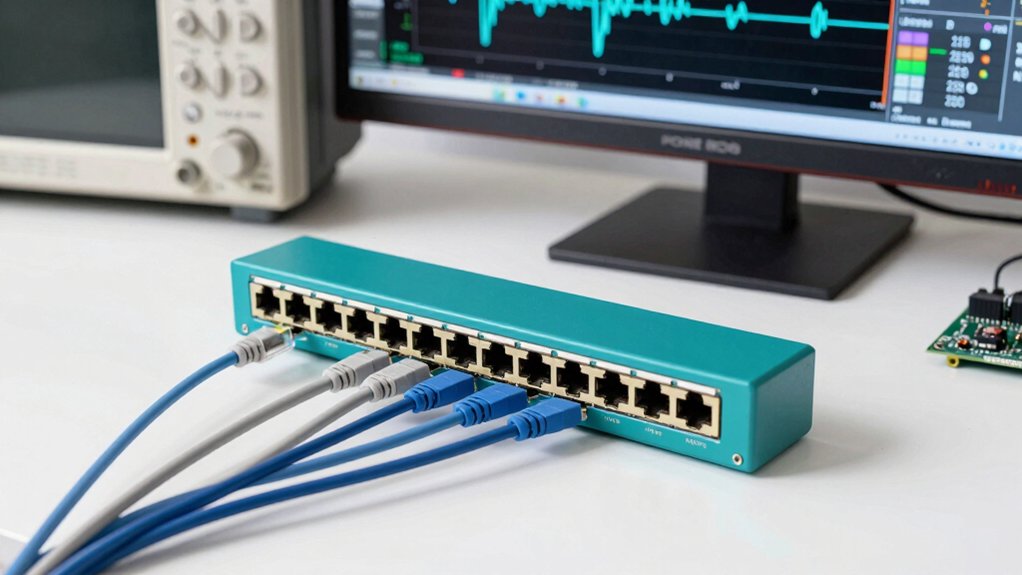
First, assess Protocol Support Range to confirm the interfaces you need (Ethernet, PoE, Modbus, or custom APIs) and check driver availability for your devices. Next, evaluate Power Options Flexibility, noting whether the module supports PoE, external supply, and input voltage ranges, then select the most compatible pairing with your site’s power plan. Finally, review Isolation & Protection and Relay Ratings Suitability to ensure proper electrical safety and load handling, and choose Network Configuration Methods that fit how you manage devices today.
Protocol Support Range
You should start by listing the protocol options you need and then verify how well the module supports each one. Start with Modbus RTU and Modbus TCP, confirming coil actuation and register-based control for SCADA or PLC integration. Check TCP Server and TCP Client modes for direct device access and remote control, and verify UDP options if broadcast updates are needed. Look for UDP Multicast support to reach multiple endpoints efficiently. Evaluate HTTP capability for simple web-based status checks or config pages. Review MQTT availability for publish/subscribe messaging, and consider Alibaba Cloud MQTT demos or tutorials as practical references. Confirm how well each protocol blends with your system, noting any version limits, latency expectations, or security features. Ensure compatibility matches your project requirements before purchase.
Power Options Flexibility
Power options determine how you power an Ethernet relay module and how reliable your system will be. You have flexible DC input ranges, typically 7–36V, so you can source power from common industrial supplies without extra adapters. Consider PoE support, which lets power and data travel on one Ethernet cable, simplifying installation. If you use PoE, ensure the module supports IEEE 802.3af hardware for safe power transfer. Some models add optional DC power plugs alongside screw terminals, giving you two physical connection options. Look for reverse-proof circuits, which protect the module from damage caused by incorrect power connections. Review each option, match it to your layout, and pick a solution that minimizes wiring while maintaining reliability.
Isolation & Protection
Isolation and protection are essential for reliable Ethernet relays. You should verify onboard optocoupler isolation to keep the relay circuitry safe from high-voltage interference and noise on the control side. This helps prevent ground loops and voltage transients from propagating into your controller or network interfaces. Check for a reverse-proof circuit to guard against damage from incorrect power or connection placement. Ensure isolation between channels to reduce cross-talk and allow independent operation of each relay. Look for multi-stage isolation and protective features, especially for rugged industrial environments, to ensure safer integration with external systems. Compare modules by listing which protections exist, and confirm they match your application’s voltage levels, wiring layout, and required safety standards.
Relay Ratings Suitability
When choosing an Ethernet relay module, start by matching your load to the relay’s contact ratings. Most modules specify a contact rating up to 10A at 250VAC or 30VDC, which defines the maximum load you can safely switch. Check both voltage and current to stay within limits. For AC loads, keep voltage at or below 250VAC and current at or below 10A to align with the specification. For DC loads, ensure the load voltage does not exceed 30V and the current stays within 10A. If you switch inductive or motor loads, consider derating or adding a snubber, since inductive loads can require higher surge handling than steady-state ratings. Never exceed the stated ratings to prevent contact weld or overheating.
Network Configuration Methods
For configuring an Ethernet relay module, start by understanding the available network methods and choose those that fit your environment. Most modules support DHCP for dynamic IP, DNS for name resolution, and static IP for fixed addressing. You’ll typically configure TCP Server, TCP Client, UDP, UDP Multicast, HTTP, and MQTT modes to fit different integration needs. Use Web Browser configuration for initial setup and software-based tools for ongoing parameter changes. DHCP with DNS name access lets you identify and manage devices across networks more easily. If you use IoT, enable MQTT, and note that some modules include Alibaba Cloud demos for lightweight publish/subscribe control. Plan your topology, assign addresses, and verify connectivity with a simple ping and a test message.
Physical Mounting Hardware
Choosing the right physical mounting hardware starts with confirming rail compatibility and enclosure type. Most modules use an ABS rail-mount enclosure designed for DIN rail installation to fit standard industrial panels. Check that the device snaps onto a 35mm DIN rail and note whether brackets or clips are included for secure mounting. The enclosure’s compact form saves panel space and improves cable management, so verify it fits your enclosure footprint and available space. Some modules specify a rugged, industrial-grade enclosure with screw terminals and protective covers for harsh environments, and you should confirm these features if your location demands protection. Rail-mount design usually means easy mechanical alignment with other DIN-rail devices and standardized spacing for multiple units.
Expansion & Scalability
Expanding an Ethernet relay setup starts with checking how well a module scales with your system. First, look for modular expansion that adds outputs, ideally up to eight, so you can grow without replacing the base unit. Next, verify the architecture supports multiple control protocols like Modbus RTU/TCP, MQTT, and HTTP to connect future controllers easily. Then, prefer models with PoE or wide DC input (7–36V) to simplify power budgeting as you expand the network. Also, choose devices offering per-channel independent control modes—Normal, Flash, Linkage, and Toggle—to handle varied expansion needs. Finally, confirm there’s a rail-mount ABS enclosure and clear status indicators to maintain reliability and ease of maintenance in industrial environments.
Final Thoughts
Evaluate your needs, then pick one path. If you require Modbus RTU/TCP with PoE and rail-mount, choose the 8‑CH module with Modbus, TCP/RTU, and PoE. If you need simple TCP/HTTP control, select the generic 8‑CH or Ethernet TCP/UDP controller with 2‑way relay. For isolation and surge protection, confirm on-board protections and power range. Compare per-channel modes, enclosure type, and indicators. Install, test each channel, and document configurations for fault tracing and maintenance.

Meet Ry, “TechGuru,” a 36-year-old technology enthusiast with a deep passion for tech innovations. With extensive experience, he specializes in gaming hardware and software, and has expertise in gadgets, custom PCs, and audio.
Besides writing about tech and reviewing new products, he enjoys traveling, hiking, and photography. Committed to keeping up with the latest industry trends, he aims to guide readers in making informed tech decisions.